3CX vs Zoiper 2026: Which Softphone Wins for B2B Sales?
3CX bundles a full PBX with its softphone, while Zoiper is a SIP client you bolt onto any provider. Here is which one fits a B2B sales team in 2026.
TL;DR#
- 3CX is a full PBX platform with a softphone built on top — call routing, IVR, queues, recording, and web client included.
- Zoiper is a pure SIP softphone that connects to any provider you choose. It does one job and does it cheaply.
- Pick 3CX if you want one vendor for the whole phone system and have 10+ reps.
- Pick Zoiper if you already have a SIP trunk or hosted PBX and just need a reliable dialer per seat.
- Neither finds B2B mobile numbers for you — pair the dialer with a phone finder before any outbound shift.
What is 3CX and what is Zoiper?#
3CX is a software-based private branch exchange — a PBX. It runs on Linux, Windows, or a hosted VM, and ships with Web Client, Windows/Mac apps, iOS/Android apps, browser extension, and a full admin console. You bring your own SIP trunk (or use 3CX's bundled trunk), and 3CX handles everything from there: extensions, IVR, ring groups, call queues, recording, voicemail-to-email, and reporting.
Zoiper is a SIP/IAX softphone. That is the whole product. It registers to whatever provider you point it at — Twilio, Telnyx, your existing 3CX, FreePBX, RingCentral SIP, anything that speaks SIP — and gives you a dial pad, presence, transfer, hold, and recording. No IVR, no admin tier, no queues. Just a phone on your laptop.
That distinction is the entire comparison. Everything below flows from it.
How do 3CX and Zoiper compare on features?#
| Capability | 3CX | Zoiper 5 |
|---|---|---|
| Type | PBX + softphone suite | SIP softphone only |
| SIP trunk included | Optional (3CX SIP Trunk) | No — bring your own |
| Web client | Yes (full UC) | Yes (Zoiper Web, paid) |
| Mobile apps | iOS + Android, native | iOS + Android, native |
| Call recording | Built-in, server-side | Local recording only |
| Queues / IVR | Yes | No |
| Live chat / WhatsApp / SMS | Yes (Pro/Enterprise) | No |
| Video conferencing | Yes, built-in | No |
| CRM integration | Native (HubSpot, Salesforce, Pipedrive, Zoho) | Click-to-dial via URI handler |
| Self-hosted option | Yes | N/A (client app) |
| Encryption | TLS + SRTP | TLS + SRTP / ZRTP |
| Free tier | Free Small Business (up to 10 users) | Zoiper Free (one account, basic codecs) |
| Paid starting price | ~$175/year (Small Business) | ~$50 one-time per device (Pro) |
The TL;DR of the table: 3CX competes with RingCentral, Dialpad, and FreePBX. Zoiper competes with X-Lite (RIP), MicroSIP, Bria, and Linphone. They are not really in the same weight class — but B2B sales leaders compare them all the time because both can be "the thing the rep clicks to dial out."
How does pricing actually work?#
3CX moved to an annual subscription model. As of 2026, the tiers are:
- Free Small Business — up to 10 users, hosted by 3CX, includes the web client, mobile apps, video, live chat, and basic queues. Real product, not a 30-day trial.
- Small Business — adds CRM integration, call recording, voicemail transcription, MS Teams integration.
- Pro — call reporting, listen-in / whisper / barge, custom IVR, SMS, MS 365 integration.
- Enterprise — standby instance, skill-based routing, custom IP options, white-glove migration.
Prices scale per simultaneous call, not per user, which is unusual and can be a bargain at scale. A 50-rep team with a 1:4 concurrency ratio pays roughly the same as a 12-rep team with 1:1.
Zoiper sells per device, mostly one-time:
- Zoiper Free — one SIP/IAX account, G.711 codec only, ad-supported.
- Zoiper Pro — multiple accounts, G.722/iLBC/Speex, video, encryption. Roughly $50 one-time for Windows/Mac/Linux, $10 for the Android app.
- Zoiper Biz — adds enterprise codecs (G.729, OPUS premium), provisioning, push notifications for mobile, Outlook integration. Per-seat licensing for fleets.
If you have a hosted PBX from RingCentral, Twilio, or your existing on-prem 3CX, Zoiper is the cheapest path to a stable desktop client. If you do not have a PBX yet, 3CX gives you one for free up to 10 users — Zoiper alone will not.
Is 3CX better than Zoiper for cold-calling teams?#
For an outbound SDR team, the answer depends on whether you need call control or just call placement.
If you need supervision, queues, and reporting — call recordings searchable by extension, dial-attempt reports, manager whisper, call-disposition codes — 3CX wins by default. Zoiper has none of this. You would have to layer a separate analytics tool on top of the SIP trunk and reconstruct the data, which nobody does.
If your reps just need to make outbound calls through an existing dialer or PBX, Zoiper is faster to deploy and lighter on the laptop. We have seen 200-seat shops standardize on Zoiper Pro because their PBX (3CX, FusionPBX, or a hosted provider) already covers queues and reporting on the server side. The rep only needs a dial pad that does not crash.
The bigger trap is something neither tool solves: bad data. If you are dialing wrong numbers, no softphone helps. Source mobile numbers from a verified B2B phone finder and use a phone validator before pushing the list into the dialer. Calls that connect to live prospects are the only metric that matters.
How is call quality and reliability?#
Both tools support modern codecs (G.722, OPUS) and SRTP encryption. In real-world testing on a stable 50/10 Mbps connection:
- 3CX Web Client uses WebRTC end-to-end. Quality is consistent across Chrome, Edge, and Firefox. MOS scores stay above 4.0 on properly QoS-tagged networks.
- 3CX desktop apps wrap the web client and behave identically.
- **
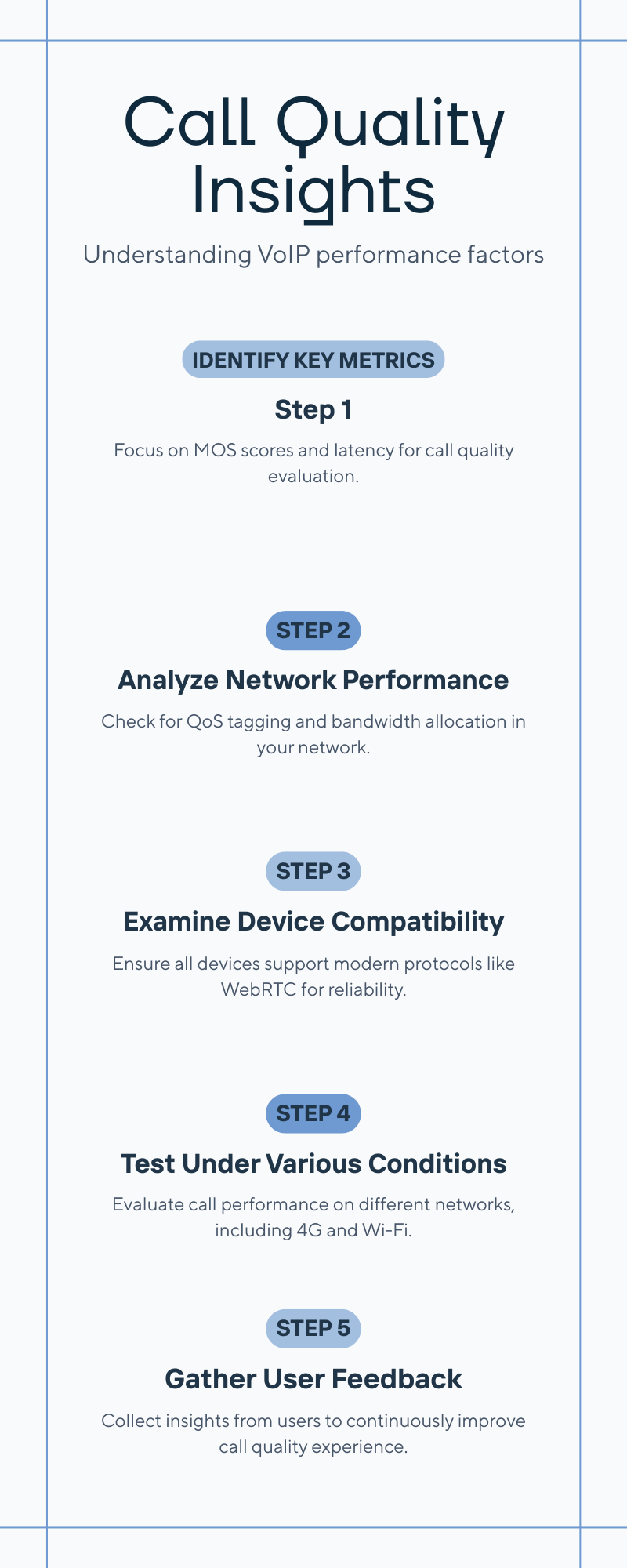
Zoiper 5 desktop** runs native SIP. Slightly lower CPU, slightly faster call setup (around 200 ms vs 350 ms for 3CX Web). Audio quality identical when codecs match.
- Mobile is a tie in clean conditions. On flaky 4G, 3CX's push notifications wake the app faster than Zoiper Free; Zoiper Biz with push is competitive.
Where things diverge: Zoiper is a thinner application, so it crashes less under odd network conditions, but it also offers fewer diagnostic logs when something goes wrong. 3CX's admin console gives you SIP traces, RTP statistics, and per-extension call quality scores out of the box — invaluable when you are debugging why one rep's calls drop and the others' don't.
Which integrates better with CRMs and prospecting tools?#
3CX ships native integrations with HubSpot, Salesforce, Pipedrive, Zoho, Freshdesk, MS 365, and Google Workspace. Inbound caller ID resolves against the CRM, call logs sync as activities, and click-to-dial works from the CRM browser tab. The Pro tier exposes a Call Control API for custom workflows.
Zoiper offers a click-to-dial URI handler (zoiper://) and an Outlook contact lookup in the Biz tier. That is it. Everything else is DIY. If your CRM is HubSpot or Salesforce, plan to write a Zapier hop or a small server to mirror call events.
For prospecting workflows, neither tool feeds you contacts. You will still need to:
- Build the target list (ICP filtering, role match).
- Find mobile numbers and direct dials.
- Verify before dialing.
The fastest stack we have seen: pull leads from a B2B database, enrich with data enrichment, then push verified numbers into 3CX or Zoiper via CSV import or a Zapier action. Whatever softphone you pick is the last 10% of the pipeline.
Self-hosted vs hosted: which model to choose?#
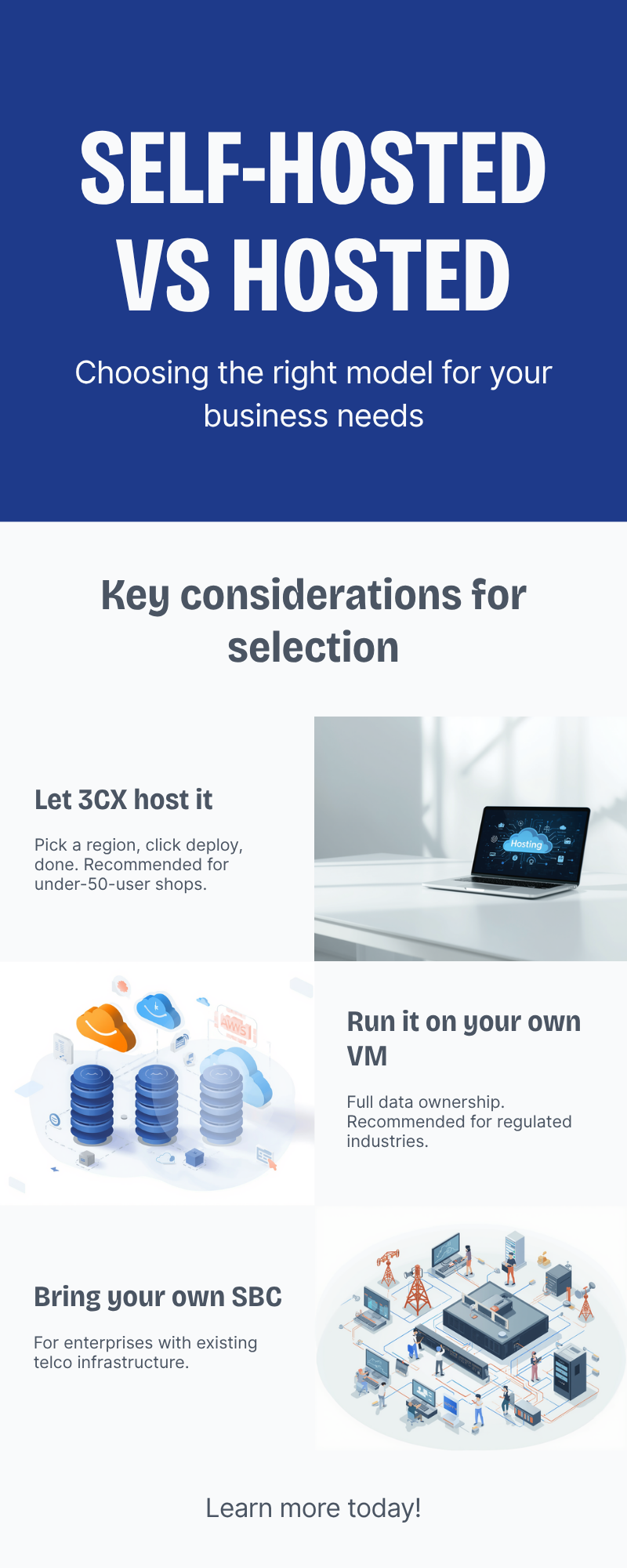
3CX gives you the choice and that is its main differentiator. You can:
- Let 3CX host it — pick a region, click deploy, done. Recommended for under-50-user shops.
- Run it on your own VM — AWS, Azure, Hetzner, bare metal. Full data ownership. Recommended for regulated industries (healthcare, finance, EU GDPR-heavy).
- Bring your own SBC — for enterprises with existing telco infrastructure.
Zoiper is a desktop/mobile client. There is nothing to host. The hosting question is about the PBX you connect it to — Twilio, Telnyx, Bandwidth, Plivo, or any SIP-capable provider including 3CX itself.
A common production setup: 3CX self-hosted PBX as the backend, Zoiper Pro on a subset of reps' machines because some of them dislike the 3CX desktop app's Electron wrapper. The two tools coexist fine.
When should you pick 3CX over Zoiper?#
Pick 3CX when:
- You do not already have a PBX and want a single-vendor system.
- You need queues, IVR, recording, and reporting in one place.
- You want native CRM integrations and admin reporting.
- You are 10+ users and growing.
- Compliance requires server-side recording and retention controls.
Pick Zoiper when:
- You already have a PBX (3CX, FreePBX, or hosted) and need a clean client.
- You want a one-time license, not a subscription.
- Reps are remote and need the lightest possible footprint.
- You connect to multiple SIP providers (failover, geographic routing).
- You like the SIP-first philosophy and want maximum vendor independence.
Pick something else when:
- You need conversation intelligence, AI call summaries, and coaching dashboards. Look at Gong alternatives, Aircall, or Dialpad Ai.
- Your team is exclusively browser-based and you want zero install. RingCentral or Dialpad's web client wins.
What about call data and conversation intelligence?#
Neither 3CX nor Zoiper ships conversation intelligence. 3CX gives you recordings; you can pipe them to an STT service (Whisper, Rev.ai, Assembly) and run summarization. Zoiper records locally to WAV — same downstream pipeline.
For a 2026 outbound team, the realistic stack is:
- Dialer: 3CX or Zoiper.
- Recordings → S3 or your audit store.
- Transcription: Whisper API or Anthropic Claude for summarization.
- Coaching: weekly review of flagged calls, scored against a rubric.
If you want this turnkey, both 3CX and Zoiper lose to specialized AI dialers. But for cost-conscious teams already paying for a CRM and a database, rolling your own is half the price.
How do users rate them?#
According to G2 and Capterra reviews as of 2026:
- 3CX: rated highly for value (free tier is legit), criticized for the admin UI's learning curve and recent licensing model changes. 4.4/5 average.
- Zoiper: rated highly for stability and price, criticized for dated UI in Zoiper 5 and limited collaboration features. 4.3/5 average.
Both have strong communities. 3CX runs an active forum with vendor engineers; Zoiper relies more on third-party SIP-provider documentation.
Final verdict — 3CX vs Zoiper in 2026#
3CX wins when you need a system. Zoiper wins when you need a phone. Most sales teams of 10+ reps will be better served by 3CX because its free tier removes the cost objection and its integrations cut weeks of glue work. Smaller shops, freelancers, and teams already on a hosted PBX get more out of Zoiper because it is the lightest, fastest SIP client you can buy.
Whichever one you pick, the softphone is not your bottleneck — your contact data is. A perfect dialer ringing the wrong number is still a wasted call.
Stop dialing wrong numbers#
If your reps are pasting bad numbers from LinkedIn or guessing direct dials, no softphone will save the conversion rate. Tomba's phone finder returns verified B2B mobile and direct-dial numbers from name + company, validates them in real time, and exports straight to CSV for your 3CX or Zoiper dialer. Combined with email finder for the follow-up sequence, you get a multi-channel outbound stack that uses both tools in this comparison better than they were designed to be used. Start with the free Tomba tier — 25 lookups a month, no card required.
// get started
Find, verify and enrich your first contacts today
Start on the free plan with 25 searches a month, then scale when your team is ready.
Free plan · No credit card required · GDPR & CCPA
// about the author