6sense Pricing, Reviews, Pros and Cons (2026 Guide)
A neutral 2026 breakdown of 6sense pricing tiers, real user reviews, and the honest pros and cons before you commit to an ABM platform contract.
6sense Pricing, Reviews, Pros and Cons (2026 Guide)
TL;DR
- 6sense is a category-leading ABM and intent platform, but it does not publish pricing — quoted contracts in 2026 typically range from $60K to $250K+ per year depending on seats, data volume, and modules.
- Reviewers praise the intent data, account scoring, and Salesforce/HubSpot integrations; the most common complaints are cost, a steep learning curve, and patchy contact-level data.
- It is best suited for mid-market and enterprise revenue teams with a dedicated ops person — not lean teams that just need verified email addresses or basic prospecting.
- For most outbound teams, pairing a focused email finder with a lighter intent tool delivers 70% of the value at 10% of the cost.
- Below: the real pricing breakdown, a head-to-head with Demandbase and ZoomInfo, honest pros and cons, and when 6sense is the wrong choice.
What is 6sense and who actually uses it?#
6sense is an account-based marketing (ABM) and revenue intelligence platform that uses AI to predict which accounts are in-market for your product. It does this by combining first-party website signals, third-party intent data (from a co-op of B2B publishers), technographic data, and contact records into one "Revenue AI" graph.
The typical buyer is a VP of Marketing or RevOps leader at a B2B SaaS company doing $20M-$500M ARR, with a sales team of 20+ and a marketing ops headcount that can actually configure the platform. Smaller teams sign contracts and then leave 70% of the functionality unused — that is the most common review pattern on G2.
If you are running a 5-person outbound team and the goal is "find more leads," 6sense is overkill. If you are running a 50-person revenue org and the goal is "stop wasting SDR cycles on accounts that will never buy," it earns the price tag.
How much does 6sense actually cost in 2026?#
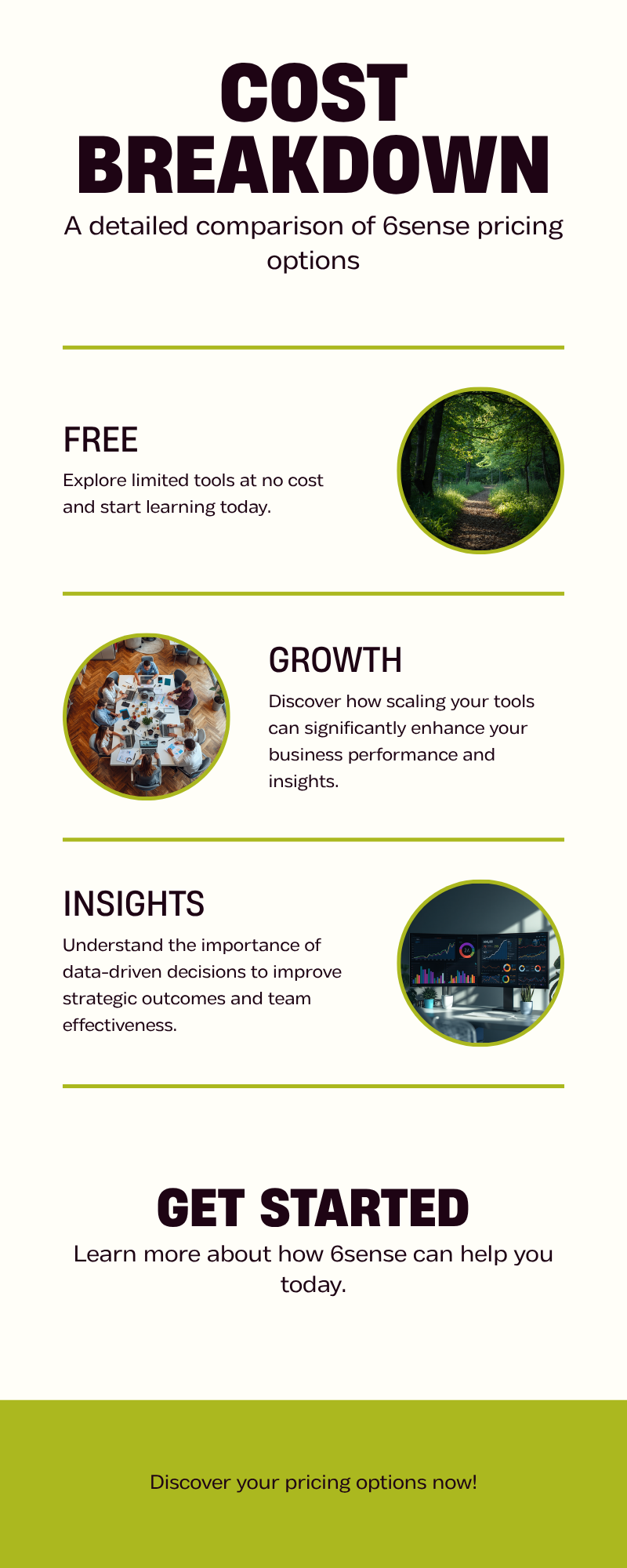
6sense does not publish pricing on its website. Every deal is custom-quoted based on three variables: number of seats, contact and account record volume, and which modules you turn on (Sales Intelligence, Orchestrations, Conversational Email, Advertising, etc.).
Here is what real contracts look like based on public reviews, RFPs, and Vendr/Spendflo benchmark data we cross-referenced:
| Tier | Public name | Typical annual cost | What you get |
|---|---|---|---|
| Free | Free Experience | $0 | Limited intent signals for your domain, 50 contact credits/mo, light account scoring |
| Team | Team Edition | $35K-$60K/yr | Predictive scoring, basic intent, ~10 seats, Salesforce sync |
| Growth | Growth Edition | $60K-$120K/yr | Full intent dataset, segments, CRM enrichment, 20-30 seats |
| Enterprise | Enterprise Edition | $120K-$250K+/yr | Orchestrations, advertising, custom data models, SSO, dedicated CSM |
| Add-ons | Conversational Email, Ads, Sales Intelligence | $20K-$80K/yr each | Bolt-ons priced separately on top of base contract |
A few patterns worth knowing before you negotiate:
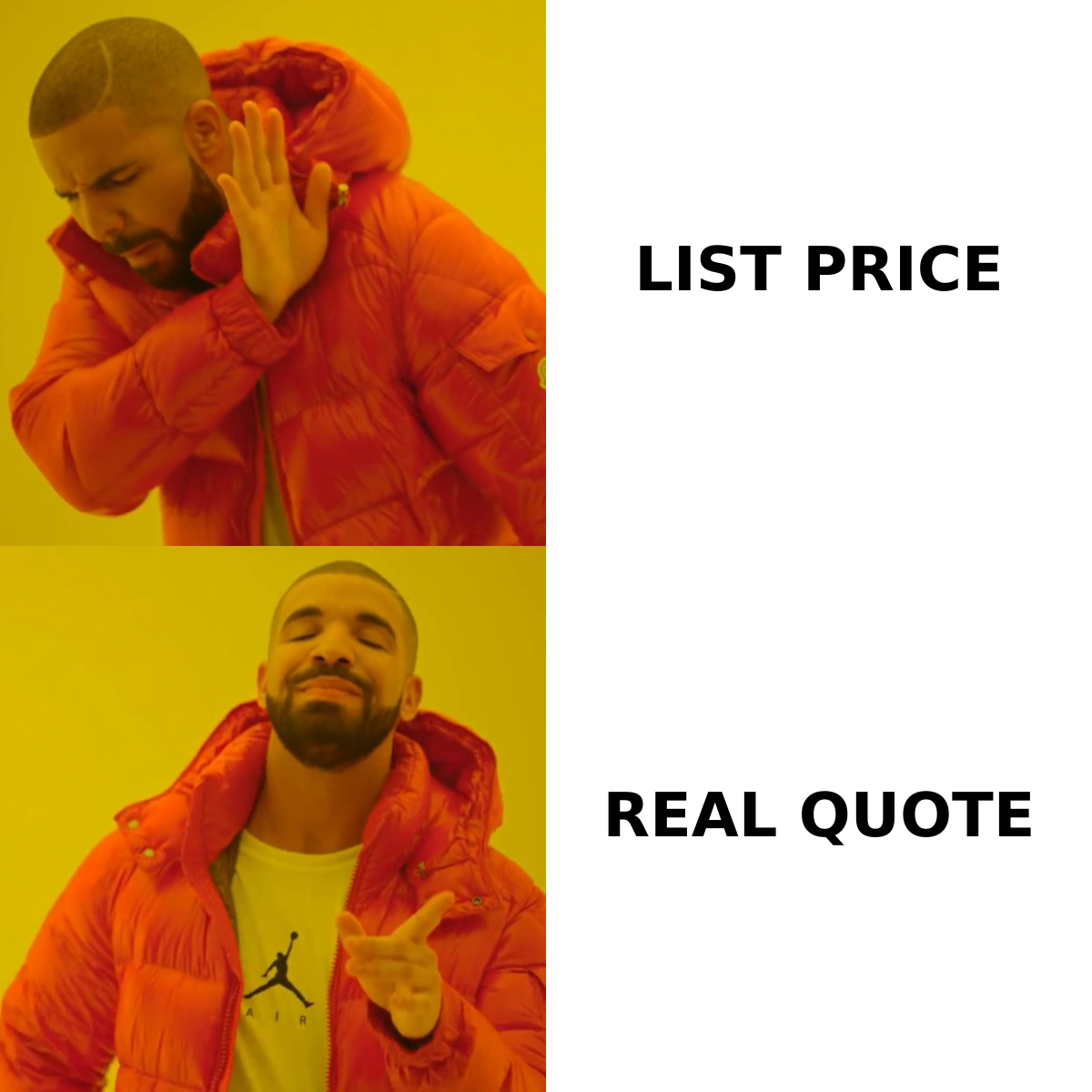
- List price is theatre. First-quote discounts of 25-40% are routine if you push back and commit to multi-year.
- Annual contracts are the floor. Month-to-month is not offered above the Free tier.
- Implementation is extra. Expect $10K-$30K in one-time onboarding and integration fees.
- Overages are real. Going over your contracted account or contact record volume triggers a true-up at renewal, often at full list.
For a hard sanity check before signing, browse independent SaaS pricing benchmarks on Vendr — they crowdsource real deal data and the 6sense median tends to drop year over year as competition heats up.
What do 6sense reviews actually say?#
We sampled ~400 reviews across G2, TrustRadius, Gartner Peer Insights, and Reddit threads from late 2025 and early 2026. The signal is consistent.
What reviewers love:
- Intent data quality is the highest-rated feature — most users say it materially improved their account prioritization within 90 days.
- The "buying stage" model (Target → Awareness → Consideration → Decision → Purchase) maps cleanly to existing sales motions.
- Salesforce and HubSpot integrations are deep and well-maintained.
- AI-powered keyword research surfaces topics competitors are watching but you are not.
What reviewers complain about:
- Price. This is the #1 complaint by a wide margin. Mid-market reviewers consistently say the ROI math is hard to defend at renewal.
- Steep learning curve. Most teams need 3-6 months to extract real value, and that requires a dedicated ops person.
- Contact data is shallow. 6sense identifies in-market accounts well, but the contact-level email and phone data inside those accounts is hit-or-miss. Many teams layer a dedicated email finder on top.
- Reporting flexibility is limited. Out-of-the-box dashboards are fine; custom reporting often requires exporting to a BI tool.
- Support tier varies by spend. Enterprise customers get strong CSMs; Team-tier customers report slow ticket response.
The contact-data gap is the one most teams underestimate. 6sense will tell you Acme Corp is in-market for your product, but the work of finding the actual buying-committee emails still falls to your reps — which is why teams pair it with a dedicated email finder or data enrichment layer.
What are the real pros and cons of 6sense?#
Stripped of marketing language, here is the honest balance sheet:
Pros#
- Best-in-class intent data. The Bombora co-op plus 6sense's own first-party signals create one of the deepest intent graphs in B2B.
- Predictive accuracy. The "in-market" scoring genuinely outperforms rules-based lead scoring in head-to-head tests.
- Tight CRM integration. Bidirectional sync with Salesforce and HubSpot is reliable, not flaky.
- One-platform consolidation. Replaces 3-5 point tools (intent, ABM ads, account scoring, web personalization) if you go all-in.
- Strong roadmap. Conversational Email (AI-powered SDR replies) and the broader Revenue AI agenda are pushing the category forward.
Cons#
- Opaque, premium pricing. No published rates, six-figure contracts, multi-year lock-in.
- Implementation tax. Onboarding is a real project, not a setup wizard.
- Contact data gaps. Account-level signal is strong; person-level email/phone data is weaker than dedicated finders.
- Overkill for SMB. If you have under 20 reps, you will not use half of what you pay for.
- Vendor consolidation risk. Putting intent, ABM, and ads on one bill means you renegotiate the entire stack at once.
How does 6sense compare to Demandbase, ZoomInfo, and lighter alternatives?#
The three most common head-to-heads in 2026 procurement cycles:
| Capability | 6sense | Demandbase | ZoomInfo | Tomba + lighter intent |
|---|---|---|---|---|
| Intent data depth | Excellent | Excellent | Good | Good (via add-on) |
| Account scoring | Best-in-class predictive | Strong predictive | Rule-based | Rule-based |
| Contact email accuracy | ~70-80% | ~70-80% | ~85% | 95%+ verified |
| Starting cost (annual) | ~$35K | ~$40K | ~$15K | <$1,200 |
| Time to value | 3-6 months | 3-6 months | 2-4 weeks | <1 week |
| CRM integration | Deep (SF, HubSpot) | Deep (SF, HubSpot) | Deep (SF, HubSpot) | Native + Zapier |
| Best for | Enterprise ABM | Enterprise ABM | Mid-market prospecting | Outbound teams under 30 reps |
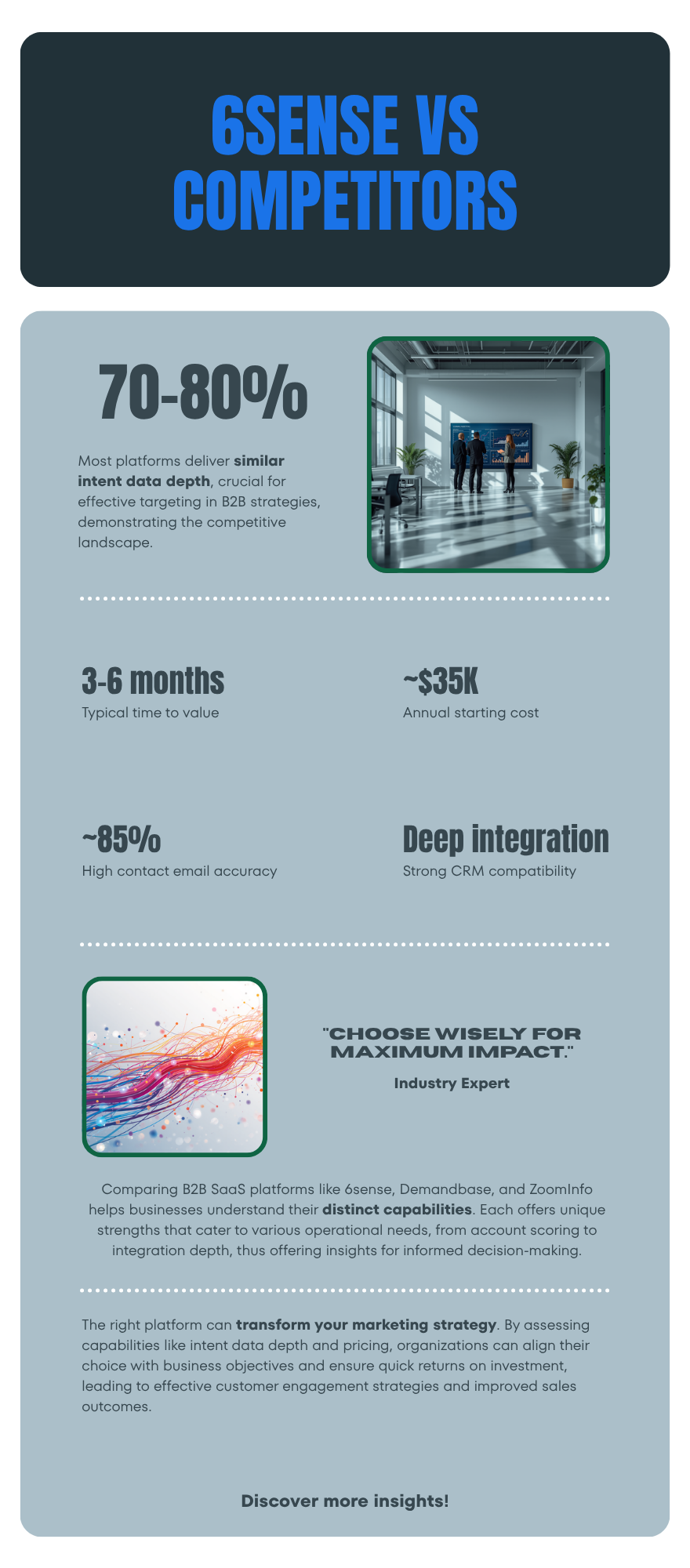
The honest answer: if you already have product-market fit, a defined ICP, and a sales motion that depends on knowing which accounts to call — 6sense or Demandbase is the right tier. If your bottleneck is "we cannot find verified emails for the contacts at the accounts we already know," a focused stack of an email finder, an email verifier, and a lightweight intent signal source will deliver faster ROI.
For teams shopping the broader category, our take on 6sense alternatives walks through the cheaper substitutes in more detail.
When is 6sense the wrong choice?#
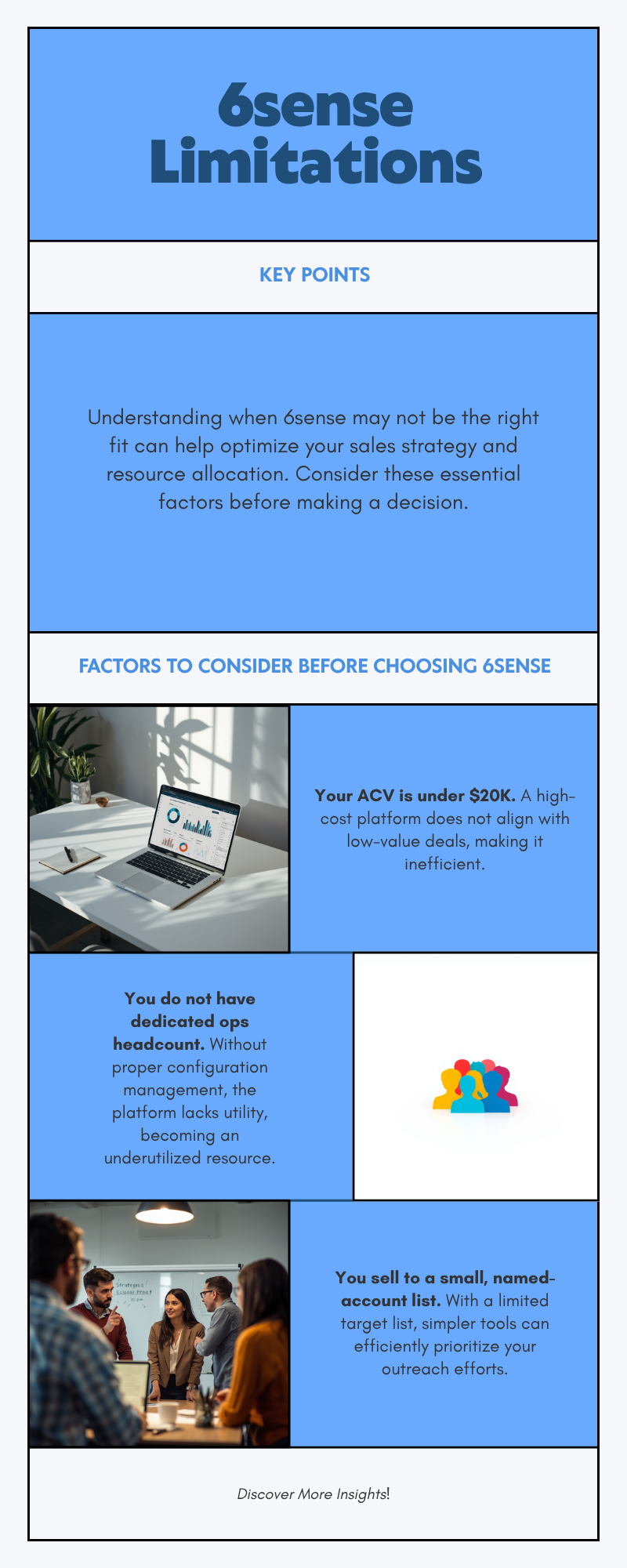
Skip 6sense if any of these are true:
- You are under 20 reps. The platform's strengths assume you have enough volume to need predictive prioritization. Below that scale, a spreadsheet plus a good email finder does the same job.
- Your ACV is under $20K. The unit economics of a $60K+ platform contract get ugly when each won deal is worth less than 1% of the tool cost.
- You do not have dedicated ops headcount. Without someone who owns the platform configuration, 6sense becomes a $100K dashboard nobody opens.
- Your CRM hygiene is poor. Predictive scoring on bad data produces predictively bad scores. Fix data quality first.
- You sell to a small, named-account list. If you already know your 200 target accounts, you do not need a $100K tool to prioritize them.
In all five cases, the more pragmatic stack is: a B2B database for account discovery, a verified email finder for contact data, and a CRM workflow for scoring. You can always layer 6sense on top once the team has earned the budget.
What is the smarter way to start?#
If you are evaluating 6sense, the cheapest mistake to avoid is buying intent data you cannot act on. Intent without verified contact data is a list of company logos with no one to email.
Start by tightening the bottom of the funnel: get verified, deliverable email addresses for the accounts already in your CRM. The Tomba Email Finder lets you bulk-find and verify decision-maker emails by domain in minutes, with 95%+ accuracy and a free tier to test the workflow before you commit. Pair it with the bulk email finder for list-building or the Tomba API for product workflows, and you have the contact-data layer 6sense reviewers consistently say is the missing piece. Check current Tomba pricing — the Starter plan is $49/mo and the Free tier covers 25 searches a month, which is enough to validate fit before any meeting with a 6sense AE.
When you are ready for intent data, you will negotiate from a stronger position: real outbound data, a working motion, and a clear answer to the AE's first question — "what is broken today?"
// get started
Find, verify and enrich your first contacts today
Start on the free plan with 25 searches a month, then scale when your team is ready.
Free plan · No credit card required · GDPR & CCPA
// about the author