ABM Services in 2026: What to Buy, What to Build, What to Skip
A buyer's guide to ABM services in 2026 — agency models, pricing tiers, data stacks, and the in-house workflows that quietly out-perform six-figure retainers.
TL;DR#
- ABM services in 2026 fall into four buckets: strategy consulting, data and intent, orchestration (ads + outbound + sales plays), and creative production. Most vendors sell at least two; almost none do all four well.
- Mid-market budgets land around $8K–$25K/month for a managed ABM program. Enterprise programs with 6sense or Demandbase under the hood routinely cross $250K/year all-in.
- The biggest ROI lever is not the agency — it's the account list. Programs built on a fuzzy 5,000-account list lose money no matter who runs them. Tight lists of 50–300 accounts with verified contacts win.
- In-house ABM with a sharp RevOps lead, clean data, and a coordinated SDR motion now beats most retainer agencies on cost-per-meeting. The gap closed when LLM-driven research and tools like Tomba's data enrichment made manual list-building cheap.
- Buy services when you need senior strategy, intent data licenses, or production capacity you can't hire. Don't buy services to replace internal accountability.
What are ABM services, exactly?#
ABM services are outsourced or fractional capabilities that help a B2B company run account-based marketing — meaning marketing where you treat each target account like a market of one, coordinated across sales and marketing, instead of spraying campaigns at industries.
The phrase "ABM services" is doing a lot of work. In practice it covers:
- Strategy — ICP definition, account scoring models, tiering (1:1, 1:few, 1:many), program design.
- Data — third-party intent signals, firmographic enrichment, contact discovery, technographic overlays.
- Orchestration — running the actual plays: paid ads, LinkedIn outreach, direct mail, SDR sequences, sales handoffs.
- Creative — landing pages per account or industry, personalized video, custom case studies, microsites.
Most vendors selling "ABM services" do two of those four. The Gartner-tier consultancies do strategy and process. The 6sense and Demandbase ecosystems do data and orchestration. Boutique agencies do creative and orchestration. Vendor selection is mostly about figuring out which two you can't run in-house.
Why are companies still buying ABM services in 2026?#
Two reasons, and they're getting more lopsided.
First, the data stack got expensive and confusing. 6sense and Demandbase still command six-figure annual contracts, and the buyers signing those contracts often need an agency to operationalize them — otherwise the platform sits half-used for a year, gets renewed once out of sunk-cost reflex, and gets canceled the year after.
Second, senior ABM talent is hard to hire. A good ABM director costs $180K–$240K base in North America in 2026, and the people with real track records are mostly already employed. A fractional ABM lead through an agency is faster to onboard, doesn't need stock options, and you can fire them by email.
Where the case for services is weakest: list-building, contact discovery, and outbound execution. Those used to require an agency's data subscriptions. In 2026, you can match agency output with a B2B database, a few API calls, and one focused operator.
What do ABM services cost in 2026?#
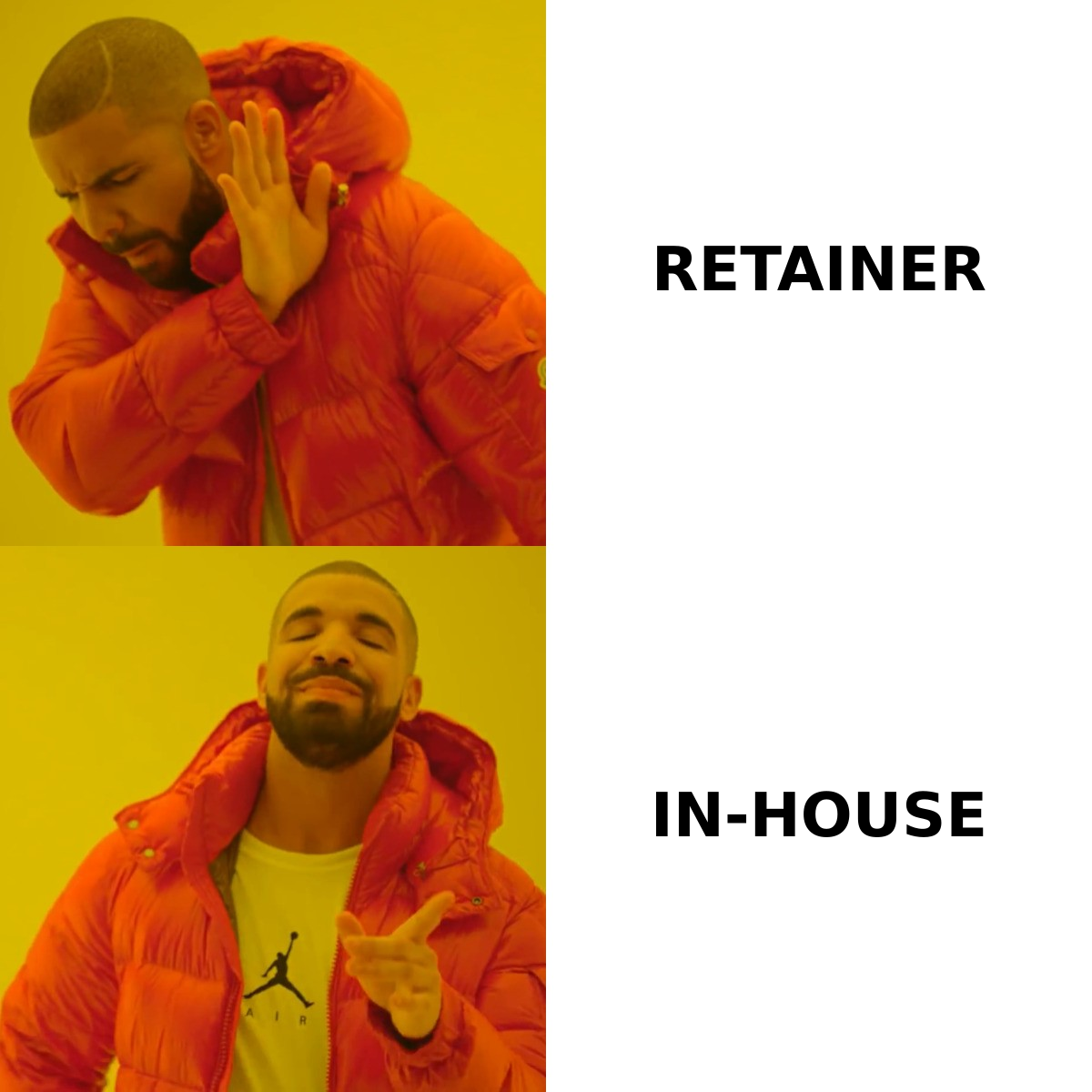
Pricing splits cleanly by tier of program ambition. The numbers below are typical North American mid-market and enterprise quotes, gathered from open agency price pages and 2026 procurement benchmarks.
| Tier | Scope | Typical monthly fee | Typical contract | Best fit |
|---|---|---|---|---|
| Pilot | 25–50 accounts, 1 channel, 90 days | $5K–$8K | 3 months | Testing ABM before committing |
| Mid-market managed | 100–300 accounts, ads + outbound + content | $8K–$25K | 12 months | Series B/C SaaS, $5M–$30M ARR |
| Enterprise full-service | 500+ accounts, 6sense/Demandbase, multi-region | $25K–$60K | 12–24 months | $50M+ ARR, multiple BUs |
| Strategic 1:1 | 5–25 accounts, custom microsites, exec engagement | $15K–$40K | Per-account or annual | Big-ticket deals, $250K+ ACV |
| Data-only | Intent + enrichment, no orchestration | $2K–$10K | 12 months | Teams with in-house execution |
A few things buyers consistently miss when they read those numbers:
- Most retainers exclude paid media spend. A $15K/month fee usually sits on top of $20K–$80K/month of ad spend you fund directly.
- Platform licenses (6sense, Demandbase, Clearbit, LeadIQ) are pass-through and rarely discounted by the agency.
- Creative production for 1:1 plays — custom landing pages, video, direct mail — adds $2K–$10K per account, and that math kills the ROI of "1:1" programs that aren't sitting on six-figure deal sizes.
What's actually inside a good ABM program?#
Strip the vendor branding off, and any ABM program — agency-run or in-house — has the same five components. If your services contract doesn't address all five with named owners, it's an ad-buying contract wearing an ABM costume.
- Account list — Tiered (1:1, 1:few, 1:many) with explicit entry and exit criteria.
- Buying committee map — 5–9 named contacts per account, with role and seniority, refreshed quarterly.
- Signal layer — Intent data, web visits, content engagement, hiring signals, funding events.
- Orchestration cadence — A weekly rhythm where marketing surfaces hot accounts and sales runs the play within 48 hours.
- Measurement — Account-level engagement score, pipeline contribution, win-rate vs control accounts.
The component most agencies under-deliver is #2 — the contact map. They'll hand you a CSV of 30 accounts with two contacts each, mostly LinkedIn URLs and a few guessed emails, then bill an enrichment fee on top. You can do this yourself with a bulk email finder and a LinkedIn finder in an afternoon for a fraction of the price, and your contacts will be more current.
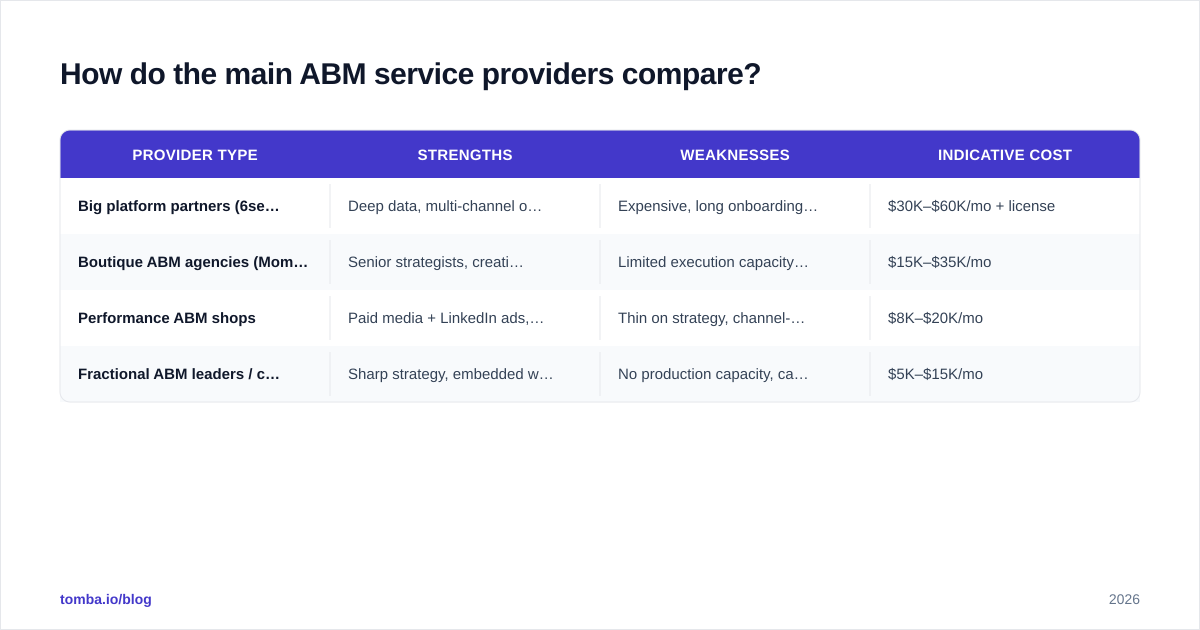
How do the main ABM service providers compare?#
The category sorts into four archetypes. Specific vendor names shift every year, but the archetypes are stable.
| Provider type | Strengths | Weaknesses | Indicative cost |
|---|---|---|---|
| Big platform partners (6sense, Demandbase certified) | Deep data, multi-channel orchestration, mature reporting | Expensive, long onboarding, dependent on platform license | $30K–$60K/mo + license |
| Boutique ABM agencies (Momentum ITSMA, Strategic IC, etc.) | Senior strategists, creative production, 1:1 plays | Limited execution capacity, low tech leverage | $15K–$35K/mo |
| Performance ABM shops | Paid media + LinkedIn ads, fast turnaround | Thin on strategy, channel-narrow | $8K–$20K/mo |
| Fractional ABM leaders / consultants | Sharp strategy, embedded with team, lower cost | No production capacity, can't scale alone | $5K–$15K/mo |
Buyers often skip the boring-but-decisive question: who owns the account list? If the agency owns the list and the enrichment subscription, you're renting your own ICP. When you churn, you start over. Insist on owning the source data — including raw contact records — and on portable formats (CSV, Airtable, HubSpot sync).
For independent validation of any agency shortlist, check their case studies against verified reviews on G2 and Gartner Peer Insights, and ask for two reference customers in your ARR band — not the marquee logo on their homepage.
Should you outsource ABM or build it in-house?#
The honest 2026 answer: build the core, outsource the edges.
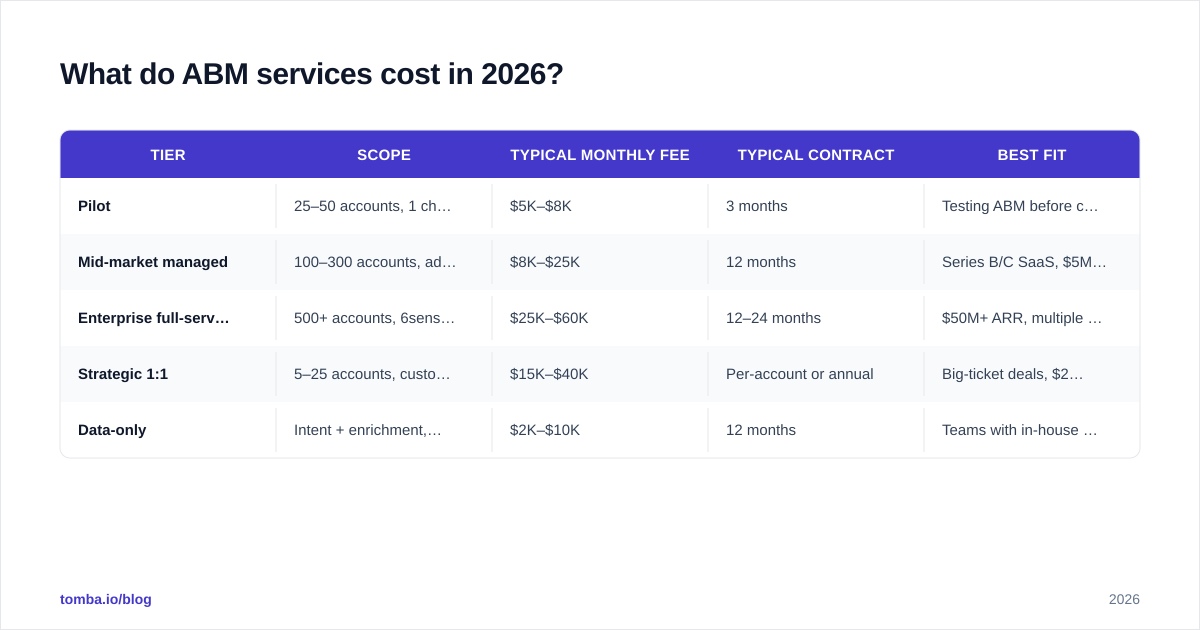
Companies under $20M ARR almost always get more out of an in-house pod — one ABM lead, one SDR, one designer, plugged into RevOps — than a $20K/month retainer. The pod can move faster, owns the data, and learns the ICP in ways an agency rotating three accounts can't.
The exceptions where outsourcing wins:
- You need senior strategy for 90 days to design the program, then you take it in-house.
- You need a 6sense or Demandbase operator and can't justify a full-time hire.
- You're entering a new region and need local creative and local SDR hands.
- You're running a 1:1 program on 10 accounts where each requires a custom microsite, and your design team is at capacity.
For the in-house build, the heavy lift is contact data quality. You can compose a competent stack with a CRM, a HubSpot integration, an email verifier, and an enrichment source. That combination, with one operator running it, replaces a meaningful chunk of what mid-tier ABM agencies bill for. Salesforce and HubSpot both publish reference architectures for this — see the HubSpot ABM playbook and Salesforce ABM resources for the canonical setups.
What does a 90-day ABM rollout look like?#
This is the same 90-day plan most agencies sell. It's not proprietary. The reason it works is sequencing, not secrets.
Days 1–14 — Foundation
- Define ICP with sales: industry, employee count, tech stack, revenue band.
- Score and tier accounts (1:1, 1:few, 1:many). Cap each tier — 25, 100, 500 max.
- Map buying committee roles per account: economic buyer, champion, technical evaluator, end user.
- Pull contacts. Use a domain search for company-level discovery and a LinkedIn finder for individual role-based lookups.
Days 15–45 — Activation
- Launch ads on LinkedIn and a display layer (Demandbase, RollWorks, or a self-managed Google Display setup with audience uploads).
- Send the first SDR cadence — three emails, two LinkedIn touches, one phone. Personalized at the account level, not just the contact level.
- Publish two pieces of mid-funnel content keyed to your top three account themes. Not gated. Track engagement at the account level via reverse IP and form fills.
- Stand up the weekly RevOps stand-up: marketing surfaces the top 10 most-engaged accounts; sales commits to outreach within 48 hours.
Days 46–90 — Optimization
- Promote engaged accounts to a higher tier. Demote dark accounts to nurture.
- Add a second cohort — a new vertical or a new region — using the playbook as a template.
- Build the dashboard: account engagement score, pipeline created, meetings booked, opportunity stage progression vs a hold-out control group.
- Decide what's worth keeping, what's worth firing. Usually one channel turns out to be doing 60% of the work.
What metrics actually prove ABM is working?#
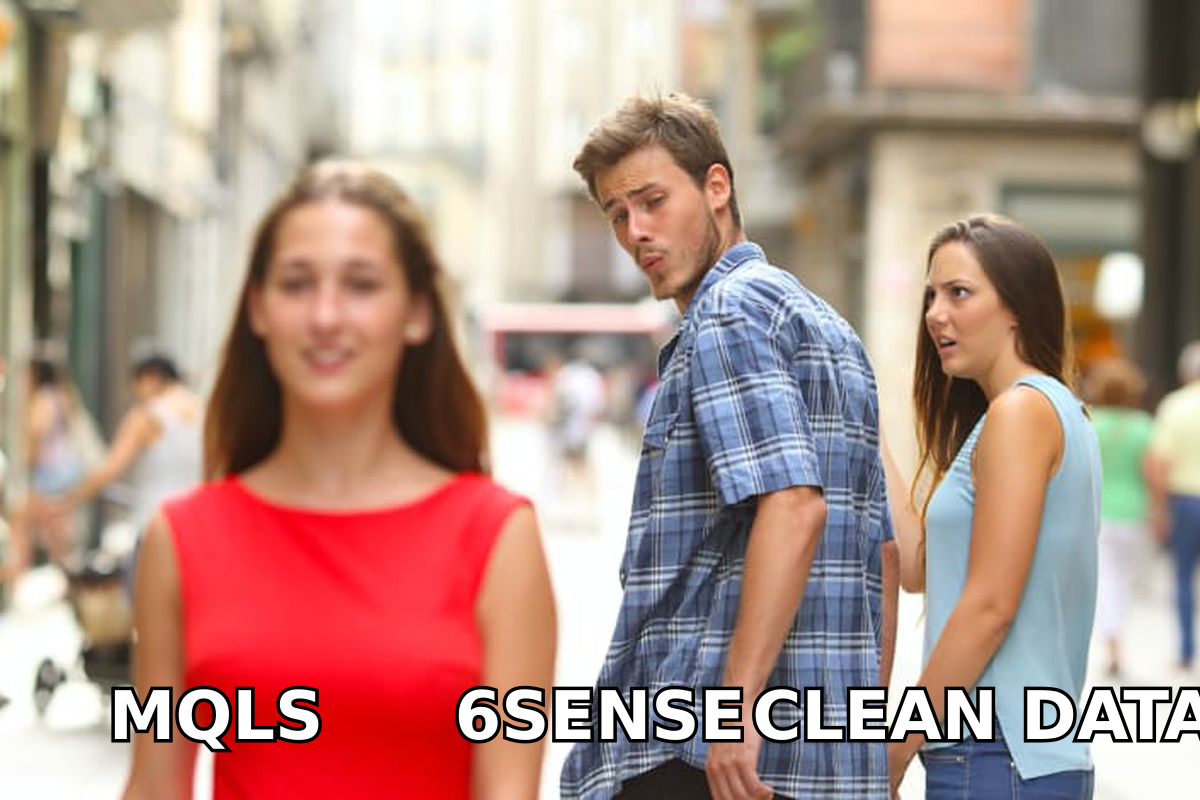
The MQL is dead for ABM purposes. Account-level metrics that matter in 2026:
- Account engagement score — composite of web visits, content downloads, ad impressions, sales touches, with decay.
- Account penetration — percentage of target accounts with 3+ contacts engaged.
- Pipeline coverage on target accounts — pipeline dollars from named accounts vs total target account ACV.
- Win rate, target vs non-target — should be 1.5x–3x higher on target accounts. If it isn't, the list is wrong.
- Sales cycle length — ABM should compress it. If cycle length doesn't drop within two quarters, the buying committee isn't being engaged.
- Cost per opportunity — total program spend (services + media + tooling) divided by opportunities created from target accounts.
A common agency tactic is reporting impressions and ad CTR as the headline. Push back. Demand pipeline coverage and win rate by tier. If they can't measure those, they're a media buyer, not an ABM partner.
What red flags should kill an ABM services deal?#
- Refusal to commit to account-level reporting (anything other than ad-channel reporting).
- Account list is delivered as a final artifact, not a living dataset you can edit.
- Contact data isn't verified — you'll see bounce rates over 8% within 30 days. A real provider runs an email verifier before delivery.
- Strategist on the pitch isn't the strategist on your account. Ask for the named team.
- Year-one contract with no opt-out at 90 days. Reasonable agencies offer a 90-day pilot before the long commitment.
- No SDR coordination model. ABM without sales coordination is just expensive display advertising.
- Hidden platform fees passed through at list price. You should always see the underlying contract.
How does Tomba fit into ABM services?#
Tomba is not an ABM agency. It's the data layer most ABM programs need to make the agency or the in-house team useful.
Specifically:
- The Tomba Email Finder discovers and verifies the named contacts on your account list — the buying committee map every ABM playbook depends on.
- The bulk email finder processes uploaded account lists at scale, returning verified contacts per role.
- The HubSpot and Salesforce integrations push enriched contacts into the CRM your agency or in-house team works from.
- The API lets RevOps run the contact-refresh loop automatically every quarter, so the buying committee map doesn't decay between QBRs.
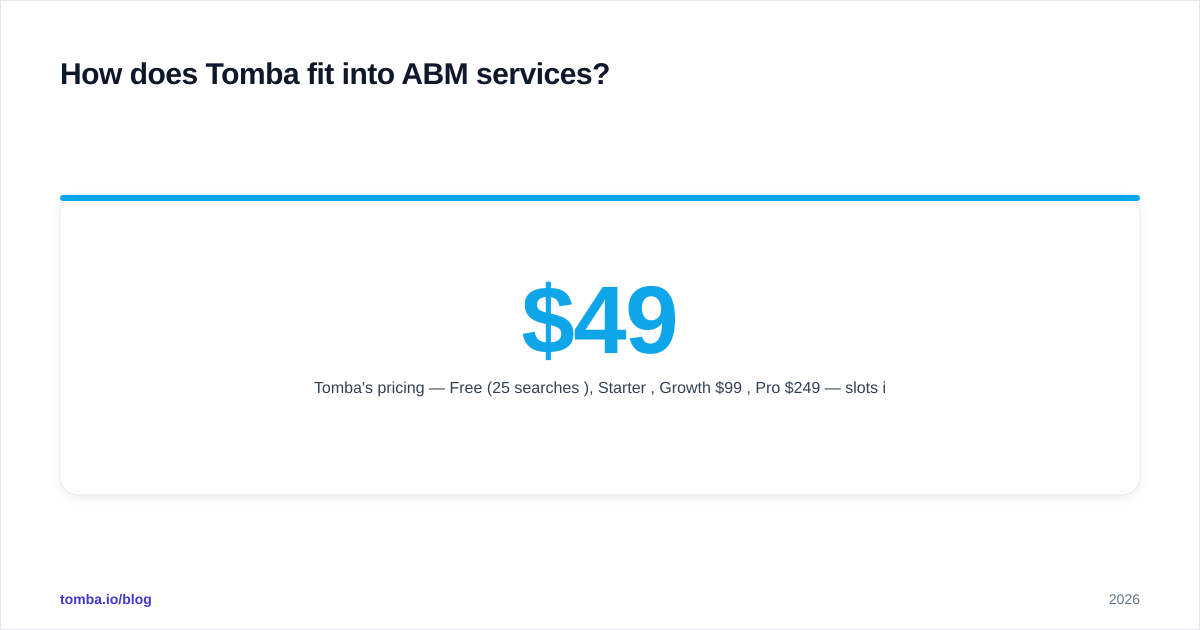
Tomba's pricing — Free (25 searches/month), Starter $49/month, Growth $99/month, Pro $249/month — slots in below the cost of a single seat at most ABM platforms, and the data accuracy holds up against enrichment-only vendors. Full breakdown on Tomba pricing.
How should you actually pick an ABM services partner?#
Five questions, in order. If any one is wrong, the rest doesn't matter.
- Is our account list real? 50–300 named accounts with sales-validated ICP. Not a 5,000-row download from ZoomInfo.
- Do we have a contact map? 5–9 named, verified contacts per account, with role and seniority. Refreshed quarterly.
- Do we have sales coordination? A weekly rhythm where surfaced accounts get outreach within 48 hours. If sales won't commit, ABM will fail.
- What's the smallest service we can buy? Probably data and intent, plus a fractional strategist for 90 days. Save the full-service retainer for when the in-house pod is stuck on capacity, not strategy.
- What's the exit? Contract terms, data ownership, transition plan to in-house. Assume you'll bring it in-house within 18 months and design accordingly.
The teams that win at ABM in 2026 treat services as scaffolding — used to build the program, then mostly removed as the in-house pod takes over. The teams that lose treat services as a permanent outsourced function and never develop the muscle.
Run your ABM program on data you actually own#
Whether you go agency-led, in-house, or hybrid, the bottleneck is the same: verified contacts on the right accounts, refreshed faster than they decay. Tomba's Email Finder gives you that layer — a sales-grade contact discovery and verification engine that plugs into HubSpot, Salesforce, and the rest of your stack. Start free with 25 searches, and only scale up to a paid plan once your account list is doing real work. That's the cheapest, fastest way to turn an ABM program from a slide deck into pipeline.
Ready to find emails that actually work?
Join 150,000+ professionals who stopped guessing and started sending. Free credits on signup — no credit card required.
Get the Tomba newsletter
Practical outbound tactics and product updates — once every two weeks.
About the author