Abstrakt Alternatives 2026: 7 Real-Time Sales Coaching Tools Compared
Abstrakt promises real-time call coaching, but the price, accuracy, and CRM fit aren't right for every team. Here are seven alternatives worth testing in 2026.
TL;DR#
- Abstrakt pioneered real-time call coaching with battle cards that pop on screen mid-conversation, but pricing, CRM integrations, and accuracy gaps push many teams to look elsewhere.
- The strongest abstrakt alternatives in 2026 are Balto, Gong, Wingman by Clari, Salesken, Convin, Jiminny, and Dialpad Ai — each optimized for a different team size and use case.
- For SDR teams that live in the dialer, Balto and Wingman dominate. For closing teams obsessed with post-call analytics, Gong remains untouchable.
- Real-time coaching only works when your contact data is clean. Pair any of these tools with an email finder and verified phone numbers so reps actually reach decision-makers.
- Skip to the comparison table below if you only want the pricing, accuracy, and feature matrix.
What is Abstrakt and why look for alternatives?#
Abstrakt is a real-time sales coaching platform. It listens to live phone calls, transcribes them in real time, and surfaces battle cards, objection-handling scripts, and compliance prompts on the rep's screen while they're still on the call. Think of it as a teleprompter that reacts to whatever the prospect just said.
That on-call assist is genuinely useful, especially for high-volume SDR teams and contact centers where new reps churn fast and ramp-up is expensive. But teams shopping for abstrakt alternatives usually cite four recurring problems:
- Pricing opacity. Abstrakt doesn't publish per-seat pricing publicly. Most teams land somewhere in the $80–$120 per seat per month range after negotiation, which is steep for early-stage GTM teams.
- Limited CRM depth. Native integrations exist for Salesforce and HubSpot, but logging custom fields, attaching call snippets to opportunities, and triggering automations is shallower than Gong or Salesloft offer.
- Transcription accuracy on noisy lines. Real-time transcription degrades on VoIP calls with packet loss, accents, or industry jargon. Battle cards trigger on keywords, so a missed phrase means a missed cue.
- No async coaching workflow. Abstrakt is built for the moment of the call. Post-call review, deal-room collaboration, and forecasting live in other tools, which means duplicated subscriptions.
If any of those hit a nerve, the seven alternatives below cover the full spectrum from cheaper Balto-style on-call assists to full revenue intelligence platforms like Gong.
How do real-time call coaching tools actually work?#
Real-time coaching tools share a four-stage pipeline:
- Audio capture. The tool either taps into your VoIP provider (Aircall, RingCentral, Dialpad), runs as a softphone, or sits as a sidecar via screen capture.
- Speech-to-text. Streaming ASR converts audio into text with sub-second latency. Accuracy here is the single biggest differentiator between vendors.
- Intent detection. A classifier matches phrases to triggers — "too expensive" surfaces the pricing battle card, "send me an email" prompts a follow-up reminder.
- Surface and log. The cue appears on the rep's screen, the transcript saves to the CRM, and a coaching score posts to the manager dashboard.
The differences come down to which step each vendor prioritizes. Balto invests heavily in step 3 (intent + scorecards). Gong invests in step 4 (deal intelligence). Wingman tries to balance all four under the Clari revenue platform.
What are the best Abstrakt alternatives in 2026?#
Here's the head-to-head matrix. All pricing is per seat per month, billed annually, sourced from vendor websites and verified G2 reviews as of Q1 2026.
| Tool | Starting price | Real-time cues | Post-call analytics | CRM integrations | Best for |
|---|---|---|---|---|---|
| Abstrakt | ~$99/seat (negotiated) | Yes — battle cards | Basic | Salesforce, HubSpot | Contact centers, SDR teams |
| Balto | ~$90/seat | Yes — real-time scorecards | Good | Salesforce, HubSpot,Zendesk | High-volume call centers |
| Gong | $1,600/user/year (~$133/mo) | Limited (Gong Assist beta) | Best-in-class | 100+ native | Mid-market & enterprise closers |
| Wingman (Clari Copilot) | $60/seat (Standard) | Yes — battle cards + monologues | Strong | Salesforce, HubSpot, Pipedrive | SMB and mid-market SaaS |
| Salesken | Custom (~$60–$80/seat) | Yes — nudges + intent scoring | Strong | Salesforce, HubSpot | Enterprise outbound |
| Convin | $30/seat (Basic) | Yes — real-time agent assist | Strong | Salesforce, HubSpot, LeadSquared | BPO & contact centers |
| Jiminny | $85/seat | Limited — post-call focus | Strong | Salesforce, HubSpot, Pipedrive | EU teams, GDPR-strict orgs |
| Dialpad Ai | $35/seat (Ai Voice) | Yes — bundled with dialer | Good | Salesforce, HubSpot, Zendesk | Teams that want phone + AI in one bill |
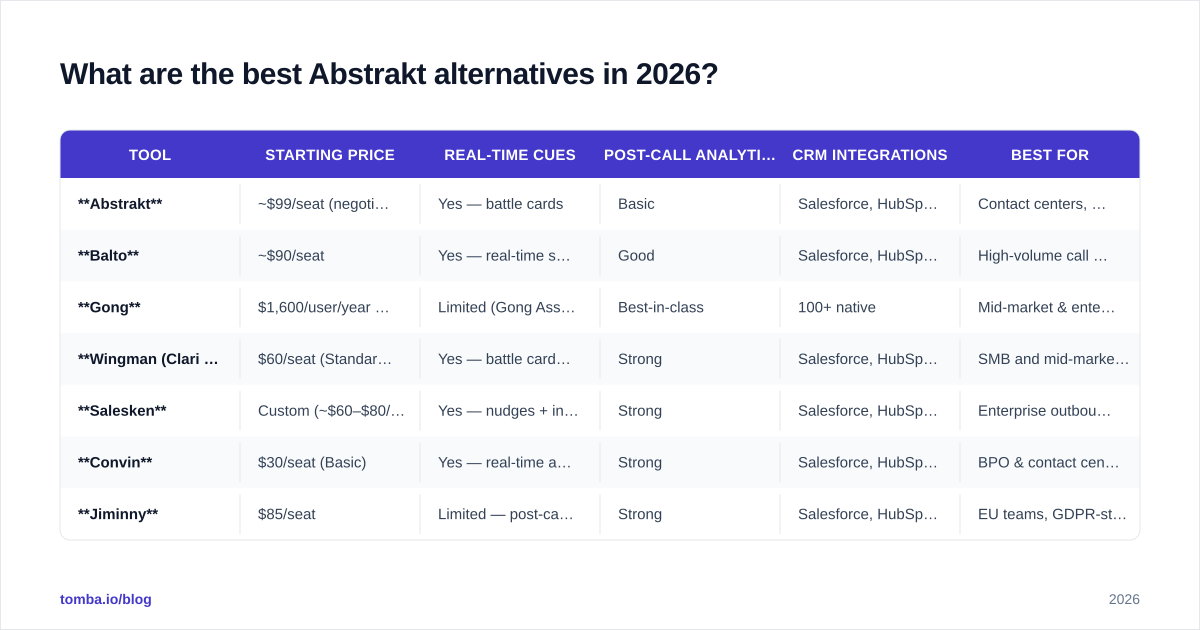
A few notes on this matrix. Gong looks expensive, but it replaces 3-4 separate tools (call recording, deal intelligence, forecasting, coaching). Convin is the cheapest entry point but skews toward BPO and customer service rather than complex B2B sales. Wingman's price jumped slightly after the Clari acquisition but it's still the best value for SaaS teams under 50 reps.
Is Balto the closest Abstrakt alternative?#
Yes, Balto is the most direct head-to-head replacement. Both tools were built around the same core premise: surface a card on the rep's screen the moment a trigger phrase fires. The differences:
- Scorecards. Balto's QA scorecards run in real time, so managers see a call quality score updating live. Abstrakt's QA is mostly post-call.
- Deck Studio. Balto's no-code playbook builder is more flexible. You can branch logic ("if the prospect says X, surface card A; if they say Y, surface card B") without involving an admin.
- Integrations. Balto plays nicer with cloud phone systems like Five9, Genesys, and NICE CXone — important if you're running an actual contact center.
- Pricing. Comparable, but Balto's published starter pricing is more transparent.
If your team's pain is "Abstrakt works, it's just expensive and the cards are static," Balto is the natural switch. If your pain is "we want deeper analytics and forecasting," skip to Gong or Wingman.
Is Gong overkill if you only need real-time coaching?#
Gong is the 800-pound gorilla of revenue intelligence. It's not purely a real-time coaching tool — Gong Assist is still in beta as of early 2026 — but it's where most growing sales teams end up because it answers questions Abstrakt simply doesn't: which deals are slipping, which reps' calls predict won opportunities, what topics correlate with closed-won.
When Gong makes sense:
- You're 25+ reps and have a real sales ops function.
- You care about deal-level forecasting and pipeline reviews.
- You want a single source of truth for every customer conversation across calls, email, and Slack.
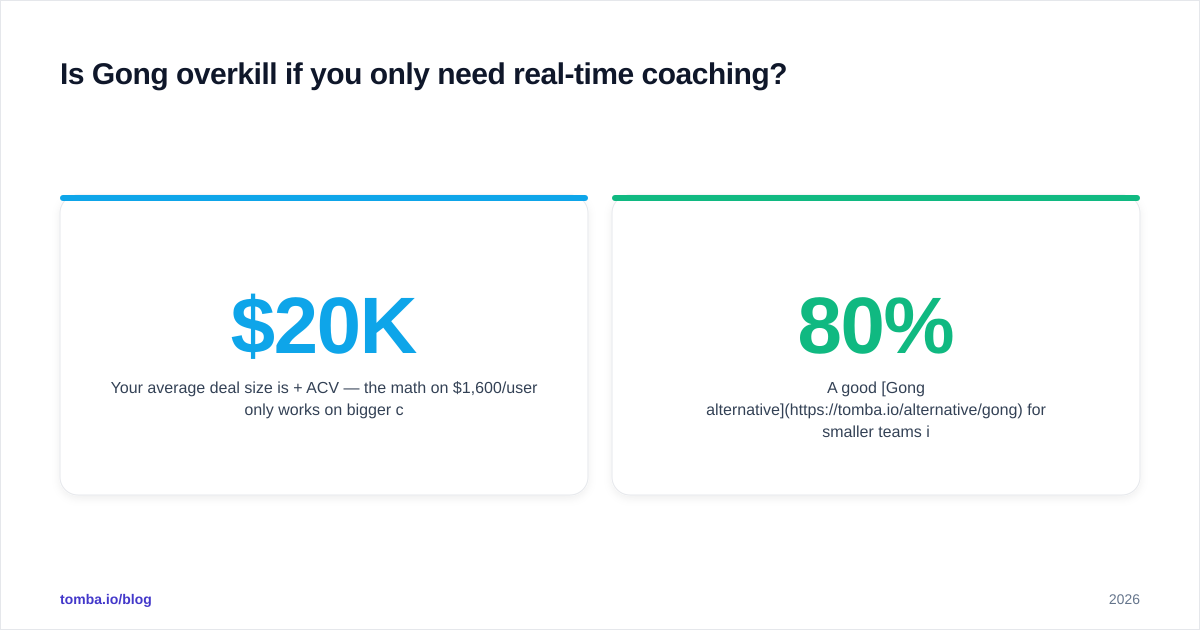
- Your average deal size is $20K+ ACV — the math on $1,600/user/year only works on bigger contracts.
When Gong is overkill:
- You're an SDR-heavy outbound team where every call is a 60-second pitch.
- You need on-call cues during the call, not insights two hours later.
- You're under 10 reps and don't have anyone to actually action Gong's recommendations.
A good Gong alternative for smaller teams is Wingman (now Clari Copilot), which gives you 80% of Gong's value at less than half the price.
How does Wingman / Clari Copilot compare?#
Wingman was acquired by Clari in 2022 and rebranded to Clari Copilot. The product is essentially Gong's little brother — same core capabilities (call recording, transcription, deal warnings, coaching) at SMB pricing.
What Wingman does well:
- Live battle cards. Closest direct replacement for Abstrakt's on-call assist.
- Monologue alerts. Pings the rep if they've been talking for more than 90 seconds straight. Genuinely changes behavior.
- Game tapes. Curated playlists of great calls for new-hire onboarding — better than Abstrakt's library feature.
- Native Salesforce sync. Logs calls, updates fields, attaches transcripts.
What's weaker than Gong:
- Forecasting is bolted on via the broader Clari platform, not native to the Copilot product.
- Fewer third-party integrations.
- Multi-language transcription accuracy lags Gong by ~5-8% on Romance languages.
For most SaaS teams between 5 and 50 reps, Wingman is the sweet spot of price-to-capability.
What about Salesken, Convin, and Jiminny?#
These three are worth a section because each fills a niche the others miss.
Salesken is enterprise-grade and India-headquartered. It's strong on intent classification and "cue cards" that fire mid-call. The pitch lands well with enterprise outbound orgs running shift-based teams. Custom pricing, so expect a procurement cycle.
Convin targets BPOs and customer-service-heavy operations. It's the cheapest tool on this list — Basic plans start at $30/seat — and it ships with real-time agent assist, automated QA, and conversation intelligence. If you're running a 200-seat contact center on a tight budget, Convin punches above its weight.
Jiminny is the European pick. GDPR-native, EU data residency, and strong Salesforce / HubSpot integrations. Less focus on real-time cues, more on post-call coaching workflow. Popular with UK and EU teams who can't put US-only vendors past procurement.

Is Dialpad Ai a hidden value play?#
Dialpad bundles AI coaching, transcription, and CRM logging into its core dialer plans starting at $35/seat. If you're already shopping for a cloud phone system, you may not need a separate coaching tool at all.
Where Dialpad Ai wins:
- Single vendor. Phone + AI + voicemail + SMS on one invoice.
- Live coach mode. Managers can whisper to reps without the prospect hearing.
- Built-in transcription. No bolt-on cost.
Where Dialpad Ai falls short:
- Battle cards are simpler than Abstrakt or Balto.
- Reporting is good for telephony, weaker for revenue intelligence.
- Best-fit for teams under 30 reps; large contact centers usually outgrow it.
How do you actually pick between these abstrakt alternatives?#
Use this decision framework. It's the same one we recommend internally when teams ask us to spec their outbound stack.
- Volume first. If you make 100+ calls per rep per day, you need real-time cues (Balto, Wingman, Convin, Dialpad). If you make 5-15 high-stakes demos a day, you need post-call analytics (Gong, Jiminny).
- Stack constraints. What CRM are you on? Which dialer? The friction of swapping either of those will dominate any feature debate. Match the tool to your existing Salesforce integration or HubSpot integration needs.
- Compliance scope. Healthcare, finance, EU customers? Jiminny and Salesken are GDPR-strong. Convin has HIPAA-compliant SKUs.
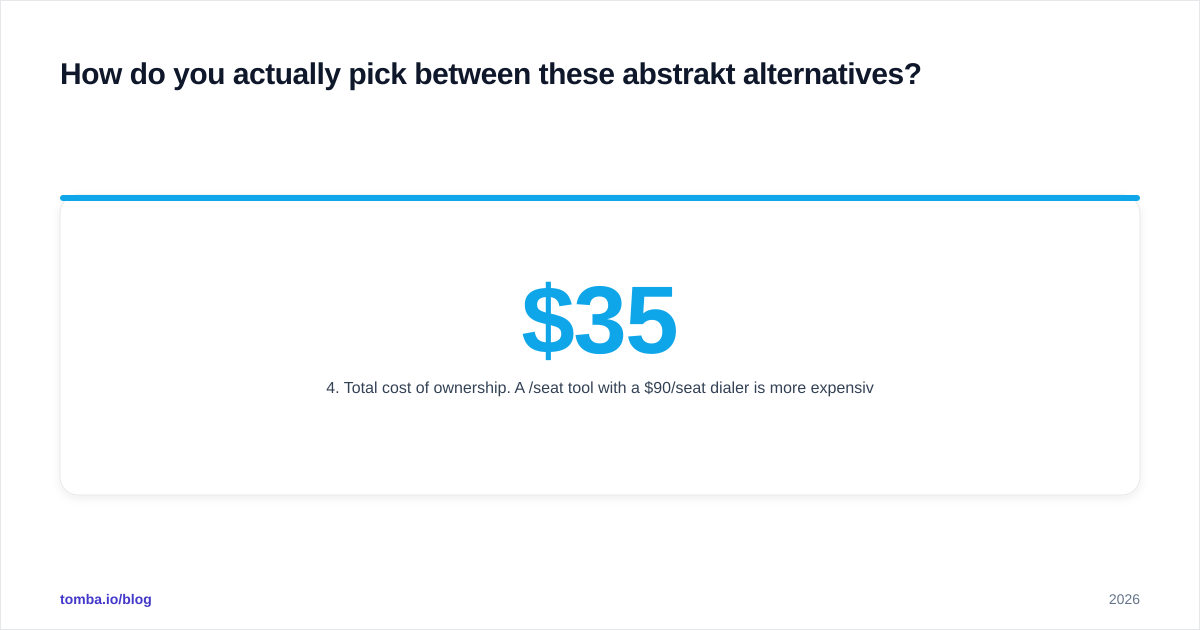
- Total cost of ownership. A $35/seat tool with a $90/seat dialer is more expensive than a $90/seat tool with a free dialer. Sum the line items.
- Pilot two, not five. Pick the top two from this matrix, run a 30-day pilot with five reps each, and measure connect-to-meeting conversion. Don't over-evaluate.
What about the data feeding these tools?#
Real-time coaching only helps after the rep is already on the phone. If the prospect didn't pick up — or worse, you're dialing the wrong person — Abstrakt, Balto, and Gong all sit idle.
Two leverage points before the call:
- Verified contact data. Bad numbers waste dials. Use a phone validator before any list goes into your dialer, and pair it with verified work emails from an email verifier so your multi-channel cadence actually lands.
- Persona research. The best battle cards in the world won't save a rep pitching the wrong message to the wrong title. Enrich every record with title, seniority, tech stack, and recent intent signals before the rep dials.
This is where companies like HubSpot and Salesloft sell the full stack — dialer plus coaching plus enrichment. If you're already paying for one piece, check whether the other pieces are bundled before adding another vendor.
Frequently asked questions#
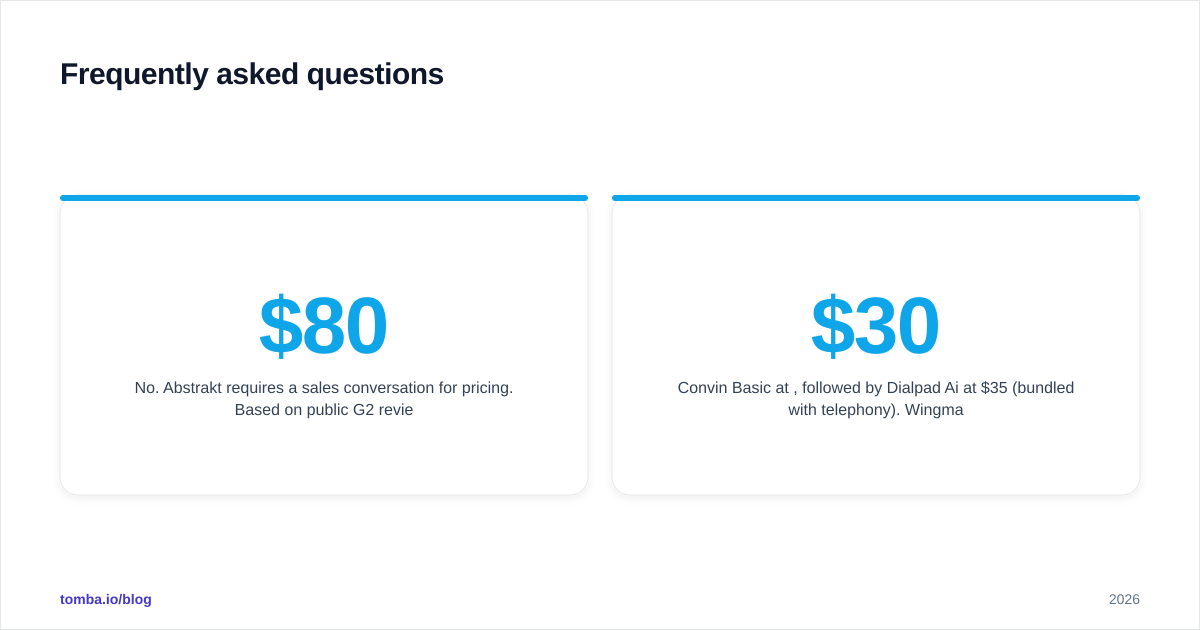
Is Abstrakt's pricing public? No. Abstrakt requires a sales conversation for pricing. Based on public G2 reviews and procurement records shared in /r/sales threads, expect $80–$120 per seat per month after negotiation, with annual commits required.
Which abstrakt alternative is the cheapest? Convin Basic at $30 per seat per month, followed by Dialpad Ai at $35 per seat per month (bundled with telephony). Wingman Standard at $60 is the best price-to-capability for B2B SaaS teams.
Does Gong have real-time coaching yet? Gong Assist is in limited release as of Q1 2026. It surfaces talk-track suggestions during calls, but feature parity with Balto or Abstrakt is still 12-18 months out per Gong's own roadmap.
Can I run Abstrakt and Gong together? Yes, and several enterprise teams do — Abstrakt for real-time cues, Gong for post-call intelligence and forecasting. Watch for transcript duplication in Salesforce and decide which tool owns the call object.
What if I only have 3 reps? Skip Gong and Abstrakt entirely. Use Dialpad Ai's bundled AI or Wingman's starter plan. The ROI math on enterprise revenue intelligence doesn't pencil under five seats.
Closing thoughts#
The right Abstrakt alternative depends on whether your bottleneck is mid-call cues, post-call analytics, or vendor consolidation. Balto and Wingman are the strongest direct swaps. Gong wins if you can absorb the price tag. Convin and Dialpad win on price.
Whichever you pick, make sure the contact data feeding your dialer is clean — coaching tools amplify good reps and good lists, but they can't save bad data. Start with Tomba's email finder to build a verified outbound list, then layer the coaching tool of your choice on top. That order matters: verified contacts first, AI cues second.
// get started
Find, verify and enrich your first contacts today
Start on the free plan with 25 searches a month, then scale when your team is ready.
Free plan · No credit card required · GDPR & CCPA
// about the author