ActiveCampaign Pricing Reviews, Pros and Cons: 2026 Buyer Guide
A no-spin breakdown of ActiveCampaign's 2026 pricing tiers, the real reviews behind the marketing, and where the pros outweigh the cons for B2B teams.
ActiveCampaign sells itself as the automation platform that grows with you. The catch is that the price grows with you too — and not in a straight line. Before you commit a year of budget, you need to know exactly what each tier costs, what real users complain about, and where the value curve bends.
TL;DR#
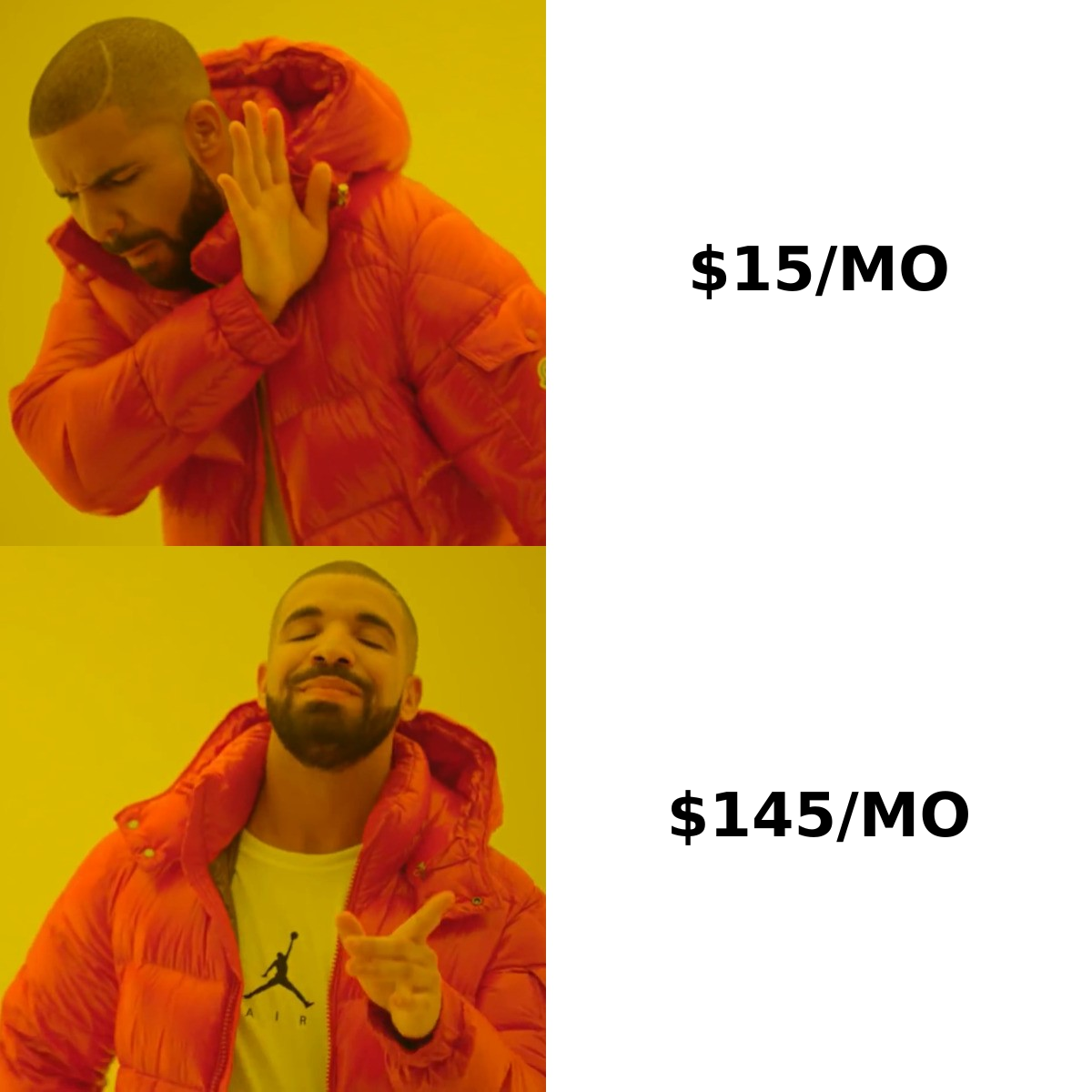
- ActiveCampaign starts cheap and scales steeply. The Starter plan opens around $15/mo, but contact-based billing and feature gating push serious B2B teams toward the $145/mo+ Pro and Enterprise tiers fast.
- The automation builder is the genuine reason to buy. Reviewers consistently rate the visual workflow engine and segmentation as best-in-class for the money.
- The biggest complaints are the learning curve and surprise renewal jumps as your contact count climbs.
- It is a marketing-automation tool, not a prospecting tool. ActiveCampaign nurtures contacts you already have; it does not find new ones.
- Best fit: mid-market teams that send a lot of behavior-triggered email and want CRM-lite automation without paying HubSpot prices.
What is ActiveCampaign and who is it for?#
ActiveCampaign is a marketing-automation and email platform with a built-in CRM. Think of it as the plumbing between a lead entering your database and that lead becoming a customer: it tags, scores, segments, and drips messages automatically based on what people do.
It serves three overlapping buyers:
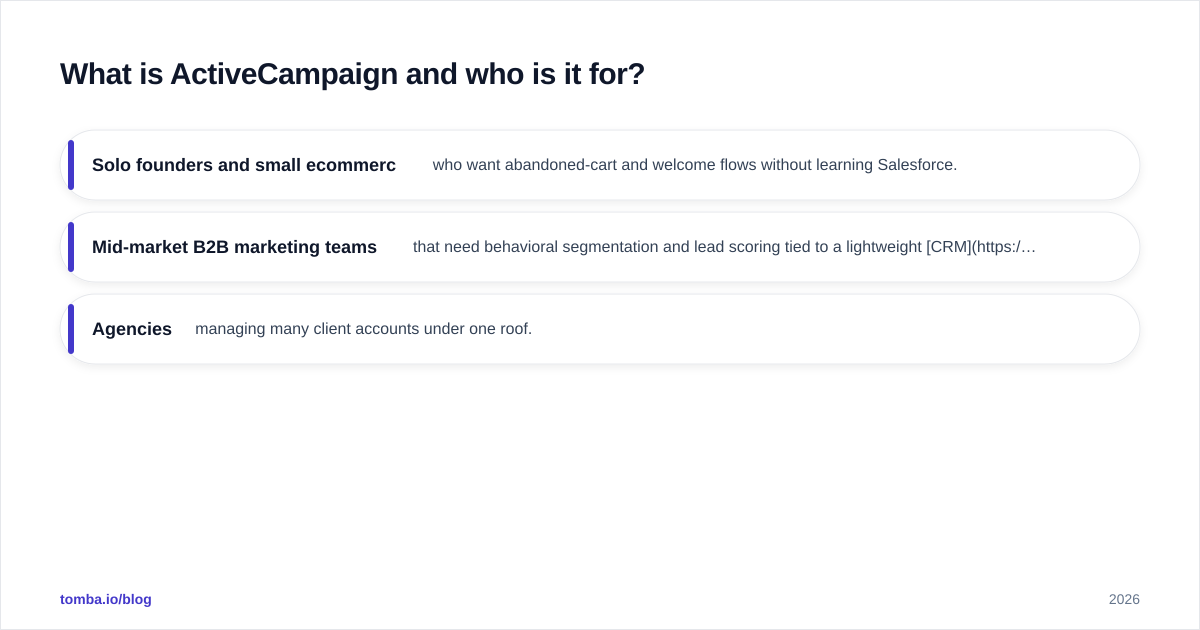
- Solo founders and small ecommerce shops who want abandoned-cart and welcome flows without learning Salesforce.
- Mid-market B2B marketing teams that need behavioral segmentation and lead scoring tied to a lightweight CRM.
- Agencies managing many client accounts under one roof.
What it is not is a source of new contacts. ActiveCampaign works the records already in your list. Filling that list — finding verified work emails for the companies you want to reach — is a separate job handled by an email finder, not an ESP. Keep that distinction in mind; it changes how you budget.
How much does ActiveCampaign cost in 2026?#
ActiveCampaign uses contact-based pricing, which is the single most important thing to understand. Your monthly bill is a function of two variables: which plan tier you pick and how many contacts sit in your account. The same plan can cost $15 or $400 depending on list size.
There are two product lines that often get confused:
- Marketing (email + automation, the classic product)
- Sales / bundles (adds the CRM, deals, and sales automation)
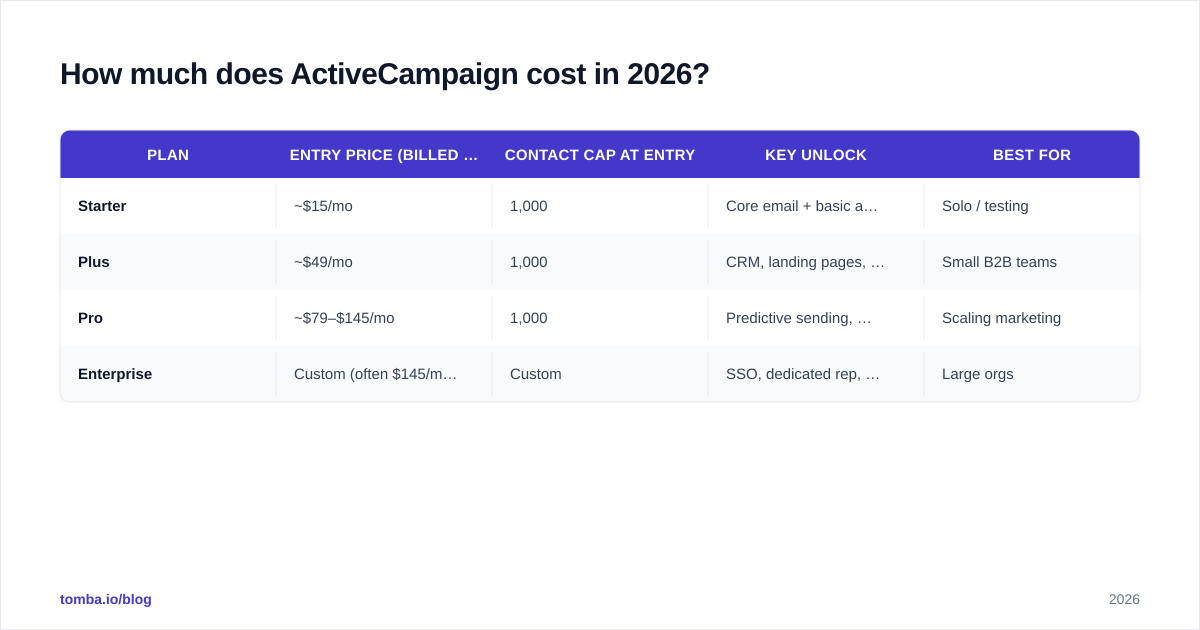
Here is the simplified Marketing tier structure most B2B buyers evaluate, priced at a small starting contact band and billed annually:
| Plan | Entry price (billed yearly) | Contact cap at entry | Key unlock | Best for |
|---|---|---|---|---|
| Starter | ~$15/mo | 1,000 | Core email + basic automation | Solo / testing |
| Plus | ~$49/mo | 1,000 | CRM, landing pages, lead scoring | Small B2B teams |
| Pro | ~$79–$145/mo | 1,000 | Predictive sending, attribution | Scaling marketing |
| Enterprise | Custom (often $145/mo+) | Custom | SSO, dedicated rep, custom objects | Large orgs |
Two things reviewers warn about repeatedly:
- Monthly billing costs roughly 25–40% more than the annual numbers above. The headline prices everyone quotes are the annual-commit prices.
- Crossing a contact tier re-prices the whole plan. Go from 1,000 to 2,500 contacts and every feature you use gets billed at the higher band. This is where the "my renewal doubled" reviews come from.
For a like-for-like sense of how subscription tools price by capability rather than by contact count, it is worth comparing against transparent per-seat models such as Tomba pricing, where the cost driver is searches, not stored records.
What do ActiveCampaign reviews actually say?#
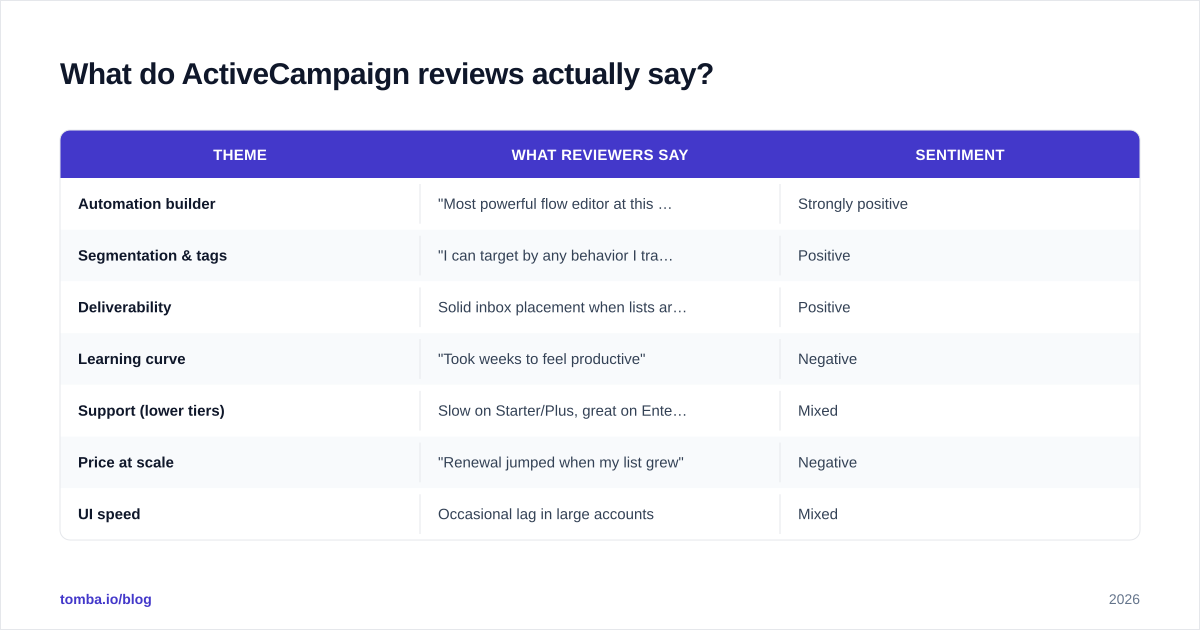
Strip away the affiliate blog noise and the consensus on independent review sites is consistent. On G2, ActiveCampaign holds a strong overall rating built largely on its automation depth, with the recurring criticism being onboarding difficulty.
Here is the pattern across thousands of reviews:
| Theme | What reviewers say | Sentiment |
|---|---|---|
| Automation builder | "Most powerful flow editor at this price" | Strongly positive |
| Segmentation & tags | "I can target by any behavior I track" | Positive |
| Deliverability | Solid inbox placement when lists are clean | Positive |
| Learning curve | "Took weeks to feel productive" | Negative |
| Support (lower tiers) | Slow on Starter/Plus, great on Enterprise | Mixed |
| Price at scale | "Renewal jumped when my list grew" | Negative |
| UI speed | Occasional lag in large accounts | Mixed |
The takeaway: people who invest the ramp-up time love it; people who expected a plug-and-play tool churn. ActiveCampaign rewards teams with a dedicated owner for marketing ops.
What are the pros of ActiveCampaign?#
1. The automation engine is the real product. You can build branching, behavior-triggered journeys — if a contact opens this, waits three days, and visits pricing, then assign a task to a rep — without code. Few tools in this price bracket match it.
2. CRM and email live in one place. On Plus and above you get a usable sales CRM with deal pipelines and sales automation. For small teams, that removes a whole separate subscription.
3. Deep segmentation and lead scoring. Tag contacts by any tracked event and score them so reps chase the warmest leads first. This feeds directly into lead management and scoring workflows.
4. Strong deliverability fundamentals. When your list is clean, inbox placement is reliable. That "when" matters — see the cons.
5. Generous integration ecosystem. Native connectors plus Zapier mean it slots into most stacks. If you already run HubSpot or Pipedrive, you can bridge data, and tools like the Tomba HubSpot integration show how enrichment data can flow alongside it.
What are the cons of ActiveCampaign?#
1. The price curve is steep and a little sneaky. Contact-based billing means costs you cannot fully predict. A successful lead-gen quarter that adds 5,000 contacts can raise your bill before those contacts convert. Budget for the tier above where you start.
2. The learning curve is real. The power that reviewers love is the same thing that overwhelms newcomers. Expect two to four weeks before your team is fluent.
3. Features are gated upward aggressively. Lead scoring, predictive sending, and attribution sit on higher tiers. The cheap Starter plan is genuinely limited for B2B.
4. Support quality tracks your spend. Lower-tier support is documentation-heavy and slow. Priority help effectively starts at Pro/Enterprise.
5. It does nothing to fill your list. This is the big one for outbound teams. ActiveCampaign assumes contacts arrive somehow. If your growth depends on net-new accounts, you still need a way to source and verify those emails before they ever hit a workflow.
How does ActiveCampaign compare to the alternatives?#
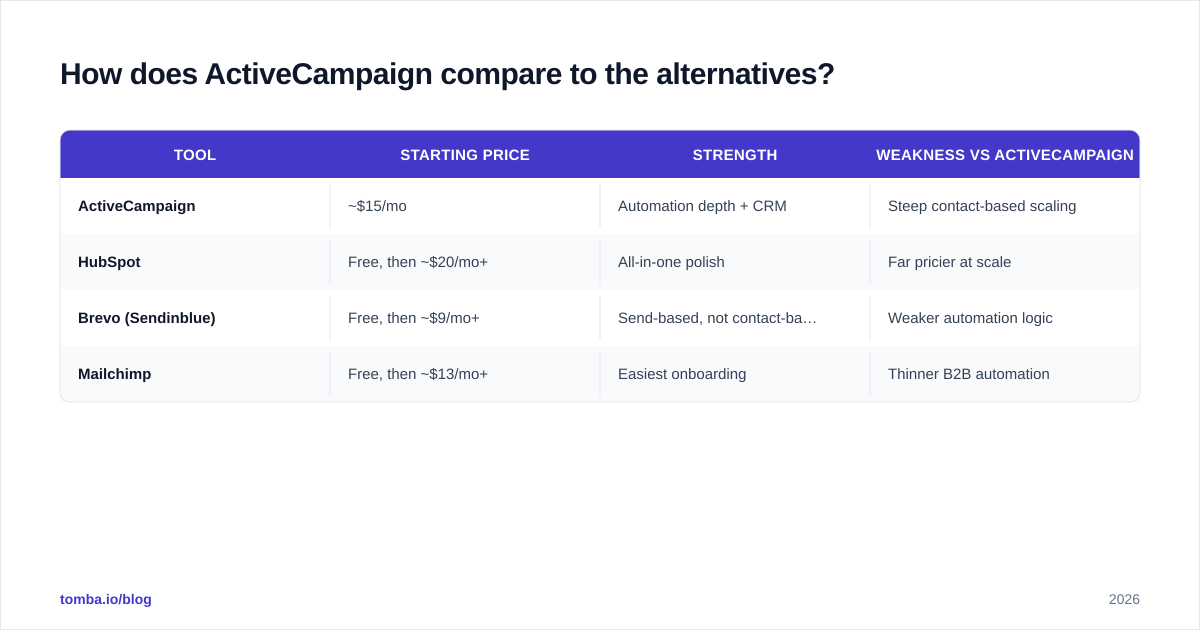
The honest framing: ActiveCampaign sits between cheap blast-email tools and full enterprise suites. Here is where it lands against the names buyers shortlist alongside it.
| Tool | Starting price | Strength | Weakness vs ActiveCampaign |
|---|---|---|---|
| ActiveCampaign | ~$15/mo | Automation depth + CRM | Steep contact-based scaling |
| HubSpot | Free, then ~$20/mo+ | All-in-one polish | Far pricier at scale |
| Brevo (Sendinblue) | Free, then ~$9/mo+ | Send-based, not contact-based | Weaker automation logic |
| Mailchimp | Free, then ~$13/mo+ | Easiest onboarding | Thinner B2B automation |
If you want the all-in-one route, HubSpot's marketing pricing is the obvious comparison — more polished, materially more expensive. If price predictability matters more than automation power, send-based tools like Brevo bill on emails sent rather than contacts stored, which suits big lists that email infrequently.
But all of these share ActiveCampaign's blind spot: they nurture, they do not prospect. None of them tell you the verified email of the VP of Marketing at the 200 accounts you want to land this quarter.
Where does ActiveCampaign fit in a B2B stack?#
Think of your stack in three layers, and ActiveCampaign only owns the middle one:
- Source — find and verify net-new contacts (prospecting layer)
- Nurture — segment, score, and automate journeys (ActiveCampaign)
- Close — pipeline, deals, forecasting (CRM, partly ActiveCampaign on Plus+)
The mistake teams make is treating ActiveCampaign as the top of the funnel. It is not. You feed it. The cleaner and more verified the contacts you feed in, the better its deliverability and the lower your wasted sends — which, on contact-based billing, is literally money.
That sourcing layer is where a dedicated tool earns its keep. Use a domain search to pull the right contacts at a target company, run them through an email verifier so you are not paying ActiveCampaign to store dead addresses, and enrich the records with data enrichment before they ever enter an automation. Clean input is the cheapest deliverability upgrade you can buy.
Is ActiveCampaign worth it in 2026?#
Yes — if you are a mid-market team that lives in automation and has someone to own it. The flow builder, segmentation, and built-in CRM deliver more capability per dollar than HubSpot at the small-to-mid range, and the deliverability is solid.
No — if you want plug-and-play, or if your growth is outbound-led. Beginners get overwhelmed, and outbound teams will spend more time wishing it could find contacts than enjoying its automation.
Score it like this:
- Automation power: 9/10
- Ease of use: 6/10
- Price transparency: 5/10
- Value at scale: 6/10
- Fit for outbound B2B: 4/10 (it is the wrong layer)
The bottom line#
ActiveCampaign is a strong nurture engine with a pricing model that punishes inattention and a feature set that assumes your contacts already exist. Buy it for the automation, budget one tier above where you start, and do not expect it to grow your list.
That growth job belongs upstream. Before a single contact reaches an ActiveCampaign workflow, you need verified, accurate emails for the accounts you actually want — and that is exactly what the Tomba Email Finder does. Find professional email addresses by domain, name, or company, verify them, and feed only clean, deliverable contacts into your automation so every send counts. Start free with 25 searches a month, then scale on transparent plans that bill on what you search — not on how big your list happens to grow.
// get started
Find, verify and enrich your first contacts today
Start on the free plan with 25 searches a month, then scale when your team is ready.
Free plan · No credit card required · GDPR & CCPA
Get the Tomba newsletter
Product and data updates
// about the author