ActiveCampaign vs SharpSpring 2026: Which Is Better?
A neutral, hands-on breakdown of ActiveCampaign vs SharpSpring in 2026 — pricing, automation depth, CRM, and which platform fits your team.
Choosing between ActiveCampaign and SharpSpring is really a choice between two philosophies: a self-serve automation platform built to scale from solo founder to mid-market, versus an agency-first CRM-and-marketing suite now sold under the Constant Contact banner. Both can run your email, nurture your leads, and score your pipeline. They just assume very different buyers.
This is a neutral, practitioner-level comparison. No marketing fluff — just where each tool actually wins, where it frustrates people, and how to pick without regretting it six months in.
TL;DR: ActiveCampaign vs SharpSpring at a glance#
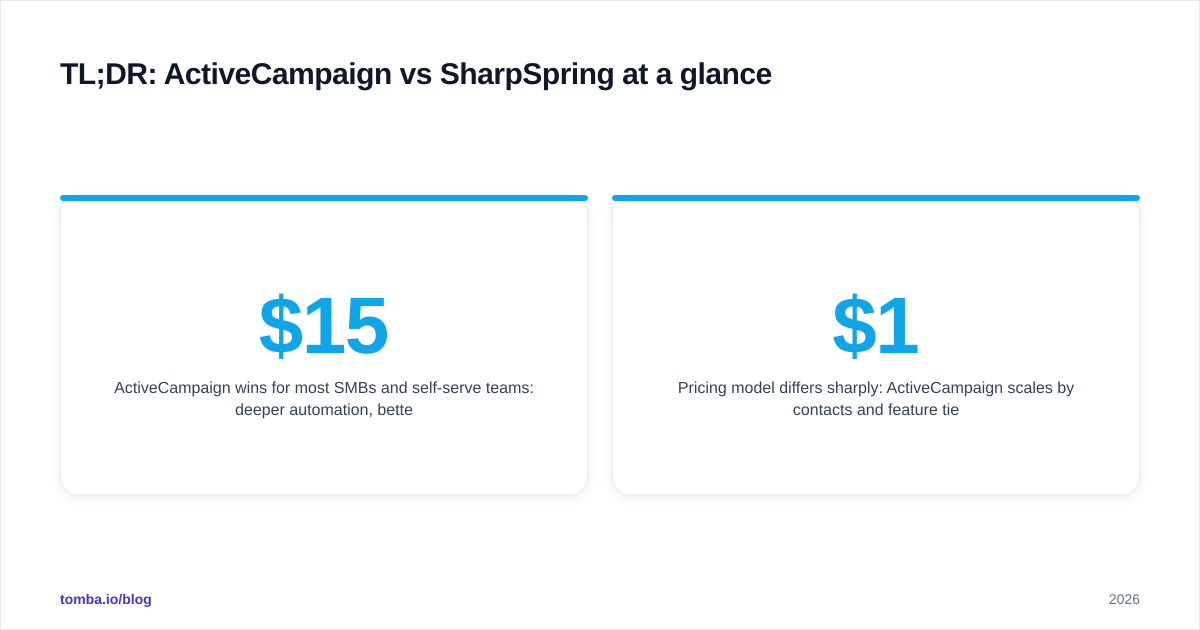
- ActiveCampaign wins for most SMBs and self-serve teams: deeper automation, better deliverability reputation, a cleaner learning curve, and transparent monthly pricing starting around $15–$49/mo.
- SharpSpring (now Constant Contact Lead Gen & CRM) is built for agencies managing many client accounts, with a built-in CRM, flat pricing, and white-label/rebilling options.
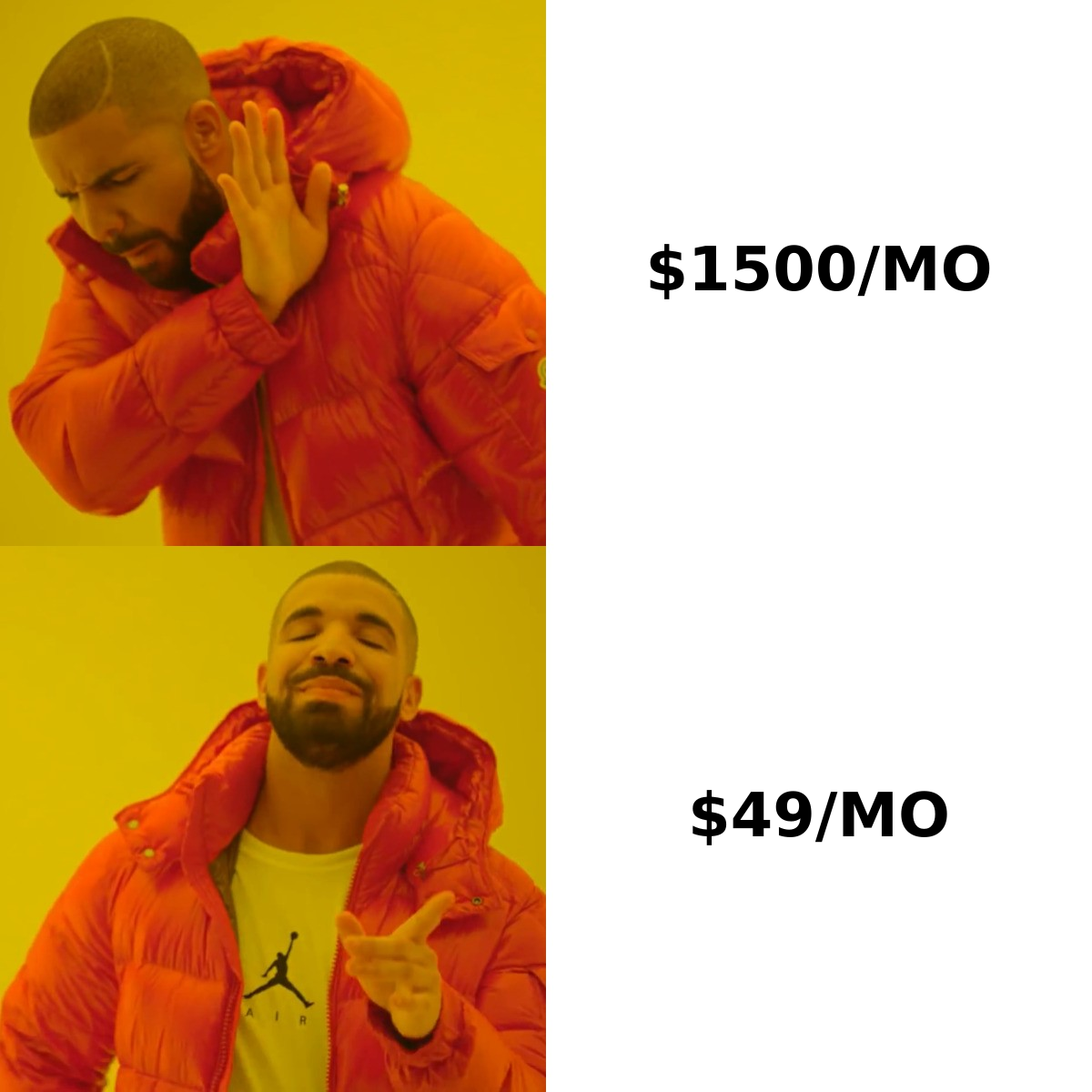
- Pricing model differs sharply: ActiveCampaign scales by contacts and feature tier; SharpSpring historically sold annual agency contracts in the ~$1,000–$1,500/mo range with unlimited users.
- Automation depth favors ActiveCampaign; agency account management and rebilling favor SharpSpring.
- Whichever you pick, your results depend on clean contact data going in — bad emails sink both platforms.
What is ActiveCampaign?#
ActiveCampaign is a marketing automation and email platform aimed at small and mid-sized businesses that want to run sophisticated nurture sequences without enterprise overhead. It started as an email tool and grew into "customer experience automation" — email, SMS, a lightweight CRM, site tracking, and a visual automation builder that's become its signature feature.
The pitch is approachability with depth. You can launch a welcome series in an afternoon, then layer on conditional branching, lead scoring, and predictive sending as you mature. It's self-serve: most teams onboard without a paid implementation partner.
You can see the platform and tiers on the official ActiveCampaign site, and real-user sentiment on G2.
What is SharpSpring?#
SharpSpring launched as a marketing automation platform priced and packaged specifically for agencies and resellers. In 2021 it was acquired by Constant Contact, and the product now lives under the name Constant Contact Lead Gen & CRM. If you read older comparison posts that still say "SharpSpring," they're describing the same lineage.
Its differentiators were always commercial, not just technical: flat monthly pricing with unlimited users, a built-in CRM and sales pipeline, white-labeling so agencies could present it as their own, and rebilling so agencies could mark it up to clients. The platform bundles email, landing pages, forms, dynamic content, and a sales CRM into one contract.
The trade-off is that the buying experience is sales-led, contracts are typically annual, and the UI carries more legacy weight than newer self-serve tools. You can review the current product on the Constant Contact site and user reviews on Capterra.
ActiveCampaign vs SharpSpring: full comparison table#
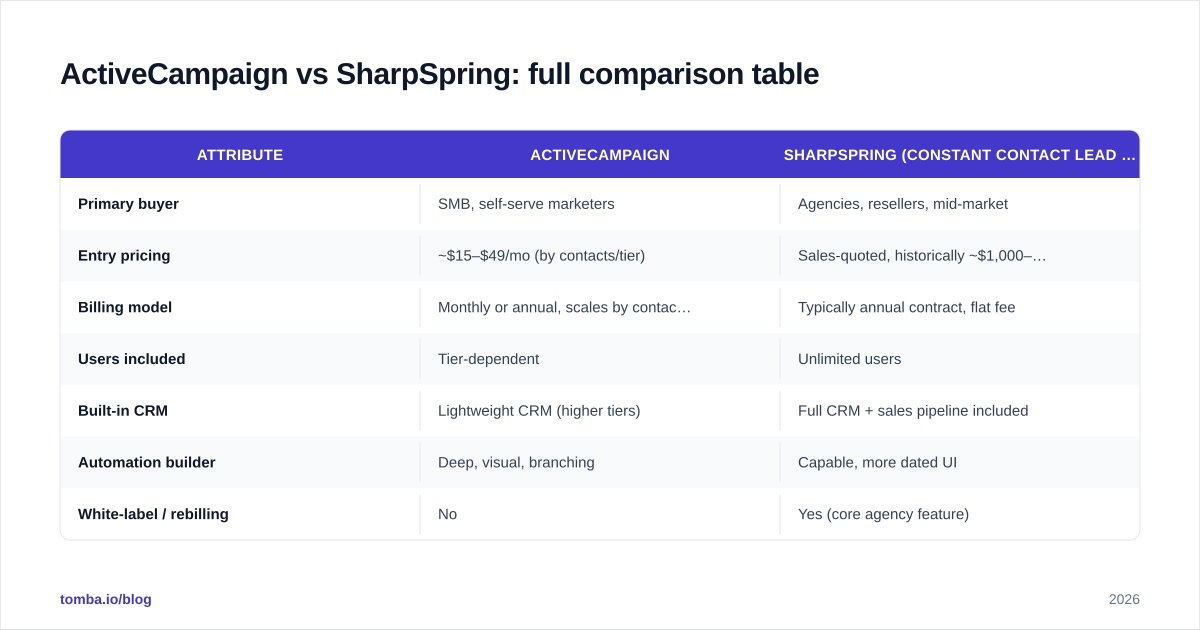
| Attribute | ActiveCampaign | SharpSpring (Constant Contact Lead Gen & CRM) |
|---|---|---|
| Primary buyer | SMB, self-serve marketers | Agencies, resellers, mid-market |
| Entry pricing | ~$15–$49/mo (by contacts/tier) | Sales-quoted, historically ~$1,000–$1,500/mo |
| Billing model | Monthly or annual, scales by contacts | Typically annual contract, flat fee |
| Users included | Tier-dependent | Unlimited users |
| Built-in CRM | Lightweight CRM (higher tiers) | Full CRM + sales pipeline included |
| Automation builder | Deep, visual, branching | Capable, more dated UI |
| White-label / rebilling | No | Yes (core agency feature) |
| Landing pages & forms | Yes | Yes |
| SMS marketing | Yes (add-on) | Limited |
| Learning curve | Moderate, self-serve | Steeper, onboarding-assisted |
| Best-known strength | Automation depth + deliverability | Agency multi-account management |
Is ActiveCampaign better than SharpSpring?#
For most non-agency teams, yes — but "better" depends entirely on who's buying.
If you're a startup, e-commerce brand, B2B SaaS, or in-house marketing team, ActiveCampaign almost always feels lighter and more modern. The automation builder is genuinely best-in-class for the price, the deliverability reputation is strong, and you don't sign an annual contract to get started. You grow into complexity instead of paying for it upfront.
If you're an agency managing ten, twenty, or fifty client accounts, the math flips. SharpSpring's unlimited users, flat pricing, white-labeling, and rebilling were designed for exactly that motion. Trying to run a 30-client book on ActiveCampaign means juggling separate accounts and per-account contact billing, which gets expensive and messy fast.
So the honest answer: ActiveCampaign is the better product for self-serve marketers; SharpSpring is the better business model for agencies.
How does pricing compare?#
This is where the two diverge most.
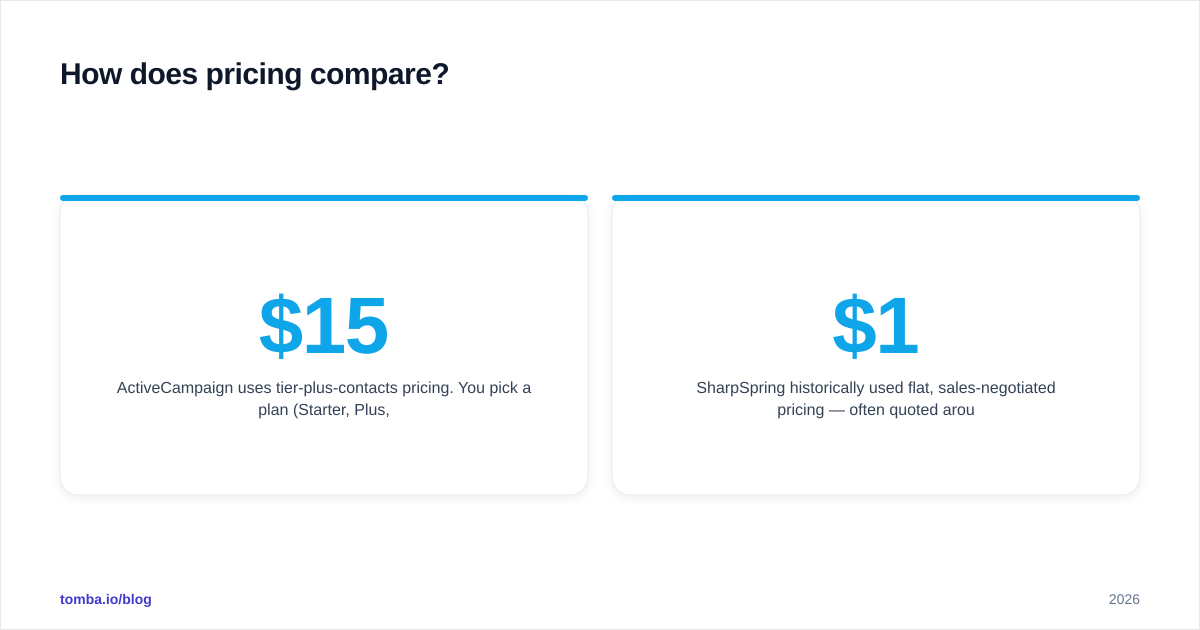
ActiveCampaign uses tier-plus-contacts pricing. You pick a plan (Starter, Plus, Pro, Enterprise — names shift over time) and pay more as your contact list grows. A small list on the entry tier can start in the $15–$49/mo range, which makes it accessible for testing. The downside: costs climb as your list and feature needs grow, and some automation features are gated to higher tiers.
SharpSpring historically used flat, sales-negotiated pricing — often quoted around $1,000–$1,500/mo on annual terms, with unlimited users and the full CRM included. For a single small business that price is steep. For an agency reselling to 20 clients, it's a rounding error per account. The catch is the annual commitment and the sales call required to get a real number.
A quick rule of thumb: if you can't fill a CRM with multiple client accounts, ActiveCampaign's pay-as-you-grow model will almost always be cheaper. If you can, SharpSpring's flat fee amortizes beautifully.
Which has better automation and CRM?#
Automation: ActiveCampaign. Its visual builder handles deep branching, conditional logic, split testing, event triggers, and predictive features with a UI that stays legible even when workflows get complex. SharpSpring's automation is competent and covers the common nurture and lead-scoring use cases, but the interface feels older and power users hit ceilings sooner.
CRM: SharpSpring. A real sales pipeline, deal stages, and contact management ship in the box. ActiveCampaign's CRM exists but is intentionally lightweight — fine for solo sellers and simple pipelines, underpowered if your sales team lives in the CRM all day. Many ActiveCampaign users pair it with a dedicated CRM like HubSpot or Pipedrive instead.
If sales and marketing must share one system and you don't want a separate CRM subscription, SharpSpring's bundling is a genuine advantage. If marketing automation is the priority and sales already has its own tools, ActiveCampaign's depth wins.
What about email deliverability?#
Both platforms can deliver well, but ActiveCampaign carries a stronger reputation among practitioners for inbox placement, largely because of its scale and infrastructure investment. SharpSpring is serviceable, especially now under Constant Contact's deliverability resources.
Here's the part both vendors gloss over: deliverability starts with your list, not the platform. Sending to stale, mistyped, or fabricated addresses tanks your sender reputation no matter how good the ESP is. Hard bounces and spam traps follow bad data into either tool.
That's why teams running serious outbound clean their lists before import. Use an email verifier to strip invalid and risky addresses, and if you're building lists from scratch, a reliable email finder gives you verified contacts instead of guesses. Garbage in, garbage out applies to every automation platform ever built.
Who should choose SharpSpring?#
Pick SharpSpring (Constant Contact Lead Gen & CRM) if you:
- Run a marketing agency and need to manage many client accounts under one contract.
- Want white-labeling and rebilling to present the platform as your own and mark it up.
- Need a built-in CRM and sales pipeline without buying a separate tool.
- Prefer flat pricing with unlimited users over per-contact scaling.
- Are comfortable with an annual commitment and a guided onboarding.
The agency features are not a marketing gimmick — they're a real operational moat that ActiveCampaign simply doesn't try to match.
Who should choose ActiveCampaign?#
Pick ActiveCampaign if you:
- Are an in-house team, startup, or e-commerce brand running your own marketing.
- Want the deepest automation builder in this price range.
- Prefer self-serve onboarding and monthly billing without a sales call.
- Value deliverability and a modern, frequently-updated interface.
- Already have a dedicated CRM (or only need a lightweight one).
For the majority of buyers who aren't agencies, this is the default recommendation — and the one most independent reviews on G2 land on too.
How do you migrate or run both?#
You don't usually run both — they overlap too much. The realistic decision is a one-time migration, and the friction is almost always the data, not the features.
Before you move lists into either platform:
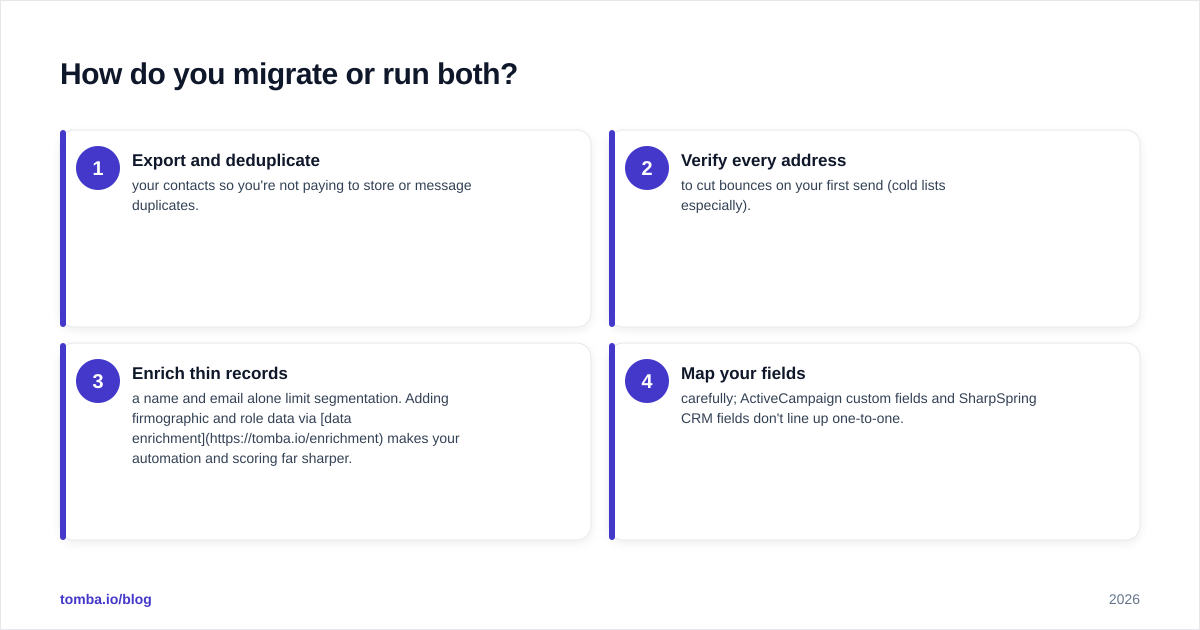
- Export and deduplicate your contacts so you're not paying to store or message duplicates.
- Verify every address to cut bounces on your first send (cold lists especially).
- Enrich thin records — a name and email alone limit segmentation. Adding firmographic and role data via data enrichment makes your automation and scoring far sharper.
- Map your fields carefully; ActiveCampaign custom fields and SharpSpring CRM fields don't line up one-to-one.
Teams that skip the verification step inherit their old list's problems — and a brand-new platform gets blamed for deliverability issues that were baked into the data all along. Check Tomba pricing if you need to clean or build a list before migrating.
The bottom line#
ActiveCampaign and SharpSpring solve overlapping problems for different buyers. ActiveCampaign is the stronger self-serve automation platform — deeper workflows, better deliverability reputation, transparent pricing, modern UI. SharpSpring, now Constant Contact Lead Gen & CRM, is the stronger agency play — unlimited users, built-in CRM, white-labeling, rebilling, and flat pricing that rewards multi-account management.
Decide on identity first: are you an agency or an in-house team? That single question resolves most of the debate before you compare a single feature.
And remember the unglamorous truth underneath both: every automation, score, and segment is only as good as the contact data feeding it. Before you commit to either platform, build and verify a clean list. Tomba's Email Finder gives you accurate, verified B2B contacts by domain, name, or company — so whichever platform you choose, it starts with data worth automating. Spin up the free tier (25 searches/mo), find your prospects, and import a list that actually lands in the inbox.
// get started
Find, verify and enrich your first contacts today
Start on the free plan with 25 searches a month, then scale when your team is ready.
Free plan · No credit card required · GDPR & CCPA
// about the author