Adaptio vs Go4database: Which B2B Data Tool Wins in 2026?
Adaptio and Go4database both sell B2B contact data, but they solve different problems. Here's a neutral breakdown of accuracy, coverage, pricing, and compliance for 2026.
Choosing a B2B data vendor is really a choice about how your contact records get made, refreshed, and proven correct. This Adaptio vs Go4database comparison breaks down the real differences without the sales gloss. Both tools promise to hand you accounts and contacts. But they sit at opposite ends of the spectrum. Read on to see where a verification-first tool fits.
TL;DR#
- Adaptio leans toward dynamic, signal-driven prospecting data. Think intent, firmographics, and on-demand enrichment for teams that want to act on fresh signals.
- Go4database is built around pre-packaged, industry-segmented contact and email lists you buy in bulk. It works much like a traditional list broker.
- Accuracy is the deciding factor. Any list decays 2–3% per month, no matter how big. So verifying data at the point of use beats raw volume.
- Pricing models differ. Adaptio is usually subscription- or credit-based. Go4database sells per-list or per-record packages.
- If your real goal is deliverable email, pair either source with a dedicated email verifier. Or skip the static list and use a live email finder.
What are Adaptio and Go4database?#
Adaptio positions itself as a modern go-to-market data layer. Think firmographic and technographic attributes, buying-intent signals, and enrichment you call when a lead enters your CRM. The pitch is timeliness. The data reflects a company today and surfaces when a prospect shows interest. That way reps work accounts that are actually in-market.
Go4database is a B2B contact and email database vendor in the list-provider tradition. You browse or request lists by industry, job title, technology, or geography. Then you receive a file of records — names, company details, and email addresses — to load into your outreach tools. The value proposition is breadth and speed: large, segmented datasets available right away.
The mental model matters here. Adaptio is like a faucet you turn on when you need fresh water. Go4database is like a water tank you fill once and draw from over time. Tanks are handy until the water sits long enough to go stale. That is exactly the problem with any static B2B list.
Adaptio vs Go4database: how do they compare?#
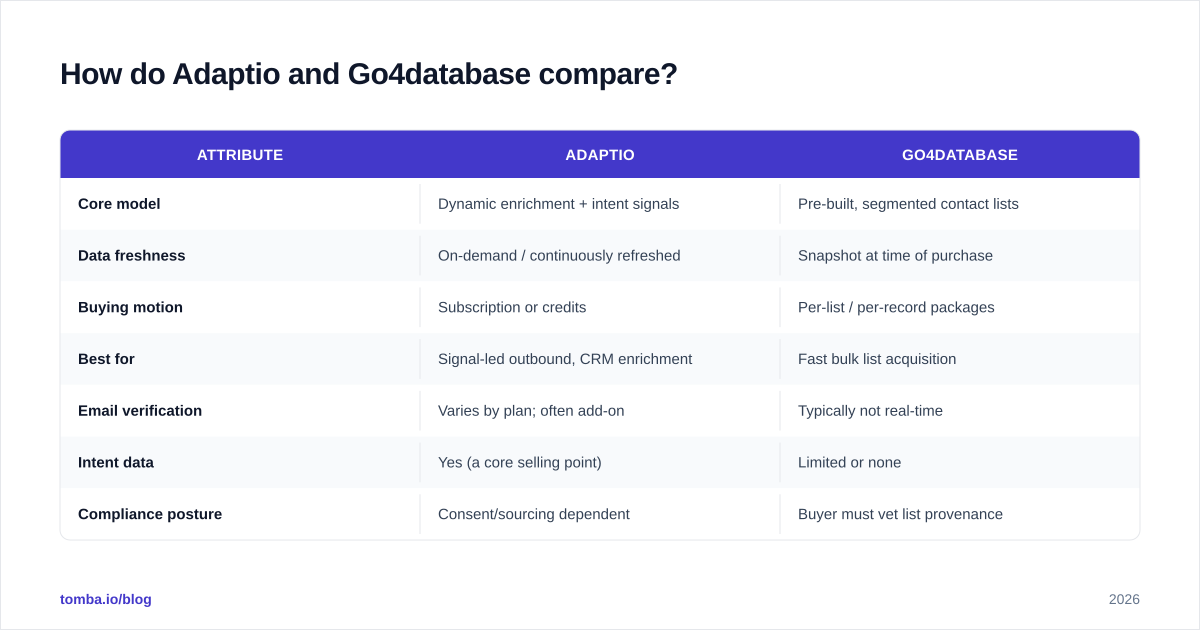
Here is the side-by-side on the attributes that change your day-to-day workflow and your deliverability.
| Attribute | Adaptio | Go4database |
|---|---|---|
| Core model | Dynamic enrichment + intent signals | Pre-built, segmented contact lists |
| Data freshness | On-demand / continuously refreshed | Snapshot at time of purchase |
| Buying motion | Subscription or credits | Per-list / per-record packages |
| Best for | Signal-led outbound, CRM enrichment | Fast bulk list acquisition |
| Email verification | Varies by plan; often add-on | Typically not real-time |
| Intent data | Yes (a core selling point) | Limited or none |
| Compliance posture | Consent/sourcing dependent | Buyer must vet list provenance |
| Ramp time | Setup + integration | Near-instant file delivery |
A few honest caveats. Vendor feature sets shift every quarter. Both companies publish marketing claims that outrun independent testing. Always check third-party reviews on G2 or Capterra. Then run your own sample test before you commit budget. A 200-record trial you verify by hand tells you more than any datasheet.
Is Adaptio better than Go4database?#
It depends on whether your bottleneck is finding accounts or acting on them. Neither tool is universally "better." They simply optimize for different jobs.
Adaptio wins when:
- You run a signal-led outbound motion and want to prioritize in-market accounts.
- Your CRM is the system of record and you need fields enriched the moment a lead arrives.
- You care about technographics (what stack a company runs) to qualify fit.
Go4database wins when:
- You need a large, segmented list today for a specific campaign.
- Your team is comfortable cleaning and verifying records before send.
- Budget predictability per campaign matters more than continuous refresh.
The trap with both is treating delivered data as deliverable data. A record can be perfectly accurate about a person's role and still bounce. They may have changed jobs last month. That gap — between "correct on paper" and "lands in the inbox" — is where most cold campaigns quietly burn sender reputation.
Why does data accuracy beat data volume?#
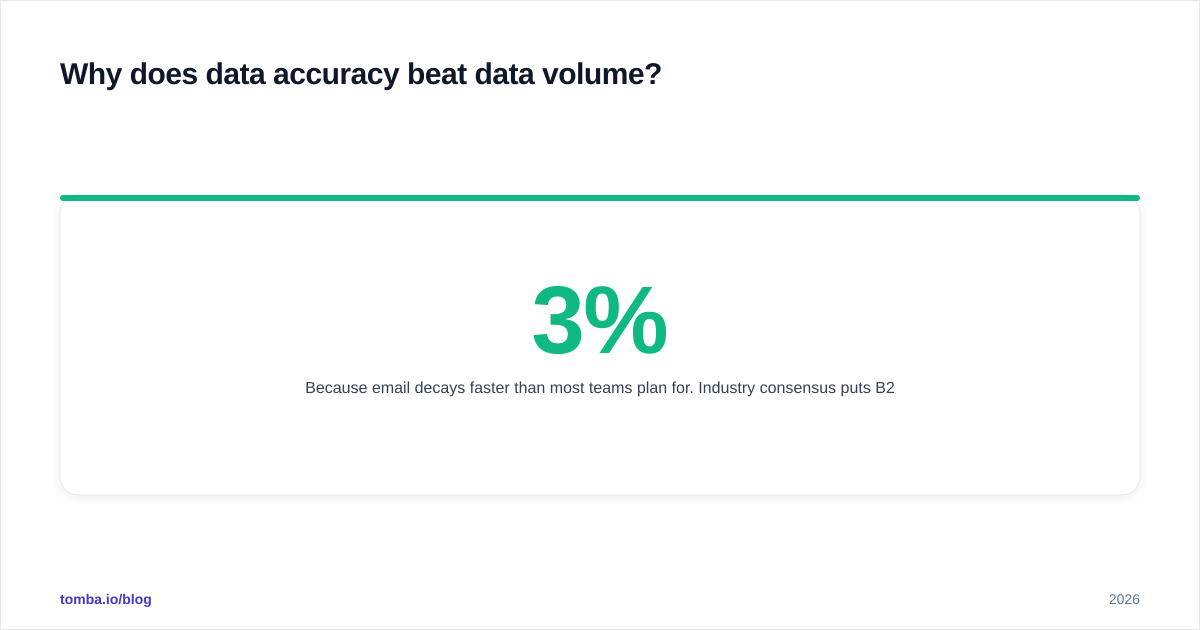
Because email decays faster than most teams plan for. Industry consensus puts B2B contact data decay at roughly 2–3% per month. That is about 25–30% per year, driven by job changes, company moves, and domain switches. A 100,000-record list you bought in January is much worse by June, even if it was 95% accurate on day one.
This is the core weakness of any list-first vendor like Go4database. It is also a risk for enrichment platforms if their sources aren't re-checked. Volume is cheap. Verified, current volume is the expensive part. It is also the part that actually protects your email deliverability.
The practical fix is a two-step discipline:
- Source the contact (from Adaptio, Go4database, or a live finder).
- Verify every address right before it enters a sequence, and re-verify anything older than ~30 days.
That second step is non-negotiable for cold outbound. Skip it and teams end up on blocklists, wondering why open rates cratered. If you want the mechanics, the way Tomba sources and refreshes records is documented on its data sources page.
What about compliance and data provenance?#
Provenance is the question that should keep you up at night, not coverage. Under GDPR and CCPA, the buyer of B2B data shares responsibility for how that data was collected. You also need a lawful basis to contact someone. A vendor handing you a giant list does not transfer that liability away from you.
When you evaluate either tool, ask for specifics:
- Where does the data come from (public sources, opt-in, partnerships, scraping)?
- Is there a documented lawful basis for processing EU contacts?
- Can a record be traced to its source and an opt-out be honored?
- How quickly are deletion requests propagated?
List-broker models tend to be opaque here. That is why a buyer-beware posture is wise with any bulk-list vendor. Enrichment platforms vary widely. For a neutral primer on the rules, Wikipedia's GDPR overview is a reasonable starting point before you talk to legal.
The point isn't that one vendor is compliant and the other isn't. It is that you must verify provenance, no matter whose logo is on the invoice.
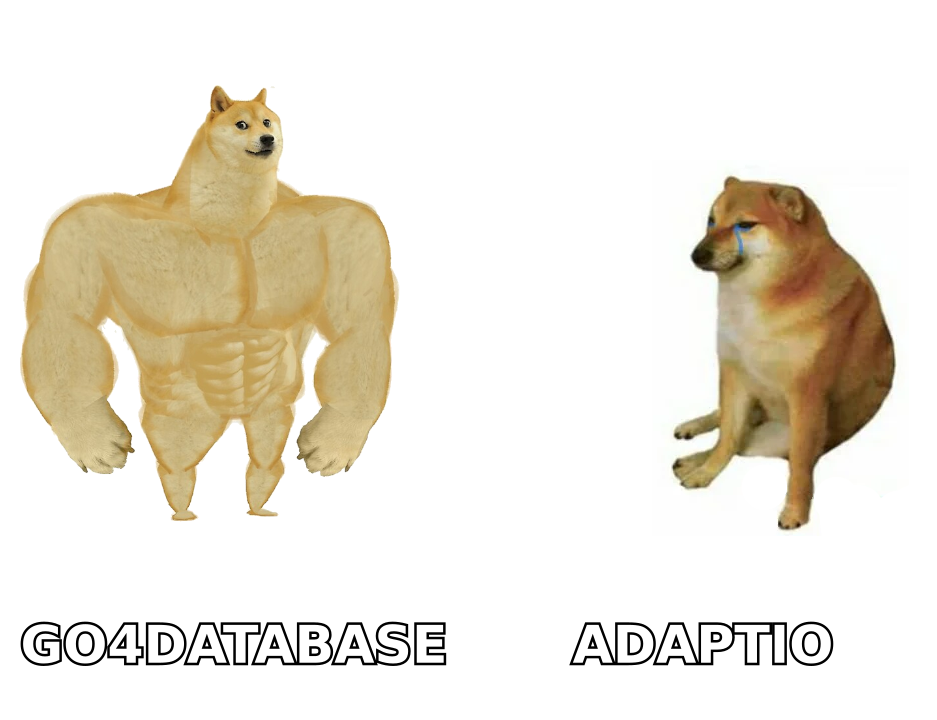
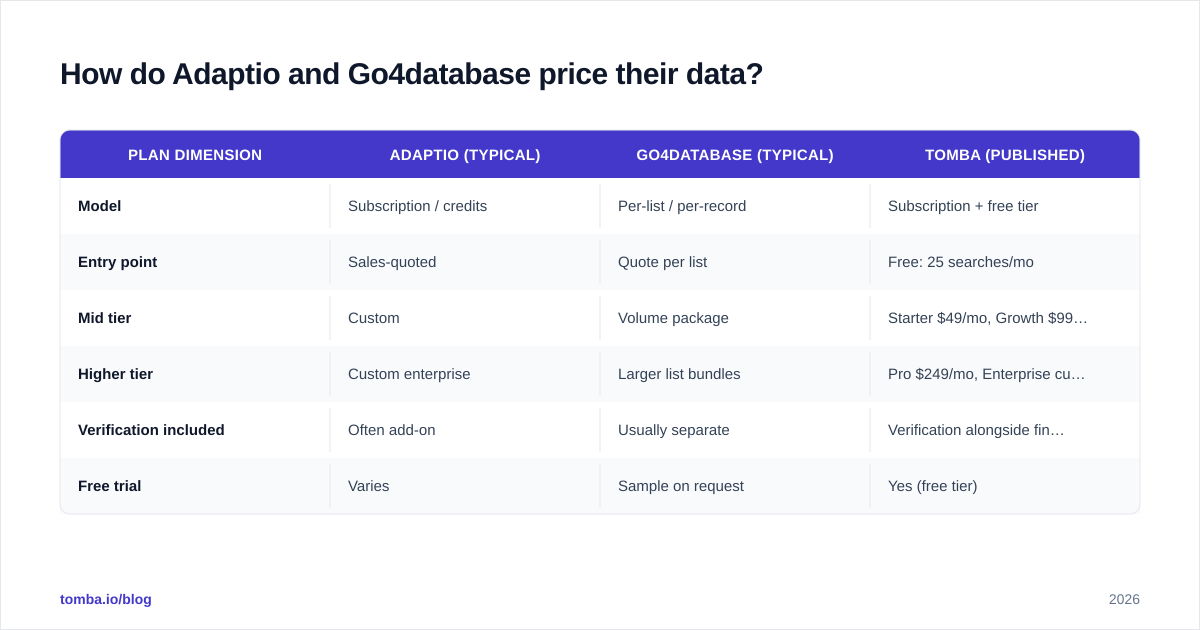
How do Adaptio and Go4database price their data?#
Pricing is where the two models diverge most sharply. It also pays to model your real cost-per-usable-contact, not cost-per-record.
| Plan dimension | Adaptio (typical) | Go4database (typical) | Tomba (published) |
|---|---|---|---|
| Model | Subscription / credits | Per-list / per-record | Subscription + free tier |
| Entry point | Sales-quoted | Quote per list | Free: 25 searches/mo |
| Mid tier | Custom | Volume package | Starter $49/mo, Growth $99/mo |
| Higher tier | Custom enterprise | Larger list bundles | Pro $249/mo, Enterprise custom |
| Verification included | Often add-on | Usually separate | Verification alongside finder |
| Free trial | Varies | Sample on request | Yes (free tier) |
Two budgeting traps to avoid:
- Per-record pricing hides the decay tax. If 25% of a purchased list is dead within a year, your real cost per reachable contact is ~33% higher than the sticker.
- "Unlimited" enrichment isn't unlimited value if the records aren't verified. You are paying to enrich noise.
For a transparent, published reference point you can hold against either vendor's quote, see Tomba pricing. One fixed anchor makes the sales-quoted numbers easier to negotiate.
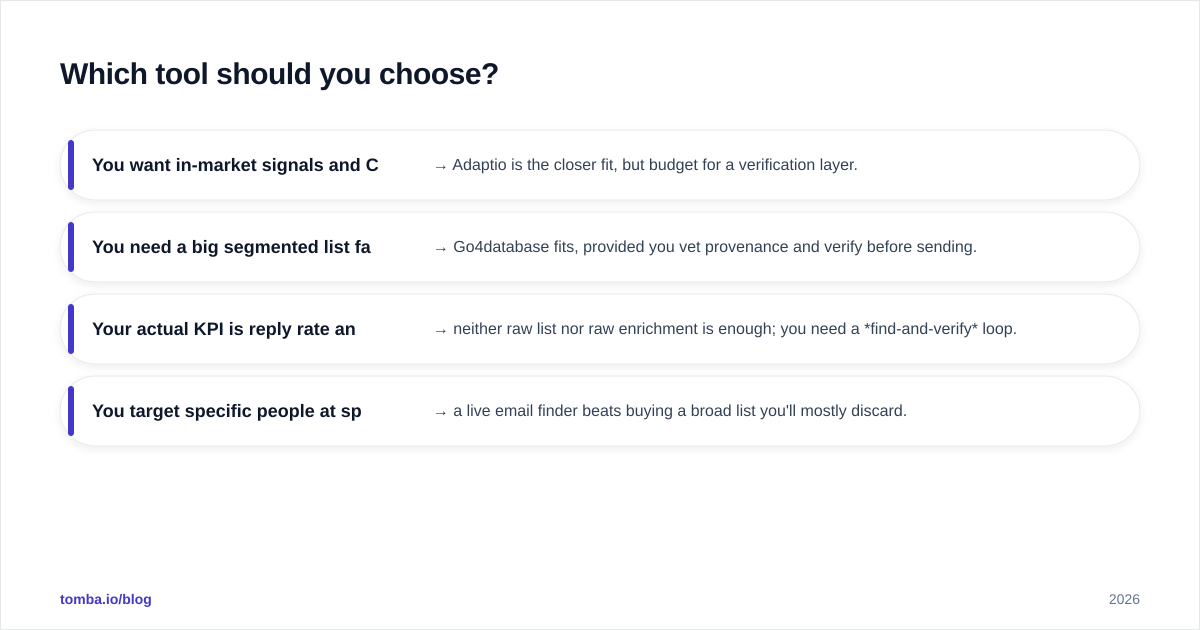
Which tool should you choose?#
Use this quick decision framework:
- You want in-market signals and CRM enrichment → Adaptio is the closer fit, but budget for a verification layer.
- You need a big segmented list fast and will clean it yourself → Go4database fits, as long as you vet provenance and verify before sending.
- Your actual KPI is reply rate and inbox placement → neither raw list nor raw enrichment is enough. You need a find-and-verify loop.
- You target specific people at specific companies → a live email finder beats buying a broad list you'll mostly discard.
That last case is more common than teams admit. Most reps don't need 100,000 contacts. They need the right 500, verified, this week. For that, query by domain or name on demand. A domain search pulls every reachable address at a target account. It is faster and cleaner than filtering a purchased file.
Where does Tomba fit between the two?#
Tomba is the verification-first alternative to both. Go4database sells you a static list. Adaptio sells a broad enrichment subscription. Tomba's core product is an email finder instead. It locates professional addresses by name, domain, or company in real time, and verifies them in the same workflow.
That collapses the source-then-verify two-step into one motion:
- Find the contact at the moment you need it (no decaying inventory).
- Confirm the address is deliverable before it touches your sequence.
- Enrich the record with firmographic context via data enrichment when you need more than an email.
It also avoids the provenance fog of bulk lists. You are looking up a specific person at a specific domain, not buying a file of unknown origin. For analysts who want the broader category context, Gartner's market guides on sales intelligence are a useful neutral reference alongside hands-on testing.
None of this means Adaptio or Go4database are wrong choices. If you have a mature data-cleaning operation, a purchased list can still feed a machine that scrubs it well. If intent signals drive your motion, Adaptio's strength is real. The argument is narrower: whatever you source, verify before you send. And price your data on reachable contacts, not raw rows.
The bottom line#
The Adaptio vs Go4database choice answers two different questions. Adaptio is about acting on fresh signals. Go4database is about acquiring volume fast. Both expose you to the same risk — data decay and unproven provenance. And both demand a verification step you can't skip if you care about deliverability and compliance.
If your goal is simply to reach the right person with an email that lands, start at the verification layer rather than the volume layer. Try the Tomba Email Finder on a target domain. Watch it return verified addresses in real time. Then compare the cost-per-reachable-contact against any list quote you're holding. The free tier gives you 25 searches a month to run that test before you spend a dollar.
// get started
Find, verify and enrich your first contacts today
Start on the free plan with 25 searches a month, then scale when your team is ready.
Free plan · No credit card required · GDPR & CCPA
// about the author