Cold Calling in 2026: Scripts, Stats & a Proven Framework
Cold calling still books meetings in 2026 — if you pair tight scripts with verified phone data. Here's the framework, the benchmarks, and the tools that make dials connect.
Cold calling was declared dead every year for the last decade, and every year it kept booking pipeline. The reps who win in 2026 are not the ones who dial the most — they are the ones who dial the right numbers with a tight, repeatable structure. This guide breaks down what still works, what the benchmarks actually say, and the framework you can run on Monday morning.
TL;DR#
- Cold calling is alive in 2026, but average connect rates have dropped to roughly 5–8% — bad phone data, not the channel, is the real killer.
- A repeatable five-stage call framework (Open → Permission → Problem → Proof → Push) beats memorized scripts.
- Verified, fresh mobile numbers can lift connect rates 2–3x versus scraped lists; clean your data before you blame your pitch.
- Pair calls with email and LinkedIn in a multi-touch cadence — single-channel outbound underperforms.
- Track three metrics that matter: connect rate, conversation-to-meeting rate, and dials-per-meeting.
Is cold calling still worth it in 2026?#
Yes — but only when your list and your structure are both solid. The channel has not stopped working; the average list has gotten worse. Buyers screen unknown numbers harder than ever, carrier spam-labeling is aggressive, and a lot of "B2B data" sold today is stale by months.
Think of cold calling like fishing. The fish are still in the lake. But if your bait is rotten (bad data) and you cast in the parking lot (wrong numbers), you will conclude there are no fish. The reps complaining that "cold calling is dead" almost always have a data problem disguised as a channel problem.
The economics still favor the phone for one reason: it is the only outbound channel where you get a real-time, two-way conversation with a stranger in under a minute. Email and LinkedIn outreach are asynchronous; a call collapses the entire discovery loop into 90 seconds.
What are realistic cold calling benchmarks?#
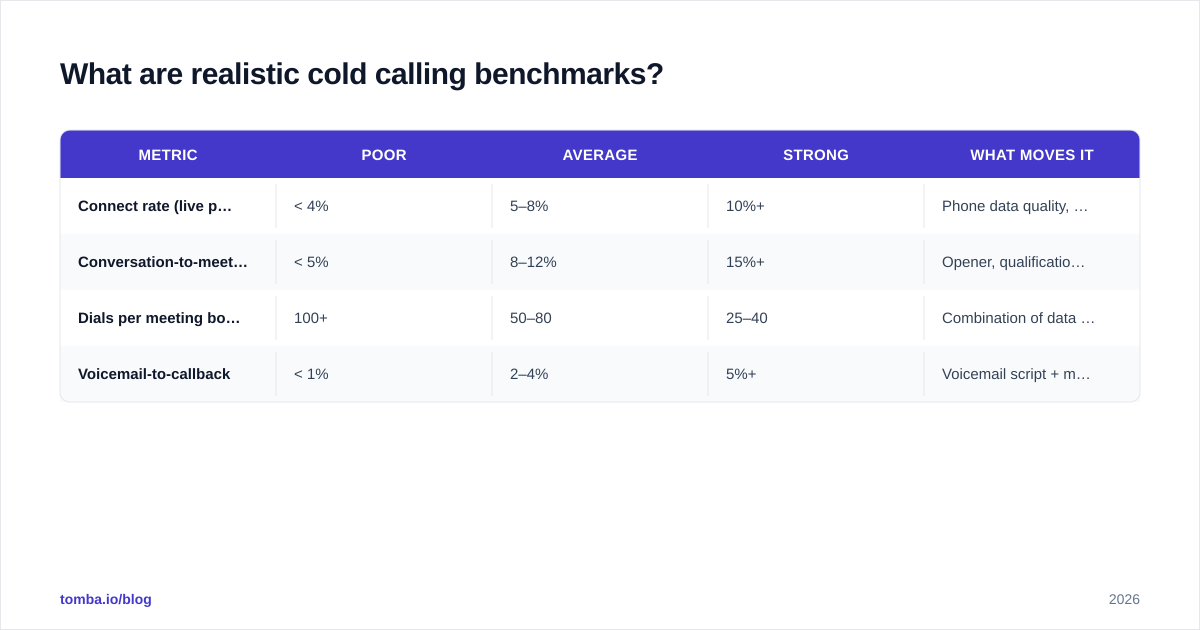
Before you judge your own numbers, anchor them against current reality. These ranges reflect what most B2B SDR teams report in 2026 — your mileage varies by industry, seniority of target, and time of day.
| Metric | Poor | Average | Strong | What moves it |
|---|---|---|---|---|
| Connect rate (live pickup) | < 4% | 5–8% | 10%+ | Phone data quality, local presence, call timing |
| Conversation-to-meeting | < 5% | 8–12% | 15%+ | Opener, qualification, framework discipline |
| Dials per meeting booked | 100+ | 50–80 | 25–40 | Combination of data + skill |
| Voicemail-to-callback | < 1% | 2–4% | 5%+ | Voicemail script + multi-touch follow-up |
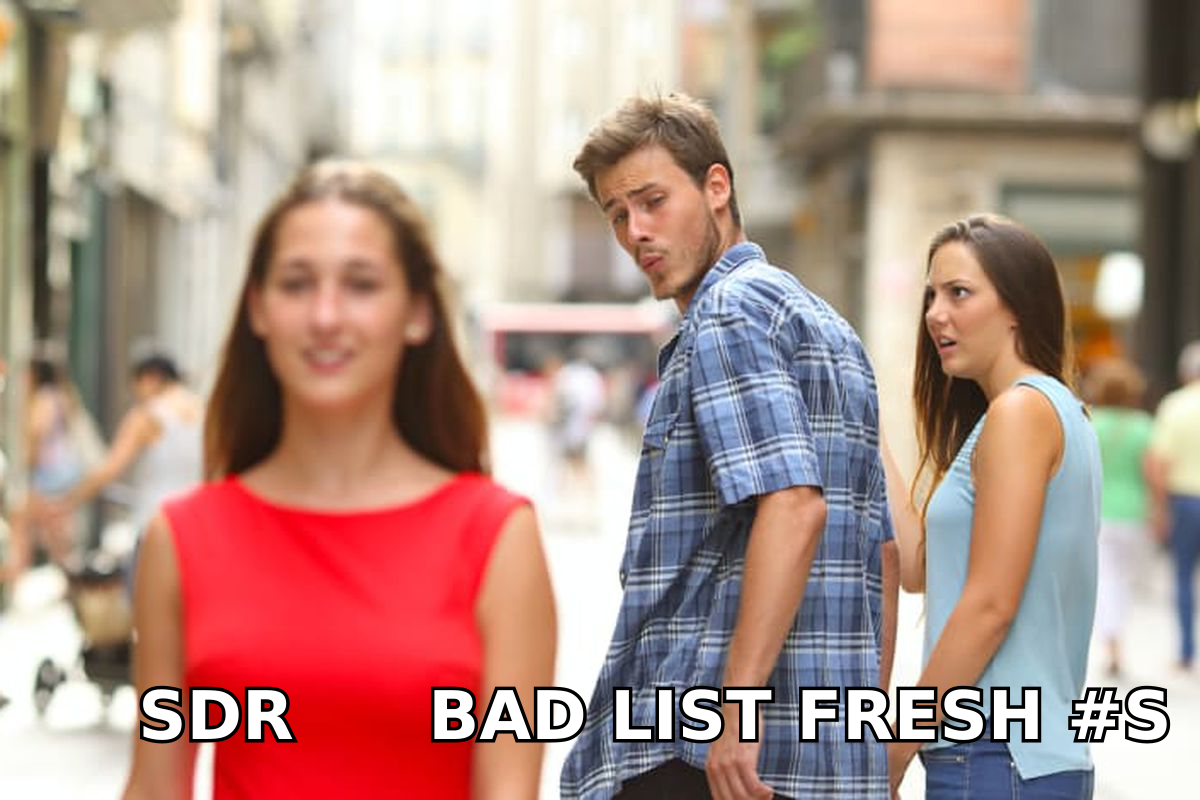
The single biggest lever is the first row. If your connect rate sits at 3%, no script tweak saves you — you are dialing dead numbers. Reps obsess over openers when the upstream problem is the list. Fix data first, then optimize the conversation.
A practical test: pull 50 numbers from your current list and run them through a phone validator before dialing. If more than a quarter come back invalid or disconnected, your "low connect rate" is a data issue, full stop.
What's the cold calling framework that actually works?#
Scripts fail because they make you sound like you are reading. A framework gives you structure while keeping you conversational. Use the five-stage flow below — memorize the stages, not the words.
1. Open (5 seconds). State your name, company, and a pattern interrupt. Do not ask "How are you today?" — it signals a pitch instantly.
2. Permission (5 seconds). Ask for 30 seconds. "Can I borrow 30 seconds and you can tell me to get lost?" Disarming honesty earns more airtime than a slick hook.
3. Problem (20 seconds). Name a specific, relevant pain you see in their role or industry. This is where research and good data pay off — generic problems get hung up on.
4. Proof (20 seconds). One concrete, quantified result from a similar company. Not a feature dump. "We helped a 40-rep team cut dials-per-meeting from 80 to 35."
5. Push (10 seconds). Ask for the next step directly. A specific time beats "Are you interested?" Always propose: "Does Thursday at 2 work for a 15-minute look?"
The whole thing runs under 90 seconds. The goal of a cold call is not to close — it is to earn the meeting.
How do you handle the most common objections?#
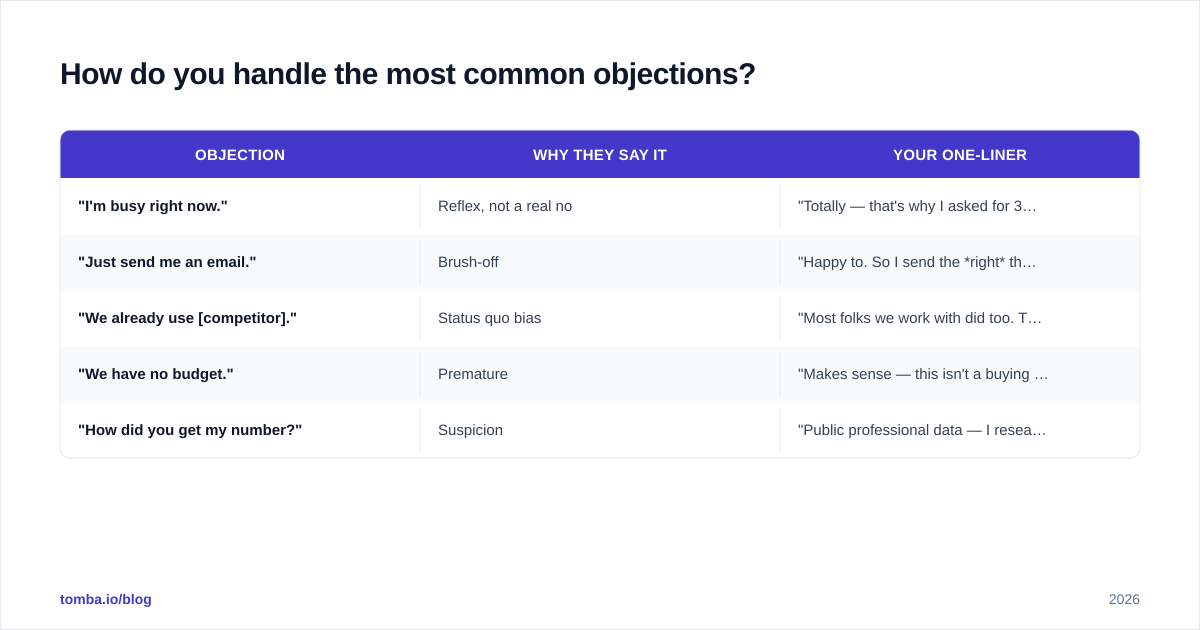
Objections are not rejections; they are reflexes. Most buyers say the same five things. Prepare a one-line response for each and you will stay in the conversation instead of freezing.
| Objection | Why they say it | Your one-liner |
|---|---|---|
| "I'm busy right now." | Reflex, not a real no | "Totally — that's why I asked for 30 seconds. Worth it or I hang up?" |
| "Just send me an email." | Brush-off | "Happy to. So I send the right thing — are you the one who owns [area]?" |
| "We already use [competitor]." | Status quo bias | "Most folks we work with did too. The reason they switched was [X]. Worth a look?" |
| "We have no budget." | Premature | "Makes sense — this isn't a buying call. It's a 15-minute look so you have it on your radar for next quarter." |
| "How did you get my number?" | Suspicion | "Public professional data — I research before I dial so I'm not wasting your time." |
That last objection is far less awkward when your data source is legitimate. Reps who scrape sketchy lists sound defensive; reps using compliant, traceable data sources answer it in stride.
Why does phone data quality decide your connect rate?#
Because you cannot have a conversation with a number that rings nowhere. This is the unglamorous truth of cold calling: the spreadsheet matters more than the script.
Phone data decays fast. People change roles, companies churn carriers, and direct dials get reassigned. A list that was 90% accurate last year can be 60% accurate today. Every dead number is wasted rep time, a hit to morale, and a depressed connect-rate stat that makes you question the whole channel.
Here is the data workflow that high-connect teams run:
- Source direct dials and mobiles, not just main switchboard lines. Mobiles connect far better than desk phones in a hybrid-work world. A phone finder that returns mobile numbers tied to a verified person beats a generic company line every time.
- Validate before dialing. Run numbers through a phone validator to drop disconnected and invalid lines. This alone can reclaim hours per week.
- Enrich the contact record so the rep has title, company, and context on screen. Use data enrichment to fill gaps before the call, not during it.
- Refresh quarterly. Treat your dial list like produce, not canned goods.
When you tighten this loop, the same reps with the same script suddenly look like top performers — because they are finally talking to live humans.
How should cold calling fit into a multi-channel cadence?#
Cold calling works best as one instrument in the band, not a solo act. The modern cadence interleaves calls with email and social touches so you build familiarity before and after the dial.
A simple, effective 10-business-day cadence:
- Day 1: Call + voicemail, then a short email referencing the voicemail.
- Day 3: LinkedIn connection request, no pitch.
- Day 4: Call (different time of day than Day 1).
- Day 6: Value email — share one relevant insight, ask nothing.
- Day 8: Call + voicemail.
- Day 10: Break-up email that re-opens the loop.
To run email touches well you still need verified addresses, so a list-building step with an email finder and an email verifier feeds the same cadence. Log every touch in your CRM — track it consistently and your response rate becomes a number you can actually improve rather than guess at. If you are formalizing this, the concept of a unified CRM workflow keeps calls, emails, and notes in one timeline.
Rotating call times matters more than people expect. Early morning (before gatekeepers settle in) and late afternoon consistently outperform the dead zone right after lunch.
What tools make up a cold calling stack in 2026?#
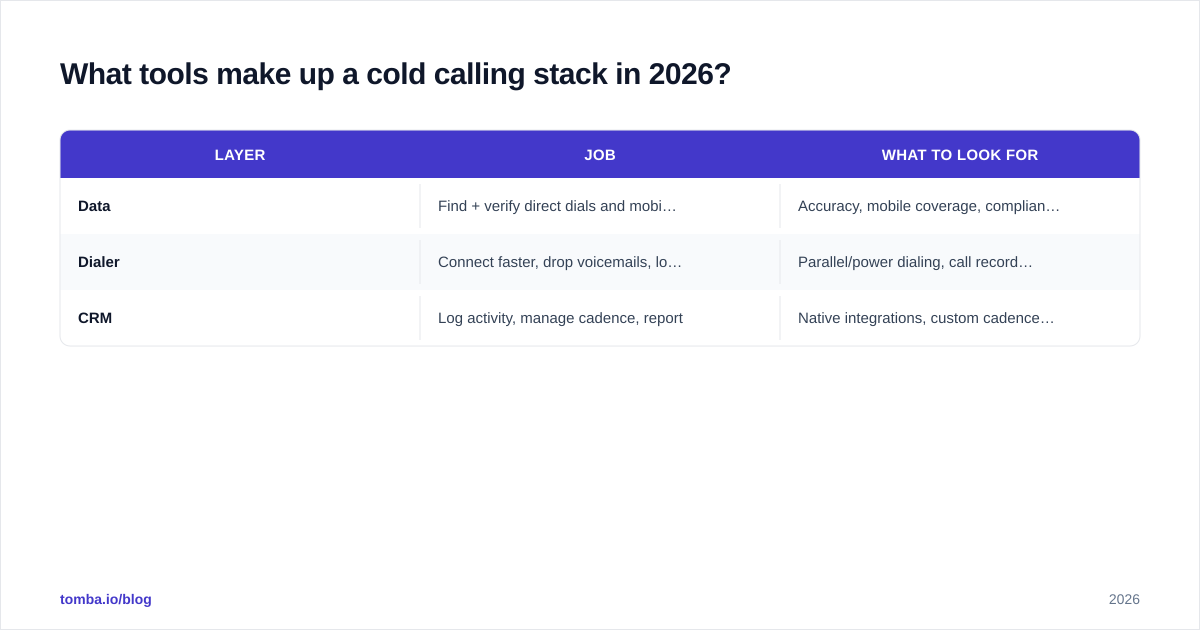
You need three layers: data, dialer, and CRM. Don't over-buy — most teams waste money on overlapping platforms.
| Layer | Job | What to look for |
|---|---|---|
| Data | Find + verify direct dials and mobiles | Accuracy, mobile coverage, compliant sourcing, bulk + API |
| Dialer | Connect faster, drop voicemails, local presence | Parallel/power dialing, call recording, CRM sync |
| CRM | Log activity, manage cadence, report | Native integrations, custom cadences, clean reporting |
For the dialer and conversation-intelligence layer, established players like Gong (call recording and coaching) and CRM platforms such as HubSpot and Salesforce cover most needs — check current reviews on G2 before committing, since this category shifts fast.
The layer reps most often under-invest in is data. A great dialer that pumps through a bad list just helps you reach voicemail faster. Get the B2B phone numbers right first.
Cold calling FAQ#
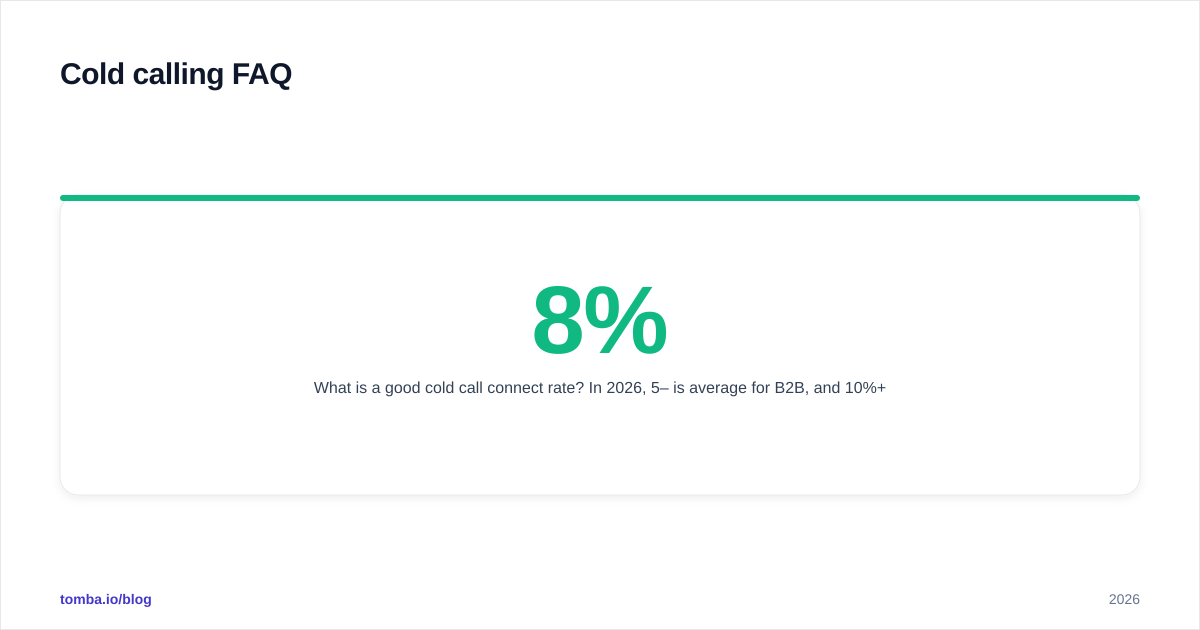
What is a good cold call connect rate? In 2026, 5–8% is average for B2B, and 10%+ is strong. Below 4%, suspect your data before your script.
How many cold calls should an SDR make per day? Quality-focused teams run 40–80 dials a day. Pure volume past that usually means the list or targeting is too broad.
Is cold calling legal? B2B cold calling is legal in most regions, but rules vary (do-not-call lists, consent in some jurisdictions). Use compliant data sources and honor opt-outs.
Should I leave a voicemail? Yes — short ones tied to a follow-up email. Voicemail-plus-email touches lift callback rates versus calling alone.
Put it together#
Cold calling in 2026 is a data game wearing a conversation costume. Nail the five-stage framework, prepare your objection one-liners, weave calls into a multi-channel cadence, and — above all — dial verified, fresh numbers. The reps hitting double-digit connect rates aren't more charming; they're better fed by their data stack.
If your connect rate is the bottleneck, start at the source. Use the Tomba Phone Finder to pull verified direct dials and mobiles tied to real decision-makers, validate them before you dial, and feed clean records straight into your cadence. Spin up a free account to test it against your current list — and see Tomba pricing when you're ready to scale dials across the team. Fewer dead numbers, more live conversations, more meetings booked.
// get started
Find, verify and enrich your first contacts today
Start on the free plan with 25 searches a month, then scale when your team is ready.
Free plan · No credit card required · GDPR & CCPA
// about the author