Social Selling Strategy in 2026: The B2B LinkedIn Playbook
A practical social selling strategy for B2B teams in 2026: the LinkedIn framework, daily routine, tools, metrics, and message templates that actually book meetings.
TL;DR
- A social selling strategy is a repeatable system for building buyer relationships on social platforms (mostly LinkedIn) before you ever pitch — and in 2026 it outperforms cold-only outreach on reply and meeting rates.
- The core loop is four steps: optimize your profile, listen for signals, engage with value, then move qualified conversations to a direct channel.
- Social selling does not replace email and phone — it warms them up. The highest-performing reps layer all three.
- You need a daily 30-45 minute routine, a content cadence, and a way to enrich social profiles into verified contact data so conversations don't stall.
- Measure leading indicators (profile views, replies, accepted requests) and lagging ones (meetings, pipeline, win rate) — not vanity follower counts.
What is a social selling strategy?#
A social selling strategy is your documented plan for using social networks to find, research, engage, and nurture prospects until they're ready to buy. Think of it like tending a garden instead of hunting: cold calling is a single shot at a moving target, while social selling plants seeds, waters them with relevant content, and harvests when the buyer is ready.
Technically, social selling is the practice of integrating social media touchpoints into your sales process — commenting, sharing insight, and direct messaging — so that by the time you ask for a meeting, the buyer already recognizes your name and associates it with usefulness.
It matters because buyers have changed. According to Gartner research on B2B buying, customers spend the majority of their journey doing independent research and only a small slice of it talking to any single vendor. If you're invisible during that research window, you're not in the deal. A social selling strategy makes you visible — and credible — exactly when buyers are forming a shortlist.
Is social selling better than cold calling and cold email?#
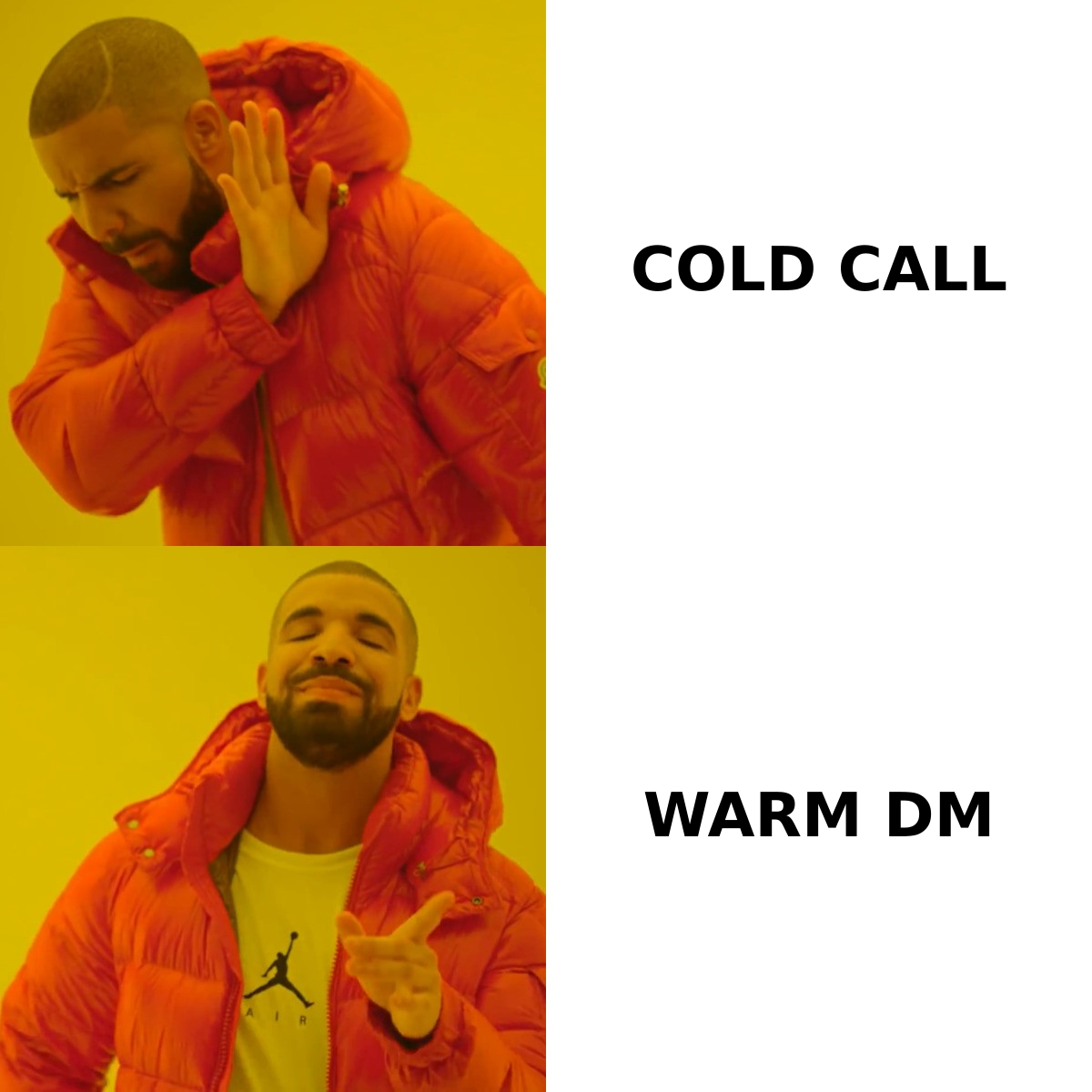
Short answer: it's not better, it's better together. Social selling raises the ceiling on your other channels rather than replacing them.
Cold outreach has a discovery problem and a trust problem. Social selling solves the trust problem (the buyer has seen you) but is slow at scale. Email and phone solve the scale problem but start from zero trust. Layer them and each channel lifts the others — a connection who saw your post is far more likely to reply to your email.
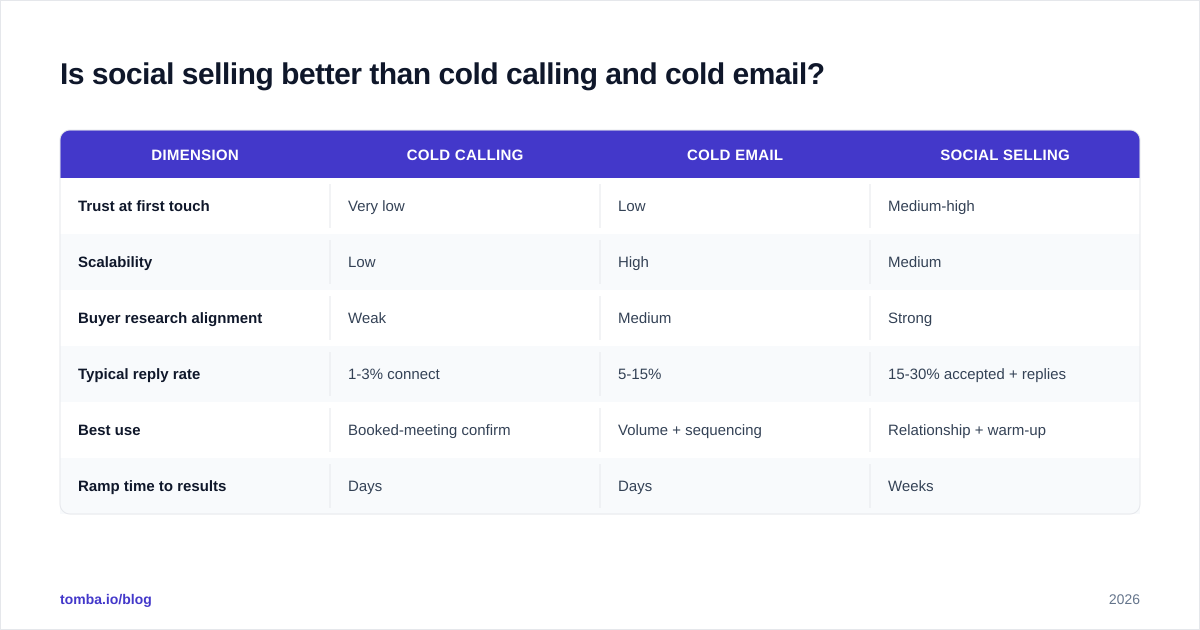
Here's how the three channels actually stack up:
| Dimension | Cold calling | Cold email | Social selling |
|---|---|---|---|
| Trust at first touch | Very low | Low | Medium-high |
| Scalability | Low | High | Medium |
| Buyer research alignment | Weak | Medium | Strong |
| Typical reply rate | 1-3% connect | 5-15% | 15-30% accepted + replies |
| Best use | Booked-meeting confirm | Volume + sequencing | Relationship + warm-up |
| Ramp time to results | Days | Days | Weeks |
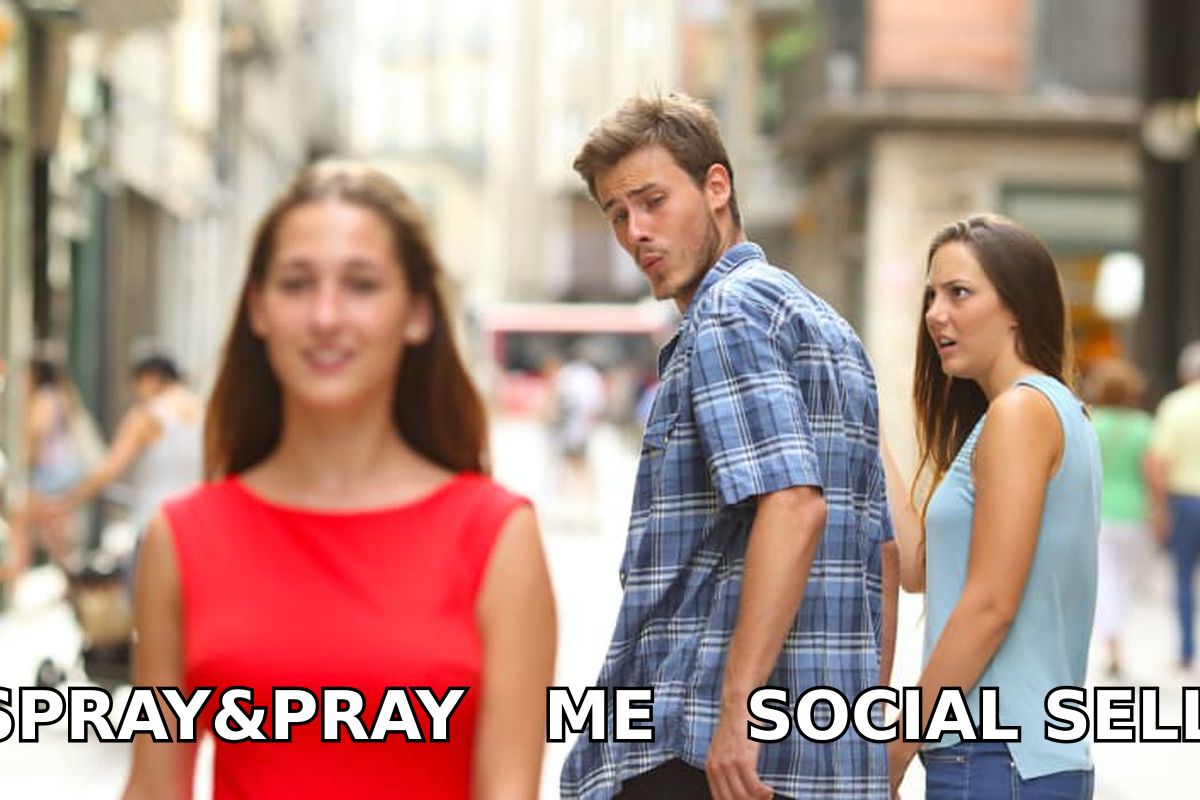
The takeaway: use social selling to earn recognition, then use email and phone to drive the calendar invite. Reps who skip the warm-up and DM a pitch on connection are just doing cold email with worse deliverability.
What are the four pillars of a social selling strategy?#
Every durable social selling strategy rests on four pillars. Skip one and the system leaks.
1. Profile: become the resource, not the resume#
Your profile is your landing page. Buyers click your name before they reply, so optimize it for them, not for recruiters. Rewrite your headline to state who you help and the outcome you create. Replace the "experienced sales professional" summary with a short narrative about the problems you solve. Add a banner, a clear photo, and social proof (case studies, customer logos you're allowed to name).
2. Listen: turn the feed into a signal stream#
Most reps scroll passively. Top performers treat the feed as an intent monitor. Track target accounts, follow decision-makers, and watch for trigger events: a new role, a funding round, a hiring spike, a public complaint about a competitor. Each signal is a permission slip to reach out with context instead of a generic pitch.
3. Engage: give before you ask#
Engagement is where trust compounds. Comment with a genuine insight (not "Great post!"), share content that helps your buyer do their job, and answer questions in relevant communities. The goal is for the prospect to see your name three to five times in a useful context before you ever send a connection request with a note.
4. Convert: move the conversation off-platform#
LinkedIn is a starting line, not a finish line. Once a prospect engages back, your job is to move the relationship to a channel you control — a call, an email thread, a calendar invite. This is the step most people fumble, because they either pitch too early or never make the ask at all.
What does a daily social selling routine look like?#
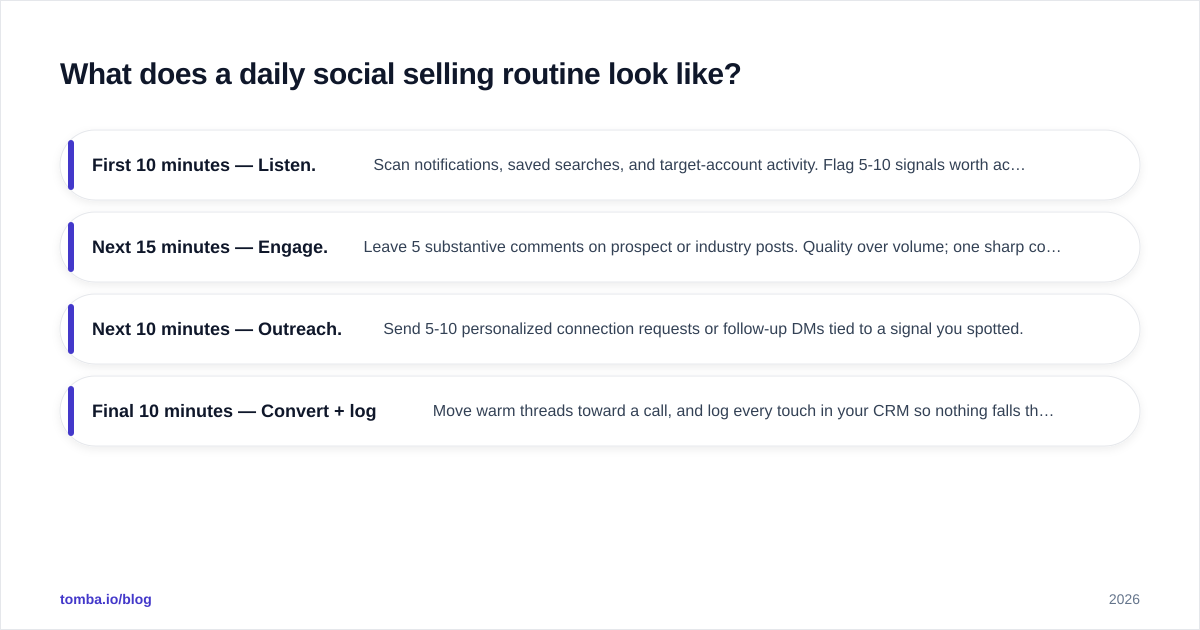
Strategy fails without a routine. The reps who win treat social selling like brushing their teeth — small, daily, non-negotiable. Here's a 45-minute block that fits before your first meeting:
- First 10 minutes — Listen. Scan notifications, saved searches, and target-account activity. Flag 5-10 signals worth acting on.
- Next 15 minutes — Engage. Leave 5 substantive comments on prospect or industry posts. Quality over volume; one sharp comment beats ten emojis.
- Next 10 minutes — Outreach. Send 5-10 personalized connection requests or follow-up DMs tied to a signal you spotted.
- Final 10 minutes — Convert + log. Move warm threads toward a call, and log every touch in your CRM so nothing falls through.
Pair this daily block with a weekly content cadence: post two or three times a week, mixing a personal lesson, a customer story, and a contrarian take on your category. You're not trying to go viral — you're trying to stay top-of-mind with a few hundred buyers who matter.
For the outreach step, your LinkedIn outreach messages should reference the specific signal, lead with value, and keep the ask tiny. "Worth a 15-minute compare-notes call?" converts better than "Can I show you a demo?"
How do you turn LinkedIn connections into pipeline?#
The hand-off from social conversation to sales conversation is where most social selling strategies break. A connection is not a lead until you have a way to reach them on a channel that drives action — and most reps have nothing but a LinkedIn thread that goes quiet.
The fix is to enrich your social conversations into verified contact data. When a prospect engages, capture their professional email and phone so you can sequence them properly instead of hoping the algorithm shows them your next DM.
This is where tooling matters. You can find a prospect's verified work email straight from their profile with a LinkedIn finder, then drop them into a multichannel sequence. The pattern that works in 2026:
- Engage on LinkedIn until the prospect replies or accepts.
- Enrich the connection into a verified email and, where appropriate, a phone number.
- Send a short, context-rich email that references your LinkedIn interaction.
- Follow up across email and phone with the social touch as the warm anchor.
Reps who close this loop see materially higher response rate numbers than reps who live entirely inside the LinkedIn inbox, because they control the channel and the timing.
Which tools do you need for social selling?#
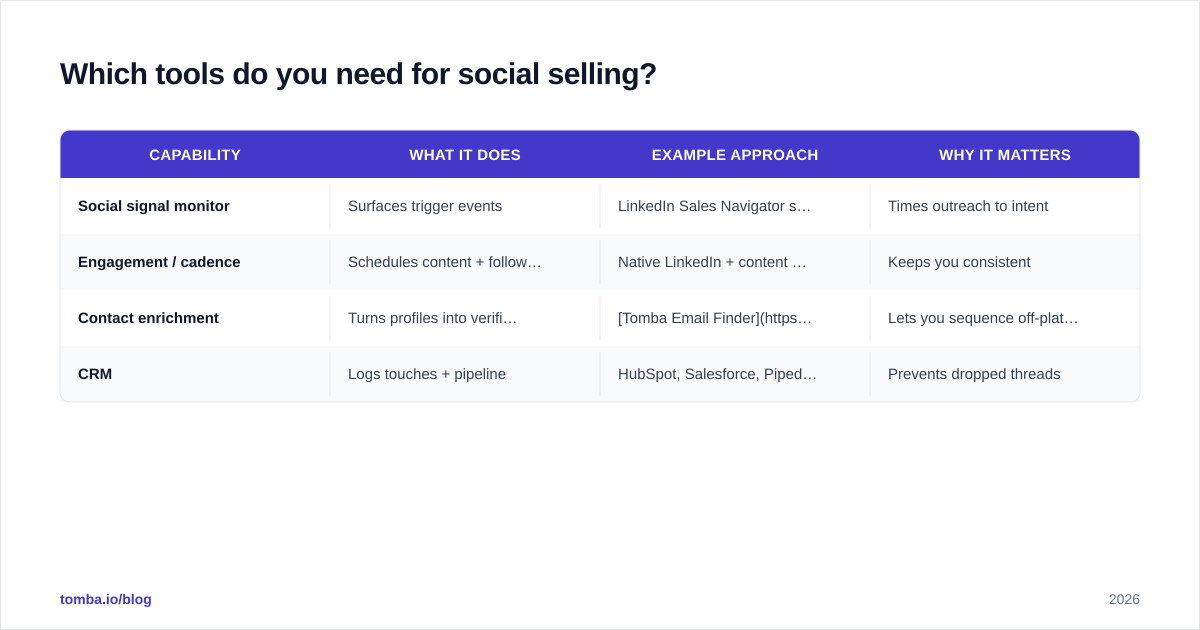
You don't need a 12-app stack. You need four capabilities: a signal monitor, an engagement workflow, a contact-data layer, and a CRM to remember everything. Here's how the common categories compare:
| Capability | What it does | Example approach | Why it matters |
|---|---|---|---|
| Social signal monitor | Surfaces trigger events | LinkedIn Sales Navigator saved searches | Times outreach to intent |
| Engagement / cadence | Schedules content + follow-ups | Native LinkedIn + content calendar | Keeps you consistent |
| Contact enrichment | Turns profiles into verified email/phone | Tomba Email Finder + data enrichment | Lets you sequence off-platform |
| CRM | Logs touches + pipeline | HubSpot, Salesforce, Pipedrive | Prevents dropped threads |
You can read more about how the underlying data accuracy is sourced if verified contact quality is a concern — it usually is, because bouncing on a hard-won warm lead wastes the entire relationship you built.
For native social tooling, LinkedIn Sales Navigator is the de facto signal layer for most B2B teams, and HubSpot's social selling resources are a solid free primer if you're standing up a program from scratch.
How do you measure a social selling strategy?#
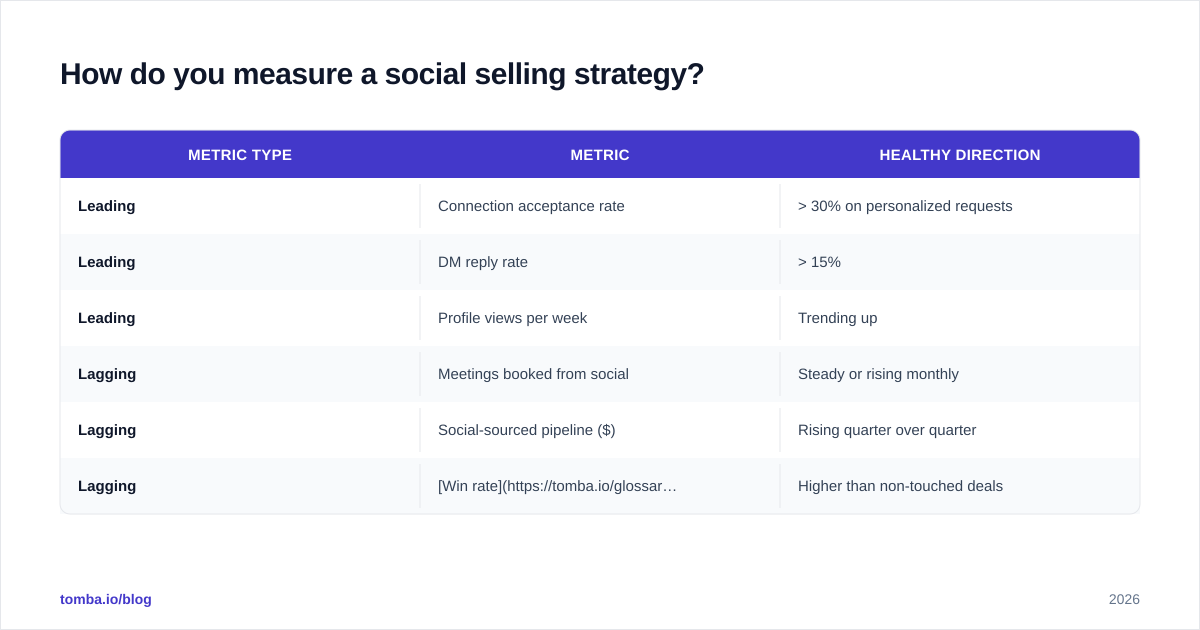
Measure the funnel, not the applause. Follower count and post likes feel good but rarely correlate with pipeline. Split your metrics into leading indicators (you can influence them this week) and lagging indicators (they prove the strategy works over a quarter).
| Metric type | Metric | Healthy direction |
|---|---|---|
| Leading | Connection acceptance rate | > 30% on personalized requests |
| Leading | DM reply rate | > 15% |
| Leading | Profile views per week | Trending up |
| Lagging | Meetings booked from social | Steady or rising monthly |
| Lagging | Social-sourced pipeline ($) | Rising quarter over quarter |
| Lagging | Win rate on social-touched deals | Higher than non-touched deals |
A practical rule: if your leading indicators are healthy but lagging ones are flat, your conversion step is broken — you're engaging well but failing to move conversations off-platform. If leading indicators are weak, your profile or your messaging is the problem. Diagnose by layer.
The platforms themselves publish a "Social Selling Index" you can track on LinkedIn, but treat it as a hygiene score, not a north star. Your CRM-confirmed pipeline is the metric that pays the bills.
What are the most common social selling mistakes?#
Even good strategies get sabotaged by a few predictable errors:
- Pitching on connection. Sending a sales pitch in the first message is the fastest way to get ignored or blocked. Earn the conversation first.
- Generic engagement. "Great insight!" comments are invisible. If your comment could be pasted under any post, it adds nothing.
- No off-platform plan. Living inside the LinkedIn inbox means you're at the mercy of an algorithm. Capture verified contact data and own the channel.
- Inconsistency. Two great weeks followed by a month of silence resets all your trust. The routine beats the heroic sprint.
- Vanity metrics. Optimizing for likes instead of meetings produces an audience, not a pipeline.
- Ignoring data hygiene. Reaching out with a stale or guessed email burns the relationship you spent weeks building. Verify before you send.
Avoid these six and you're already ahead of most of your market.
How long until a social selling strategy works?#
Expect leading indicators to move within two to four weeks and pipeline impact within one to two quarters. Social selling is a compounding asset — like a savings account, the early deposits feel small, but consistency turns recognition into reputation and reputation into inbound. Teams that quit at week three never see the curve bend.
Set a 90-day commitment, instrument the funnel above, and review weekly. If the leading indicators climb, trust the system — the lagging revenue numbers follow on a delay.
Put your social selling strategy into motion#
A social selling strategy only pays off when warm LinkedIn conversations become real, sequenced sales conversations — and that hand-off depends on verified contact data. The Tomba Email Finder turns the profiles you engage into accurate, deliverable work emails, so you can move every warm connection into a multichannel sequence instead of watching it go cold in your LinkedIn inbox. Start on the free tier (25 searches a month), and when your pipeline grows, scale up through the Starter ($49/mo) and Growth ($99/mo) plans — see full Tomba pricing for the breakdown. Build the relationships on social; let verified data turn them into meetings.
// get started
Find, verify and enrich your first contacts today
Start on the free plan with 25 searches a month, then scale when your team is ready.
Free plan · No credit card required · GDPR & CCPA
// about the author