Adaptio vs Brandnav 2026: Which B2B Data Tool Wins?
A neutral, side-by-side breakdown of Adaptio vs Brandnav in 2026 — coverage, accuracy, waterfall enrichment, pricing, and where a dedicated email finder beats both.
Choosing between Adaptio and Brandnav usually comes down to one question: do you want a single enrichment workflow that "just works," or do you want granular control over where each data point comes from? Both tools promise cleaner B2B contact data, but they take different routes to get there — and the route matters when you are paying per credit and emailing real prospects.
This is a neutral teardown. No tool is perfect, and the right answer depends on how your team prospects, how strict your deliverability needs are, and how much you care about controlling cost per verified contact.
TL;DR#
- Adaptio leans toward an opinionated, automation-first enrichment flow — good when you want speed and minimal configuration.
- Brandnav leans toward waterfall/multi-source enrichment with more visible control over providers — good when you want to squeeze coverage and audit where data came from.
- Accuracy is the real battleground. Both rise and fall on how aggressively they verify emails before handing them to you.
- Neither is a pure email finder. If your bottleneck is finding and verifying professional emails at scale, a dedicated tool like the Tomba Email Finder often costs less per valid contact.
- Pick by workflow, not by hype: automation simplicity (Adaptio) vs. source-level control and coverage stacking (Brandnav).
What are Adaptio and Brandnav?#
Both Adaptio and Brandnav sit in the B2B data enrichment category. You feed them partial records — a name, a company domain, a LinkedIn URL — and they return enriched fields like work email, job title, company size, and sometimes phone numbers. They are designed to plug into your CRM and outbound stack rather than to be the place where you live all day.
Adaptio positions itself around automation and a streamlined enrichment experience. The pitch is "less knob-twisting": you connect a source, define what you want enriched, and let the workflow run. That simplicity is attractive for lean teams who would rather not babysit a data pipeline.
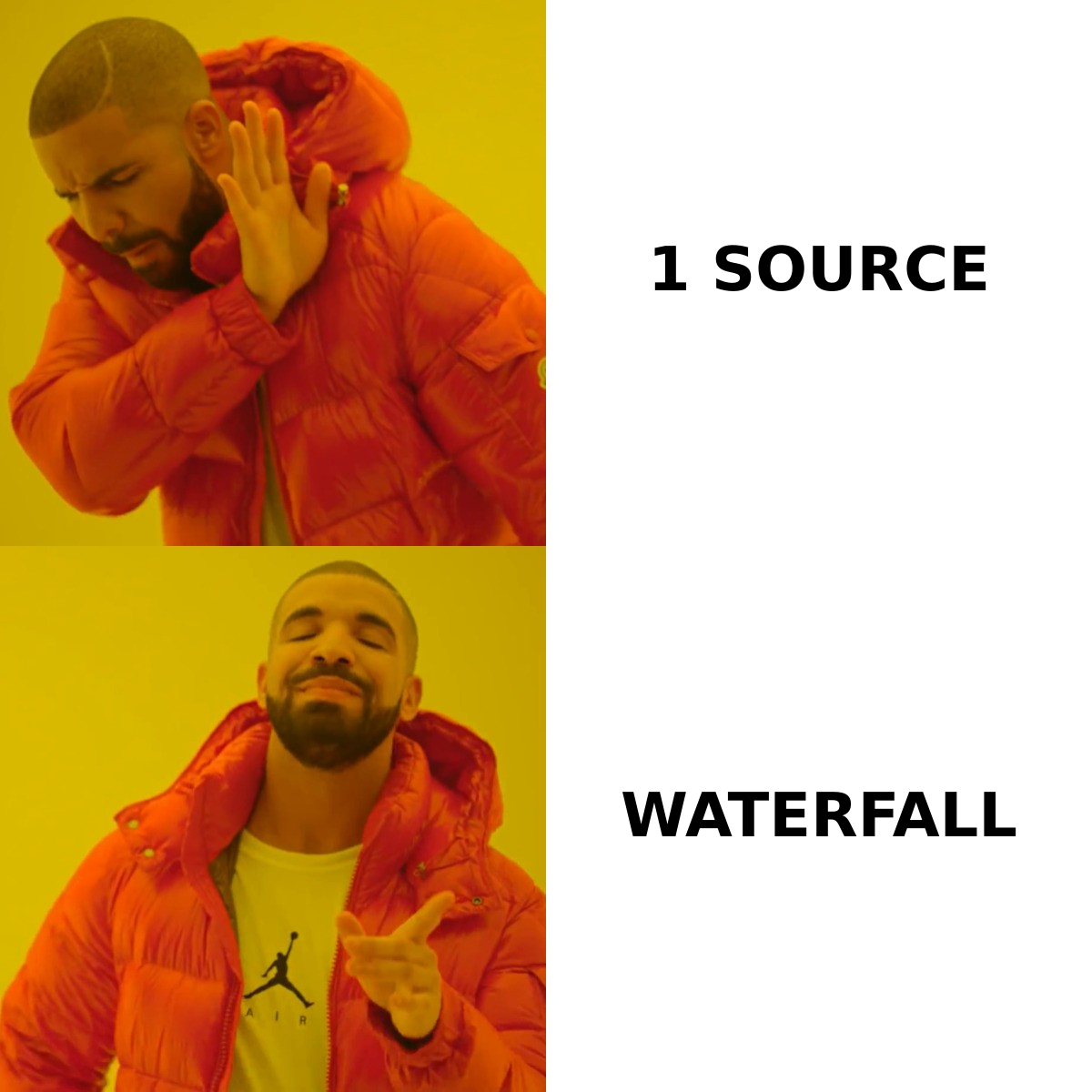
Brandnav positions itself around multi-source coverage. The pitch is "don't settle for one provider's gaps": it tries multiple data sources in sequence — a pattern usually called waterfall enrichment — so that if source A has no email, source B or C might. The trade-off is more configuration and more attention to per-source cost.
How does waterfall enrichment change the comparison?#
Waterfall enrichment is the single biggest conceptual difference, so it deserves its own section.
Think of it like booking a flight. A single-source tool is like checking one airline's website — fast, but if they do not fly your route, you are stuck. A waterfall tool is like a meta-search that checks ten airlines and stitches together the best option. You get more coverage, but you also pay more attention to which "airline" each result came from and what it cost.
Brandnav builds this multi-source logic into its core flow, which tends to lift match rates on hard-to-find contacts. Adaptio can still return strong coverage, but its philosophy is to keep the pipeline simple rather than expose every fallback step.
Why this matters for you:
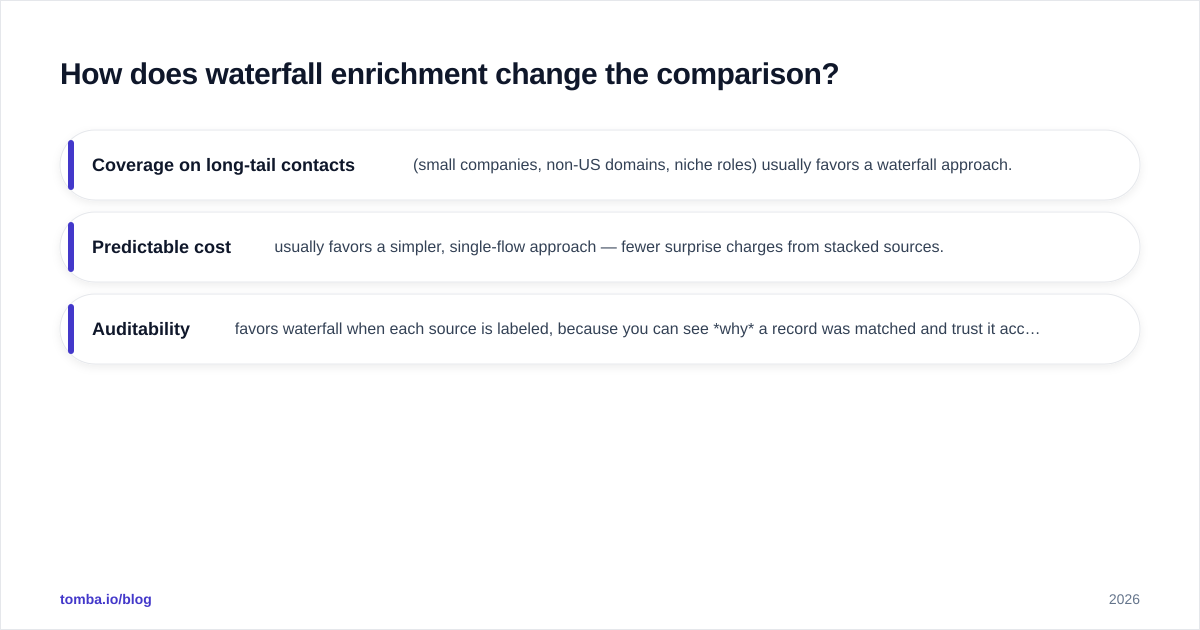
- Coverage on long-tail contacts (small companies, non-US domains, niche roles) usually favors a waterfall approach.
- Predictable cost usually favors a simpler, single-flow approach — fewer surprise charges from stacked sources.
- Auditability favors waterfall when each source is labeled, because you can see why a record was matched and trust it accordingly.
If you want to go deeper on the mechanics, our explainer on data enrichment walks through how multi-source matching and verification interact.
Adaptio vs Brandnav: feature comparison#
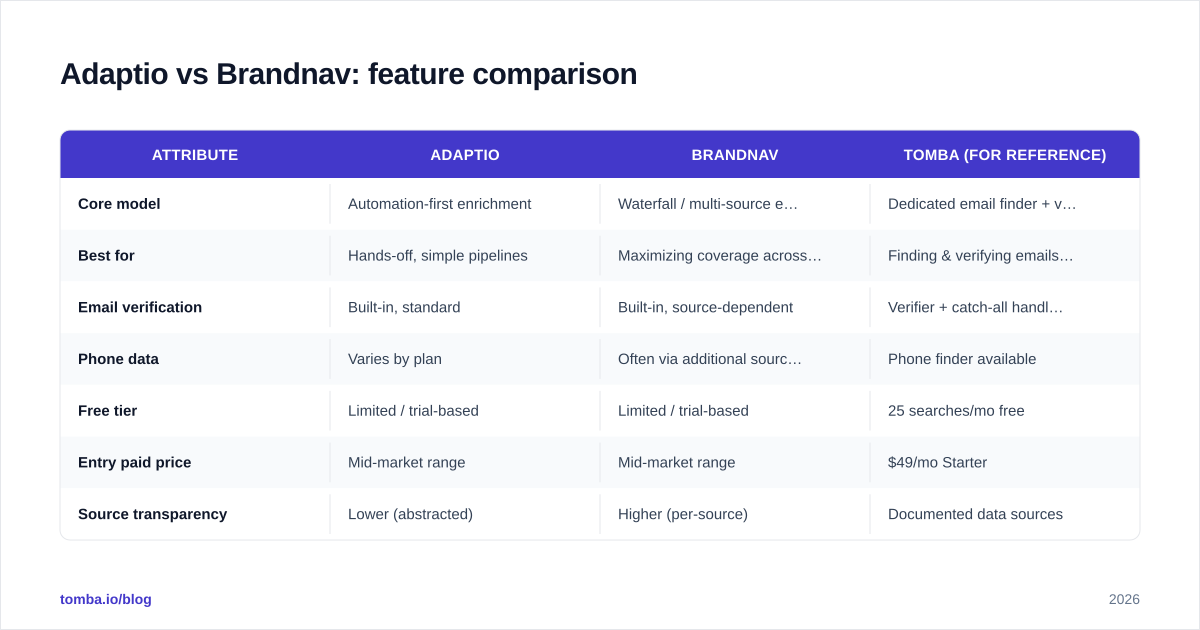
Here is a side-by-side view of the attributes that actually move the needle in outbound. Treat exact numbers as directional — vendors update tiers often, so always confirm on the live pricing pages.
| Attribute | Adaptio | Brandnav | Tomba (for reference) |
|---|---|---|---|
| Core model | Automation-first enrichment | Waterfall / multi-source enrichment | Dedicated email finder + verifier |
| Best for | Hands-off, simple pipelines | Maximizing coverage across sources | Finding & verifying emails at scale |
| Email verification | Built-in, standard | Built-in, source-dependent | Verifier + catch-all handling |
| Phone data | Varies by plan | Often via additional sources | Phone finder available |
| Free tier | Limited / trial-based | Limited / trial-based | 25 searches/mo free |
| Entry paid price | Mid-market range | Mid-market range | $49/mo Starter |
| Source transparency | Lower (abstracted) | Higher (per-source) | Documented data sources |
| API access | Yes | Yes | Yes (REST API) |
| Learning curve | Low | Medium | Low |
A few honest caveats about this table:
- "Mid-market range" is intentionally vague because both Adaptio and Brandnav frequently price by credits, seats, and usage tiers rather than one flat number. Always price your actual monthly volume, not the headline plan.
- A higher match rate is worthless if those matches are not verified. Coverage and accuracy are different metrics, and waterfall tools can inflate the first while quietly hurting the second if verification is weak.
Which tool is more accurate?#
Accuracy is where most enrichment comparisons get sloppy, so let's be precise: the tool that verifies most aggressively before returning a result wins your sender reputation, regardless of which has the bigger raw database.

A high "found" rate can be a trap. If Adaptio or Brandnav returns an email it merely guessed from a pattern (first.last@domain.com) without an SMTP check, you may be looking at a bounce waiting to happen. Bounces above roughly 2–3% start to damage email deliverability and your domain's sender reputation, which silently tanks every campaign that follows.
When you evaluate either tool, run this same test on both:
- Pull a sample of 200 contacts you can independently confirm.
- Enrich them through Adaptio and Brandnav separately.
- Verify the returned emails with an independent email verifier.
- Compare valid-and-verified rate, not raw "found" rate.
- Note how each tool handles catch-all domains — the biggest source of false positives.
Catch-all domains accept every address at the SMTP layer, so a naive tool marks them "valid" when they may not be. A dedicated catch-all verifier exists precisely because this edge case fools generalist enrichment tools. If Adaptio or Brandnav cannot tell you how it treats catch-alls, assume some portion of its "valid" emails are unverified.

How should you think about pricing?#
Conclusion first: compare cost per verified contact, not cost per credit. A cheaper credit that returns an unverified or wrong email is more expensive once you count the bounce, the wasted send, and the reputation hit.
Both Adaptio and Brandnav typically use credit-based pricing, which makes head-to-head math tricky because a "credit" can mean different things:
- Does a failed match still burn a credit?
- Does each waterfall source count as a separate credit (a real concern with Brandnav-style stacking)?
- Are verification and enrichment billed separately?
Brandnav's multi-source model can deliver better coverage but can also multiply credit consumption per record if several sources are queried. Adaptio's simpler flow can be more predictable, but predictability is not the same as cheap.
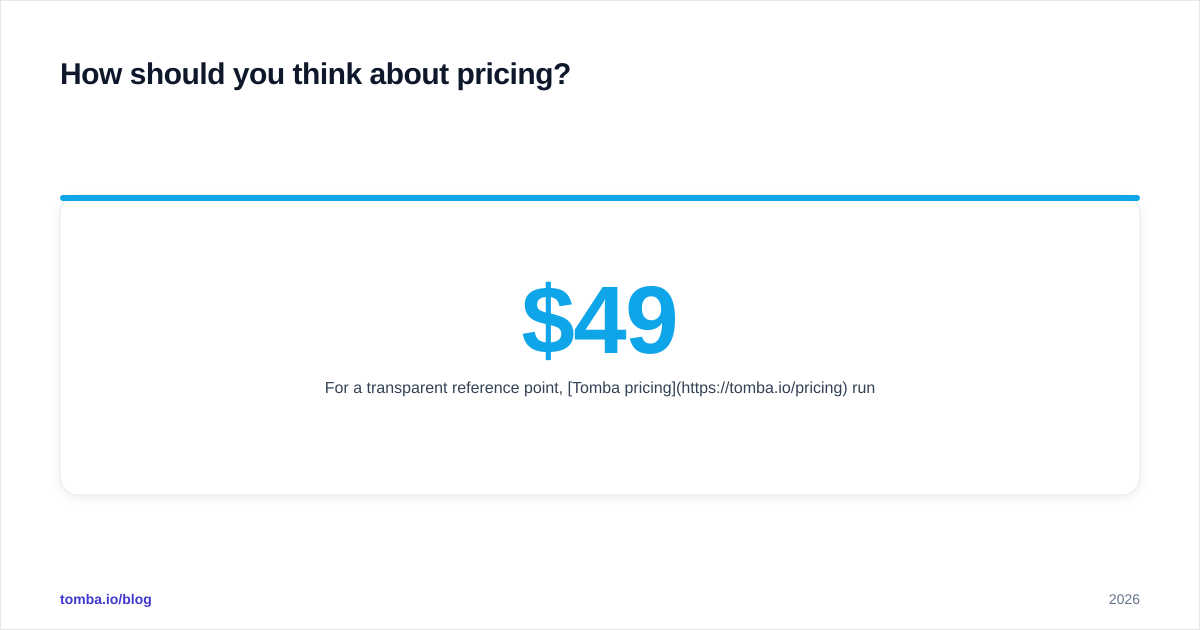
For a transparent reference point, Tomba pricing runs a free tier (25 searches/month), then Starter at $49/mo, Growth at $99/mo, and Pro at $249/mo, with Enterprise custom — and finding plus verifying are part of the same flow rather than two meters running at once.
What are the real-world use cases for each?#
Neither tool is "better" in a vacuum. They fit different jobs.
Choose Adaptio when:
- You want enrichment to run quietly in the background without constant tuning.
- Your team is small and would rather not manage source priority and credit rules.
- Your prospect list skews toward well-covered segments (mid-to-large US companies) where single-flow coverage is already strong.
- Predictable spend matters more than squeezing the last few percentage points of coverage.
Choose Brandnav when:
- You target hard-to-reach segments where one source's gaps hurt you.
- You want to see and control which provider supplied each field.
- You are comfortable trading some configuration time for higher match rates.
- Auditability — knowing the provenance of a record — matters for compliance or data-quality reviews.
Choose a dedicated email finder when:
- Your primary bottleneck is simply getting verified work emails, not enriching dozens of fields.
- You prospect by company and need domain search to pull every reachable contact at an organization.
- You want finding and verification unified, with explicit catch-all handling, so your bounce rate stays low.
- You run bulk lead generation and need cost-per-valid-email to stay flat at volume.
Where does a focused email finder beat both?#
Here is the part most "Adaptio vs Brandnav" comparisons skip: a lot of teams do not actually need a full enrichment platform. They need correct emails that land. If 80% of your value from a data tool is the email address, paying enrichment-platform pricing for 20 extra fields you never use is a leak.
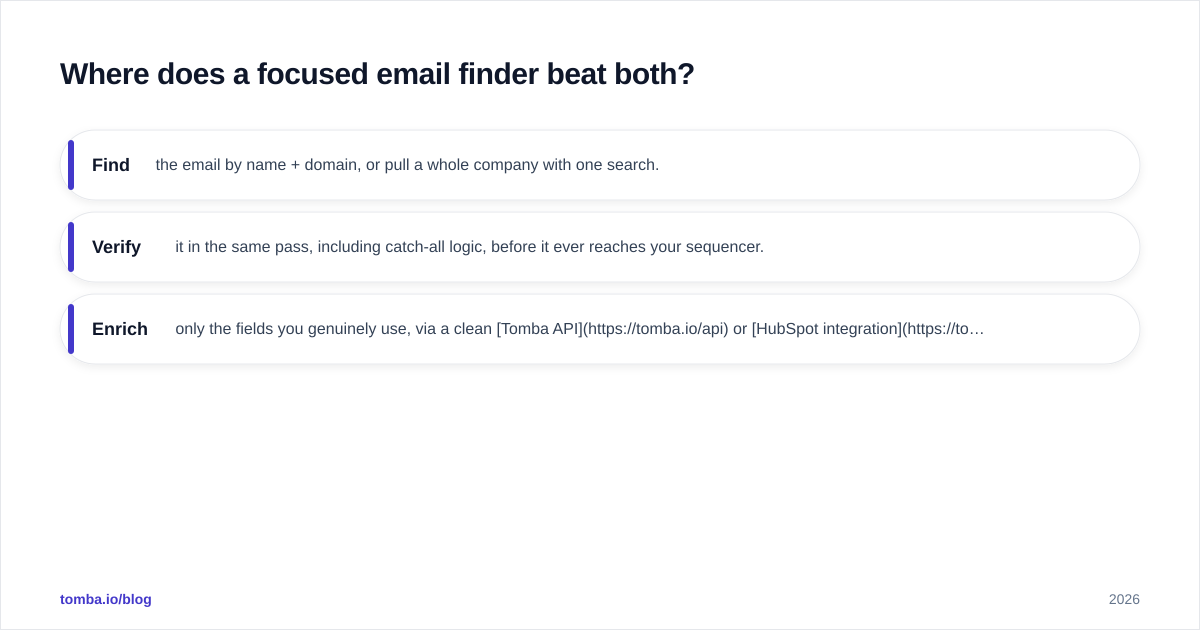
A specialized finder collapses the workflow:
- Find the email by name + domain, or pull a whole company with one search.
- Verify it in the same pass, including catch-all logic, before it ever reaches your sequencer.
- Enrich only the fields you genuinely use, via a clean Tomba API or HubSpot integration, instead of a sprawling schema.
This is not an argument against Adaptio or Brandnav — it is an argument for matching the tool to the bottleneck. If you are spending more time deleting unused enrichment columns than you are sending emails, the platform is bigger than the job.
How do you actually decide?#
Run a three-step bake-off instead of trusting any vendor's marketing (including ours):
- Define the metric. Decide upfront that you are measuring valid-and-verified rate and cost per verified contact — not raw coverage.
- Test the same list. Use an identical 200–500 row sample across Adaptio, Brandnav, and a dedicated finder. Same inputs, same day.
- Verify independently. Pass every returned email through a neutral verifier so no tool gets to grade its own homework.
Whichever option wins your list on your metric is the right call. Segment, geography, and target seniority shift these results more than brand reputation does — a tool that crushes US SaaS contacts may flounder on EU manufacturing firms.
For more authoritative, vendor-neutral signal while you shortlist, cross-check real buyer reviews on G2 and Capterra, and read each provider's own documentation on its official site before committing budget. HubSpot's sales statistics roundup is also a useful sanity check on what "good" outbound performance actually looks like.
Final verdict: Adaptio vs Brandnav#
There is no universal winner. Adaptio wins on simplicity and predictable, hands-off enrichment. Brandnav wins on coverage and source-level control through waterfall enrichment. Your prospecting profile decides which trade-off is correct.
But before you sign up for either, be honest about your bottleneck. If the thing slowing your team down is finding and verifying professional emails — not assembling rich multi-field profiles — a dedicated tool will usually deliver more valid contacts per dollar with fewer bounces.
That is exactly what the Tomba Email Finder is built for: find emails by name, company, or domain, verify them with catch-all handling in the same flow, and start free with 25 searches a month before scaling to a $49/mo Starter plan. Run it on the same test list as Adaptio and Brandnav, measure cost per verified contact, and let the numbers — not the marketing — pick your winner.
Ready to find emails that actually work?
Join 150,000+ professionals who stopped guessing and started sending. Free credits on signup — no credit card required.
Get the Tomba newsletter
Practical outbound tactics and product updates — once every two weeks.
About the author