The BDR Playbook for 2026: Process, Metrics, and Tools
A practical BDR playbook for 2026: the daily cadence, the metrics that matter, the tech stack, and the data layer that turns reps into a repeatable pipeline engine.
A BDR playbook is only as good as the day it survives contact with a real territory. Most "playbooks" you find online are motivational PDFs — this one is the operating manual: the cadence, the math, the data layer, and the tools that move a rep from a cold list to a booked meeting on repeat.
TL;DR#
- A bdr playbook is the documented, repeatable system your business development reps follow to turn a target account list into qualified meetings — not a pep talk, an operating manual.
- The four pillars are targeting (ICP + data), messaging (multichannel cadence), metrics (leading + lagging), and tooling. Skip any one and the engine stalls.
- In 2026, reply rates are won at the data layer: a verified, enriched contact beats clever copy sent to a bounced address every time.
- Benchmarks worth holding to: 3–5% positive reply rate, 18–22 dials to a connect, and 1 meeting per ~120 quality touches.
- Your stack does not need to be expensive. A finder/verifier, a sequencer, a CRM, and a dialer cover 90% of the job.
What is a BDR playbook (and how is it different from an SDR script)?#
A BDR playbook is the full operating system a rep runs each day; a script is one line inside it. Business Development Representatives focus on outbound sourced pipeline — they go find accounts that have not raised their hand. Sales Development Reps often handle inbound qualification. The roles blur by company, but the playbook discipline is identical: define who you target, how you reach them, what "good" looks like in numbers, and which tools remove the friction.
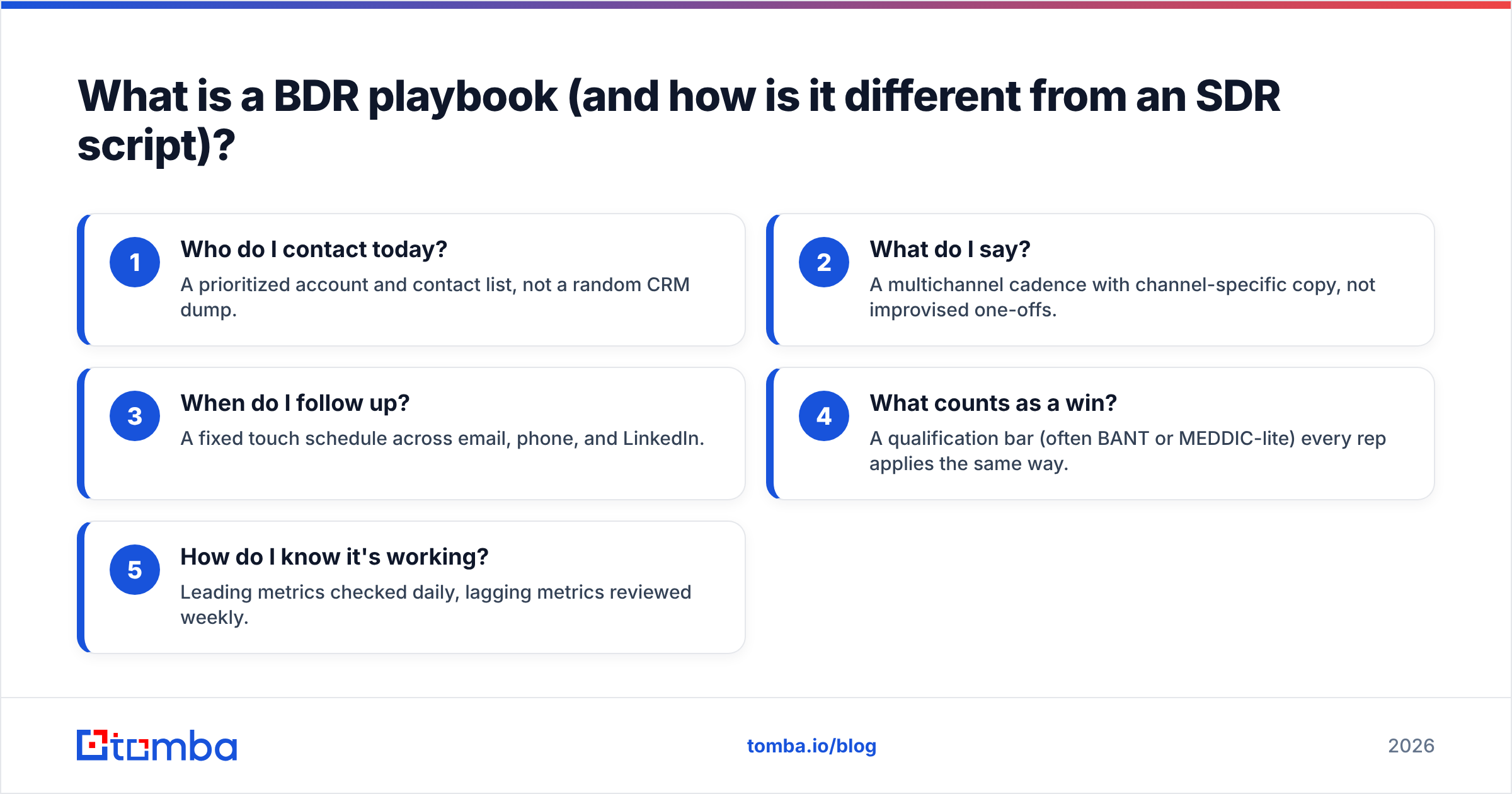
A complete playbook answers five questions without the rep having to guess:
- Who do I contact today? A prioritized account and contact list, not a random CRM dump.
- What do I say? A multichannel cadence with channel-specific copy, not improvised one-offs.
- When do I follow up? A fixed touch schedule across email, phone, and LinkedIn.
- What counts as a win? A qualification bar (often BANT or MEDDIC-lite) every rep applies the same way.
- How do I know it's working? Leading metrics checked daily, lagging metrics reviewed weekly.
The difference between a team that hits quota and one that thrashes is usually not talent — it's whether these five answers are written down and enforced.
What does the core BDR process look like, step by step?#
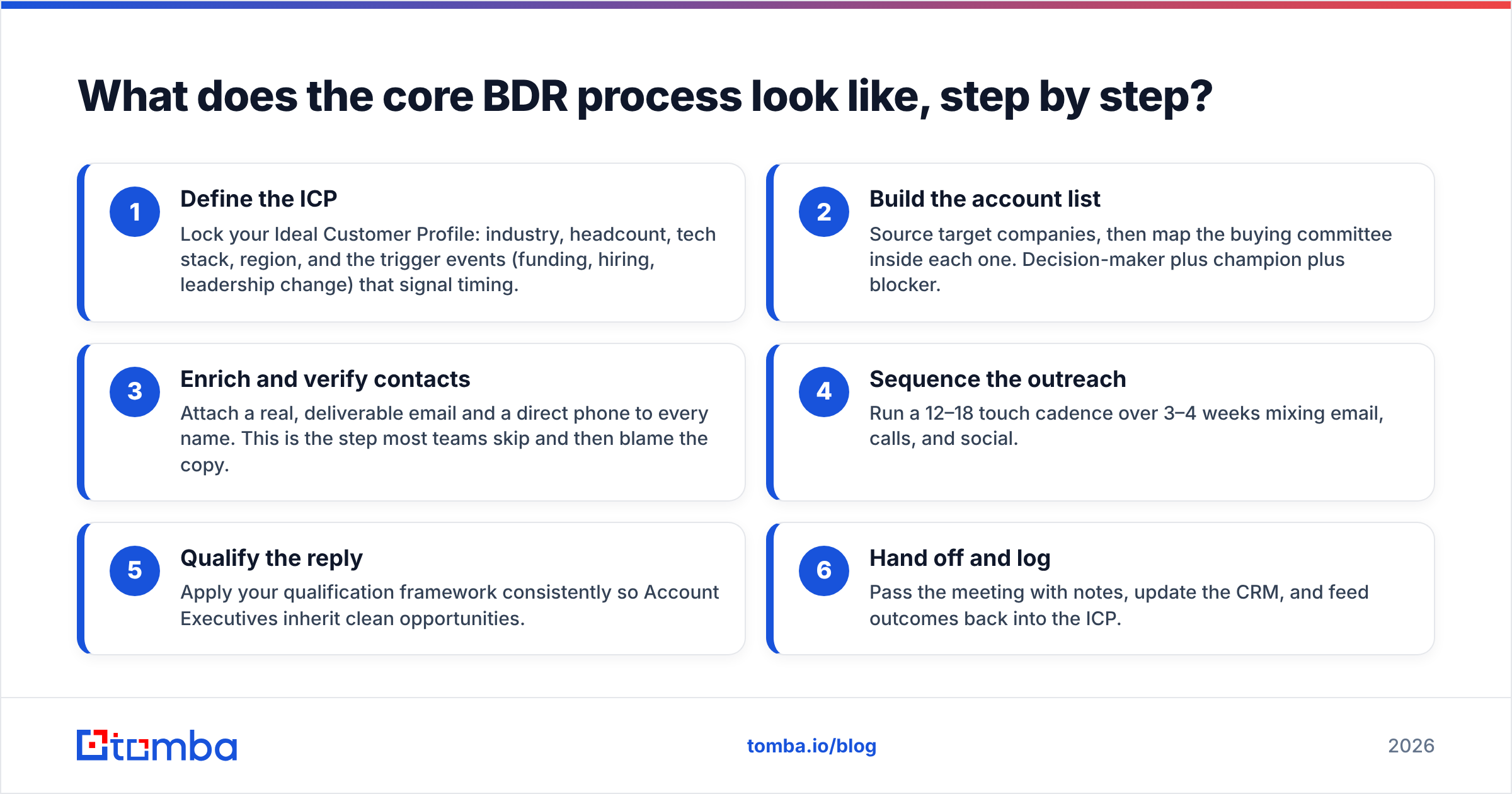
Here is the repeatable loop. Every BDR motion, no matter how fancy the tooling, collapses to these six stages.
- Define the ICP — Lock your Ideal Customer Profile: industry, headcount, tech stack, region, and the trigger events (funding, hiring, leadership change) that signal timing.
- Build the account list — Source target companies, then map the buying committee inside each one. Decision-maker plus champion plus blocker.
- Enrich and verify contacts — Attach a real, deliverable email and a direct phone to every name. This is the step most teams skip and then blame the copy.
- Sequence the outreach — Run a 12–18 touch cadence over 3–4 weeks mixing email, calls, and social.
- Qualify the reply — Apply your qualification framework consistently so Account Executives inherit clean opportunities.
- Hand off and log — Pass the meeting with notes, update the CRM, and feed outcomes back into the ICP.
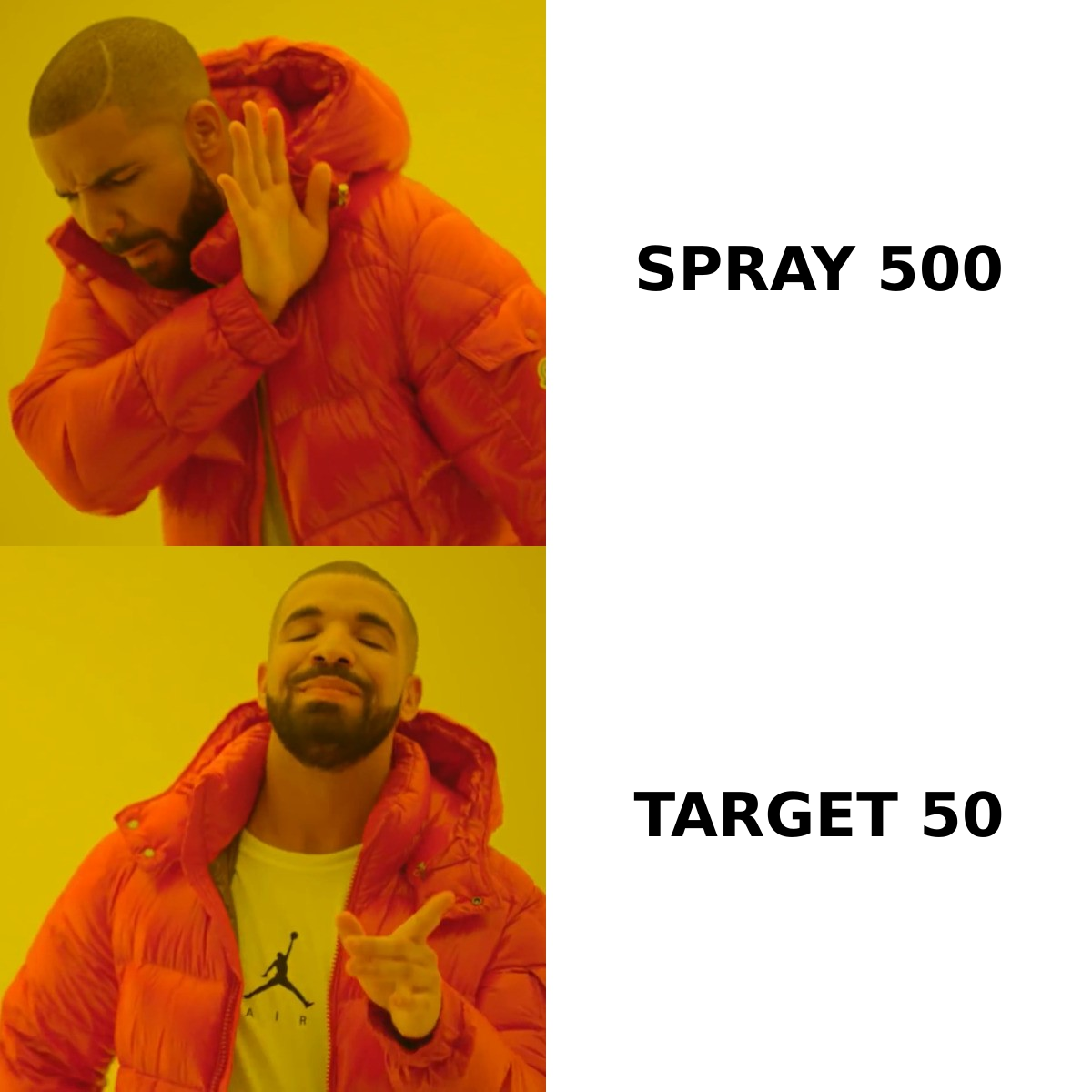
Notice that stages 1–3 are all data work. You can have the sharpest stage-4 copy in the building, but if stage 3 is weak you are personalizing messages to addresses that bounce. Garbage in, no pipeline out.
How do you build the targeting and data layer?#
Start with the list, because the list caps your ceiling. A perfectly written email to the wrong person at a poor-fit account converts at zero. Your targeting layer has three jobs: pick the right accounts, find the right people, and confirm you can actually reach them.
For account selection, build a tiered model. Tier 1 accounts match your ICP and show a trigger event — these get full multichannel, hand-personalized treatment. Tier 2 match the ICP without a trigger — lighter cadence. Tier 3 are speculative — automated, low-effort touches only. This stops reps from spending Tier-1 energy on Tier-3 logos.
For contact data, you need three fields per person to run a real cadence: a verified business email, a direct dial, and a LinkedIn profile. Tools like an email finder resolve names and domains into addresses, an email verifier confirms they are deliverable before you ever hit send, and a phone finder adds the dial for your calling block. If you are working entire companies at once, a domain search returns every known address pattern for a target domain in one pull.
The non-negotiable here is verification. Industry guidance from deliverability authorities like Google Postmaster Tools is blunt: high bounce rates wreck sender reputation, and a wrecked reputation lands your future mail in spam regardless of content. Verify before you send. Always.
What should the multichannel cadence look like?#
A cadence is a fixed schedule of touches across channels — think of it like a workout plan: the results come from showing up on the calendar, not from one heroic session. Single-channel outreach is the most common reason good reps underperform. Email alone gets ignored; calls alone get voicemail; LinkedIn alone gets buried. Stacked together, each channel reinforces the others.
A reliable 2026 baseline cadence over 18 business days:
- Day 1 — Email 1 (value-led, one ask) + LinkedIn profile view
- Day 3 — Call 1 + voicemail
- Day 4 — Email 2 (reply to thread, new angle)
- Day 6 — LinkedIn connection request with context
- Day 8 — Call 2 + Email 3 (case study or proof point)
- Day 11 — LinkedIn message
- Day 14 — Call 3
- Day 18 — Breakup email (permission to close the loop)
Keep emails under 90 words, one clear call to action, and lead with the prospect's problem, not your feature list. On calls, your only job in the first ten seconds is to earn the next thirty. For social, comment before you pitch — relevance buys the reply. If you want to push more volume, the bulk email finder lets you prepare an entire cadence's worth of verified contacts in a single batch instead of one-off lookups.
Which BDR metrics actually matter in 2026?#
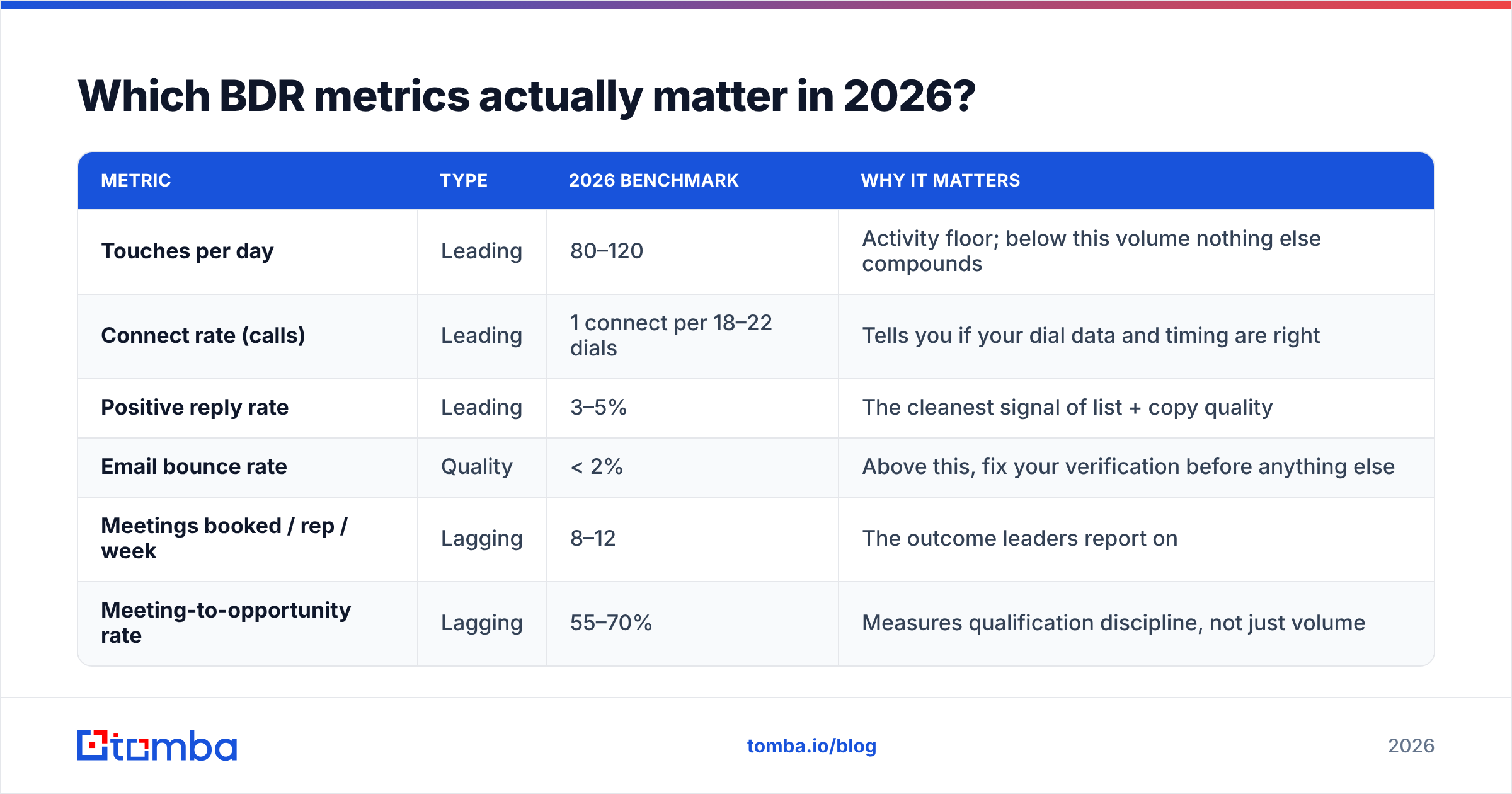
Track leading metrics daily and lagging metrics weekly — the leading ones are the levers you can still pull. The classic mistake is staring at "meetings booked" (a lagging number you can't change after the fact) while ignoring the activity and quality metrics that produce it.
| Metric | Type | 2026 benchmark | Why it matters |
|---|---|---|---|
| Touches per day | Leading | 80–120 | Activity floor; below this volume nothing else compounds |
| Connect rate (calls) | Leading | 1 connect per 18–22 dials | Tells you if your dial data and timing are right |
| Positive reply rate | Leading | 3–5% | The cleanest signal of list + copy quality |
| Email bounce rate | Quality | < 2% | Above this, fix your verification before anything else |
| Meetings booked / rep / week | Lagging | 8–12 | The outcome leaders report on |
| Meeting-to-opportunity rate | Lagging | 55–70% | Measures qualification discipline, not just volume |
The most diagnostic line in that table is bounce rate. If yours is above 2%, stop optimizing subject lines — your problem is upstream in the data layer, and every other metric is being dragged down with it. The fix is verification at list-build time, not at send time.
For framing your funnel math, the playbook from established sales orgs like HubSpot's sales blog and analyst guidance from Gartner both reinforce the same point: small improvements in early-funnel data quality produce outsized gains in booked pipeline, because the error compounds at every stage downstream.
What tools belong in the BDR stack?#
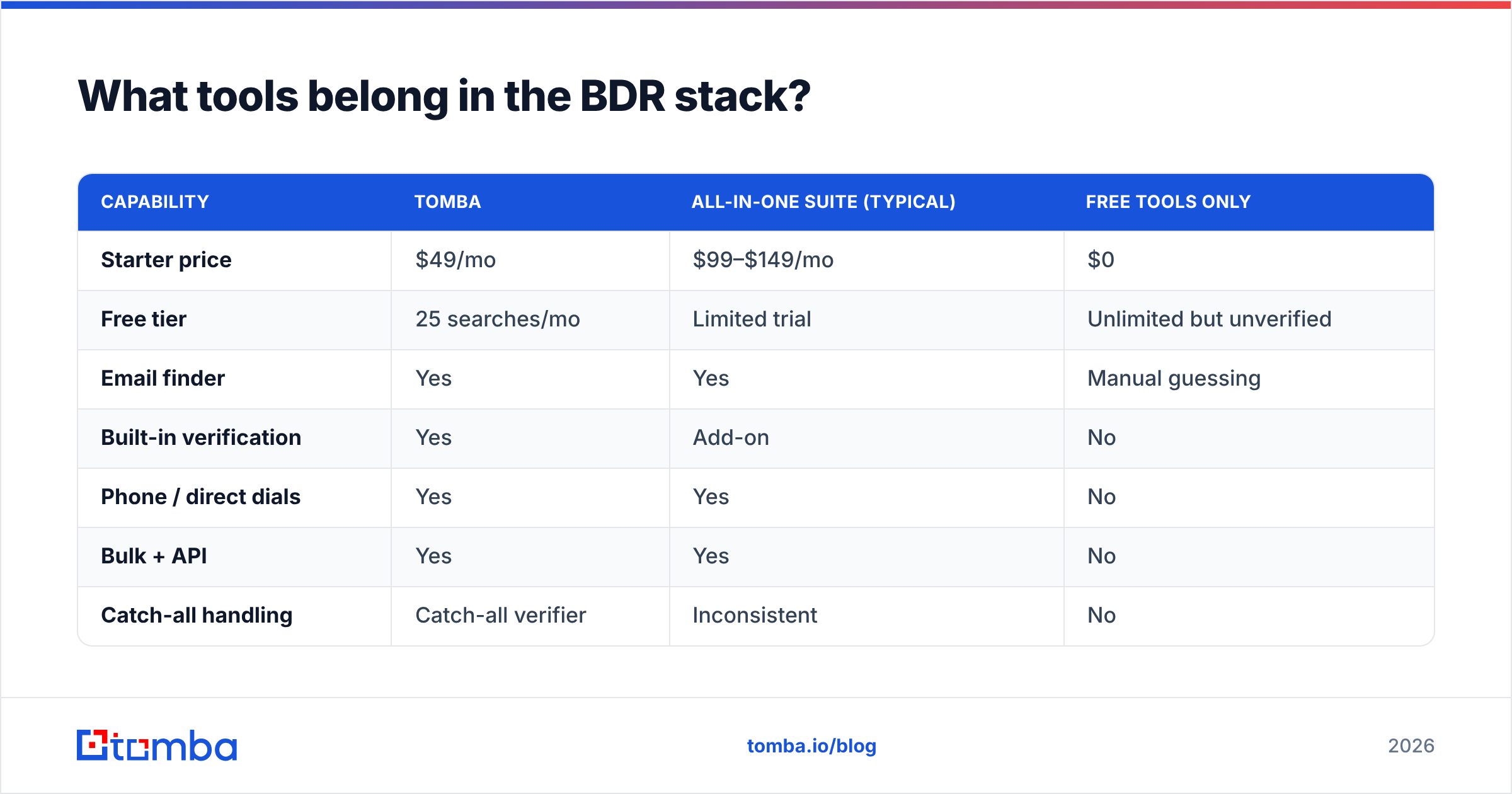
You need four categories, and you can run a credible motion for well under what most "all-in-one" platforms charge. Here is how the core data layer stacks up against the bundled-suite approach.
| Capability | Tomba | All-in-one suite (typical) | Free tools only |
|---|---|---|---|
| Starter price | $49/mo | $99–$149/mo | $0 |
| Free tier | 25 searches/mo | Limited trial | Unlimited but unverified |
| Email finder | Yes | Yes | Manual guessing |
| Built-in verification | Yes | Add-on | No |
| Phone / direct dials | Yes | Yes | No |
| Bulk + API | Yes | Yes | No |
| Catch-all handling | Catch-all verifier | Inconsistent | No |
The four stack categories every BDR team needs:
- Data & enrichment — finds, verifies, and enriches contacts. This is the foundation; underspend here and everything downstream leaks. See full Tomba pricing for tiers from Free through Pro at $249/mo.
- Sequencer / engagement — runs and tracks the multichannel cadence (Instantly, Salesloft, Outreach, or similar).
- CRM — the system of record for accounts, contacts, and opportunities.
- Dialer — powers the calling block with local presence and call logging.
If budget forces a choice, fund the data layer first. A great sequencer sending to bad data just bounces faster.
How do you ramp a new BDR with this playbook?#
Ramp in three two-week phases, and measure leading activity before you ever judge outcomes. A new rep judged on meetings in week one will panic and spam; a rep judged on quality touches will build the habits that produce meetings in week four.
- Weeks 1–2: Foundations — Learn the ICP cold, shadow calls, build their first verified list, send under supervision. Target: clean activity, zero bounces.
- Weeks 3–4: Volume — Run the full cadence solo, hit the touch floor, review every reply with a manager. Target: connect rate in range.
- Weeks 5–6: Conversion — Tighten qualification, refine copy from real replies, own the handoff. Target: first self-sourced meetings.
Document objection responses in a shared library so every rep benefits from the team's best rebuttals. A playbook that lives in one person's head is not a playbook — it's a liability the day they leave.
What are the most common BDR playbook mistakes?#
Three failures account for most underperforming teams, and all three are preventable:
- Sending to unverified lists. It tanks deliverability and poisons every metric. Verify first — a free email checker handles spot checks, and the verifier handles scale.
- Single-channel cadences. Email-only or call-only motions leave half your reply potential on the table. Stack channels.
- Optimizing copy before fixing data. Reps will rewrite subject lines for a week while a 9% bounce rate quietly destroys their domain. Diagnose the funnel top-down: data, then targeting, then copy.
Fix these three and most teams see reply rates move before they touch anything else.
Build your pipeline engine on clean data#
A BDR playbook turns individual effort into a predictable system — but the system rests on the data layer, and that is exactly where most teams cut corners. Before you invest another hour in cadences or copy, make sure every contact you touch is real and reachable.
Start with the Tomba Email Finder: find professional emails by name, domain, or company, verify them in the same workflow, and feed your sequencer a list that actually lands. The Free tier gives you 25 searches a month to test it against your own territory, and paid plans start at $49/mo when you're ready to scale the engine. Clean data in, booked meetings out — that's the whole playbook.
// get started
Find, verify and enrich your first contacts today
Start on the free plan with 25 searches a month, then scale when your team is ready.
Free plan · No credit card required · GDPR & CCPA
// about the author