Client Prospecting in 2026: A Practical Playbook That Works
A no-fluff client prospecting playbook for 2026: how to build a target list, find verified contacts, score leads, and book meetings without spray-and-pray outreach.
Client Prospecting in 2026: A Practical Playbook That Works
Client prospecting is the work of finding and qualifying the companies and people most likely to buy from you — before you ever send a pitch. Do it well and your pipeline fills with deals that close. Do it badly and you burn hours emailing people who were never going to reply.
This guide gives you a repeatable system: define who you're chasing, find verified contact data, score the list, and reach out in a way that earns replies. No theory padding — just the steps that move meetings onto your calendar.
TL;DR#
- Client prospecting is targeting, not volume. A tight list of 200 right-fit accounts beats a scraped list of 10,000 strangers every time.
- Build your ICP first. Firmographics, trigger events, and a buyer persona decide who's worth your time before you write a single email.
- Verified contact data is the bottleneck. Bad emails kill deliverability and waste reps' hours — find and verify contacts before outreach.
- Score and sequence. Rank prospects by fit and intent, then run multi-touch sequences across email, phone, and LinkedIn.
- Measure reply and meeting rates, not send volume. Optimize the funnel, not your activity count.
What is client prospecting?#
Client prospecting is the front end of the sales process: identifying potential customers, researching whether they fit, and starting a conversation. Think of it like fishing. Spray-and-pray prospecting is dumping bait across the whole lake and hoping. Targeted prospecting is reading the water, picking the spot where your fish actually feed, and casting there. Same effort, wildly different catch.
Technically, prospecting sits before qualification and discovery. You're not closing — you're earning the right to a first conversation. That means the quality of your inputs (who you target, how accurate your data is) sets the ceiling for everything downstream. A great pitch to the wrong person still fails.
The modern twist for 2026: buyers research silently long before they talk to a rep. By the time someone "raises a hand," most of the decision is made. So good prospecting now means reaching the right accounts while they're still forming an opinion — using intent signals and trigger events instead of waiting for inbound.
How do you build a prospecting list that converts?#
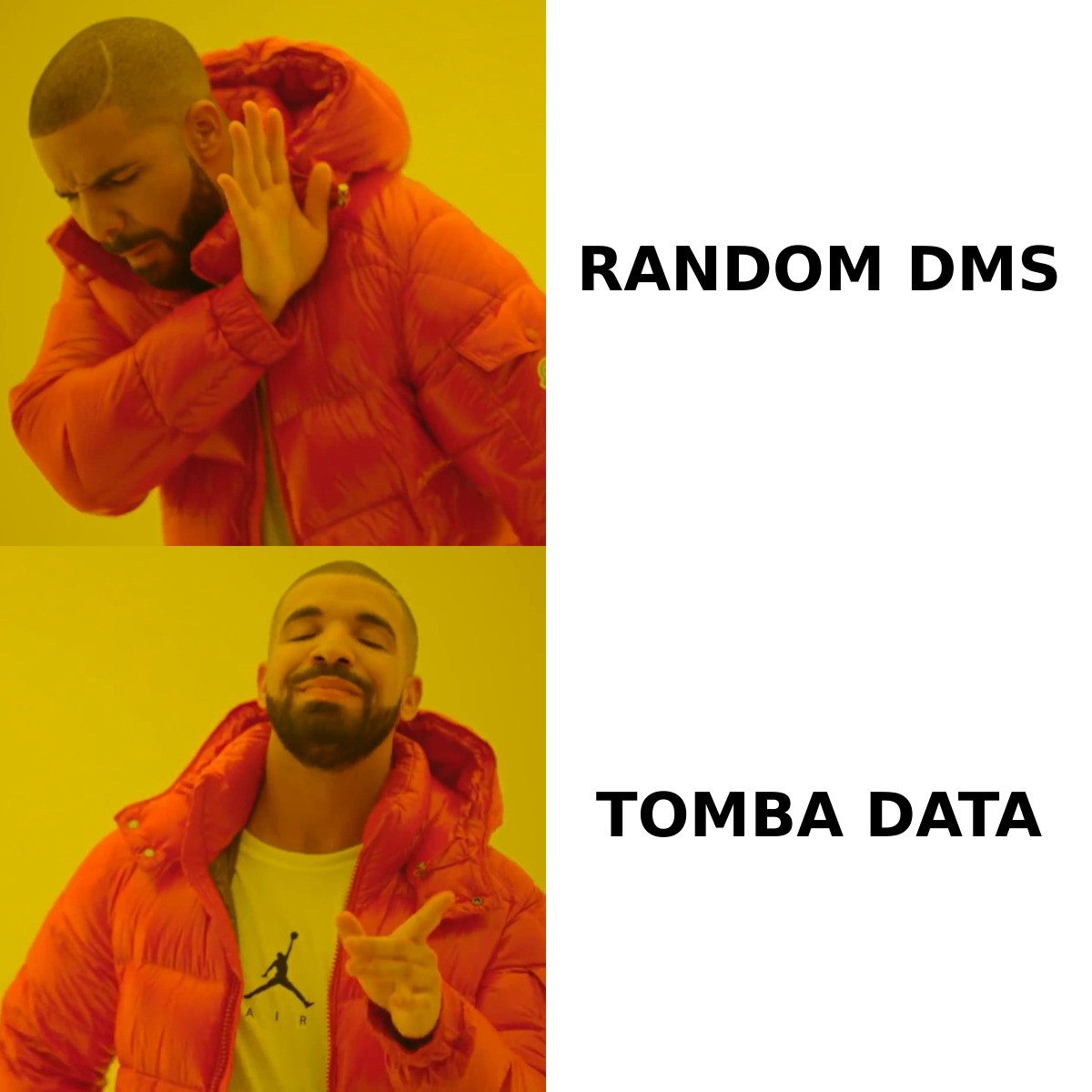
Start with the people you actually want to win, then work backward to the data. Here's the order that works:
- Define your Ideal Customer Profile (ICP). Nail firmographics: industry, company size, revenue band, geography, and tech stack. The narrower and more honest this is, the better your reply rates.
- Map the buying committee. B2B deals involve 6–10 stakeholders. Identify the economic buyer, the champion, and the blockers by role, not just one "decision maker."
- Layer in trigger events. New funding, a leadership hire, a product launch, or a job posting for a relevant role all signal timing. Timing beats persistence.
- Find the contacts. Use a domain search to pull every email pattern at a target company, then narrow to the named people on your buying committee.
- Verify before you send. Run every address through an email verifier so bounces never touch your sending domain.
- Enrich for context. Add role, seniority, location, and recent activity so your first line isn't generic.
This list-building loop is where most teams either win or lose the quarter. Skipping verification (step 5) is the single most common mistake — it quietly destroys deliverability and makes every later step less effective.
What's the difference between good and bad prospecting?#
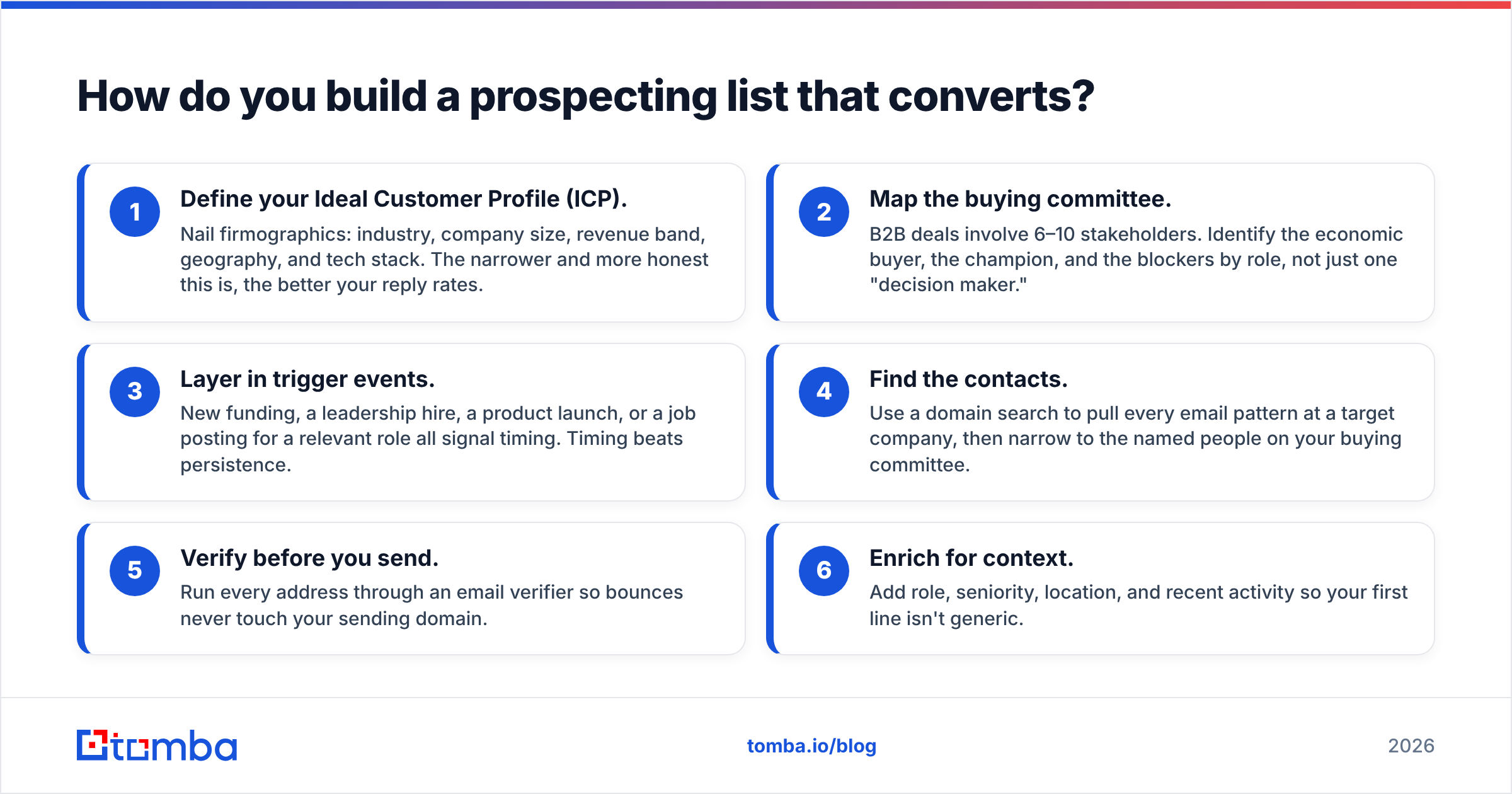
The gap usually comes down to inputs and discipline, not talent. Here's a side-by-side:
| Dimension | Spray-and-Pray Prospecting | Targeted Prospecting |
|---|---|---|
| List source | Bought/scraped bulk lists | ICP-defined, enriched accounts |
| Contact accuracy | Unverified, high bounce | Verified, < 2% bounce |
| Personalization | "Hi {{FirstName}}" merge tag | Role + trigger-event relevance |
| Channels | Email blast only | Email + phone + LinkedIn |
| Reply rate | 0.5–1% | 5–12% |
| Meetings per 100 contacts | 0–1 | 4–8 |
| Domain health | Degrades fast | Protected |
| Rep morale | Burnout from rejection | Momentum from replies |
The numbers in the right column aren't aspirational fantasy — they're what disciplined teams routinely hit when their data is clean and their targeting is tight. The difference is almost never "better copy." It's better lists.
Which channels should you prospect on?#
Use more than one. A single-channel sequence leaves replies on the table because different buyers respond to different mediums. The strongest 2026 motion blends three:
- Email is the workhorse. It scales, it's measurable, and it respects the buyer's time. But it only works if your email deliverability is healthy — which loops back to verified data and warm sending domains.
- Phone still converts. A well-timed call after an email opens often gets the meeting that email alone couldn't. Pull direct dials with a phone finder so you're not stuck on the company switchboard.
- LinkedIn builds familiarity. A thoughtful comment or connection before your email lands makes you a known name instead of a cold stranger. Use a LinkedIn finder to connect profiles to verified work emails.
The sequence matters. A common high-performing pattern: LinkedIn view → email 1 → LinkedIn connect → call → email 2 → break-up email. Each touch reinforces the others, and the buyer sees a consistent, professional presence across the places they already work.

How do you find and verify prospect contact data?#
This is the operational heart of prospecting, and it's where tooling earns its keep. You need three things working together: discovery, verification, and enrichment.
Discovery answers "what's this person's email?" Modern email-finder tools take a name and a company domain and return the most likely address based on known patterns and source data. For whole accounts, you find emails by domain in one pass instead of guessing one person at a time. If you work at scale, a bulk email finder lets you upload a list of names and domains and get verified contacts back in minutes.
Verification answers "will this actually deliver?" A good email verification step checks syntax, domain, mailbox existence, and catch-all status. Catch-all domains are the tricky ones — they accept everything at the SMTP layer, so you need a dedicated catch-all verifier to judge real reachability rather than trusting a green checkmark.
Enrichment answers "what else do I know?" Layering in title, seniority, location, and company data turns a bare email into a contact you can personalize to. Data enrichment is what separates a relevant first line from a generic one.
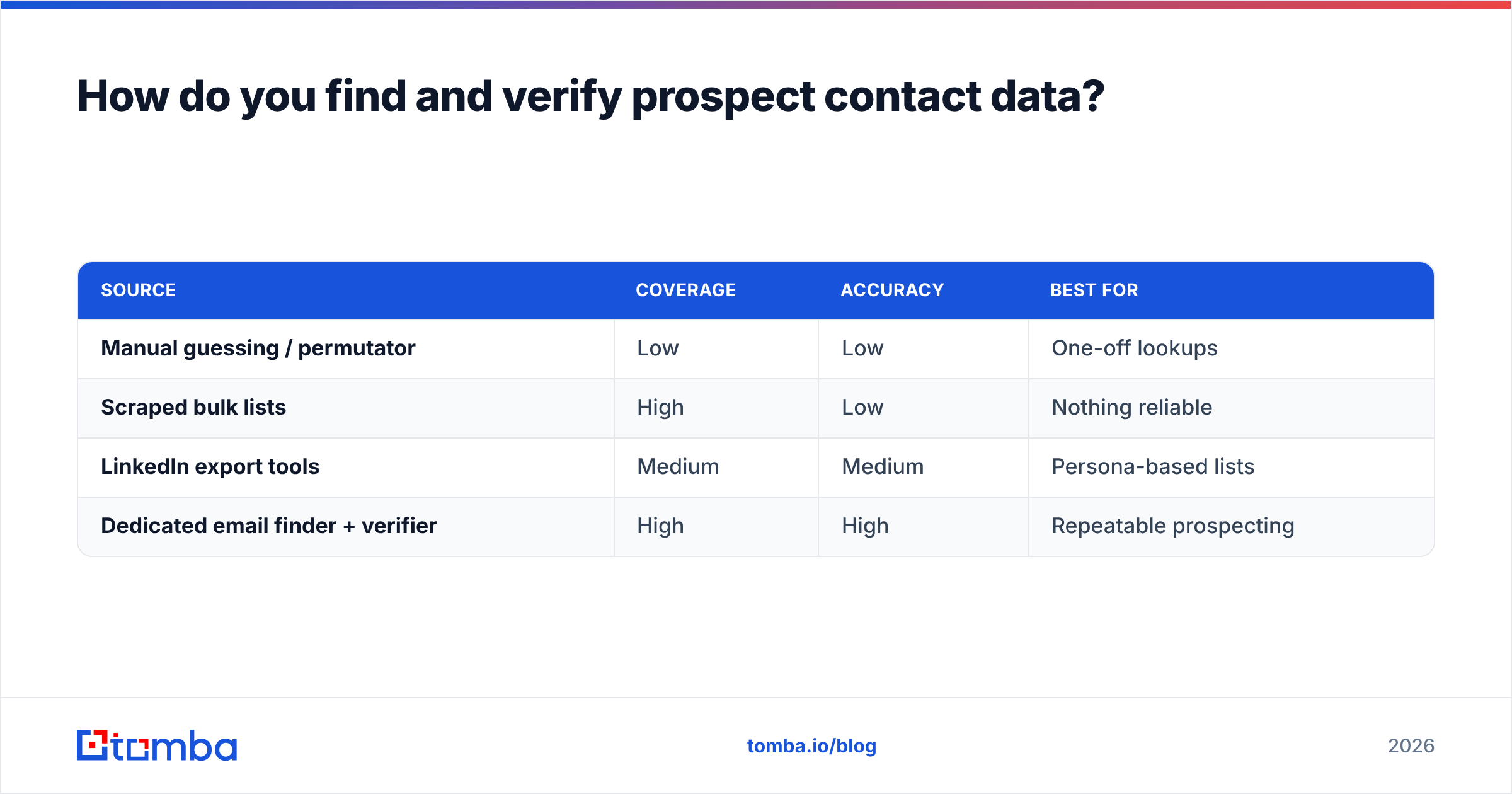
A quick comparison of where typical data sources land:
| Source | Coverage | Accuracy | Best for |
|---|---|---|---|
| Manual guessing / permutator | Low | Low | One-off lookups |
| Scraped bulk lists | High | Low | Nothing reliable |
| LinkedIn export tools | Medium | Medium | Persona-based lists |
| Dedicated email finder + verifier | High | High | Repeatable prospecting |
The takeaway: dedicated discovery plus verification is the only combination that scales without wrecking your sender reputation. Tools like Tomba's email finder are built for exactly this loop, and independent reviews on G2 are a sensible place to sanity-check any vendor's accuracy claims before you commit.
How should you qualify and score prospects?#
Score every prospect on two axes: fit (how well they match your ICP) and intent (how likely they are to buy now). A simple model beats no model:
- Fit score (0–50): points for matching industry, size, geography, and tech stack.
- Intent score (0–50): points for trigger events — funding, hiring, tech adoption, content engagement, or website visits.
- Total ≥ 70: outreach now, high priority.
- 40–69: nurture, revisit on the next trigger.
- Below 40: drop. Your time is the scarce resource.
This keeps reps focused on the accounts most likely to close instead of treating every name equally. For a deeper framework, HubSpot's lead scoring guidance is a solid, vendor-neutral reference. The key discipline is ruthlessly dropping the bottom tier — chasing low-fit, low-intent prospects is the quietest way to miss a quota.
If you run intent off website traffic, pairing a website visitor reveal tool with your scoring model lets you prioritize accounts that are already researching you anonymously. Those are some of the warmest prospects you'll ever touch.
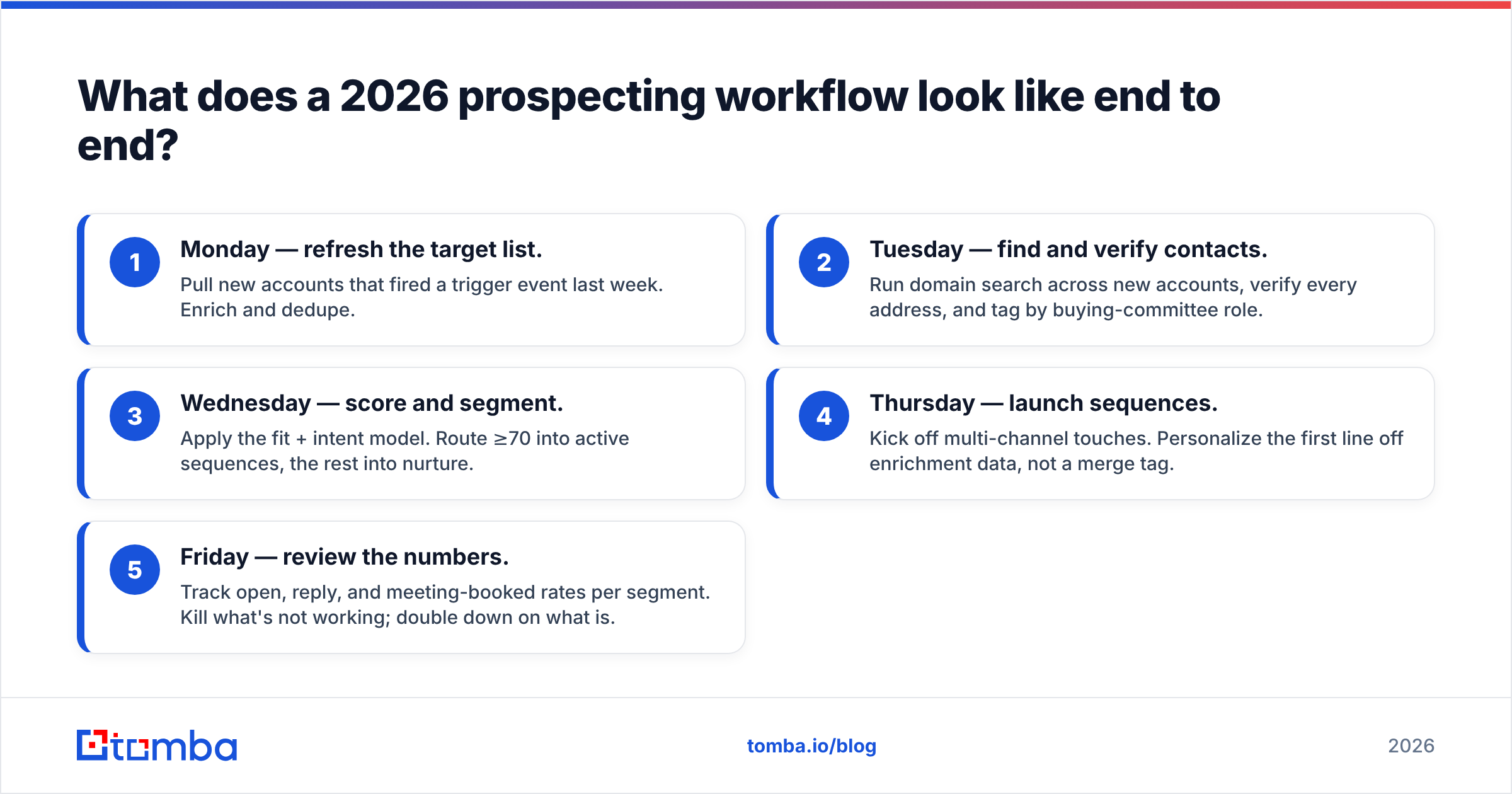
What does a 2026 prospecting workflow look like end to end?#
Here's the full loop, tool-agnostic, that a strong outbound team runs every week:
- Monday — refresh the target list. Pull new accounts that fired a trigger event last week. Enrich and dedupe.
- Tuesday — find and verify contacts. Run domain search across new accounts, verify every address, and tag by buying-committee role.
- Wednesday — score and segment. Apply the fit + intent model. Route ≥70 into active sequences, the rest into nurture.
- Thursday — launch sequences. Kick off multi-channel touches. Personalize the first line off enrichment data, not a merge tag.
- Friday — review the numbers. Track open, reply, and meeting-booked rates per segment. Kill what's not working; double down on what is.
Notice what's not here: no day spent manually copy-pasting emails into a spreadsheet. Automation handles discovery, verification, and sequencing so your reps spend their hours on conversations, not data entry. Connecting your finder to your CRM through a HubSpot integration or Salesforce keeps the whole loop in one system of record.
What metrics tell you if prospecting is working?#
Stop counting sends. Volume is an activity metric, not an outcome. Track the funnel instead:
- Contact accuracy / bounce rate — under 2% means your data is clean.
- Reply rate — the truest signal of targeting and relevance. Aim for 5%+.
- Positive reply rate — replies that want a conversation, not just "unsubscribe."
- Meetings booked per 100 contacts — the metric your VP actually cares about.
- Pipeline sourced — dollar value of opportunities from prospecting.
When a number sags, you can diagnose where: high bounce means data, low open means subject lines or deliverability, low reply means targeting or copy, low meetings means your call-to-action. Each metric maps to a fixable input. That's the whole point of measuring the funnel instead of the activity — you get a diagnosis, not just a scoreboard.
How is AI changing client prospecting?#
AI is collapsing the time between "identify an account" and "send a relevant message." In 2026, the highest-leverage uses are research and personalization, not full automation of the relationship.
- Research at scale: AI summarizes a prospect's recent news, funding, and tech stack so a rep walks into a call already informed.
- Personalization assists: AI drafts a relevant first line from enrichment data — you still edit it, but you start from something real instead of a blank box.
- Prioritization: models rank your list by likelihood to convert, sharpening the fit-and-intent scoring you do manually.
What AI doesn't replace is judgment and genuine relevance. Buyers spot generic AI spam instantly, and it torches your reputation faster than no outreach at all. Use AI to research and prioritize; keep a human deciding who's worth contacting and why.
Common client prospecting mistakes to avoid#
- Skipping verification. Bounces wreck deliverability and quietly sink every later email. Verify first, always.
- Targeting too broadly. A vague ICP produces vague outreach and 1% reply rates. Narrow until it feels almost too specific.
- Single-channel reliance. Email-only sequences leave half your meetings on the table.
- Confusing activity with progress. 500 sends and zero meetings is not a good week.
- Ignoring timing. The best message at the wrong moment still loses. Lead with trigger events.
Avoiding these five puts you ahead of most outbound teams, because most teams make at least three of them every single week.
Start prospecting smarter#
Client prospecting rewards precision over volume. Build a tight ICP, find the right people, verify their contact data, score for fit and intent, and reach out across channels with genuine relevance. The teams that win in 2026 aren't sending more — they're targeting better and protecting their sender reputation with clean data.
That clean data is where Tomba's Email Finder fits your stack. Find verified professional emails by name, domain, or company, run them through built-in verification, and feed accurate contacts straight into your sequences and CRM. Start free with 25 searches a month, or scale up on a Tomba plan — Starter at $49/mo, Growth at $99/mo — when your pipeline demands it. Spend your hours on conversations, not bounce-back emails.
// get started
Find, verify and enrich your first contacts today
Start on the free plan with 25 searches a month, then scale when your team is ready.
Free plan · No credit card required · GDPR & CCPA
// about the author