11 Best Amplemarket Alternatives for Outbound Sales in 2026
Amplemarket bundles data, outreach, and AI into one seat — but the price and lock-in aren't for everyone. Here are 11 Amplemarket alternatives compared on data, deliverability, and cost.
Amplemarket is a strong all-in-one outbound platform, but "all-in-one" is exactly why a lot of teams go looking for something else. You pay for data, sequencing, deliverability tooling, and AI in one seat — and you're locked into whatever quality each module happens to deliver. This guide breaks down the 11 best Amplemarket alternatives for 2026, what each one is actually good at, and how to decide between an all-in-one suite and a best-of-breed stack you assemble yourself.
TL;DR#
- Amplemarket is a bundled AI sales platform (data + multichannel sequencing + deliverability + AI copy). Great if you want one tool; expensive and rigid if you only need part of it.
- If data accuracy is your bottleneck, a dedicated email-finder and verifier like Tomba plus a separate sequencer almost always beats a bundled database.
- If you want a cheaper all-in-one, look at Apollo or Saleshandy. If you want enterprise multichannel, Outreach or Salesloft.
- Best-of-breed (finder + verifier + sequencer) usually costs less and performs better than one suite — at the cost of more setup.
- Use the comparison table and decision framework below to match a tool to your actual gap, not to a feature list.
What is Amplemarket and why look for alternatives?#
Amplemarket is a sales engagement platform that bundles a B2B contact database, multichannel sequencing (email, LinkedIn, phone), email deliverability tooling, and AI-generated copy into a single product. The pitch is simple: one login replaces your data vendor, your sequencer, and half your SDR's manual work.
That bundle is also the reason teams shop around. The most common triggers:
- Price. Amplemarket sits in the premium tier. For a 2–3 person team that mostly needs accurate emails and a basic sequence, you're paying for modules you barely touch.
- Data gaps in your region or niche. Every bundled database is strong somewhere and thin elsewhere. When the included data misses your ICP, you can't swap just the data layer.
- Lock-in. Credits, contracts, and a closed workflow make it hard to leave or to mix in a better point solution.
- Deliverability control. Teams running serious volume often want their own warmup, inbox rotation, and verification stack rather than a black box.
If any of those hit home, the right move is to figure out which job you actually need done — then pick the tool that does that job best.
How should you choose an Amplemarket alternative?#
Conclusion first: pick based on your single biggest bottleneck, not on who has the longest feature list. Most teams only have one real gap — bad data, weak sequencing, or poor deliverability — and overpay to fix all three at once.
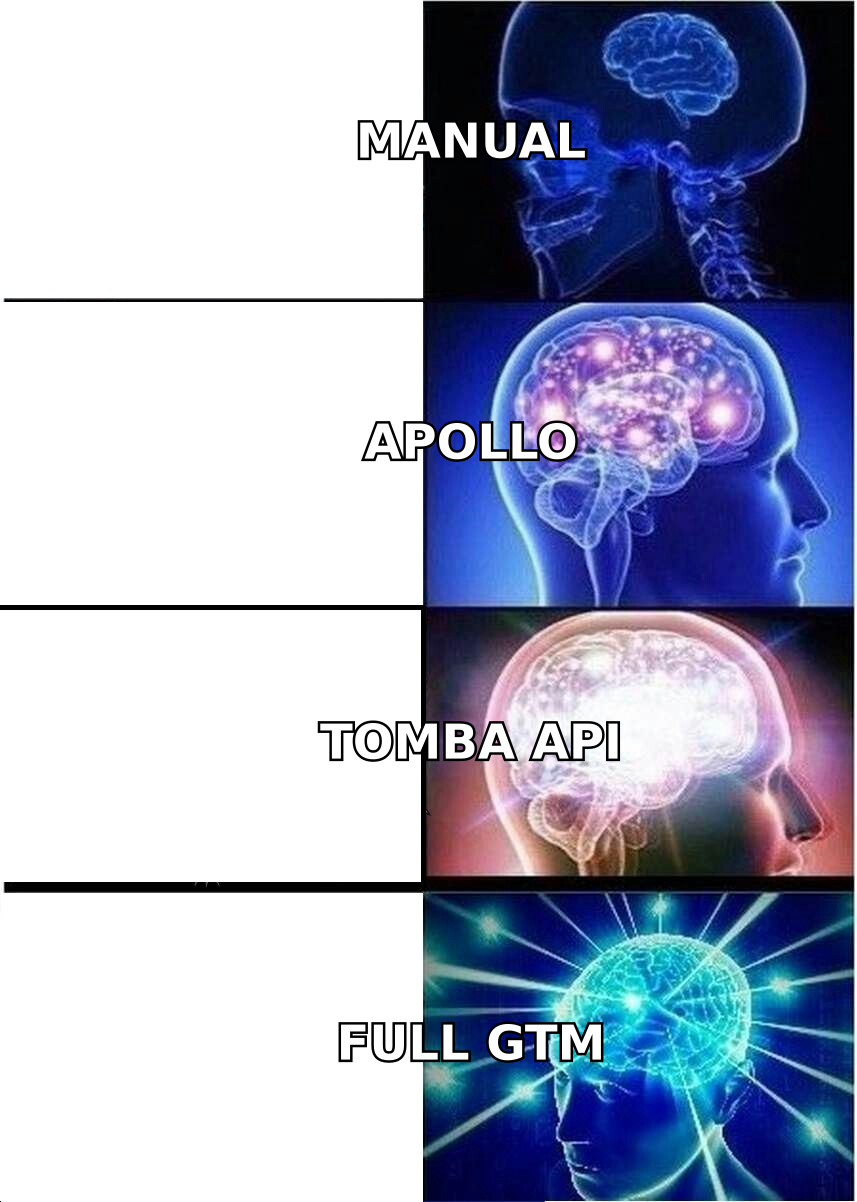
Use this framework to locate your gap before you compare vendors.
Walk it top to bottom:
- Is your reply rate low because emails bounce or never reach the inbox? Your gap is data + deliverability. Fix this first — no sequence saves a list full of invalid addresses. Start with a dedicated email verifier and an accurate finder.
- Are emails landing but nobody replies? Your gap is messaging and channel mix. You need a sequencer with strong personalization and multichannel steps.
- Do you have data and copy but no system to run it at scale? Your gap is orchestration — an engagement platform with reporting, A/B testing, and CRM sync.
- Are you spending more time stitching tools than selling? That's the one case where a true all-in-one earns its price.
Once you know your gap, the alternatives below sort themselves into obvious buckets.
What are the best Amplemarket alternatives in 2026?#
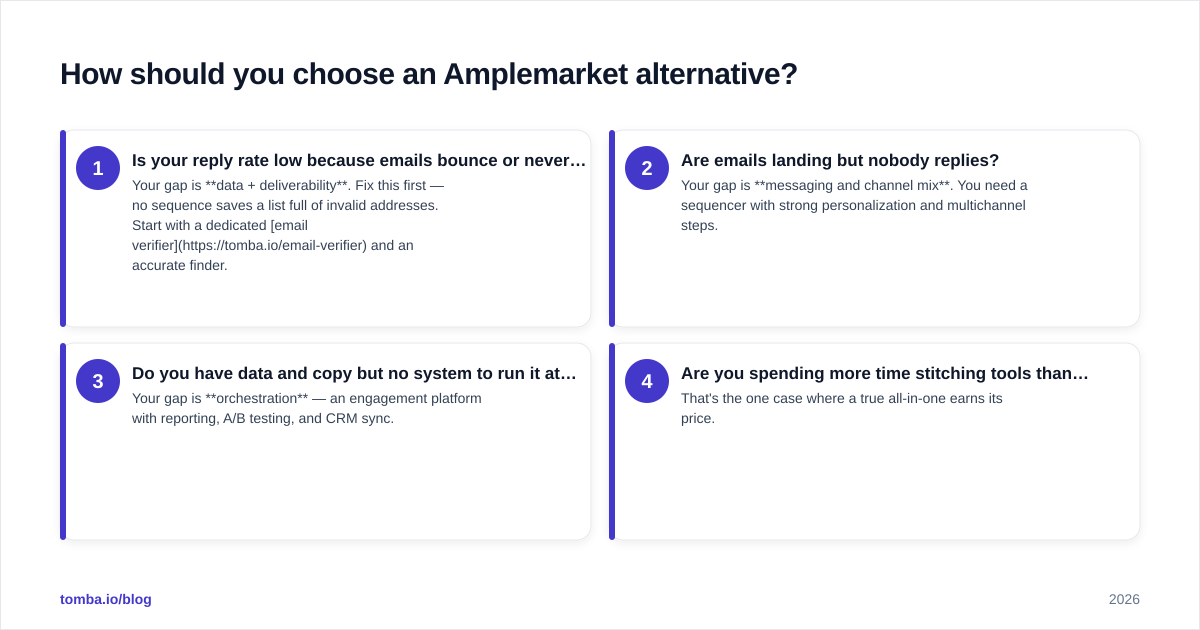
Here's how the leading options compare across the attributes that actually drive outbound results. Prices are entry paid tiers and shift over time — confirm on each vendor's page before you buy.
| Tool | Best for | Core strength | Free tier | Starting price |
|---|---|---|---|---|
| Tomba | Data accuracy layer | Email finder + verifier + enrichment | 25 searches/mo | $49/mo |
| Apollo | Cheap all-in-one | Database + basic sequencing | Yes (limited) | ~$49/mo |
| Outreach | Enterprise engagement | Multichannel + forecasting | No | Custom (enterprise) |
| Salesloft | Enterprise cadences | Cadence analytics + coaching | No | Custom (enterprise) |
| Saleshandy | SMB cold email | Sequencing + free email finder | Trial | ~$36/mo |
| Instantly | High-volume cold email | Inbox rotation + warmup | Yes (limited) | ~$37/mo |
| Lemlist | Personalization | Image/video personalization | Trial | ~$39/mo |
| Reply.io | AI multichannel | AI SDR + sequences | Trial | ~$49/mo |
| Clay | Data orchestration | Waterfall enrichment + automation | Yes (limited) | ~$149/mo |
| Smartlead | Agencies/scale | Unlimited inboxes + master inbox | Trial | ~$39/mo |
| HubSpot Sales | CRM-first teams | Native CRM + sequences | Yes (limited) | ~$20/seat/mo |
A few of these deserve more than a row.
Tomba — when your real problem is data quality#
If your outbound underperforms because of bounces and stale contacts, the cheapest high-leverage fix is a dedicated data layer. Tomba focuses on exactly that: a high-accuracy email finder, an email verifier that catches invalid and risky addresses before you send, plus domain search, catch-all verification, and enrichment. You feed clean, verified contacts into whatever sequencer you already like.
This is the best-of-breed play — pair Tomba's data with a focused sequencer and you typically beat a bundled database on accuracy while paying less. Tomba pricing runs a free tier (25 searches/mo), Starter at $49/mo, Growth at $99/mo, and Pro at $249/mo, so it scales from a solo rep to a full team. There's also a bulk email finder and an email finder API for teams that want to wire enrichment directly into their CRM or data pipeline.
Apollo — the cheaper all-in-one#
Apollo is the closest like-for-like swap if you want Amplemarket's "data plus sequencing in one tool" model at a lower entry price. Its database is large and its prospecting filters are good. The trade-off is the usual bundled-data caveat: accuracy varies by segment, and heavy sequencing features sit behind higher tiers.
Outreach and Salesloft — the enterprise lane#
If you're a 20+ rep org where the bottleneck is orchestration, reporting, and rep coaching, the two incumbents are Outreach and Salesloft. Both are mature multichannel engagement platforms with deep CRM sync and analytics. Neither leads on raw data — you'll still want a dedicated enrichment source — and both are priced for teams, not individuals. Tomba publishes dedicated breakdowns if you're weighing these specifically: Outreach alternative and Salesloft alternative.
Saleshandy, Instantly, and Smartlead — the cold-email specialists#
For pure cold-email at volume, this trio is built around deliverability: inbox rotation, automated warmup, and unified reply inboxes. Saleshandy leans SMB-friendly, Instantly and Smartlead lean high-volume and agency. If your gap is "I can send but I land in spam," start here — and still verify your list first, because no warmup fixes a dirty database.
Lemlist and Reply.io — personalization and AI#
Lemlist made its name on dynamic image and video personalization; Reply.io leans into AI-driven multichannel sequencing and an "AI SDR" workflow. Both are solid mid-market sequencers when your gap is message quality, not data.
Clay — the orchestration power tool#
Clay is different in kind: it's a data-orchestration canvas that runs waterfall enrichment across many providers and triggers automations. It's the most flexible option here and the steepest learning curve. Teams often run Clay with a dedicated finder rather than instead of one.
Is an all-in-one or best-of-breed stack better?#
Conclusion: for most teams under ~20 reps, best-of-breed wins on both cost and performance. All-in-one wins when the cost of stitching tools together exceeds the cost of the suite — usually only at larger orgs with a RevOps function.
Think of it like a kitchen. An all-in-one suite is a meal kit: everything in one box, convenient, and you pay a premium for the packaging — and you eat what's in the box even if the sauce is mediocre. Best-of-breed is buying ingredients yourself: more trips to the store, but you get the best tomatoes and the best cheese, usually for less money.
The "mediocre sauce" in outbound is almost always the data. Bundled databases optimize for breadth, not for your specific ICP, and you can't swap just that layer. That's why the most common winning stack in 2026 looks like:
Dedicated finder + verifier (data) → focused sequencer (outreach) → warmup/deliverability tool → CRM.
You control each layer, you can upgrade the weak one without re-platforming, and the total is frequently cheaper than one premium suite.

How much do Amplemarket alternatives cost?#
Pricing splits cleanly into three tiers:
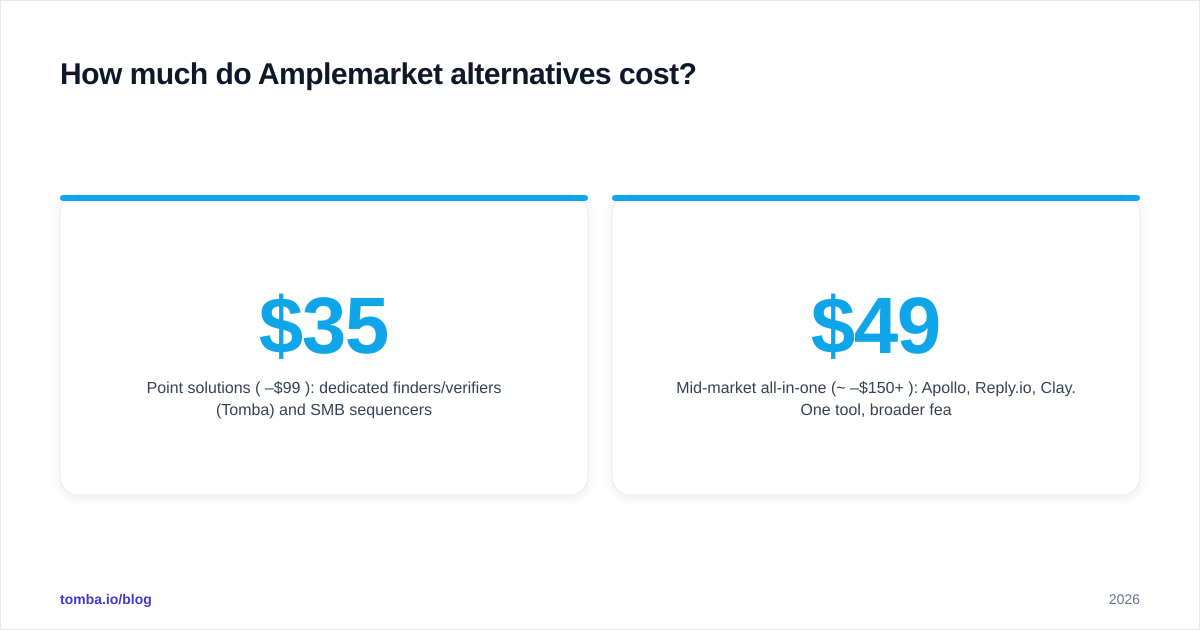
- Point solutions ($35–$99/mo): dedicated finders/verifiers (Tomba) and SMB sequencers (Saleshandy, Instantly, Lemlist, Smartlead). You assemble the stack; total often lands $80–$200/mo for a small team.
- Mid-market all-in-one (~$49–$150+/mo per seat): Apollo, Reply.io, Clay. One tool, broader features, accuracy trade-offs on bundled data.
- Enterprise engagement (custom, typically four figures/mo): Outreach, Salesloft, and Amplemarket itself. Built for teams with RevOps and forecasting needs.
A practical rule: if you're spending more on a suite's data module than a standalone finder would cost, you're overpaying for convenience. Verify list quality with a free email verifier trial before committing to any bundled database — it's the fastest way to see whether the included data is actually good for your segment.
Which Amplemarket alternative should you pick?#
Match your gap to the tool:
- Bad data / high bounces → Tomba (finder + verifier), optionally feeding Clay for waterfall enrichment.
- Cheaper all-in-one → Apollo or Reply.io.
- High-volume cold email → Instantly, Smartlead, or Saleshandy (and verify the list first).
- Personalized mid-market outreach → Lemlist or Reply.io.
- Enterprise orchestration & coaching → Outreach or Salesloft.
- CRM-first team → HubSpot Sales Hub.
For deeper side-by-sides, browse vendor reviews on G2 and check the official Amplemarket site for current feature parity, then validate the data claims yourself. Tomba also maintains a focused Amplemarket alternative comparison if you want the data-layer view specifically.
The bottom line#
Amplemarket is a capable suite, but "all-in-one" only pays off when stitching tools together costs more than the bundle — and for most teams it doesn't. Locate your single biggest bottleneck, fix that with the best tool for the job, and add layers as you scale.
Nine times out of ten, the bottleneck is data. If your reps are emailing addresses that bounce or never land, no sequencer, warmup tool, or AI copywriter will save the campaign. Start by fixing the inputs: try the Tomba Email Finder free (25 searches/mo, no card), verify your existing list, and see how many "valid" contacts in your current stack were quietly costing you reply rate. Clean data first — everything downstream gets easier.
// get started
Find, verify and enrich your first contacts today
Start on the free plan with 25 searches a month, then scale when your team is ready.
Free plan · No credit card required · GDPR & CCPA
// about the author