Arounddeal vs Brandnav 2026: Which B2B Data Tool Wins?
Arounddeal and Brandnav both promise accurate B2B contact data, but they solve different problems. We compare pricing, accuracy, coverage, and verification to help you pick.
You picked two tools that sound interchangeable on their landing pages and discovered they are not once a card was on file. Arounddeal and Brandnav both sell "accurate B2B contact data," but one is a prospecting database with a Chrome extension and the other is an enrichment-and-verification API. Choosing the wrong one means paying for coverage you don't use or building workflows the tool was never meant to support.
This is a neutral, side-by-side breakdown for 2026 — what each tool actually does, where the data comes from, how pricing really works, and which one belongs in your stack. Where a third option is genuinely cleaner, we say so.
TL;DR#
- Arounddeal is a prospecting platform: a 120M+ contact database, LinkedIn Chrome extension, and built-in lists. Best when you need to discover net-new contacts.
- Brandnav is an enrichment and email-verification engine: feed it a name and domain (or a messy list) and it returns verified emails and metadata. Best when you already have leads and need to clean and complete them.
- On raw email accuracy, both claim 95%+, but neither publishes an independent benchmark. Always run a free-tier test on your own list before committing.
- Pricing models differ: Arounddeal sells credits per contact reveal; Brandnav sells verification/enrichment volume. Cost per usable email is the only fair comparison.
- If you want finding and verification in one place at a flatter price, a third tool like Tomba's email finder covers both jobs — compare all three before you commit.
What is Arounddeal?#
Arounddeal is a B2B sales-intelligence platform built around a large contact and company database — the vendor cites 120M+ contacts and 30M+ companies. Its center of gravity is discovery: you search the database by title, industry, company size, and geography, or you install the Chrome extension and pull contact details directly from LinkedIn profiles and company sites.
The workflow is familiar to anyone who has used Apollo or ZoomInfo. You build a list inside the platform, reveal contact details with credits, push to a CRM, and sequence. Arounddeal layers in intent signals and basic enrichment, but the headline use case is "I don't have these people yet and I need to find them."
That positioning matters. If your problem is an empty pipeline, a database tool earns its keep. If your problem is a CRM full of half-complete rows, a database is overkill — you're paying for discovery you don't need.
What is Brandnav?#
Brandnav is an enrichment and verification service. You give it identifiers you already have — a full name plus company domain, a LinkedIn URL, or an uploaded CSV — and it returns the verified business email plus supporting metadata (job title, company info, sometimes phone). It leans API-first, which makes it a natural fit for developers wiring data into a product or an ops team automating a lead pipeline.
Brandnav is not trying to be your prospecting database. It assumes you already know who you want and need the machine to fill in and validate the how to reach them. Its verification layer — SMTP checks, syntax validation, catch-all detection — is the part teams pay for, because bounced sends quietly wreck sender reputation and deliverability.
The mental model: Arounddeal is the phone book; Brandnav is the fact-checker that confirms the number still rings.
Arounddeal vs Brandnav: how do they compare?#
Here's the head-to-head on the attributes that actually change your buying decision. Treat vendor accuracy claims as marketing until you've tested them on your own data.
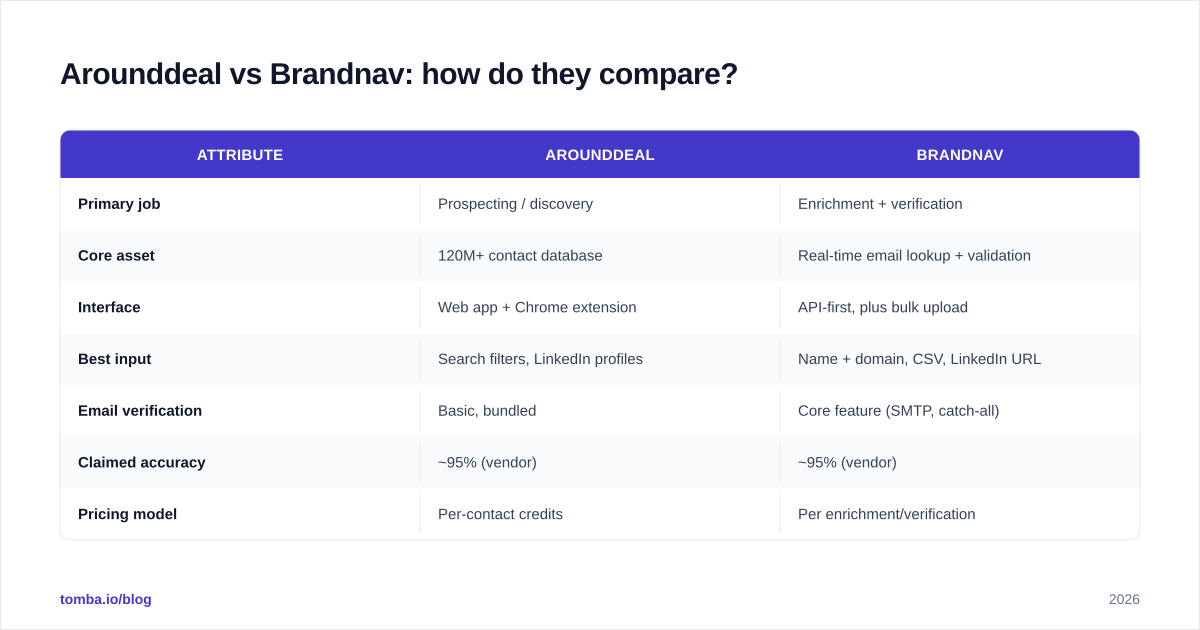
| Attribute | Arounddeal | Brandnav |
|---|---|---|
| Primary job | Prospecting / discovery | Enrichment + verification |
| Core asset | 120M+ contact database | Real-time email lookup + validation |
| Interface | Web app + Chrome extension | API-first, plus bulk upload |
| Best input | Search filters, LinkedIn profiles | Name + domain, CSV, LinkedIn URL |
| Email verification | Basic, bundled | Core feature (SMTP, catch-all) |
| Claimed accuracy | ~95% (vendor) | ~95% (vendor) |
| Pricing model | Per-contact credits | Per enrichment/verification |
| Free tier | Limited monthly credits | Limited trial credits |
| Ideal user | SDRs, list-builders | Devs, RevOps, data teams |
The pattern is clear: these tools overlap on the word "data" and diverge on the verb. One finds, one finishes. Plenty of teams end up needing both, which is why a single tool that does each adequately can beat two best-of-breed point solutions on total cost and complexity.
Which one is more accurate?#
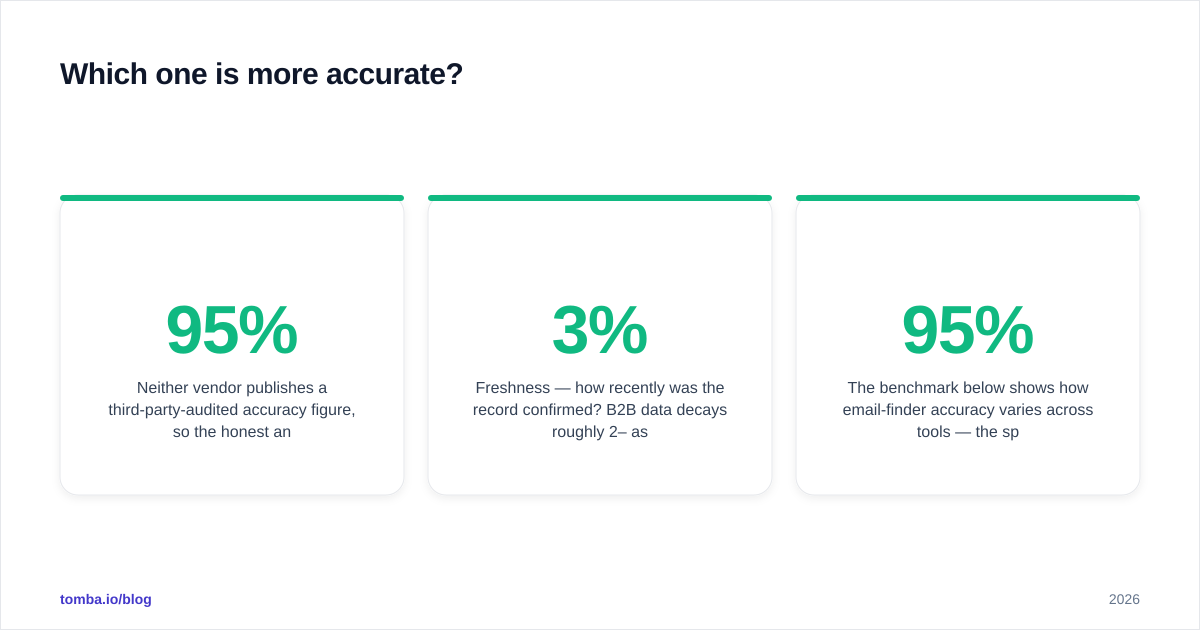
Neither vendor publishes a third-party-audited accuracy figure, so the honest answer is: test, don't trust the homepage. Both cite ~95% accuracy, a number nearly every player in this category quotes, which tells you it's a marketing floor rather than a measured result.
Accuracy also isn't one number. It splits into:
- Match rate — of the contacts you searched, how many returned any email?
- Validity rate — of those emails, how many actually deliver?
- Freshness — how recently was the record confirmed? B2B data decays roughly 2–3% per month as people change jobs.
A tool can win on match rate and lose on validity, which is the worst outcome — you pay for emails that bounce. Because Brandnav's whole design centers on verification, it tends to be stricter about what it returns (fewer guesses, more confirmed addresses). Arounddeal optimizes for coverage, so you may get more matches but should run them through an email verifier before sending.
The benchmark below shows how email-finder accuracy varies across tools — the spread is wide enough that "95%" claims rarely survive contact with a real list.

Run the same 50-contact list through both free tiers, send to a seed inbox or a verification pass, and compare deliverable emails — not raw returns. That single test beats any vendor claim.
How does pricing compare?#
The trap is comparing sticker prices. Arounddeal and Brandnav meter different units, so "cost per month" is meaningless until you convert to cost per usable (deliverable) email.
- Arounddeal charges credits per contact reveal. A list-heavy SDR burning through prospects monthly will care about credit refresh limits and rollover.
- Brandnav charges per enrichment or verification call. If you're processing inbound signups or cleaning a CRM, your volume is spiky and API-shaped, which fits this model better.
To make the comparison fair, estimate three things: your monthly volume, each tool's match rate on your data, and the validity rate. Cost per deliverable email = price ÷ (volume × match rate × validity rate). The tool with the cheaper sticker often loses once you divide by what actually lands.
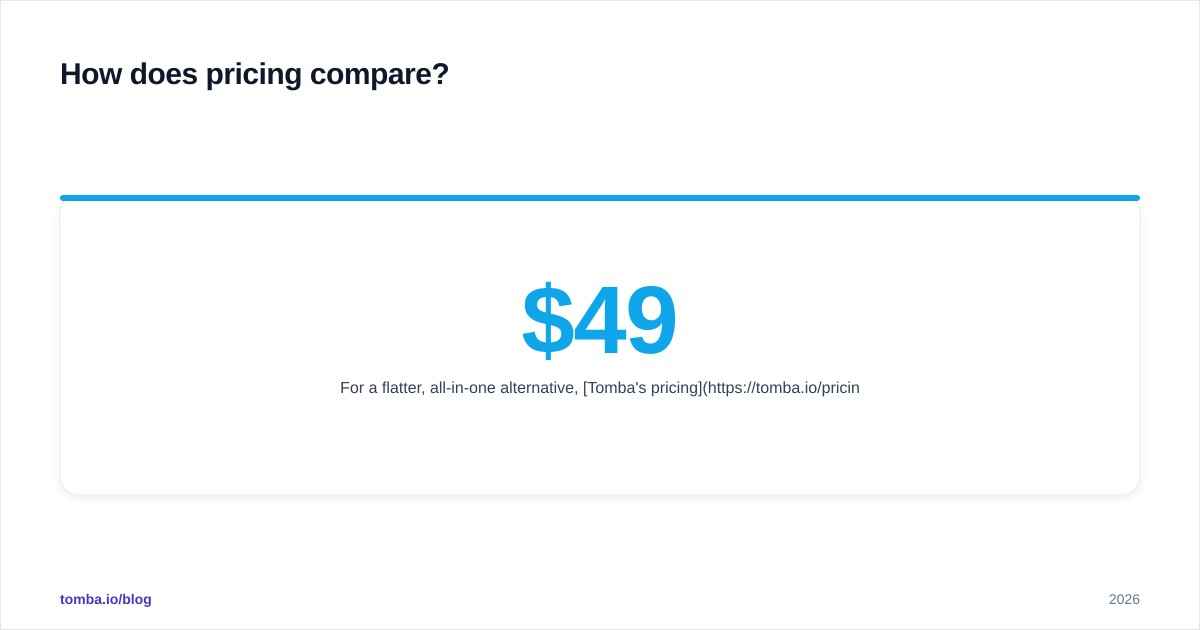
For a flatter, all-in-one alternative, Tomba's pricing bundles finding and verification into one credit pool — Free (25 searches/mo), Starter at $49/mo, Growth at $99/mo, and Pro at $249/mo — so you're not paying two vendors to do one job.
When should you choose each tool?#
Pick based on the verb your team is missing, not the brand.
Choose Arounddeal if:
- Your pipeline is thin and you need net-new contacts you don't already have.
- Your reps live in LinkedIn and want a Chrome extension to capture profiles on the fly.
- You value database search filters (title, industry, intent) over surgical verification.
Choose Brandnav if:
- You already have leads — from forms, events, or scraping — and need them enriched and validated.
- You're a developer or RevOps engineer wiring data into a product or pipeline via API.
- Deliverability is the priority and you'd rather return fewer, confirmed emails than many guesses.
Consider a combined tool if:
- You need both jobs and don't want to reconcile two billing models and two data sources.
- You want domain search to map a company's whole email pattern and a verifier in the same place.
- You'd rather run bulk email finder jobs and validation under one credit pool.
This is where many teams land. Running a discovery tool and a verification tool in parallel means two contracts, two accuracy profiles, and a hand-off step where data gets lost. A platform that finds, enriches, and verifies — like Tomba — collapses that into one workflow, which is usually cheaper and always simpler to maintain.
How do they handle data sources and compliance?#
Data provenance is the question buyers skip and regulators don't. Both tools aggregate business contact data from public sources, partner feeds, and user contributions. Neither makes its full sourcing methodology public, so do your own diligence — especially for EU contacts under GDPR, where legitimate-interest grounds and opt-out handling matter.
Ask each vendor three direct questions before you sign:
- Where does the data originate, and how often is it re-verified?
- What's the suppression/opt-out process when a contact requests removal?
- Is there a DPA (data processing agreement) available for your region?
For reference on what good practice looks like, vendors like ZoomInfo and review aggregators like G2 document compliance posture publicly. Tomba documents its own data sources for the same reason — transparency here is a feature, not a footnote. If a vendor dodges these questions, that's your answer.
What's the verdict on Arounddeal vs Brandnav?#
There's no universal winner — there's a winner for your verb. Arounddeal wins discovery; Brandnav wins verification. If you only do one of those jobs, buy the specialist and don't overthink it.
But most outbound teams do both. They find contacts and need to keep their list clean enough to protect deliverability. For those teams, running two tools is friction you'll feel every month in cost and in lost data at the hand-off. Before you commit to either, price out a single platform that does finding, enrichment, and verification together and compare cost per deliverable email across all three.

Whatever you choose, run the test: same list, both free tiers, measure deliverable emails — not vendor promises.
Ready to find and verify in one place?#
If your real need is accurate emails you can actually send to — found, enriched, and verified without juggling two vendors — start with the Tomba Email Finder. Search by name, domain, or company, get a confidence score on every result, and validate addresses in the same workflow before they ever hit your sequencer. The free tier gives you 25 searches a month to benchmark Tomba against both Arounddeal and Brandnav on your own data — no card, no guesswork. Run the same list through all three and let the deliverable-email count decide.
Ready to find emails that actually work?
Join 150,000+ professionals who stopped guessing and started sending. Free credits on signup — no credit card required.
Get the Tomba newsletter
Practical outbound tactics and product updates — once every two weeks.
About the author