Best Cold Calling Opening Lines That Actually Work in 2026
The best cold calling opening lines earn the next 30 seconds, not the sale. Here are the openers that beat hang-ups in 2026, with scripts, data, and a comparison table.
The phone still works in 2026 — but only for the first ten seconds. Your opening line is the entire ballgame. Get it right and you earn a conversation; get it wrong and you get a dial tone. This guide breaks down the best cold calling opening lines that actually book meetings, why they work, and how to build your own.
TL;DR#
- The opener's only job is to earn the next 30 seconds — not to pitch, qualify, or close.
- Permission-based and pattern-interrupt openers consistently beat the tired "How are you today?" hang-up trigger.
- Naming the reason you called in the first sentence raises connect-to-conversation rates more than any clever gimmick.
- Personalization beats volume — a researched opener tied to a real trigger outperforms 100 generic dials.
- Accurate contact data is the hidden multiplier: the best line is worthless if you dialed the wrong person. Tools like Tomba's phone finder and verified direct dials keep your reps talking to humans, not voicemail.
Why does the opening line matter so much?#
Think of a cold call like a revolving door. The prospect is already moving — toward their next meeting, their inbox, their coffee. Your opener doesn't stop the door; it just gives them one reason to step through it with you instead of pushing past.
Research from Gong's analysis of sales calls has repeatedly shown that the first few seconds set the emotional temperature for the entire conversation. A defensive, salesy opener triggers the "no thanks" reflex before the prospect even processes what you said. A confident, human one buys you time.
The mistake most reps make is treating the opener as a pitch. It isn't. The opener has exactly one goal: earn the next 30 seconds. Everything else — discovery, value, the ask — comes after you've cleared that first hurdle.
What makes a cold calling opening line actually work?#
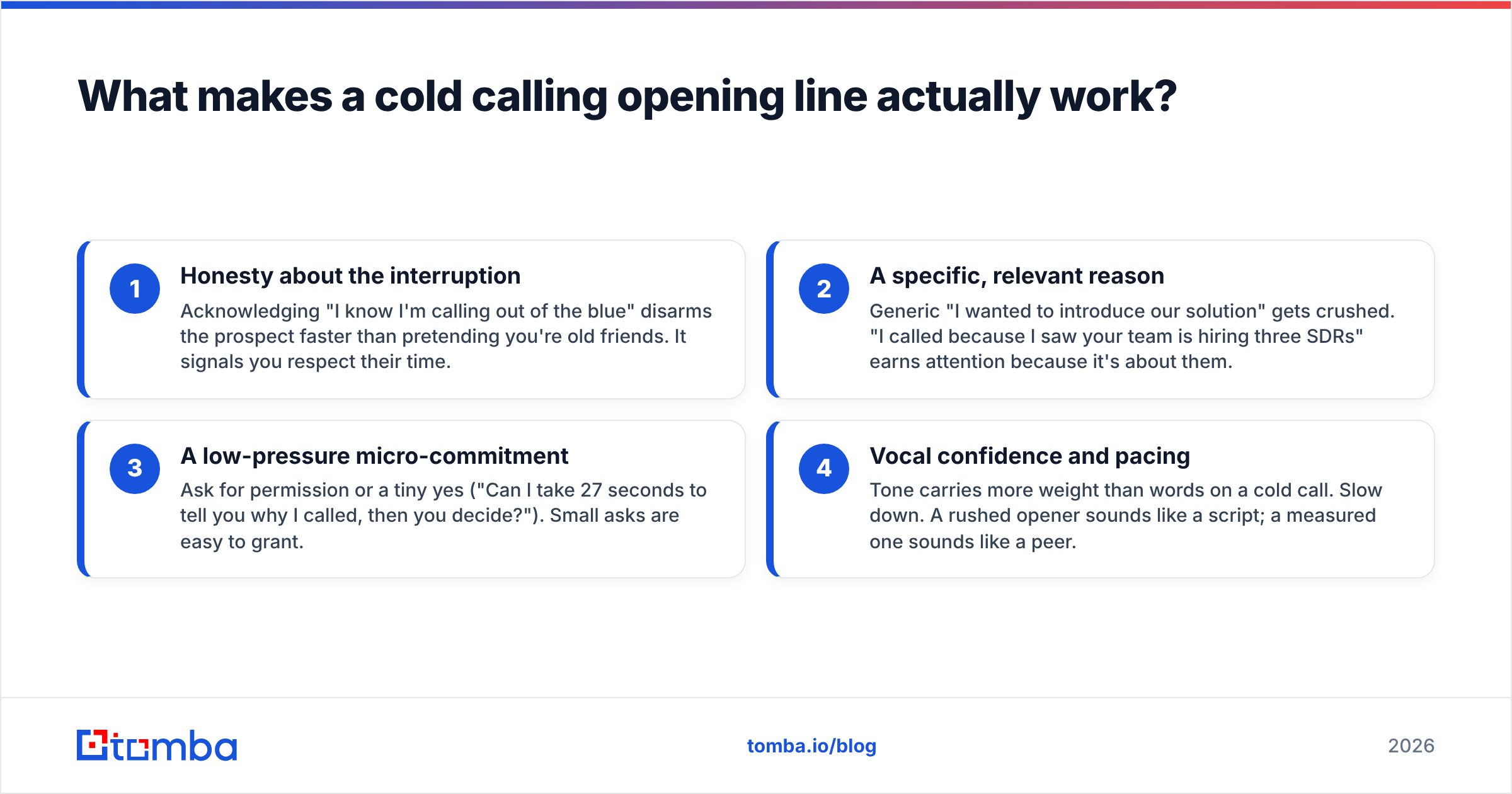
The best cold calling opening lines share four traits. Treat these as a checklist before you dial:
- Honesty about the interruption — Acknowledging "I know I'm calling out of the blue" disarms the prospect faster than pretending you're old friends. It signals you respect their time.
- A specific, relevant reason — Generic "I wanted to introduce our solution" gets crushed. "I called because I saw your team is hiring three SDRs" earns attention because it's about them.
- A low-pressure micro-commitment — Ask for permission or a tiny yes ("Can I take 27 seconds to tell you why I called, then you decide?"). Small asks are easy to grant.
- Vocal confidence and pacing — Tone carries more weight than words on a cold call. Slow down. A rushed opener sounds like a script; a measured one sounds like a peer.
If your line is missing two or more of these, rewrite it before your next call block.
What are the best cold calling opening lines for 2026?#
Here are the openers that consistently outperform, grouped by style. Steal these, then adapt them to your voice and market.
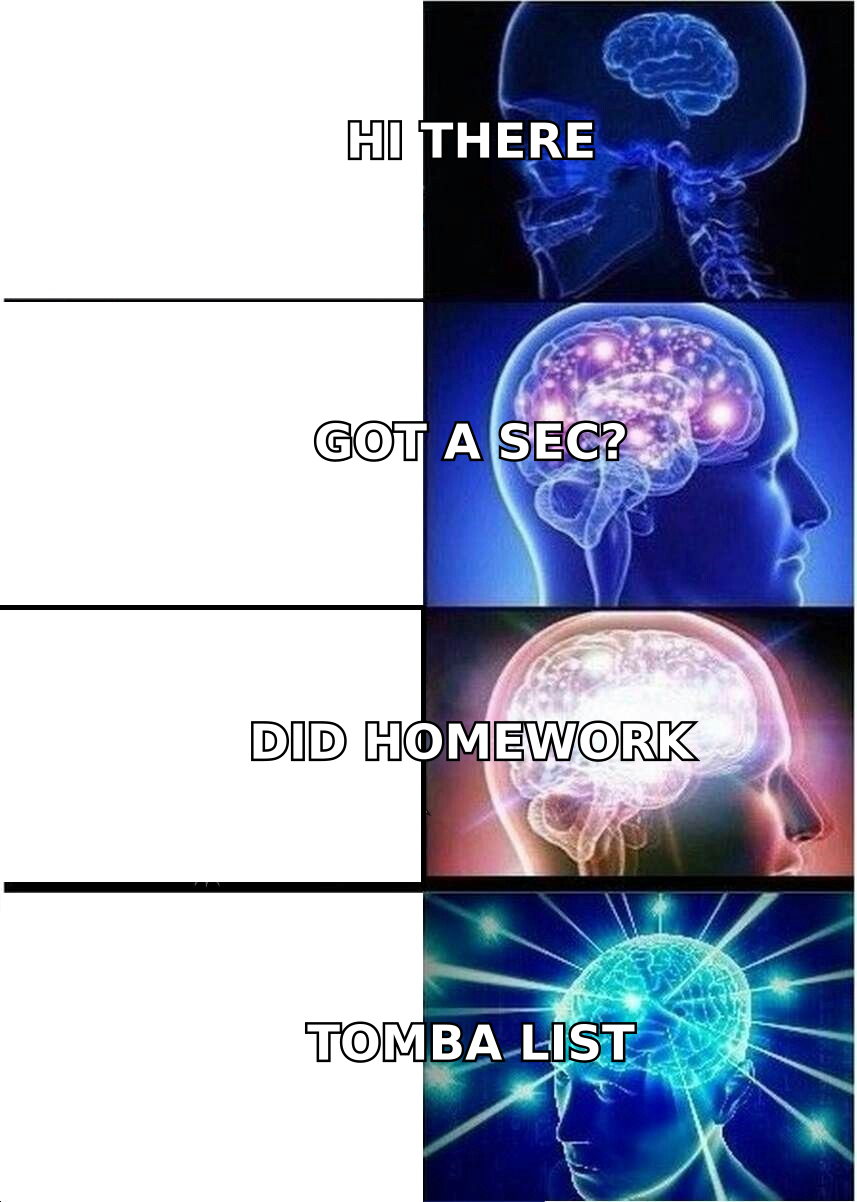
1. The permission-based opener
"Hi [Name], this is [You] from [Company]. I know you weren't expecting my call — can I have 30 seconds to tell you why I rang, and then you can decide if it's worth continuing?"
Why it works: it hands control to the prospect, which paradoxically makes them more willing to listen. People say yes to small, reversible requests.
2. The honest pattern interrupt
"Hi [Name], I'll be honest — this is a cold call. You can hang up, or you can give me 20 seconds. Fair?"
Why it works: radical transparency breaks the script the prospect expects and triggers curiosity. Most people respect the candor enough to grant the 20 seconds.
3. The trigger-event opener
"Hi [Name], I saw [Company] just opened a London office — congrats. That's actually exactly why I'm calling."
Why it works: it proves you did homework and ties the call to something timely. Relevance beats charm.
4. The problem-first opener
"Hi [Name], most [job title]s I talk to are wrestling with [specific problem] this quarter. Is that on your radar at all?"
Why it works: it leads with their world, not your product, and invites a quick yes/no that keeps the conversation moving.
5. The referral / mutual-context opener
"Hi [Name], [Mutual contact] mentioned you're the person who owns [area]. They thought a quick chat might be worth your time."
Why it works: borrowed trust. A warm thread, even a thin one, lowers the prospect's guard.
6. The straightforward value opener
"Hi [Name], the reason for my call is simple: we help [role] teams cut [metric] by [result]. Worth two minutes to see if it applies to you?"
Why it works: no games, no fluff. For senior, time-poor buyers, directness is a feature.
Which openers should you avoid?#
Some lines actively hurt you. Drop these from your scripts immediately:
- "How are you doing today?" — Universally recognized as a sales setup. It signals "I'm about to pitch you" and primes a brush-off.
- "Did I catch you at a bad time?" — Hands the prospect a free exit and invites "Yes, actually."
- "I'm not trying to sell you anything" — Nobody believes it, and it draws attention to the exact thing you're worried about.
- "This will only take a minute" followed by a five-minute monologue — breaks trust the moment you violate it.
How do the main opener styles compare?#
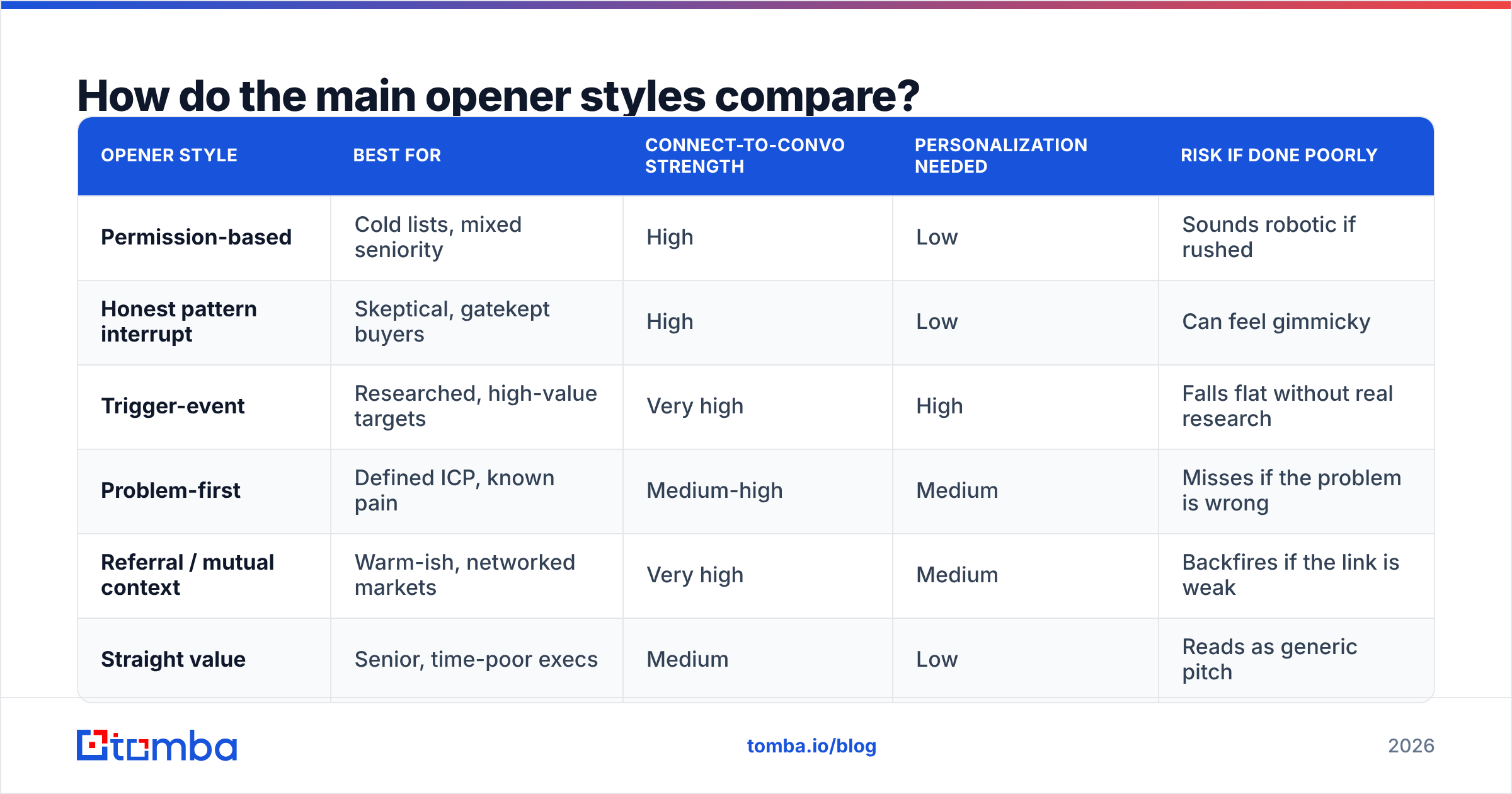
Not every opener fits every call. Match the style to your prospect's seniority, your data quality, and your offer. Here's how the top approaches stack up.
| Opener style | Best for | Connect-to-convo strength | Personalization needed | Risk if done poorly |
|---|---|---|---|---|
| Permission-based | Cold lists, mixed seniority | High | Low | Sounds robotic if rushed |
| Honest pattern interrupt | Skeptical, gatekept buyers | High | Low | Can feel gimmicky |
| Trigger-event | Researched, high-value targets | Very high | High | Falls flat without real research |
| Problem-first | Defined ICP, known pain | Medium-high | Medium | Misses if the problem is wrong |
| Referral / mutual context | Warm-ish, networked markets | Very high | Medium | Backfires if the link is weak |
| Straight value | Senior, time-poor execs | Medium | Low | Reads as generic pitch |
The pattern is clear: the more personalized openers (trigger-event, referral) convert best but demand accurate, current data. The lower-effort openers (permission, pattern interrupt) are more forgiving but cap out lower. Your data quality decides which column you can realistically play in.
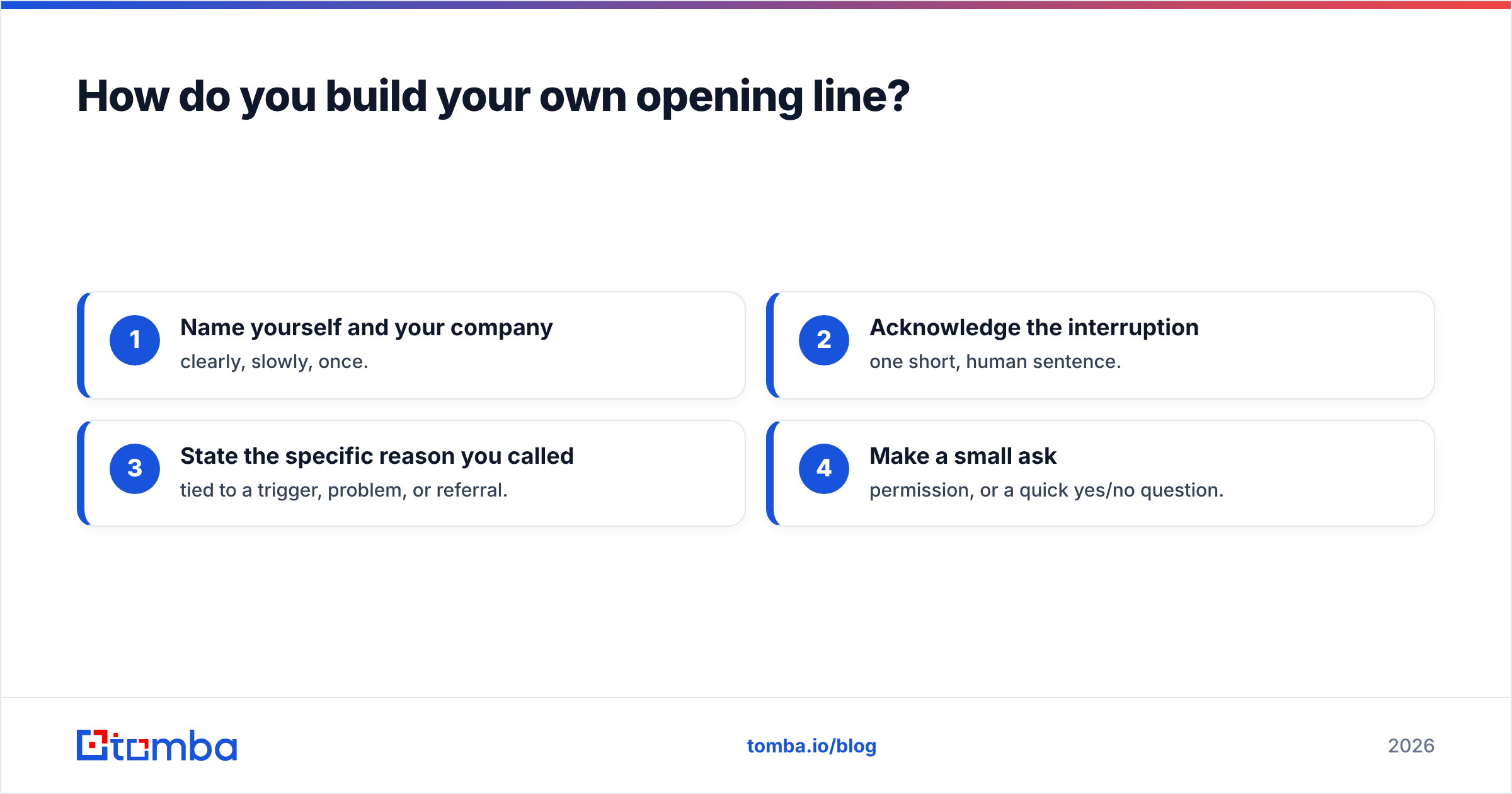
How do you build your own opening line?#
Use this four-part formula, then trim every word that doesn't earn its place:
- Name yourself and your company — clearly, slowly, once.
- Acknowledge the interruption — one short, human sentence.
- State the specific reason you called — tied to a trigger, problem, or referral.
- Make a small ask — permission, or a quick yes/no question.
Then practice it out loud until it stops sounding like reading. The words matter, but delivery matters more. Record yourself, listen back, and cut anything that sounds like a script.
A practical tip: build a short opener bank — three or four lines for different segments — and A/B test them across a week of dials. Track which one earns the most "okay, go on" responses. That's your real metric at the top of the funnel, not meetings booked. For a deeper look at how openers move the needle, study your own response rate data over a few hundred dials before declaring a winner.
Why does data quality decide whether your opener lands?#
Here's the uncomfortable truth most scripts ignore: the best cold calling opening line in the world fails if you dialed the wrong number or the wrong person.
Picture the trigger-event opener — "I saw your team is hiring three SDRs." It's brilliant. But if your list has a stale number, you're delivering that line to a disconnected tone or someone who left the company 18 months ago. The opener didn't fail; the data did.
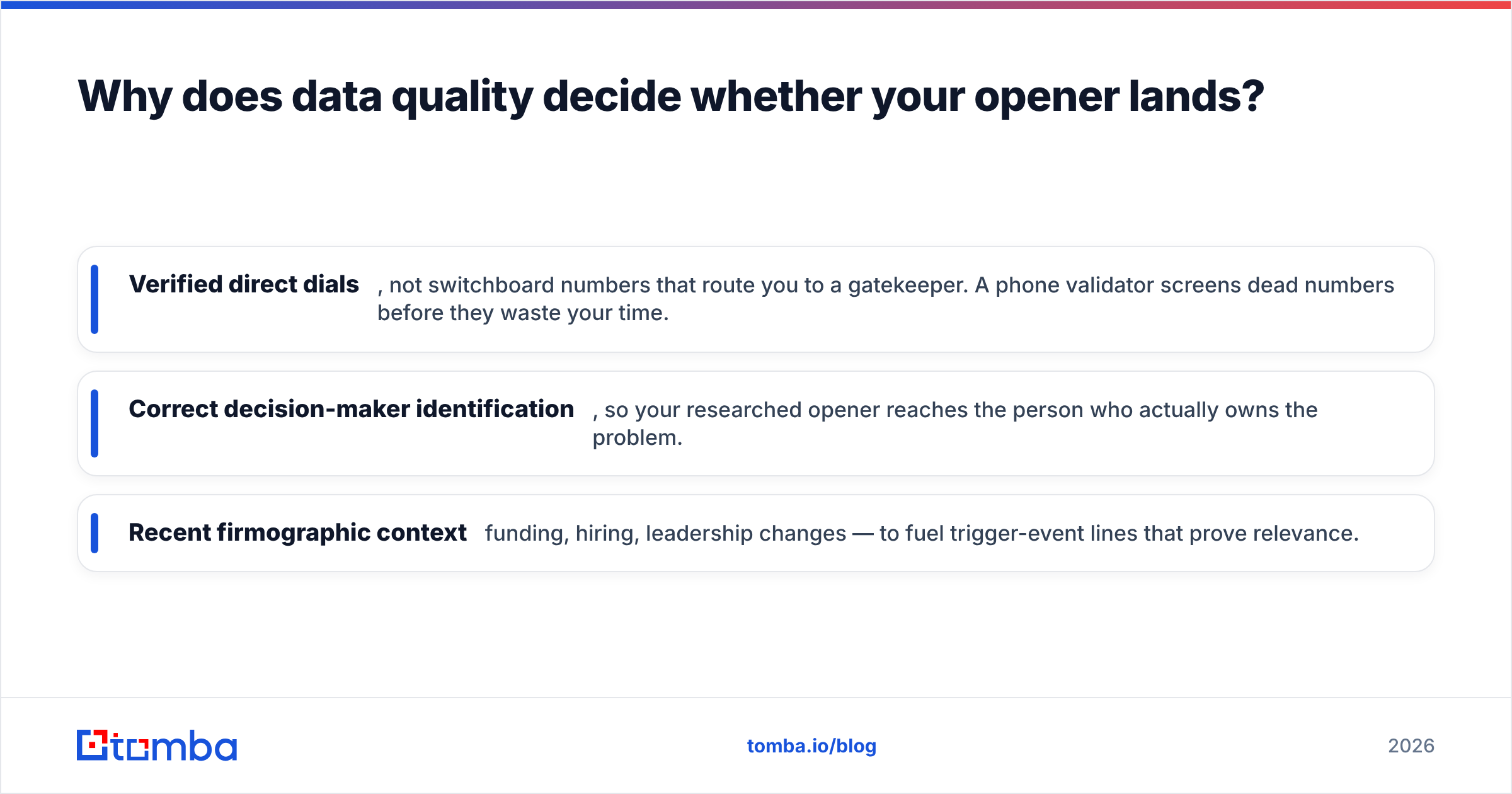
This is where prep work quietly outperforms charisma. Before a call block, you want:
- Verified direct dials, not switchboard numbers that route you to a gatekeeper. A phone validator screens dead numbers before they waste your time.
- Correct decision-maker identification, so your researched opener reaches the person who actually owns the problem.
- Recent firmographic context — funding, hiring, leadership changes — to fuel trigger-event lines that prove relevance.
Sales leaders at companies tracked by G2 consistently rank data accuracy among the top factors separating high-performing outbound teams from the rest. You can script the perfect line, but you can't talk your way out of a wrong number. Pairing strong openers with LinkedIn outreach and a verified phone list turns a guessing game into a repeatable process.
How do you handle the moment right after the opener?#
Landing the opener is step one. The next five seconds decide whether you keep the conversation. A few rules:
- Stay quiet after your ask. If you said "Can I have 30 seconds?", let them answer. Silence is pressure, and it's working for you, not against you.
- Don't over-celebrate a yes. When they say "okay, go ahead," resist launching into a pitch dump. Ask one sharp, relevant question instead.
- Roll with the objection, don't fight it. "I'm busy" isn't a no — it's a request for brevity. "Totally get it — 20 seconds and you decide" often saves the call.
- Mirror their energy. A clipped, fast prospect wants you efficient. A relaxed one will tolerate more rapport. Read the room in their first reply.
The opener gets you in the door. Discipline in the next ten seconds keeps you there.
How many calls until an opener proves itself?#
Resist judging a line on five calls. Cold calling is a numbers game with a lot of noise — bad timing, gatekeepers, and voicemail will mask a good opener's real performance. Run each line across at least 50 to 100 connected conversations before you draw conclusions.
When you compare openers, hold everything else constant: same list quality, same time of day, same product. If you swap the list and the script at once, you'll never know which change moved the needle. As HubSpot's sales research notes, disciplined testing — one variable at a time — is what turns anecdote into a repeatable playbook. And the cleaner your contact list, the faster you reach statistical signal, because more of your dials become actual conversations instead of dead ends.
The bottom line: pair great lines with great data#
The best cold calling opening lines in 2026 aren't magic incantations — they're honest, specific, low-pressure invitations to keep talking. Permission-based and trigger-event openers lead the pack, but every one of them depends on a foundation most reps overlook: reaching the right person on a working number.
That's the part you can fix today. Start your calls with verified contacts and you stop wasting your best lines on disconnected tones and gatekeepers. Tomba's Email Finder and phone-finding tools give you accurate, verified decision-maker contacts — the direct dials and emails that make your openers land. Build the list right, then deliver the line. You can start free with 25 searches a month, and full Tomba pricing scales with your dialing volume from there. Your script is only as good as the number you dialed — make both of them count.
// get started
Find, verify and enrich your first contacts today
Start on the free plan with 25 searches a month, then scale when your team is ready.
Free plan · No credit card required · GDPR & CCPA
// about the author