Best Days To Send Cold Emails in 2026 (Data-Backed Guide)
Tuesday, Wednesday, or Thursday? Here's what the send-time data actually says about the best days to send cold emails — and why the day matters less than your list.
You can A/B test send days for a year, but if half your list bounces, the calendar will never save you. The best days to send cold emails are real and measurable — they just sit downstream of a problem most senders ignore: list quality. This guide gives you both. The day-and-hour data first, then the deliverability work that makes timing actually pay off.
TL;DR — Best Days To Send Cold Emails in 2026#
- Tuesday, Wednesday, and Thursday consistently win on open and reply rates. Monday is buried under weekend backlog; Friday attention drifts toward the weekend.
- Best windows: 8–10 a.m. and 1–2 p.m. in the recipient's time zone — not yours.
- Avoid weekends for B2B cold outreach. Open rates exist, but replies and meeting bookings crater.
- Day-of-week lifts are small (a few percentage points). A verified, deduplicated list moves the needle 5–10x more than the perfect Tuesday slot.
- Pair good timing with a clean, verified list and warmed-up sending domain, or the schedule is cosmetic.
What Are the Best Days To Send Cold Emails?#
The short answer: Tuesday, Wednesday, and Thursday. Across most published B2B send-time studies — from email service providers and outreach platforms tracking billions of sends — mid-week beats the edges of the week on opens, clicks, and replies.
The logic is behavioral, not mystical. Think of your prospect's inbox like a grocery checkout line. Monday morning is the post-weekend rush: a backlog of unread mail, internal fires, and a brain in triage mode. Your cold email gets archived in a three-second sweep. By Friday, the same person is mentally clocked out, deferring anything that smells like new work to "next week" — which never comes.
Tuesday through Thursday is the calm middle of the line. The weekend backlog is cleared, the week's priorities are set, and there's enough runway left that replying to a relevant pitch doesn't feel like starting something they can't finish.
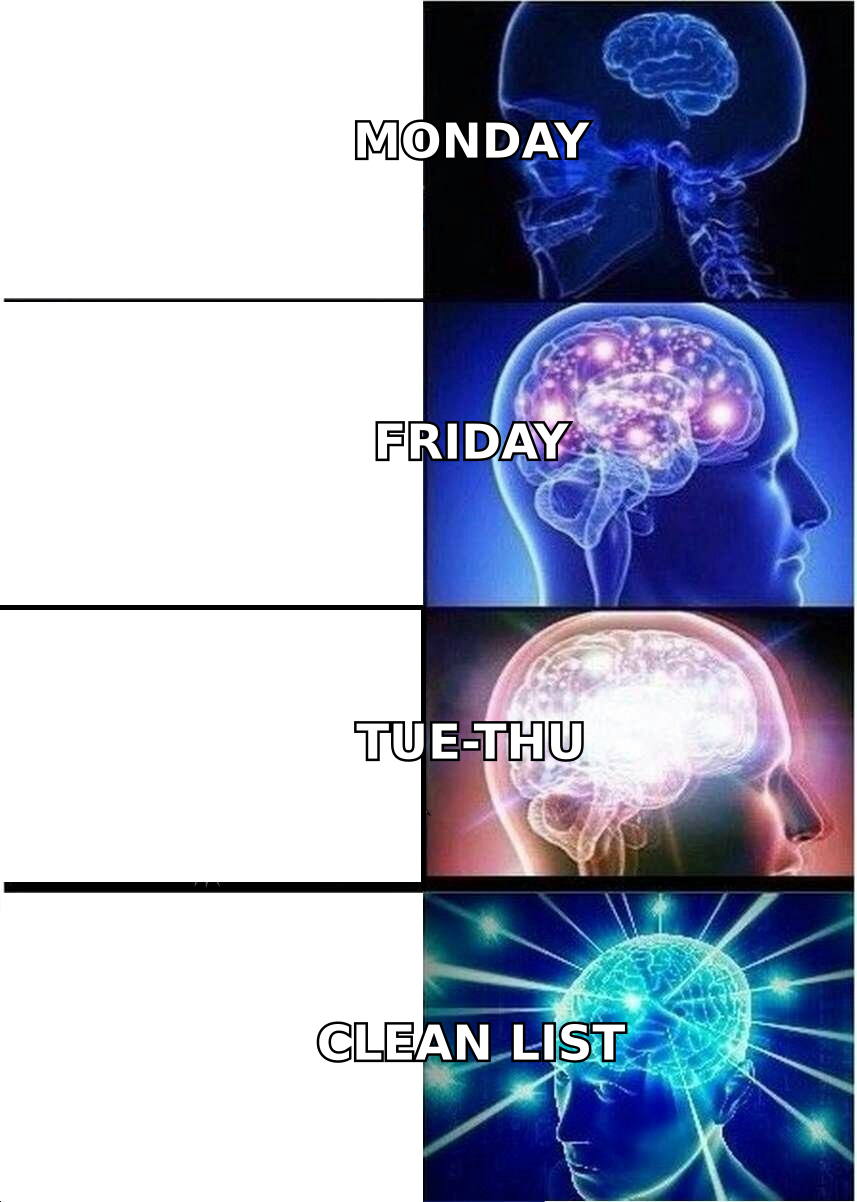
That said, "best day" is a probability nudge, not a guarantee. The lift from picking Wednesday over Monday is typically a few percentage points on open rate. Useful at scale, irrelevant if your fundamentals are broken.
How Do Send Days Compare on Open and Reply Rates?#
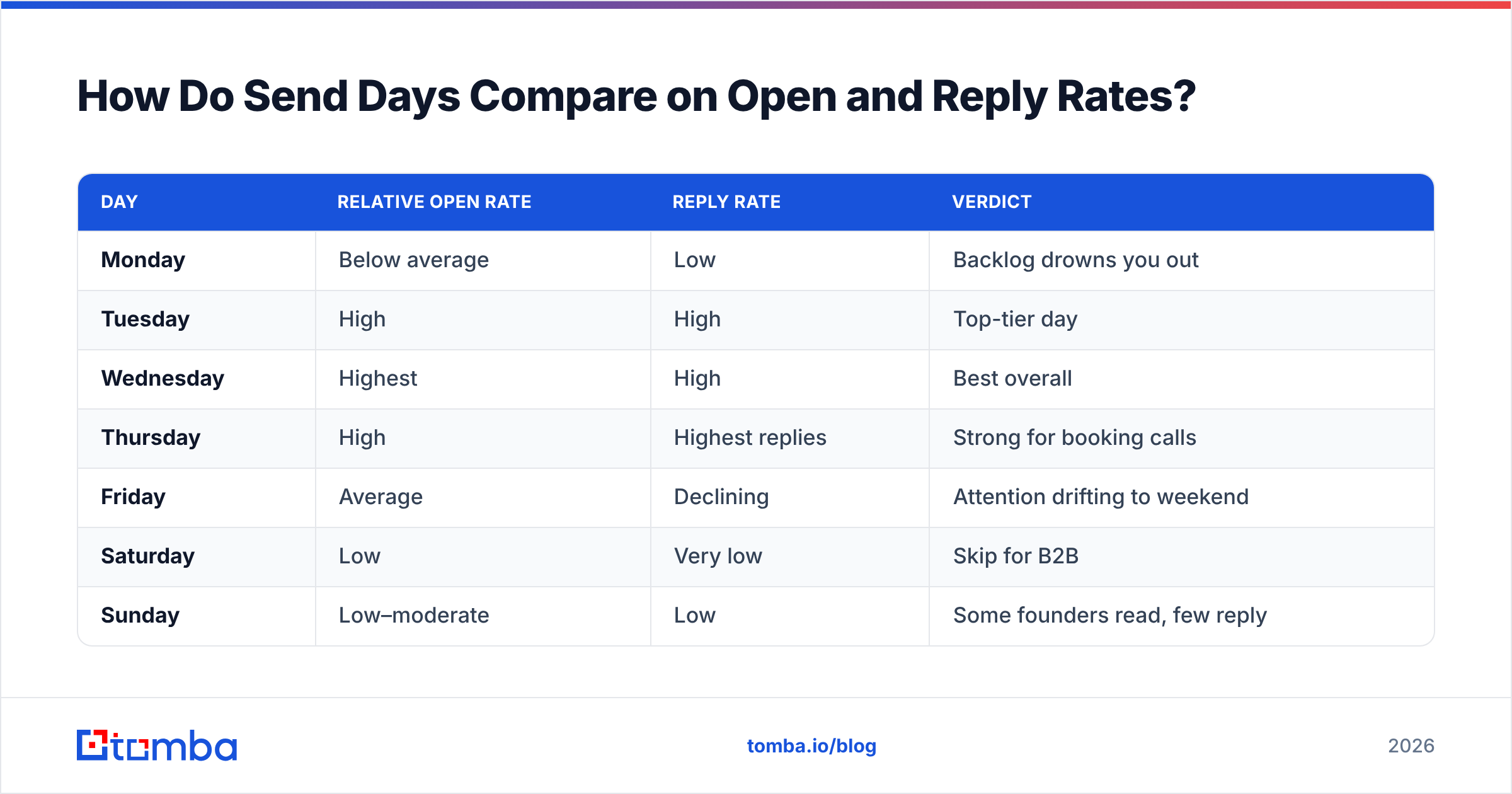
Here's a representative breakdown of how the days stack up for B2B cold email. Treat these as directional benchmarks — your audience, industry, and offer will shift the exact numbers.
| Day | Relative Open Rate | Reply Rate | Verdict |
|---|---|---|---|
| Monday | Below average | Low | Backlog drowns you out |
| Tuesday | High | High | Top-tier day |
| Wednesday | Highest | High | Best overall |
| Thursday | High | Highest replies | Strong for booking calls |
| Friday | Average | Declining | Attention drifting to weekend |
| Saturday | Low | Very low | Skip for B2B |
| Sunday | Low–moderate | Low | Some founders read, few reply |
A few patterns worth internalizing:
- Wednesday tends to win opens; Thursday often wins replies. If your goal is a booked meeting, a Thursday-morning send can outperform because people are clearing their plate before the weekend.
- Tuesday is the safe default. When in doubt and you can only test one day, start here.
- Sunday evening is a wildcard for founder-to-founder outreach. Some executives clear their inbox before Monday. It's niche, not a primary strategy.
- Weekends are noise for most B2B. Unless you're selling to weekend-active audiences (creators, e-commerce, hospitality), don't waste sends.
What Time of Day Should You Send Cold Emails?#
The best day is only half the equation — the hour decides whether you land at the top of the inbox or the bottom.
Two windows dominate:
- 8:00–10:00 a.m. — Prospects are triaging the inbox at the start of the workday. Land here and you ride the first scroll.
- 1:00–2:00 p.m. — The post-lunch reset. People return to their desk and re-scan email before diving back into deep work.
The non-negotiable detail: send in the recipient's time zone, not yours. A 9 a.m. send from New York hits a London prospect at 2 p.m. and a San Francisco prospect at 6 a.m. — wildly different attention states. If your tool supports time-zone-aware scheduling, use it. If not, segment your list by region and stagger sends manually.
One caution about "optimal hour" obsession: inbox providers like Gmail now reorder mail by relevance, not strictly by arrival time. A genuinely relevant email from a reputable sender surfaces regardless of the exact minute. Which brings us to the part that actually matters.
Why Does List Quality Beat Timing Every Time?#
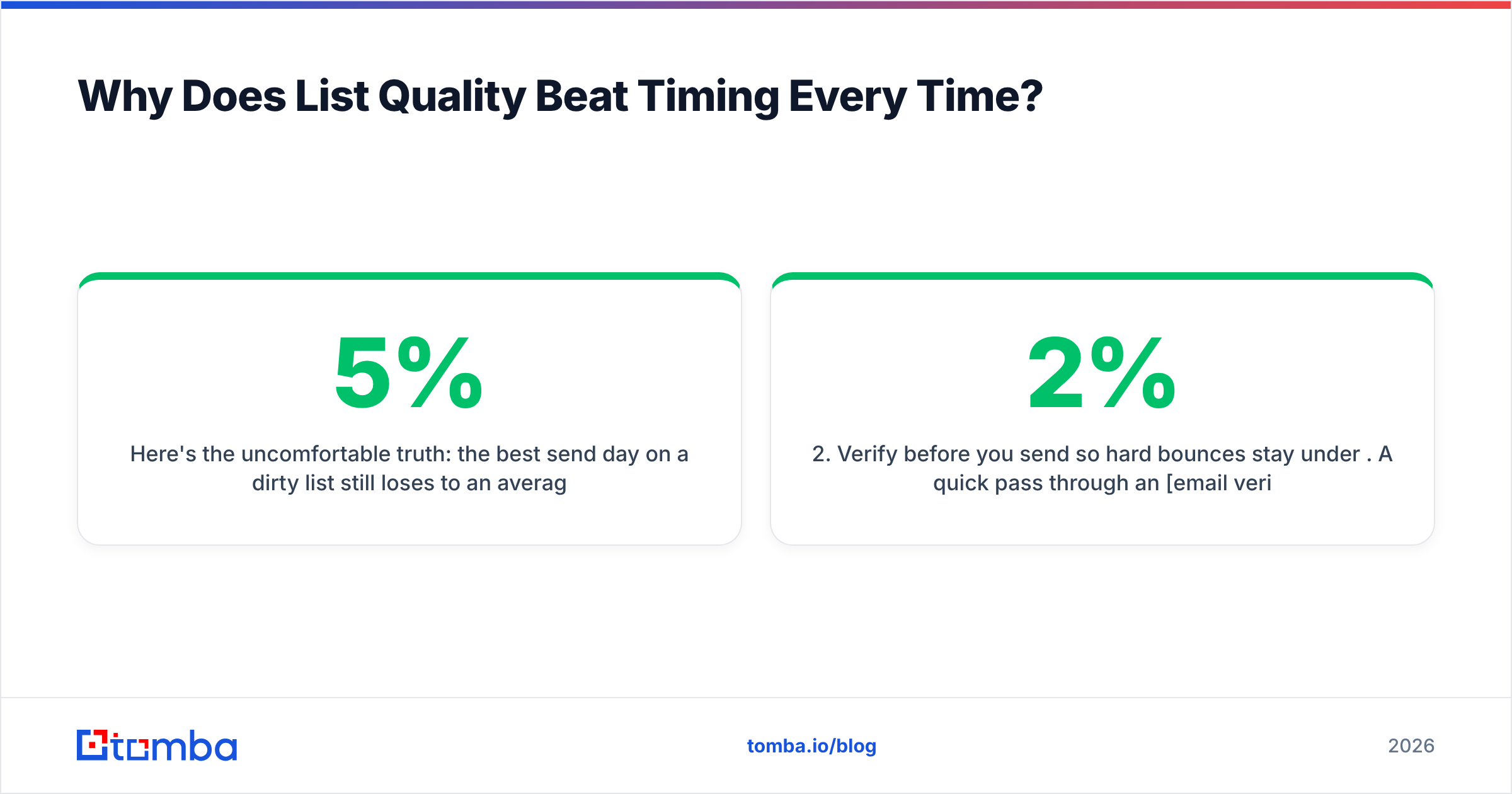
Here's the uncomfortable truth: the best send day on a dirty list still loses to an average send day on a clean one. Timing optimizes the last 5%. List quality and deliverability control the other 95%.
Consider what happens when you blast a Tuesday-morning campaign to an unverified list:
- Bounces spike. Every hard bounce signals to mailbox providers that you don't maintain your list — a direct hit to sender reputation.
- Spam traps fire. Old, scraped lists are littered with traps. Hit a few and your domain gets throttled or blocklisted.
- Your good emails get filtered. Once reputation drops, even your perfectly-timed messages to real prospects land in spam, where send day is irrelevant.
A clean list flips all of that. Low bounce rates protect your reputation, your messages reach the primary inbox, and then the Tuesday-versus-Wednesday optimization starts to matter.
The workflow that consistently outperforms calendar-tweaking:
- Find accurate addresses with an email finder instead of guessing patterns or scraping.
- Verify before you send so hard bounces stay under 2%. A quick pass through an email verifier removes invalid and risky addresses.
- Handle catch-all domains deliberately — use a catch-all verifier rather than treating every catch-all as deliverable.
- Warm up your sending domain before volume, so your reputation can absorb the campaign.
Get those four right and your "best day" experiments produce signal instead of noise.
Timing Tactics vs. Deliverability Foundations: Where To Spend Effort#
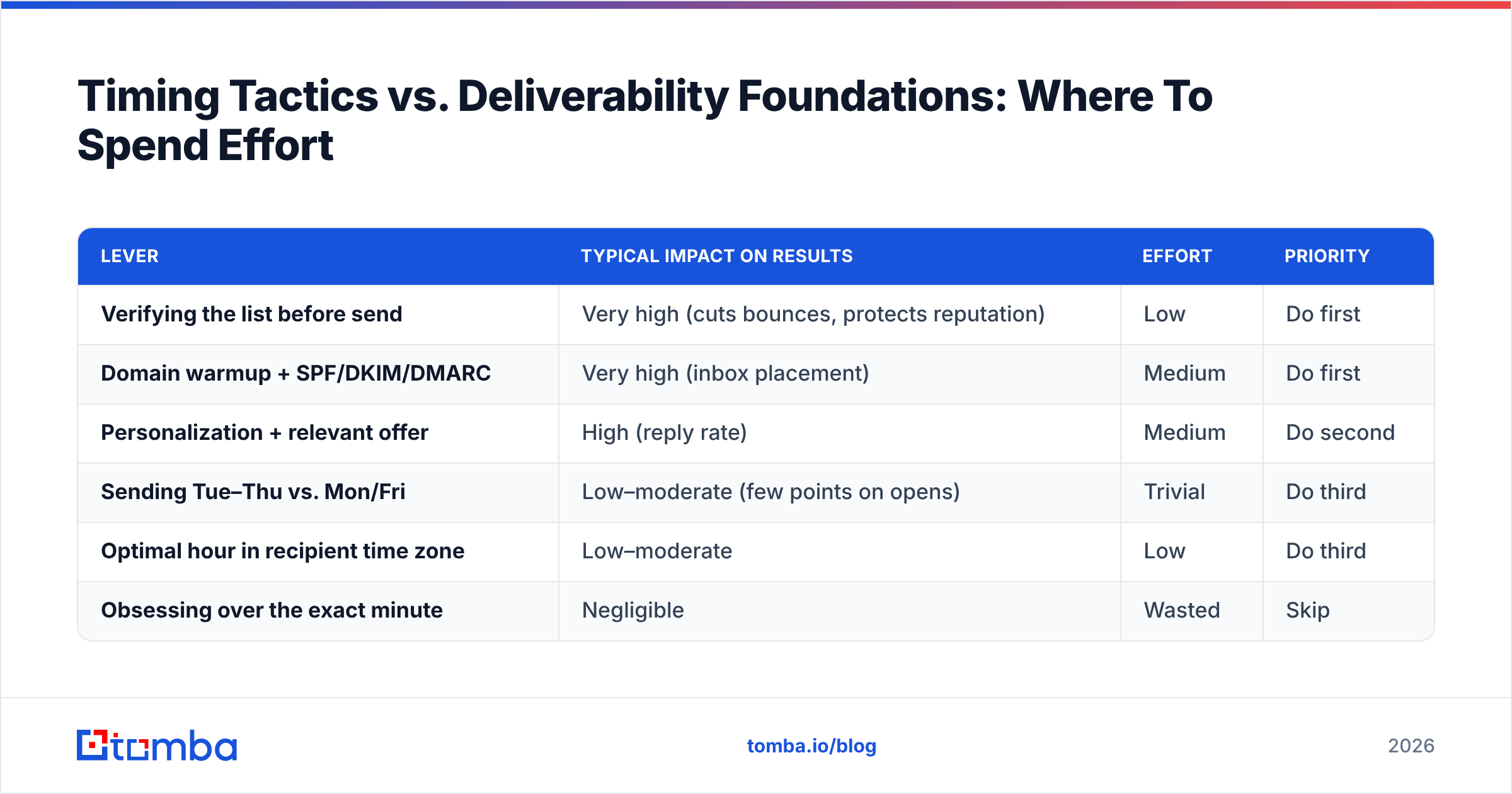
To make the trade-off concrete, here's where each lever actually moves results.
| Lever | Typical impact on results | Effort | Priority |
|---|---|---|---|
| Verifying the list before send | Very high (cuts bounces, protects reputation) | Low | Do first |
| Domain warmup + SPF/DKIM/DMARC | Very high (inbox placement) | Medium | Do first |
| Personalization + relevant offer | High (reply rate) | Medium | Do second |
| Sending Tue–Thu vs. Mon/Fri | Low–moderate (few points on opens) | Trivial | Do third |
| Optimal hour in recipient time zone | Low–moderate | Low | Do third |
| Obsessing over the exact minute | Negligible | Wasted | Skip |
The pattern is clear: deliverability foundations are high-impact and should come first; send-day timing is a cheap, easy optimization you layer on top once the foundation is solid. Don't invert the order.
How Should You Test Your Own Best Send Day?#
Industry benchmarks are a starting point, not gospel. Your list of CFOs in manufacturing behaves differently from a list of startup founders. Run your own test:
- Hold everything else constant. Same copy, same segment, same offer. Only the send day varies, or you can't attribute the result.
- Split by day, not by guess. Send identical campaigns Tuesday, Wednesday, and Thursday to comparable segments of your list.
- Use a meaningful sample. A few hundred sends per day minimum. Twenty emails won't give you statistical signal.
- Measure replies and meetings, not just opens. Open rates are increasingly unreliable thanks to privacy features that auto-load images. Replies and booked calls are what pay rent.
- Re-test quarterly. Buyer behavior shifts. The winning day in Q1 may not hold in Q4.
For high-value outbound where you're also dialing prospects, layer in phone outreach data too — a phone finder lets you follow a well-timed email with a same-day call, which often outperforms either channel alone.
What About Industry and Audience Differences?#
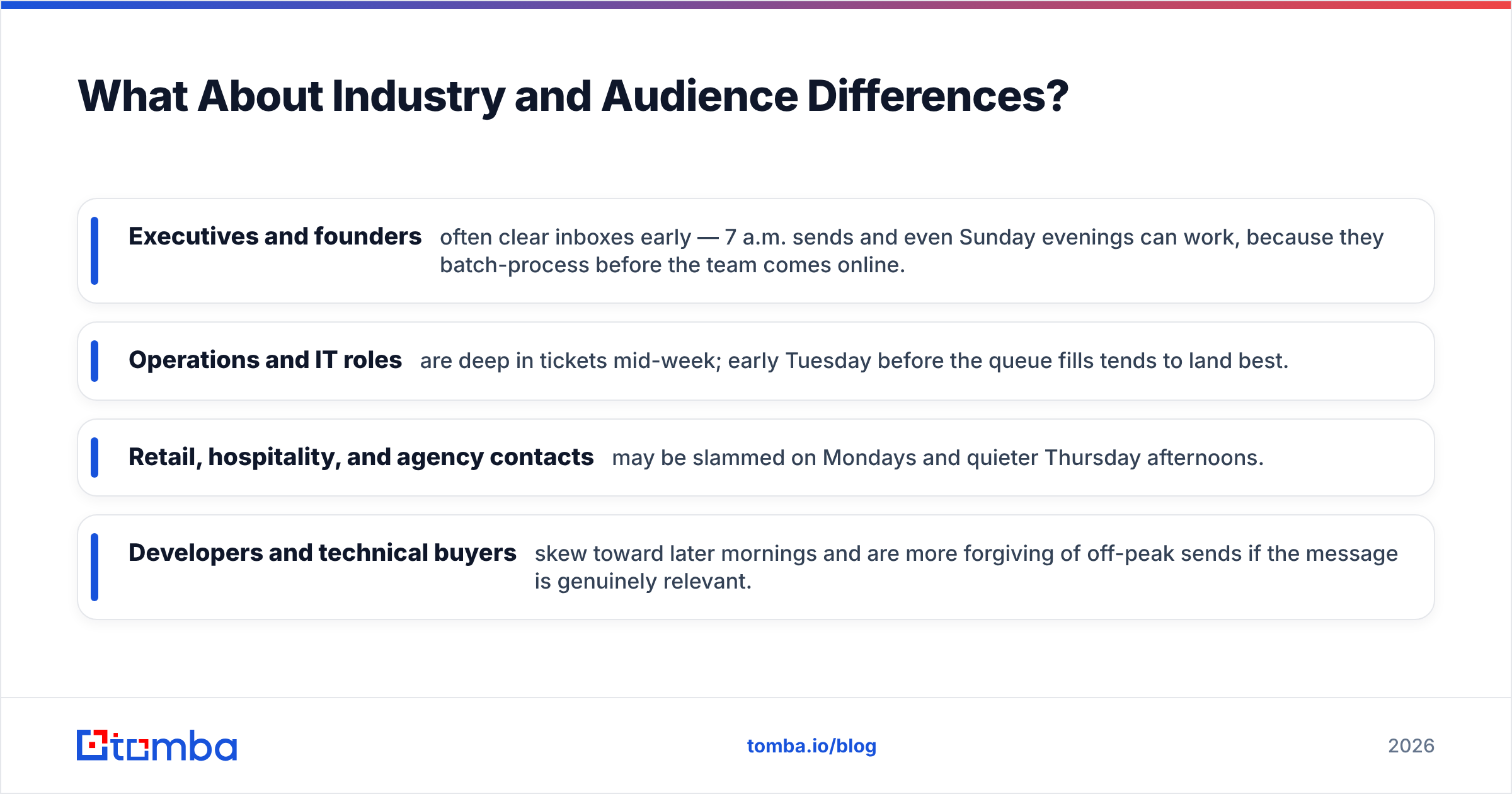
Send-day wisdom bends to who you're emailing. A few examples:
- Executives and founders often clear inboxes early — 7 a.m. sends and even Sunday evenings can work, because they batch-process before the team comes online.
- Operations and IT roles are deep in tickets mid-week; early Tuesday before the queue fills tends to land best.
- Retail, hospitality, and agency contacts may be slammed on Mondays and quieter Thursday afternoons.
- Developers and technical buyers skew toward later mornings and are more forgiving of off-peak sends if the message is genuinely relevant.
The meta-lesson: segment your list and let the data for your audience override the general rule. General benchmarks get you 80% of the way; your own A/B tests close the gap.
For more on the mechanics behind reaching the inbox at all, the email deliverability fundamentals are worth a read before you fine-tune timing. External resources like the Gmail Postmaster Tools documentation and HubSpot's ongoing email send-time research are reliable references for tracking how send-time norms evolve.
Common Mistakes That Cancel Out Good Timing#
Even a perfect Wednesday-9-a.m. send fails if you trip over these:
- Sending from a cold domain. No warmup means filters distrust you regardless of timing.
- Skipping verification. Bounces from a stale list tank reputation before timing can help.
- One message, no follow-up. Most replies come from follow-ups 2–4. Timing the first email perfectly and never following up wastes the open.
- Generic copy. A flawlessly-timed irrelevant pitch is still an irrelevant pitch.
- Ignoring time zones. Your "9 a.m." is someone else's midnight.
Fix the foundations, then the calendar optimization compounds instead of getting cancelled out.
The Bottom Line#
The best days to send cold emails in 2026 are Tuesday, Wednesday, and Thursday, in the 8–10 a.m. and 1–2 p.m. windows of the recipient's time zone. But that advantage only materializes on top of a verified list and a warmed-up sending domain. Timing is the polish; deliverability is the engine.
Start by making sure every address you send to is real and reachable. Tomba's email finder sources accurate, verified professional emails so your carefully-timed campaigns actually land — and you can confirm the whole list with the built-in verifier before a single send goes out. Check the Tomba pricing plans, start free with 25 searches a month, and put your best send day to work on a list worth sending to.
// get started
Find, verify and enrich your first contacts today
Start on the free plan with 25 searches a month, then scale when your team is ready.
Free plan · No credit card required · GDPR & CCPA
// about the author