Bonzo Alternatives: 7 Best Sales CRM Tools for 2026
Bonzo is strong for conversational sales, but it's not for everyone. Compare the 7 best Bonzo alternatives in 2026 on pricing, features, and fit.
Bonzo built its name on conversational, text-first outreach for loan officers, insurance agents, and real estate teams. It's good at what it does. But "good at one workflow" and "right for your team" are not the same thing, and the price-to-feature math stops working for a lot of buyers once they grow past the core SMS-and-drip use case.
This guide breaks down the seven strongest Bonzo alternatives in 2026, what each one is actually good at, and how to avoid the mistake that quietly kills most CRM migrations: forgetting that the platform is only as good as the contact data you feed it.
TL;DR#
- Bonzo is best for conversational, SMS-heavy outreach in mortgage, insurance, and real estate — but it gets expensive per seat and is narrow outside those verticals.
- Best all-around alternative: HubSpot (scales from free to enterprise). Best for pure cold outreach: Close or Salesmate. Best for agencies: GoHighLevel.
- Pricing across alternatives ranges from free tiers up to $100+/user/month — match the tier to your actual seat count and channel mix, not the demo.
- Every CRM on this list lives or dies on data quality. Pair your pick with a data enrichment layer so reps work verified contacts, not guesses.
- Switching cost is real: budget for data migration, sequence rebuilds, and 2–4 weeks of ramp before you judge results.
What is Bonzo and who is it really for?#
Bonzo (formerly "You've Got Leads") is a conversational sales and marketing platform built around speed-to-lead and text messaging. Its core promise is simple: when a lead comes in, automated and semi-automated SMS, email, and ringless voicemail sequences fire so a human can connect while the lead is still warm.
That focus makes it a strong fit for high-velocity, relationship-driven verticals — mortgage loan officers, insurance producers, and real estate agents who live in their phone. Where Bonzo gets weaker:
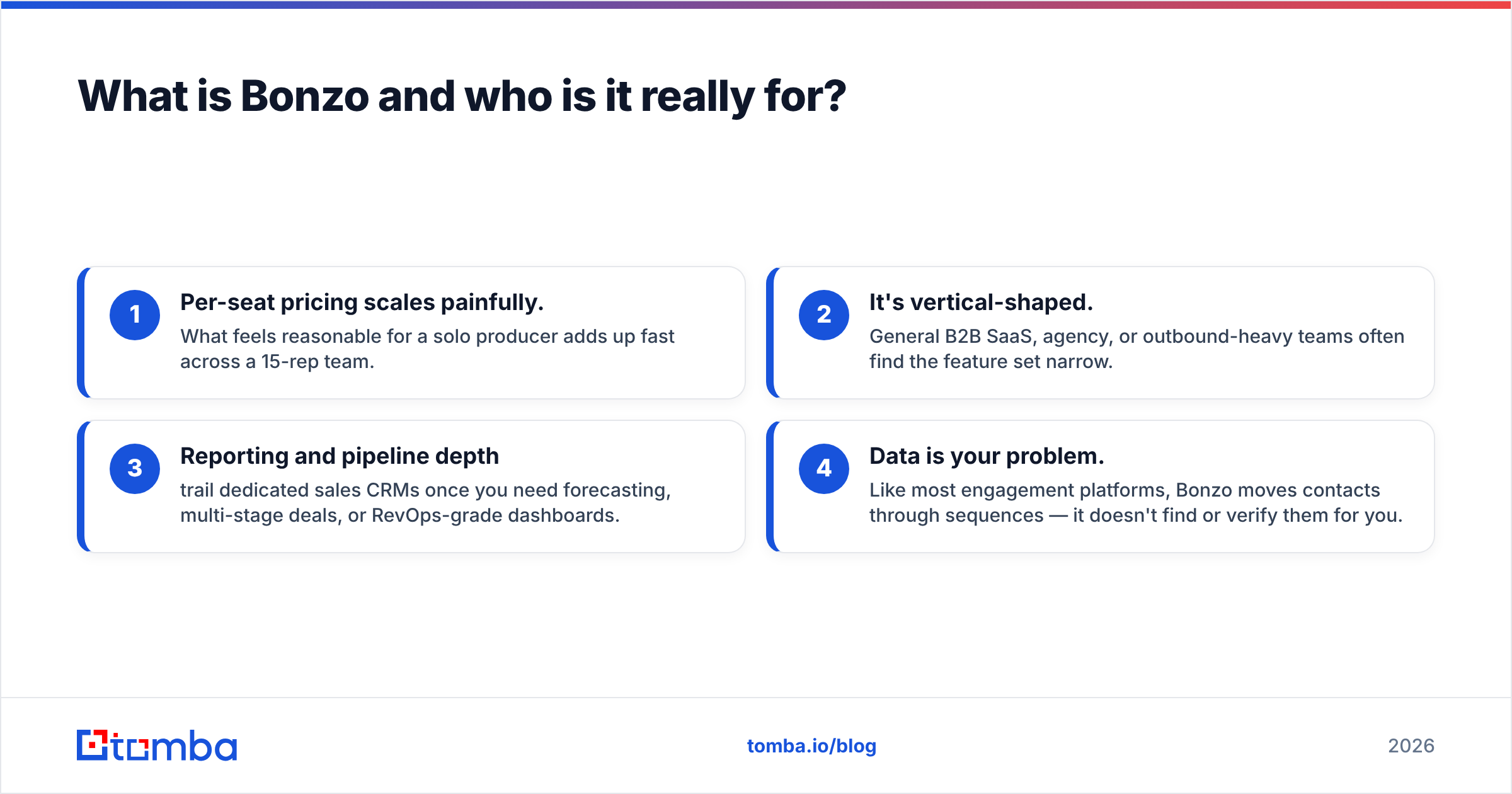
- Per-seat pricing scales painfully. What feels reasonable for a solo producer adds up fast across a 15-rep team.
- It's vertical-shaped. General B2B SaaS, agency, or outbound-heavy teams often find the feature set narrow.
- Reporting and pipeline depth trail dedicated sales CRMs once you need forecasting, multi-stage deals, or RevOps-grade dashboards.
- Data is your problem. Like most engagement platforms, Bonzo moves contacts through sequences — it doesn't find or verify them for you.
If any of those are sore spots, the alternatives below are worth a serious look. You can see Bonzo's own positioning on getbonzo.com and cross-check real user sentiment on G2 before you decide.
)
What should you compare Bonzo alternatives on?#
Before the tool list, get your criteria straight. A platform that wins the demo often loses the quarter because the buyer optimized for the wrong thing. Weigh these:
- Channel mix — Do you need SMS-first like Bonzo, or is email/LinkedIn your real volume?
- Seat economics — Per-user pricing punishes growing teams. Model your 12-month headcount.
- Automation depth — Branching sequences, triggers, and conditional logic vs. simple drips.
- Pipeline and reporting — Forecasting, deal stages, and attribution for sales leadership.
- Data and enrichment — Native contact enrichment, or bring-your-own? This is where most teams underinvest.
- Integrations — Does it connect to your existing stack (HubSpot, Pipedrive, Zapier, Slack)?
Keep a glossary handy if terms get fuzzy — Tomba's CRM definition and sales automation entries are good quick references.
What are the 7 best Bonzo alternatives in 2026?#
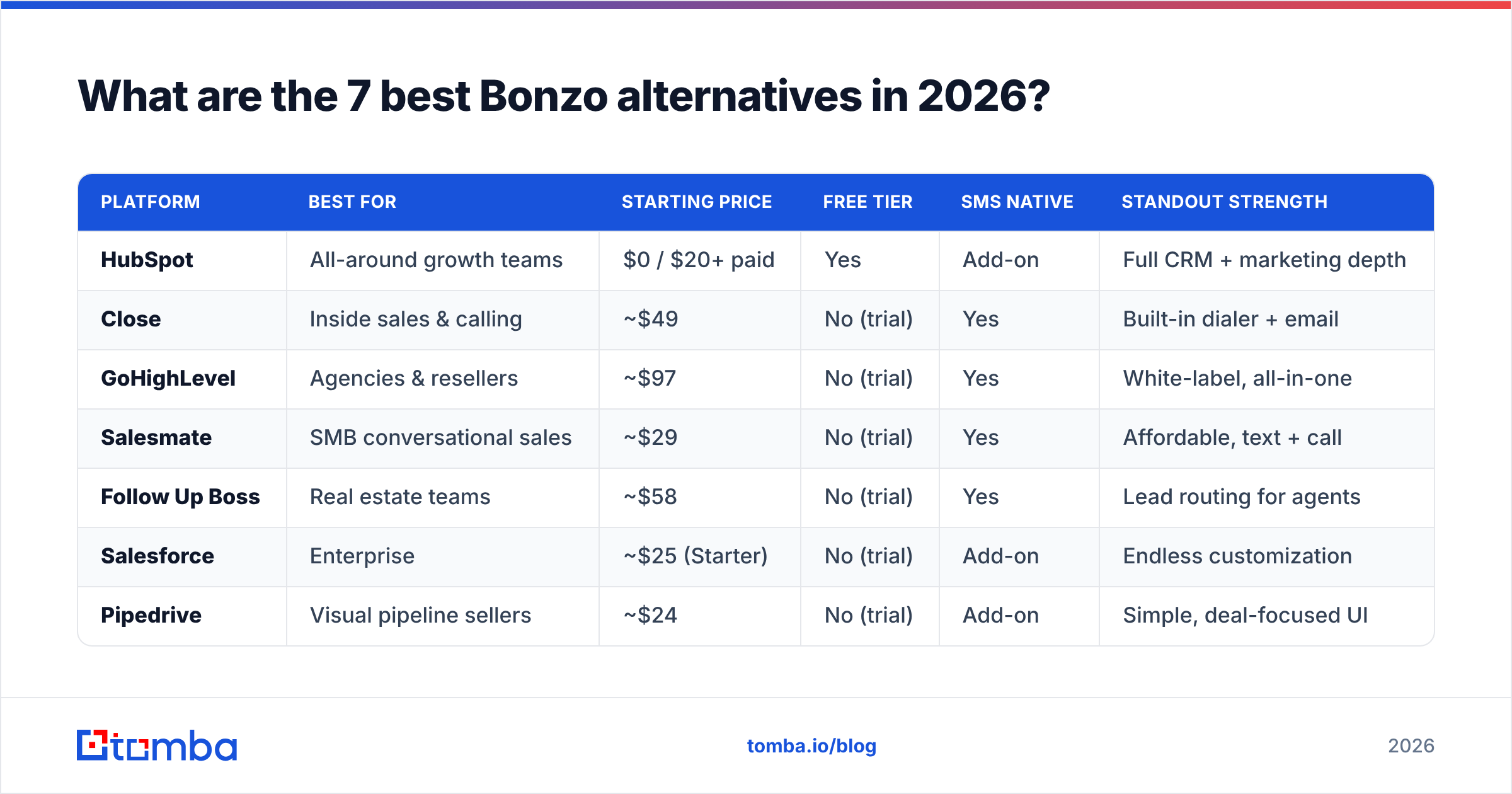
Here's the head-to-head. Prices reflect publicly listed plans as of early 2026 and are per user per month unless noted — always confirm current pricing on each vendor's site.
| Platform | Best for | Starting price | Free tier | SMS native | Standout strength |
|---|---|---|---|---|---|
| HubSpot | All-around growth teams | $0 / $20+ paid | Yes | Add-on | Full CRM + marketing depth |
| Close | Inside sales & calling | ~$49 | No (trial) | Yes | Built-in dialer + email |
| GoHighLevel | Agencies & resellers | ~$97 | No (trial) | Yes | White-label, all-in-one |
| Salesmate | SMB conversational sales | ~$29 | No (trial) | Yes | Affordable, text + call |
| Follow Up Boss | Real estate teams | ~$58 | No (trial) | Yes | Lead routing for agents |
| Salesforce | Enterprise | ~$25 (Starter) | No (trial) | Add-on | Endless customization |
| Pipedrive | Visual pipeline sellers | ~$24 | No (trial) | Add-on | Simple, deal-focused UI |
1. HubSpot — best all-around alternative#
If Bonzo feels narrow, HubSpot feels endless. The free CRM is genuinely usable, and you scale into Sales Hub and Marketing Hub as you grow. You lose Bonzo's SMS-first simplicity (texting is an add-on or integration), but you gain real pipeline reporting, sequences, and a marketplace. Verify current tiers on hubspot.com — the per-seat math changes often. Tomba's HubSpot integration pushes verified contacts straight in.
2. Close — best for outbound calling and email#
Close is built for inside sales teams that live on the phone and inbox. The dialer, email sequencing, and reporting are tight and fast. It's a better fit than Bonzo if your motion is high-volume cold outreach rather than nurturing inbound leads in a single vertical.
3. GoHighLevel — best for agencies#
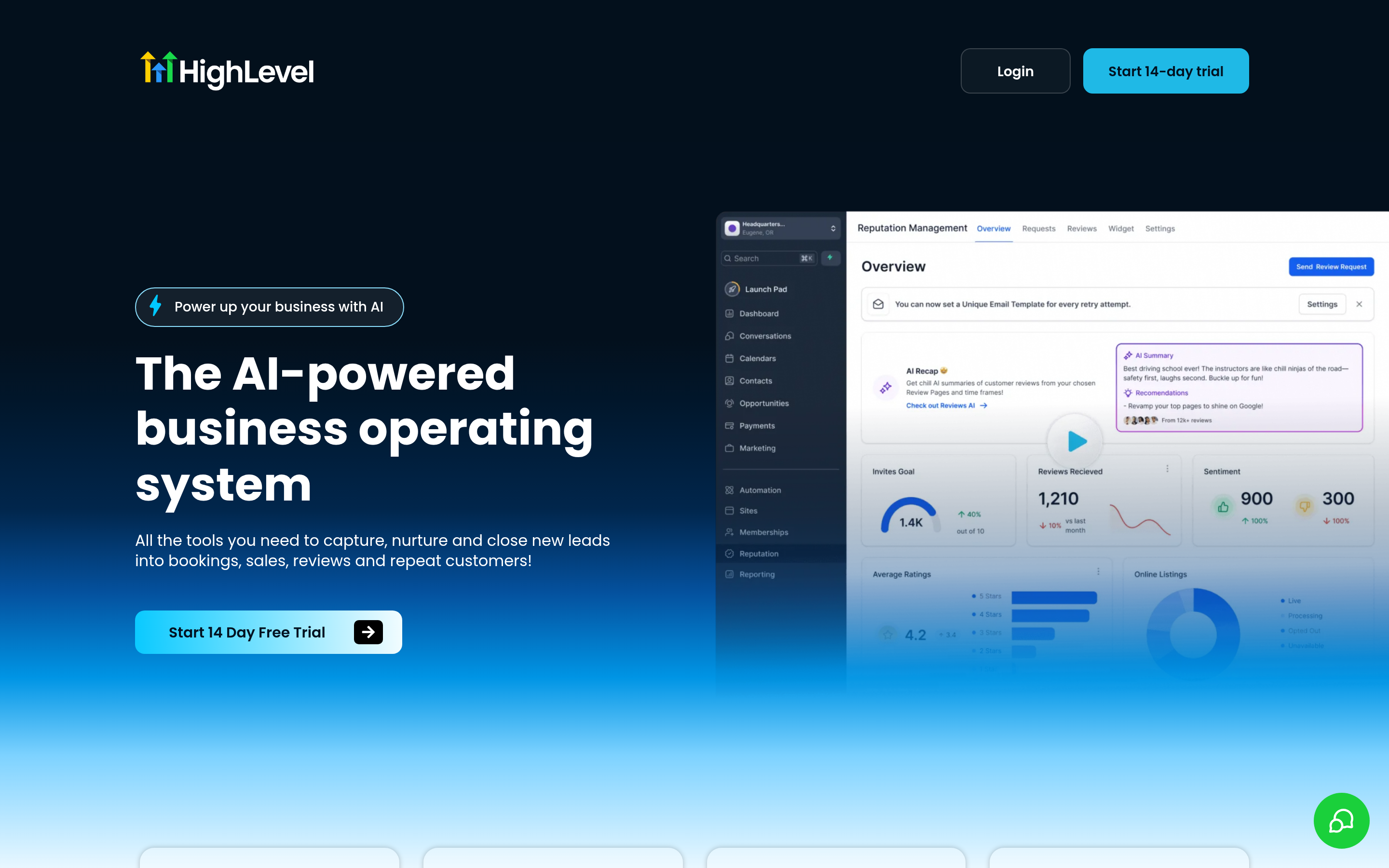
GoHighLevel (GHL) is the all-in-one, white-label favorite for marketing agencies. Funnels, SMS, email, calendars, and reputation management in one resold platform. It overlaps Bonzo on conversational automation but adds far more breadth — at the cost of a steeper learning curve.
4. Salesmate — best budget conversational CRM#
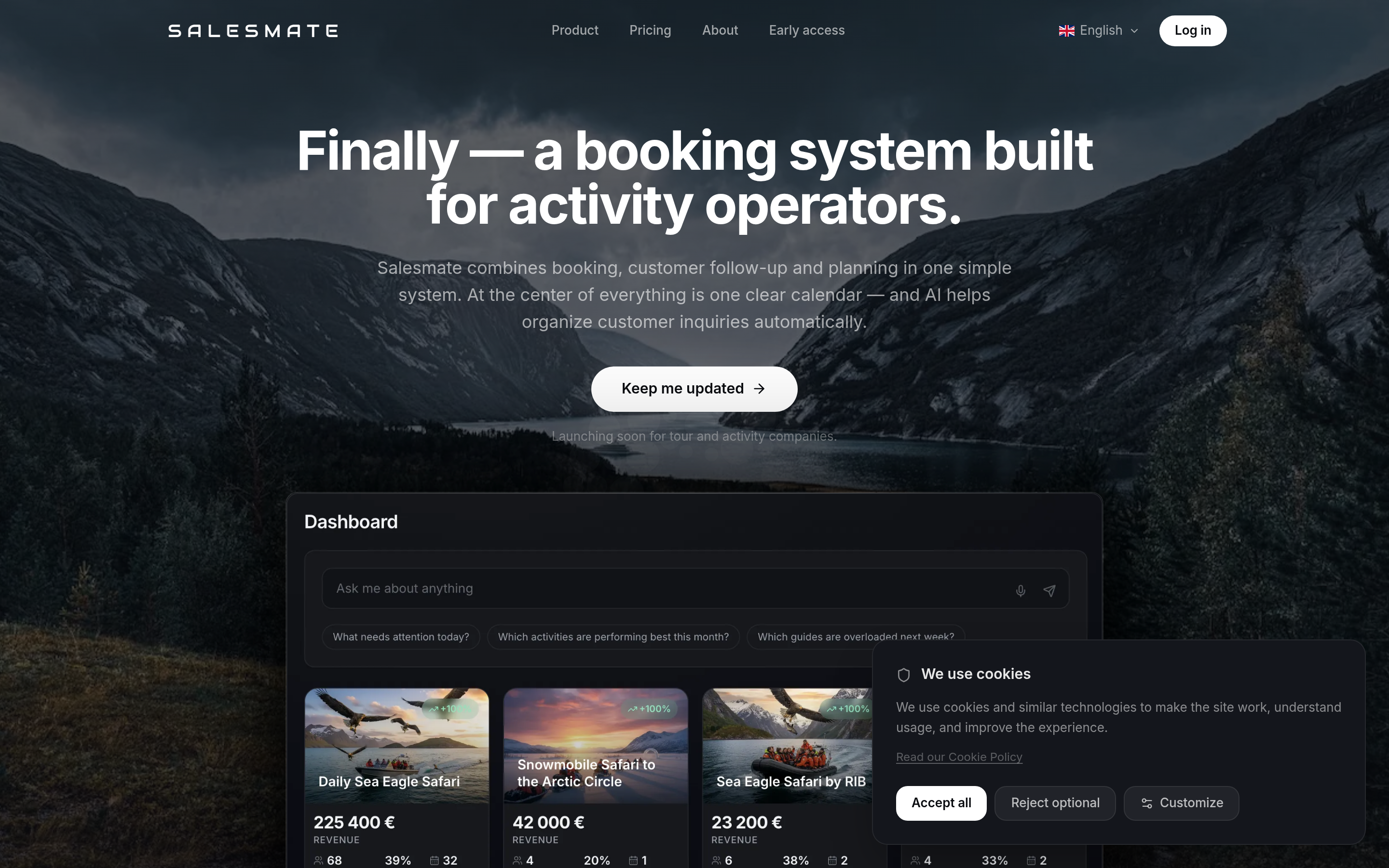
Salesmate hits a sweet spot for small teams that want Bonzo-style text-and-call workflows without the premium price. Built-in calling, SMS, and pipeline at a lower entry point make it a practical swap for solo producers and small offices.
5. Follow Up Boss — best for real estate#
If your Bonzo use case is specifically real estate lead follow-up, Follow Up Boss is the most direct competitor. Lead routing, agent accountability, and integrations with real estate lead sources are its whole reason for existing.
6. Salesforce — best for enterprise#
Salesforce is overkill for a solo loan officer and exactly right for a large org that needs governance, custom objects, and forecasting. The trade-off is complexity and admin overhead. Check the current Starter and Pro tiers on salesforce.com.
7. Pipedrive — best for visual pipeline management#
Pipedrive keeps it simple: a drag-and-drop pipeline that reps actually update. SMS and advanced automation come via add-ons, but if your team rejected Bonzo for being too automation-heavy, Pipedrive's clarity is a relief.
)
Is Bonzo better than these alternatives?#
It depends entirely on your motion. Bonzo wins when your job is speed-to-lead in a phone-first vertical and you want conversational automation out of the box without assembling a stack. It loses when you need deeper pipeline reporting, lower per-seat cost at scale, or a platform that fits general B2B outbound.
A quick decision filter:
- Choose Bonzo or Follow Up Boss if you're a mortgage, insurance, or real estate team optimizing inbound lead follow-up.
- Choose Close or Salesmate if outbound calling and cold email are your real engine.
- Choose HubSpot or Salesforce if you need a system of record the whole revenue org runs on.
- Choose GoHighLevel if you're an agency reselling marketing services.
- Choose Pipedrive if you want the lightest tool your reps will actually use.
What does every Bonzo alternative have in common?#
None of them find or verify your contacts for you. This is the part buyers skip — and it's the part that determines whether any of these platforms produces revenue.
Think of your CRM as a kitchen. A better kitchen doesn't fix bad ingredients. If half your contact records have stale or wrong emails and missing phone numbers, your shiny new sequences just deliver more bounces, faster. The 2026 reality is that email deliverability and number accuracy gate everything downstream.
That's why the smartest stacks pair their CRM with a dedicated data layer:
- Find the right contacts — use an email finder to get professional addresses by name, domain, or company.
- Verify before you send — run lists through an email verifier so bounces don't tank your sender reputation.
- Add phone numbers — layer in a phone finder for the SMS and dial workflows Bonzo-style tools depend on.
- Keep records fresh — schedule ongoing data enrichment so the database doesn't decay.
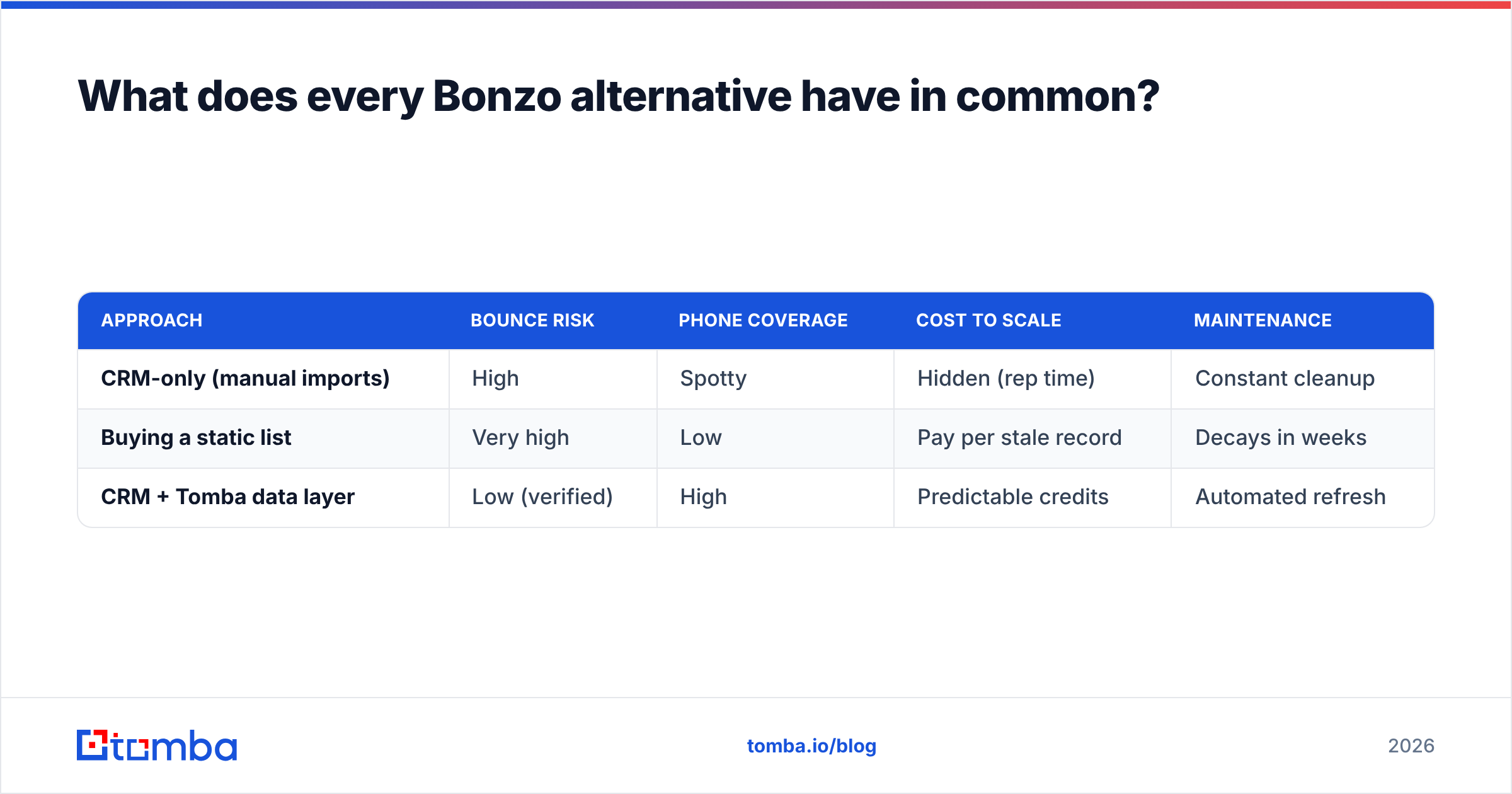
Here's how the data layer compares to relying on whatever your CRM imports by default:
| Approach | Bounce risk | Phone coverage | Cost to scale | Maintenance |
|---|---|---|---|---|
| CRM-only (manual imports) | High | Spotty | Hidden (rep time) | Constant cleanup |
| Buying a static list | Very high | Low | Pay per stale record | Decays in weeks |
| CRM + Tomba data layer | Low (verified) | High | Predictable credits | Automated refresh |
Tomba's plans scale with that need: a free tier with 25 searches a month to test, Starter at $49/month, Growth at $99/month, and Pro at $249/month. You can also wire it into whatever CRM you choose through the Tomba API or native integrations.
How do you switch from Bonzo without losing momentum?#
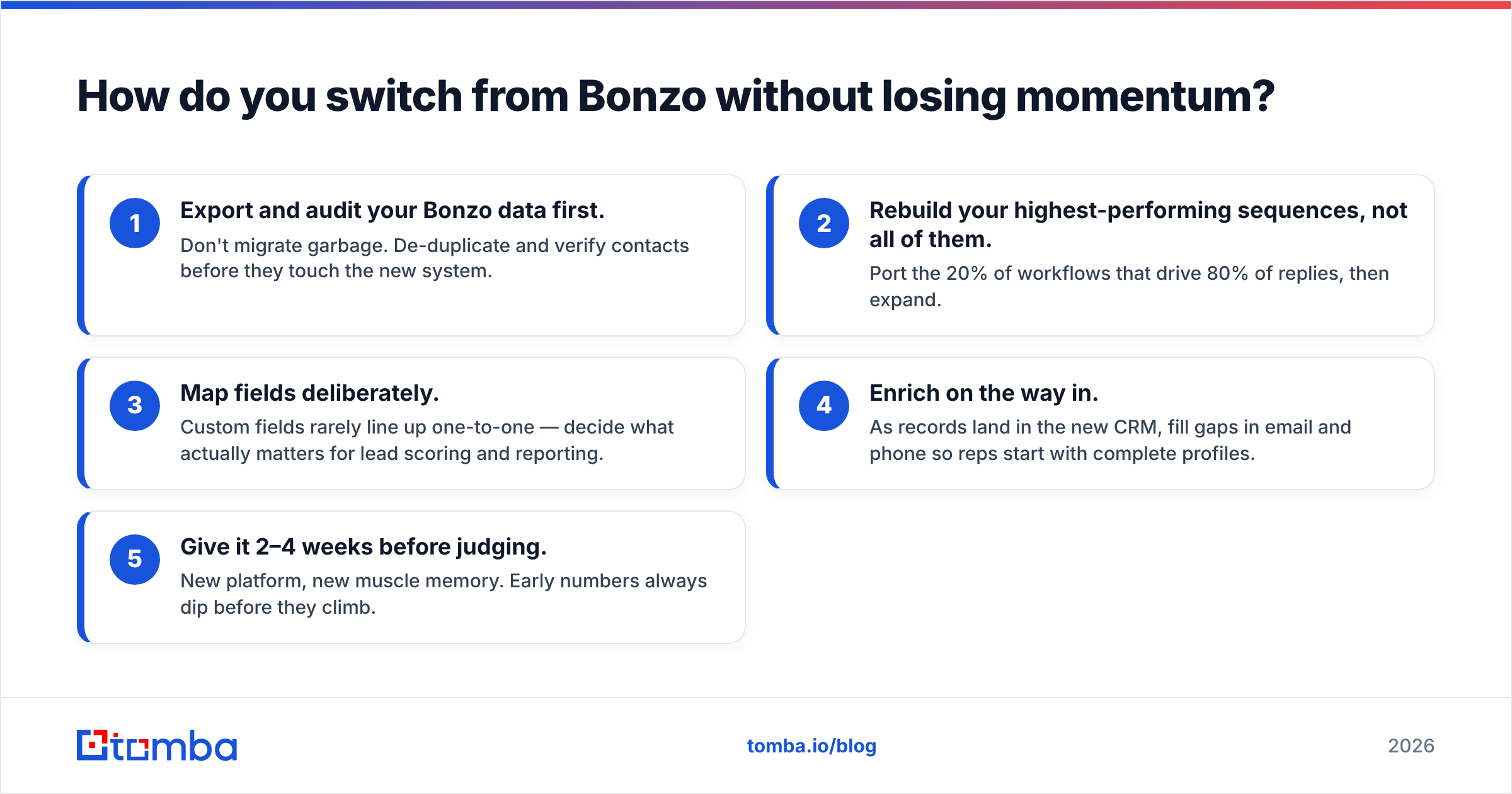
Migrations stall when teams treat them as an IT task instead of a revenue task. Run it in this order:
- Export and audit your Bonzo data first. Don't migrate garbage. De-duplicate and verify contacts before they touch the new system.
- Rebuild your highest-performing sequences, not all of them. Port the 20% of workflows that drive 80% of replies, then expand.
- Map fields deliberately. Custom fields rarely line up one-to-one — decide what actually matters for lead scoring and reporting.
- Enrich on the way in. As records land in the new CRM, fill gaps in email and phone so reps start with complete profiles.
- Give it 2–4 weeks before judging. New platform, new muscle memory. Early numbers always dip before they climb.
A common mistake is changing the platform and the data process at the same time and then not knowing which variable moved the metric. Lock down clean, verified data first — it's the constant that makes the platform comparison fair.
Frequently asked questions#
Is there a free Bonzo alternative? Yes. HubSpot offers a genuinely usable free CRM, and Tomba's free tier gives you 25 searches a month to build a verified contact base before you commit to a paid plan.
Which Bonzo alternative is best for real estate? Follow Up Boss is the most direct real estate competitor, with HubSpot as the more scalable general option. Pair either with a phone finder for SMS-heavy follow-up.
Do these alternatives include contact data? Mostly no. CRMs manage contacts; they don't reliably find or verify them. Add a dedicated email and phone data layer to avoid bounces and dead numbers.
What's the cheapest way to replace Bonzo? Salesmate or Pipedrive for the CRM, plus Tomba's $49/month Starter plan for verified data, lands you a complete stack well under enterprise pricing.
The bottom line#
The best Bonzo alternative is the one that matches your channel mix, seat count, and reporting needs — HubSpot for breadth, Close for outbound, GoHighLevel for agencies, Follow Up Boss for real estate. But whichever platform you pick, it will only perform as well as the data running through it.
Start with the data layer. Use the Tomba Email Finder to build a verified, enriched contact base — then load it into the CRM you choose and let your reps spend their time selling instead of chasing bounces. Try it free with 25 searches and see how much cleaner your pipeline looks before you ever pay for a seat.
// get started
Find, verify and enrich your first contacts today
Start on the free plan with 25 searches a month, then scale when your team is ready.
Free plan · No credit card required · GDPR & CCPA
// about the author