Bookyourdata vs Lakeb2b: Which B2B Data Wins in 2026?
Bookyourdata vs Lakeb2b compared on accuracy, pricing, coverage, and compliance — plus where a live email-finding API beats both static list vendors in 2026.
You are weighing two well-known B2B data vendors and want to know which one actually delivers contacts your reps can email without burning the domain. Here is the short version, then the detail.
TL;DR#
- Bookyourdata sells pay-as-you-go, build-your-own contact lists with a claimed 97% accuracy guarantee and instant download — strong for one-off list pulls.
- Lakeb2b is a managed-data and marketing-services vendor — custom list builds, intent data, and append services aimed at larger campaigns and ABM.
- Neither is a real-time finder. Both ship static records that decay the moment you export them; B2B data goes stale at roughly 22–30% per year.
- If your real goal is to email a specific person today, a live tool like the Tomba Email Finder verifies at the moment of search instead of selling you a snapshot.
- Use the comparison table below to match vendor to use case before you spend a credit.
What is Bookyourdata?#
Bookyourdata is a self-serve B2B contact database. You filter by job title, industry, location, company size, and technology, then buy the resulting records on a credit basis — no annual seat commitment required. Its headline pitch is a 97% accuracy guarantee with credit refunds on bounces, plus instant CSV download so you can move from filter to file in minutes.
That model suits a specific buyer: someone who needs a clean list now, knows exactly who they want, and does not want a sales call or a yearly contract. The trade-off is that you are buying a snapshot. The record was accurate when the database was last refreshed, not necessarily when you hit send three weeks later.

What is Lakeb2b?#
Lakeb2b leans the other way. It is a managed B2B data and marketing-services provider — think custom-built lists, data appending, email and telemarketing campaign support, healthcare and technology audiences, and intent signals layered on top. You typically talk to a rep, scope the audience, and receive a tailored dataset rather than self-serving a download.
That makes Lakeb2b a better fit for enterprise demand-gen and account-based marketing teams that want a vendor to assemble and enrich an audience for a campaign. The cost is speed and transparency: pricing is quote-based, turnaround involves people, and you are trusting the vendor's sourcing rather than filtering it yourself.
Bookyourdata vs Lakeb2b: how do they compare?#
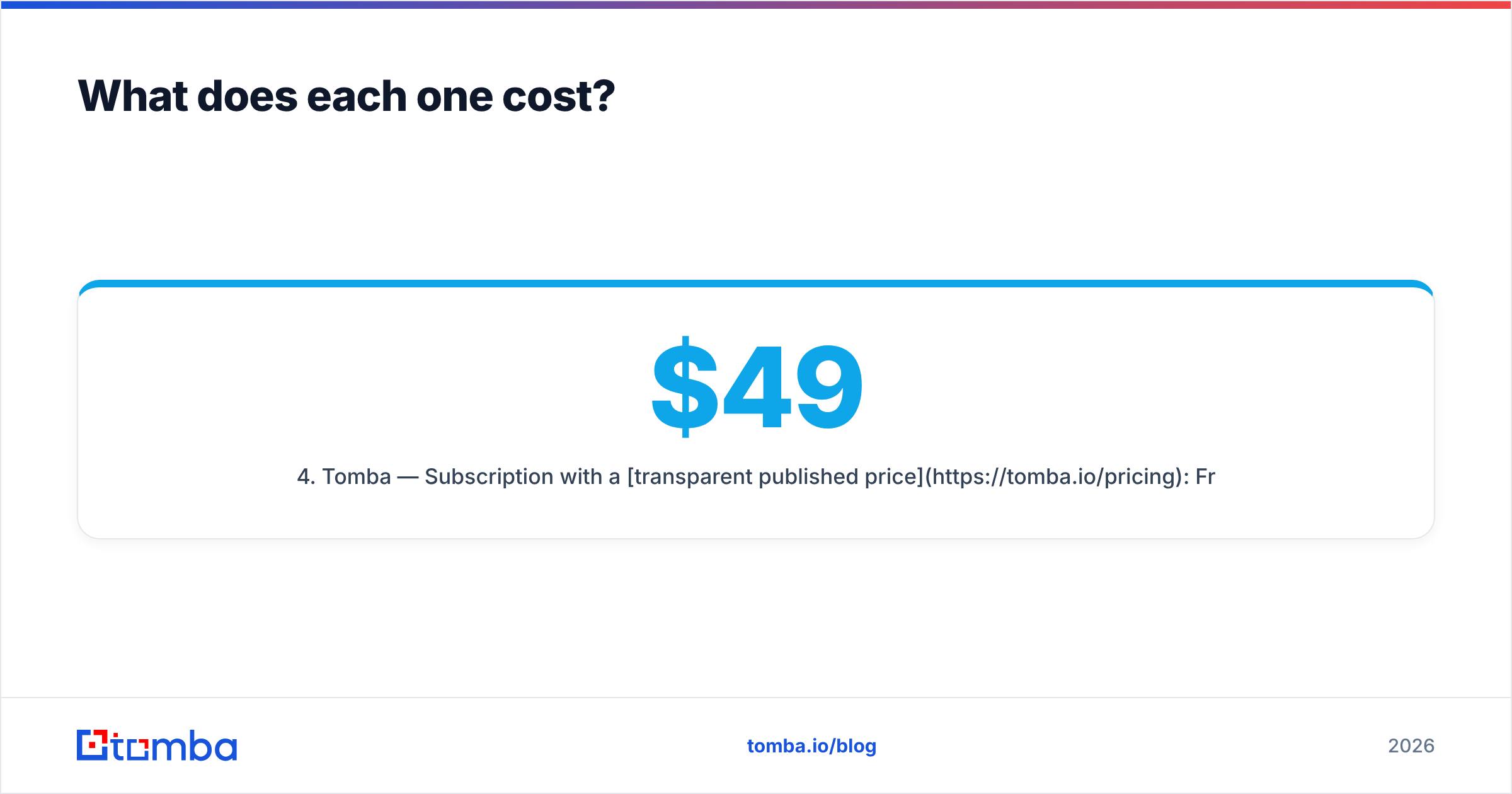
Here is the head-to-head on the attributes that actually change your outcome.
| Attribute | Bookyourdata | Lakeb2b |
|---|---|---|
| Model | Self-serve, pay-as-you-go | Managed data + marketing services |
| Pricing | Credit packs, published | Quote-based, sales-led |
| Accuracy claim | ~97% guarantee, bounce refunds | Verified, varies by build |
| Best for | Fast DIY list pulls | Enterprise ABM + custom audiences |
| Speed to data | Minutes (instant download) | Days (scoped build) |
| Intent data | Limited | Yes, add-on |
| Contract | None required | Typically engagement-based |
| Data freshness | Snapshot at export | Snapshot at delivery |
The pattern is clear. Bookyourdata wins on speed and price transparency for self-serve buyers. Lakeb2b wins on hand-held, large-scale custom audiences and intent layering. Cross-check both on G2 and Capterra before committing — review velocity tells you how each vendor treats refunds and data complaints.
Which one is more accurate?#
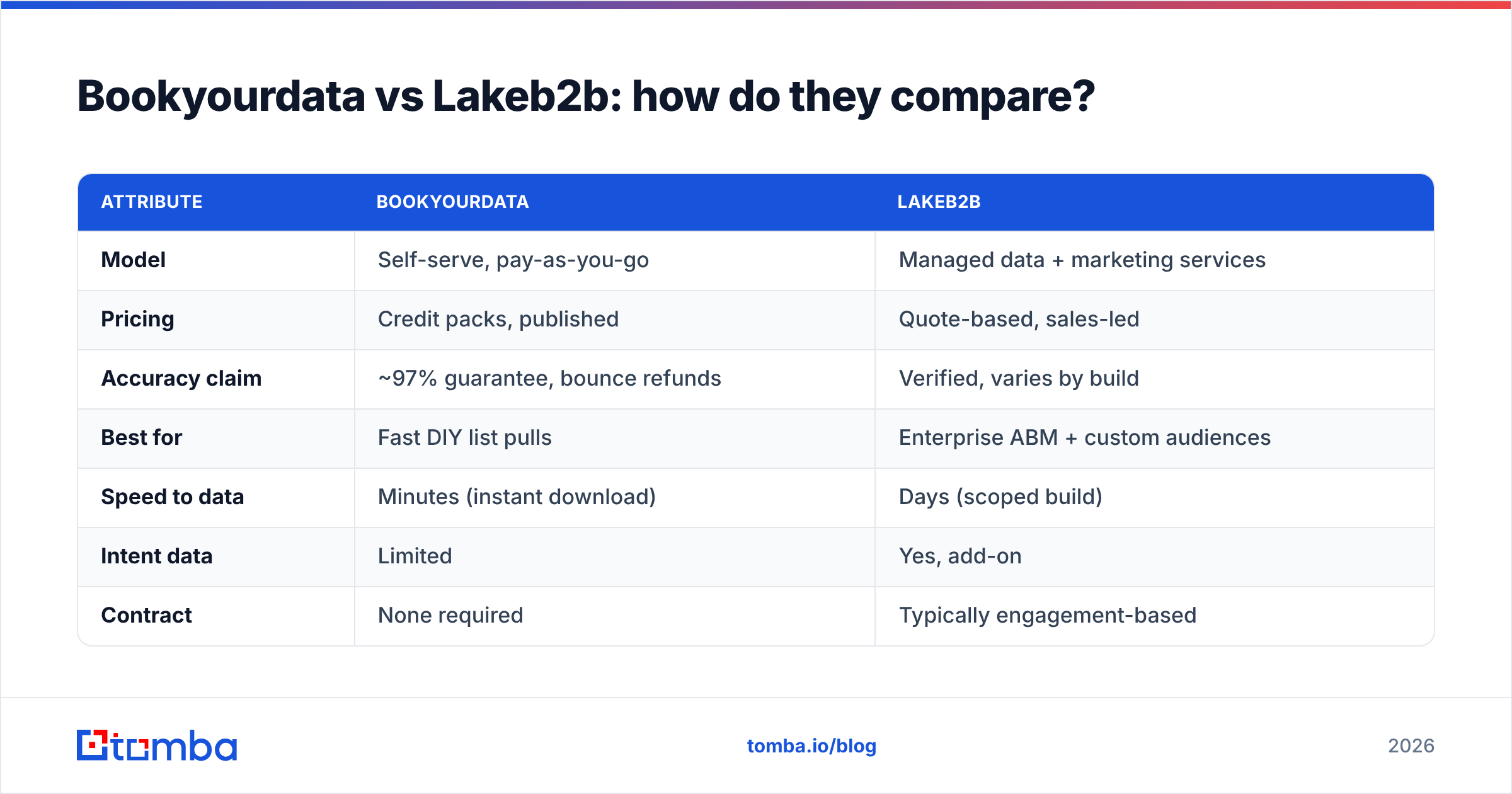
Accuracy is the wrong word for what you are buying — what you actually want is deliverability at send time. A 97% guarantee on a database measures the record when it was indexed. By the time you import, segment, and launch, a chunk of those contacts have changed jobs, the company has rebranded its domain, or the mailbox has gone to a catch-all.
Industry data on contact decay is consistent: B2B records degrade 22–30% per year, which is roughly 2% every month. So a "97% accurate" list pulled in January is closer to 89% by April even if the vendor was honest on day one. That is the structural limit of any static-list provider, Bookyourdata and Lakeb2b included.
The fix is verification at the moment you intend to email. Running a list through an email verifier before a send — or skipping the list entirely and finding the address live — is how you protect your sender reputation. If you do buy from either vendor, treat their accuracy claim as a starting point and re-verify, especially for catch-all domains where the vendor cannot actually confirm the mailbox exists.
What does each one cost?#
Bookyourdata publishes credit-based pricing, so you can estimate cost per contact before you commit and scale spend up or down per campaign. Lakeb2b is quote-driven — you describe the audience and volume, and a rep returns a price, which favors larger budgets and bespoke builds but removes the ability to self-estimate.
Here is how the cost models break down against a live-data alternative:
- Bookyourdata — Pay per credit, no contract. Predictable for one-off pulls; cost climbs fast at high volume because every record is a fresh purchase.
- Lakeb2b — Custom quote. Economical per record at enterprise scale, but opaque and slow for small teams that need to move this week.
- Hidden re-verification cost — Both require a verification pass to be safe to send, so budget for a verifier on top of the sticker price.
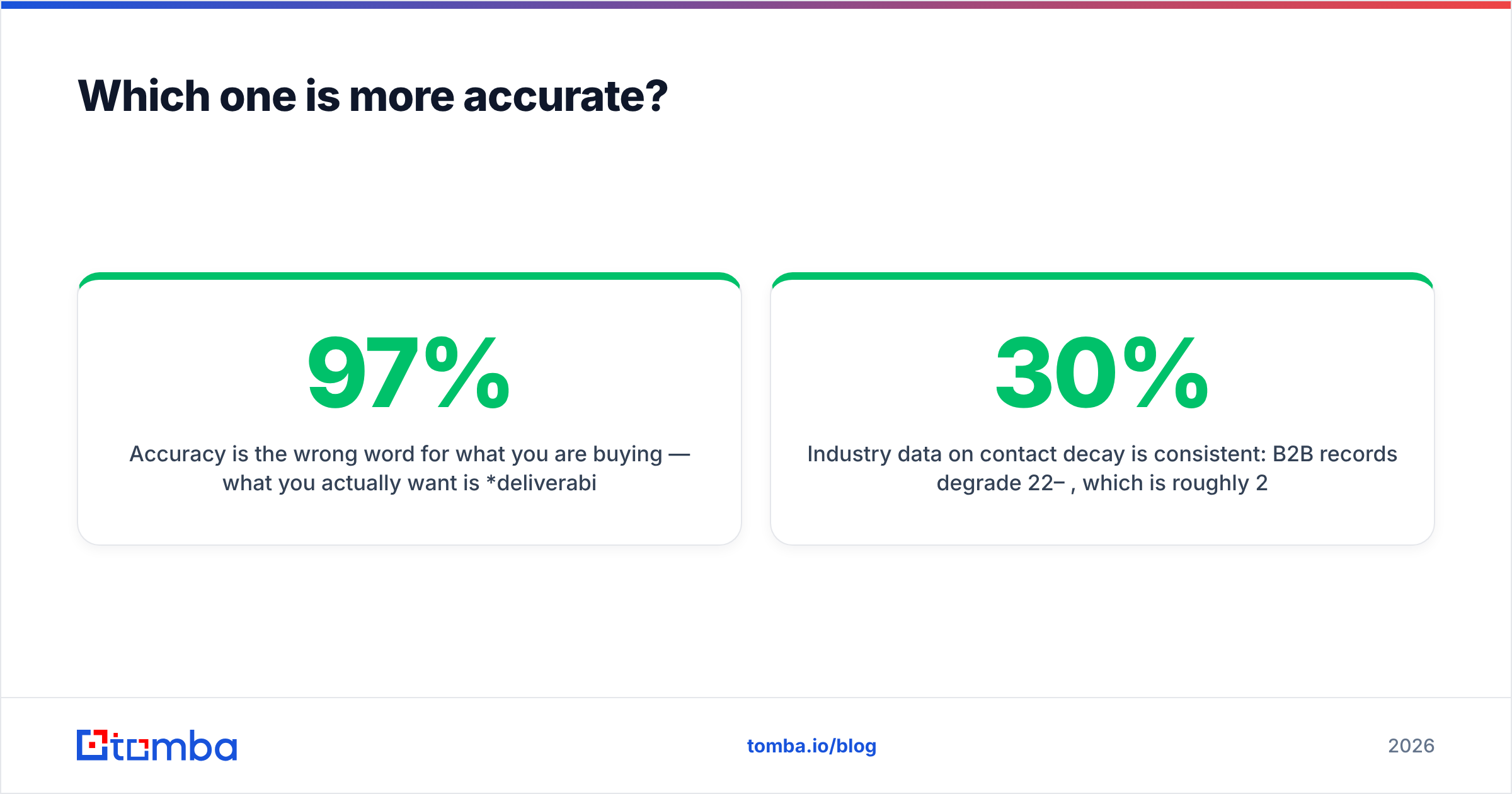
- Tomba — Subscription with a transparent published price: Free (25 searches/mo), Starter $49/mo, Growth $99/mo, Pro $249/mo, and Enterprise custom. You find and verify in one motion, so the re-verification line item disappears.
The honest takeaway: if you only need one list once, Bookyourdata's pay-as-you-go is cheapest to start. If you run continuous outbound, a subscription that finds and verifies beats repeatedly re-buying decaying records.
Why consider a live email finder instead?#
Because the core problem with both vendors is the same — you are renting a photograph of the market when you need a live feed.
A finder like Tomba flips the workflow. Instead of buying 10,000 rows and hoping, you start from the accounts you actually want, run a domain search to pull the right people at each company, and get an address that is checked against live mail-server signals as it is returned. You enrich only the contacts you will actually touch, which keeps both spend and bounce rates down.
This matters most for email deliverability. Mailbox providers judge you on bounce rate and spam complaints. A purchased list that is 11% stale will tank your sender reputation on the first big send, and recovering from that costs far more than the list saved you. Live verification keeps your bounce rate low because the address was confirmed seconds before you exported it.
For teams that still need volume, Tomba's bulk email finder and data enrichment cover list-scale work without the snapshot problem, and the Tomba API lets you wire finding and verification directly into your CRM or sequencer.
Which should you choose?#
Match the tool to the job rather than picking a universal winner.
- Choose Bookyourdata if you need a one-time, self-serve list with predictable per-record pricing and you are comfortable re-verifying before you send. It is the fastest path from filter to CSV.
- Choose Lakeb2b if you are running enterprise ABM, want intent data layered in, and prefer a managed vendor to scope and build a custom audience for you.
- Choose a live finder like Tomba if outbound is a continuous motion, deliverability is non-negotiable, and you want finding plus verification in a single, API-ready workflow instead of buying snapshots that decay.
A common, sensible setup combines them: use a list vendor for top-of-funnel discovery, then run every address through verification and enrich the keepers live before they ever hit a sequence.
How do you protect deliverability either way?#
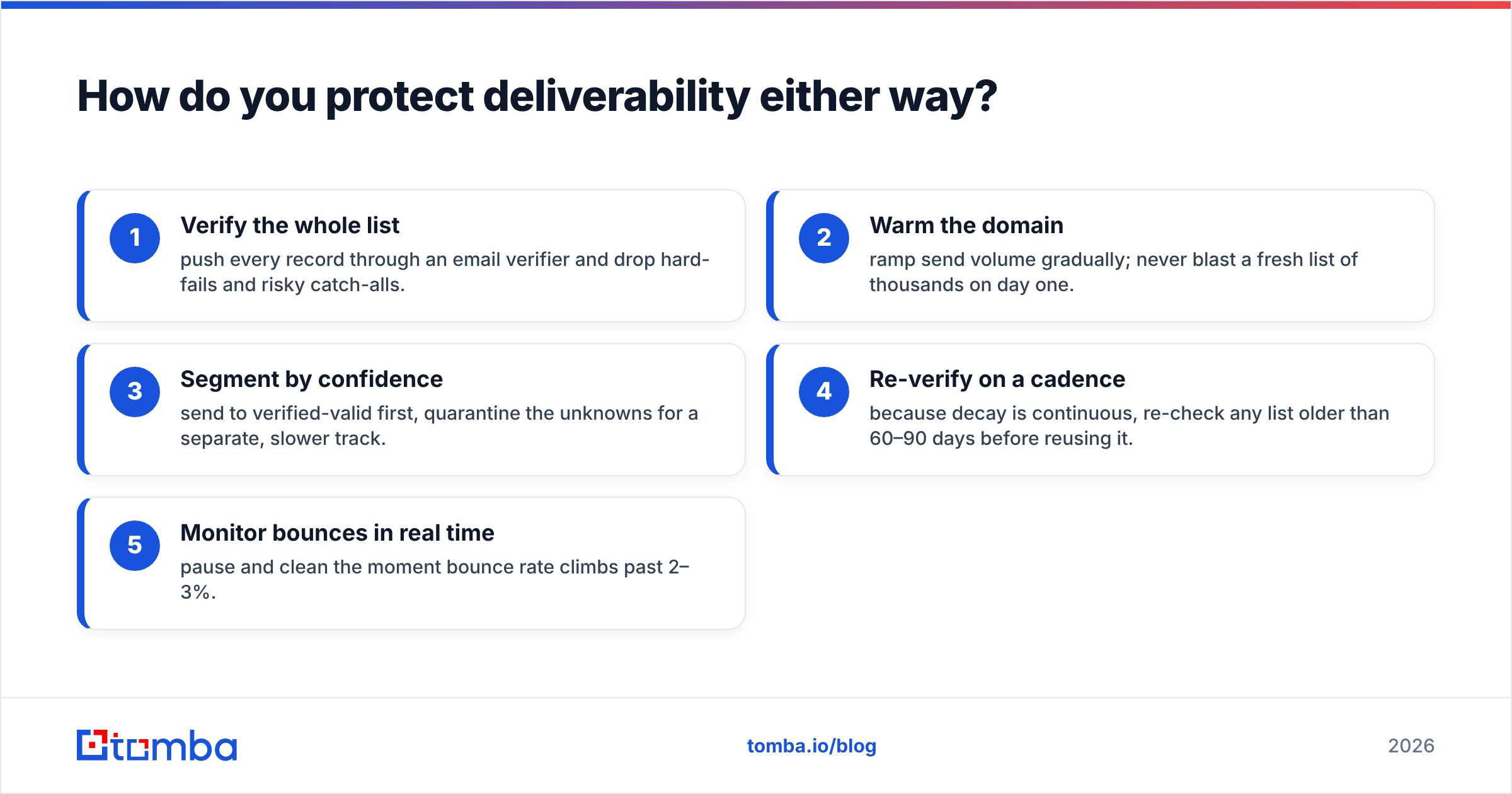
Whatever you buy, do this before the first send:
- Verify the whole list — push every record through an email verifier and drop hard-fails and risky catch-alls.
- Warm the domain — ramp send volume gradually; never blast a fresh list of thousands on day one.
- Segment by confidence — send to verified-valid first, quarantine the unknowns for a separate, slower track.
- Re-verify on a cadence — because decay is continuous, re-check any list older than 60–90 days before reusing it.
- Monitor bounces in real time — pause and clean the moment bounce rate climbs past 2–3%.
These steps are non-negotiable with static-list vendors and largely automatic when you find addresses live.
The bottom line#
Bookyourdata vs Lakeb2b comes down to self-serve speed versus managed, custom scale — both are credible static-data vendors, and both ship records that start decaying the instant you download them. If your work is one-off list pulls, Bookyourdata is the leaner choice; if it is enterprise ABM with intent, Lakeb2b earns its quote.
But if your real job is reaching specific people without wrecking your domain, stop buying snapshots. Start from the accounts you want and pull verified, current addresses with the Tomba Email Finder — find emails by domain, name, or company, verified at the moment of search, on a plan that starts free and scales with your pipeline instead of your bounce rate.
// get started
Find, verify and enrich your first contacts today
Start on the free plan with 25 searches a month, then scale when your team is ready.
Free plan · No credit card required · GDPR & CCPA
// about the author