Bounceban vs DiscoverOrg 2026: Verify or Source Leads?
Bounceban verifies emails; DiscoverOrg sources B2B data. They solve different problems. Here's how they compare in 2026—and why one affordable tool can cover both jobs.
TL;DR
- Bounceban and DiscoverOrg are not real competitors. Bounceban verifies whether an email will bounce; DiscoverOrg (now folded into ZoomInfo) sources the contact and company data in the first place. One cleans, the other supplies.
- Pick Bounceban when your problem is a dirty list and a high bounce rate, especially against catch-all domains.
- Pick DiscoverOrg/ZoomInfo when you need enterprise firmographics, org charts, and intent data, and you have the budget for an annual contract.
- Pricing gap is huge: Bounceban runs on affordable credits; DiscoverOrg-class data platforms routinely cost five figures per year.
- **If you want both jobs—find verified emails by domain or name—**a single tool like Tomba Email Finder covers sourcing and verification without a six-month sales cycle.
Why are people comparing Bounceban and DiscoverOrg?#
Short answer: they shouldn't be, but the search demand is real, so let's settle it.
People type "bounceban vs discoverorg" because both names show up when you research "how do I stop wasting outreach on bad contacts." But the two tools attack opposite ends of the same pipeline. Think of it like building a house: DiscoverOrg is the lumber yard that supplies raw materials (companies, contacts, org structure), and Bounceban is the building inspector who tells you which boards are rotten before you nail them in.
If you confuse the two, you either buy an expensive data platform when all you needed was list hygiene, or you buy a verifier and wonder why it never hands you new leads. This comparison fixes that.

What is Bounceban?#
Bounceban is an email verification tool. Its single job is to predict whether a message sent to a given address will land, bounce, or get blocked—before you hit send. Its main selling point is handling the hard cases: catch-all (accept-all) domains, role-based addresses, and temporary mailboxes that fool weaker validators.
What Bounceban does well:
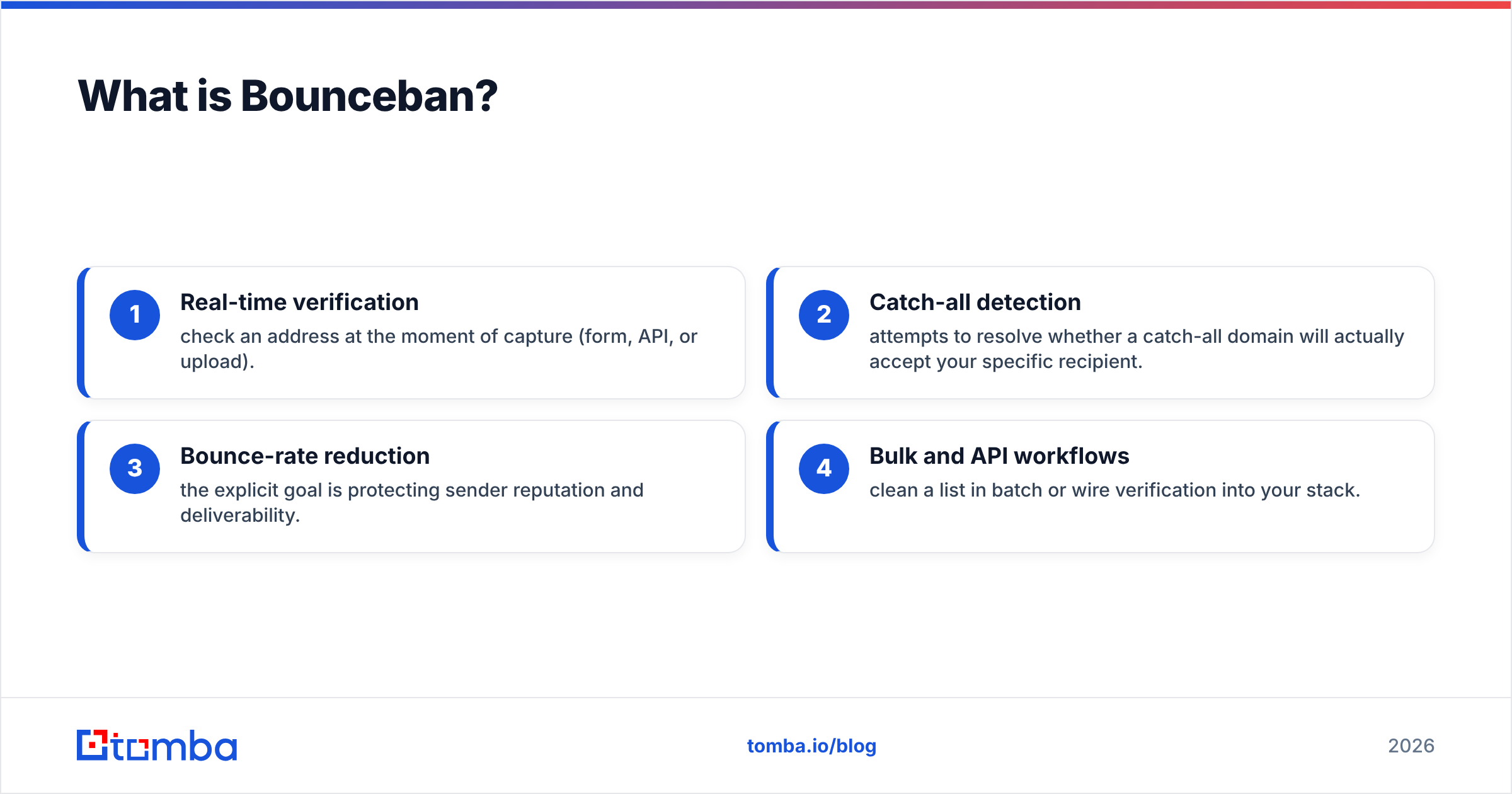
- Real-time verification — check an address at the moment of capture (form, API, or upload).
- Catch-all detection — attempts to resolve whether a catch-all domain will actually accept your specific recipient.
- Bounce-rate reduction — the explicit goal is protecting sender reputation and deliverability.
- Bulk and API workflows — clean a list in batch or wire verification into your stack.
What Bounceban does not do: it does not hand you new prospects. You bring the emails; it grades them. If your CRM is empty, Bounceban has nothing to verify.
What is DiscoverOrg?#
DiscoverOrg is a B2B sales intelligence platform—a data supplier, not a verifier. It built its reputation on deep, human-researched org charts, technographics (what software a company runs), and verified direct dials for enterprise accounts.
Here's the important 2026 context: DiscoverOrg as a standalone brand effectively no longer exists. In 2019 DiscoverOrg acquired Zoom Information and rebranded the combined company as ZoomInfo. If you "buy DiscoverOrg" today, you are buying ZoomInfo's data platform. You can confirm this on the ZoomInfo site directly. So when we say DiscoverOrg, read it as "the ZoomInfo enterprise data stack that DiscoverOrg became."
What that platform does well:
- Firmographics and org charts — who reports to whom, department structure, headcount.
- Intent and technographic data — signals on which accounts are in-market and what tools they use.
- Direct dials and contact records at enterprise scale.
- Integrations with major CRMs and sales engagement platforms.
What it is built for: large outbound and account-based teams that need to source and prioritize accounts. It is heavy, contract-based, and priced for enterprises—not a quick list-cleaning utility.
Bounceban vs DiscoverOrg: how do they actually compare?#
Because they sit at different stages, a feature-by-feature table makes the mismatch obvious. The point isn't "which is better"—it's "which problem do you have."
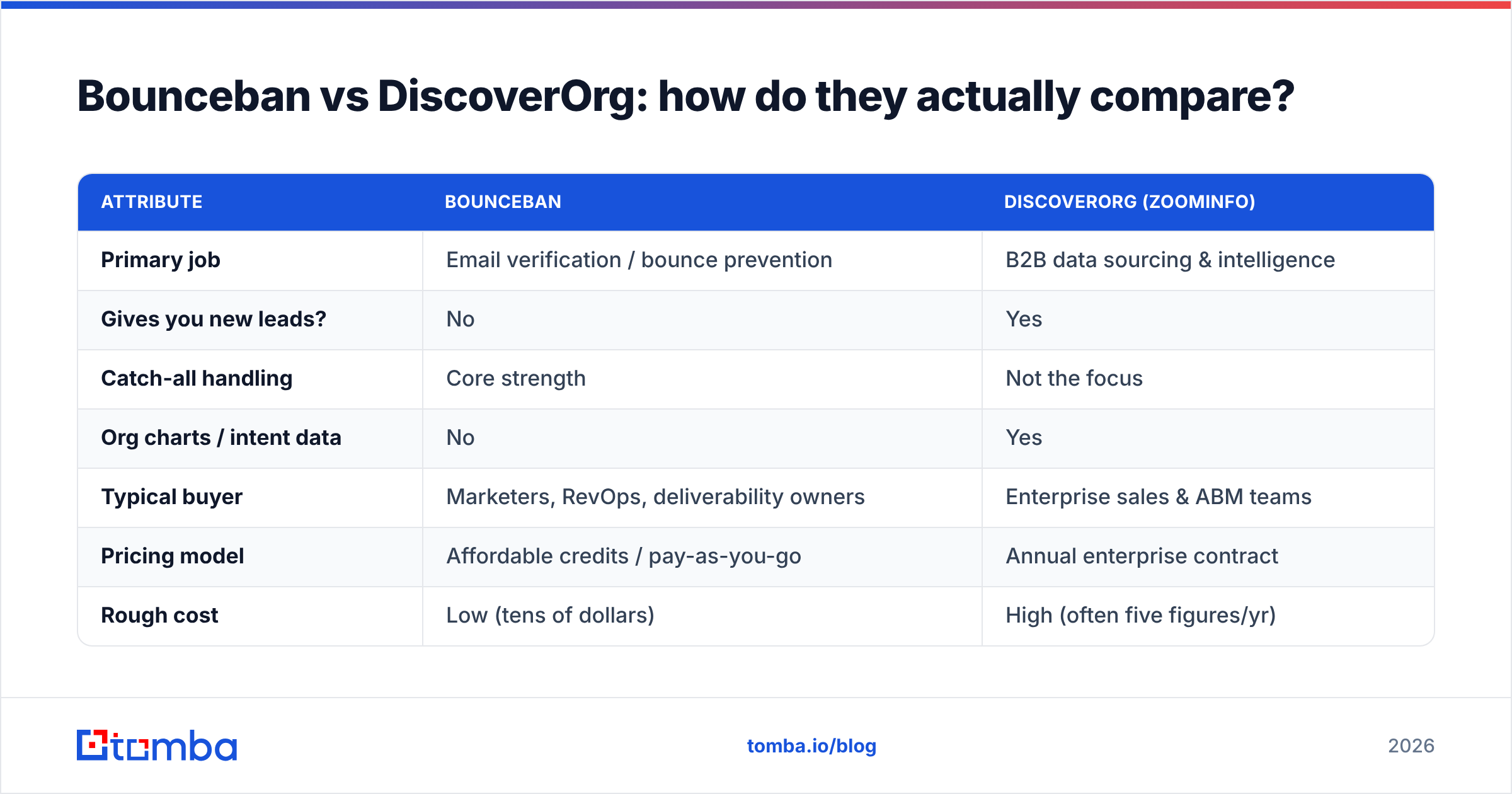
| Attribute | Bounceban | DiscoverOrg (ZoomInfo) |
|---|---|---|
| Primary job | Email verification / bounce prevention | B2B data sourcing & intelligence |
| Gives you new leads? | No | Yes |
| Catch-all handling | Core strength | Not the focus |
| Org charts / intent data | No | Yes |
| Typical buyer | Marketers, RevOps, deliverability owners | Enterprise sales & ABM teams |
| Pricing model | Affordable credits / pay-as-you-go | Annual enterprise contract |
| Rough cost | Low (tens of dollars) | High (often five figures/yr) |
| Time to value | Minutes | Weeks (procurement + onboarding) |
| Best for | Cleaning an existing list | Building target account lists |
The honest verdict from the table: if you already have contacts and they're bouncing, Bounceban is the cheaper, faster fix. If your pipeline is empty and you need enterprise-grade account data, that's DiscoverOrg/ZoomInfo territory—and a much bigger check.
Is Bounceban better than DiscoverOrg?#
Wrong question, but here's the useful version: for most small and mid-market teams, you do not need a DiscoverOrg-class contract, and a verifier alone won't fill your funnel. The real need is usually in the middle—source decent emails, then confirm they're deliverable—without paying enterprise prices for data you'll never fully use.
Three buying scenarios:
- You have a list, it's bouncing. Buy a verifier. Bounceban works; so does a dedicated email verifier that also resolves catch-all domains.
- You need to build target lists from scratch and have budget. DiscoverOrg/ZoomInfo earns its keep with depth and org structure.
- You need both, on an SMB budget. Neither tool alone is ideal. You want one platform that finds emails and verifies them.
That third scenario is where most readers actually land—and where neither of these two tools is the clean answer.

Where does Tomba fit between them?#
Tomba covers the gap: it sources professional emails like a data tool and verifies them like Bounceban—on a pay-as-you-go model that doesn't require an annual lock-in.
The practical workflow looks like this:
- Find emails by domain or name. Point domain search at a company and pull the team's addresses, or use the email finder for a specific person.
- Verify before you send. Every address can run through verification, including catch-all checks, so your bounce rate stays low without a second vendor.
- Scale in batches. Upload a company list and run a bulk email finder pass to source and validate at once.
Here's how the three stack up on the dimensions that matter for a lean team:
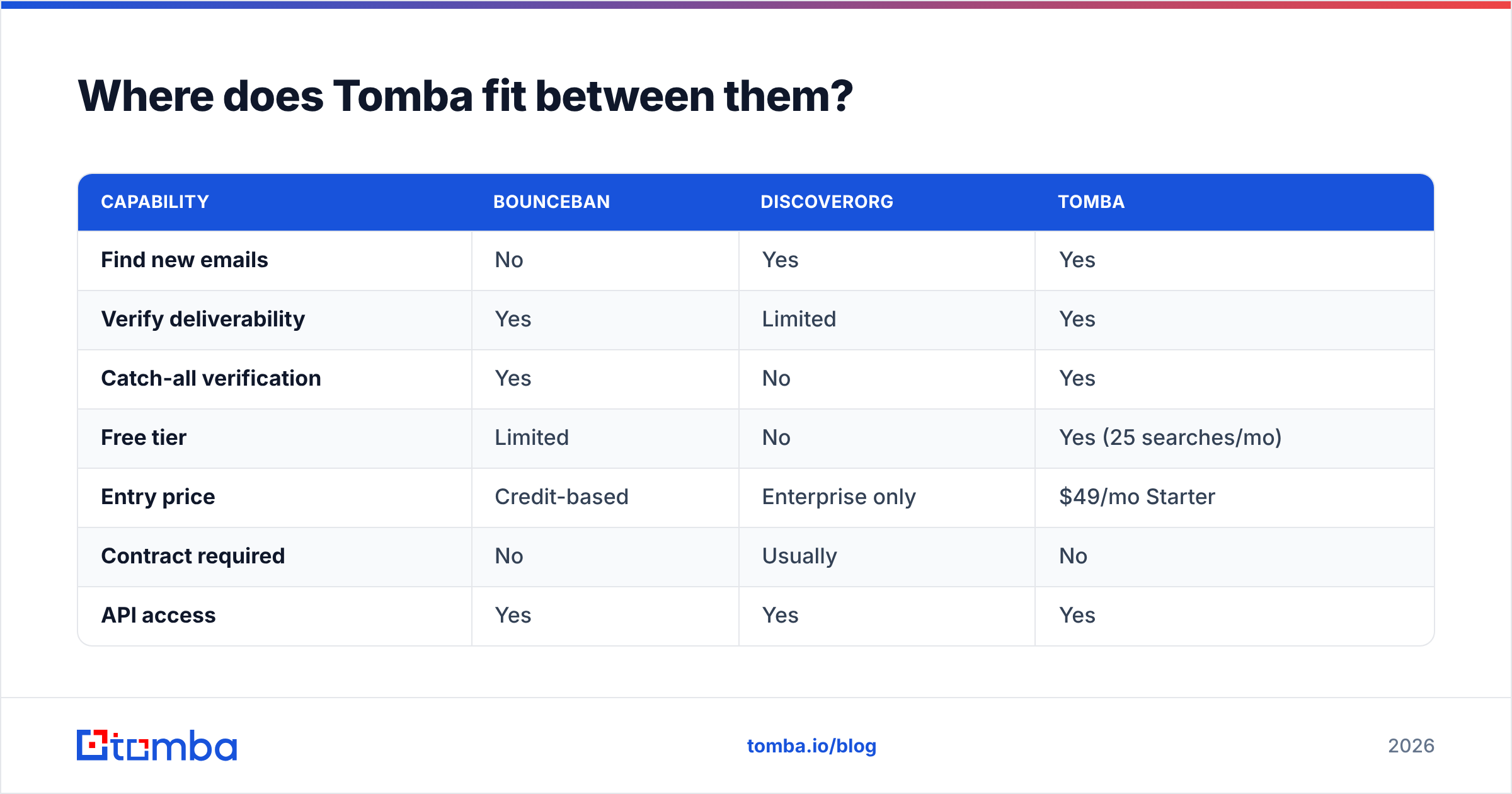
| Capability | Bounceban | DiscoverOrg | Tomba |
|---|---|---|---|
| Find new emails | No | Yes | Yes |
| Verify deliverability | Yes | Limited | Yes |
| Catch-all verification | Yes | No | Yes |
| Free tier | Limited | No | Yes (25 searches/mo) |
| Entry price | Credit-based | Enterprise only | $49/mo Starter |
| Contract required | No | Usually | No |
| API access | Yes | Yes | Yes |
This is not a claim that Tomba out-muscles ZoomInfo on enterprise org charts—it doesn't, and pretending otherwise would be dishonest. ZoomInfo's intent and technographic depth is genuinely deeper. The point is that the combined job most teams actually run—source a real email, confirm it won't bounce—is exactly what an email-finder-plus-verifier handles at a fraction of the cost.
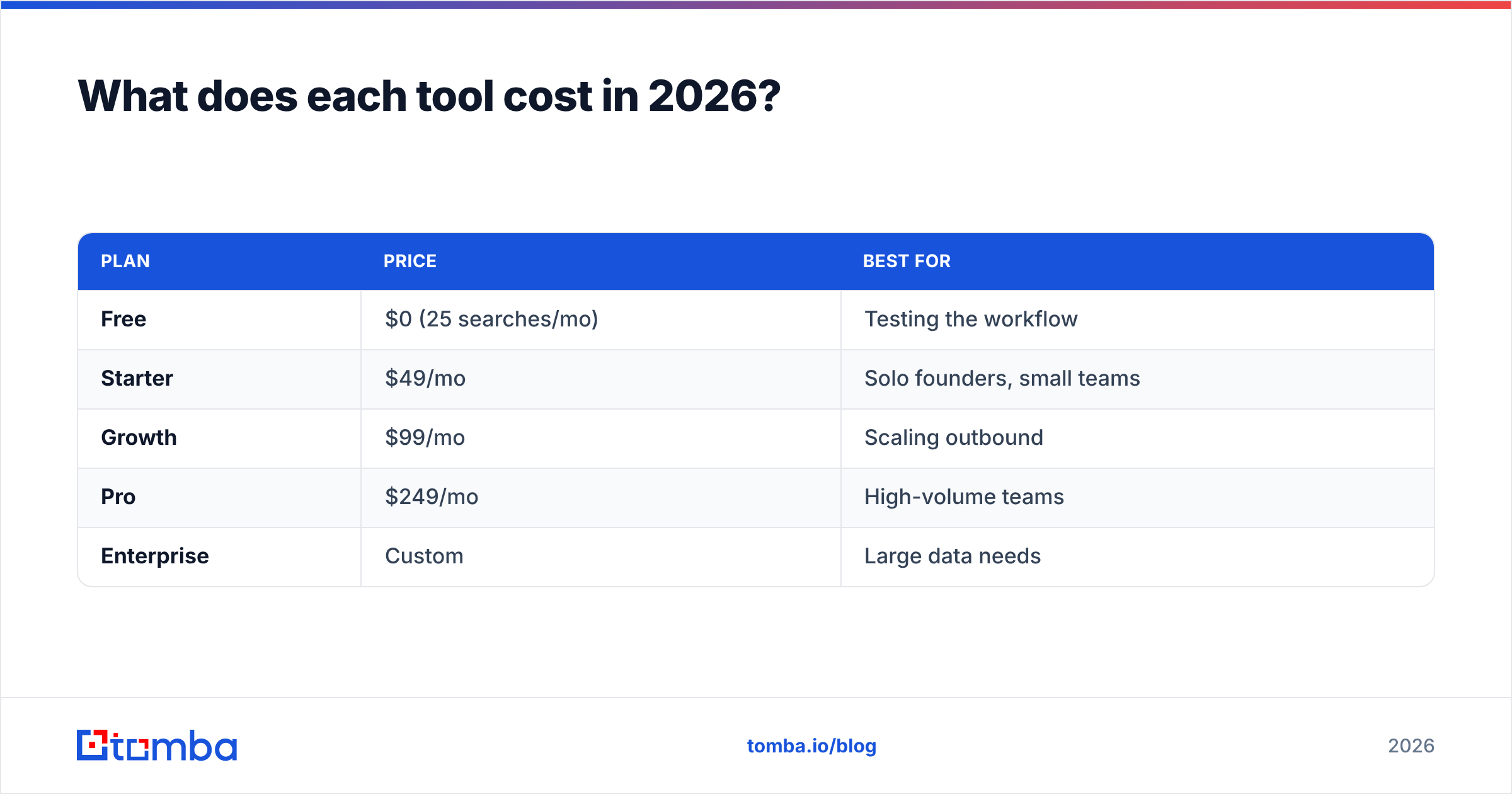
What does each tool cost in 2026?#
Cost is the cleanest tiebreaker, because the gap is not subtle.
DiscoverOrg/ZoomInfo is sold through annual contracts with custom quotes. Public reviews on G2 consistently put enterprise data platforms of this class in the five-figure-per-year range, often with seat minimums and add-ons for intent data. There is no meaningful free tier and procurement takes weeks.
Bounceban uses verification credits—affordable, usage-based, and easy to start without a sales call. You pay roughly in proportion to how many addresses you check.
Tomba sits in between on capability but stays close to Bounceban on price:
| Plan | Price | Best for |
|---|---|---|
| Free | $0 (25 searches/mo) | Testing the workflow |
| Starter | $49/mo | Solo founders, small teams |
| Growth | $99/mo | Scaling outbound |
| Pro | $249/mo | High-volume teams |
| Enterprise | Custom | Large data needs |
Full numbers are on the Tomba pricing page. The headline: you can source and verify on a $49/mo Starter plan—an order of magnitude below a DiscoverOrg-class contract—while Bounceban alone still leaves you needing a separate source of emails.
Which should you choose?#
Decide by the problem in front of you, not the brand:
- Bounce rate too high on a list you already own → a verifier. Bounceban is fine; a combined email verifier with catch-all support saves you a tool.
- Empty pipeline, enterprise budget, ABM motion → DiscoverOrg/ZoomInfo for org charts and intent.
- You need to find verified emails affordably—the most common case → a find-and-verify tool like Tomba.
The trap to avoid is buying a heavyweight data contract when your real bottleneck is just "I can't reach the right inbox," or buying a pure verifier and discovering it never grows your list. Match the tool to the actual gap and you'll spend a tenth of the money.
Final recommendation#
If your goal is to find professional email addresses by domain, name, or company—and to know they'll actually deliver—start with Tomba Email Finder. It sources contacts like a data platform and verifies them like Bounceban, on a free tier you can test today and a $49/mo Starter plan when you're ready to scale. Keep DiscoverOrg/ZoomInfo on your shortlist only if you genuinely need enterprise org charts and intent data and have the budget to match. For everyone else, one affordable tool beats stitching a verifier to a five-figure contract.
// get started
Find, verify and enrich your first contacts today
Start on the free plan with 25 searches a month, then scale when your team is ready.
Free plan · No credit card required · GDPR & CCPA
// about the author