Business Development Manager Introduction Email Examples 2026
A business development manager introduction email only works when it earns a reply. Here are templates, subject lines, and a follow-up framework that book meetings in 2026.
A business development manager introduction email is the first impression your pipeline ever gets. Done well, it opens a conversation with a stranger who had no plans to talk to you this week. Done badly, it lands in spam or gets deleted in the two seconds it takes to read a generic "I'd love to connect" opener. This guide shows you exactly how to write one that earns replies in 2026.
TL;DR#
- A business development manager introduction email should be short (under 125 words), specific to the recipient, and built around one clear ask — not a feature dump.
- Subject line and first sentence do 80% of the work; spend real time on both.
- Personalization beats volume: a researched email to 50 right-fit prospects outperforms a blast to 5,000.
- Deliverability matters as much as copy — a verified, accurate contact list keeps you out of spam.
- Follow-ups drive most replies. Plan a 3–4 touch sequence before you send the first message.
What is a business development manager introduction email?#
It's a cold (or warm) outreach message a BD manager sends to introduce themselves, their company, and a reason to talk — usually to start a partnership, sales, or referral conversation. Unlike a marketing newsletter, it's one-to-one, written to a named human, and aimed at a single next step: a reply or a booked call.
The job of this email is not to close a deal. It's to earn 15 minutes of attention. Every line should push toward that, and anything that doesn't (your company history, your award shelf, your full feature list) gets cut.
Three things separate a reply-getting intro email from the deleted majority:
- Relevance — you reference something true and specific about their world, not yours.
- Brevity — it respects the reader's time and reads in under 20 seconds.
- A single, low-friction ask — "Worth a quick call Thursday?" beats "Let me know your thoughts on a strategic partnership."
What does a great BD intro email structure look like?#
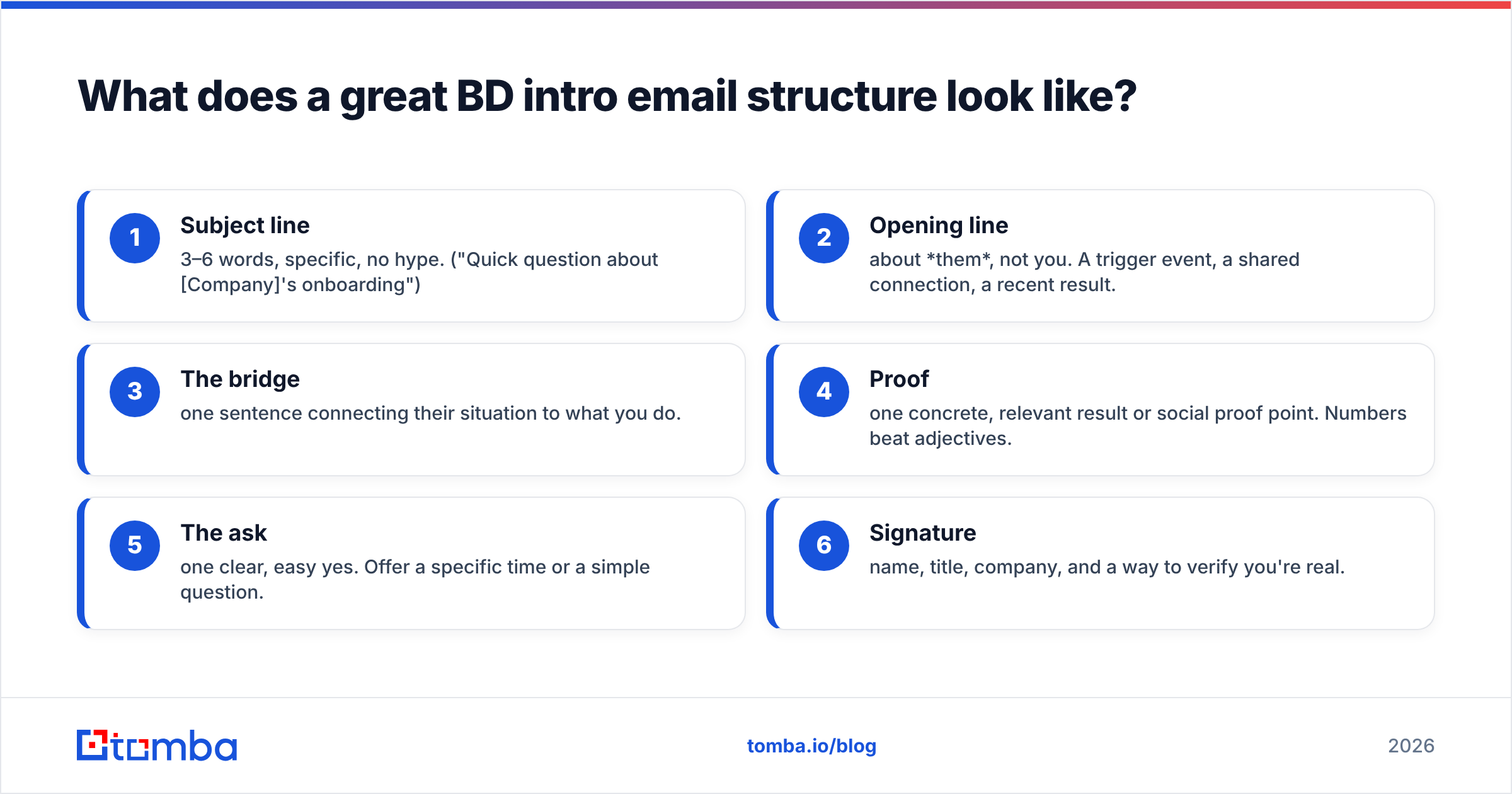
Every strong introduction email follows the same skeleton. Memorize it and you can write a solid draft in five minutes.
- Subject line — 3–6 words, specific, no hype. ("Quick question about [Company]'s onboarding")
- Opening line — about them, not you. A trigger event, a shared connection, a recent result.
- The bridge — one sentence connecting their situation to what you do.
- Proof — one concrete, relevant result or social proof point. Numbers beat adjectives.
- The ask — one clear, easy yes. Offer a specific time or a simple question.
- Signature — name, title, company, and a way to verify you're real.
Keep the whole thing to 75–125 words. If you cross 150, you're explaining instead of inviting.
Which BD intro email template fits your situation?#
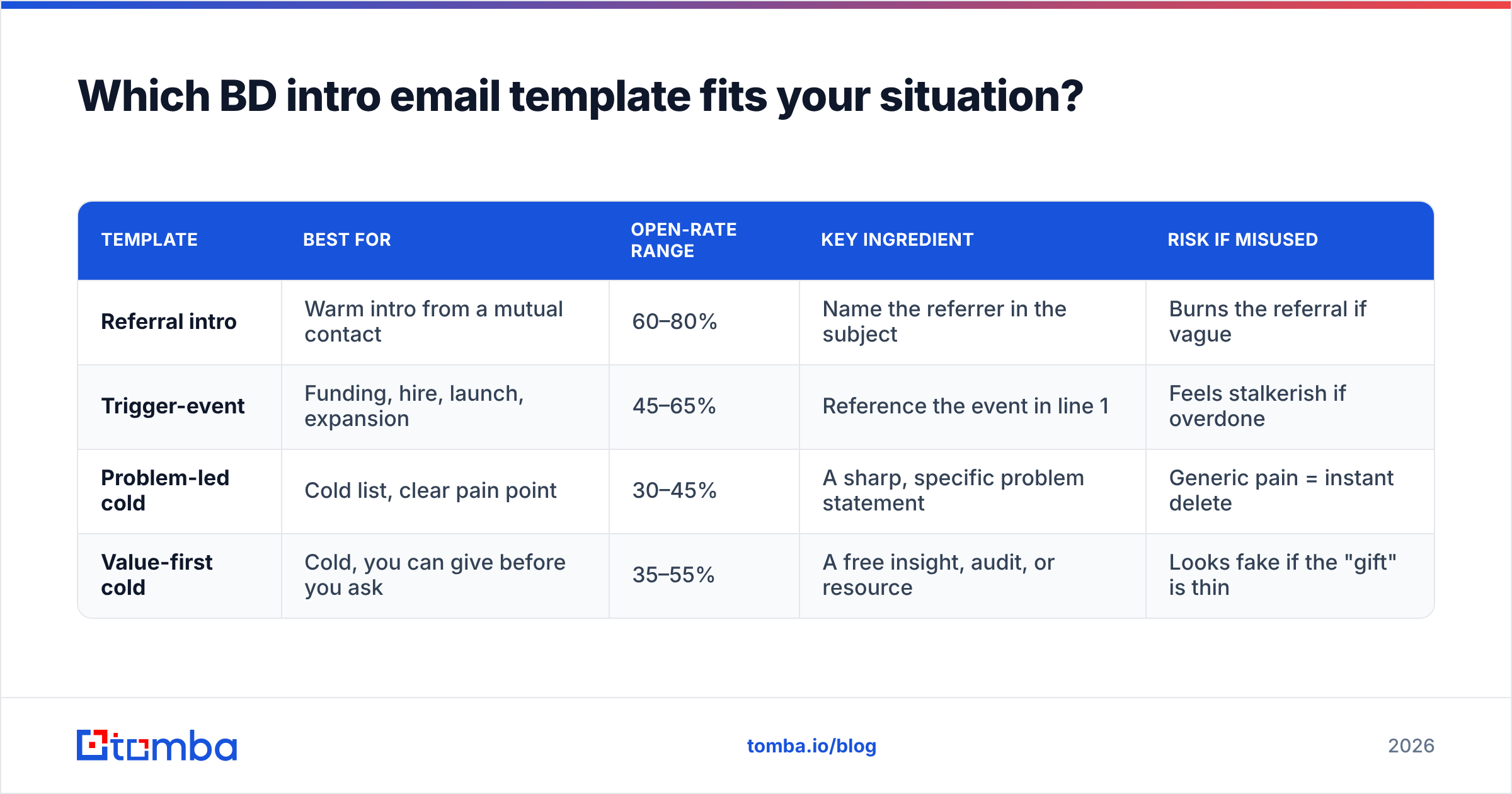
There's no single best template — the right one depends on whether you have a referral, a trigger event, or a cold start. Here's a comparison of the four you'll use most.
| Template | Best for | Open-rate range | Key ingredient | Risk if misused |
|---|---|---|---|---|
| Referral intro | Warm intro from a mutual contact | 60–80% | Name the referrer in the subject | Burns the referral if vague |
| Trigger-event | Funding, hire, launch, expansion | 45–65% | Reference the event in line 1 | Feels stalkerish if overdone |
| Problem-led cold | Cold list, clear pain point | 30–45% | A sharp, specific problem statement | Generic pain = instant delete |
| Value-first cold | Cold, you can give before you ask | 35–55% | A free insight, audit, or resource | Looks fake if the "gift" is thin |
A quick rule: the colder the relationship, the more you must give before you ask. A referral email can ask for a call in line three. A pure cold email usually needs to earn that ask with a genuinely useful observation first.
Template 1 — The referral introduction#
Subject: [Mutual contact] suggested I reach out
Hi [First name],
[Mutual contact] mentioned you're rethinking how [Company] handles [process] this quarter, and thought we should talk.
We helped [similar company] cut [metric] by [number]% in [timeframe] doing exactly that. Happy to share what worked — no pitch.
Open to 15 minutes Thursday or Friday?
[Your name]
Template 2 — The trigger-event introduction#
Subject: Congrats on the [Series B / new role / launch]
Hi [First name],
Saw [Company] just [trigger event] — congratulations. Teams at your stage usually hit [specific challenge] within a few months of that move.
We work with [comparable companies] on exactly that. One client went from [before] to [after] in [timeframe].
Worth a short call next week to see if it's relevant?
[Your name]
These templates are starting points, not scripts. Swap in your own proof and rewrite the opener in your voice. If you want more ready-made structures to adapt, browse Tomba's library of cold email templates and tweak-spot them for your niche.
How do you write a subject line that gets opened?#
The subject line decides whether anything else you wrote matters. According to HubSpot's research on email marketing, subject line relevance is among the strongest drivers of open rates — and for cold BD outreach, the bar is even higher because you have no existing relationship.
Four subject-line patterns that consistently beat "Introduction" or "Partnership opportunity":
- The specific question: "Question about [Company]'s 2026 expansion"
- The referral: "[Name] said to email you"
- The trigger: "Congrats on the [event]"
- The number: "23% fewer no-shows for [competitor type]"
Avoid ALL CAPS, exclamation points, the word "free," and anything that smells like a mass blast — those tank both opens and deliverability. If you're stuck, run a few options through a subject line generator and pick the most specific one, not the cleverest.
Why do most BD intro emails never get a reply?#
Most fail for one of three reasons, and only one of them is about copy.
1. The email never arrived. If your domain reputation is weak or you're emailing invalid addresses, your message lands in spam or bounces. High bounce rates damage your sender reputation, which makes the next batch land in spam too — a death spiral. This is why list quality comes before copy quality.
2. The contact data was wrong. Emailing info@ instead of the actual decision-maker, or guessing a format that bounces, wastes the best copy in the world. Using an accurate email finder to get the right person's verified address is the unglamorous step that separates pros from spammers.
3. The copy was about you. "We are a leading provider of end-to-end solutions" tells the reader nothing and signals a template. If your first sentence could be sent to any company in your CRM, rewrite it.
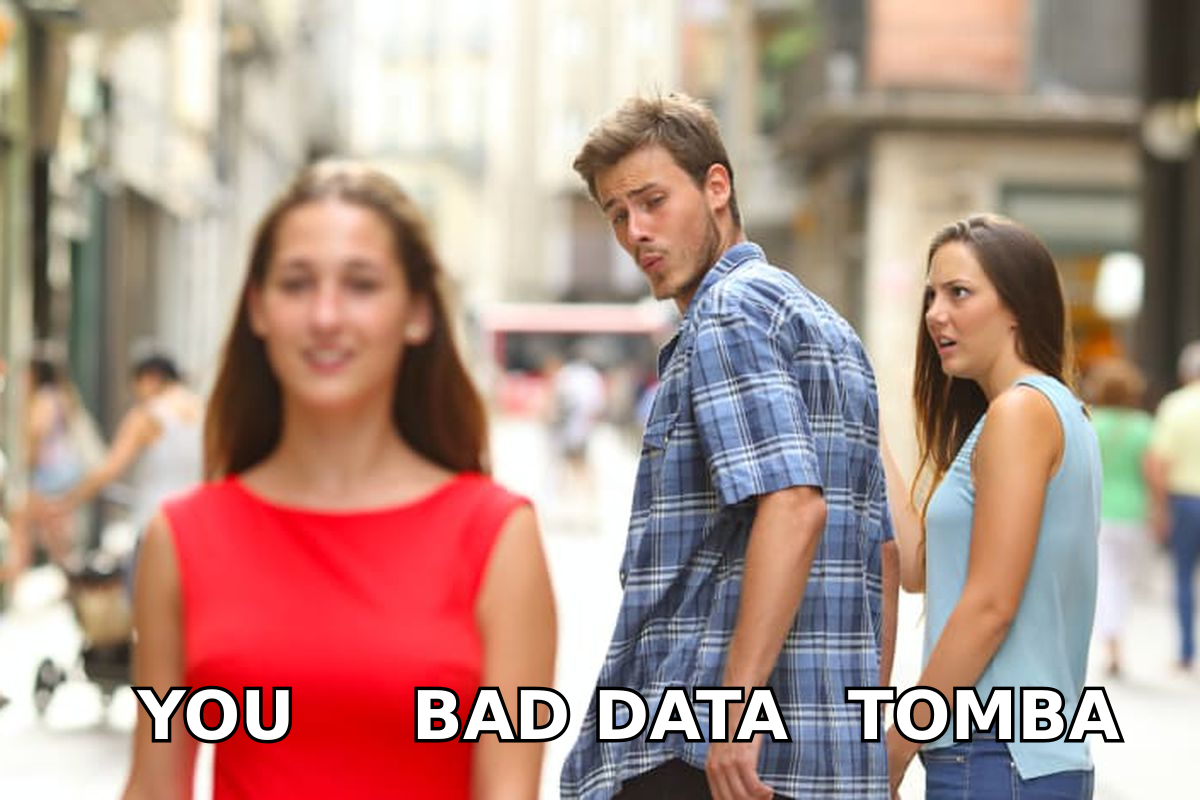
Notice that two of the three failure modes are data problems, not writing problems. You can A/B test copy forever, but if half your list bounces, you're optimizing the wrong thing. Verify your list with an email verifier before you send, and your reply rate climbs without changing a single word.
How long should the email be, and how personal?#
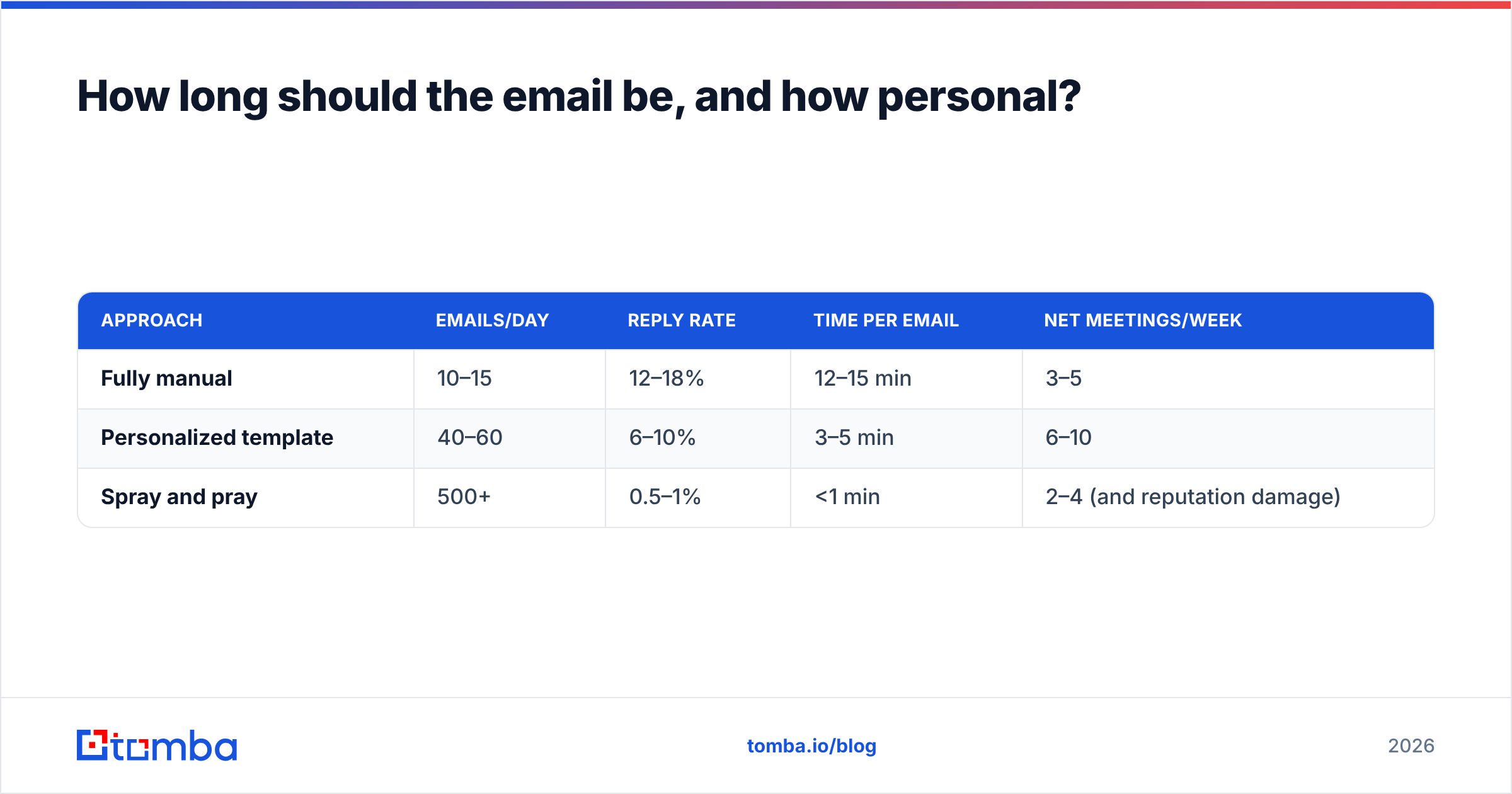
Short and genuinely personal. Here's the trade-off most BD managers get wrong: they treat personalization and scale as opposites, so they either send 1,000 generic emails or 10 hand-crafted ones.
The real answer is a personalized template at controlled scale: a strong skeleton with two or three variables that you actually research per prospect. The first line and the proof point are non-negotiable customizations. Everything else can be a smart default.
| Approach | Emails/day | Reply rate | Time per email | Net meetings/week |
|---|---|---|---|---|
| Fully manual | 10–15 | 12–18% | 12–15 min | 3–5 |
| Personalized template | 40–60 | 6–10% | 3–5 min | 6–10 |
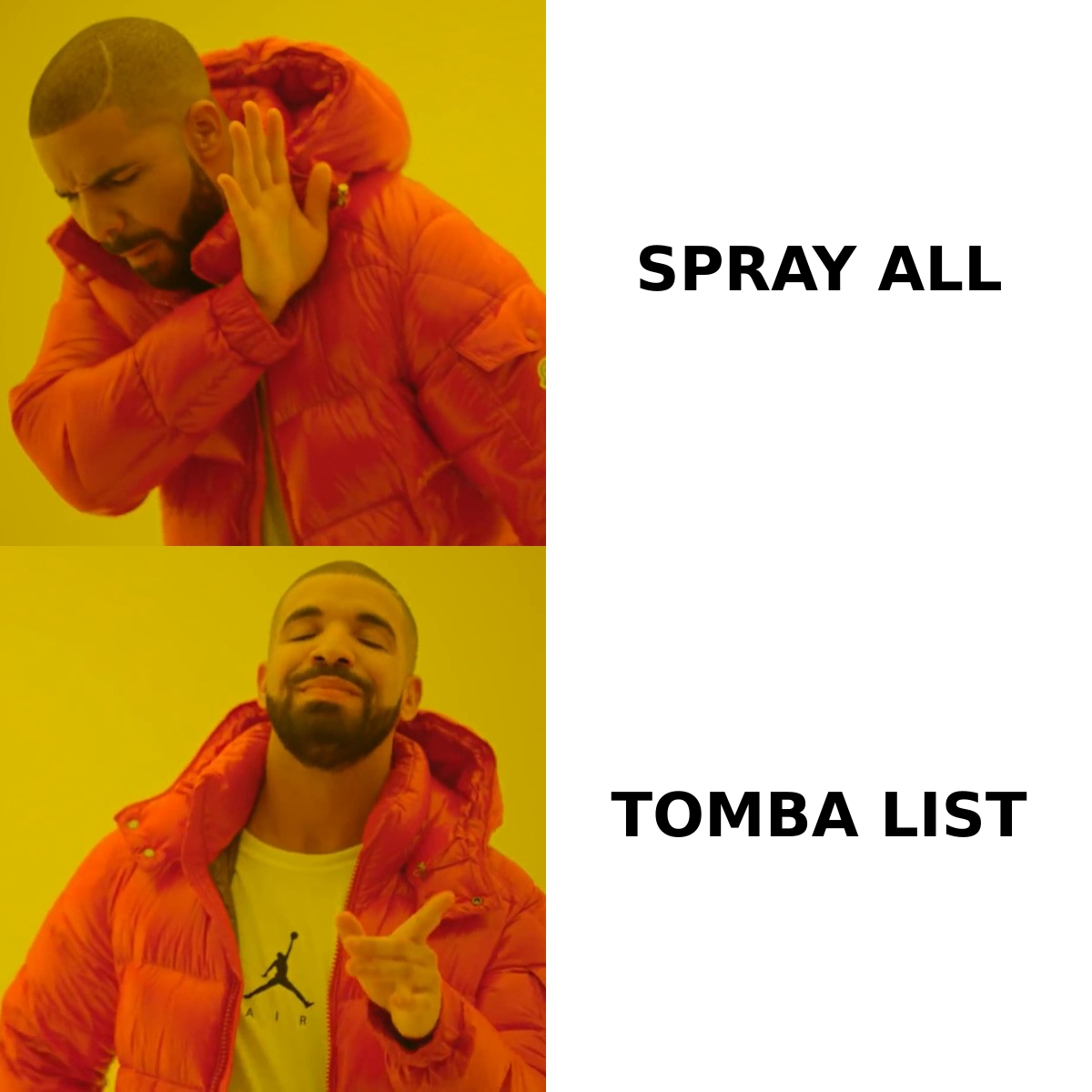
| Spray and pray | 500+ | 0.5–1% | <1 min | 2–4 (and reputation damage) |
The middle row wins on almost every dimension that matters, and it doesn't torch your domain. The trick is feeding it good data so the few variables you personalize are correct. Pull verified contacts in batches with a bulk email finder, then spend your saved time on the opening line — the part automation can't fake.
What does a strong follow-up sequence look like?#
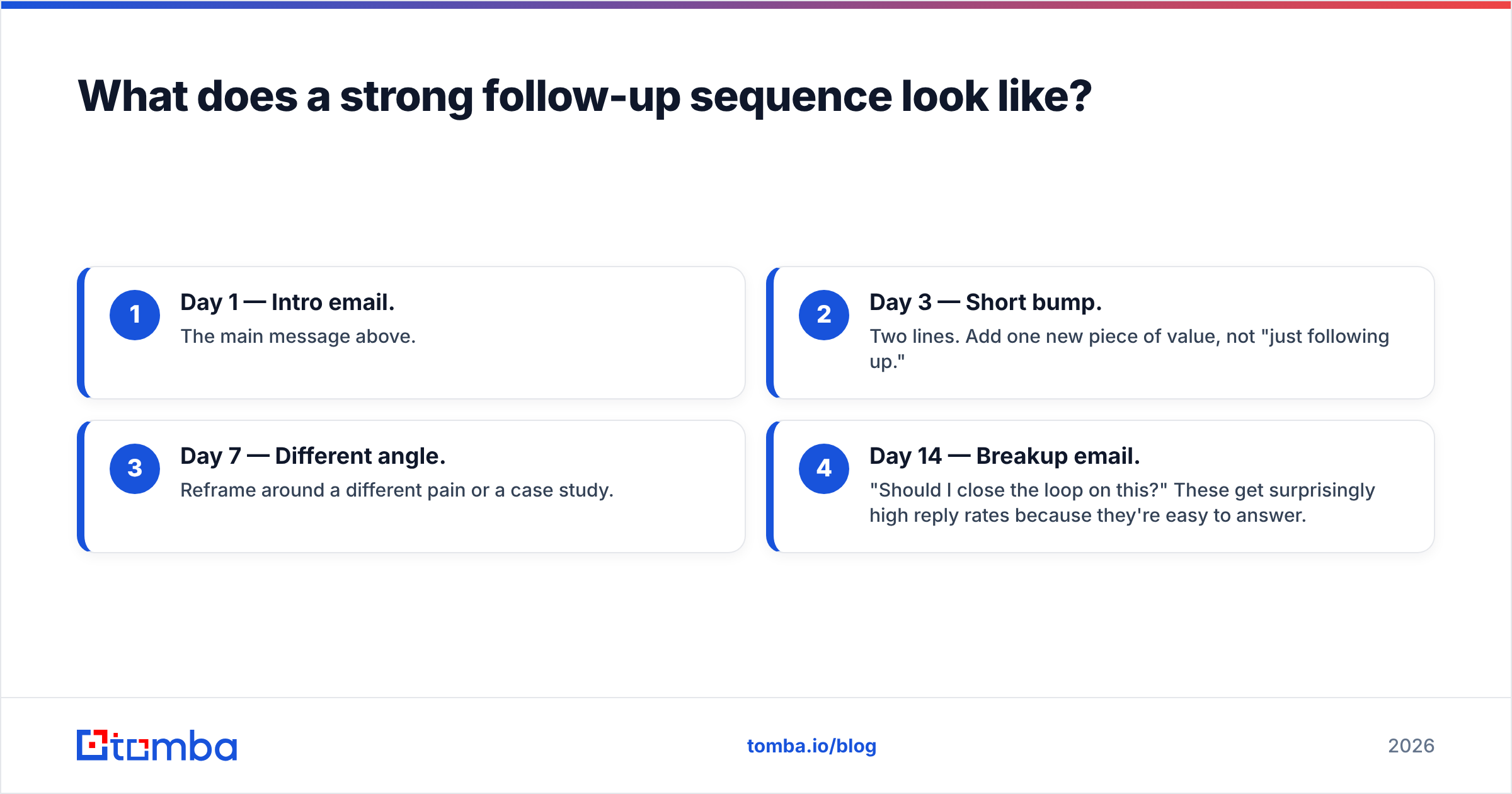
Most replies come after the first email, yet most BD managers send one message and give up. A simple 4-touch sequence over two weeks typically doubles or triples total replies versus a single send. Plan it before you send touch one.
- Day 1 — Intro email. The main message above.
- Day 3 — Short bump. Two lines. Add one new piece of value, not "just following up."
- Day 7 — Different angle. Reframe around a different pain or a case study.
- Day 14 — Breakup email. "Should I close the loop on this?" These get surprisingly high reply rates because they're easy to answer.
Keep follow-ups in the same thread, keep them short, and always add something — a stat, a relevant article, a customer quote. Never guilt-trip ("I haven't heard back…"). For benchmarks on what a healthy response rate looks like in your category, compare against verified third-party data on sites like G2 rather than vendor marketing claims.
How do you measure if your intro emails are working?#
Track these four numbers per campaign, in order of importance:
- Bounce rate — keep under 3%. Above that, your list quality is the problem, not your copy.
- Open rate — judges your subject line and sender reputation. Aim for 40%+ on a clean, targeted list.
- Reply rate — the real metric. Positive and negative replies both tell you something.
- Meetings booked — the only number your VP cares about.
If opens are high but replies are low, your subject line is writing checks the body can't cash. If bounces are high, stop everything and clean your data first. The sequence matters: fix deliverability, then opens, then reply copy, then the offer.
Quick checklist before you hit send#
- Subject line is under 6 words and specific to them
- First sentence is about the recipient, not you
- Email is under 125 words
- Exactly one clear, low-friction ask
- One concrete proof point with a real number
- The recipient's email is verified (not guessed)
- A follow-up sequence is queued
- Your signature makes you easy to verify as a real person
Start with the right contacts#
The best business development manager introduction email in the world fails if it goes to the wrong address. Before you write a single word of copy, build a clean, verified list of the actual decision-makers you want to reach. Tomba's email finder gives you accurate, source-cited professional emails by name or domain, and the built-in verifier keeps your bounce rate low so your carefully written intros actually land in the inbox. Start free with 25 searches a month, and scale up on the Tomba pricing plan that fits your outreach volume — Starter is $49/mo when you're ready to grow. Get the data right first, and your copy finally gets the chance it deserves.
// get started
Find, verify and enrich your first contacts today
Start on the free plan with 25 searches a month, then scale when your team is ready.
Free plan · No credit card required · GDPR & CCPA
// about the author