Bytemine vs Seamless.AI 2026: B2B Lead Data Tools Compared
Bytemine vs Seamless.AI in 2026: how the two B2B contact-data tools stack up on accuracy, pricing, and workflow — plus where a leaner email finder beats both.
Choosing between Bytemine and Seamless.AI usually comes down to one question that neither vendor answers cleanly on their pricing page: how many of the contacts you pull will actually be real, reachable, and worth a rep's time. This guide breaks down both platforms on data quality, pricing structure, and day-to-day workflow — and shows where a focused email finder beats a sprawling sales-intelligence suite for most teams.
TL;DR#
- Seamless.AI is a real-time B2B search engine with a large contact database and heavy sales-intelligence layering (intent, org charts, buyer signals). Pricing is credit-based and quote-driven, with annual contracts the norm.
- Bytemine is a leaner B2B lead-generation and data tool aimed at marketers and SDRs who want lists fast without an enterprise commitment.
- Accuracy is the real battleground. Both tools surface plenty of contacts; the cost is bounced emails, stale phone numbers, and wasted sender reputation.
- For pure email finding, a verification-first tool like Tomba often delivers cleaner output per dollar than either — transparent pricing starting at $49/mo and a free tier to test.
- Pick by job-to-be-done: full GTM intelligence (Seamless.AI), quick affordable lists (Bytemine), or accurate verified emails at the lowest cost (Tomba).
What are Bytemine and Seamless.AI?#
Seamless.AI markets itself as a real-time search engine for B2B sales leads. Instead of serving a static database, it claims to build and verify contact records on demand, then layers sales-intelligence features on top: buyer intent data, organizational charts, technographics, and list-building automation. It targets full sales orgs that want prospecting, enrichment, and signals in one place. You can read their positioning on the Seamless.AI homepage.
Bytemine is positioned as a more lightweight B2B lead-generation and contact-data tool. The pitch is speed and accessibility: build targeted prospect lists, pull business emails, and export to your outreach stack without a heavyweight onboarding or a long annual contract. It appeals to solo founders, small agencies, and SDR teams that need volume on a budget.
The two tools overlap in the middle — both let you find business contacts and export them — but they sit at different ends of the complexity and price spectrum. Seamless.AI is the broad GTM platform; Bytemine is the focused list-builder.
How do their core features compare?#
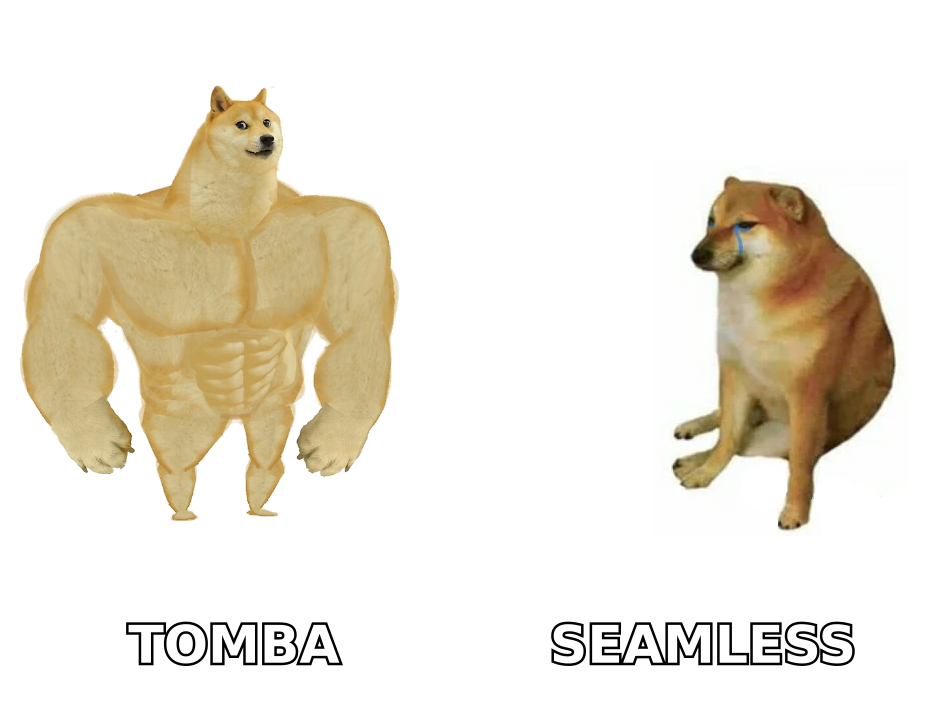
Before the table, here's the honest framing: feature checklists rarely lose deals — bad data does. A tool can advertise intent signals, org charts, and a Chrome extension and still hand you a 28% bounce rate. So weigh the columns below against your real need, not the longest feature list.
| Feature | Bytemine | Seamless.AI | Tomba |
|---|---|---|---|
| Primary use case | Fast B2B lists | Full GTM intelligence | Verified email finding |
| Email finder | Yes | Yes | Yes (core product) |
| Built-in email verification | Limited | Add-on / partial | Yes, native |
| Phone numbers | Some | Yes | Yes (phone finder) |
| Intent / buyer signals | No | Yes | No |
| Domain / bulk search | Basic | Yes | Yes (domain + bulk) |
| Free tier | Limited trial | Limited credits | 25 searches/mo |
| Pricing model | Subscription | Credits, quote-based | Transparent, from $49/mo |
| API access | Limited | Yes | Yes (full API) |
A few things stand out. Seamless.AI wins on breadth — if you want intent data and org charts in the same window as your contact list, Bytemine doesn't compete there. Bytemine wins on simplicity and entry cost for teams that just want lists. And for the one job both are most often hired for — getting an email address that lands — a dedicated email finder with native verification removes the step where you discover, mid-campaign, that a third of your list was guesswork.
Which tool has better data accuracy?#
Accuracy is where the marketing and the inbox diverge. Every contact-data vendor quotes a high accuracy figure; what matters is the rate measured against your domain, in your industry, after deduplication.
Seamless.AI's real-time model is a genuine strength here in theory — building records on demand can catch role changes a static database misses. In practice, user reviews on G2 frequently flag inconsistency: some searches return clean, verified contacts; others return outdated emails or numbers that ring the wrong desk. The credit model compounds this, because you can spend credits on records that don't verify.
Bytemine, being leaner, leans on aggregated sources. That keeps cost down but means accuracy varies by geography and seniority — senior titles at large companies tend to resolve well, while SMB and non-US contacts are spottier.

The defensive move, regardless of which tool you pick, is to verify before you send. Bouncing more than 2–3% of a campaign drags your sender reputation down and pushes future mail toward spam folders — a cost that outlives any single list. Tomba bakes this in: every result runs through the email verifier, and catch-all domains get flagged by the catch-all verifier so you know which addresses are genuinely safe to mail. If you stay on Bytemine or Seamless.AI, route exports through a standalone verification pass first.
How does pricing compare?#
Pricing is the cleanest contrast between these three tools — and the place buyers get surprised most.
- Seamless.AI uses a credit-based model with pricing delivered by quote, typically on an annual contract. There's a free tier with limited credits to test, but serious usage means a sales conversation and a year's commitment. Credits are consumed on searches, which means low-quality results still cost you.
- Bytemine runs on a more straightforward subscription, generally cheaper to enter than an enterprise sales-intelligence platform. That's its core appeal — predictable monthly cost for teams that don't need intent data.
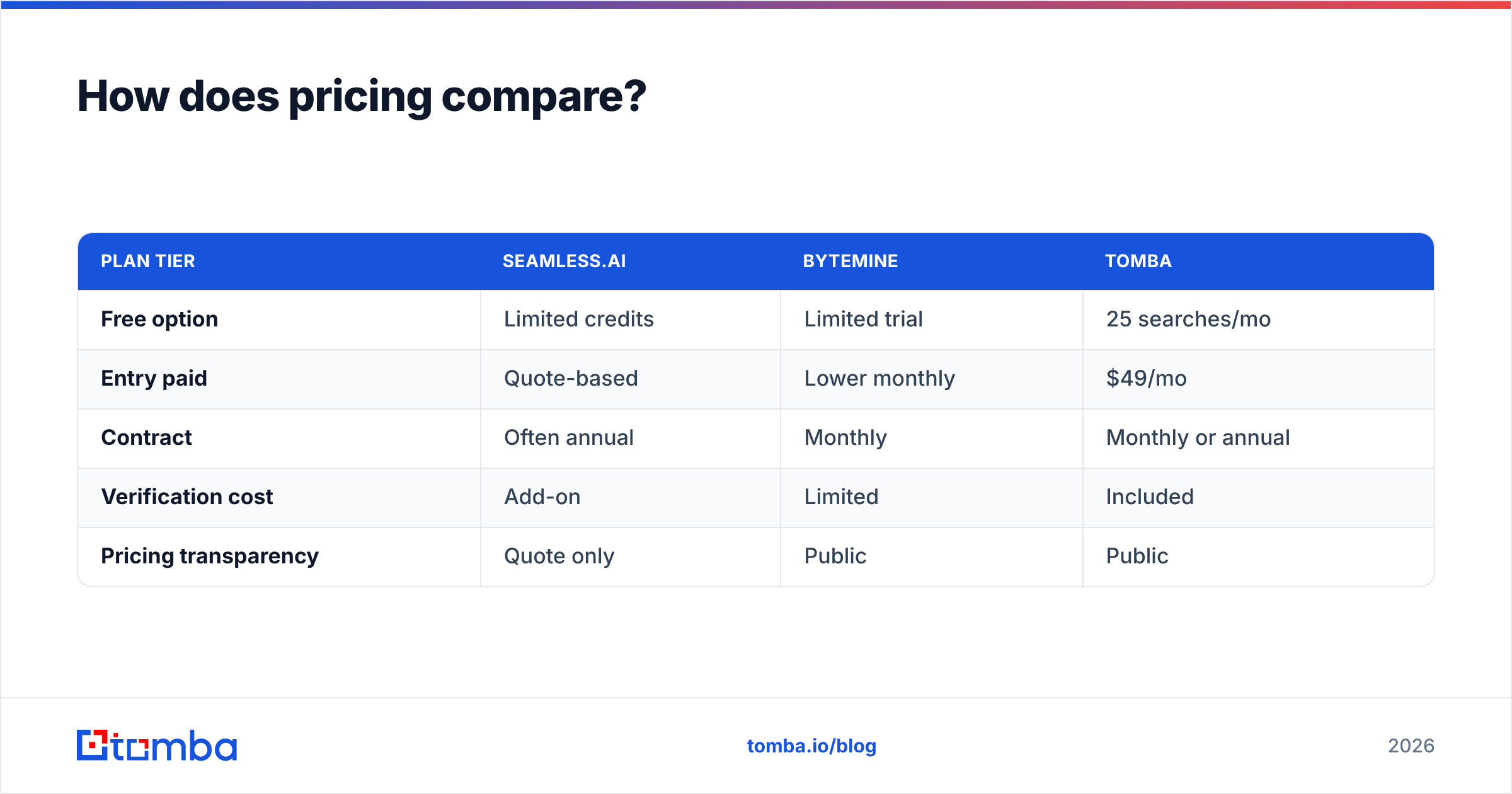
- Tomba publishes its full pricing openly: a Free tier with 25 searches/mo, Starter at $49/mo, Growth at $99/mo, Pro at $249/mo, and custom Enterprise. No annual lock-in required to start, and verification is included rather than billed as an add-on. See the full Tomba pricing breakdown.
| Plan tier | Seamless.AI | Bytemine | Tomba |
|---|---|---|---|
| Free option | Limited credits | Limited trial | 25 searches/mo |
| Entry paid | Quote-based | Lower monthly | $49/mo |
| Contract | Often annual | Monthly | Monthly or annual |
| Verification cost | Add-on | Limited | Included |
| Pricing transparency | Quote only | Public | Public |
The pattern: Seamless.AI charges for breadth and signals, Bytemine charges for cheap volume, and Tomba charges transparently for verified output. If your finance team hates surprise renewals and per-credit math, the transparent model is easier to defend.
Is Seamless.AI better than Bytemine?#
It depends entirely on what you're hiring the tool to do. Seamless.AI is the better fit if you run a mature outbound motion that consumes buyer-intent data, needs org charts to map accounts, and has budget for an annual platform commitment. Its sales-intelligence layer is real value for account-based teams.
Bytemine is the better fit if you're an SDR, founder, or small agency who needs targeted lists this week, on a predictable budget, without sitting through a procurement cycle. You give up the intelligence layer, but you skip the cost and complexity that comes with it.
Where neither shines is the unglamorous core task: producing a list of verified business emails that won't torch your email deliverability. Seamless.AI's credits can burn on unverified records; Bytemine's verification is limited. That gap is exactly why many teams pair either tool with a dedicated finder — or replace both for the email-finding job.
Where does Tomba fit in this comparison?#
Tomba isn't trying to be a full GTM intelligence suite, and that focus is the point. It does one category of work — finding and verifying business contact data — and does it with transparent pricing and native verification.
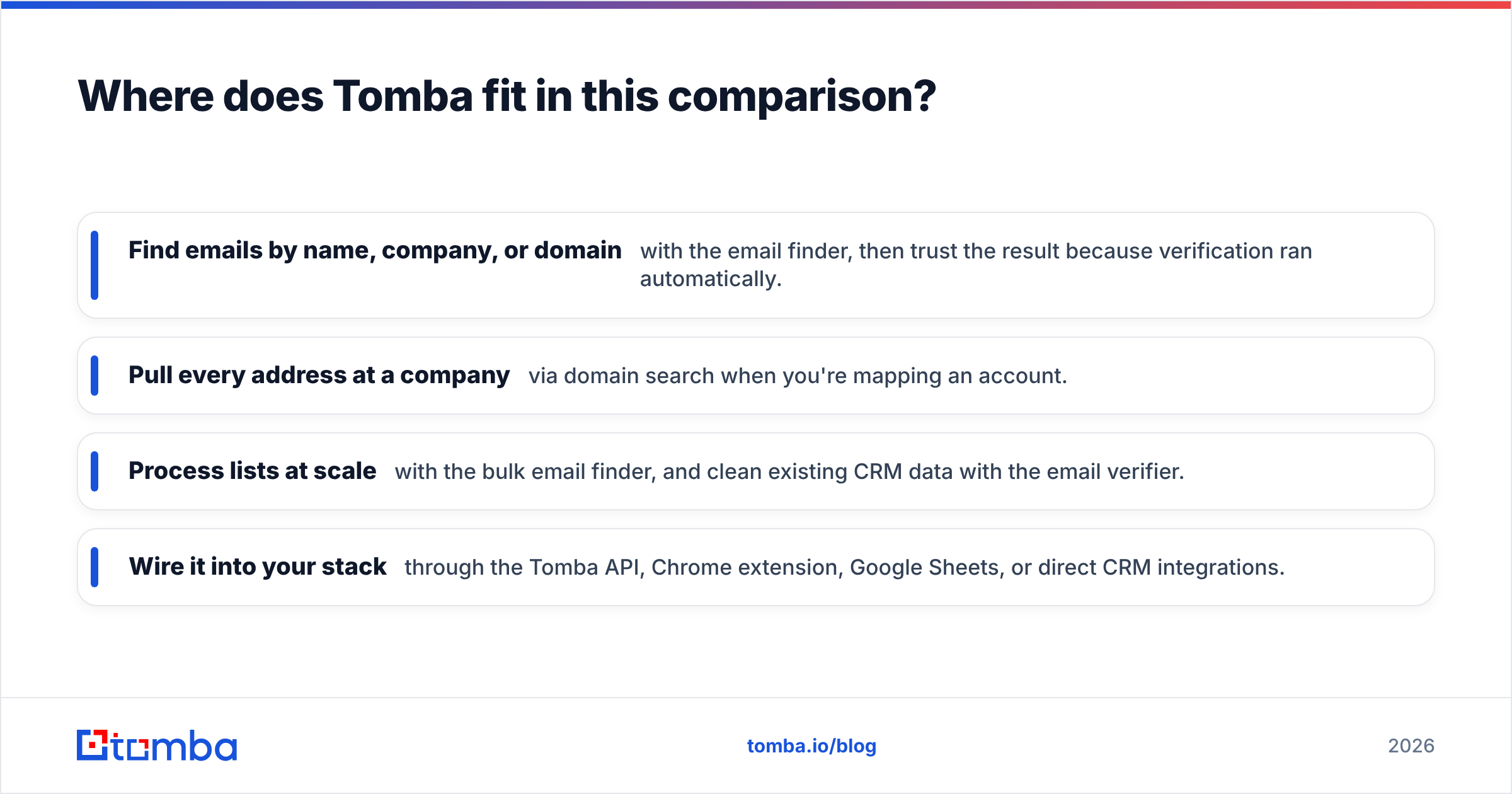
Practically, that means:
- Find emails by name, company, or domain with the email finder, then trust the result because verification ran automatically.
- Pull every address at a company via domain search when you're mapping an account.
- Process lists at scale with the bulk email finder, and clean existing CRM data with the email verifier.
- Wire it into your stack through the Tomba API, Chrome extension, Google Sheets, or direct CRM integrations.
For teams currently weighing Bytemine against Seamless.AI primarily to get reachable emails, Tomba reframes the decision. You're no longer choosing between cheap-but-spotty and expensive-but-complex — you're getting verified output at a transparent price, starting free.
What should you actually choose in 2026?#
Match the tool to the job, not the feature count:
- Choose Seamless.AI if you need a full sales-intelligence platform — intent, signals, org charts — and can justify an annual contract and quote-based pricing.
- Choose Bytemine if you want affordable, fast B2B lists and don't need the intelligence layer or enterprise features.
- Choose Tomba if your core need is accurate, verified email addresses (and phone numbers via the phone finder) at the lowest predictable cost, with the option to start free and scale.
Most teams overbuy. They sign an annual sales-intelligence contract to solve what is, underneath, an email-accuracy problem — then still bounce a quarter of their first campaign. Diagnose the real job first. If it's "find people and signals across accounts," Seamless.AI earns its price. If it's "get me clean emails that land," a focused finder wins on both quality and cost.
How do I migrate or test without risk?#
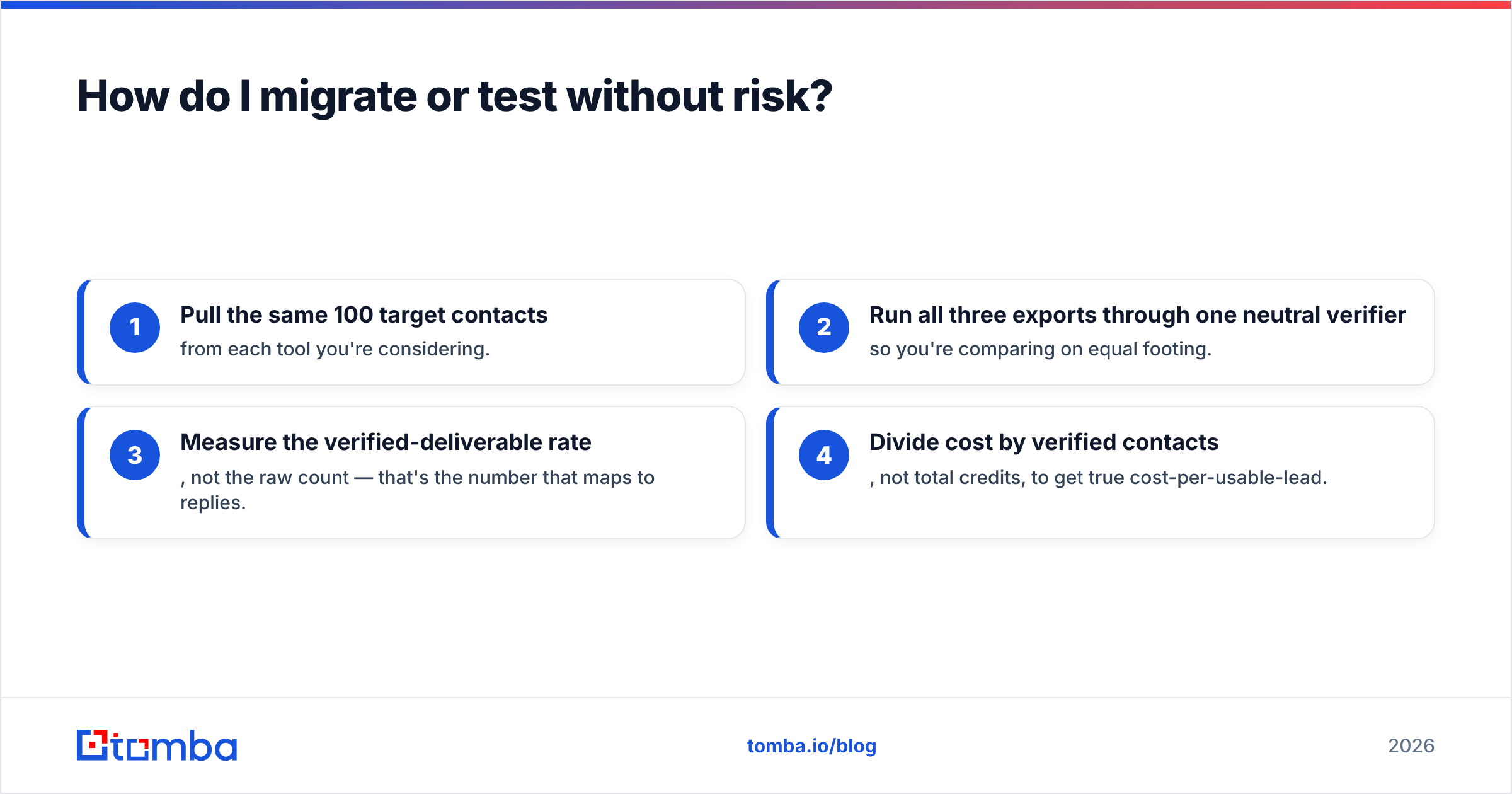
You don't have to commit blind. A low-risk evaluation looks like this:
- Pull the same 100 target contacts from each tool you're considering.
- Run all three exports through one neutral verifier so you're comparing on equal footing.
- Measure the verified-deliverable rate, not the raw count — that's the number that maps to replies.
- Divide cost by verified contacts, not total credits, to get true cost-per-usable-lead.
Because Tomba's free tier gives you 25 searches a month with verification included, it's the easiest leg of that test to set up — no sales call, no annual commitment. Run it alongside your Bytemine or Seamless.AI trial and let the bounce rate decide.
The bottom line#
Bytemine and Seamless.AI solve different problems: one is a budget list-builder, the other a full sales-intelligence platform. Neither is built primarily around verification, which is the single biggest lever on cold-outreach results. If your goal is reachable, verified business emails at a price you can read off a public page, start with Tomba's email finder — find contacts by name, company, or domain, get them verified automatically, and test the whole thing on the free tier before you spend a dollar. Stop paying for contacts that bounce; pay for ones that land.
// get started
Find, verify and enrich your first contacts today
Start on the free plan with 25 searches a month, then scale when your team is ready.
Free plan · No credit card required · GDPR & CCPA
// about the author