Caller ID Cold Calling: Boost Pickup Rates in 2026
Your caller ID decides whether a prospect picks up before you say a word. Here's how to stop getting flagged as spam and lift connect rates in 2026.
Your caller ID does more selling than your opening line. Before a prospect hears a word, their phone has already told them who you are — "Potential Spam," an unknown 800 number, or a clean local business name. That single label decides whether the call connects at all.
TL;DR#
- Caller ID is the first filter in cold calling. A "Spam Likely" tag can cut your connect rate by 50% or more before anyone answers.
- Spam labels come from carrier analytics (Hiya, TNS, First Orion) that score call patterns — high volume, low duration, and abuse reports flip the switch.
- Local presence dialing helps, but reckless number rotation now triggers faster flagging under STIR/SHAKEN enforcement.
- Branded caller ID and number registration are the 2026 fixes that actually move pickup rates.
- Clean data is the multiplier — accurate numbers, fewer wrong dials, and tighter lists lower the abuse signals that get you labeled.
What is caller ID in cold calling?#
Caller ID is the name and number a prospect's phone displays when you call. In B2B cold calling, it is the difference between a connected conversation and a number that rings into a labeled-as-spam void.
Think of caller ID like the return address on an envelope. A handwritten local address gets opened; a smudged "BULK MAIL" stamp goes straight to the bin. Your phone number is that stamp, and carriers are the postal workers deciding which pile you land in.
There are two layers worth separating:
- The number itself — the actual digits displayed (e.g., a local area code vs. a toll-free 800 line).
- The CNAM / display name — the "Caller Name" string carriers may show, like "ACME SALES" or, worse, "Potential Spam."
- The carrier reputation score — an invisible rating attached to your number that determines whether it gets a clean display, a warning label, or a silent block.
- The analytics verdict — third-party engines (Hiya, First Orion, TNS) that crowd-source spam reports and call-pattern data to override even a clean CNAM.
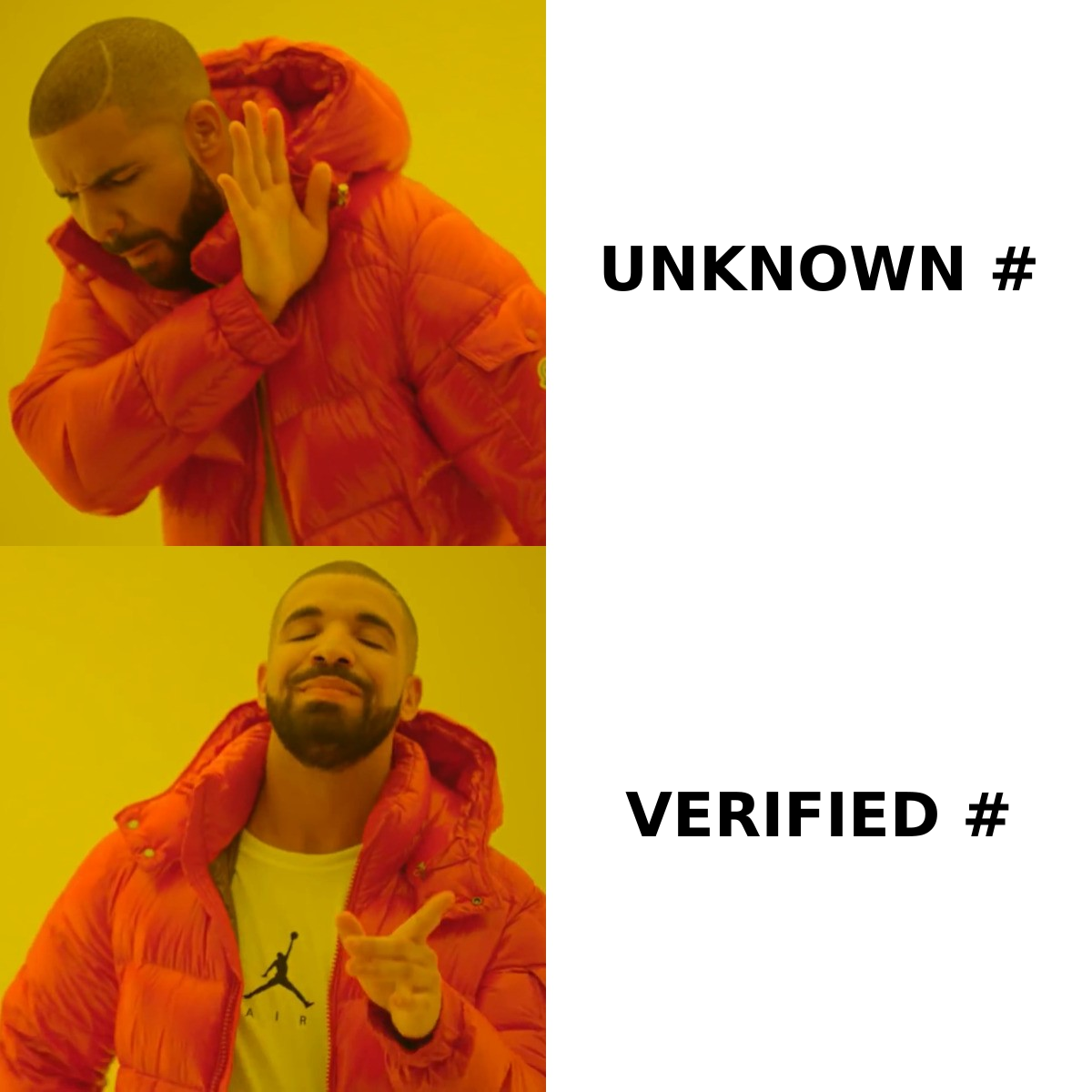
Most reps obsess over what they say after "hello." The reps who win in 2026 obsess over whether the phone rings as trusted in the first place.
Why do cold calls get flagged as spam?#
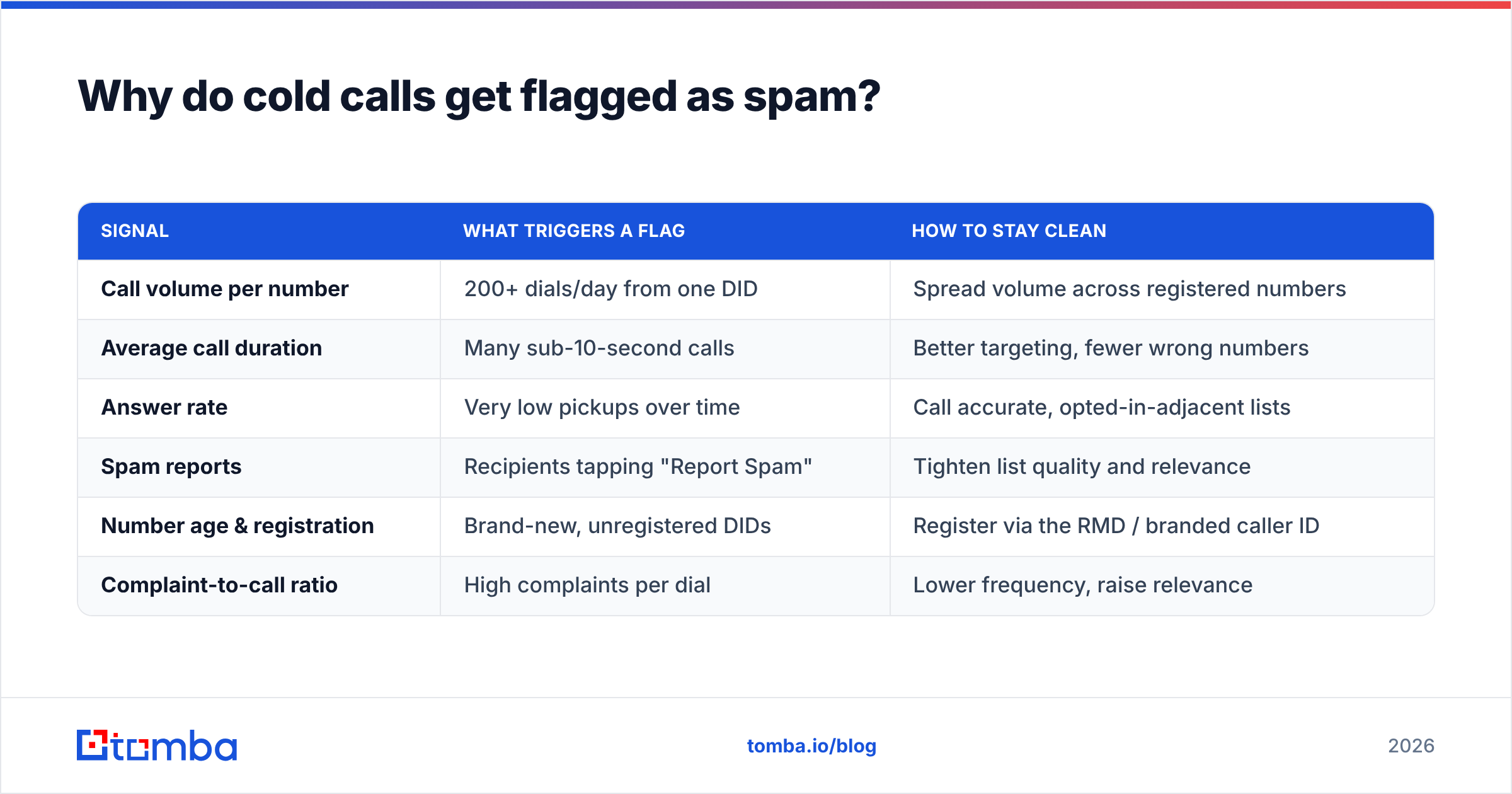
Cold calls get flagged because carrier analytics engines score your calling behavior, not your intentions. You can be a legitimate B2B seller and still earn a "Scam Likely" tag if your call patterns look like a robocaller's.
Carriers and their analytics partners watch a handful of signals:
| Signal | What triggers a flag | How to stay clean |
|---|---|---|
| Call volume per number | 200+ dials/day from one DID | Spread volume across registered numbers |
| Average call duration | Many sub-10-second calls | Better targeting, fewer wrong numbers |
| Answer rate | Very low pickups over time | Call accurate, opted-in-adjacent lists |
| Spam reports | Recipients tapping "Report Spam" | Tighten list quality and relevance |
| Number age & registration | Brand-new, unregistered DIDs | Register via the RMD / branded caller ID |
| Complaint-to-call ratio | High complaints per dial | Lower frequency, raise relevance |
The mechanism most people misunderstand is STIR/SHAKEN. It is the U.S. framework that lets carriers cryptographically "attest" that a call genuinely originates from the number shown. A full "A-level" attestation signals the carrier vouches for you. Calls with low or no attestation are far more likely to be labeled. You can read the FCC's own primer on STIR/SHAKEN caller ID authentication for the regulatory detail.
Here is the trap: spoofing or rapidly rotating unregistered numbers used to be the workaround. In 2026, that behavior is exactly what the analytics engines pattern-match against. The shortcut became the trigger.
Does local presence dialing still work?#
Local presence dialing still works, but only when paired with number registration and disciplined rotation. Used alone and aggressively, it now accelerates spam flagging instead of preventing it.
Local presence dialing means showing a number with the same area code as the prospect — a 212 number when calling Manhattan, a 415 when calling San Francisco. The logic is sound: people answer local numbers more often than unknown toll-free lines. Studies across outbound teams have repeatedly shown local numbers lifting answer rates meaningfully versus generic 800 lines.
The problem is how teams abused it. Spinning up dozens of "burner" local DIDs and burning through them created exactly the high-volume, low-duration, frequently-reported footprint that carriers hunt. When you torch a number, you also waste every dial that lands on a now-labeled line.
The 2026 version of local presence that actually works:
- Register every number you dial from (via the Reassigned Numbers Database and your carrier's branded caller ID program).
- Rotate slowly and within reputation limits — a healthy DID can handle a sustained, moderate daily volume, not a one-day blast.
- Monitor each number's reputation weekly and rest or retire ones that start showing labels.
- Match the number to a real, reachable prospect — calling dead or wrong numbers wrecks your duration and answer-rate signals.
That last point is where data quality quietly decides your caller ID fate. If half your list is stale, you rack up no-answers and wrong-number hang-ups that train the carrier to distrust you. Sourcing accurate B2B phone numbers and validating them before you dial keeps your behavioral signals healthy. A quick pass through a phone validator strips disconnected and invalid lines that would otherwise drag your number's score down.
How do you fix a number that's already labeled "Spam"?#
You fix a labeled number by remediating it at the source: register it, request a label correction with each analytics provider, and stop the behavior that flagged it. There is no single "undo" button — it is a cleanup across three databases.
Follow this sequence:
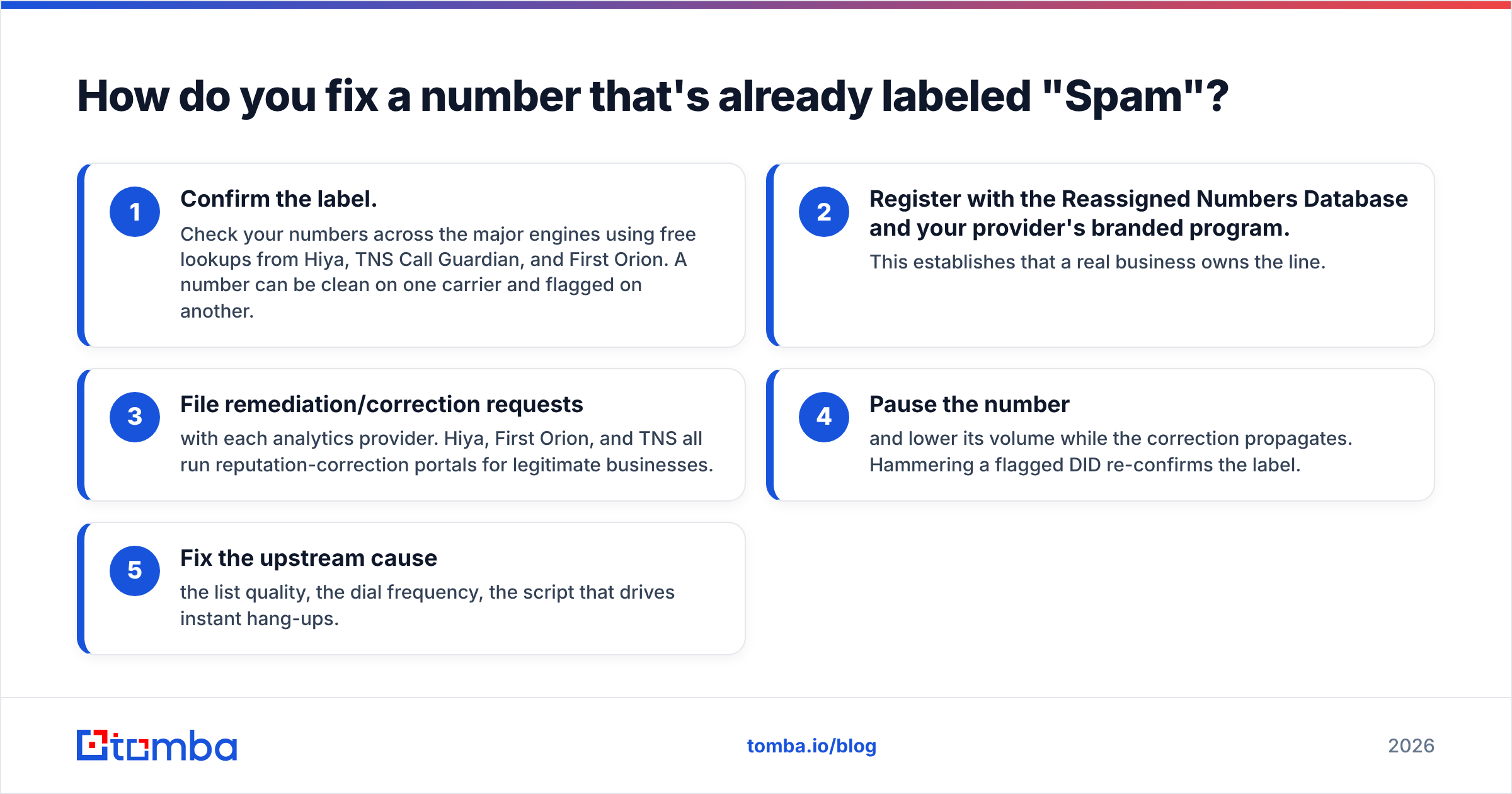
- Confirm the label. Check your numbers across the major engines using free lookups from Hiya, TNS Call Guardian, and First Orion. A number can be clean on one carrier and flagged on another.
- Register with the Reassigned Numbers Database and your provider's branded program. This establishes that a real business owns the line.
- File remediation/correction requests with each analytics provider. Hiya, First Orion, and TNS all run reputation-correction portals for legitimate businesses.
- Pause the number and lower its volume while the correction propagates. Hammering a flagged DID re-confirms the label.
- Fix the upstream cause — the list quality, the dial frequency, the script that drives instant hang-ups.
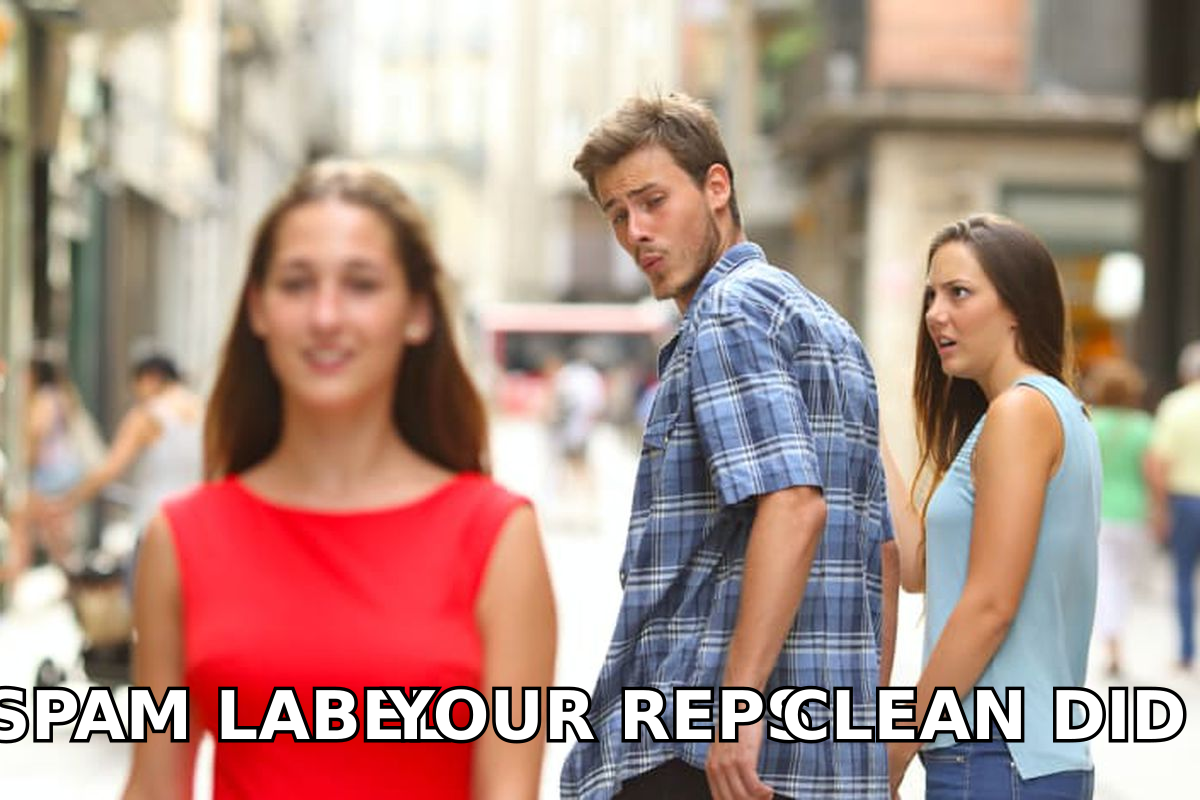
If a number is badly burned, retiring it is often cheaper than rehabilitating it. But replacing it without fixing your calling patterns just moves the problem to the next DID. Treat the label as a symptom; the disease is usually volume-to-relevance imbalance.
What's the difference between caller ID tactics in 2026?#
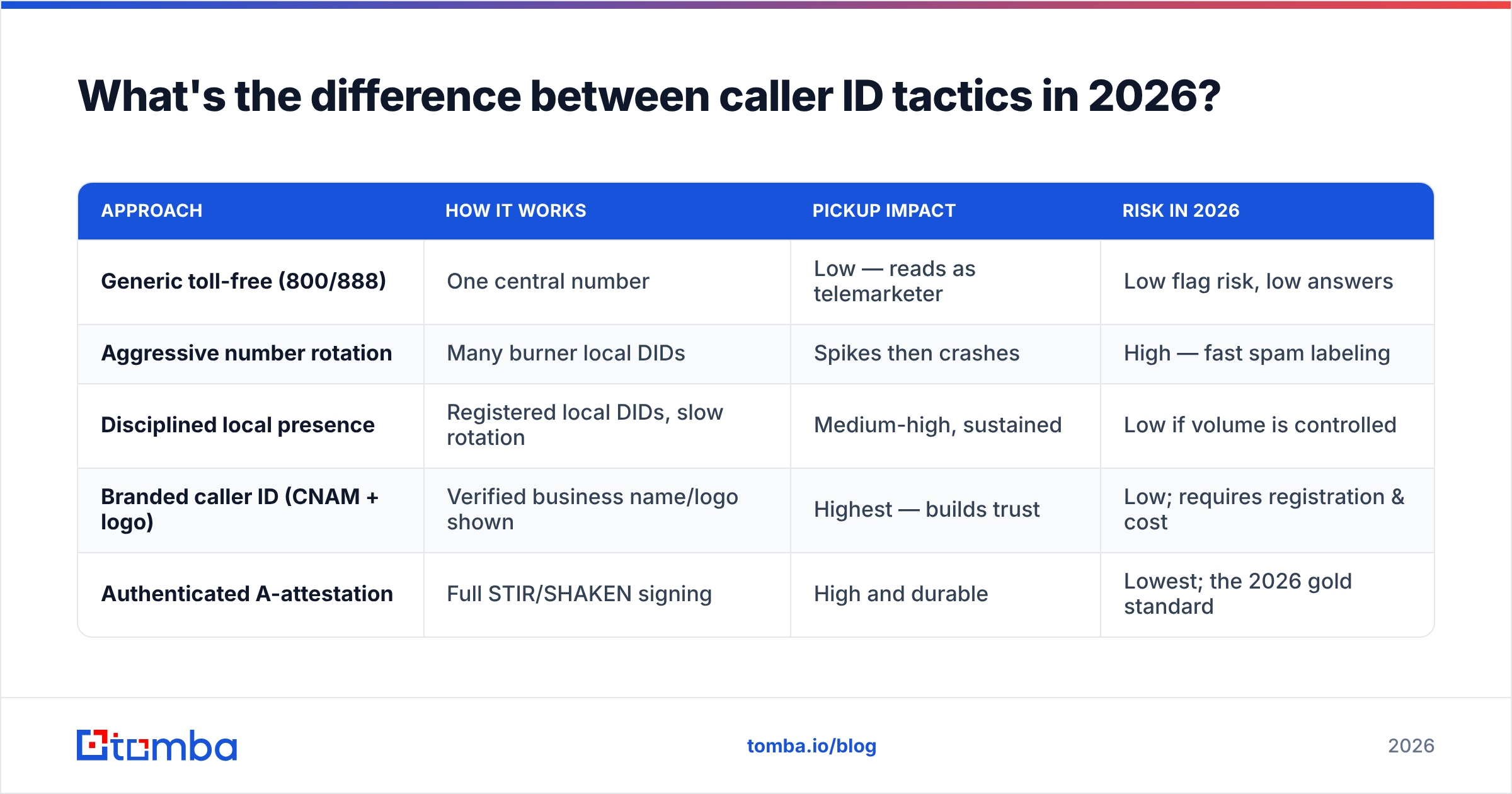
The biggest shift is from hiding behind rotated numbers to proving you are legitimate with branded, authenticated caller ID. The old game was evasion; the new game is verification.
| Approach | How it works | Pickup impact | Risk in 2026 |
|---|---|---|---|
| Generic toll-free (800/888) | One central number | Low — reads as telemarketer | Low flag risk, low answers |
| Aggressive number rotation | Many burner local DIDs | Spikes then crashes | High — fast spam labeling |
| Disciplined local presence | Registered local DIDs, slow rotation | Medium-high, sustained | Low if volume is controlled |
| Branded caller ID (CNAM + logo) | Verified business name/logo shown | Highest — builds trust | Low; requires registration & cost |
| Authenticated A-attestation | Full STIR/SHAKEN signing | High and durable | Lowest; the 2026 gold standard |
Branded caller ID — where the prospect sees "Acme Software" (and on some devices, your logo) instead of a bare number — is the single highest-leverage upgrade available. Vendors like First Orion and Hiya sell it, and major CRMs are integrating it. It costs more than spinning up burner lines, but it converts the caller ID from a liability into a credibility cue.
For broader context on how buyers evaluate these dialing and sales-engagement platforms, the peer reviews on G2's sales engagement category are a useful, vendor-neutral starting point.
How does data quality affect caller ID reputation?#
Data quality is the hidden lever behind every caller ID metric. Clean lists raise your answer rate and call duration, which are the exact behavioral signals carriers use to keep your number trusted.
Walk the chain backward:
- A spam label is driven by low answer rates and spam reports.
- Low answer rates come from dialing wrong, disconnected, or irrelevant numbers.
- Wrong numbers come from stale, unverified, or poorly sourced contact data.
So the cheapest reputation insurance is not a fancier dialer — it is a cleaner list. When every dial reaches a real person at a relevant company, your calls run longer, get reported less, and answer more. That behavioral profile is what earns and keeps a clean caller ID.
This is why prospecting and dialing now have to be one workflow, not two. Pulling verified direct-dial numbers, enriching them with contact enrichment so you call the right person, and removing dead lines before they ever hit the dialer protects the reputation of every number you own. Teams that wire data hygiene into their cold calling cadence see fewer flags and steadier connect rates than teams chasing the latest rotation hack.
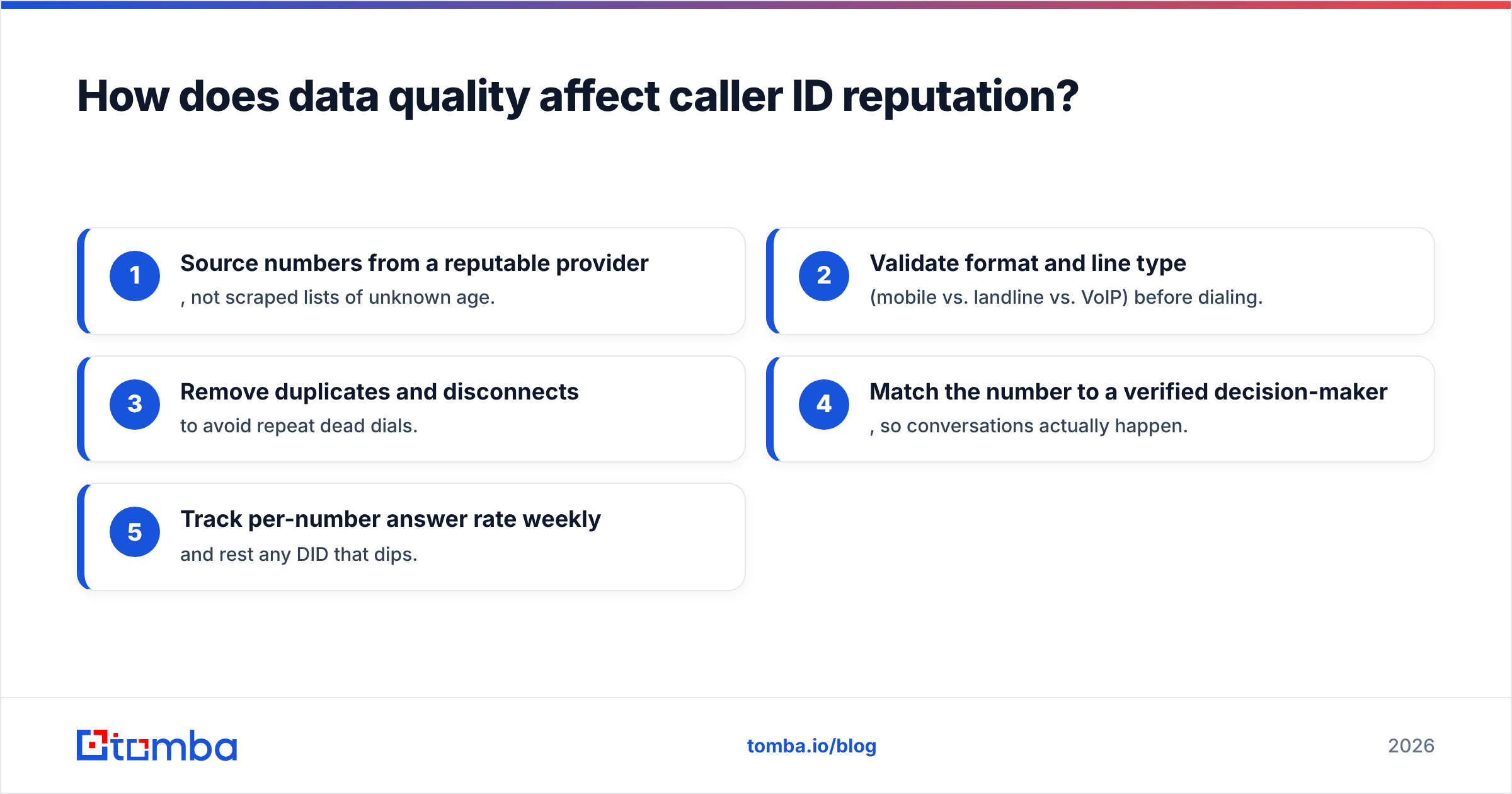
A practical pre-dial checklist:
- Source numbers from a reputable provider, not scraped lists of unknown age.
- Validate format and line type (mobile vs. landline vs. VoIP) before dialing.
- Remove duplicates and disconnects to avoid repeat dead dials.
- Match the number to a verified decision-maker, so conversations actually happen.
- Track per-number answer rate weekly and rest any DID that dips.
Frequently asked questions#
Does caller ID spam labeling only affect U.S. numbers? No. STIR/SHAKEN is U.S./Canada-centric, but analytics engines like Hiya operate globally and label numbers in the UK, EU, and beyond. The mechanics differ by country, but the principle — carriers scoring your behavior — is universal.
Will using a CRM dialer automatically keep me unflagged? No. The dialer is neutral; your volume, list quality, and registration status determine your reputation. A premium dialer on a dirty list still gets flagged.
Is spoofing a local number illegal? Misleading spoofing with intent to defraud is illegal under the U.S. Truth in Caller ID Act. Legitimate local presence using numbers you own and have registered is allowed — the distinction is ownership and intent.
How fast can a clean number get labeled? A single day of high-volume, low-duration dialing on an unregistered line can trigger a label within 24–48 hours. Reputation is lost quickly and rebuilt slowly.
The bottom line: clean numbers, clean reputation#
Caller ID cold calling in 2026 rewards legitimacy over evasion. Register your numbers, adopt branded or authenticated caller ID, rotate with discipline, and — most importantly — dial clean, accurate data so your behavioral signals stay healthy. The label on the prospect's screen is downstream of the quality of your list.
That is where your prospecting stack earns its keep. Before you dial, build your list with verified, decision-maker contact data: use the Tomba Email Finder to pin down the right people and pair it with Tomba's phone finder and validation tools so every number you load is reachable and clean. Check the Tomba pricing — a free tier with 25 searches/month lets you test the data quality before you scale. Fewer dead dials, longer calls, fewer spam reports, and a caller ID that keeps ringing as trusted. Start your list clean, and the pickup rate follows.
// get started
Find, verify and enrich your first contacts today
Start on the free plan with 25 searches a month, then scale when your team is ready.
Free plan · No credit card required · GDPR & CCPA
// about the author