7 Best CallHippo Alternatives for Cold Calling in 2026
CallHippo is fine until call quality drops or per-seat pricing balloons. Here are 7 CallHippo alternatives for 2026, compared on price, dialer power, and data.
7 Best CallHippo Alternatives for Cold Calling in 2026
CallHippo gets a lot of teams off the ground with a virtual phone number and a basic dialer. But once your reps are making hundreds of calls a day, the cracks show: dropped calls on cheaper routes, per-seat pricing that climbs fast, and a power dialer that lives behind a higher tier. If you are pricing out a switch, this guide compares the seven strongest CallHippo alternatives for 2026 — and shows where the real bottleneck usually hides.
TL;DR#
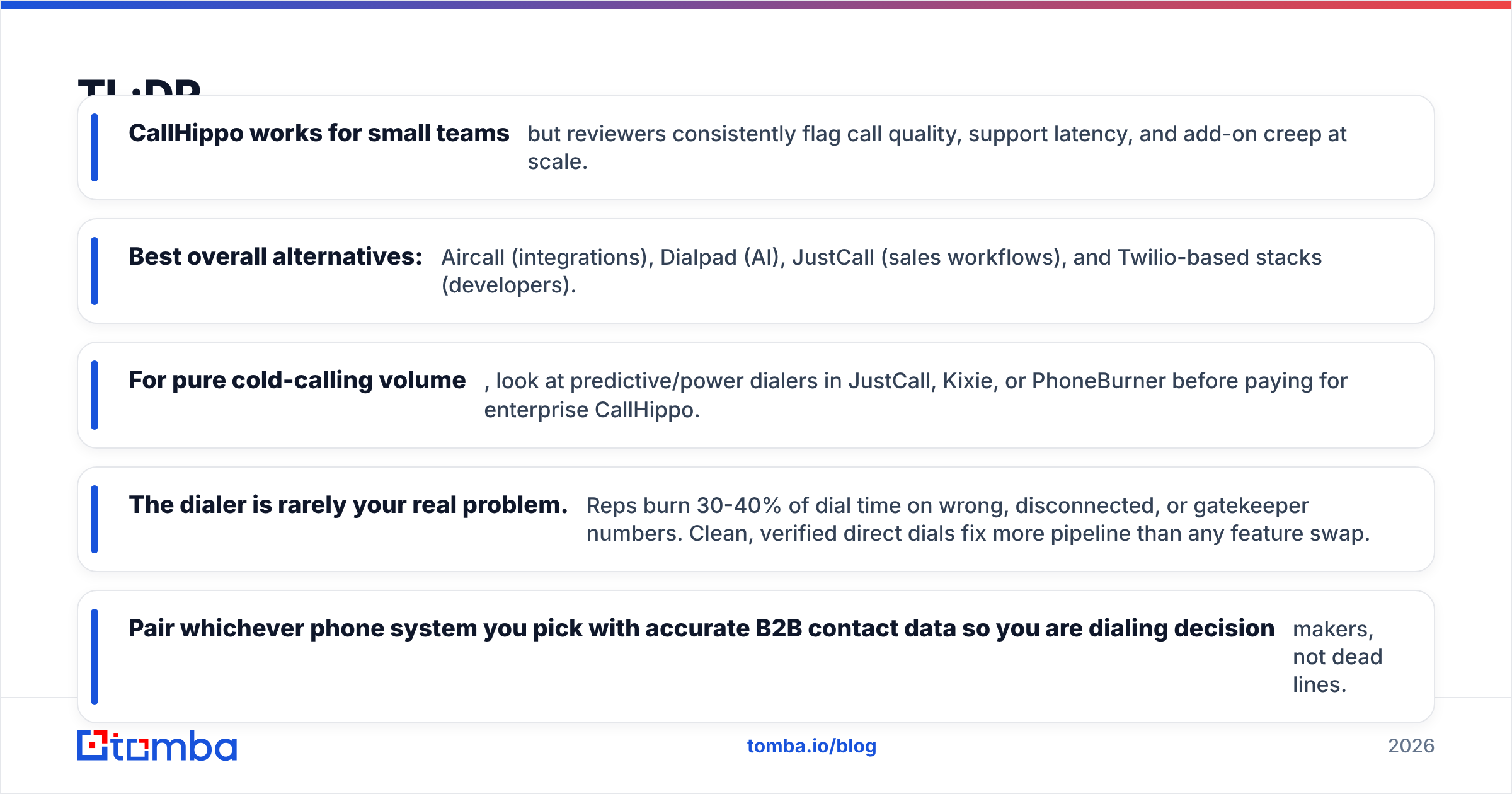
- CallHippo works for small teams but reviewers consistently flag call quality, support latency, and add-on creep at scale.
- Best overall alternatives: Aircall (integrations), Dialpad (AI), JustCall (sales workflows), and Twilio-based stacks (developers).
- For pure cold-calling volume, look at predictive/power dialers in JustCall, Kixie, or PhoneBurner before paying for enterprise CallHippo.
- The dialer is rarely your real problem. Reps burn 30-40% of dial time on wrong, disconnected, or gatekeeper numbers. Clean, verified direct dials fix more pipeline than any feature swap.
- Pair whichever phone system you pick with accurate B2B contact data so you are dialing decision-makers, not dead lines.
Why look for a CallHippo alternative?#
The short answer: predictability. CallHippo's entry pricing is attractive, but the features cold-callers actually need — power dialing, call transcription, deeper CRM sync — tend to sit in higher tiers or paid add-ons. Teams scaling past a handful of seats often report that the monthly bill stops matching the original quote.
The three recurring complaints in G2 and Capterra reviews are consistent year over year:
- Call quality on certain international routes — choppy audio, dropped connections.
- Support response time when something breaks mid-shift.
- Add-on pricing that turns a "$" plan into a much larger invoice once you add the dialer, transcription, and number rentals.
None of those are dealbreakers for every team. If you are a two-person shop making light outbound, CallHippo is genuinely fine. The alternatives below matter when call volume, reliability, or reporting become revenue-critical.
What should a CallHippo alternative actually replace?#
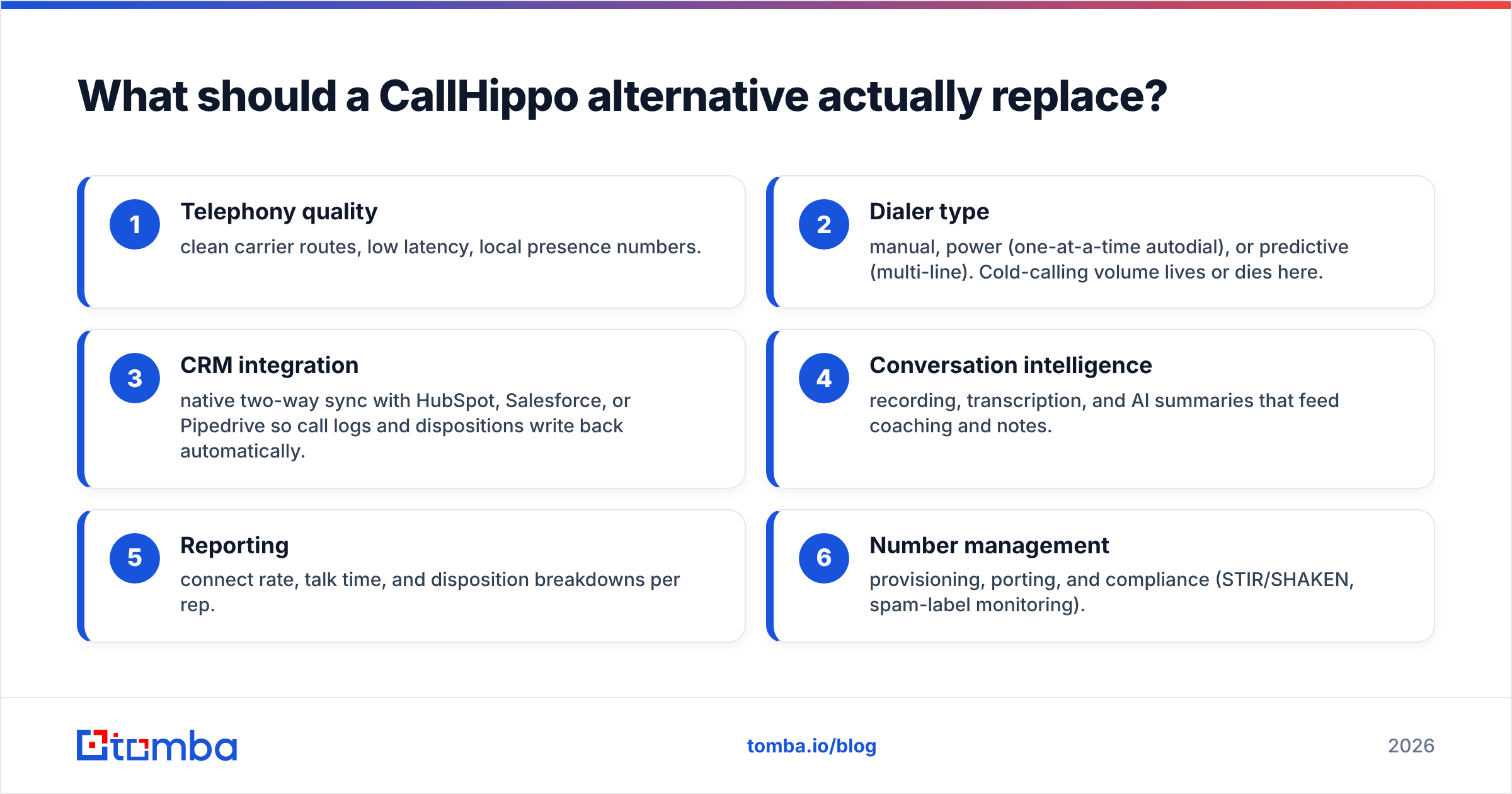
Before you compare logos, separate the phone system into the jobs it does. A good replacement has to cover all of these — not just the one that annoyed you:
- Telephony quality — clean carrier routes, low latency, local presence numbers.
- Dialer type — manual, power (one-at-a-time autodial), or predictive (multi-line). Cold-calling volume lives or dies here.
- CRM integration — native two-way sync with HubSpot, Salesforce, or Pipedrive so call logs and dispositions write back automatically.
- Conversation intelligence — recording, transcription, and AI summaries that feed coaching and notes.
- Reporting — connect rate, talk time, and disposition breakdowns per rep.
- Number management — provisioning, porting, and compliance (STIR/SHAKEN, spam-label monitoring).
Score each candidate against those six and the choice gets a lot less subjective.
How do the top CallHippo alternatives compare?#
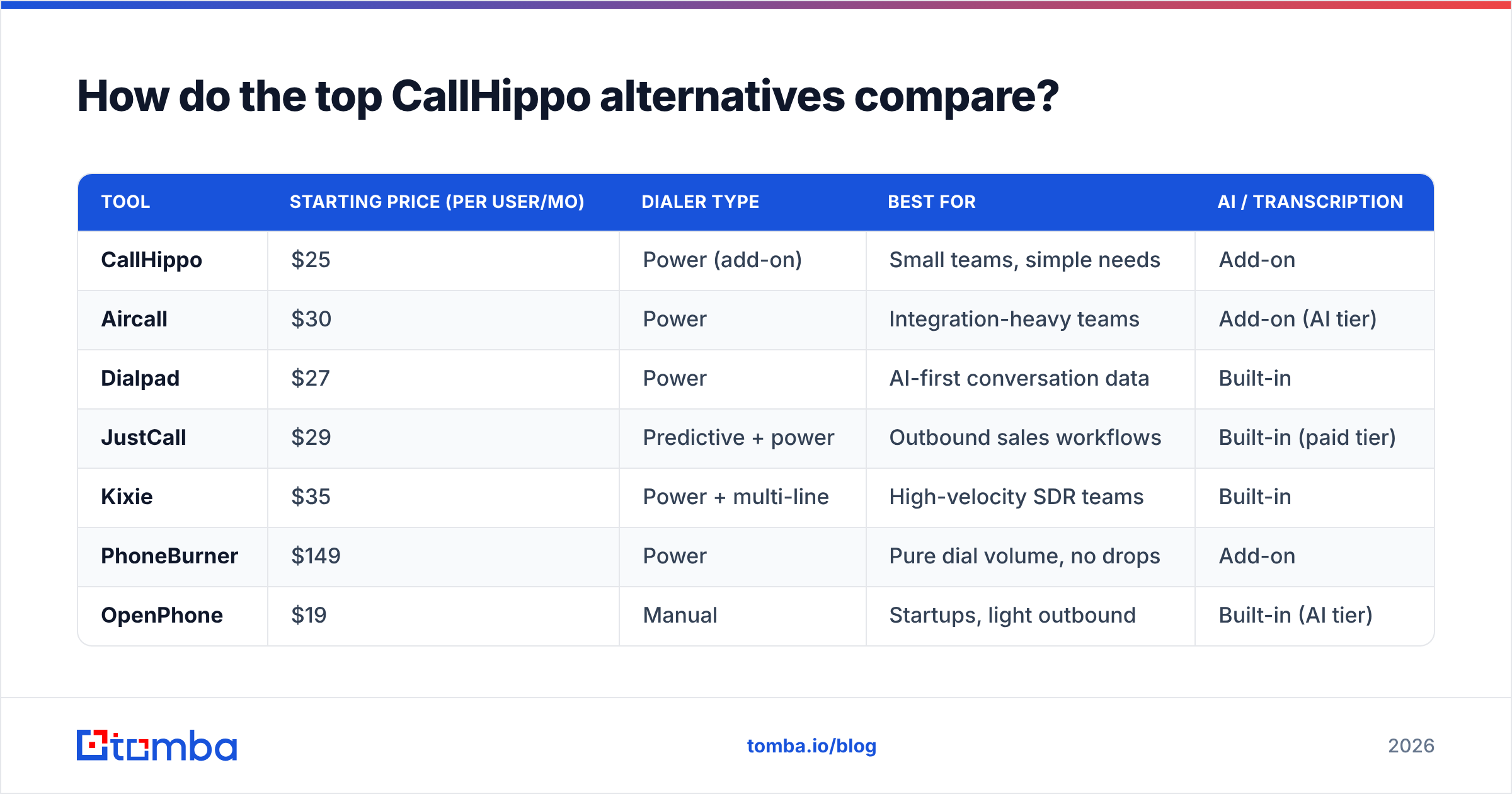
Here is the head-to-head. Prices are entry-level published rates for 2026 and move with seat count and billing term, so treat them as a starting line, not gospel.
| Tool | Starting price (per user/mo) | Dialer type | Best for | AI / transcription |
|---|---|---|---|---|
| CallHippo | $25 | Power (add-on) | Small teams, simple needs | Add-on |
| Aircall | $30 | Power | Integration-heavy teams | Add-on (AI tier) |
| Dialpad | $27 | Power | AI-first conversation data | Built-in |
| JustCall | $29 | Predictive + power | Outbound sales workflows | Built-in (paid tier) |
| Kixie | $35 | Power + multi-line | High-velocity SDR teams | Built-in |
| PhoneBurner | $149 | Power | Pure dial volume, no drops | Add-on |
| OpenPhone | $19 | Manual | Startups, light outbound | Built-in (AI tier) |
| Twilio (build) | Usage-based | Custom | Developers, custom stacks | Via API |
A few reads on that table:
- Cheapest seat ≠ cheapest stack. OpenPhone wins on sticker price but is a light dialer, not a volume cold-calling machine. PhoneBurner looks expensive until you count the dials its drop-free power dialer pushes through per hour.
- AI is now table stakes. Dialpad, JustCall, and Kixie bake transcription and call summaries in. CallHippo and Aircall still gate much of it behind upgrades.
- Predictive dialing is the real volume lever. Only JustCall and Kixie meaningfully offer multi-line autodialing at the SDR price point.
1. Aircall — best for integrations#
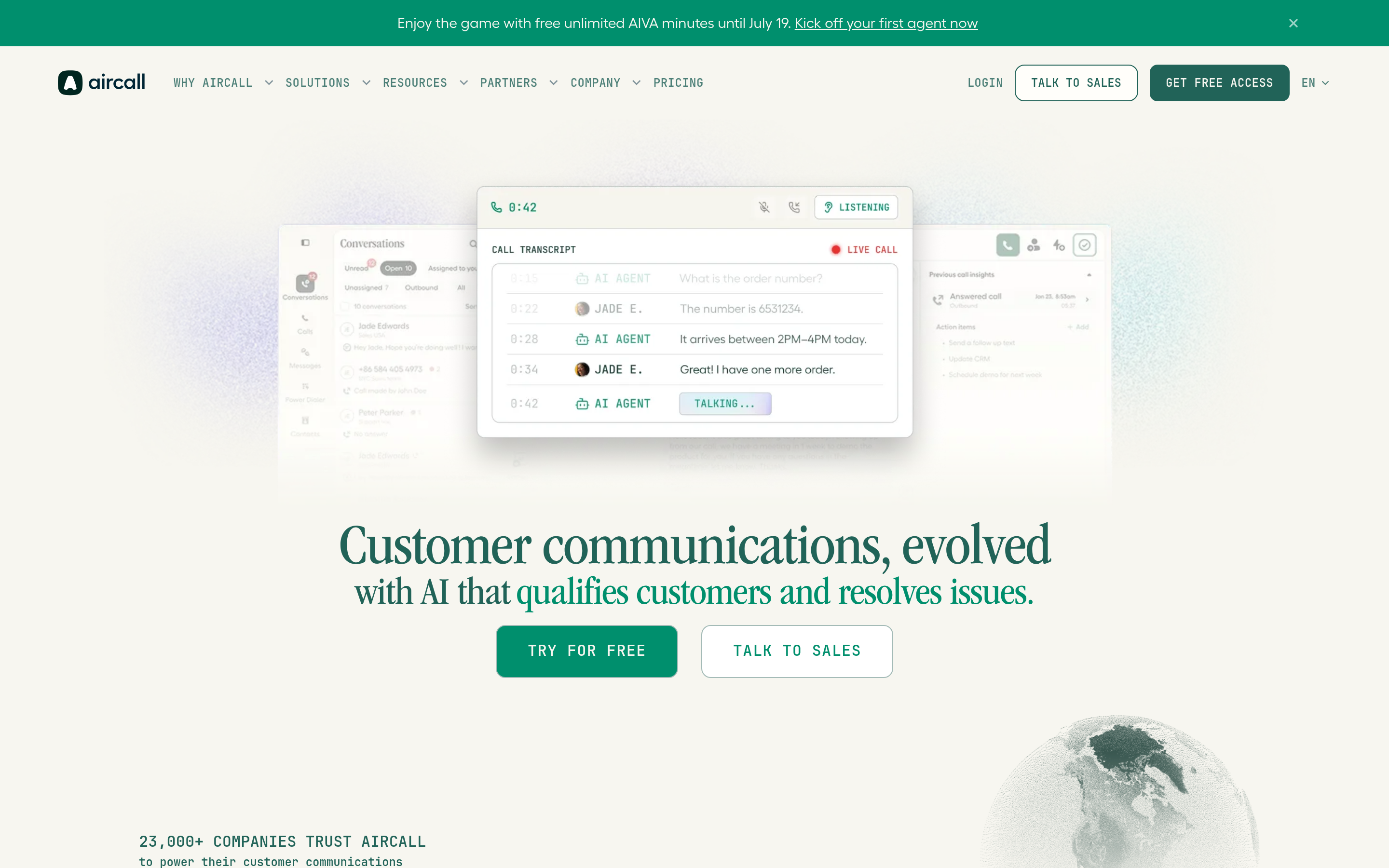
Aircall is the safe enterprise-adjacent pick. Its strength is the app marketplace and clean native CRM sync, so call activity flows into HubSpot or Salesforce without glue code. The dialer is solid rather than spectacular, and the AI features sit in a higher tier. Choose it when reliable integrations matter more than raw dial speed.
2. Dialpad — best AI#
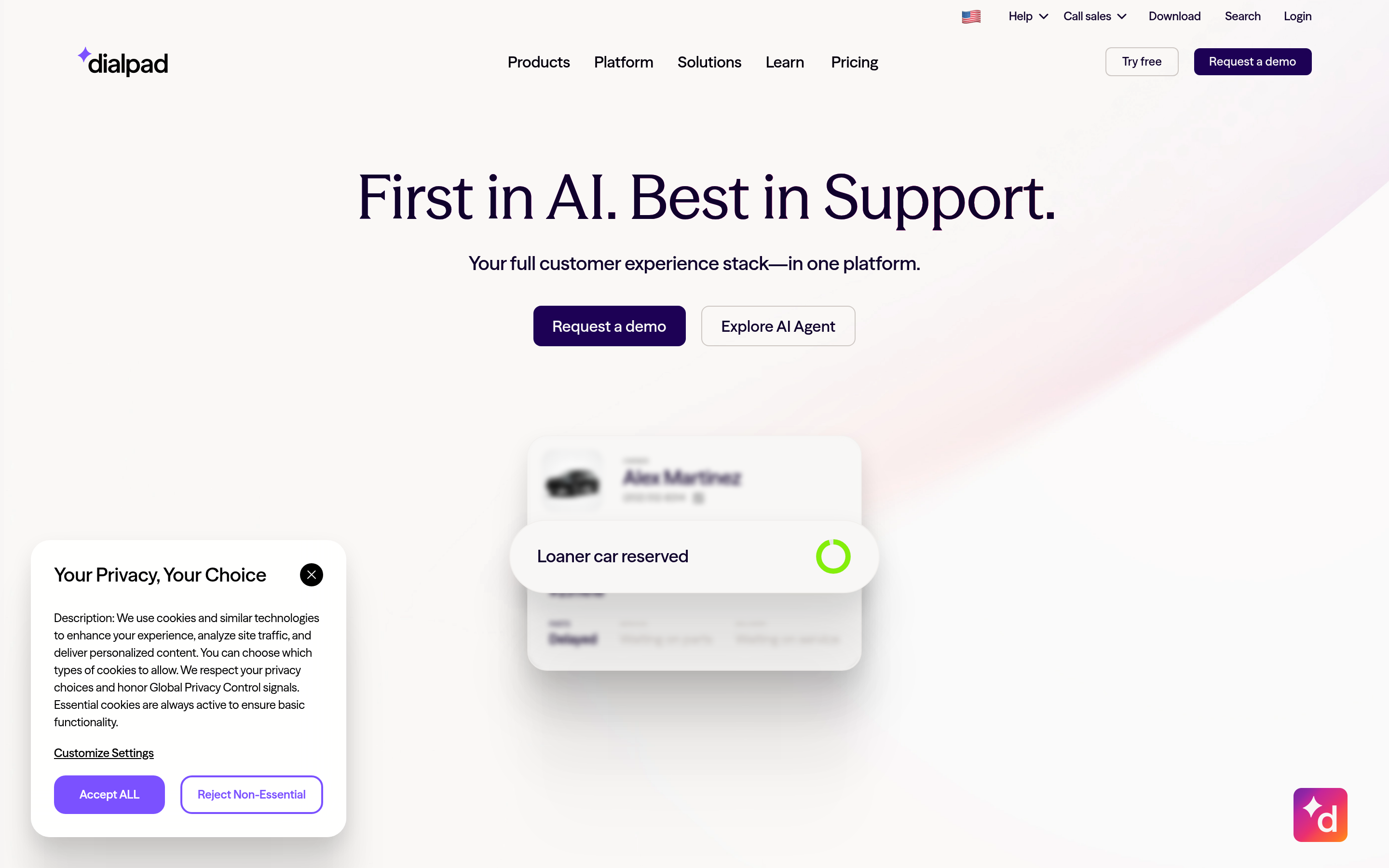
Dialpad leads on conversation intelligence: live transcription, sentiment, and post-call summaries are built in, not bolted on. For managers who coach off call recordings, that is the differentiator. It is a strong CallHippo replacement for teams that treat every call as data.
3. JustCall — best for outbound sales workflows#

JustCall is purpose-built for sales teams. You get a predictive dialer, SMS sequences, and workflow automation that CallHippo only partially matches. It is the most direct "upgrade path" for a CallHippo team that has outgrown the basics but does not want to jump to a full revenue platform.
4. Kixie — best for high-velocity SDRs#
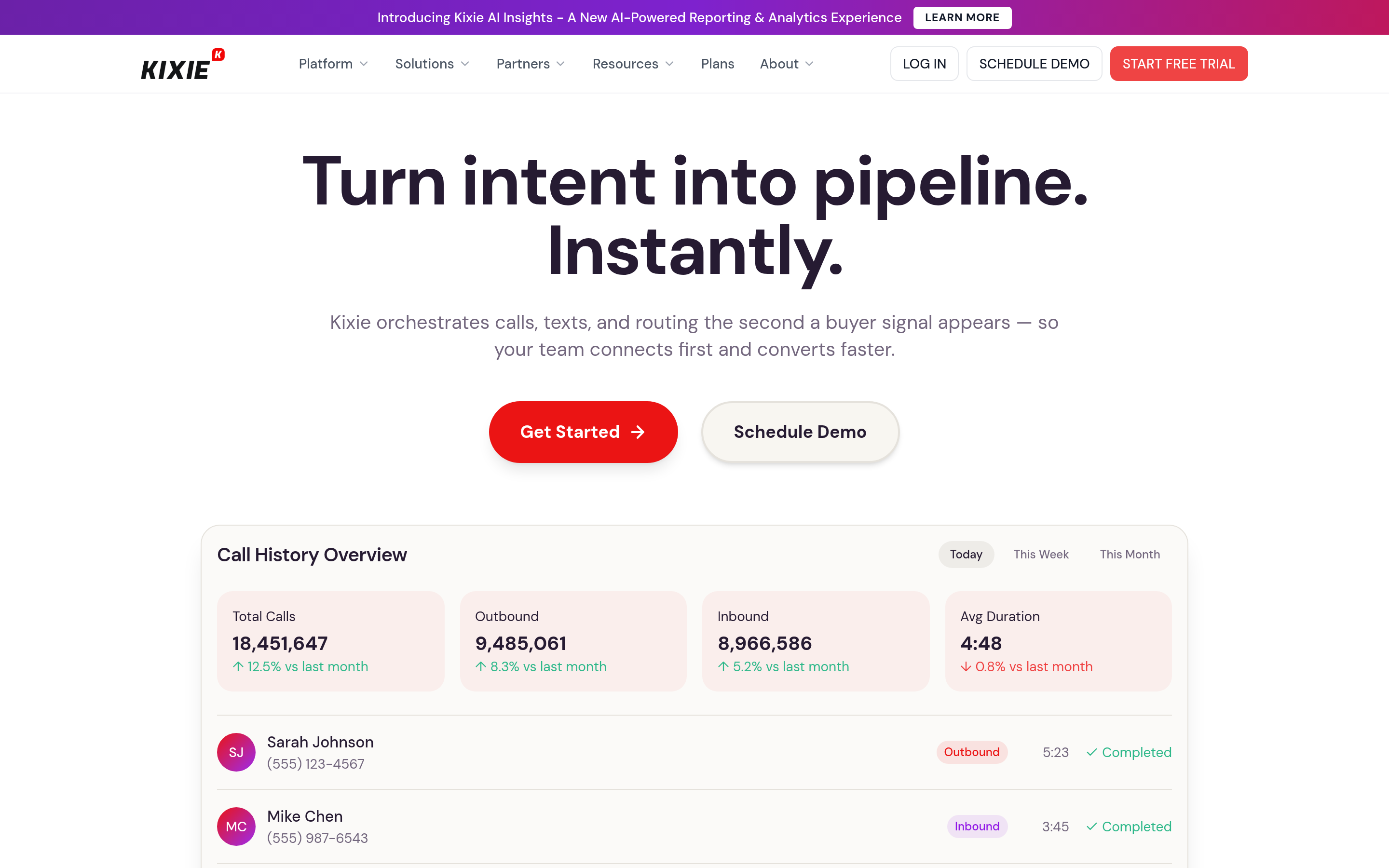
Kixie pairs a fast power dialer with local presence and automatic CRM logging. It is opinionated toward SDR motions — leaderboards, voicemail drop, connection-rate dashboards — and reps tend to like the speed.
5. PhoneBurner — best for pure dial volume#
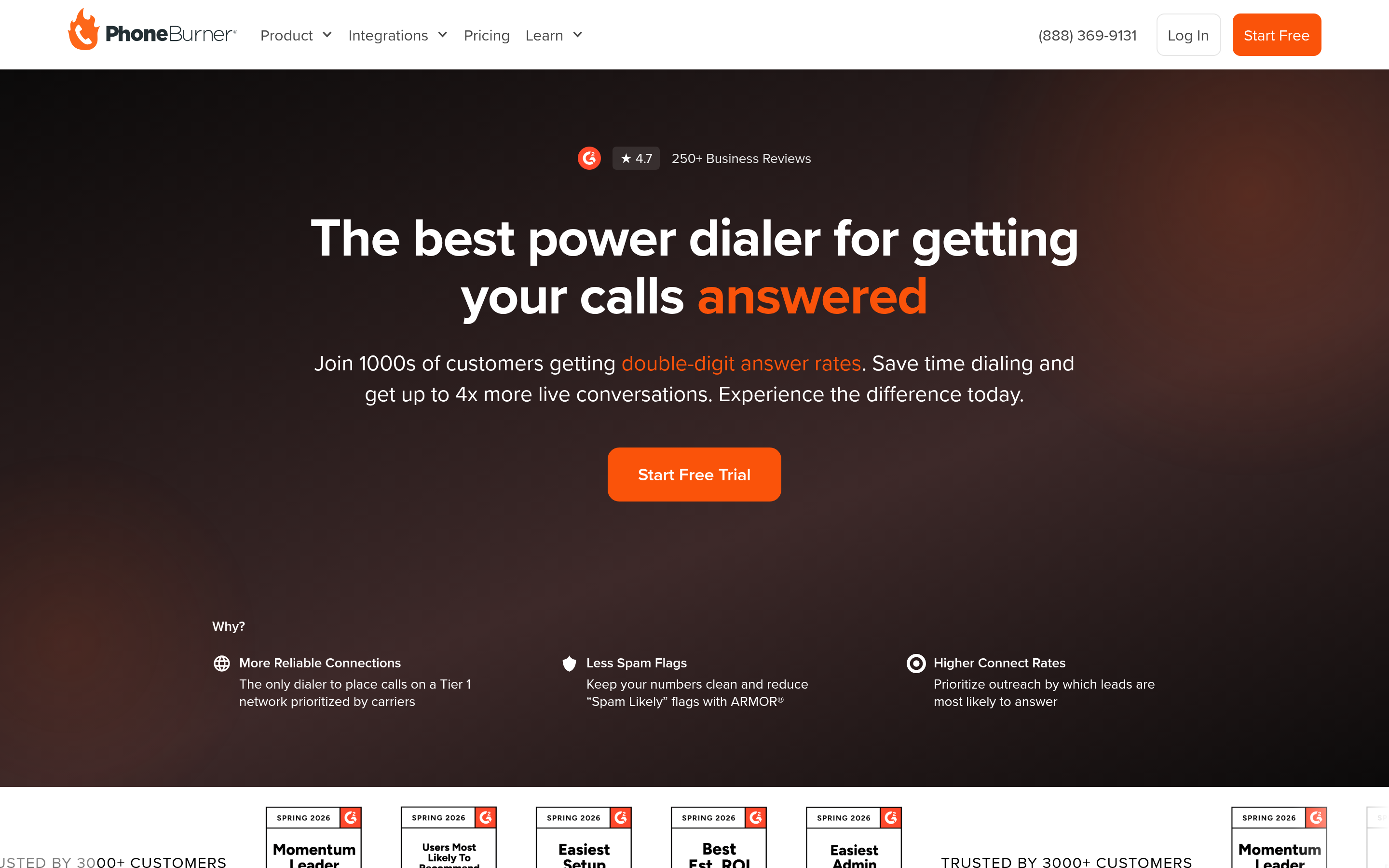
If your only metric is conversations per hour, PhoneBurner's drop-free power dialer is the specialist. Higher per-seat cost, narrower feature set, but it removes the awkward connect delay that kills momentum on other dialers.
6. OpenPhone — best for startups#
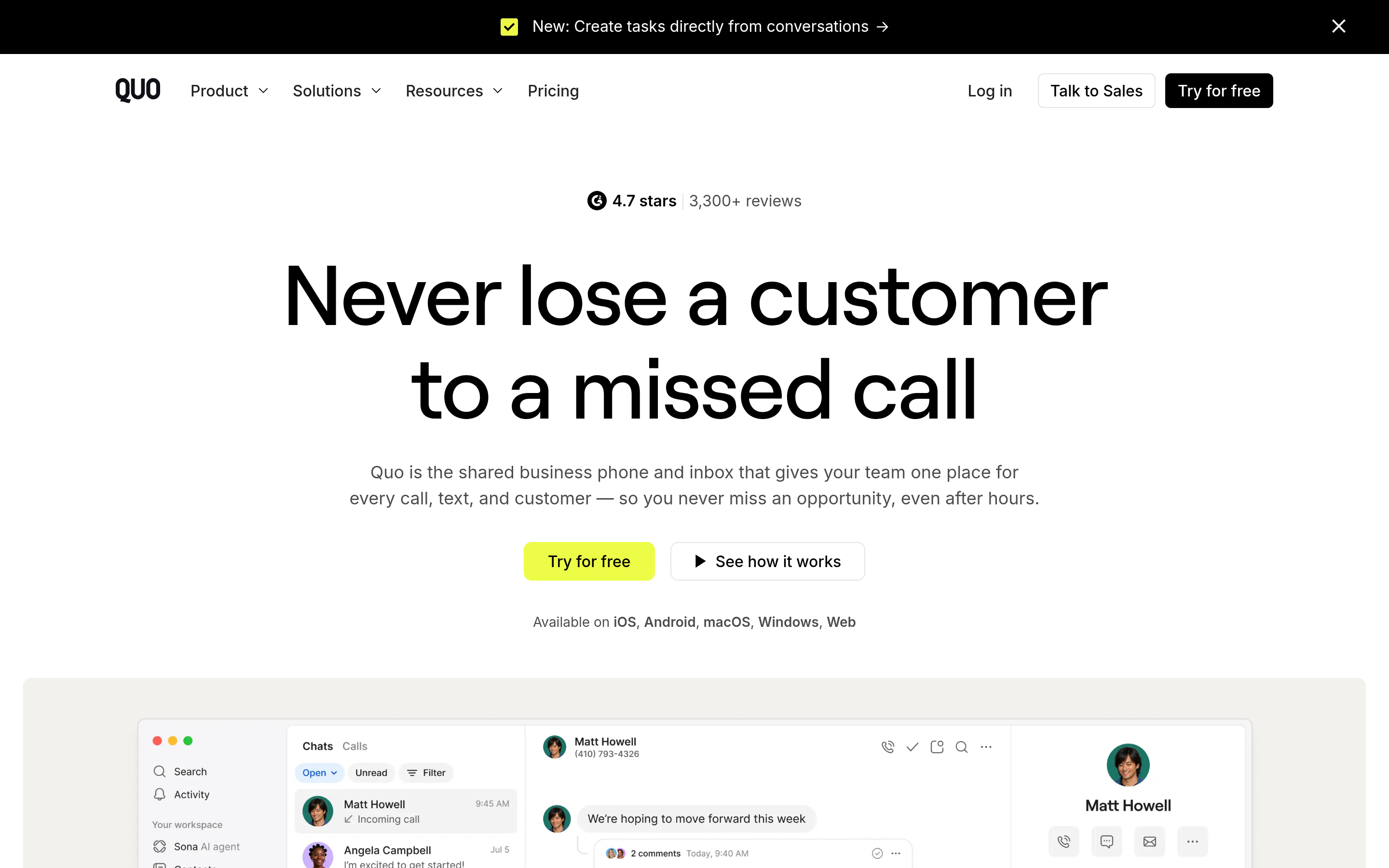
OpenPhone is the lightweight, modern pick. Cheap, clean mobile and desktop apps, shared numbers, and built-in AI on the upper tier. It is not a heavy cold-calling tool, but for a small team doing light outbound and inbound, it undercuts CallHippo on both price and UX.
7. Twilio — best for developers#
If you have engineering resources, a Twilio-based stack gives you total control and usage-based pricing. You are building the dialer, not buying it — worth it only when an off-the-shelf tool genuinely cannot fit your workflow.
Is the dialer really your bottleneck?#
Probably not. This is the part most "best CallHippo alternatives" lists skip, and it is the one that actually moves pipeline.
Here is the everyday version: switching dialers to make more calls is like buying a faster car when the real problem is that half the addresses in your GPS are wrong. You arrive faster — at the wrong houses. Industry connect rates for cold outbound sit in the low single digits to low teens, and a large slice of that waste is bad contact data: disconnected numbers, switchboard mains instead of direct dials, and contacts who left the company two roles ago.
No dialer fixes that. The fix is verified, enriched contact records feeding the dialer in the first place. Before a rep dials, you want a validated phone number and ideally a direct line for the actual decision-maker, not the front desk. That single change lifts connect rate more than any feature on the comparison table above — and it compounds, because every minute not spent on a dead number is a minute spent in a real conversation.

How do you feed a dialer with good data?#
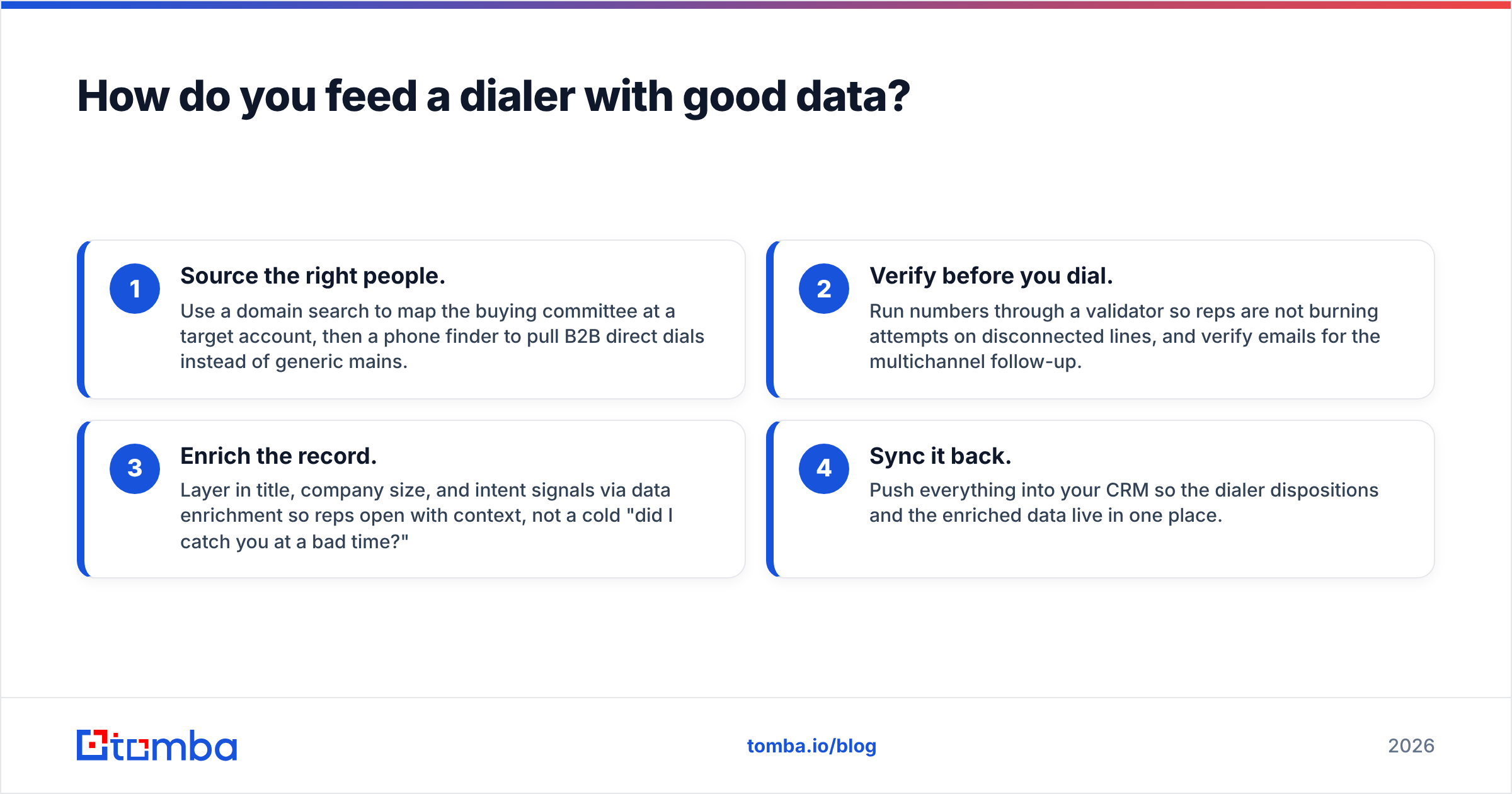
Plug a data layer in front of whichever phone system you pick. A clean workflow looks like this:
- Source the right people. Use a domain search to map the buying committee at a target account, then a phone finder to pull B2B direct dials instead of generic mains.
- Verify before you dial. Run numbers through a validator so reps are not burning attempts on disconnected lines, and verify emails for the multichannel follow-up.
- Enrich the record. Layer in title, company size, and intent signals via data enrichment so reps open with context, not a cold "did I catch you at a bad time?"
- Sync it back. Push everything into your CRM so the dialer dispositions and the enriched data live in one place.
Done right, the phone system becomes the cheap, swappable part of the stack. The data is what determines whether your reps have conversations or leave voicemails.
CallHippo alternatives by use case#
To make the shortlist concrete:
- You want better integrations than CallHippo: Aircall.
- You coach off calls and want AI built in: Dialpad.
- You are a scaling outbound team that outgrew CallHippo: JustCall.
- You run a high-velocity SDR floor: Kixie.
- You only care about raw dial volume: PhoneBurner.
- You are an early-stage startup watching every dollar: OpenPhone.
- You have engineers and a non-standard workflow: Twilio.
Notice that every one of those still leaves the data question open. Whichever box you check, the dialer is only as good as the numbers you load into it.
What about cost at scale?#
Per-seat pricing is the trap CallHippo teams usually fall into, and the alternatives are not immune. A "$" headline rate becomes meaningful only after you add the dialer tier, transcription, number rentals, and integration add-ons. Model the real number:
- Multiply the fully-loaded seat price (base + dialer + AI) by your seat count.
- Add per-minute international charges if you dial across borders.
- Add the data layer separately — and budget it deliberately, because it is the part that changes your connect rate.
When you compare total cost this way, the gap between the "cheap" and "premium" phone systems narrows a lot, and the data spend usually has the highest ROI of anything on the invoice. For reference on how much a dedicated data tool runs, see Tomba pricing — a free tier to start, then plans that scale with volume rather than per dialing seat.
The bottom line#
Any of these seven CallHippo alternatives will give you a better dialer, cleaner integrations, or stronger AI than the entry CallHippo plan. Pick the phone system that matches your motion — Aircall for integrations, Dialpad for AI, JustCall or Kixie for outbound volume, OpenPhone for startups. But do not stop there. The teams that win at cold calling in 2026 are not the ones with the fanciest dialer; they are the ones dialing the right, verified numbers.
That is where the leverage is. Before your next outbound sprint, build a list of accurate direct dials and decision-maker emails so every dial has a real chance of connecting. Start with the Tomba Email Finder and pair it with the phone finder and validator to feed whatever dialer you choose — clean data in, more conversations out. Your phone system is replaceable. Good contact data is the part that actually compounds.
// get started
Find, verify and enrich your first contacts today
Start on the free plan with 25 searches a month, then scale when your team is ready.
Free plan · No credit card required · GDPR & CCPA
// about the author