Clodura.ai vs Harmonic: B2B Data Tools Compared 2026
Clodura.ai and Harmonic chase very different buyers. One arms outbound sales teams with verified contacts; the other tracks private-company growth. Here is the honest split.
You typed "Clodura.ai vs Harmonic" into a search box because two tools keep showing up in the same shortlist, and you cannot tell whether they actually do the same job. They mostly do not. Picking the wrong one wastes a quarter of budget on data you will never use.
TL;DR#
- Clodura.ai is a sales-intelligence and outbound platform: contact discovery, verified emails and direct dials, intent signals, and a built-in sequencer for B2B sales teams.
- Harmonic is a private-market intelligence platform: it tracks startups, founders, headcount growth, and funding for VCs, corp-dev, and growth-stage prospecting.
- If your goal is booking meetings now, Clodura is closer to the use case. If your goal is finding companies before they blow up, Harmonic wins.
- Neither is a pure email-finder. If contact accuracy is the real bottleneck, a focused tool like the Tomba Email Finder often beats both on cost-per-verified-email.
- Most teams end up pairing a discovery layer with a dedicated verification layer rather than betting everything on one all-in-one.
What is Clodura.ai?#
Clodura.ai is an all-in-one sales prospecting platform aimed at outbound and SDR teams. Its pitch is a single workflow: build a list from a B2B database, pull verified business emails and direct-dial numbers, layer on buying-intent and technographic signals, then run sequences without leaving the tool.
The product leans into the "do everything" model. You get a contact database, an email and phone enrichment layer, an email-sequencing engine, and basic deliverability tooling. For a small team that does not want to stitch five subscriptions together, that bundling is the entire appeal. You can read their own framing on the Clodura.ai site.
The trade-off with all-in-one tools is familiar: each module is competent, few are best-in-class. The sequencer is lighter than a dedicated Outreach or Salesloft setup, and the contact accuracy depends heavily on how fresh the underlying database is for your specific territory.
What is Harmonic?#
Harmonic is a different animal. It is a private-company and startup data platform built for investors, corporate development, and teams that need to spot companies early. Instead of "give me 500 VPs of Marketing to email this week," the question Harmonic answers is "which seed-stage fintechs in Europe doubled headcount in the last six months?"
Harmonic ingests signals from across the web — team growth, founder backgrounds, funding events, web traffic, hiring patterns — and turns them into a searchable map of the private market. Their own product pages frame it around discovery and monitoring of emerging companies, with an API that powers sourcing pipelines.
That makes Harmonic excellent for venture sourcing, market mapping, and account discovery at the top of a long sales motion. It is not designed to hand a rep a verified email and a dialer-ready phone number for a same-day cold call.
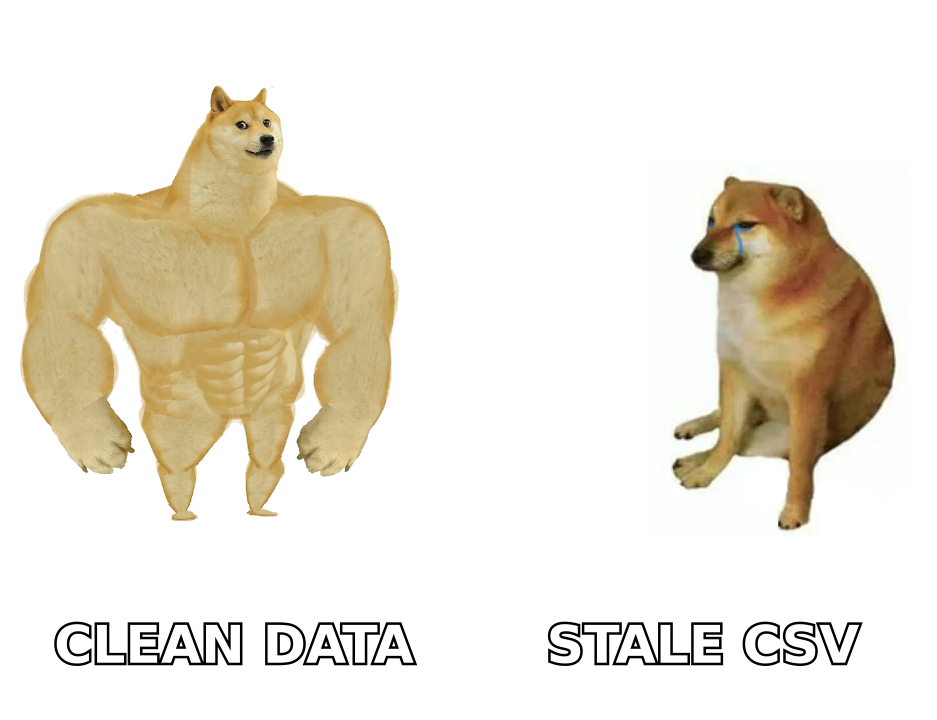
Clodura.ai vs Harmonic: how do they actually compare?#
The cleanest way to think about it: Clodura optimizes for activation (contact, sequence, convert), Harmonic optimizes for discovery (find, track, qualify the company). Here is the side-by-side.
| Attribute | Clodura.ai | Harmonic |
|---|---|---|
| Primary user | SDRs, outbound sales | VCs, corp-dev, growth prospecting |
| Core job | Find contacts + run sequences | Track private companies + signals |
| Contact emails | Yes, with verification | Limited / enrichment-focused |
| Direct-dial phone | Yes | Not a focus |
| Intent / signals | Buying intent, technographics | Headcount, funding, founder data |
| Built-in outreach | Yes (email sequencer) | No |
| Best for | Booking meetings now | Sourcing future accounts |
| API access | Yes | Yes (strong) |
| Pricing model | Per-seat tiers | Quote-based, higher floor |
Which one fits your motion?#
Use this quick decision list before you book a single demo:
- You need verified emails and dials this week — Clodura is the closer fit; pair it with standalone email verification to cut bounces.
- You source companies 6–18 months before they buy — Harmonic's growth signals are unmatched here.
- You are a VC or M&A team — Harmonic, full stop; Clodura is not built for deal sourcing.
- You run high-volume outbound on a budget — neither all-in-one may be cheapest; a focused finder plus a sequencer often costs less.
- You want one tool to "do it all" — Clodura is the more complete single workflow, with the usual jack-of-all-trades caveat.
- Developer-led pipelines — both expose APIs, but Harmonic's company-graph API and a dedicated email finder API serve different layers of the same stack.
Is accuracy the same on both platforms?#
No, and it is the wrong comparison anyway. Harmonic is not trying to win on per-contact email accuracy — it is trying to be right about which companies matter. Clodura competes more directly on contact accuracy, but like every bundled database, its hit rate swings by region, seniority, and how recently a record was refreshed.
This is where a lot of teams get burned. They buy an all-in-one for the database, then discover that 15–30% of "verified" emails still bounce because verification was a checkbox feature, not the core product. If you are sending real volume, a bounce rate above a few percent quietly tanks your sender reputation and pulls down every campaign you run.
The fix is boring but effective: treat discovery and verification as separate jobs. Let your platform surface contacts, then run them through a dedicated verifier before they touch your sending domain. You can also enrich thin records with a focused data enrichment pass so reps are not cold-calling job titles from two roles ago.
How does pricing compare?#
Pricing is where the two tools stop pretending to be alternatives. Clodura sells per-seat sales tiers with a usable entry point for small teams. Harmonic is quote-based and aimed at funded teams — the floor is meaningfully higher because the buyer is a VC fund or a corp-dev group, not a two-person SDR pod.
For reference, here is how a focused contact-data spend stacks up against bundled-platform expectations. Tomba's published pricing gives a concrete anchor for the verification-and-finding layer specifically.
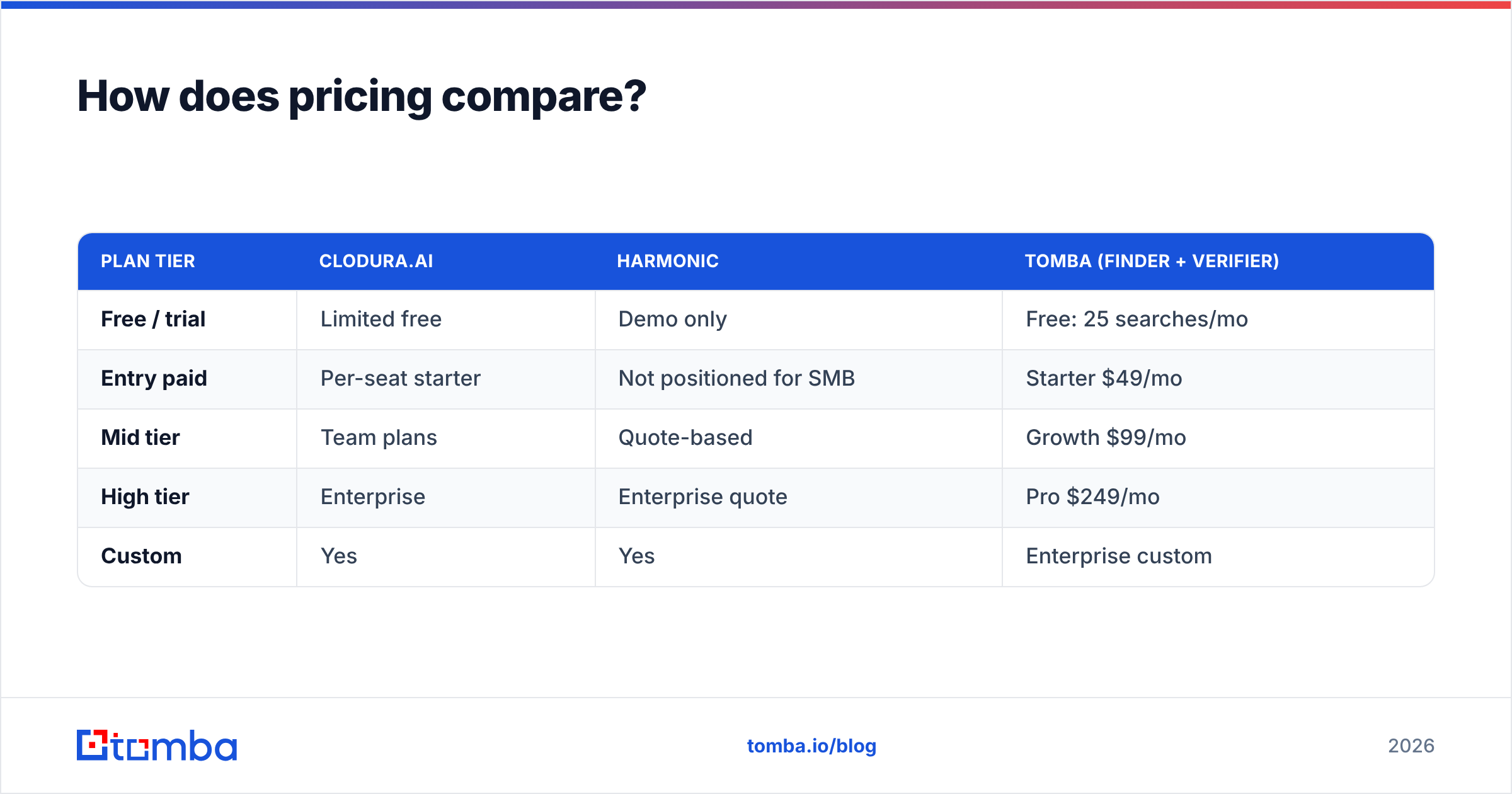
| Plan tier | Clodura.ai | Harmonic | Tomba (finder + verifier) |
|---|---|---|---|
| Free / trial | Limited free | Demo only | Free: 25 searches/mo |
| Entry paid | Per-seat starter | Not positioned for SMB | Starter $49/mo |
| Mid tier | Team plans | Quote-based | Growth $99/mo |
| High tier | Enterprise | Enterprise quote | Pro $249/mo |
| Custom | Yes | Yes | Enterprise custom |
The point of the table is not that Tomba replaces either platform wholesale. It is that the contact accuracy slice of the job — the part that actually decides whether your emails land — can be solved for $49–$99/mo instead of being bundled into a much larger seat license you may only half-use.
When should you use Tomba alongside these tools?#
Use a dedicated finder-and-verifier whenever contact deliverability is the constraint, regardless of which platform you pick for discovery.
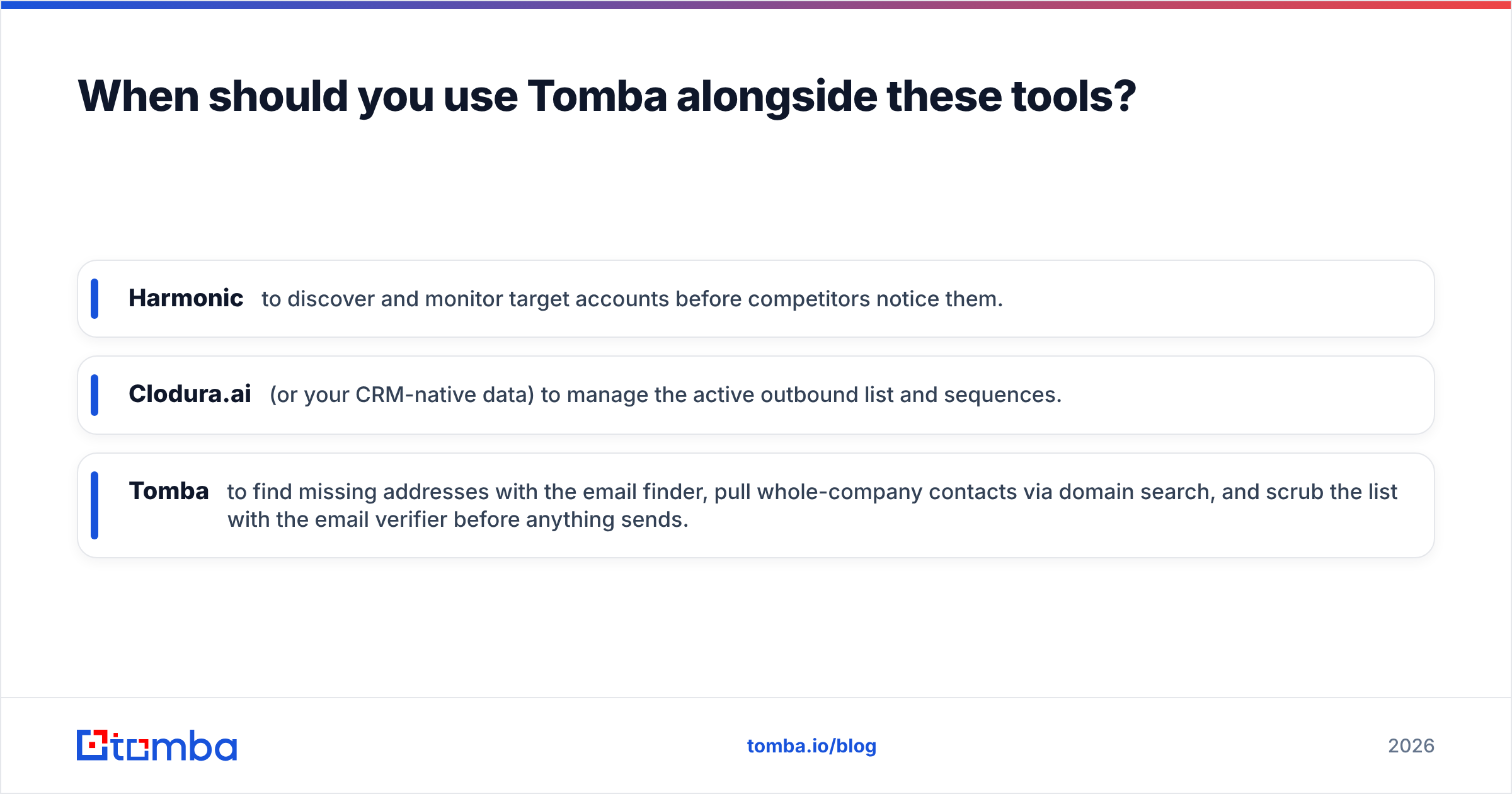
A common, realistic stack looks like this:
- Harmonic to discover and monitor target accounts before competitors notice them.
- Clodura.ai (or your CRM-native data) to manage the active outbound list and sequences.
- Tomba to find missing addresses with the email finder, pull whole-company contacts via domain search, and scrub the list with the email verifier before anything sends.
That separation keeps each layer honest. Your discovery tool is judged on coverage, your outreach tool on workflow, and your data tool on the one metric that actually moves reply rates: did the email reach a real inbox.
Clodura.ai vs Harmonic: which should you choose?#
Choose Clodura.ai if you are a sales team that wants a single workflow to find, sequence, and convert B2B contacts, and you accept that bundled modules are "good enough" rather than best-in-class. Validate its database against your exact territory during the trial — that is where all-in-ones live or die.
Choose Harmonic if you source companies early: venture, corporate development, or a long-cycle enterprise motion where knowing which startup matters is worth more than a ready-to-dial phone number. Cross-check current capabilities and reviews on a neutral source like G2 before committing to a quote.
Choose neither as your data layer if your real problem is bounced emails and stale records. In that case the smartest spend is a focused tool that does finding and verification well, plugged into whichever discovery platform fits your motion.
The bottom line#
Clodura.ai and Harmonic are not really competitors — they sit at opposite ends of the same pipeline. Clodura activates contacts; Harmonic discovers companies. The mistake is buying one to do the other's job and then blaming the data when reply rates sag.
Whatever you choose for discovery, do not let contact accuracy be an afterthought. Start free with the Tomba Email Finder — 25 searches a month at no cost, verified results, and a clean API — and bolt it onto Clodura, Harmonic, or your CRM so every address you send to is one a human will actually open. It is the cheapest line item in your stack and the one that decides whether the rest of it works.
// get started
Find, verify and enrich your first contacts today
Start on the free plan with 25 searches a month, then scale when your team is ready.
Free plan · No credit card required · GDPR & CCPA
// about the author