Clodura.ai vs MailRush.io 2026: Pick the Right Sales Tool
Clodura.ai is a B2B data and cadence platform; MailRush.io is a cold-email sending engine. Here's which one fits your outbound stack in 2026 — and where a dedicated data layer beats both.
Clodura.ai vs MailRush.io: Which Sales Tool Should You Actually Buy in 2026?
You found both tools on a "best cold outreach software" list and now you're stuck. They sound similar, the pricing pages use the same buzzwords, and neither site tells you the one thing you need: these are not the same kind of product. One is a data-and-cadence platform. The other is an email-sending engine with warmup. Buying the wrong one means paying for half a stack.
This breakdown sorts that out fast, then shows where each tool is genuinely strong, where it's thin, and what you'll still need to bolt on.
TL;DR#
- Clodura.ai is a B2B sales-intelligence platform: a contact database, email finder, technographics, and a built-in sales cadence tool. Best if you need who to contact plus light sequencing in one place.
- MailRush.io is a cold-email automation and SMTP sending tool with built-in email warmup. Best if you already have a list and need to send and warm at scale.
- They overlap on "cold email" but solve different jobs — Clodura sources and sequences; MailRush sends and warms.
- Neither is a best-in-class data provider. Contact accuracy is the weak point for most outbound teams, and that's where a dedicated email finder and email verifier earn their keep.
- For a lean 2026 stack: source and verify contacts with a specialist tool, then push them into whichever sending or cadence engine fits your volume.
What is Clodura.ai?#
Clodura.ai is an all-in-one sales prospecting platform. It bundles a B2B contact database (claiming hundreds of millions of contacts), an email finder and verifier, buyer-intent and technographic signals, org charts, and a sales-engagement module that runs multi-step email cadences. The pitch is "find, engage, close" without leaving one dashboard.
In practice, teams use Clodura for the top of the funnel: building target-account lists, pulling direct contacts, and firing off a basic email sequence. It leans toward SMB and mid-market sales teams that want database access without the enterprise price tag of the biggest names. You can read its own positioning on the Clodura.ai homepage.
Where it gets fuzzy is data freshness. Bundled databases age fast, and "verified" inside a platform doesn't always mean re-checked against a live mail server. More on that below.
What is MailRush.io?#
MailRush.io is a cold-email sending and automation tool. Its core is a dedicated SMTP/email-sending infrastructure with built-in email warmup, drip campaigns, reply detection, and basic list management. Think of it as the engine room: you supply the leads, it handles deliverability mechanics, sequencing, and inbox placement.
MailRush is built for senders who care about volume and inbox rates — agencies, lead-gen shops, and founders running their own outbound. It does not pretend to be a data provider. There's no rich intent graph or org-chart browser. You bring the addresses; MailRush warms the domain and ships the mail. See the MailRush.io homepage for its feature set.
The strength is also the limit: a great sending tool with a bad list still produces bounces and spam complaints. Garbage in, garbage delivered.
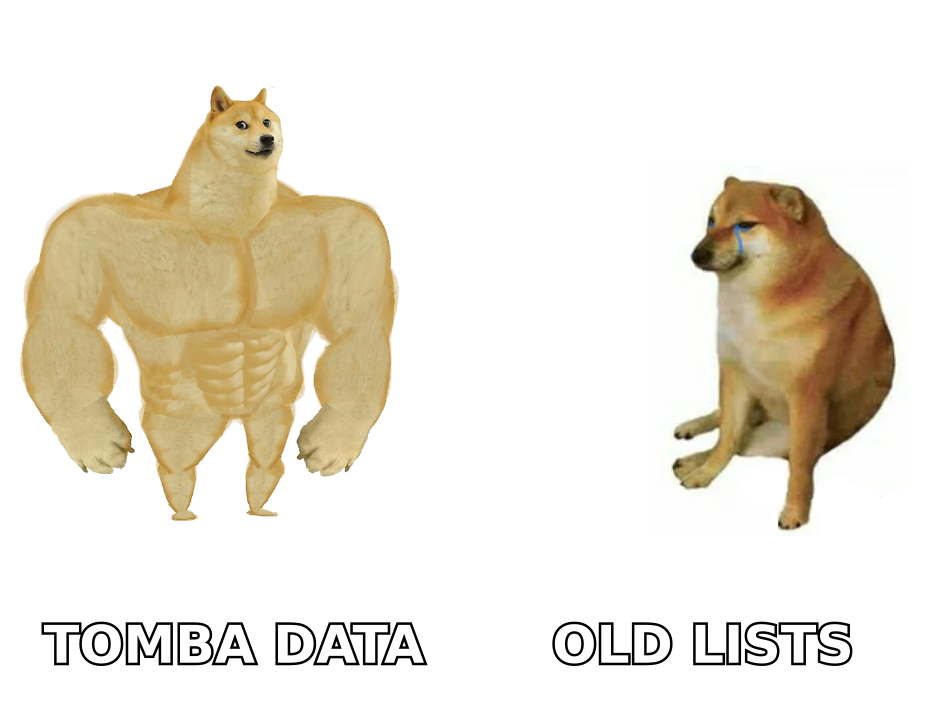
Clodura.ai vs MailRush.io: the core difference#
Here's the simplest way to hold these two in your head. A restaurant analogy: Clodura.ai is the supplier that sells you the ingredients and a basic kitchen. MailRush.io is a specialized oven that cooks at scale — but you have to bring your own ingredients. Asking "which is better" is like asking whether a grocery store beats an oven. It depends on what's missing from your kitchen.
The four practical questions that decide it:
- Do you need a list, or do you have one? No list → Clodura. Have a list → MailRush.
- How much do you send? High-volume, multi-domain sending → MailRush's warmup and SMTP focus shine.
- Do you need intent and technographics? Yes → Clodura. MailRush doesn't do this.
- How clean does your data need to be? Either way, plan to verify independently — bundled "verified" flags are not a substitute for a live email verification pass.
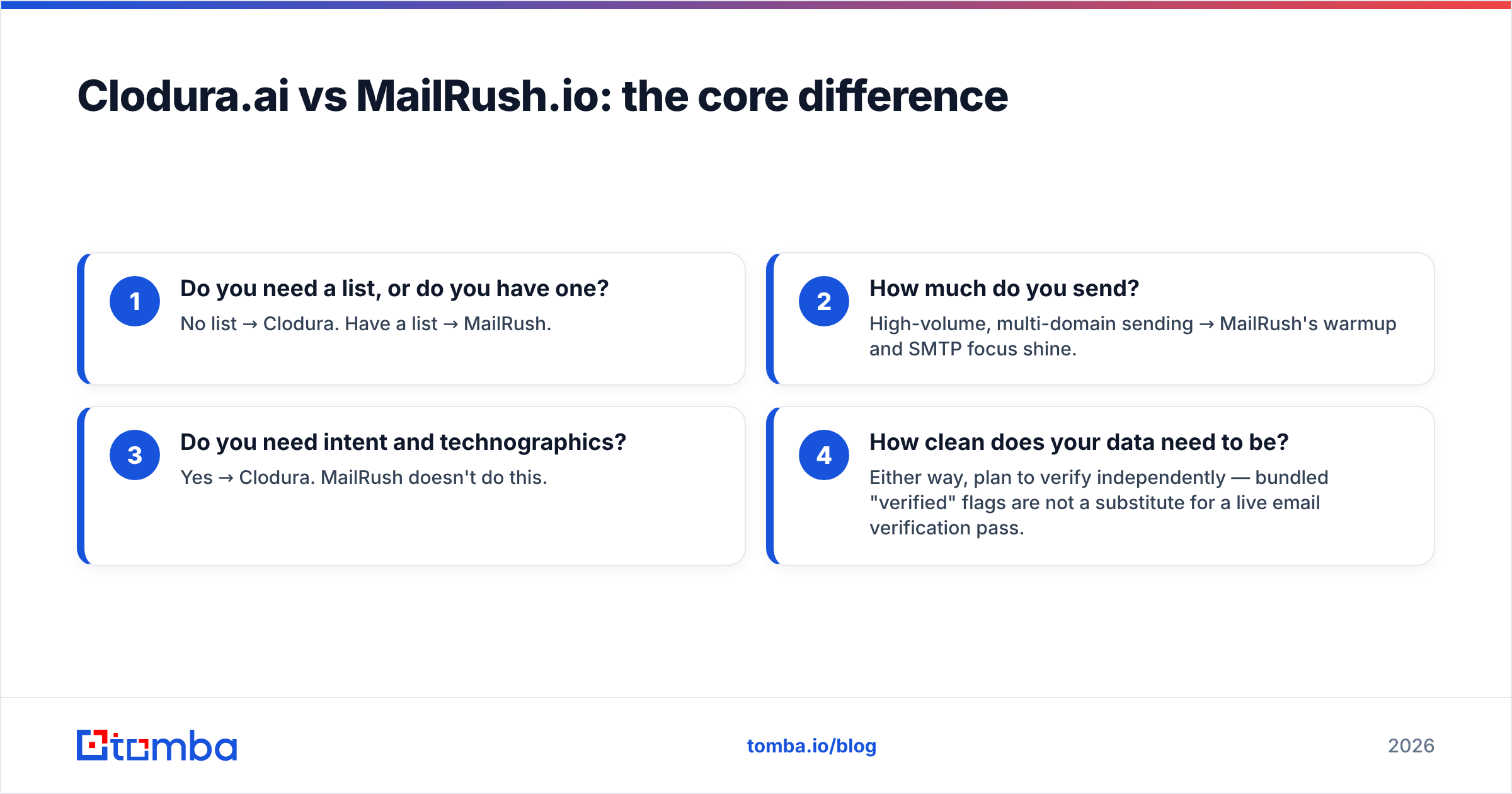
Clodura.ai vs MailRush.io: feature comparison table#
| Capability | Clodura.ai | MailRush.io |
|---|---|---|
| Primary job | Find contacts + sequence | Send + warm email |
| B2B contact database | Yes (built-in) | No (bring your own) |
| Email finder | Yes | No |
| Email verification | Built-in flag | Basic list cleaning |
| Buyer intent / technographics | Yes | No |
| Email warmup | Limited | Yes (core feature) |
| Dedicated SMTP sending | No | Yes |
| Multi-step cadences | Yes | Yes |
| Best for | Sourcing + light outreach | High-volume sending |
| Typical user | SMB/mid-market sales | Agencies, founders, lead-gen |
The table makes the overlap clear: both run cadences, but the surrounding muscle is opposite. Clodura is strong on the left side of the funnel (who), MailRush on the right (deliver).
Which one is better for cold email deliverability?#
MailRush wins on raw sending, but deliverability starts before either tool touches your campaign. Inbox placement is roughly three things stacked: a clean list, a warmed domain, and good content. MailRush directly owns two of those — warmup and sending reputation — which is why high-volume senders gravitate to it.
Clodura can send cadences too, but it's a feature inside a data platform, not a deliverability specialist. If your main pain is "my emails land in spam," MailRush's dedicated warmup and SMTP focus is the more direct fix.
But here's the trap both tools share: list quality is upstream of everything they do. A 12% bounce rate tanks your sender reputation no matter how good the warmup is. Mailbox providers read bounces and spam complaints as signals that you're a low-quality sender. That's why serious teams verify every address against a live server before the first send — using a standalone email verifier or catch-all verifier rather than trusting a database's internal "valid" stamp. G2 reviews of both categories repeatedly flag stale data as the number-one complaint; you can scan them yourself on G2.

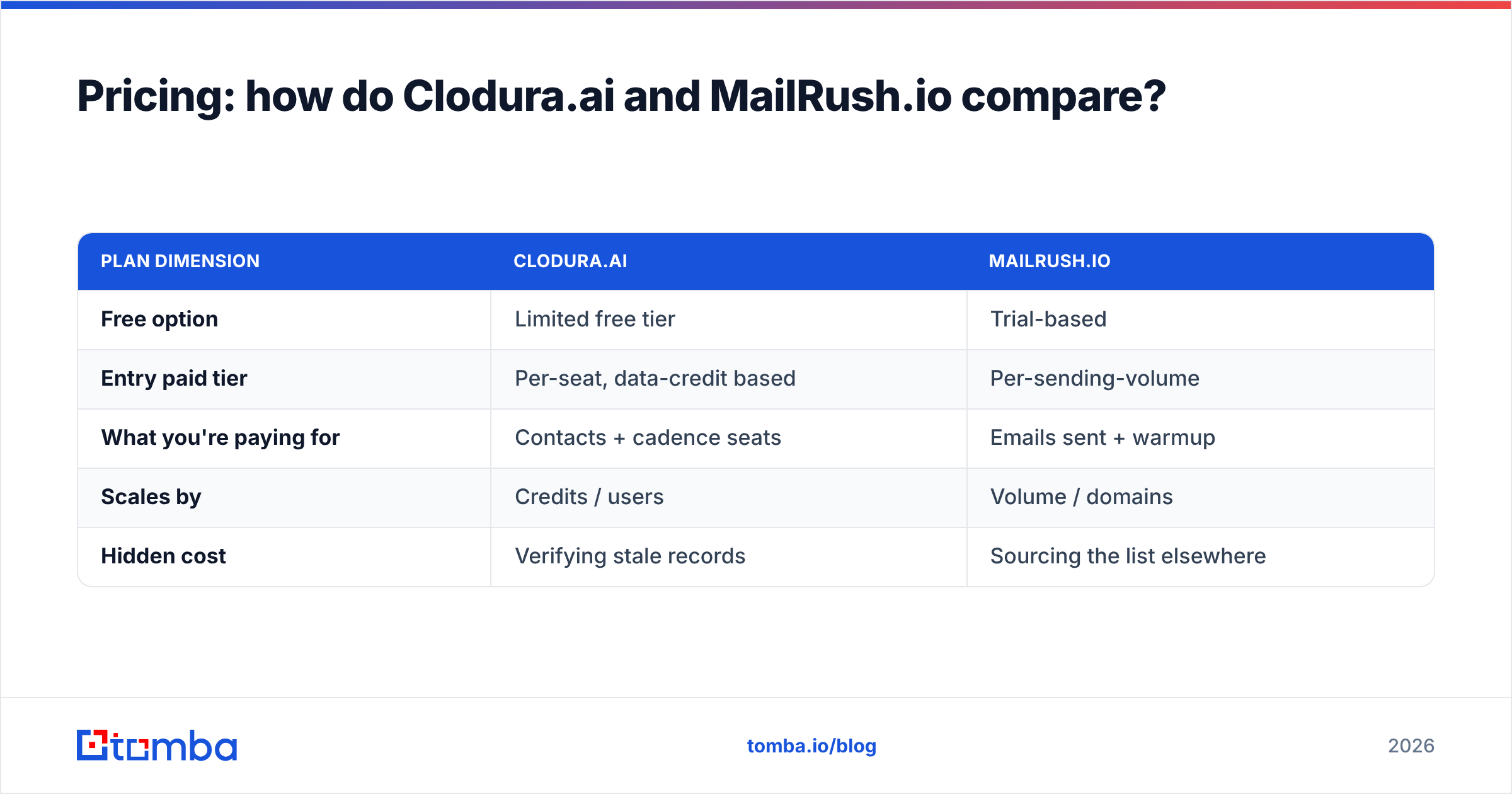
Pricing: how do Clodura.ai and MailRush.io compare?#
Both publish entry tiers, but you're comparing different units — Clodura sells data credits plus seats; MailRush sells sending volume and warmup slots. Always check the live pages, because both adjust often.
| Plan dimension | Clodura.ai | MailRush.io |
|---|---|---|
| Free option | Limited free tier | Trial-based |
| Entry paid tier | Per-seat, data-credit based | Per-sending-volume |
| What you're paying for | Contacts + cadence seats | Emails sent + warmup |
| Scales by | Credits / users | Volume / domains |
| Hidden cost | Verifying stale records | Sourcing the list elsewhere |
The "hidden cost" row is the honest part. With Clodura, you may pay again to re-verify aging records. With MailRush, you're paying a separate vendor to build the list in the first place. Budget for the whole motion, not the sticker price of one tool.
For reference on what a transparent, usage-based data layer costs, Tomba pricing runs a free tier at 25 searches/month, Starter at $49/mo, Growth at $99/mo, and Pro at $249/mo — credits you can spend purely on accurate contacts and verification, independent of whichever sender you choose.
Where do both tools fall short?#
Every honest comparison needs this section. The shared gap is data accuracy and freshness.
- Clodura.ai: Large bundled databases are convenient but decay. People change jobs every few years, and a contact verified at ingestion may be wrong by the time you email it. The platform's own "verified" flag is a point-in-time check, not a live SMTP ping at send time.
- MailRush.io: No native sourcing at all. Its list cleaning is basic deduplication and syntax checks, not deep verification. Feed it a bad list and warmup can't save you — you'll still rack up bounces.
The fix in both cases is the same: treat data as its own layer. Use a specialist to find current addresses, verify them against live mail servers, and enrich them with firmographics before they ever reach a sequencer or sender. A focused data enrichment and domain search workflow keeps your list current without locking you into one platform's release cycle.
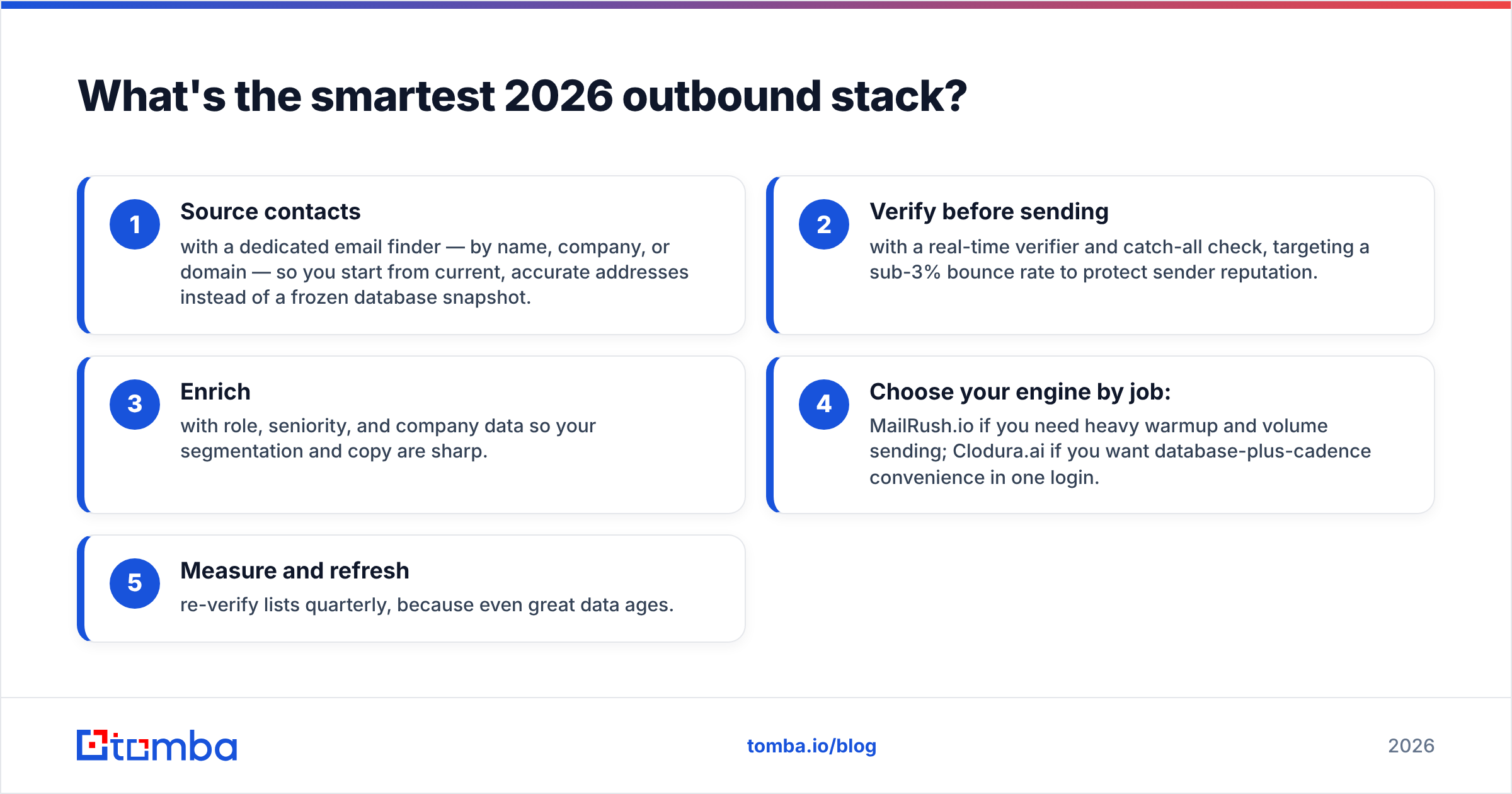
What's the smartest 2026 outbound stack?#
Decouple your data layer from your sending layer. That single decision survives tool churn better than any all-in-one bet.
A clean, modular setup looks like this:
- Source contacts with a dedicated email finder — by name, company, or domain — so you start from current, accurate addresses instead of a frozen database snapshot.
- Verify before sending with a real-time verifier and catch-all check, targeting a sub-3% bounce rate to protect sender reputation.
- Enrich with role, seniority, and company data so your segmentation and copy are sharp.
- Choose your engine by job: MailRush.io if you need heavy warmup and volume sending; Clodura.ai if you want database-plus-cadence convenience in one login.
- Measure and refresh — re-verify lists quarterly, because even great data ages.
This way, switching senders (or adding a second one) never means rebuilding your data pipeline. The contacts are clean and portable.
So, Clodura.ai or MailRush.io?#
Pick Clodura.ai if you don't have a list and want sourcing, intent signals, and light sequencing in one tool — and you're willing to re-verify records before you send.
Pick MailRush.io if you already have contacts and your problem is inbox placement at volume — its warmup and dedicated SMTP are the more direct answer to "why am I in spam?"
Pick both, or neither's data if you're building to last: keep the sending tool you like, but own your contact accuracy separately. The teams with the best reply rates in 2026 aren't the ones with the fanciest all-in-one suite — they're the ones whose lists actually reach real inboxes.
Get accurate contacts before you send a single email#
Whatever you decide between these two, your reply rate is capped by your list. Tomba's email finder pulls current, professional email addresses by name, company, or domain, and the built-in verifier checks each one against live mail servers so you ship clean lists into Clodura, MailRush, or any sender you choose. Start free with 25 searches a month, scale to Starter at $49/mo when you're ready, and stop paying the bounce tax on stale data. Build the data layer once — then let your sending tool do what it's good at.
// get started
Find, verify and enrich your first contacts today
Start on the free plan with 25 searches a month, then scale when your team is ready.
Free plan · No credit card required · GDPR & CCPA
// about the author