

Lead Decay: Why Leads Go Stale and How to Slow It Down
Lead decay is the loss of a lead's value and data quality over time. Learn why it happens, how to spot it in your CRM, and how to slow it down.
Every lead has a shelf life. A form fill from last week is a warm lead. The same form fill from last year is a record with a name on it, and the person may have changed jobs, changed roles or forgotten they ever asked.
That loss of value over time is lead decay. This guide explains what lead decay is, why it happens, how to spot it in your CRM, and what to do about it before your pipeline fills with leads that no longer work.
What lead decay is#
Lead decay is the drop in a lead's value, and in the accuracy of its data, as time passes. It has two sides, and you need to handle both.
- Interest decay. The person was interested when they filled in the form. Their need, budget or timing has moved on. The longer you wait, the less likely they are to remember you.
- Data decay. The contact details go out of date. People change jobs, companies rebrand, and mailboxes are closed. An email that worked in January may bounce in November.
A lead can decay in one way and not the other. A person may still care about your product and have a new work email. Another may have the same email and no interest left. Treat the two problems separately.
Why lead decay happens#
Most decay has plain causes.
- Slow follow-up. The first hours after a request are the best. Every day without contact lowers the odds of a reply.
- Job changes. A contact who leaves the company takes the context with them. The old email may stop working.
- Changing priorities. Budgets and projects shift. A lead who was ready to buy last quarter may have no plan now.
- Lists that sit untouched. Leads imported from events or webinars often wait weeks for a first touch.
- No re-checks. Nobody re-verifies the data, so the errors pile up unseen.
- Weak nurturing. A lead that gets no useful content has no reason to stay interested.
Lead decay is normal. The goal is not to stop it. The goal is to notice it early and respond.
How to spot lead decay in your CRM#
You do not need a complex model. A few simple reports show where decay is hiding.
- Lead age by stage. Sort open leads by created date. List the ones that have not moved in 30, 60 and 90 days.
- Last activity date. Find leads with no email, call or meeting logged for a long time.
- Bounce and invalid flags. Count the leads whose emails bounced or failed verification.
- Reply and conversion by age. Compare how often leads of different ages turn into meetings. This shows how fast value drops in your own funnel.
- Owner gaps. Look for leads with no owner, or with an owner who left the team.
Use your own numbers for the thresholds. Every business has a different sales cycle, and a good age limit for a fast SaaS trial is wrong for a long enterprise deal.
How to slow lead decay#
You cannot freeze a lead, but you can slow the loss.
Respond fast#
Set a clear rule for first contact and measure it. Route new leads to an owner right away, and alert the owner when a lead has waited too long. Connecting your CRM to your other tools through Tomba integrations makes routing and alerts easier to automate.
Keep the data fresh#
Do not wait for bounces to tell you a contact is dead. Re-check data on a schedule. Run old email lists through an email verifier, and for large files use bulk tasks. When a contact has left a company, look for the new role. An email finder can help you reach the same person at the new company.
Enrich the record#
A record with only a name and an email gives reps little to work with. Add company, role and other details with data enrichment. Richer records are easier to score, route and personalize.
Nurture, do not ignore#
Leads that are not ready today still have value. Put them in a light nurture track with useful content, and set a date to review them. A short, regular touch keeps your brand in mind without pressure.
Score by age#
Add a time factor to your lead scoring. A lead who acted this week should rank above a lead who acted six months ago. Reduce the score when there is no activity for a set time. This keeps stale leads from crowding your best ones. Most CRMs support this: HubSpot, for one, lets you turn on a decay setting in its lead scoring tool.
What to do with leads that have already decayed#
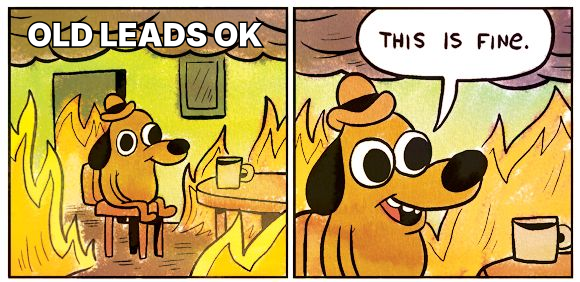
Some leads are past the point of quick rescue. Do not delete them in a rush. Use a short routine.
- Verify the email. If it fails, find a new address or mark the lead as unreachable.
- Check for a job change. If the person moved, treat the new role as a fresh opportunity. The change is a good reason to write.
- Send one honest re-engagement email. Keep it short. Refer to what they asked about, and offer a simple next step.
- Set a deadline. If there is no reply after a fixed number of touches, move the lead to a long-term list or archive it.
- Keep the history. Archive instead of deleting when you may need the record for reporting.
For a fuller approach to this step, see our guide on lead recycling.
A simple lead decay routine#
- Daily: check that new leads have an owner and a first touch.
- Weekly: review leads with no activity for 30 days.
- Monthly: verify emails on leads that are still open.
- Quarterly: archive or recycle leads past your age limit, and review your thresholds.
Write the routine down and give it an owner. A habit that belongs to nobody does not happen.
FAQ#
What is lead decay?#
Lead decay is the loss of a lead's value and data quality over time, because interest fades and contact details go out of date.
How fast do leads decay?#
It depends on your market and sales cycle. Compare conversion rates by lead age in your own CRM to see how fast your leads lose value.
What is the difference between lead decay and data decay?#
Lead decay is the whole loss of value. Data decay is one part of it: the contact details becoming wrong, such as an old email or job title.
How do I stop leads from going stale?#
Follow up fast, verify and enrich the data on a schedule, nurture leads that are not ready, and use activity age in your scoring.
Should I delete old leads?#
Not at once. Verify them, try one re-engagement, and archive the ones that stay silent so your reports stay clean.
// start free
See who Tomba finds at any company
Type a company's domain to see its people, their roles and verified work emails, each with the pages it was found on. Free account, no card.
Free plan · No credit card required · GDPR & CCPA
// about the author