Amplemarket Pricing in 2026: Plans, Costs & Real Alternatives
Amplemarket hides its pricing behind a sales call. Here's what teams actually pay in 2026, what's included at each tier, and where the seat-based math stops making sense.
TL;DR
- Amplemarket does not publish prices. Every plan is a custom quote tied to seats, credits, and an annual contract — expect a sales call before you see a number.
- Real-world spend usually lands in the $1,000–$2,000+/month range for a small team, often with annual commitments and a platform fee on top of per-seat costs.
- The platform bundles lead data, multichannel sequencing, AI copy, and deliverability tools — powerful if you use all of it, expensive if you only need part of it.
- Credit limits, seat minimums, and add-on data packages are where the bill grows faster than teams expect.
- If your real need is accurate email and contact data, a usage-based tool like the Tomba Email Finder starting at $49/mo covers the core job for a fraction of the cost.
What is Amplemarket and who is it for?#
Amplemarket is an all-in-one AI sales platform built for outbound teams. Think of it as the engine room of a sales-led growth motion: it finds contacts, scores intent, writes the first-touch copy, runs email and LinkedIn sequences, and watches your deliverability — all under one login.
That breadth is the pitch. Instead of stitching together a data provider, a sequencer, a copy tool, and a deliverability monitor, you buy one subscription. For a mid-market or enterprise SDR team running high-volume outbound, that consolidation is genuinely useful.
The catch is the same as the pitch: you pay for the whole engine even if you only need one cylinder. And because Amplemarket keeps its pricing off the website, you can't size the cost until you're already on a call with their team.
This post breaks down what you actually pay, how the pricing model works, and when a leaner, usage-based stack makes more financial sense.
How does Amplemarket pricing work in 2026?#
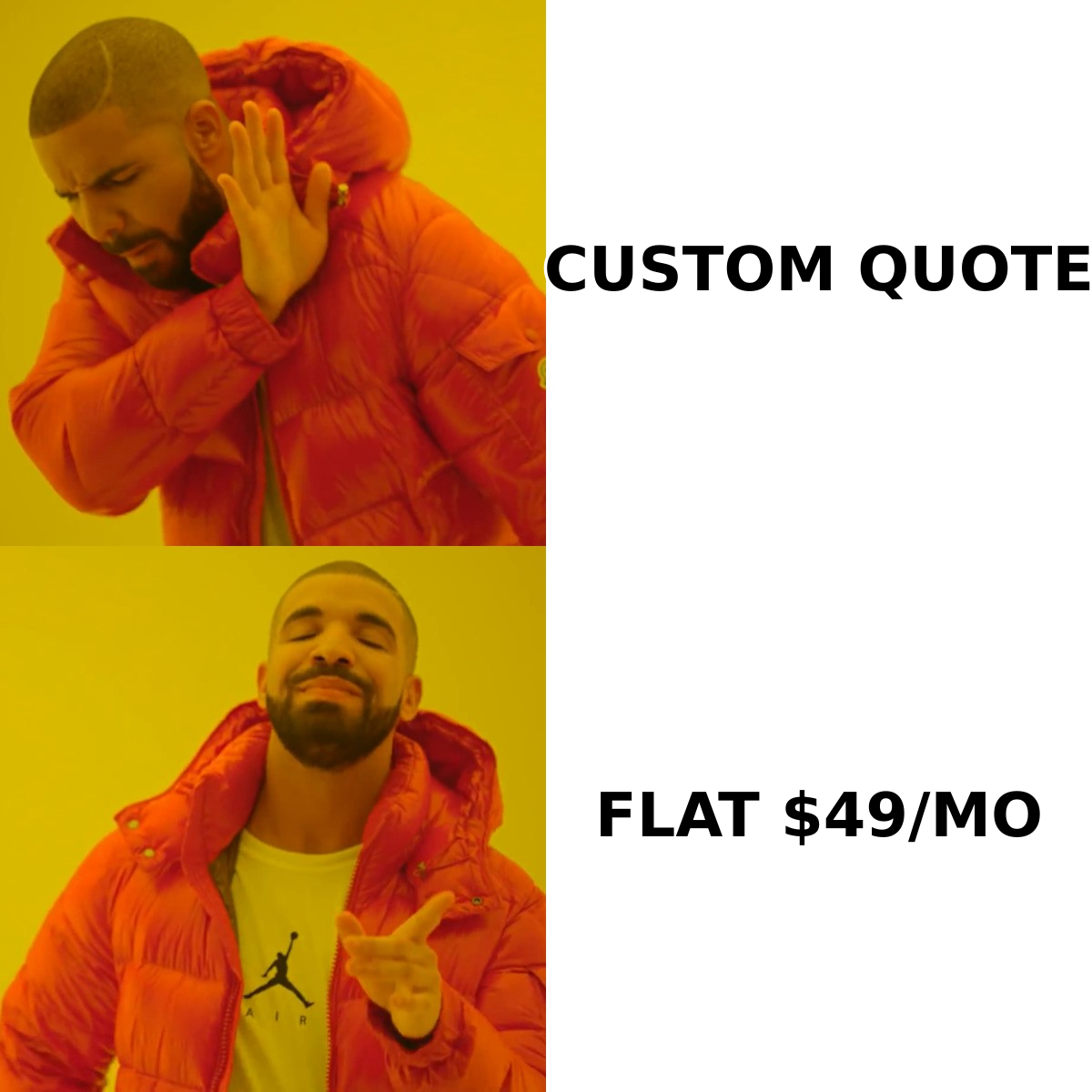
Conclusion first: Amplemarket uses custom, quote-based pricing — there is no public price list, no free plan, and no self-serve checkout. You request a demo, talk to sales, and receive a proposal built around three levers.
The three levers that determine your bill:
- Seats — the number of users (reps) on the platform. Most quotes carry a per-seat license fee and a minimum seat count.
- Credits — your monthly allowance for finding and enriching contacts. Run out, and you buy more or wait for the reset.
- Contract length — annual commitments are the norm. Month-to-month, when offered, costs more per seat.
On top of those, expect a platform fee (a base charge independent of seats) and optional data add-ons for things like phone numbers, intent signals, or expanded contact volumes.
This is the standard enterprise-SaaS playbook: anchor on consolidation value, price by seat, and gate volume behind credits. It works well for the vendor's revenue predictability. It works less well for a buyer trying to forecast cost before committing.
What do teams actually pay?#
Public data points from review sites and buyer reports put typical Amplemarket spend in the low four figures per month for a small team, scaling up with seats and data volume. G2 and Capterra reviewers frequently describe it as a premium-tier purchase rather than a budget tool — you can browse current user reviews on G2 to gauge sentiment and see where pricing complaints cluster.
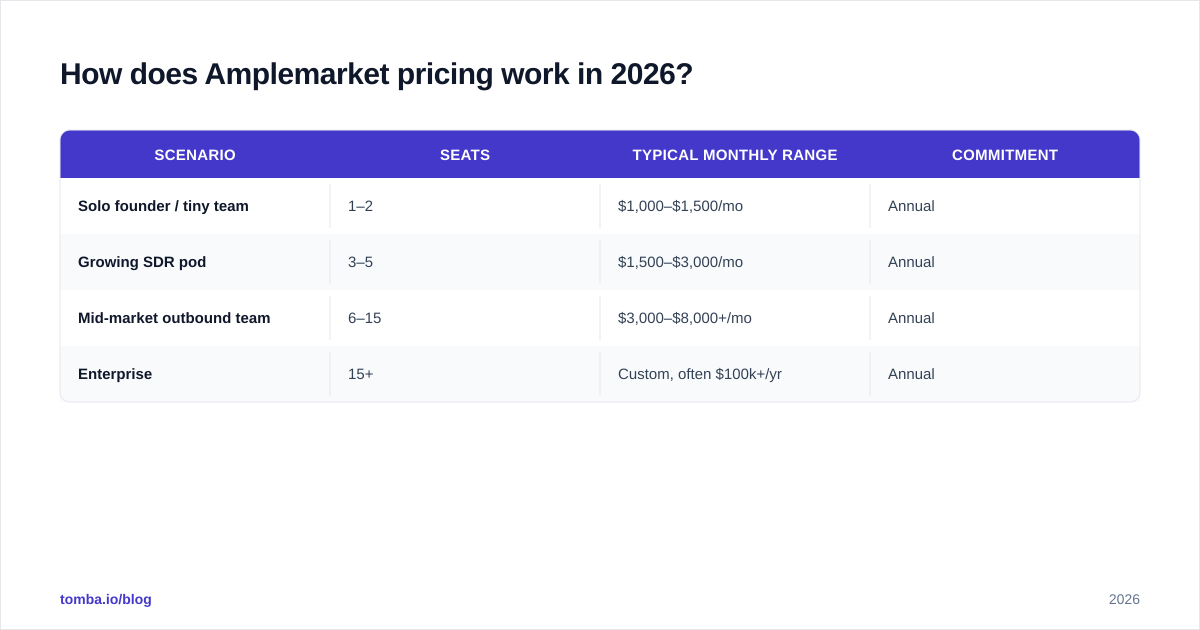
A rough, illustrative picture of how the math tends to land:
| Scenario | Seats | Typical monthly range | Commitment |
|---|---|---|---|
| Solo founder / tiny team | 1–2 | $1,000–$1,500/mo | Annual |
| Growing SDR pod | 3–5 | $1,500–$3,000/mo | Annual |
| Mid-market outbound team | 6–15 | $3,000–$8,000+/mo | Annual |
| Enterprise | 15+ | Custom, often $100k+/yr | Annual |
These figures are directional, not quotes — your actual proposal depends on negotiation, region, and add-ons. The point is the floor: this is not a tool you trial for $49 and expand later. The entry cost assumes you're already running serious outbound.
What's included at each Amplemarket tier?#
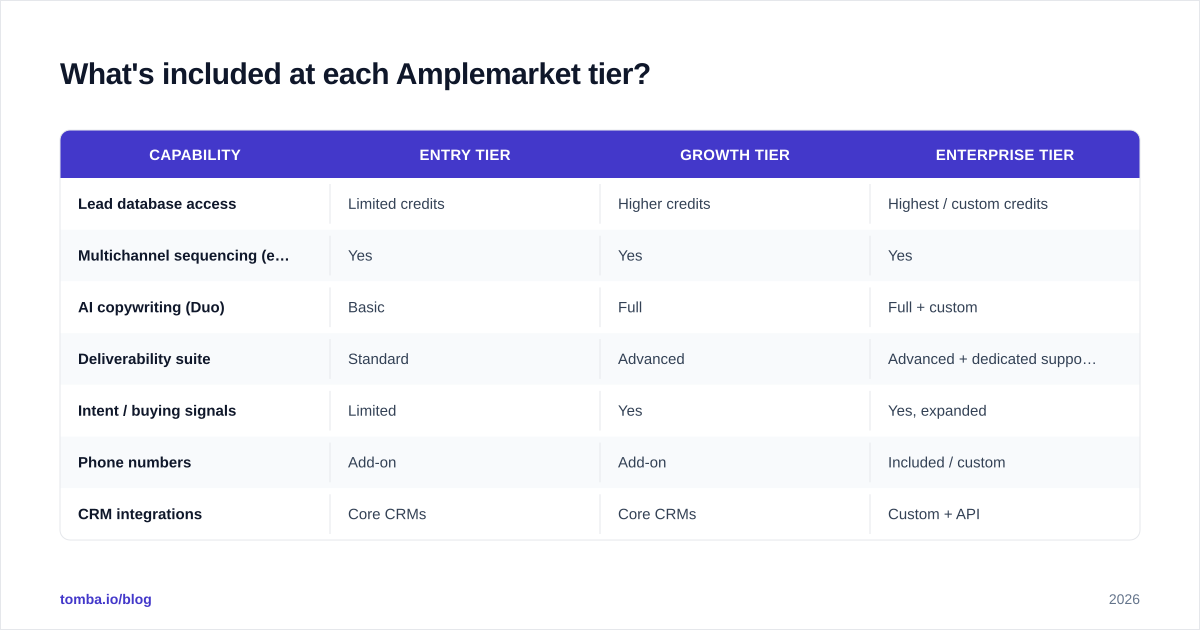
Amplemarket doesn't name its tiers publicly the way a self-serve tool does, but the feature set generally clusters into a few bands. Here's how the capabilities typically stack:
| Capability | Entry tier | Growth tier | Enterprise tier |
|---|---|---|---|
| Lead database access | Limited credits | Higher credits | Highest / custom credits |
| Multichannel sequencing (email + LinkedIn) | Yes | Yes | Yes |
| AI copywriting (Duo) | Basic | Full | Full + custom |
| Deliverability suite | Standard | Advanced | Advanced + dedicated support |
| Intent / buying signals | Limited | Yes | Yes, expanded |
| Phone numbers | Add-on | Add-on | Included / custom |
| CRM integrations | Core CRMs | Core CRMs | Custom + API |
| Dedicated CSM | No | Sometimes | Yes |
| Seat minimum | Low | Medium | Negotiated |
The pattern is familiar: the features you'd expect to be table stakes (phone numbers, intent data, generous credits) tend to sit behind the higher tiers or as paid add-ons. That's not unique to Amplemarket — it's how most enterprise sales platforms structure value — but it's worth knowing before you assume the "all-in-one" price includes everything.
If you want a deeper feature-by-feature teardown, the Amplemarket alternative comparison page lays out where the platform is strong and where a focused tool covers the same job for less.
Is Amplemarket worth the price?#
It depends entirely on how much of the platform you'll use. Amplemarket is priced as a system. If you adopt the whole system — data, sequencing, AI copy, and deliverability — the consolidated cost can beat buying four separate tools, and the workflow is genuinely smoother.
But three buyer profiles consistently overpay:
1. The data-only buyer. If you mainly need accurate emails and contact details to feed a sequencer you already own (Instantly, Smartlead, your CRM's native cadences), you're paying enterprise platform prices for what a dedicated email finder does directly. That's the most common mismatch.
2. The small team. With seat minimums and annual commitments, a two-person team pays a disproportionate share of a tool built for ten-person pods. The per-result cost is brutal at low volume.
3. The seasonal or bursty user. Credit-and-seat models punish uneven usage. If your outbound spikes for a quarter and goes quiet the next, you're still paying for the annual license the whole way through.
For everyone else — a funded team running consistent, high-volume, multichannel outbound — the price can be justified. The deliverability tooling alone (mailbox monitoring, spam-placement checks, warmup) is the kind of thing teams underinvest in until it bites them. HubSpot's research on email deliverability and sender reputation is a good primer on why deliverability infrastructure matters before you scale send volume.
How does Amplemarket compare to usage-based alternatives?#
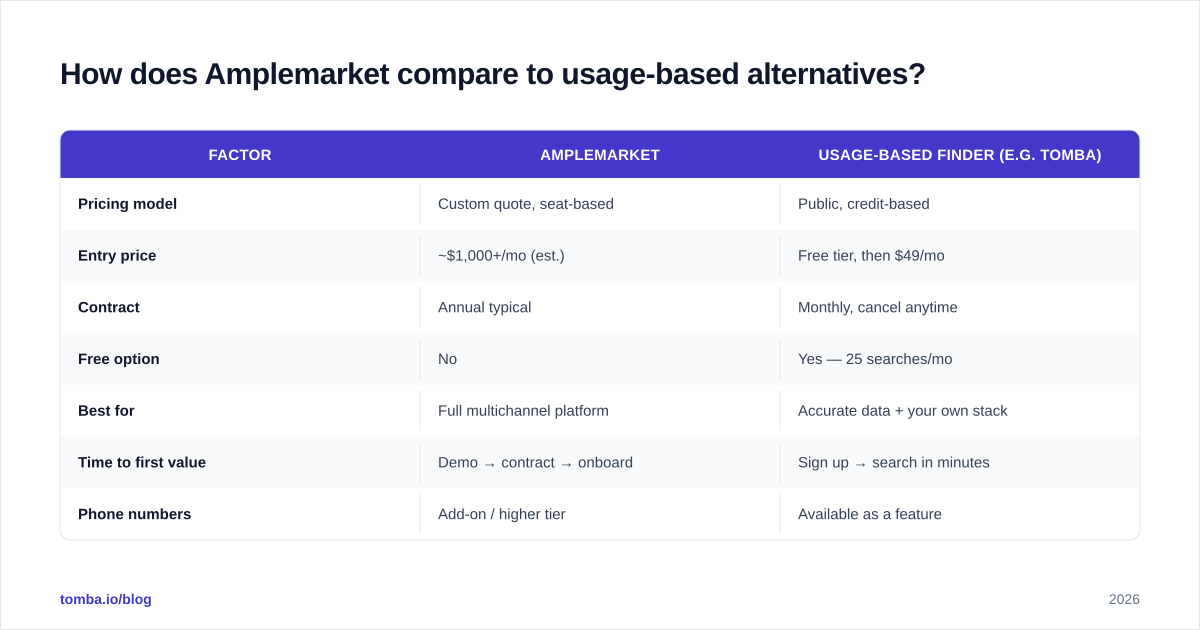
The cleanest way to think about it: Amplemarket sells a platform; usage-based tools sell a job done. If your job is "find verified email addresses and enrich contacts," you can buy exactly that, pay only for what you use, and skip the seat math entirely.
Here's the core trade-off, priced out:
| Factor | Amplemarket | Usage-based finder (e.g. Tomba) |
|---|---|---|
| Pricing model | Custom quote, seat-based | Public, credit-based |
| Entry price | ~$1,000+/mo (est.) | Free tier, then $49/mo |
| Contract | Annual typical | Monthly, cancel anytime |
| Free option | No | Yes — 25 searches/mo |
| Best for | Full multichannel platform | Accurate data + your own stack |
| Time to first value | Demo → contract → onboard | Sign up → search in minutes |
| Phone numbers | Add-on / higher tier | Available as a feature |
The numbers on the right are concrete because they're public. Tomba's pricing is listed openly: a Free tier with 25 searches/month, Starter at $49/mo, Growth at $99/mo, Pro at $249/mo, and custom Enterprise. You can do the per-search math before you ever talk to anyone.
That transparency is the real difference. With a usage-based tool you can start small, verify the data quality on your own list with an email verifier, and scale spend only as results justify it. With Amplemarket you commit first and discover fit second.
To be fair to Amplemarket: a usage-based finder does not replace a full sequencing-plus-deliverability platform. If you need native LinkedIn automation, AI-written sequences, and intent scoring in one place, that's a different purchase. The mistake is paying for that bundle when all you actually consume is the data layer.
A simple decision framework#
Ask three questions in order:
- Will I use the sequencing and deliverability suite daily? If no, you're overpaying for a platform — buy data and copy separately.
- Is my team big enough to clear the seat minimum efficiently? If no, usage-based pricing will be cheaper per result.
- Can I commit to a year of consistent volume? If no, avoid annual seat contracts and stay flexible.
Three "no" answers means a leaner stack almost certainly wins on cost. Three "yes" answers means Amplemarket's consolidation may genuinely pay off.
What hidden costs should you watch for?#
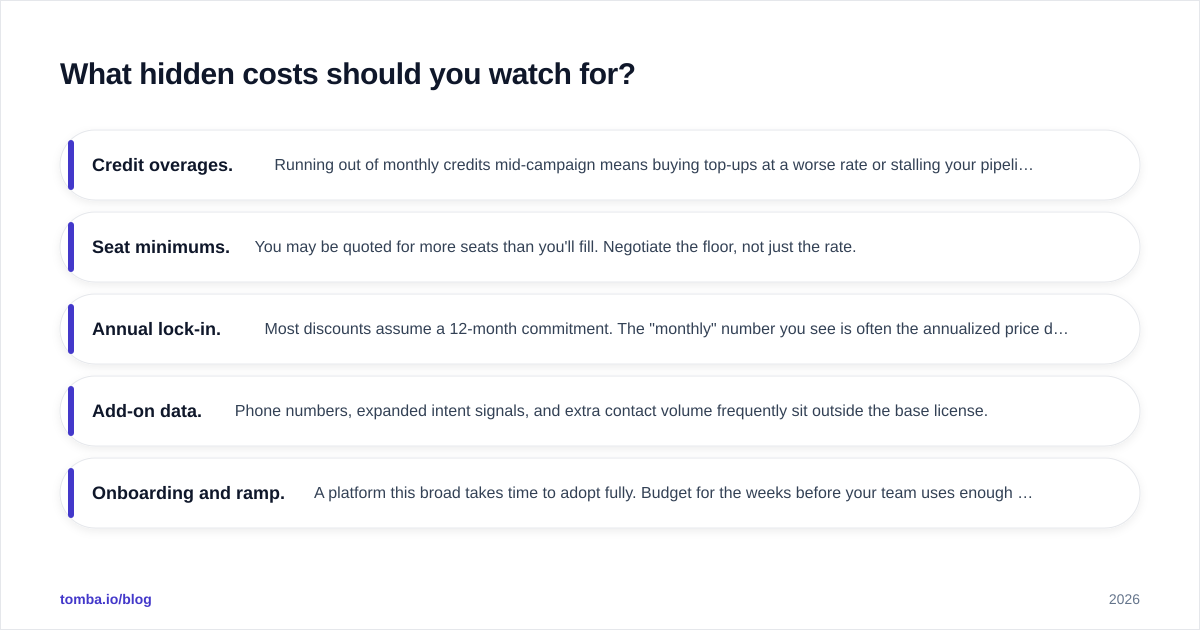
Beyond the headline seat price, these are the line items that surprise buyers:
- Credit overages. Running out of monthly credits mid-campaign means buying top-ups at a worse rate or stalling your pipeline. Model your real monthly contact volume before signing.
- Seat minimums. You may be quoted for more seats than you'll fill. Negotiate the floor, not just the rate.
- Annual lock-in. Most discounts assume a 12-month commitment. The "monthly" number you see is often the annualized price divided by twelve — cancel early and the math changes.
- Add-on data. Phone numbers, expanded intent signals, and extra contact volume frequently sit outside the base license.
- Onboarding and ramp. A platform this broad takes time to adopt fully. Budget for the weeks before your team uses enough of it to justify the cost.
None of these are dishonest — they're standard enterprise SaaS structure. But they're invisible on a website that shows no prices, which is exactly why you should itemize them on the sales call.
The bottom line on Amplemarket pricing#
Amplemarket is a capable, premium, platform-priced tool. In 2026 that means custom quotes, seat-based licensing, annual commitments, and a real-world floor in the four-figures-per-month range. If you'll use the full stack — data, multichannel sequencing, AI copy, and deliverability — it can be worth it. If you won't, you're financing features you don't touch.
Before you commit to an annual platform contract, isolate what you actually need. For most teams, the non-negotiable is accurate contact data — and that's the one piece you can buy transparently, usage-based, and risk-free.
Want the data layer without the enterprise contract? Start with the Tomba Email Finder — find verified professional emails by name, domain, or company, with a free tier of 25 searches a month and paid plans from $49/mo. Test the data quality on your own prospect list today, keep your existing sequencer, and only scale spend when the results earn it. No demo call required.
// get started
Find, verify and enrich your first contacts today
Start on the free plan with 25 searches a month, then scale when your team is ready.
Free plan · No credit card required · GDPR & CCPA
// about the author