Amplemarket vs Ditlead 2026: Which Sales Tool Wins?
Amplemarket vs Ditlead, compared on pricing, AI features, deliverability, and multichannel reach — so you pick the right outbound platform in 2026.
TL;DR
- Amplemarket is an enterprise-grade, AI-first sales platform that bundles data, multichannel sequencing, and deliverability tooling into one stack — built for funded teams that want everything in one contract.
- Ditlead is a lean, affordable cold-email and sales-engagement engine focused on inbox rotation, deliverability, and pipeline automation — built for solo founders, agencies, and SMB sales teams.
- Price gap is the headline: Amplemarket runs into enterprise seat pricing (often quoted per seat, annual contract), while Ditlead starts in the tens of dollars per month.
- Choose Amplemarket if you need native B2B data, AI personalization, and intent signals in one place. Choose Ditlead if you already have a data source and want cheap, high-volume sending with strong inbox management.
- Neither tool is primarily an email-finder — pair whichever you pick with a dedicated email finder so your sequences hit real, verified inboxes.
What are Amplemarket and Ditlead?#
Amplemarket and Ditlead solve the same end goal — fill the pipeline with booked meetings — but they come at it from opposite ends of the market.
Amplemarket positions itself as an all-in-one AI sales platform. It combines a native contact database, buying-intent signals, multichannel sequences (email, LinkedIn, phone), and a suite of deliverability features (its "Duo" AI assistant, spintax, and inbox monitoring). The pitch is consolidation: instead of stitching together a data vendor, a sequencer, and a deliverability tool, you buy one platform. You can read their own framing on the Amplemarket homepage.
Ditlead is a sales-engagement and cold-email platform that leans into volume and affordability. Its core strengths are unlimited email account connections, automated inbox rotation, a built-in warmup pool, and multichannel sequences that layer in LinkedIn steps and calls. It targets agencies running many client campaigns, founders doing their own outbound, and SMB teams that found enterprise tools overpriced for what they actually use.
Think of it like buying a car. Amplemarket is the fully-loaded model where navigation, sound system, and driver-assist all come pre-installed and integrated — you pay for the package. Ditlead is the reliable, efficient model where you add the parts you actually need and keep the monthly cost low.
How do Amplemarket and Ditlead compare on features?#
The fastest way to see the split is side by side. The table below maps the attributes most outbound teams actually evaluate.
| Attribute | Amplemarket | Ditlead |
|---|---|---|
| Best for | Funded mid-market / enterprise teams | Founders, agencies, SMB sales |
| Native B2B data | Yes — built-in contacts + intent | No — bring your own data |
| Email sequences | Yes | Yes |
| LinkedIn automation | Yes (native) | Yes |
| Phone / cold calling | Yes (dialer + numbers) | Limited / via integrations |
| Inbox rotation | Yes | Yes — unlimited accounts |
| Built-in warmup | Yes | Yes (included pool) |
| AI personalization | Yes — "Duo" AI assistant | Yes — AI writing assist |
| Buying-intent signals | Yes | No |
| Starting price | Enterprise / per-seat annual | Low monthly (tens of $) |
| Free trial / tier | Demo-gated | Free trial available |
| Contract style | Annual, sales-led | Self-serve, monthly |
The pattern is clear: Amplemarket wins on breadth — especially native data and intent — while Ditlead wins on cost and the specific, high-volume sending mechanics that cold-email operators obsess over.
Is Amplemarket better than Ditlead?#
Short answer: only if you need what Amplemarket uniquely provides and can fund it. "Better" depends entirely on which constraint is binding for your team — budget or breadth.
Amplemarket is the stronger product when:
- You have no reliable data source and want contacts, intent, and sequencing under one login.
- You run a mid-market or enterprise motion where consolidation reduces vendor sprawl and procurement headaches.
- Buying-intent signals materially change your targeting — Amplemarket surfaces accounts showing activity so reps prioritize warm prospects.
- You want an AI assistant (Duo) embedded in the workflow to draft, personalize, and triage replies.
Ditlead is the stronger product when:
- You're price-sensitive — a solo founder, a bootstrapped startup, or an agency where margin per client matters.
- You already have a data pipeline (a scraper, a list provider, or an email finder) and just need a sender.
- You run high email volume across many inboxes and need rotation + warmup to protect email deliverability.
- You want self-serve onboarding without a sales call or annual lock-in.
This is a classic power-creep-in-reverse story: the heavyweight suite isn't automatically the winner when a focused, cheaper tool covers your real workflow.
Wait — that's the wrong slot. Here's the first meme where it belongs:
)
How does pricing compare between Amplemarket and Ditlead?#
Pricing is the single biggest differentiator, and it's not close.
Amplemarket uses a sales-led, enterprise pricing model. Plans are typically quoted per seat on an annual contract, and the all-in cost climbs quickly once you add data credits, dialer minutes, and multiple seats. You won't find a public self-serve checkout — you book a demo, scope your needs, and negotiate. For teams that genuinely use the data and intent layers, the bundled cost can be competitive against buying those tools separately. For teams that only need sending, it's overkill.
Ditlead uses transparent, self-serve monthly pricing that starts in the low tens of dollars and scales by sending volume and contacts. There's a free trial, no annual commitment required, and the headline feature — unlimited connected email accounts — means you can scale sending without per-inbox fees that crush other tools' economics.
Because both vendors adjust pricing over time, always confirm current numbers on their official pages before you commit. Cross-checking on a review marketplace like G2 also helps you sanity-check real user-reported costs.
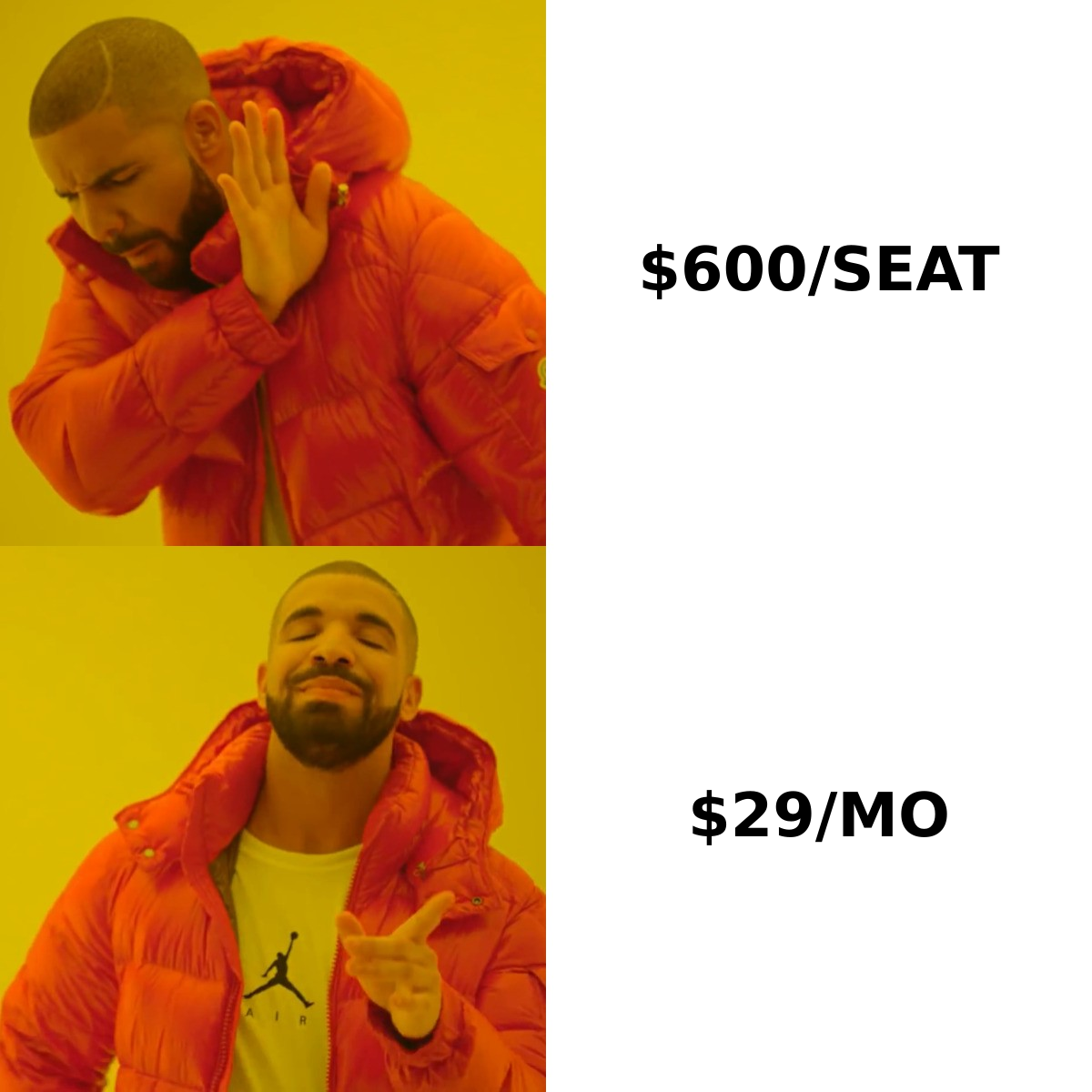
A useful rule of thumb: if your monthly tooling budget is smaller than one Amplemarket seat, Ditlead (plus a separate data source) is almost certainly your starting point.
Here's how the preference typically shakes out for budget-conscious operators:
Which tool has better deliverability and email sending?#
Ditlead is built around deliverability mechanics; Amplemarket treats them as one feature among many.
Cold-email success lives and dies on whether your messages land in the inbox, not spam. Both platforms include the modern table-stakes: inbox rotation (spreading sends across multiple connected accounts), warmup (automated engagement to build sender reputation), and message-randomization tricks like spintax.
Ditlead's differentiator is that it lets you connect an effectively unlimited number of sending accounts and rotate across all of them automatically. For agencies and high-volume senders, that's the whole game — you spread risk, keep per-inbox volume low, and protect domains. The warmup pool is included rather than billed as an add-on.
Amplemarket also handles deliverability well and adds inbox-health monitoring, but its sending model is tuned for sales teams sending considered, personalized sequences rather than agencies blasting thousands of cold touches across dozens of domains.
Whatever you pick, deliverability starts before the send: clean your list. A bounce rate above a few percent will tank your reputation no matter how good the rotation is. Run every address through an email verifier and screen risky domains with a catch-all verifier before the first email goes out. You can also pressure-test your setup with a free SPF checker and spam checker.
What about data quality and lead sourcing?#
This is where the two tools diverge most — and where many buyers misjudge the comparison.
Amplemarket ships with a native B2B database and intent data. You search, filter, and pull contacts directly inside the platform, then drop them into sequences. That's a genuine advantage if you have no other data source, because it collapses two purchases into one.
Ditlead, by design, does not include a contact database. It assumes you arrive with leads — exported from LinkedIn, scraped, purchased, or sourced from a dedicated finder. That's not a weakness so much as a different philosophy: keep the sending engine cheap and let you choose your own best-in-class data.
This matters because bundled data is not always the best data. Native databases inside all-in-one platforms are often broad but stale, and accuracy varies wildly by region and seniority. Many teams running Amplemarket still supplement with a specialist finder for hard-to-reach contacts. And teams on Ditlead need a finder by definition.
That's the gap a focused tool fills. A dedicated domain search pulls every reachable address at a target company, while a name-plus-domain email finder resolves specific people. For founder and exec outreach where direct lines matter, a phone finder adds a second channel. The point: your data layer is a decision you can — and often should — make independently of your sending tool.
Which should you choose in 2026?#
Match the tool to your constraint, not the feature list.
Choose Amplemarket if:
- You're a funded mid-market or enterprise team that values consolidation.
- You lack a data source and want contacts + intent + sequencing in one contract.
- AI-assisted personalization and reply triage will materially change rep productivity.
- Annual, sales-led procurement is acceptable to your finance team.
Choose Ditlead if:
- You're cost-sensitive — founder, agency, or SMB.
- You already source data elsewhere and need an affordable, high-volume sender.
- Unlimited inbox rotation and included warmup are central to your motion.
- You want self-serve setup and monthly flexibility.
A third path many teams land on: Ditlead for sending + a specialist data stack. You get cheap, deliverability-first outreach and pick your own contact data, often at a fraction of an all-in-one's total cost. If you want to compare against other engagement tools first, the Amplemarket alternative and Saleshandy alternative breakdowns are good next reads, and you can browse current Tomba pricing to budget your data layer.
For reference on how analysts categorize the broader sales-engagement space, Gartner's peer-review listings are a neutral starting point.
How do you make either platform perform better?#
Tooling is half the battle. The other half is the inputs you feed it. Three habits separate teams that book meetings from teams that burn domains:
- Verify before you send. A clean list keeps bounce rates low and protects sender reputation. Bulk-clean lists with a bulk email finder and verifier workflow before importing into either platform.
- Personalize at the segment level. Both tools offer AI assistance, but generic AI copy still reads as spam. Tighten subject lines with a subject line tester and keep messages short.
- Enrich incomplete records. Half-built rows kill personalization. Run data enrichment to fill in titles, companies, and social profiles before your first touch.
Do these three things and a $29/month Ditlead stack can out-perform a poorly-fed enterprise suite — because deliverability and relevance beat raw feature count every time.
The bottom line#
Amplemarket and Ditlead aren't really competing for the same buyer. Amplemarket is the consolidated, AI-heavy, enterprise choice for teams that want data, intent, and sequencing under one roof and can fund it. Ditlead is the lean, deliverability-first, budget-friendly engine for founders, agencies, and SMBs who bring their own data and want to send affordably at scale.
The decision usually comes down to one question: do you need the data layer bundled in, or do you want to source it yourself and keep sending costs low?
If it's the latter — and for most growing teams it is — your highest-leverage move is pairing a cheap sender with accurate, verified contact data. That's exactly what the Tomba Email Finder is built for: find professional email addresses by name, domain, or company, verify them, and export clean lists straight into Amplemarket, Ditlead, or whatever engine you choose. Start on the free tier (25 searches/month), then scale to Starter at $49/mo when your outbound takes off. Feed your sequences real inboxes, and let the sending tool do the rest.
// get started
Find, verify and enrich your first contacts today
Start on the free plan with 25 searches a month, then scale when your team is ready.
Free plan · No credit card required · GDPR & CCPA
// about the author