Top 7 Aspr Alternatives for Smarter B2B Prospecting (2026)
Aspr promises autonomous AI prospecting, but it isn't the only option. Compare 7 Aspr alternatives by data accuracy, pricing, and workflow fit before you commit.
TL;DR
- Aspr is an AI-driven prospecting and outreach tool, but its data layer, pricing transparency, and workflow lock-in push many teams to look for alternatives.
- The right replacement depends on what you actually need: raw contact data, verification, multichannel sequencing, or an all-in-one engine.
- For accurate, verified contact data at a transparent price, a dedicated email finder like Tomba is the most cost-effective swap.
- Apollo, Instantly, and Saleshandy cover sequencing; Tomba, Clearbit, and RocketReach win on data and enrichment.
- Use the decision framework below to match a tool to your team size, budget, and outbound motion instead of buying on hype.
What is Aspr and why look for alternatives?#
Aspr positions itself as an AI-first prospecting layer: it aims to find prospects, draft personalized outreach, and automate parts of the sales-development workflow that a human SDR would otherwise own. That pitch is attractive when you are short on headcount and long on target accounts.
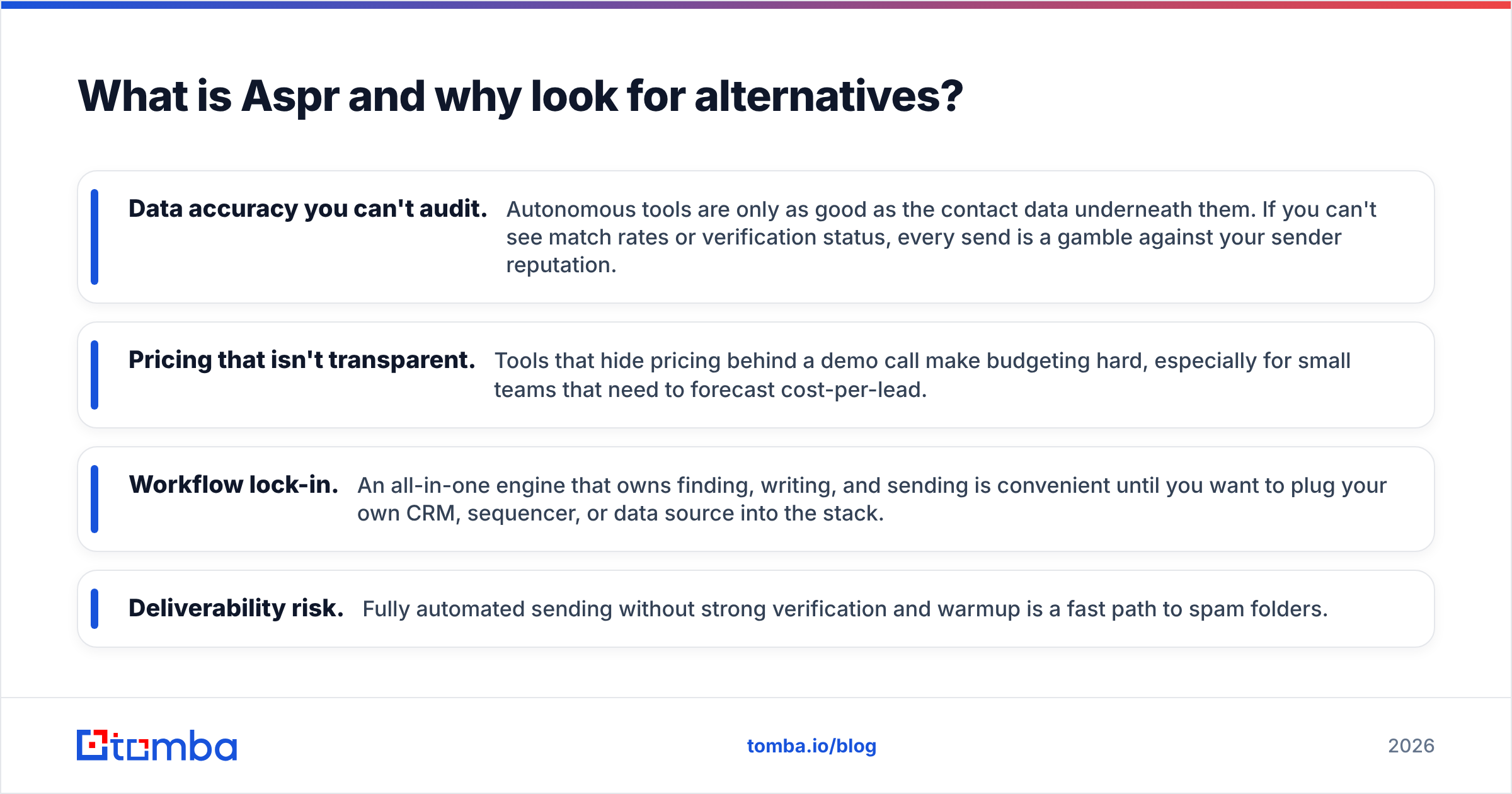
The reasons teams shop for Aspr alternatives are consistent across B2B sales orgs:
- Data accuracy you can't audit. Autonomous tools are only as good as the contact data underneath them. If you can't see match rates or verification status, every send is a gamble against your sender reputation.
- Pricing that isn't transparent. Tools that hide pricing behind a demo call make budgeting hard, especially for small teams that need to forecast cost-per-lead.
- Workflow lock-in. An all-in-one engine that owns finding, writing, and sending is convenient until you want to plug your own CRM, sequencer, or data source into the stack.
- Deliverability risk. Fully automated sending without strong verification and warmup is a fast path to spam folders.
The good news: the prospecting market is deep. You can rebuild the same outcome from focused, transparent tools and usually pay less. Let's break down how to choose.
How should you evaluate an Aspr alternative?#
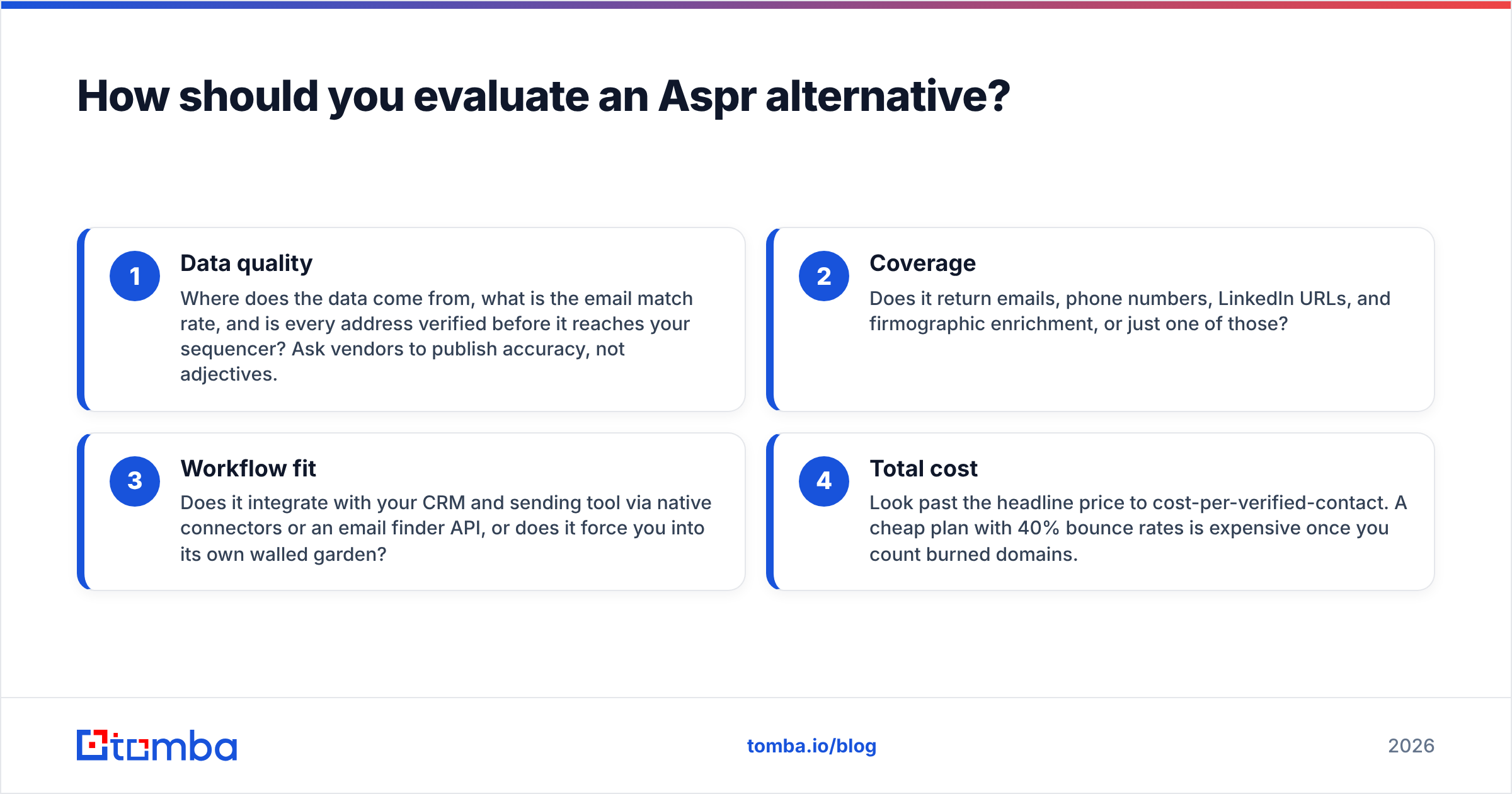
Before comparing logos, score each option against the four things that actually move outbound numbers. This is the framework we use with sales teams:
- Data quality — Where does the data come from, what is the email match rate, and is every address verified before it reaches your sequencer? Ask vendors to publish accuracy, not adjectives.
- Coverage — Does it return emails, phone numbers, LinkedIn URLs, and firmographic enrichment, or just one of those?
- Workflow fit — Does it integrate with your CRM and sending tool via native connectors or an email finder API, or does it force you into its own walled garden?
- Total cost — Look past the headline price to cost-per-verified-contact. A cheap plan with 40% bounce rates is expensive once you count burned domains.
A tool that finds 10,000 contacts is worthless if 30% bounce. Verification is not a nice-to-have — it is the difference between a healthy domain and a blacklisted one. That's why the most durable stacks separate finding from verifying and sending, even when one vendor does all three.
What are the best Aspr alternatives in 2026?#
Here are seven alternatives grouped by what they do best.
1. Tomba — best for accurate, verified contact data#
Tomba is a dedicated email-finding and enrichment platform. Instead of bundling autonomous sending, it focuses on the hardest part of outbound: getting correct, verified contact data into whatever stack you already run. You get an email verifier, domain search, catch-all detection, phone finder, and data enrichment alongside the core finder, plus an API, Chrome extension, and Google Sheets add-on. Pricing is public and starts free.
2. Apollo — best all-in-one for SMB sales teams#
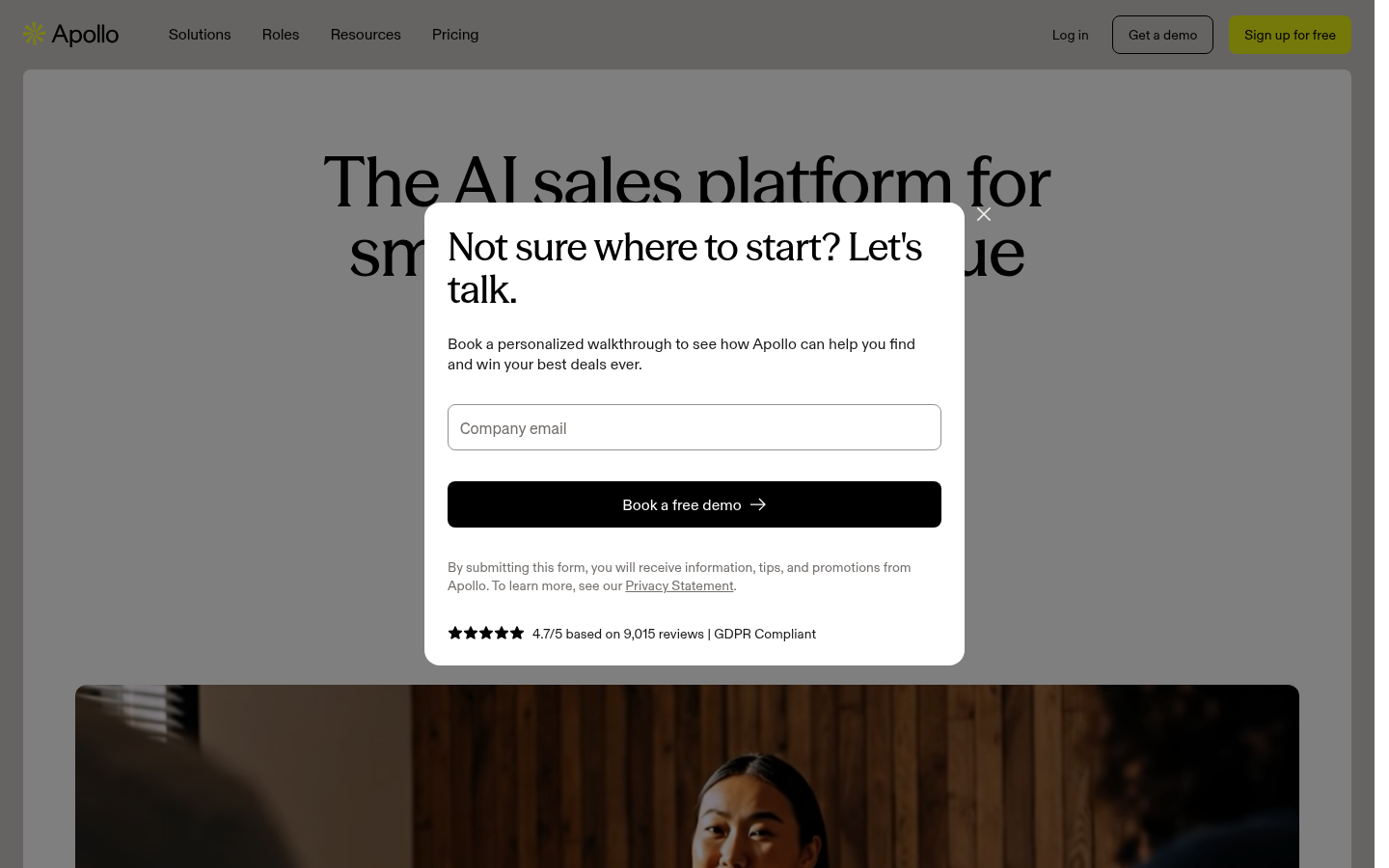
Apollo combines a large B2B database with sequencing and a built-in dialer. It's a reasonable Aspr replacement if you want database plus outreach in one seat, though data freshness and per-seat costs climb as you scale. See the Apollo alternative breakdown if data accuracy is your priority.
3. Instantly — best for high-volume cold email sending#
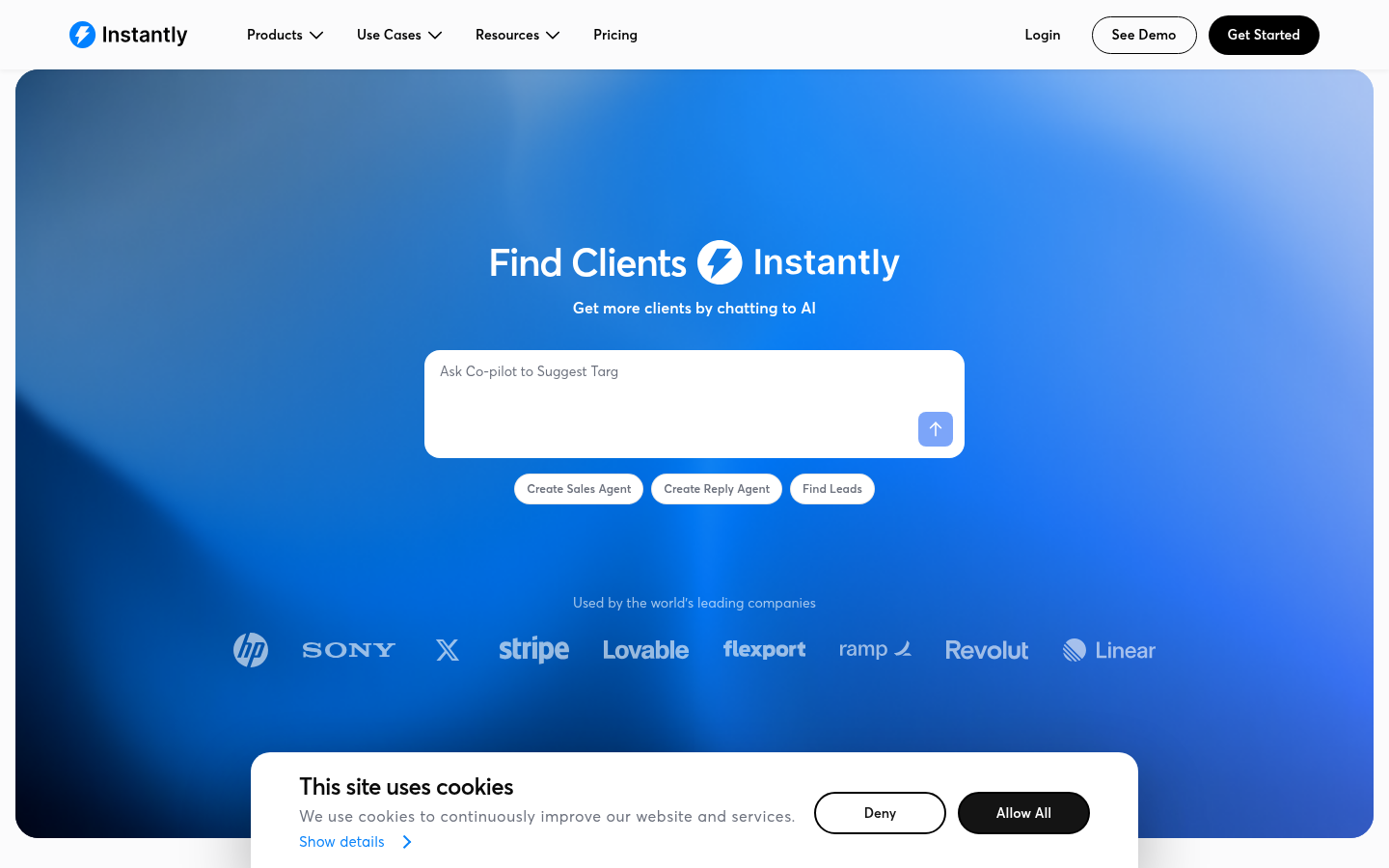
Instantly leans into deliverability with inbox rotation and warmup. Pair it with a dedicated finder, because its native data is thinner than purpose-built providers.
4. Saleshandy — best budget multichannel sequencer#
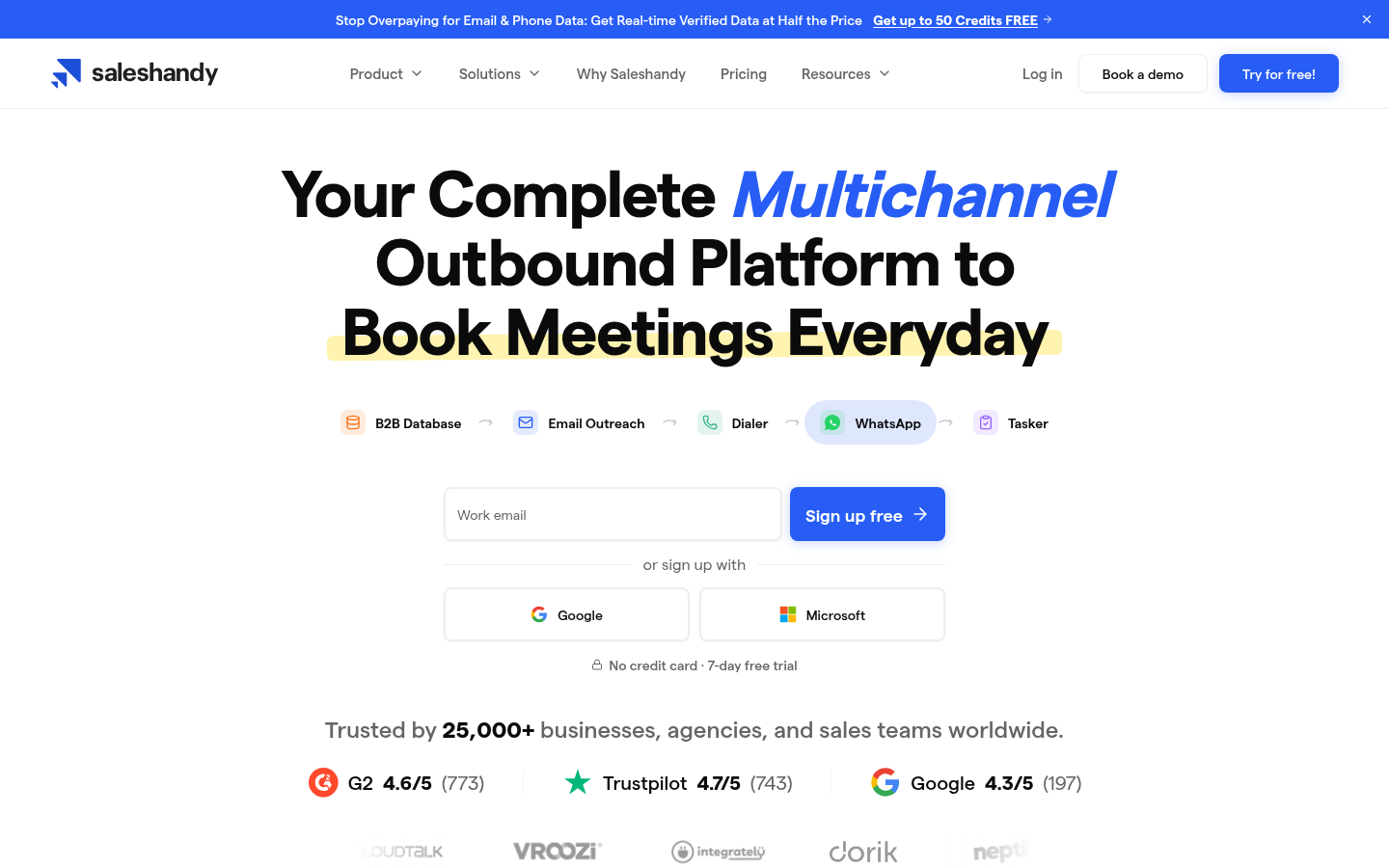
Saleshandy offers sequences, a lead finder, and unlimited email accounts on higher tiers. Good value for teams that want sending plus basic data without enterprise pricing.
5. RocketReach — best for individual-contact lookups#
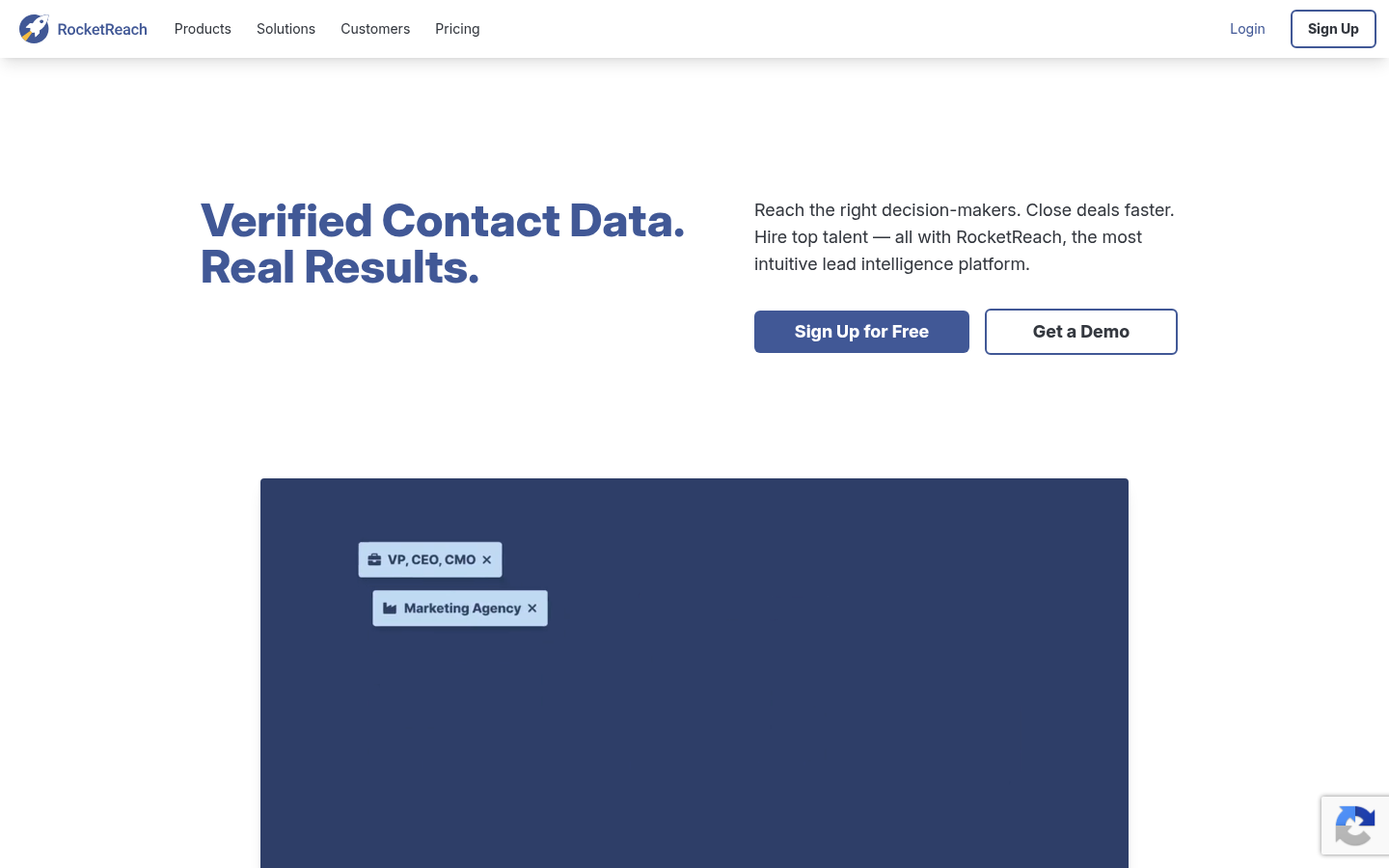
RocketReach shines for one-off prospect lookups across email and phone. It's less suited to bulk, programmatic workflows than an API-first provider.
6. Clearbit (Breeze Intelligence) — best for enterprise enrichment#
Now part of HubSpot, Clearbit excels at firmographic enrichment and real-time lead scoring inside the HubSpot ecosystem. Overkill — and over-priced — for a small SDR team.
7. Seamless.AI — best for real-time contact discovery#
Seamless.AI markets a real-time search engine for leads. Match rates vary by industry, so verify before you send.
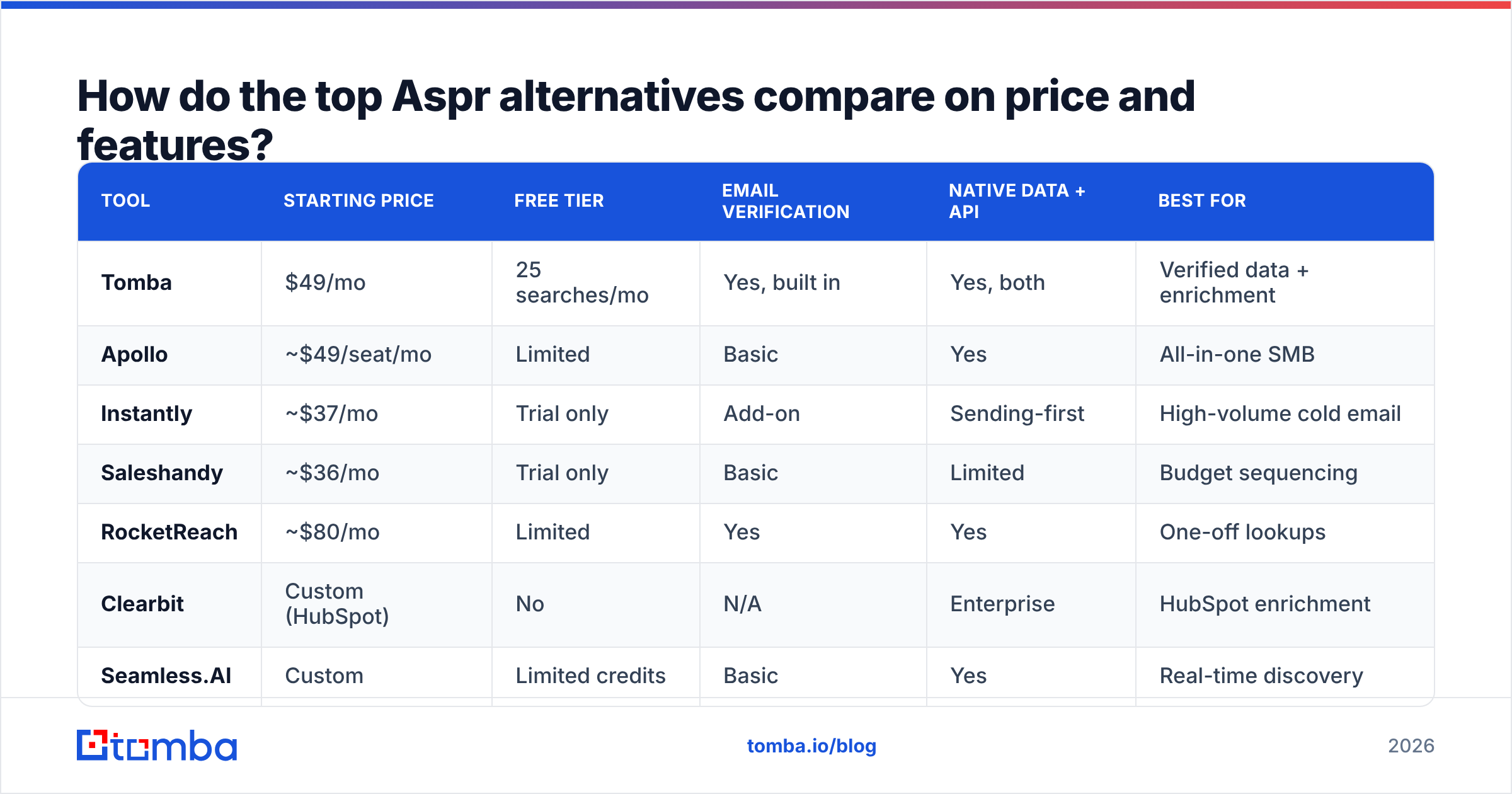
How do the top Aspr alternatives compare on price and features?#
| Tool | Starting price | Free tier | Email verification | Native data + API | Best for |
|---|---|---|---|---|---|
| Tomba | $49/mo | 25 searches/mo | Yes, built in | Yes, both | Verified data + enrichment |
| Apollo | ~$49/seat/mo | Limited | Basic | Yes | All-in-one SMB |
| Instantly | ~$37/mo | Trial only | Add-on | Sending-first | High-volume cold email |
| Saleshandy | ~$36/mo | Trial only | Basic | Limited | Budget sequencing |
| RocketReach | ~$80/mo | Limited | Yes | Yes | One-off lookups |
| Clearbit | Custom (HubSpot) | No | N/A | Enterprise | HubSpot enrichment |
| Seamless.AI | Custom | Limited credits | Basic | Yes | Real-time discovery |
Prices reflect publicly listed plans at the time of writing and shift often — always confirm on each vendor's site. The pattern that matters: tools with transparent, usage-based pricing (and a real free tier) let you prove ROI before you commit budget. You can review full Tomba pricing without a sales call, which is the opposite of the demo-gated approach Aspr and several enterprise tools take.

Is an all-in-one tool or a focused stack better?#
Conclusion first: for most teams under 50 reps, a focused stack beats a single autonomous engine — and it usually costs less.
Think of it like cooking. An all-in-one meal kit (Aspr's promise) is convenient, but you're stuck with their ingredients and their recipe. A focused stack lets you buy the best produce (verified data), the right pan (your sequencer), and your own seasoning (messaging) — and swap any part when something better ships.
The practical split most outbound teams land on:
- Data layer: a dedicated finder + verifier that feeds clean, deliverable contacts into everything else.
- Sending layer: a sequencer with warmup and inbox rotation tuned for email deliverability.
- Orchestration: your CRM as the source of truth, connected by native integrations or an API.
This separation is why so many "AI SDR" buyers eventually unbundle. The AI is fine; the data underneath it determines whether the AI helps or quietly torches your domain. When you own the data layer separately, you can verify before you send and keep bounce rates low no matter which sequencer is on top.
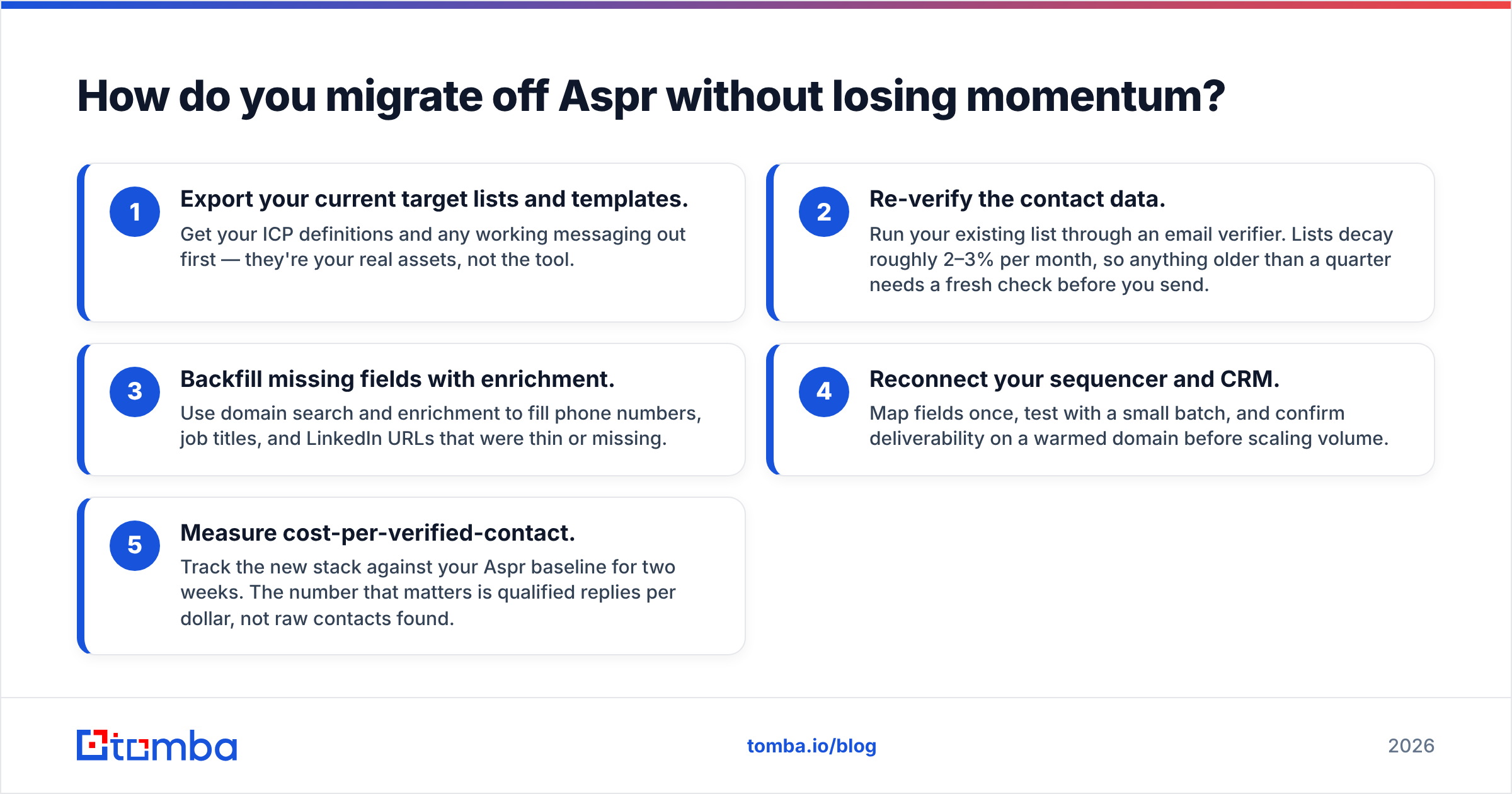
How do you migrate off Aspr without losing momentum?#
Switching tools mid-quarter scares most sales leaders, but a staged migration keeps pipeline flowing:
- Export your current target lists and templates. Get your ICP definitions and any working messaging out first — they're your real assets, not the tool.
- Re-verify the contact data. Run your existing list through an email verifier. Lists decay roughly 2–3% per month, so anything older than a quarter needs a fresh check before you send.
- Backfill missing fields with enrichment. Use domain search and enrichment to fill phone numbers, job titles, and LinkedIn URLs that were thin or missing.
- Reconnect your sequencer and CRM. Map fields once, test with a small batch, and confirm deliverability on a warmed domain before scaling volume.
- Measure cost-per-verified-contact. Track the new stack against your Aspr baseline for two weeks. The number that matters is qualified replies per dollar, not raw contacts found.
Done this way, you rarely lose more than a few days of sending — and you typically gain visibility into accuracy you never had inside a closed autonomous tool.
What about data accuracy and deliverability specifically?#
This is where alternatives separate themselves. Autonomous tools often optimize for speed of send over quality of contact. That's backwards. A single campaign to a stale list can spike your bounce rate, tank your sender reputation, and route future sends to spam — even to valid recipients.
A defensible workflow looks like this:
- Find contacts from multiple corroborating sources, not a single scrape.
- Verify every address (including catch-all detection) before it enters a sequence.
- Suppress role-based and risky addresses automatically.
- Keep bounce rates under 2–3% to protect deliverability.
If a tool can't tell you its verification method, treat its match-rate claims as marketing. Independent reviews on G2 and Capterra are useful here — sort by recent reviews and look specifically for comments about bounce rates and data freshness rather than overall star counts. For enrichment-heavy stacks, HubSpot's own ecosystem docs on data quality are a good reference for how enrichment should behave inside a CRM.
Which Aspr alternative is right for you?#
- You want clean, verified data feeding your existing stack: Tomba. Transparent pricing, real free tier, finder + verifier + enrichment + API in one place.
- You want database plus sending in a single SMB seat: Apollo.
- You send high volume and live or die by deliverability: Instantly for sending, paired with a dedicated finder.
- You're budget-constrained and want multichannel sequencing: Saleshandy.
- You enrich inside HubSpot at enterprise scale: Clearbit.
There's no universal winner — there's a best fit for your motion, team size, and budget. Score each option against the four-part framework above, run a small paid test, and let cost-per-verified-contact decide.
Get started with verified prospecting data#
If your real problem with Aspr is the data underneath the automation, fix the data first. The Tomba Email Finder gives you accurate, verified professional emails by name, domain, or company — with built-in verification, enrichment, and an API to feed whatever sequencer and CRM you already run. Start on the free tier (25 searches a month, no card), confirm the match rates against your own list, and scale to a paid plan only once the numbers prove out. That's how you replace Aspr without betting your domain on a black box.
Ready to find emails that actually work?
Join 150,000+ professionals who stopped guessing and started sending. Free credits on signup — no credit card required.
Get the Tomba newsletter
Practical outbound tactics and product updates — once every two weeks.
About the author