B2B Email Subject Line Best Practices: 2026 Field Guide
Open rates live and die in the inbox preview. Here are the B2B email subject line best practices that actually move replies in 2026 — with tests, formulas, and a swipe table.
TL;DR
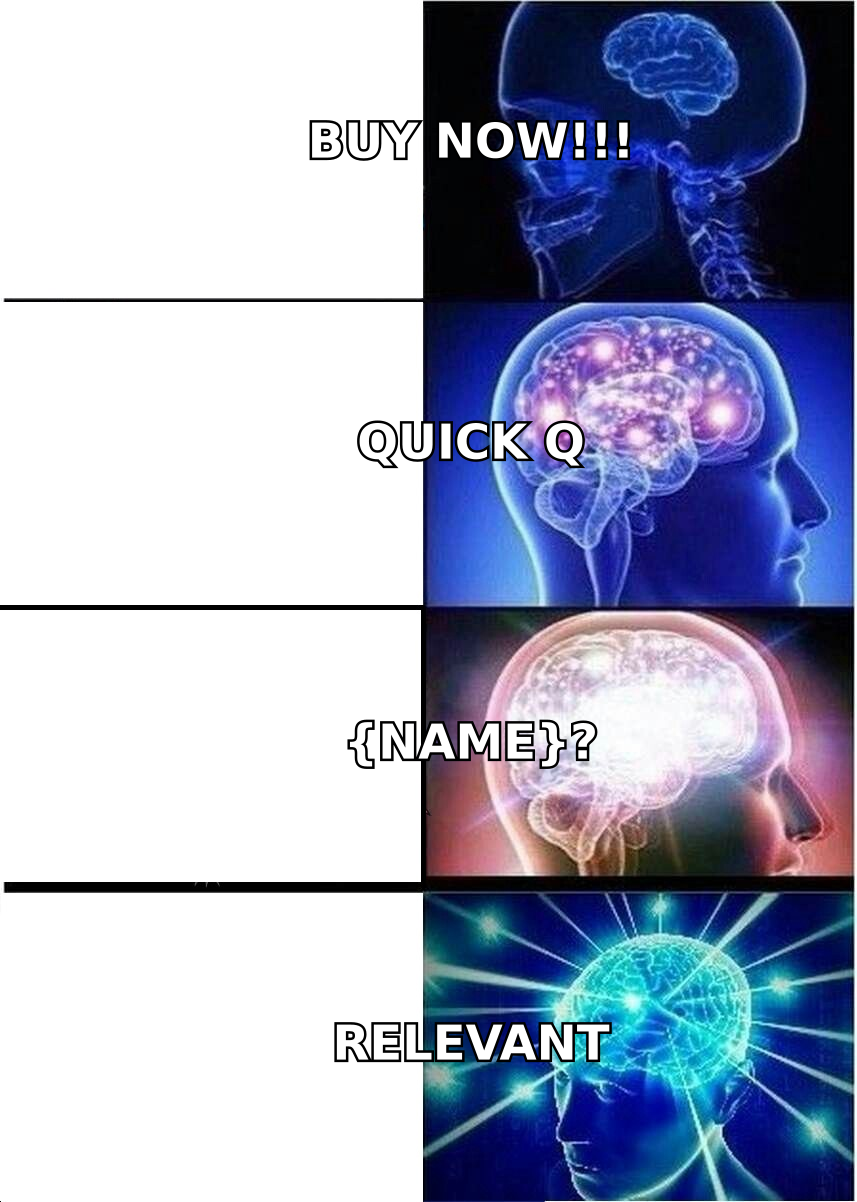
- The best B2B subject lines are short (3–7 words), specific, and written for one person — not a segment.
- Personalization beyond
{{first_name}}(role, trigger event, company milestone) lifts replies more than any clever wordplay. - Avoid spam triggers, ALL CAPS, and fake
Re:prefixes — they tank deliverability and trust at the same time. - A/B test one variable at a time, and judge winners on replies and meetings, not just opens (Apple Mail Privacy Protection has made open rate noisy since 2021).
- A great subject line on a bad list still fails. Clean, verified contact data is the multiplier underneath every tactic here.
Why do B2B email subject lines matter more than the body?#
Your subject line is the only part of your email that competes before it's read. A busy VP of Sales gets 100+ messages a day; the subject and preview text are the entire pitch for two seconds of attention. If that line doesn't earn the click, the body copy you agonized over never loads.
Here's the part most guides skip: subject lines don't just drive opens, they shape reputation. Mailbox providers watch how recipients react. Open, reply, and "move to primary" are positive signals; delete-without-open and "mark as spam" are negative ones. Write baity, misleading subject lines and you train Gmail to bury you — even for the prospects who would have converted. Good subject-line hygiene is part of email deliverability, not separate from it.
So the goal isn't "highest open rate." It's the highest rate of the right people opening, replying, and not flagging you. That reframes every tactic below.
What makes a great B2B subject line in 2026?#
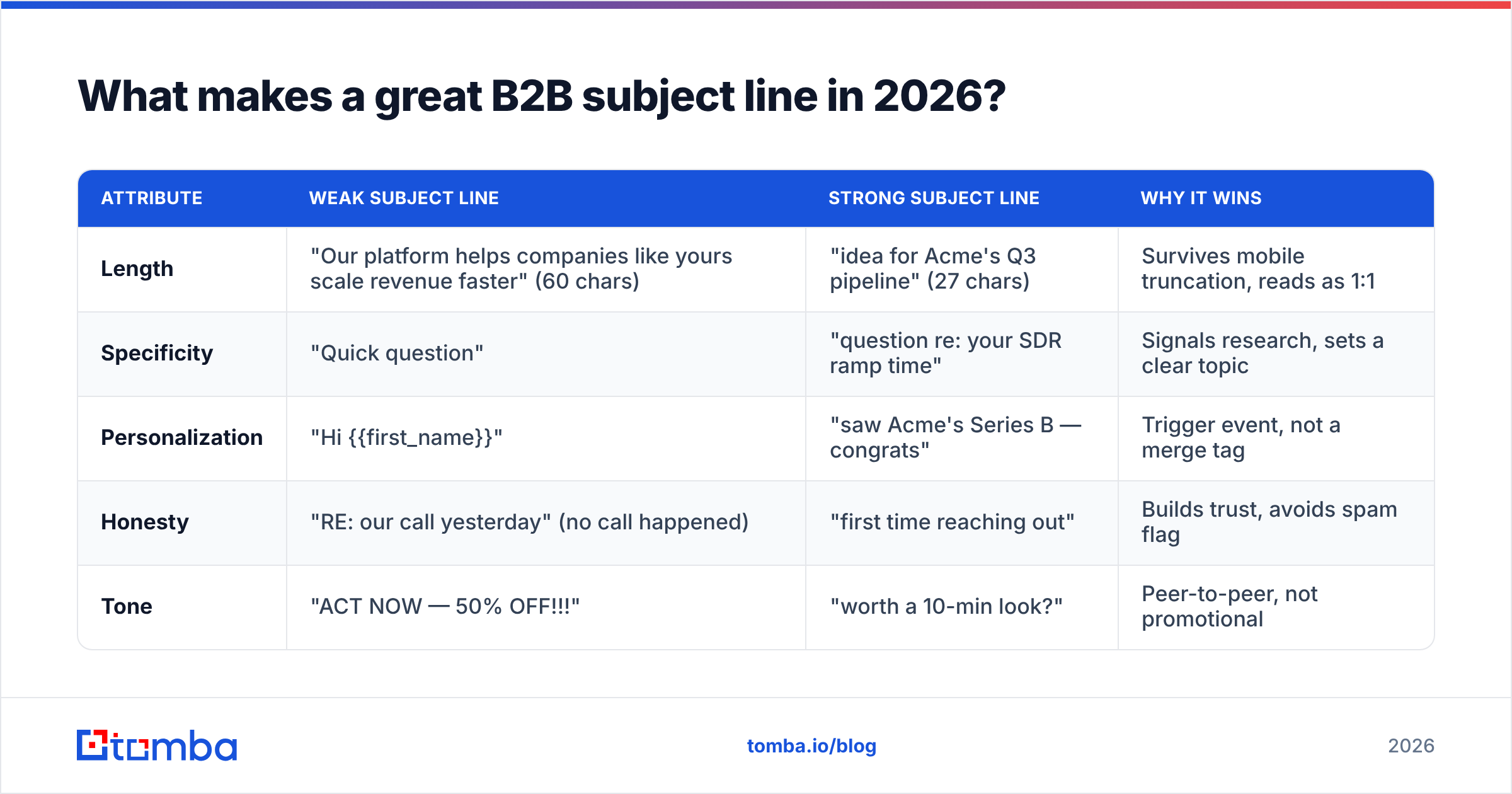
Strong B2B subject lines share five traits. Think of them like a checklist a bouncer runs at the door — fail one and you're stuck outside the inbox.
- Specific over clever. "Question about your Q3 onboarding flow" beats "A game-changing idea 🚀". Specificity signals you did homework; cleverness signals a campaign.
- Short enough to survive mobile. Roughly 60% of B2B email is opened on phones, where most clients show only 30–40 characters. Front-load the words that matter.
- Relevant to a trigger. New funding, a job change, a product launch, a LinkedIn post — a reason this email arrives today lifts response more than any adjective.
- Honest about intent. The body must deliver what the subject promised. Bait-and-switch is the fastest way to earn a spam complaint.
- Written for one human. If a subject line could be sent to 10,000 people unchanged, it reads like it was. Narrow it.
Use this quick scoring frame before you hit send:
| Attribute | Weak subject line | Strong subject line | Why it wins |
|---|---|---|---|
| Length | "Our platform helps companies like yours scale revenue faster" (60 chars) | "idea for Acme's Q3 pipeline" (27 chars) | Survives mobile truncation, reads as 1:1 |
| Specificity | "Quick question" | "question re: your SDR ramp time" | Signals research, sets a clear topic |
| Personalization | "Hi {{first_name}}" | "saw Acme's Series B — congrats" | Trigger event, not a merge tag |
| Honesty | "RE: our call yesterday" (no call happened) | "first time reaching out" | Builds trust, avoids spam flag |
| Tone | "ACT NOW — 50% OFF!!!" | "worth a 10-min look?" | Peer-to-peer, not promotional |
The pattern is consistent: lowercase, conversational, narrow, and true. The best cold subject lines look like the ones your prospect already gets from colleagues.
What are the best B2B subject line formulas?#
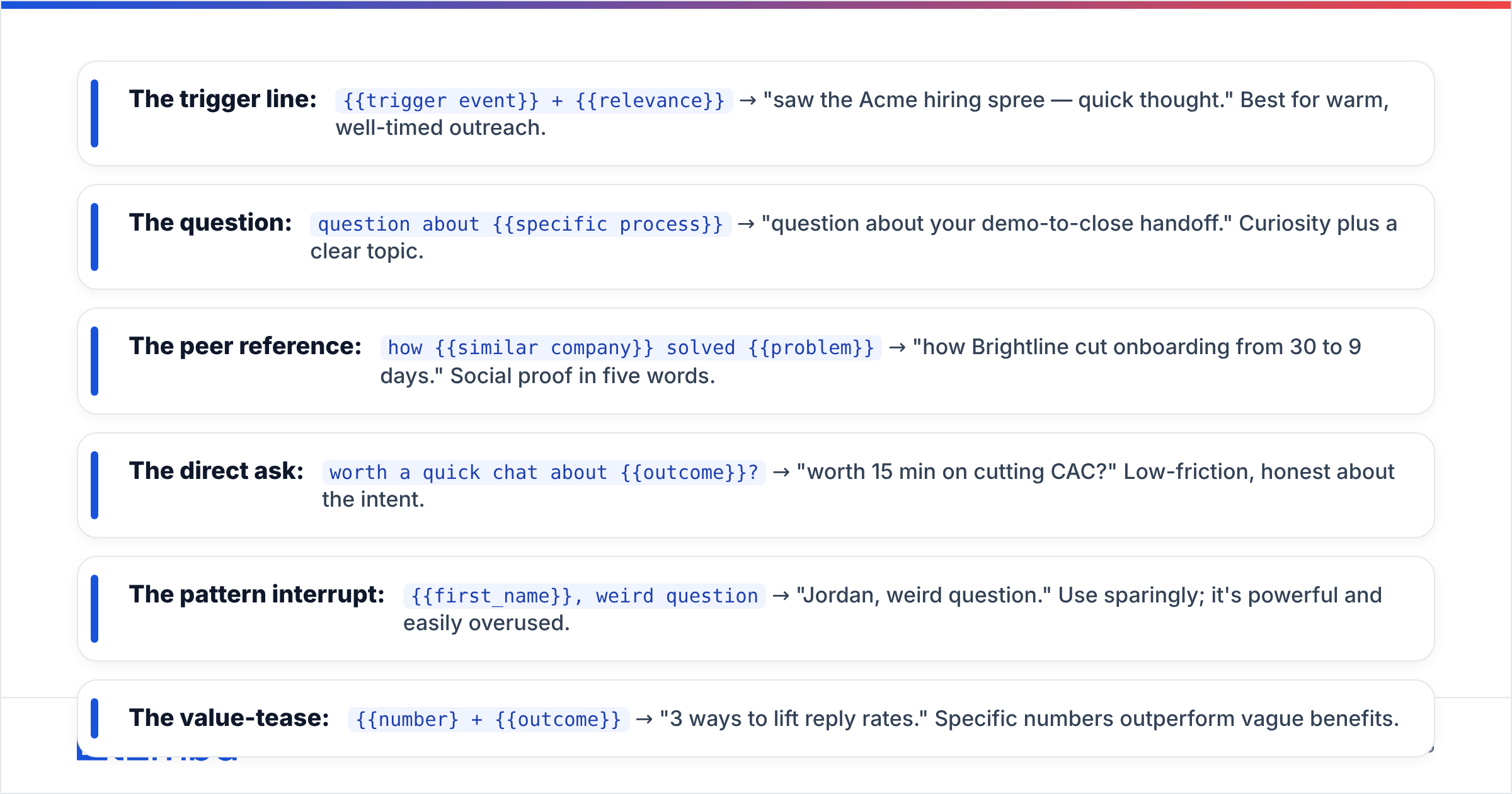
You don't need to invent a new line for every send. You need a few reliable formulas you can personalize fast. Here are the ones that hold up across industries.
- The trigger line:
{{trigger event}} + {{relevance}}→ "saw the Acme hiring spree — quick thought." Best for warm, well-timed outreach. - The question:
question about {{specific process}}→ "question about your demo-to-close handoff." Curiosity plus a clear topic. - The peer reference:
how {{similar company}} solved {{problem}}→ "how Brightline cut onboarding from 30 to 9 days." Social proof in five words. - The direct ask:
worth a quick chat about {{outcome}}?→ "worth 15 min on cutting CAC?" Low-friction, honest about the intent. - The pattern interrupt:
{{first_name}}, weird question→ "Jordan, weird question." Use sparingly; it's powerful and easily overused. - The value-tease:
{{number} + {{outcome}}→ "3 ways to lift reply rates." Specific numbers outperform vague benefits.
A note on emojis and ALL CAPS: in B2B, both usually hurt. Emojis can help in B2C lifecycle email, but in a cold sales context they read as marketing, and marketing gets deleted. Capitalize like a normal sentence. Save the exclamation points — one per email, maximum, and ideally zero in the subject.
For follow-ups, resist the urge to fake a thread. A short, fresh line like "circling back on the SDR question" or "still relevant?" performs better than a misleading "Re:" that wasn't a reply. If you want pre-built starting points, our cold email templates and subject line generator give you formulas you can adapt instead of starting from a blank box.
How long should a B2B subject line be?#
Short wins, but "short" has a reason behind it. The constraint is the preview pane, not a magic number.
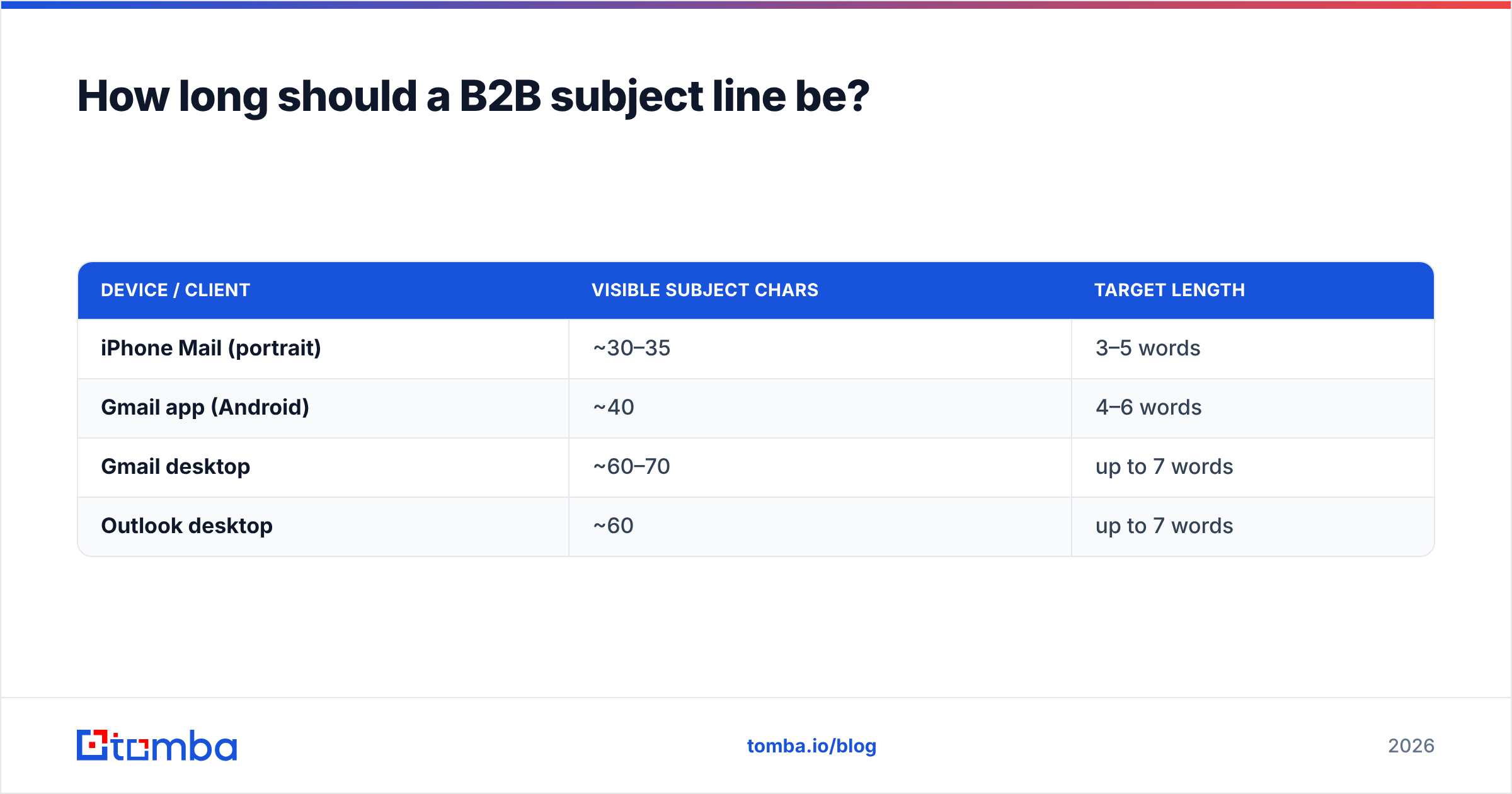
Most desktop clients show 60 characters of subject; mobile clients show far less. A 2026-relevant rule of thumb:
| Device / client | Visible subject chars | Target length |
|---|---|---|
| iPhone Mail (portrait) | ~30–35 | 3–5 words |
| Gmail app (Android) | ~40 | 4–6 words |
| Gmail desktop | ~60–70 | up to 7 words |
| Outlook desktop | ~60 | up to 7 words |
Aim for 3–7 words and under 50 characters as your default. That range survives every client above and forces you to cut filler. When you need more context, put it in the preview text (the snippet after the subject) — it's prime real estate that most senders waste with "View in browser" or an unsubscribe line.
One more length lever: the "from" name. A recognizable sender — a real person at a real company — does more for opens than any subject tweak. Subject line optimization on an unknown, unverified sender is polishing a locked door.
How do you A/B test subject lines without fooling yourself?#
Test one variable at a time, measure replies — not just opens — and give the test enough volume to mean something.
Since Apple's Mail Privacy Protection (rolled out in 2021 and now the default for a large share of opens), open rate is inflated and unreliable. Apple pre-fetches images, which fires your open pixel whether or not a human looked. That doesn't make opens useless, but it means you should treat them as directional and let reply rate and meetings booked decide the winner.
A clean test looks like this:
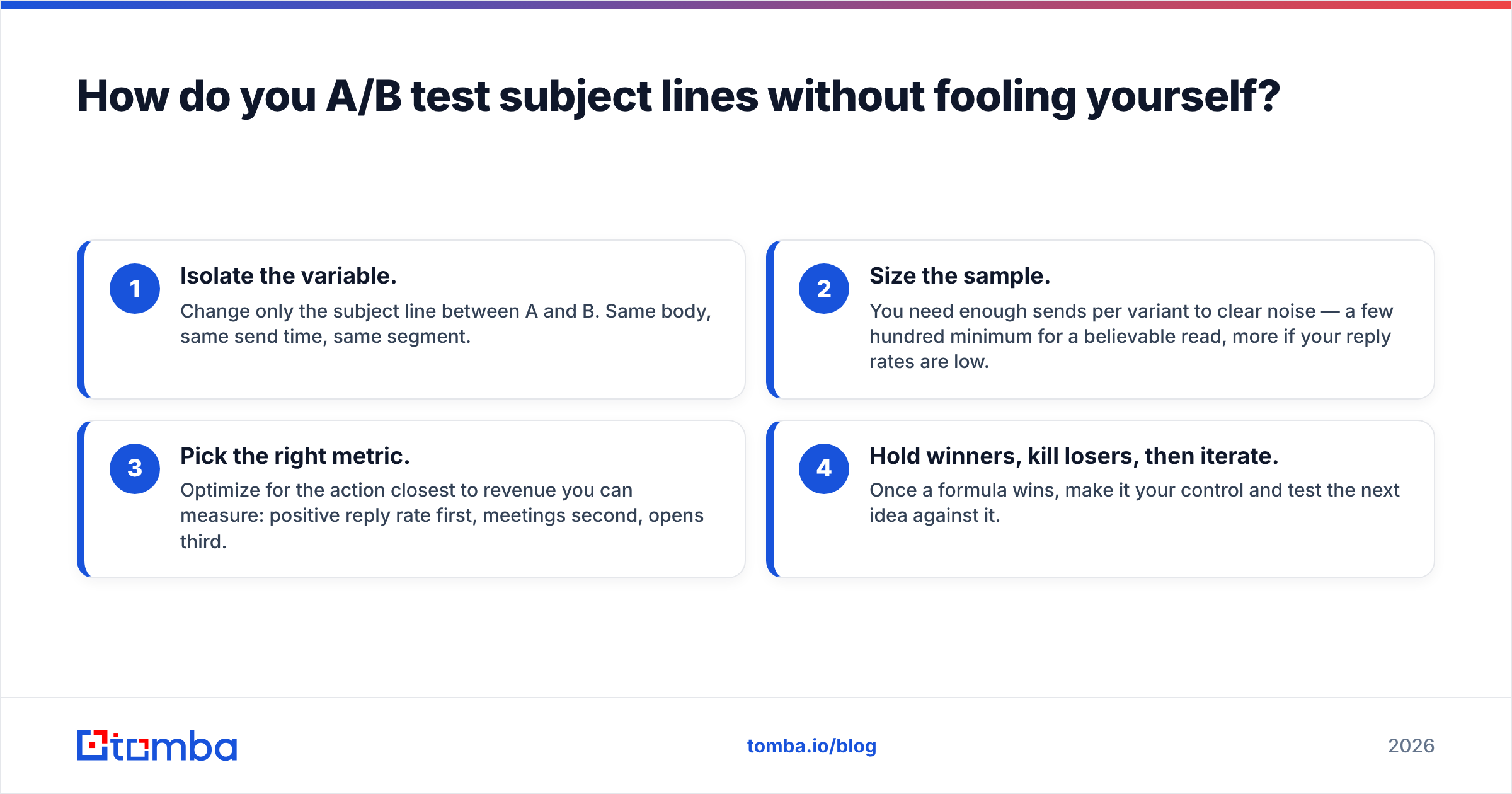
- Isolate the variable. Change only the subject line between A and B. Same body, same send time, same segment.
- Size the sample. You need enough sends per variant to clear noise — a few hundred minimum for a believable read, more if your reply rates are low.
- Pick the right metric. Optimize for the action closest to revenue you can measure: positive reply rate first, meetings second, opens third.
- Hold winners, kill losers, then iterate. Once a formula wins, make it your control and test the next idea against it.
Track results in a simple log — even a spreadsheet works. Tools like HubSpot's email A/B testing or your sequencer's built-in split testing handle the mechanics, but the discipline (one variable, reply-based metric, adequate volume) is on you. For deeper benchmarks, Mailchimp's research on subject lines and send behavior is a useful neutral reference.
Which subject line mistakes kill deliverability?#
The fastest way to lose the inbox is to trip spam filters and human suspicion at once. These are the repeat offenders.
- Spam-trigger words and punctuation: "free," "guarantee," "act now," "$$$," and strings of exclamation points raise spam scores. Run drafts through a spam checker before a big send.
- ALL CAPS or fake urgency: "URGENT" and "LAST CHANCE" feel like a billboard, not a colleague. They depress replies and invite complaints.
- Misleading prefixes: Fake "Re:" or "Fwd:" prefixes get short-term opens and long-term spam flags. Not worth it.
- Over-personalization that breaks: A merge tag that renders "Hi {{first_name}}," because your data was missing screams "automated blast." A subject line is only as good as the field behind it.
- Sending to bad addresses: Every bounce hurts your sender reputation. High bounce rates push even perfect subject lines into spam folders.
That last point is the quiet killer. You can write the best line of your career, but if 20% of your list is invalid, mailbox providers throttle you before your subject line ever gets a vote. This is why list hygiene sits underneath subject-line strategy, not beside it.
Does your contact data change which subject lines work?#
Yes — completely. The best subject line is personalized to something true about the recipient, and that "something true" comes from your data.
Consider the difference:
- Generic data → "Hi there, quick question" (no name, no hook, no trigger).
- Verified, enriched data → "Jordan — saw you just joined Acme as VP Sales" (correct name, correct role, recent job change).
The second line is only possible because you know who the person is, what they do, and what recently changed. That's enrichment plus verification working together. With accurate role and company data you can write the trigger and peer-reference formulas above; without it you're stuck with generic openers that get ignored.
This is where your top-of-funnel tooling matters more than your copywriting. If you build lists with a reliable email finder and confirm addresses with an email verifier before sending, three things improve at once: your bounce rate drops, your sender reputation stays healthy, and your subject lines have real, specific hooks to personalize against. Add data enrichment for role, seniority, and company signals, and the trigger-based formulas stop being aspirational.
Put plainly: subject-line tactics are the last 10% of inbox performance. Verified, enriched contact data is the first 90%. Most teams get this backwards and wonder why their A/B tests barely move.
A swipe file: 12 B2B subject lines you can adapt today#
Use these as templates, not copy-paste. Replace the brackets with something true.
question about {{specific process}}{{first_name}}, quick thought on {{goal}}saw {{company}}'s {{recent news}}how {{peer company}} fixed {{problem}}worth 15 min on {{outcome}}?idea for {{company}}'s {{quarter}} pipeline{{number}} ways to {{result}}re: your {{topic}} (first time reaching out){{first_name}} — bad timing?quick {{department}} questionis {{outcome}} on your roadmap?before you {{action}}, one thought
Notice what they share: lowercase, short, specific, and honest. None of them shout. Each one needs a real fact in the brackets — which loops back to your data.
Frequently asked questions#
What is the ideal length for a B2B email subject line? Aim for 3–7 words and under 50 characters so it survives mobile truncation. Put extra context in the preview text instead of stretching the subject.
Do personalized subject lines actually work in B2B? Yes, but only when the personalization is real. A correct name plus a relevant trigger (job change, funding, product launch) lifts replies. A broken merge tag does the opposite, so verify your data first.
Should I use emojis in B2B subject lines? Usually no. In cold B2B outreach, emojis read as marketing and reduce trust. They're more acceptable in B2C lifecycle email. When in doubt, leave them out.
Why are my open rates high but replies low? Apple Mail Privacy Protection inflates open rates by pre-fetching images, so opens are noisy. Optimize for reply rate and meetings booked instead. If replies are low, the problem is targeting, offer, or list quality — not the subject line alone.
How many subject lines should I test? Test two at a time, changing only the subject line, with enough volume per variant (a few hundred sends minimum) to clear noise. Keep the winner as your control and test the next idea against it.
The bottom line: write less, target better#
The best B2B email subject line best practices for 2026 are unglamorous: keep it short, make it specific, personalize against something true, stay honest, and test on replies instead of opens. Clever wordplay is optional; relevance is not.
But the highest-leverage move isn't a better line — it's a better list. A precise subject line aimed at a verified, well-targeted prospect beats a brilliant line sprayed at a stale list every time. Start by building clean, accurate lists with the Tomba Email Finder: find professional email addresses by domain, name, or company, verify them before you send, and enrich each contact with the role and company signals that make your subject lines land. Compare the Tomba pricing tiers — there's a free plan to start — and give your next campaign subject lines worth opening.
// get started
Find, verify and enrich your first contacts today
Start on the free plan with 25 searches a month, then scale when your team is ready.
Free plan · No credit card required · GDPR & CCPA
// about the author