B2B Lead Generation for Small Business: 2026 Playbook
A practical 2026 guide to B2B lead generation for small business: channels that convert, a lean tool stack, and a repeatable weekly system you can run solo.
TL;DR
- B2B lead generation for small business works best when you pick two channels, not ten — usually targeted outbound email plus one inbound or referral motion.
- You do not need an enterprise stack. A verified contact source, a CRM, and a sending tool cover 90% of what a small team needs.
- Data quality beats data volume: a clean list of 200 verified, in-ICP contacts outperforms 5,000 scraped guesses.
- Budget reality: a functional stack runs $50–$300/month, far below the $1,000+ enterprise platforms quote.
- Consistency is the whole game. A simple weekly cadence of 50–100 verified contacts compounds faster than sporadic campaigns.
What is B2B lead generation for small business?#
B2B lead generation for small business is the process of finding companies that fit your ideal customer profile, identifying the right person inside each one, and turning that person into a conversation — without the headcount or budget a large sales org takes for granted.
Think of it like fishing with a spear instead of a net. Big companies can afford to cast a huge net (paid ads, SDR teams, six-figure data contracts) and accept a lot of waste. A small business cannot. You aim precisely, you waste almost nothing, and every contact you reach has to count.
That constraint is actually an advantage. When you can only afford to contact 100 people this week, you naturally do the work to make sure those 100 are the right people. The result is higher reply rates, better-fit customers, and a pipeline you can predict.
Why is lead generation harder for small teams?#
Three reasons, and naming them helps you plan around them.
- No dedicated headcount. The founder or a single rep is also doing demos, onboarding, and support. Time is the scarcest resource, so manual prospecting at scale is off the table.
- Tight budgets. A $1,250/month data platform with an annual contract is a non-starter when monthly revenue is still lumpy.
- Brand is unknown. Prospects don't recognize your name, so you can't rely on inbound demand the way an established player can. Your outbound has to earn the first reply on its own merits.
The takeaway: small businesses win on focus and accuracy, not volume. Every recommendation below flows from that.
Which lead generation channels actually work in 2026?#
You will see dozens of "23 channels" listicles. Ignore most of them. For a small B2B team, these five carry the load, and you should run at most two well.
- Targeted cold email — The highest-leverage channel for small teams. Low cost, fully controllable, and scales with verified data rather than ad spend. This is where a tool like the email finder earns its keep.
- LinkedIn outreach — Strong for relationship-led sales and high-ACV deals. Slower and more manual, but warm. Pairs well with email.
- Referrals and partnerships — The highest close rate of any channel. Underused because it isn't a "campaign" you can automate, but for small teams it's gold.
- Content + SEO inbound — Compounds over 6–12 months. Worth starting early even if it won't fill the pipeline this quarter.
- Niche communities and events — Slack groups, industry forums, local meetups. Low volume, high trust.
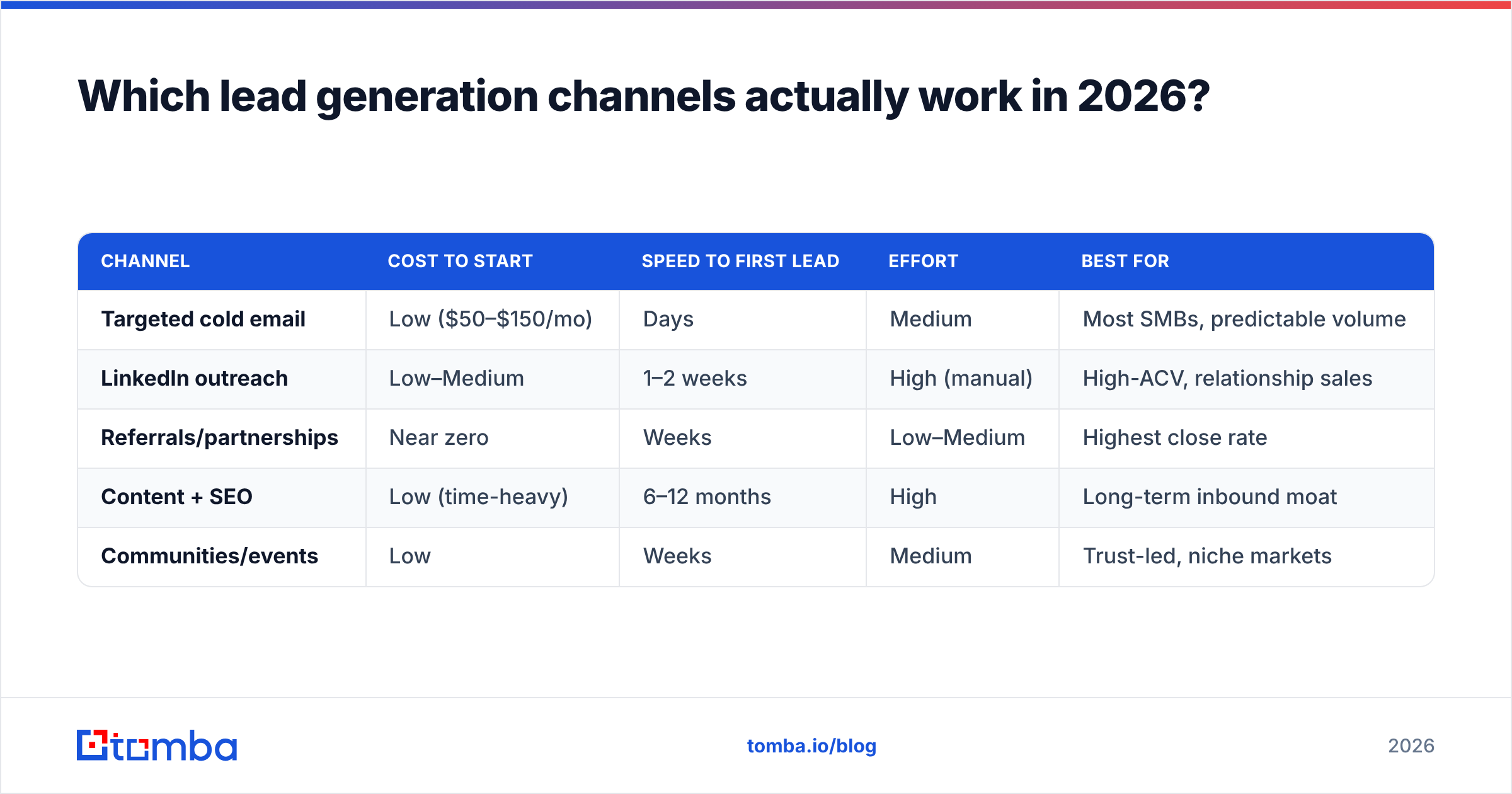
Here is how they stack up for a resource-constrained team:
| Channel | Cost to start | Speed to first lead | Effort | Best for |
|---|---|---|---|---|
| Targeted cold email | Low ($50–$150/mo) | Days | Medium | Most SMBs, predictable volume |
| LinkedIn outreach | Low–Medium | 1–2 weeks | High (manual) | High-ACV, relationship sales |
| Referrals/partnerships | Near zero | Weeks | Low–Medium | Highest close rate |
| Content + SEO | Low (time-heavy) | 6–12 months | High | Long-term inbound moat |
| Communities/events | Low | Weeks | Medium | Trust-led, niche markets |
If you're starting from zero, begin with targeted cold email for predictable near-term volume and seed referrals in parallel. Add content once the first two are producing.
What does a lean lead generation stack look like?#
You need exactly three layers: find, manage, send. Everything else is optional until you've proven the motion.
- Find & verify contacts — Where you get accurate, in-ICP email addresses and phone numbers. Accuracy here determines everything downstream.
- Manage the pipeline — A CRM (even a free tier) so leads don't fall through cracks. Don't run your pipeline from a spreadsheet past your first 50 leads.
- Send & follow up — An email sending tool with sequencing, or manual sends for very low volume.
A common mistake is over-buying layer 2 and 3 (fancy automation) while under-investing in layer 1 (data). Bad data poisons the whole funnel: every bounce hurts your sender reputation, and every wrong-person email burns a prospect you can't re-approach.
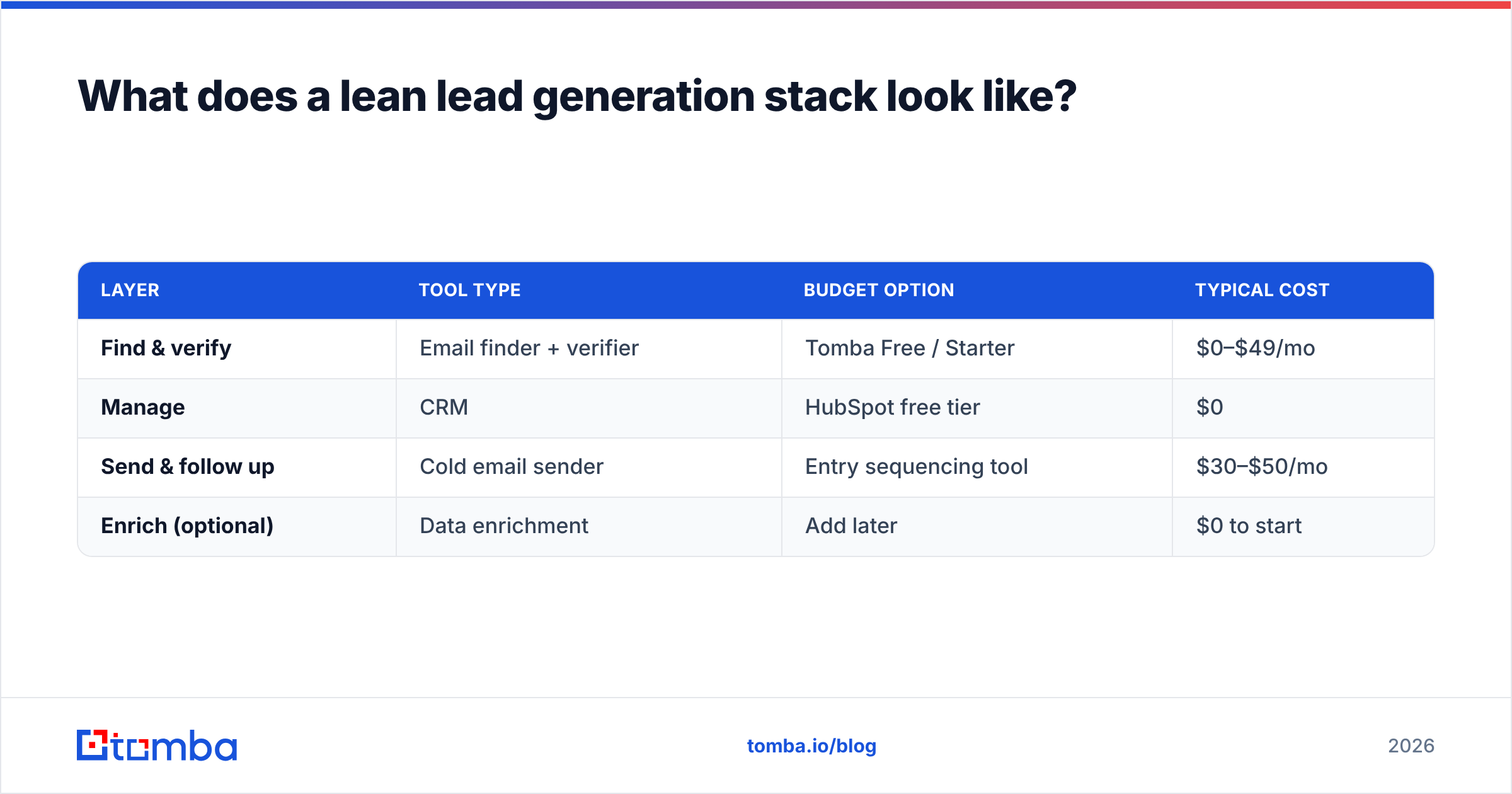
Here's a realistic small-business stack and what it costs:
| Layer | Tool type | Budget option | Typical cost |
|---|---|---|---|
| Find & verify | Email finder + verifier | Tomba Free / Starter | $0–$49/mo |
| Manage | CRM | HubSpot free tier | $0 |
| Send & follow up | Cold email sender | Entry sequencing tool | $30–$50/mo |
| Enrich (optional) | Data enrichment | Add later | $0 to start |
Total to start: under $100/month, and you can begin on free tiers. Compare that to enterprise suites — G2 lists many at $1,000+/month with annual commitments that make no sense for a five-person company.
How accurate does your contact data need to be?#
Accuracy is the single biggest lever, so it gets its own section. A 5% bounce rate is the rough ceiling before mailbox providers start throttling you; above that, your email deliverability collapses and even your good emails stop landing.
The math is unforgiving for small senders. If you send 100 emails and 20 bounce because the list was scraped and never verified, you've not only wasted 20 contacts — you've signaled to Gmail and Outlook that you're a low-quality sender, which suppresses the other 80. One bad list can hurt campaigns for weeks.
This is why the workflow is always find → verify → send, never find → send. Tools like the email verifier exist precisely to catch invalid and risky addresses before they ever cost you reputation. For domains that accept everything, a dedicated catch-all verifier gives you a confidence signal instead of a coin flip.
A clean, verified list of 200 contacts will beat a raw list of 2,000 every single time — better reply rates, healthier domain, and prospects you can actually convert.

Is buying lead lists a good idea?#
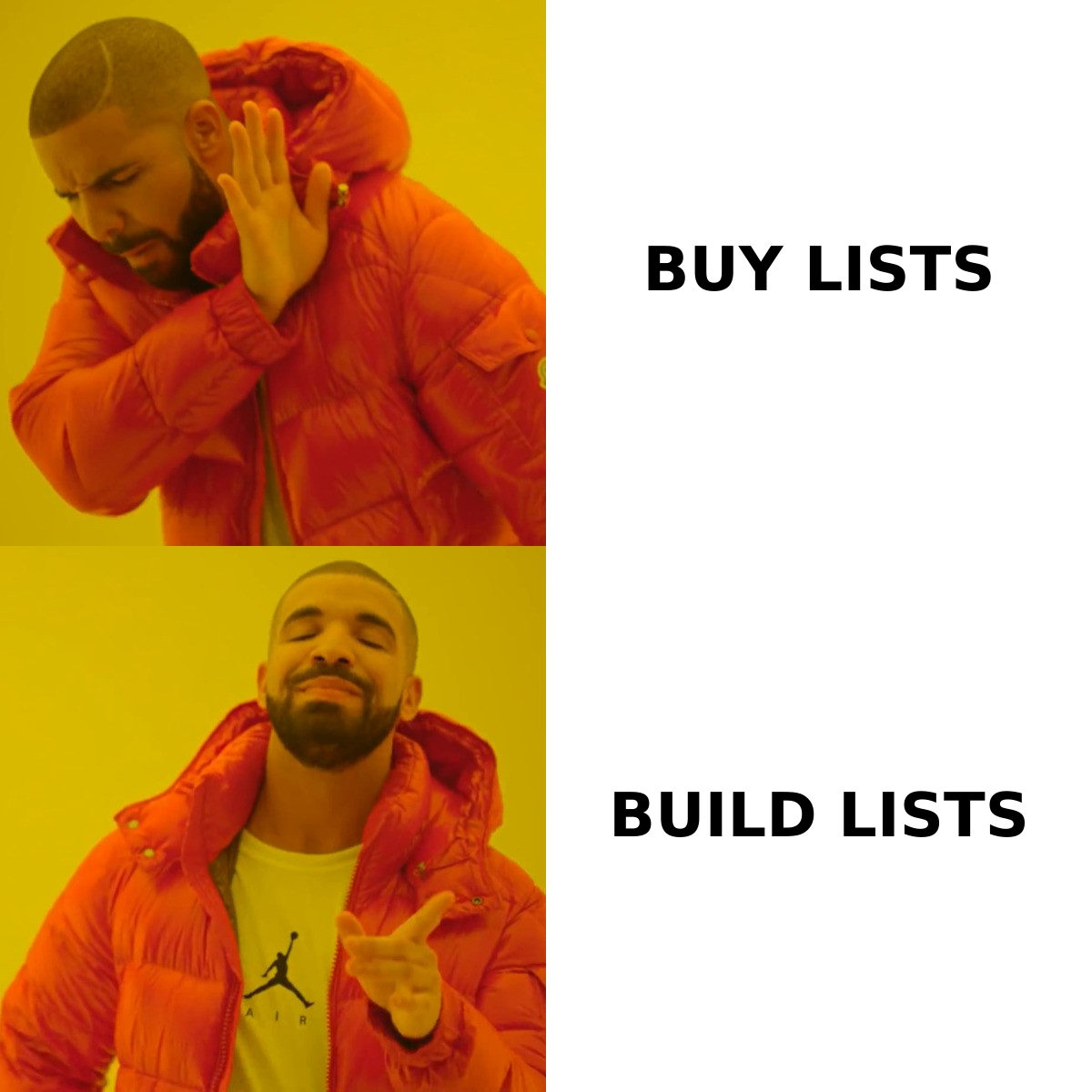
Short answer: almost never. Purchased lists are stale, non-exclusive (your competitors bought the same one), and frequently violate the recipient's expectations, which tanks both deliverability and trust.
Building your own list from your ICP is more work up front but pays compounding returns. The modern approach:
- Define your ICP precisely — industry, company size, role, geography.
- Build a target account list (even 100 accounts is enough to start).
- Use domain search to pull the right contacts at each company by role.
- Verify every address before it enters a sequence.
- Enrich with phone and LinkedIn data only for accounts worth a multi-touch effort.
You own this list, it matches your ICP, and it stays useful. A bought list is a depreciating asset; a built list is an appreciating one.
How do you measure if it's working?#
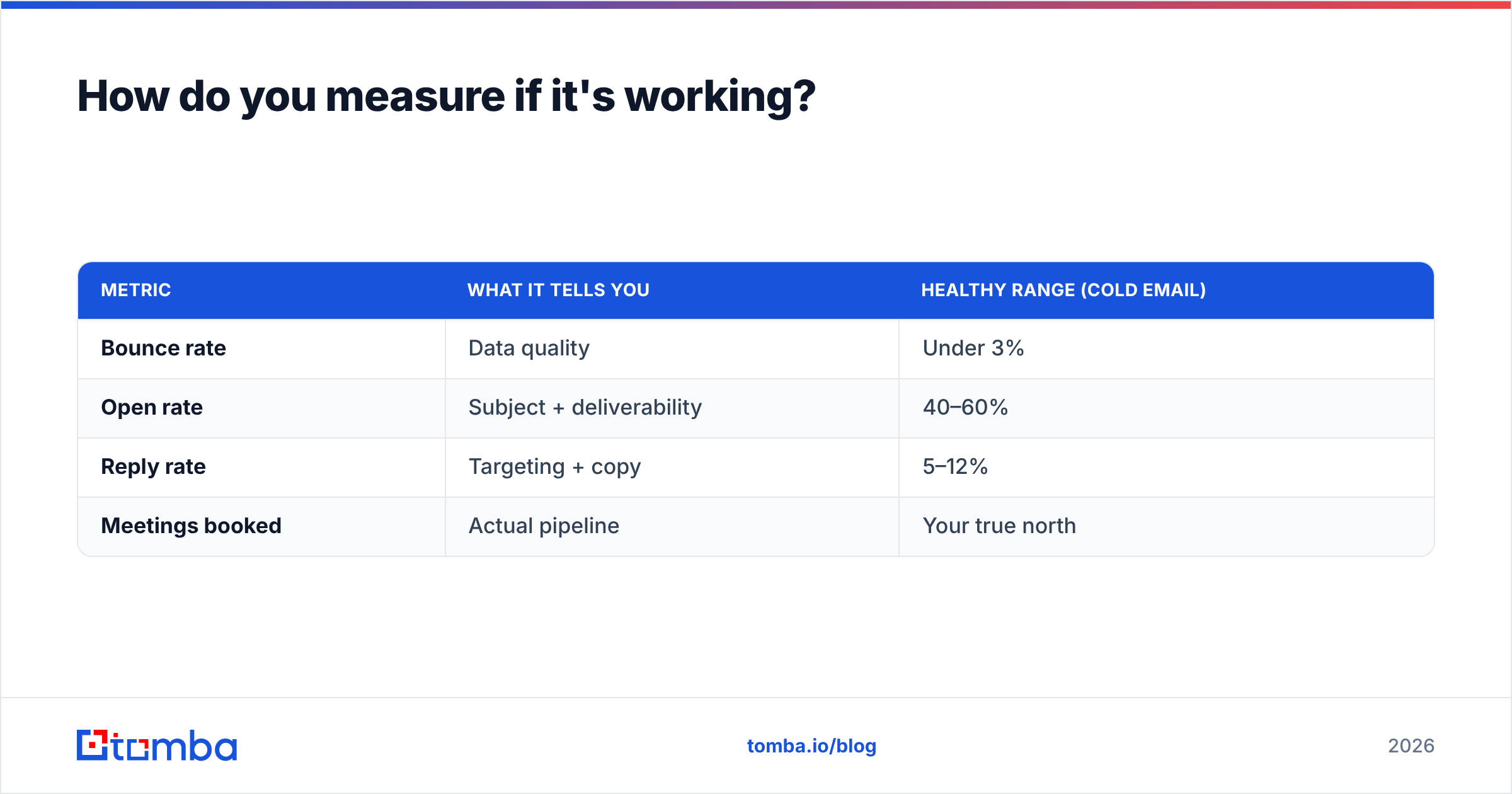
Track a tiny set of metrics. More dashboards do not equal more revenue, and small teams drown in vanity numbers. These four tell you everything:
| Metric | What it tells you | Healthy range (cold email) |
|---|---|---|
| Bounce rate | Data quality | Under 3% |
| Open rate | Subject + deliverability | 40–60% |
| Reply rate | Targeting + copy | 5–12% |
| Meetings booked | Actual pipeline | Your true north |
If bounce rate is high, fix your data before touching anything else — it's the root cause that distorts every metric below it. If opens are fine but replies are weak, your targeting or response rate copy needs work, not your list.
What's a repeatable weekly workflow?#
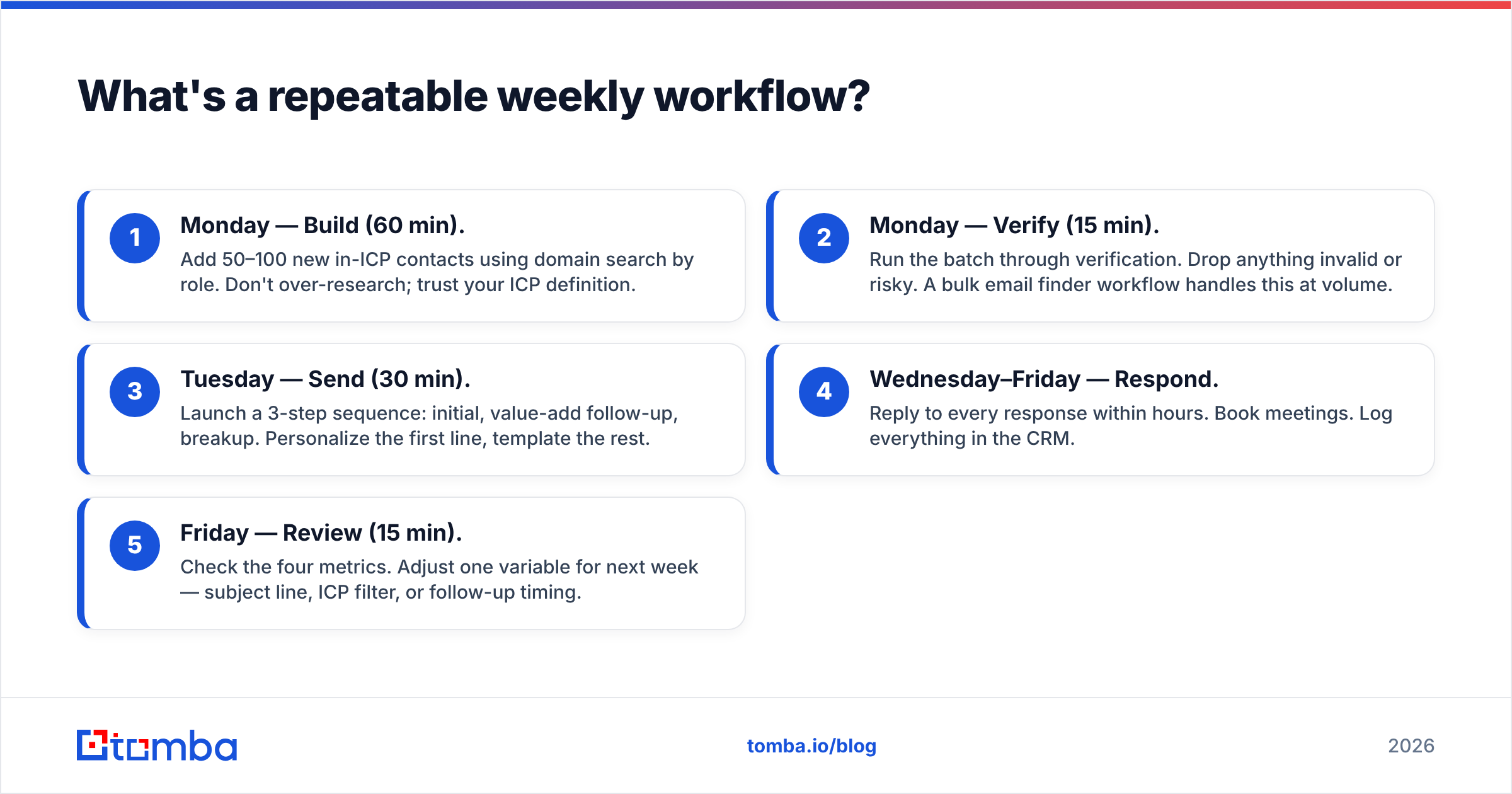
Consistency beats intensity. A solo founder who runs this loop every week will out-pipeline a team that does one big blast per quarter. Here's a system you can run in a few hours a week:
- Monday — Build (60 min). Add 50–100 new in-ICP contacts using domain search by role. Don't over-research; trust your ICP definition.
- Monday — Verify (15 min). Run the batch through verification. Drop anything invalid or risky. A bulk email finder workflow handles this at volume.
- Tuesday — Send (30 min). Launch a 3-step sequence: initial, value-add follow-up, breakup. Personalize the first line, template the rest.
- Wednesday–Friday — Respond. Reply to every response within hours. Book meetings. Log everything in the CRM.
- Friday — Review (15 min). Check the four metrics. Adjust one variable for next week — subject line, ICP filter, or follow-up timing.
Run this for eight weeks before judging it. Lead generation is a compounding habit, not a one-shot event. The teams that win aren't the ones with the cleverest tactics — they're the ones who show up every Monday.
Common mistakes that quietly kill small-business pipelines#
- Skipping verification to "save time" — then losing the domain to spam folders.
- Chasing volume over fit, producing busy reps and empty calendars.
- Buying lists and wondering why reply rates are near zero.
- Running five channels at 20% effort instead of two at full focus.
- No follow-up — most replies come on touch two or three, yet most small teams send once and quit.
Avoid these five and you're already ahead of most competitors in your space.
Get started without overspending#
You don't need a big budget or a sales team to build a steady B2B pipeline — you need accurate data and a habit. Start by defining your ICP, then use the Tomba Email Finder to build and verify your first list of 100 in-ICP contacts. The free tier gives you 25 searches to test the workflow, and when you're ready to scale, Tomba pricing starts at $49/month for Starter — a fraction of what enterprise platforms charge, with the email finder, verifier, and domain search all in one place.
Pick two channels, run the weekly loop, and let consistency do the compounding. That's how small businesses build pipelines that punch well above their size.
// get started
Find, verify and enrich your first contacts today
Start on the free plan with 25 searches a month, then scale when your team is ready.
Free plan · No credit card required · GDPR & CCPA
// about the author