B2B Lists vs Datanyze 2026: Which Data Source Wins?
Static B2B lists are cheap but decay fast. Datanyze sells live technographics. Here's an honest 2026 breakdown of which B2B data source actually fills your pipeline — and the third option both miss.
You have a quarterly number, an empty CRM, and two tabs open: one for a vendor selling a pre-built B2B contact list, the other for Datanyze. Both promise to fill your pipeline. They do it in completely different ways, and picking wrong wastes either your budget or your reps' time.
This is a direct, vendor-neutral comparison of b2b lists vs Datanyze — what each actually is, where each breaks, and how to decide based on how your team prospects. No fluff, no "it depends and good luck."
TL;DR#
- Static B2B lists are a one-time bulk purchase of contacts. Cheap per record, but data decays ~30% per year, and you can't refresh it without buying again.
- Datanyze is a live sales-intelligence tool focused on technographics (what tech a company uses) plus a Chrome extension for grabbing contacts during prospecting.
- Lists win on raw volume and upfront cost; Datanyze wins on freshness, intent signals, and fit for tech-stack-based targeting.
- Both have an accuracy ceiling. The smarter play for most teams is find-and-verify on demand instead of trusting any pre-packaged dataset.
- If you mainly need accurate, current email addresses, a dedicated email finder beats both on cost-per-valid-contact.
What is a B2B list?#
A B2B list is a static file — usually CSV — of company and contact records you buy in bulk from a data broker or list provider. You pick filters (industry, company size, job title, geography), pay once, and download anywhere from 1,000 to 1,000,000 rows.
Think of it like buying bottled water in bulk. It's convenient and cheap per unit on day one, but it sits on a shelf and slowly goes flat. People change jobs, companies rebrand, domains move, and email formats shift. By the time you've worked through 10,000 rows, a meaningful chunk are already wrong.
The hard number every list buyer should memorize: B2B contact data decays at roughly 22–30% per year because of job changes alone, per Gartner and multiple data-quality studies. A list you bought in January is materially worse by summer, and you have no way to "patch" it — you just buy another.
Lists are best when you need breadth fast and accept that you'll verify and discard a portion. They're worst when you need accuracy on a small, high-value target account list.
What is Datanyze?#
Datanyze is a sales-intelligence tool now owned by ZoomInfo, best known for technographic data — detecting which technologies a website or company uses (CMS, analytics, ad tech, hosting, payment processors, and so on). Its modern product centers on a freemium Chrome extension that surfaces contact details and company info while you browse LinkedIn or company sites.
Where a static list is a frozen snapshot, Datanyze is closer to a live lookup. You enrich on demand, one prospect or company at a time, and the technographic layer lets you target buyers by their stack — for example, "every company running Shopify Plus and HubSpot."
That technographic angle is the real differentiator. If your product only matters to companies using a specific tool, Datanyze lets you build a list around that signal instead of guessing from industry codes.
The trade-offs: coverage is strongest for North American mid-market and enterprise, contact data quality is solid but not flawless, and pricing scales by credits and seats — it gets expensive once a whole team is enriching daily.
B2B lists vs Datanyze: the core comparison#
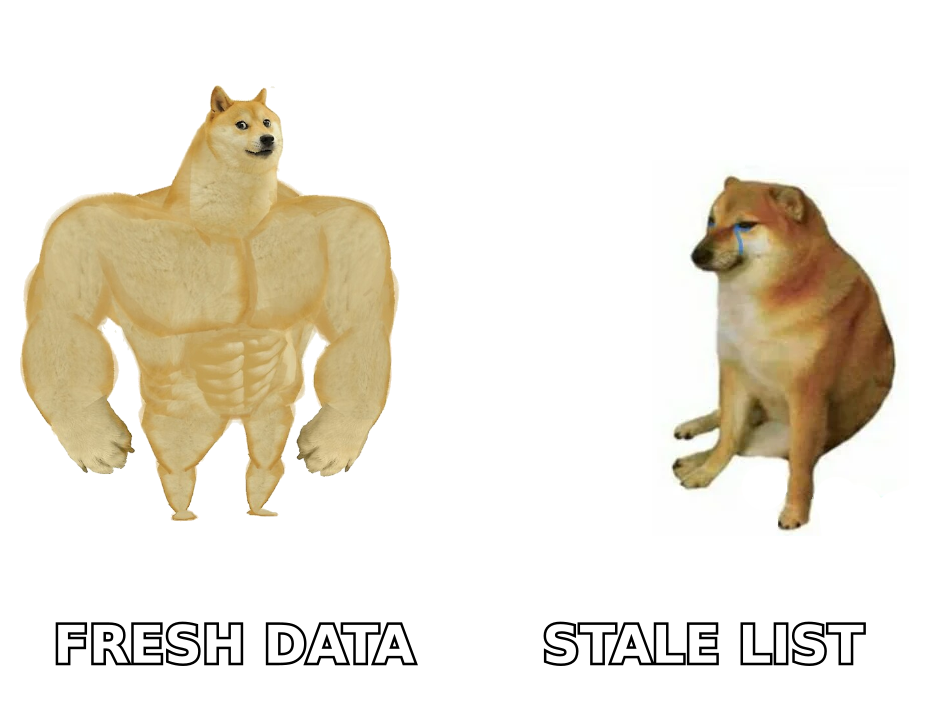
Here's the side-by-side. "B2B list" here means a typical bulk static-list provider; "Datanyze" reflects its current freemium-plus-paid model.
| Attribute | Static B2B List | Datanyze |
|---|---|---|
| Data model | One-time bulk file (CSV) | Live, on-demand enrichment |
| Best for | Wide top-of-funnel volume | Tech-stack and account targeting |
| Technographics | Rarely included | Core strength |
| Freshness | Decays ~30%/yr, no refresh | Pulled at lookup time |
| Free tier | Almost never | Yes (limited credits) |
| Typical entry cost | $0.10–$1.00 per record upfront | Free tier, then per-seat/credit plans |
| Email accuracy | Variable; verify before send | Good, not guaranteed |
| Phone numbers | Sometimes, often outdated | Mobile/direct dials on paid tiers |
| Compliance burden | High — provenance often unclear | Vendor-managed, clearer sourcing |
| Ongoing cost | Re-buy to stay current | Recurring subscription |
A few things that table doesn't capture:
- Provenance matters more every year. With a bought list you often can't prove where the data came from, which is a real GDPR/CCPA exposure. Datanyze, as a managed platform, gives you cleaner sourcing.
- Lists front-load cost; Datanyze spreads it. A 50,000-row list is one invoice. Datanyze is a subscription you keep paying — better for steady prospecting, worse if you only run one campaign a year.
- Neither guarantees a deliverable inbox. This is the part most teams underestimate, and it's why a verification step is non-negotiable regardless of source.
Is Datanyze more accurate than a B2B list?#
Short answer: usually yes, but accuracy is the wrong question if you stop there.
Datanyze pulls data closer to the moment you need it, so it sidesteps the worst of list decay. A purchased list is only as accurate as its harvest date, and you rarely know that date. So on freshness alone, Datanyze has the edge.
But "accurate at the source" and "lands in the inbox" are two different claims. Even a perfectly sourced email can bounce because the mailbox was deactivated, the domain switched to a catch-all, or a spam trap got mixed in. Both a list and Datanyze hand you addresses that look right; neither runs them through SMTP validation at send time.
That's why experienced teams treat any data source — list or platform — as raw material, then run every address through an email verifier before the first send. Verification, not source prestige, is what protects your sender reputation and keeps bounce rates under the ~2–3% threshold mailbox providers tolerate.
If you want to sanity-check this yourself, vendor reviews on G2 consistently show the same pattern: praise for coverage, complaints about a slice of stale or wrong records. No provider is exempt.
When should you buy a B2B list anyway?#
Lists aren't dead. They make sense in specific cases:
- You need volume now and have a verification workflow. If you can ingest 20,000 rows and clean them before sending, the low per-record price wins.
- Your TAM is broad and undifferentiated. When almost any company in an industry could buy, technographic precision is wasted and raw reach matters more.
- One-off campaign, no ongoing motion. Paying a recurring subscription for a single blast is overkill; a one-time file is cheaper.
- You're enriching, not cold-prospecting. A list can backfill missing fields in records you already own.
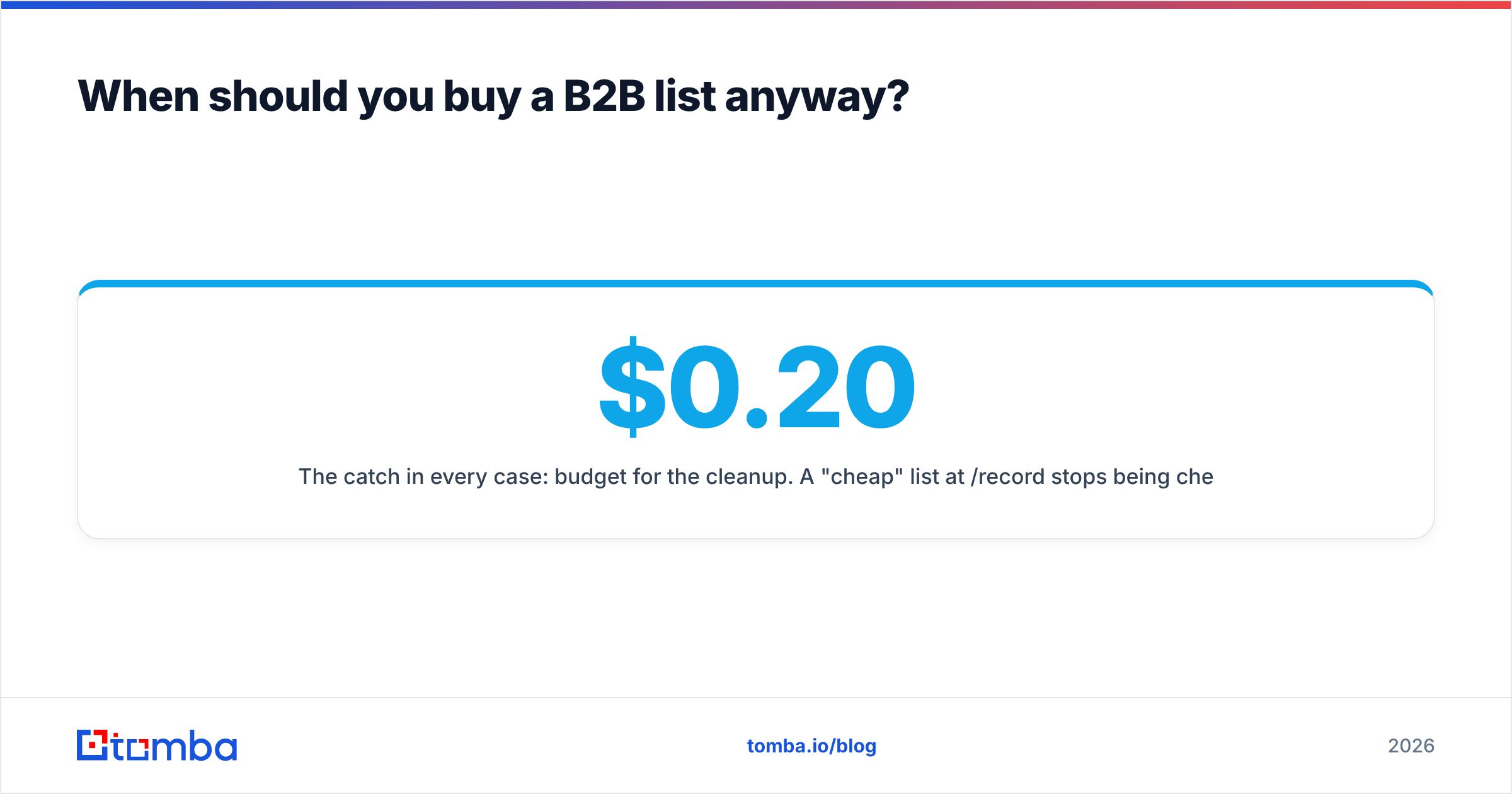
The catch in every case: budget for the cleanup. A "cheap" list at $0.20/record stops being cheap when 30% is unusable — your real cost per valid contact is closer to $0.30, before you've sent a single email.
When is Datanyze the better call?#
Datanyze earns its subscription when:
- Your ICP is defined by technology. Selling a Shopify app, a Salesforce add-on, or a security tool for AWS shops? Technographic filtering is genuinely hard to replicate with a static list.
- Reps prospect interactively. The Chrome extension fits a workflow where SDRs research accounts on LinkedIn and pull contacts in the flow of work.
- You value freshness over raw volume. On-demand lookups beat a decaying file for account-based motions.
- Compliance is a board-level concern. Managed sourcing is easier to defend than an opaque CSV.
Where it struggles: cost at team scale, coverage gaps outside North America, and the reality that you're still verifying emails before send.

Is there a better alternative to both?#
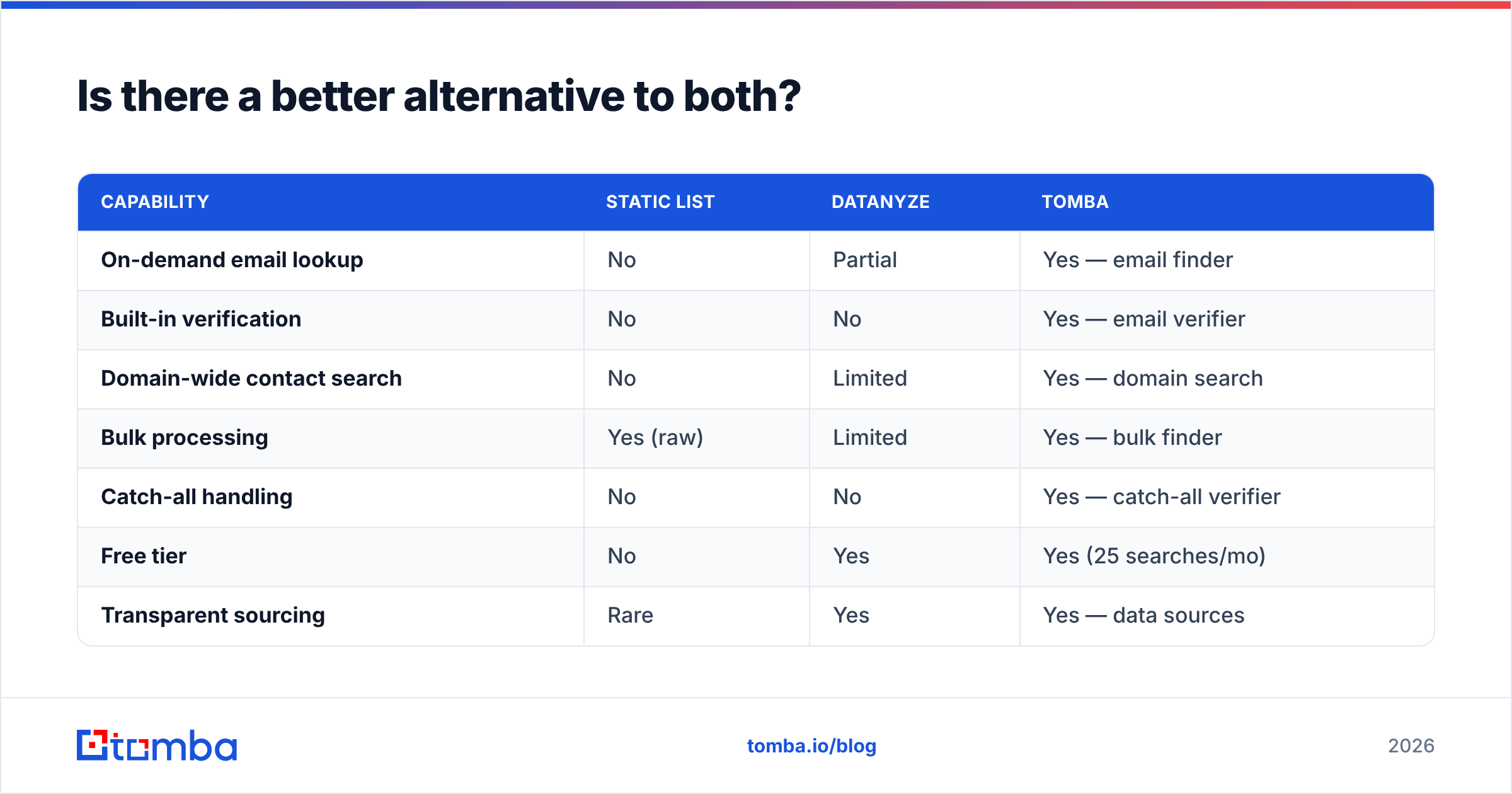
For most teams whose actual bottleneck is "I need correct, current email addresses for specific people," there's a third model that beats both: find and verify on demand.
Instead of paying upfront for a decaying file (lists) or a broad subscription you mostly use for technographics (Datanyze), you look up exactly the contacts you need, when you need them, and validate each one in the same step. You pay for hits, not shelf inventory.
This is the lane Tomba sits in. A quick, honest map of how it lines up:
| Capability | Static List | Datanyze | Tomba |
|---|---|---|---|
| On-demand email lookup | No | Partial | Yes — email finder |
| Built-in verification | No | No | Yes — email verifier |
| Domain-wide contact search | No | Limited | Yes — domain search |
| Bulk processing | Yes (raw) | Limited | Yes — bulk finder |
| Catch-all handling | No | No | Yes — catch-all verifier |
| Free tier | No | Yes | Yes (25 searches/mo) |
| Transparent sourcing | Rare | Yes | Yes — data sources |
| Starter price | Per-record | Per-seat | $49/mo |
Two honest caveats so this stays balanced:
- Tomba does not do technographic targeting the way Datanyze does. If "what tech do they run" is your primary filter, Datanyze is the better-fit specialist.
- A static list still wins on pure upfront cost-per-row if you genuinely need a massive, undifferentiated volume and have the cleanup pipeline to handle it.
What find-and-verify wins on is cost-per-valid-contact and freshness: you're not paying to store data that rots, and verification is baked in rather than bolted on. You can also enrich existing records through data enrichment without re-buying a whole list.
How do you actually choose?#
Run your situation through three questions:
- Is your ICP defined by technology used? If yes, Datanyze's technographics are worth the subscription. If no, that strength is irrelevant to you.
- Do you need volume once, or accuracy continuously? One-time broad blast → a list. Ongoing, targeted outreach → an on-demand finder or Datanyze.
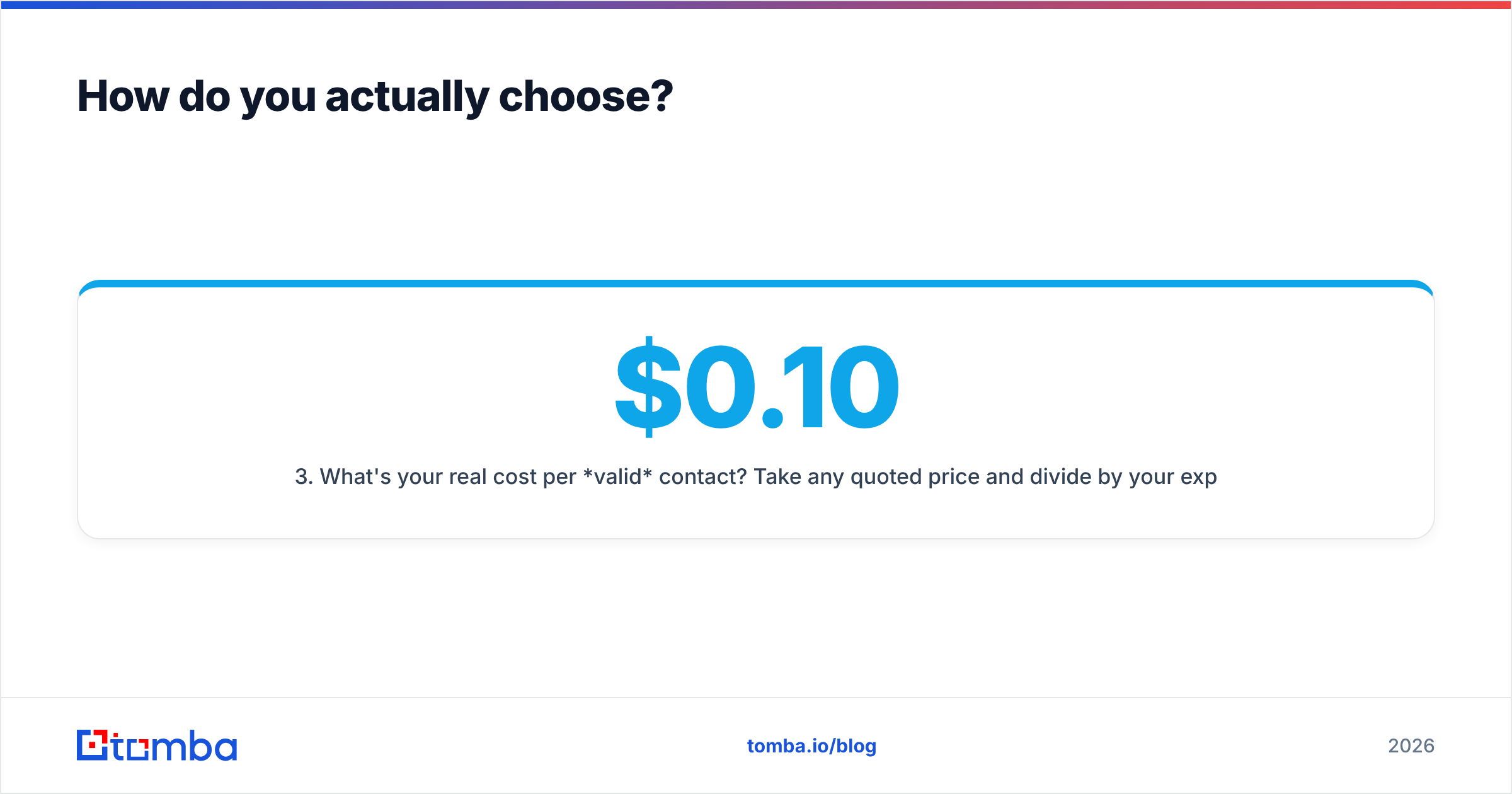
- What's your real cost per valid contact? Take any quoted price and divide by your expected valid rate after verification. A "$0.10 list" at 65% deliverable is really $0.15+, and that's before bounce damage to your domain.
Most teams running modern outbound land on a hybrid: a focused data tool for accurate emails, verification on every send, and Datanyze-style technographics only if their product demands it. Pure static lists increasingly serve as a fallback for raw reach, not the backbone.
Whatever you pick, check the real Tomba pricing and the equivalent from each vendor against your valid-contact math, not the sticker per-row number. That single reframe changes most decisions.
The bottom line#
B2B lists and Datanyze solve different problems. Lists give you cheap, immediate breadth that decays fast. Datanyze gives you fresh, technology-targeted intelligence at a recurring cost. Neither guarantees an address actually reaches the inbox — that's on your verification step, every time.
If your core need is accurate, current email addresses for specific prospects — without buying a file that's stale by spring or paying enterprise seat fees for technographics you won't use — start with a tool built around find-and-verify. The Tomba Email Finder locates professional emails by name, company, or domain and verifies them in the same workflow, with a free tier of 25 searches a month so you can test the data quality against your own list before committing a dollar. Build the smaller, cleaner list that actually converts instead of the big one that bounces.
// get started
Find, verify and enrich your first contacts today
Start on the free plan with 25 searches a month, then scale when your team is ready.
Free plan · No credit card required · GDPR & CCPA
Get the Tomba newsletter
Product and data updates
// about the author