B2B SaaS Demand Generation: The Complete 2026 Playbook
Demand gen isn't lead gen with a new name. Here's how high-growth B2B SaaS teams build pipeline in 2026 — channels, metrics, budget splits, and the data layer that makes it work.
TL;DR
- B2B SaaS demand generation is the full program of creating awareness, interest, and intent across your market — not a fancy label for collecting form fills.
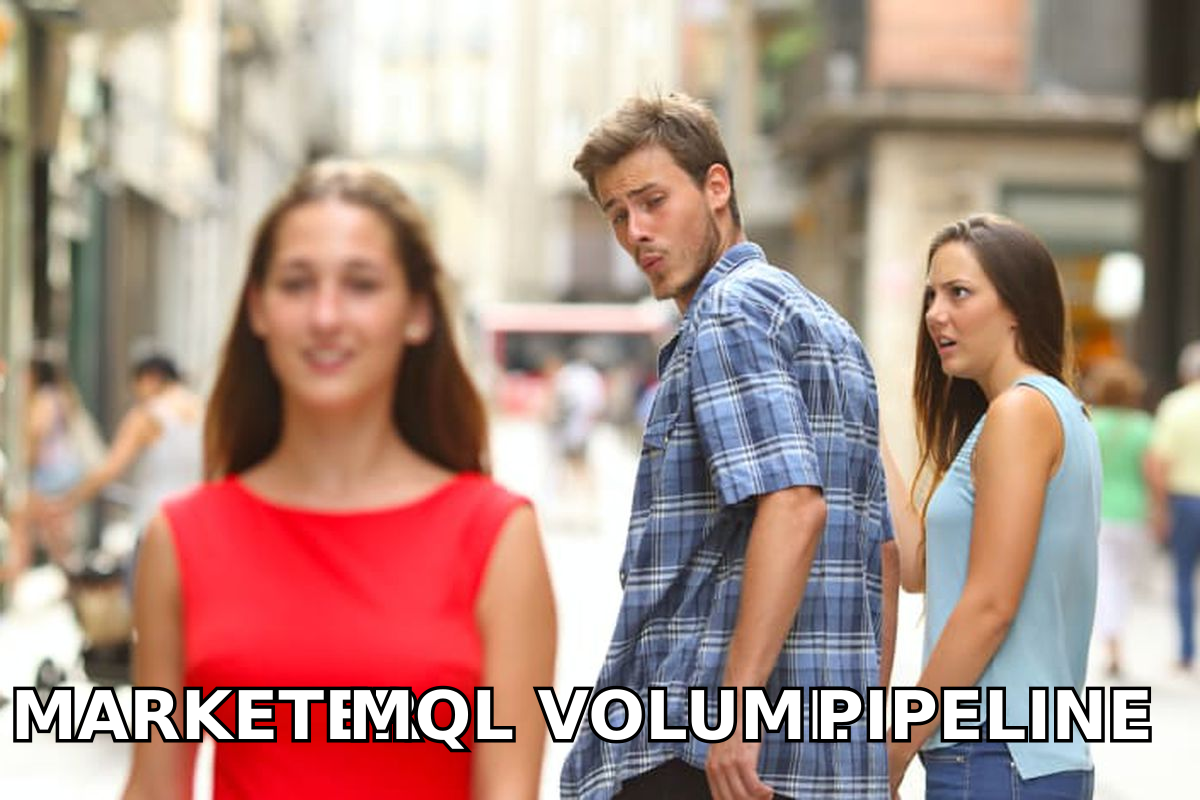
- The 2026 shift is from MQL volume to pipeline and revenue. If your dashboard still leads with "leads," you're measuring the wrong thing.
- A working demand engine has three layers: demand creation (content, ads, community), demand capture (search, retargeting, intent), and demand conversion (sales handoff, nurture, retargeting).
- The "dark funnel" — podcasts, communities, peer chat, word of mouth — now drives most buying decisions and almost none of it shows up in last-touch attribution.
- Accurate contact data is the unglamorous foundation: enrichment, verified emails, and clean routing decide whether demand actually turns into booked meetings.
What is B2B SaaS demand generation?#
B2B SaaS demand generation is the coordinated set of marketing and sales activities that create awareness and buying intent for your product, then capture and convert that intent into revenue. Think of it like running a restaurant, not a vending machine: you're not just dispensing a product when someone inserts a coin (a form fill), you're building reputation, atmosphere, and word of mouth so people show up hungry and ready to order.
That distinction matters because "demand generation" is often used interchangeably with "lead generation," and the two are not the same. Lead generation captures contact details from people already looking. Demand generation creates the looking in the first place — and then captures it. One is a net; the other is the weather system that fills the ocean.
In a SaaS context, this is sharper than in most industries. Your sales cycles are long, buying committees average 6 to 10 people, and a single closed deal can be worth six or seven figures over its lifetime. That economics rewards programs that build durable mindshare over ones that chase cheap clicks.
How is demand generation different from lead generation?#
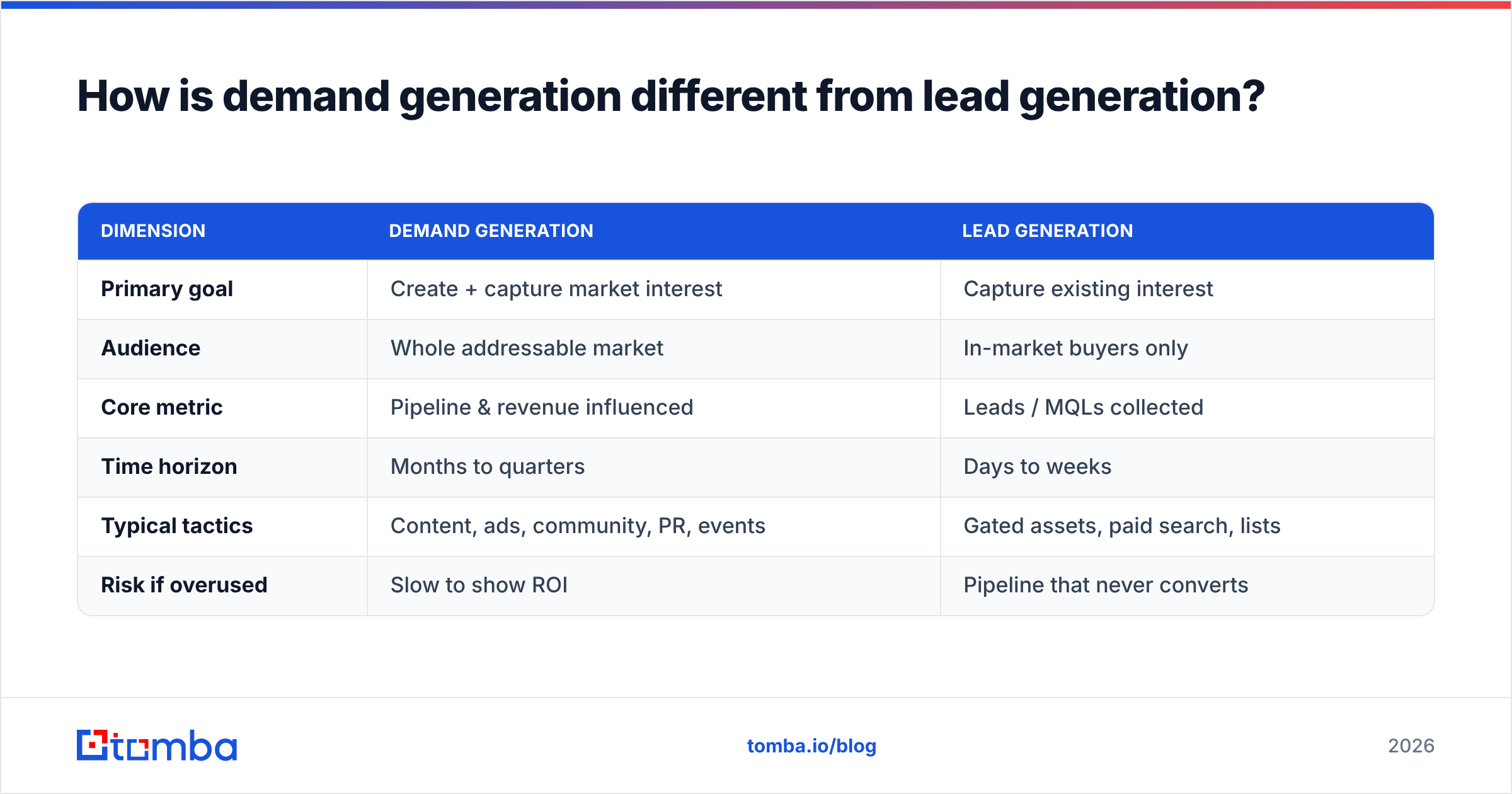
The cleanest way to see the difference is by intent and timing. Lead gen works the bottom of the market — people ready to evaluate now. Demand gen works the entire market, including the 95% who aren't in-market yet but will be.
| Dimension | Demand generation | Lead generation |
|---|---|---|
| Primary goal | Create + capture market interest | Capture existing interest |
| Audience | Whole addressable market | In-market buyers only |
| Core metric | Pipeline & revenue influenced | Leads / MQLs collected |
| Time horizon | Months to quarters | Days to weeks |
| Typical tactics | Content, ads, community, PR, events | Gated assets, paid search, lists |
| Risk if overused | Slow to show ROI | Pipeline that never converts |
Most SaaS teams that "do demand gen" are actually doing dressed-up lead gen: gate an ebook, run a LinkedIn lead-form campaign, pass every download to sales, and report the volume. The leads look great in a spreadsheet and convert at 1%. Real demand generation accepts that the majority of your buyers won't raise a hand for months, and invests in being the brand they remember when they do.
What are the stages of a demand generation funnel?#
A demand engine maps to three jobs, not the classic linear funnel. Buyers don't move in a straight line anymore — they loop, lurk, and self-educate. Structure your program around what you're trying to do at each stage instead.
- Demand creation — You make people aware a problem (and your category) exists. This is podcasts, organic social, thought-leadership content, YouTube, paid awareness campaigns, and community. Success here looks like branded search lift and "how did you hear about us" answers, not form fills.
- Demand capture — You catch the intent you created plus the intent that already exists. This is paid search on high-intent keywords, SEO for bottom-funnel queries, review sites like G2, retargeting, and comparison pages. The buyer is signaling; your job is to be findable and credible.
- Demand conversion — You turn captured interest into pipeline and revenue. This is sales handoff, lead routing, nurture sequences, and the operational glue — including the contact data that lets a rep actually reach the right person.
The mistake is over-investing in stage two because it's measurable, while starving stage one because it isn't. You can only capture demand that exists. If nobody is creating it, capture campaigns just bid up the same shrinking pool of in-market buyers and your CAC climbs every quarter.
What channels work best for B2B SaaS demand generation in 2026?#
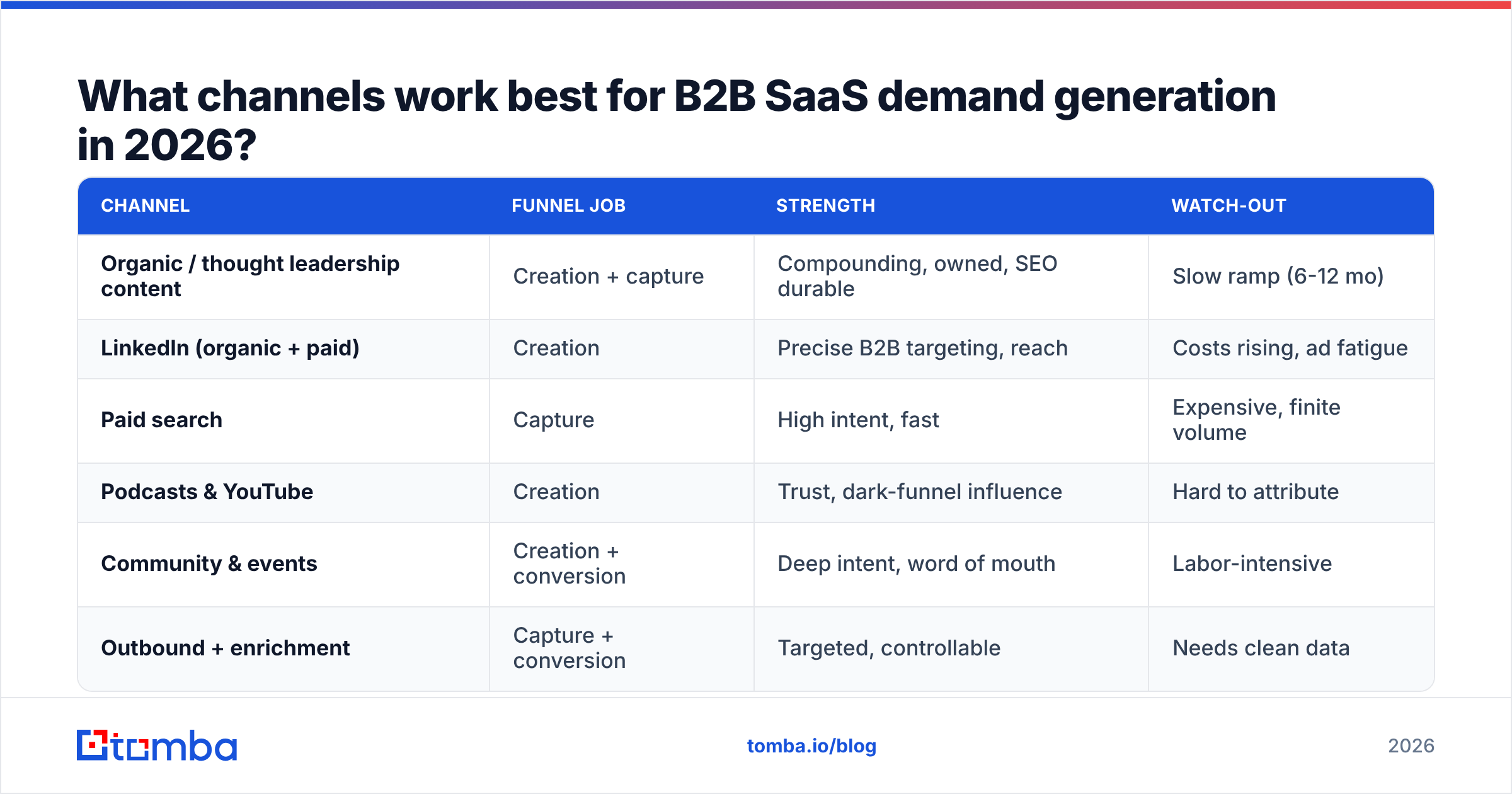
There's no universal channel mix — it depends on your ACV, motion (PLG vs. sales-led), and where your buyers actually spend attention. But the high-performing 2026 patterns are consistent enough to plan around.
| Channel | Funnel job | Strength | Watch-out |
|---|---|---|---|
| Organic / thought leadership content | Creation + capture | Compounding, owned, SEO durable | Slow ramp (6-12 mo) |
| LinkedIn (organic + paid) | Creation | Precise B2B targeting, reach | Costs rising, ad fatigue |
| Paid search | Capture | High intent, fast | Expensive, finite volume |
| Podcasts & YouTube | Creation | Trust, dark-funnel influence | Hard to attribute |
| Community & events | Creation + conversion | Deep intent, word of mouth | Labor-intensive |
| Outbound + enrichment | Capture + conversion | Targeted, controllable | Needs clean data |
The teams pulling ahead treat content as a product, not a checkbox. They publish opinionated, specific material — pricing teardowns, real benchmarks, founder POV — instead of the keyword-stuffed "ultimate guide" sludge that AI search now ignores. They also accept that channels like podcasts and Slack communities won't attribute cleanly but still drive the pipeline that closes.
For an outbound layer that complements all of this, the limiting factor is rarely strategy — it's whether you can reach the right person. That's where a reliable email finder and clean data enrichment quietly decide your conversion rate. A brilliant campaign that bounces 30% of the time is just an expensive way to hurt your sender reputation.
What is the dark funnel and why does it matter?#
The dark funnel is everything that influences a buyer that you can't see in your analytics: private Slack groups, podcasts, peer DMs, word of mouth, the LinkedIn post they read but didn't click. By most estimates, the majority of B2B buying research now happens in these untracked channels before a prospect ever touches your site.
Here's the practical problem. Your last-touch attribution will credit branded search or a direct visit, because that's the final click before the demo request. So the demand-creation work that actually drove the deal — the podcast appearance, the founder's hot take, the community recommendation — looks worthless in the dashboard. Teams then cut exactly the activities building their pipeline.
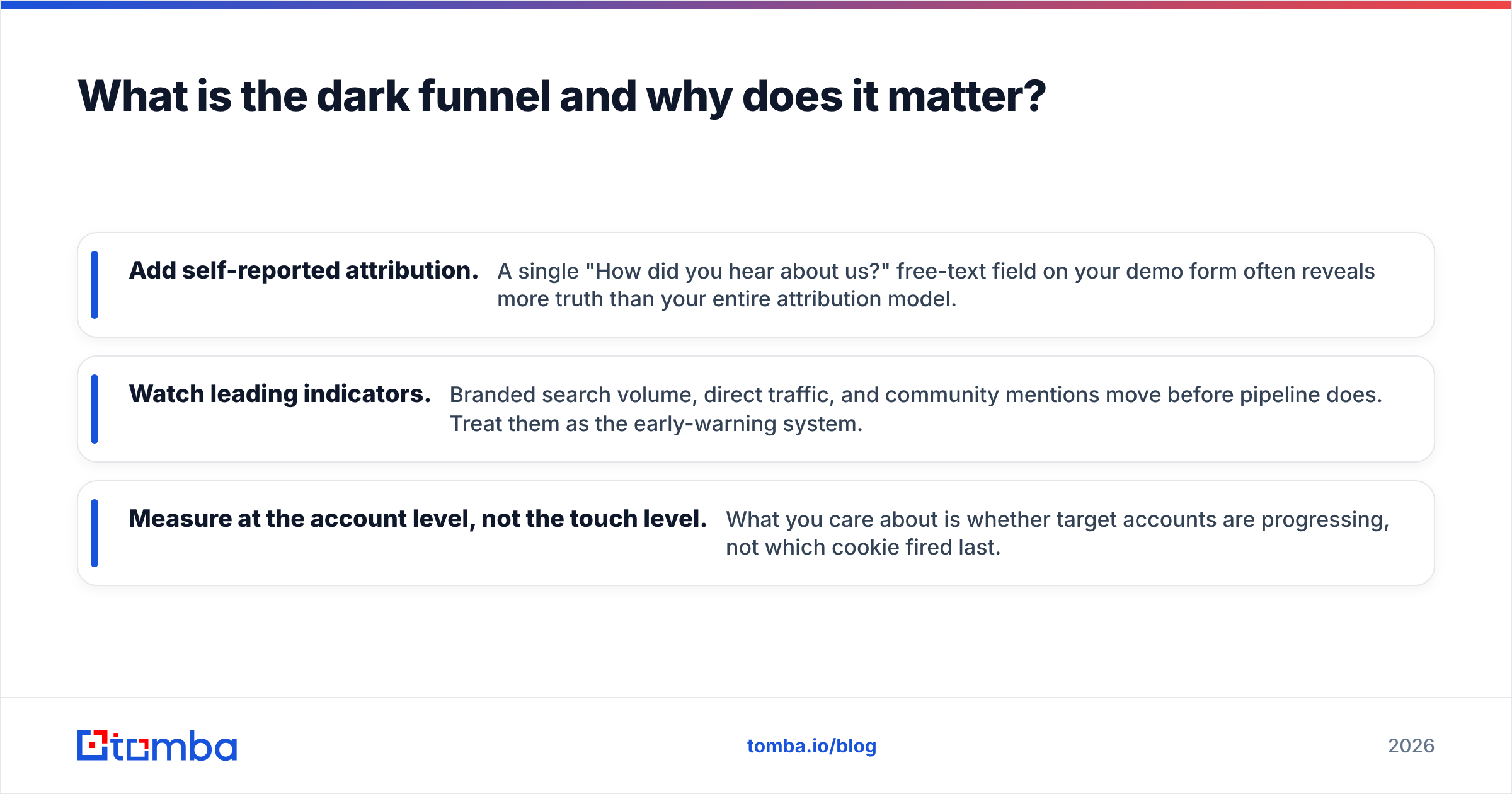
The fix isn't better tracking; the dark funnel is dark by design. It's three changes:
- Add self-reported attribution. A single "How did you hear about us?" free-text field on your demo form often reveals more truth than your entire attribution model.
- Watch leading indicators. Branded search volume, direct traffic, and community mentions move before pipeline does. Treat them as the early-warning system.
- Measure at the account level, not the touch level. What you care about is whether target accounts are progressing, not which cookie fired last.
This connects to a broader 2026 reality: trust is the scarce resource. Buyers discount vendor claims and weight peer signals heavily. Reviews on Capterra and G2, real customer stories, and credible community presence do more for capture-stage conversion than another retargeting banner.
What metrics should a demand generation program track?#
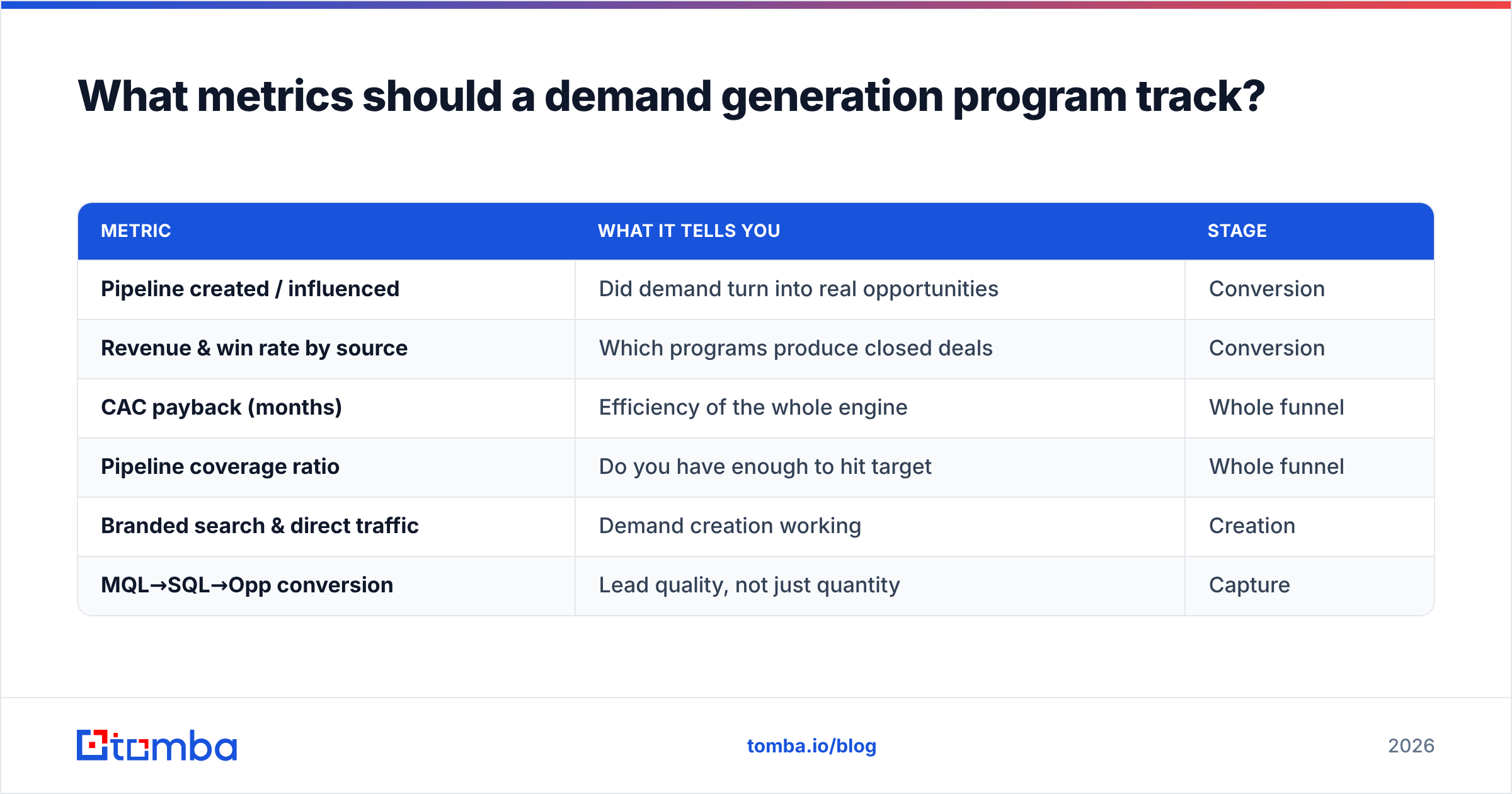
Lead with pipeline and revenue, support with leading indicators, and ruthlessly demote vanity metrics. The single biggest upgrade most SaaS teams can make is changing what their marketing dashboard reports first.
| Metric | What it tells you | Stage |
|---|---|---|
| Pipeline created / influenced | Did demand turn into real opportunities | Conversion |
| Revenue & win rate by source | Which programs produce closed deals | Conversion |
| CAC payback (months) | Efficiency of the whole engine | Whole funnel |
| Pipeline coverage ratio | Do you have enough to hit target | Whole funnel |
| Branded search & direct traffic | Demand creation working | Creation |
| MQL→SQL→Opp conversion | Lead quality, not just quantity | Capture |
Notice MQL volume isn't on the list as a headline metric. It's a diagnostic at best. A program generating 2,000 MQLs that convert to 5 deals is losing to one generating 300 MQLs that convert to 25. If you want a deeper definition of the upstream metric, see what actually qualifies a marketing qualified lead — and then track the conversion rate past it, not the raw count.
One more operational metric that hides in plain sight: data quality. Bounce rate, contact completeness, and routing accuracy directly throttle everything downstream. You can't convert demand into a meeting if the email is wrong or the lead sits unrouted for three days.
How should you budget across demand creation and capture?#
Split deliberately, and resist the gravity that pulls every dollar toward measurable capture. A defensible 2026 starting point for a sales-led SaaS company is roughly a 60/40 split favoring creation over capture — but the right ratio depends on your stage.
- Early stage (finding fit): Lean toward capture (think 70/30). You need revenue and learning fast, and you don't yet have the brand to justify heavy creation spend.
- Growth stage (scaling): Shift toward creation (60/40 or beyond). Capture-only growth hits a ceiling as you exhaust in-market buyers and CAC inflates.
- Mature stage (category leader): Creation becomes a moat. The brand you build makes every capture dollar cheaper because buyers arrive pre-sold.
The trap is that capture spend shows ROI in weeks and creation shows it in quarters, so quarterly-pressured teams perpetually underfund creation and then wonder why CAC keeps rising. Hold a fixed creation budget the way you'd hold an R&D budget — as non-negotiable investment in future efficiency.
Wherever you land, protect a slice for the operational layer: enrichment, verification, routing, and the tooling that makes the rest convert. It's typically a small line item with an outsized effect on win rate.
How does data quality power demand generation?#
Accurate contact data is the foundation the entire engine sits on — and it's the part teams most often neglect because it isn't a "campaign." Demand creation fills the top, capture catches the intent, but conversion fails silently when your data is dirty.
Three concrete failure modes:
- Bounces wreck deliverability. Send to unverified addresses and your bounce rate spikes, your domain reputation drops, and even your good emails land in spam. Run lists through an email verifier before any send — it's cheaper than rebuilding sender reputation.
- Incomplete records kill routing. If you don't know a lead's company size, role, or industry, you can't route or score them correctly, so high-intent buyers wait in a generic queue while the moment passes.
- Stale data wastes spend. People change jobs constantly; B2B data decays fast. Without ongoing enrichment, you're paying to reach contacts who left two roles ago.
This is the quiet reason demand programs with identical strategy get wildly different results. The team with verified, enriched, well-routed data converts the demand it worked so hard to create. The team without it generates the same interest and lets it leak out of a bucket full of holes.
You don't need a heavy platform to fix this. A focused stack — find the right contacts, verify them, enrich the record, route cleanly — covers most of it. Tomba's pricing starts with a free tier (25 searches/month) and a Starter plan at $49/mo, which is enough for most teams to plug the biggest leaks before scaling up.
What does a 90-day demand generation plan look like?#
Don't try to light every channel at once. A staged 90-day rollout beats a big-bang launch because it lets you find what works before you scale spend.
- Days 1-30 — Foundation. Define your ICP and target account list. Fix data hygiene (verify and enrich your existing database). Set up pipeline-first reporting and add self-reported attribution. Pick one creation channel and one capture channel.
- Days 31-60 — Activate. Ship consistent content on your chosen creation channel. Turn on capture campaigns against high-intent keywords. Stand up a clean lead-routing and nurture flow. Start an outbound motion against your verified target list.
- Days 61-90 — Optimize & expand. Read the data: which sources produce pipeline, not just leads? Double down on what converts, cut what doesn't, and add a second creation channel only once the first is humming.
By day 90 you won't have a finished engine — you'll have a working one with evidence behind every dollar, which is far more valuable than a sprawling program nobody can attribute.
The bottom line#
B2B SaaS demand generation in 2026 is a long game played with short-game discipline: invest in creating demand you can't fully measure, capture the intent that results, and obsess over the unglamorous data layer that decides whether any of it converts. Lead with pipeline, fund creation like R&D, and respect the dark funnel.
When you're ready to make the conversion layer bulletproof, start with the part most teams skip: reaching the right person, reliably. Use Tomba's Email Finder to find verified, professional email addresses for your target accounts — pair it with verification and enrichment, and watch the demand you worked so hard to create actually turn into booked meetings. Spin up the free tier and clean one campaign's worth of contacts this week; the lift in reply rates makes the case better than any deck.
// get started
Find, verify and enrich your first contacts today
Start on the free plan with 25 searches a month, then scale when your team is ready.
Free plan · No credit card required · GDPR & CCPA
// about the author