B2B Sales Meaning: What It Is and How It Works in 2026
B2B sales means selling products or services from one business to another. Here's what that really involves in 2026 — the process, roles, metrics, and tools that close deals.
What does B2B sales actually mean?#
B2B sales means one business selling its products or services to another business, instead of to an individual consumer. A software vendor selling seats to a marketing agency, a logistics firm signing a manufacturer, a data provider licensing an API to a sales team — all of it is B2B sales.
If you have ten minutes and just want the essentials, start here:
- B2B = business-to-business. The buyer is a company (and usually a committee), not a single shopper.
- Deals are bigger, slower, and rational. Multiple stakeholders, longer cycles, and ROI-driven decisions replace impulse buying.
- Process beats charisma. Repeatable stages — prospect, qualify, demo, negotiate, close — matter more than a smooth pitch.
- Data is the fuel. You cannot sell to a company you cannot reach, so accurate contact data sits at the front of the whole engine.
- Tools compound results. The right finder, verifier, and CRM stack turns a good rep into a quota-crushing one.
This guide breaks down the b2b sales meaning the way a practitioner needs it: the definition, how the process works end to end, the people involved, the numbers that matter, and the stack that makes it run in 2026.
How is B2B sales different from B2C sales?#
The clearest way to understand the b2b sales meaning is to put it next to its opposite. B2C (business-to-consumer) is you buying sneakers online. B2B is a procurement manager buying 400 pairs for a uniform program after three calls, a security review, and a finance sign-off.
The difference is not just deal size. It is who decides, how long it takes, and what convinces them.
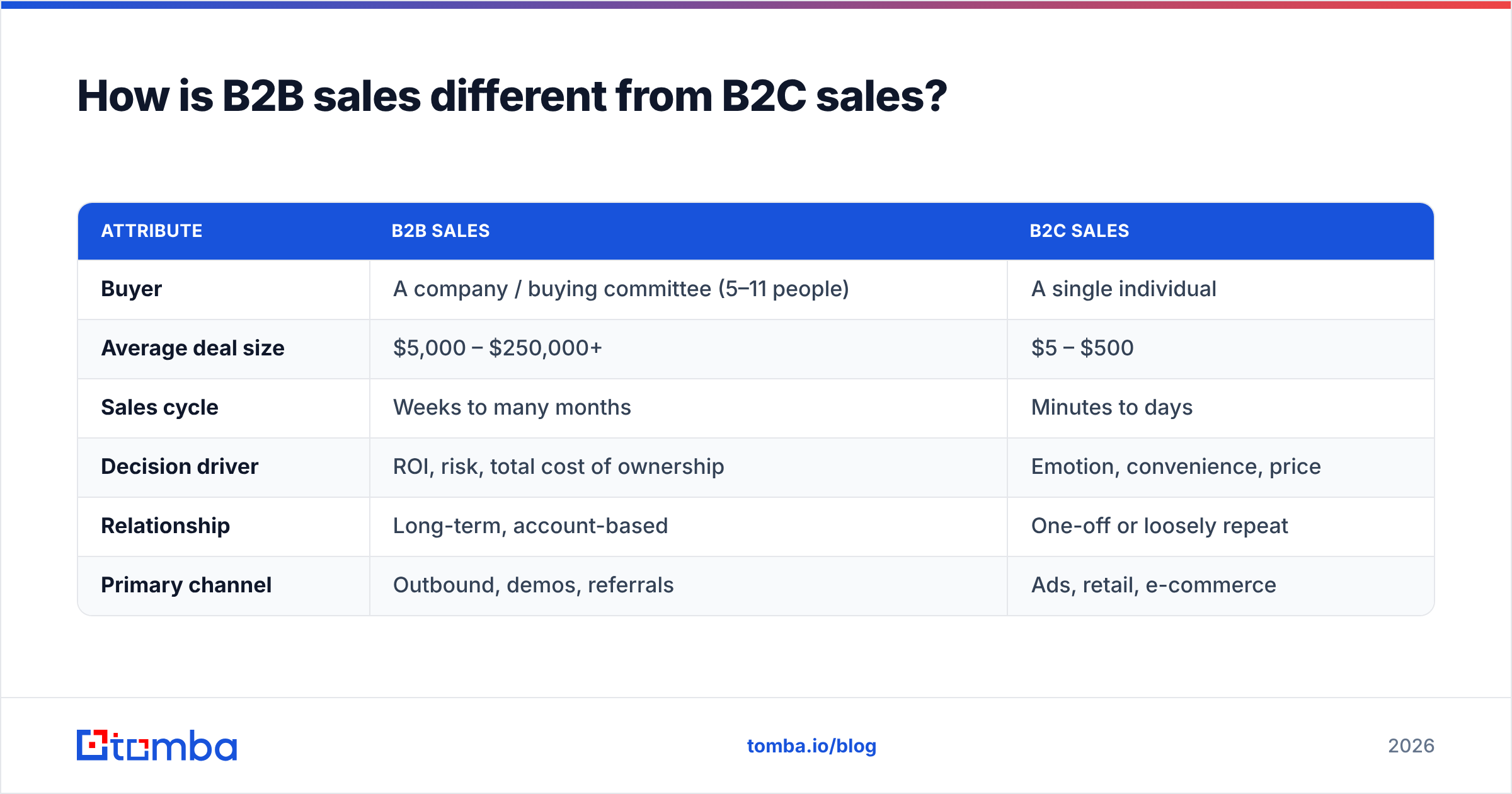
| Attribute | B2B Sales | B2C Sales |
|---|---|---|
| Buyer | A company / buying committee (5–11 people) | A single individual |
| Average deal size | $5,000 – $250,000+ | $5 – $500 |
| Sales cycle | Weeks to many months | Minutes to days |
| Decision driver | ROI, risk, total cost of ownership | Emotion, convenience, price |
| Relationship | Long-term, account-based | One-off or loosely repeat |
| Primary channel | Outbound, demos, referrals | Ads, retail, e-commerce |
Notice the buying committee row. According to Gartner research, the typical B2B purchase now involves six to ten decision-makers, each armed with their own information. That single fact reshapes everything: you are not persuading a person, you are equipping a group to reach internal consensus.
What are the stages of a B2B sales process?#
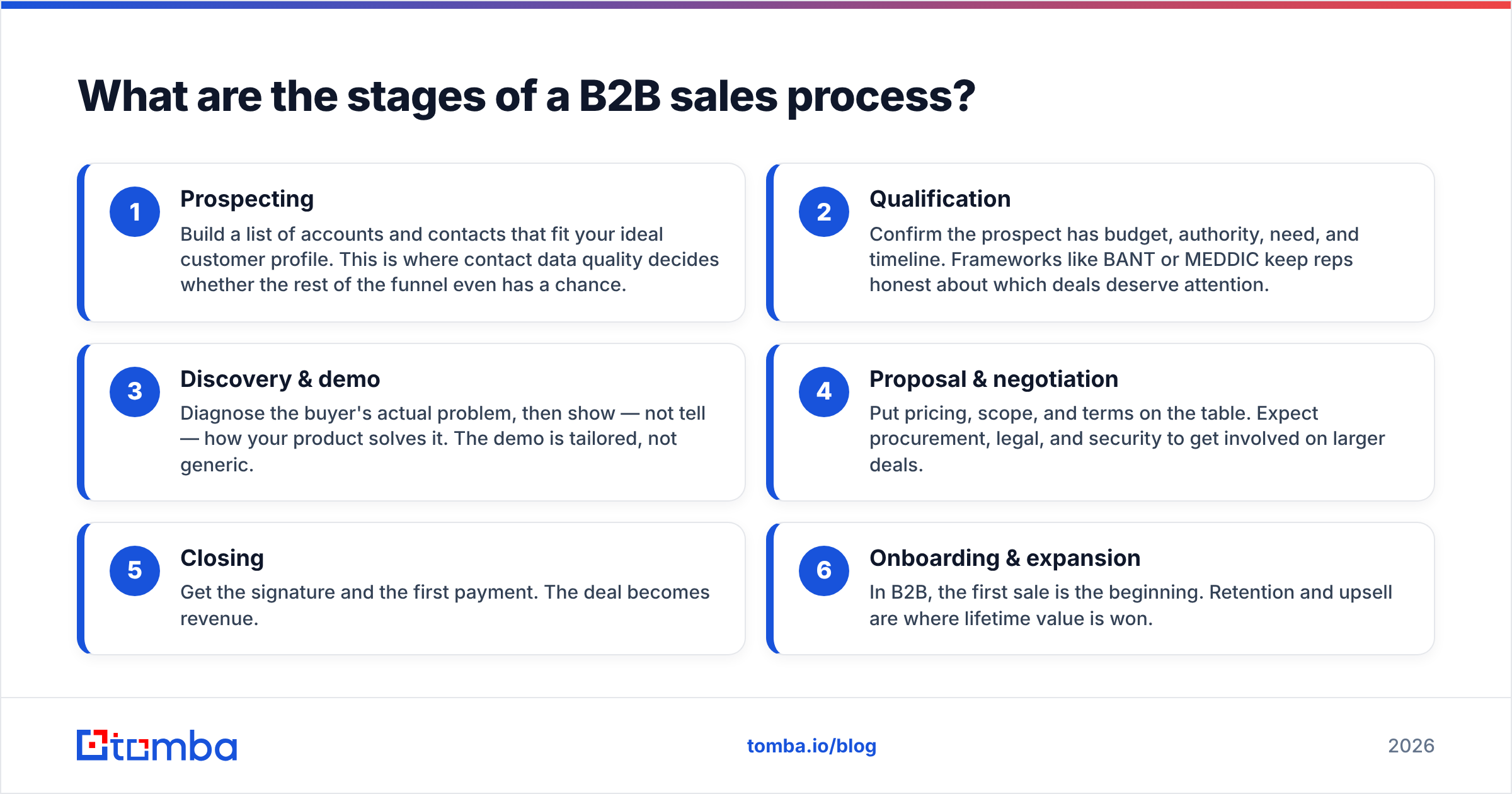
A B2B sale is a pipeline, not a moment. Each deal moves through predictable stages, and your job is to advance it from one to the next without leaks. Here is the standard flow, with the work that happens at each step:
- Prospecting — Build a list of accounts and contacts that fit your ideal customer profile. This is where contact data quality decides whether the rest of the funnel even has a chance.
- Qualification — Confirm the prospect has budget, authority, need, and timeline. Frameworks like BANT or MEDDIC keep reps honest about which deals deserve attention.
- Discovery & demo — Diagnose the buyer's actual problem, then show — not tell — how your product solves it. The demo is tailored, not generic.
- Proposal & negotiation — Put pricing, scope, and terms on the table. Expect procurement, legal, and security to get involved on larger deals.
- Closing — Get the signature and the first payment. The deal becomes revenue.
- Onboarding & expansion — In B2B, the first sale is the beginning. Retention and upsell are where lifetime value is won.
Most teams track these stages in a CRM so every rep works the same playbook and managers can forecast. The stages rarely change; what changes is how efficiently you move deals between them — and that efficiency almost always traces back to data and tooling at the top of the funnel.
Who is involved in a B2B sale?#
B2B selling is a team sport on both sides of the table. Understanding the roles clarifies why the cycle is longer and why "just talk to the boss" rarely works.
On the selling side:
- Sales Development Rep (SDR) — Generates and qualifies new pipeline through outbound prospecting.
- Account Executive (AE) — Owns the deal from qualified lead to closed-won.
- Sales Engineer (SE) — Handles technical proof, demos, and security questions.
- Customer Success Manager (CSM) — Drives onboarding, retention, and expansion after the close.
On the buying side you will meet champions (who want your product), economic buyers (who control the budget), technical evaluators, and blockers. Mapping these people early is the difference between a deal that closes and one that stalls in "we're still discussing internally" limbo. Reaching them often means finding direct contact details — which is why teams lean on an email finder and a B2B database rather than guessing at info@ inboxes that nobody reads.
Why does data quality decide B2B sales outcomes?#
Because every stage of the process depends on reaching the right person, bad data quietly caps your entire revenue ceiling. You can have the best AE in the market, but if their list is full of stale emails and wrong titles, the funnel starves before it starts.
Think of contact data like the fuel in a race car. A beautifully engineered engine — your messaging, your demo, your pricing — still goes nowhere on contaminated fuel. Bounced emails hurt your sender reputation, wrong numbers waste dialing hours, and outdated titles send your pitch to someone who left the company a year ago.
This is where modern teams separate from laggards. Instead of buying one dusty list and hammering it for months, high-performing orgs treat data as a living input: they find verified contacts on demand, confirm deliverability before sending, and enrich records with the context reps need to personalize.
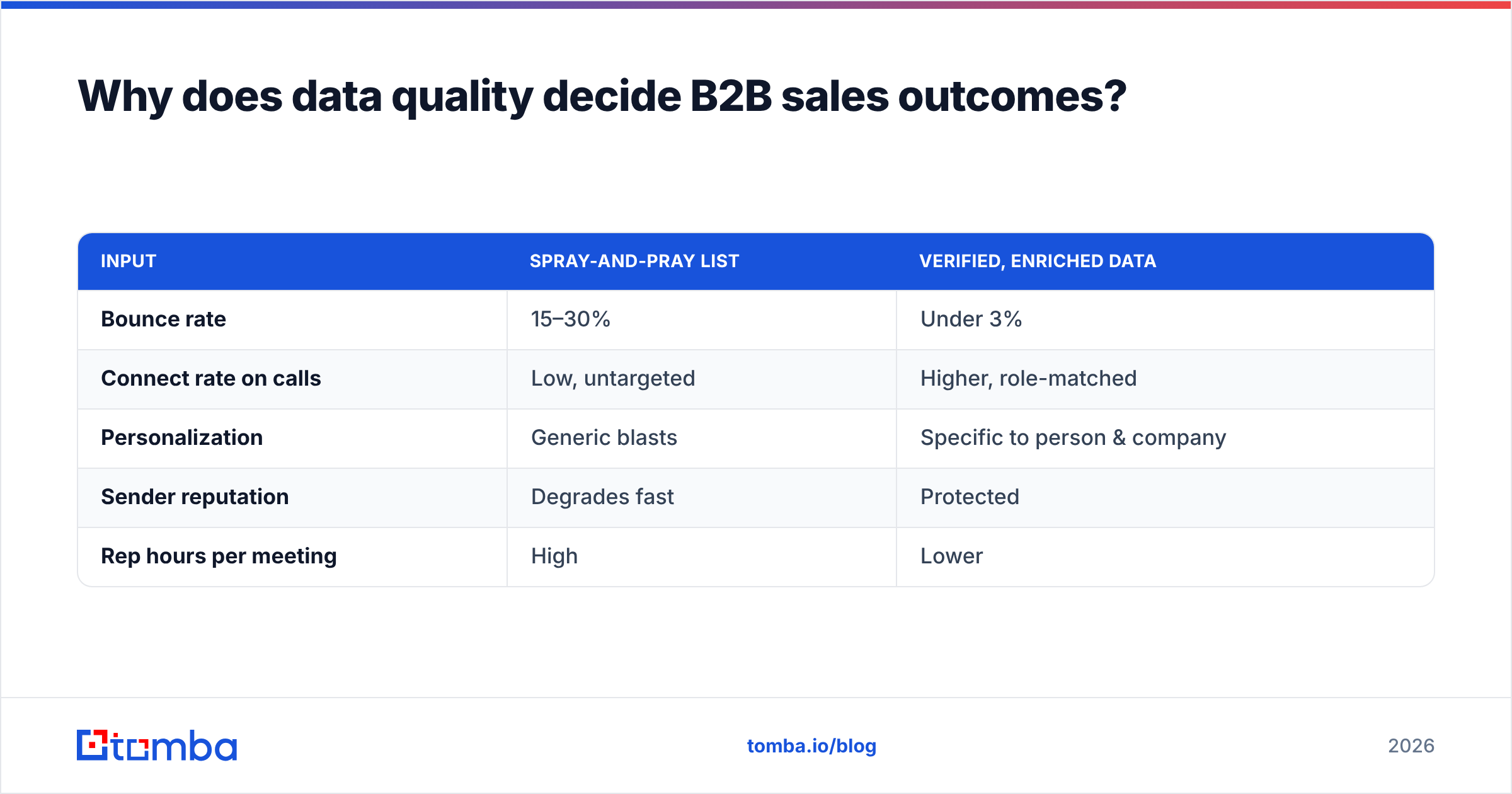
A quick reality check on what "good data" buys you versus "any data":
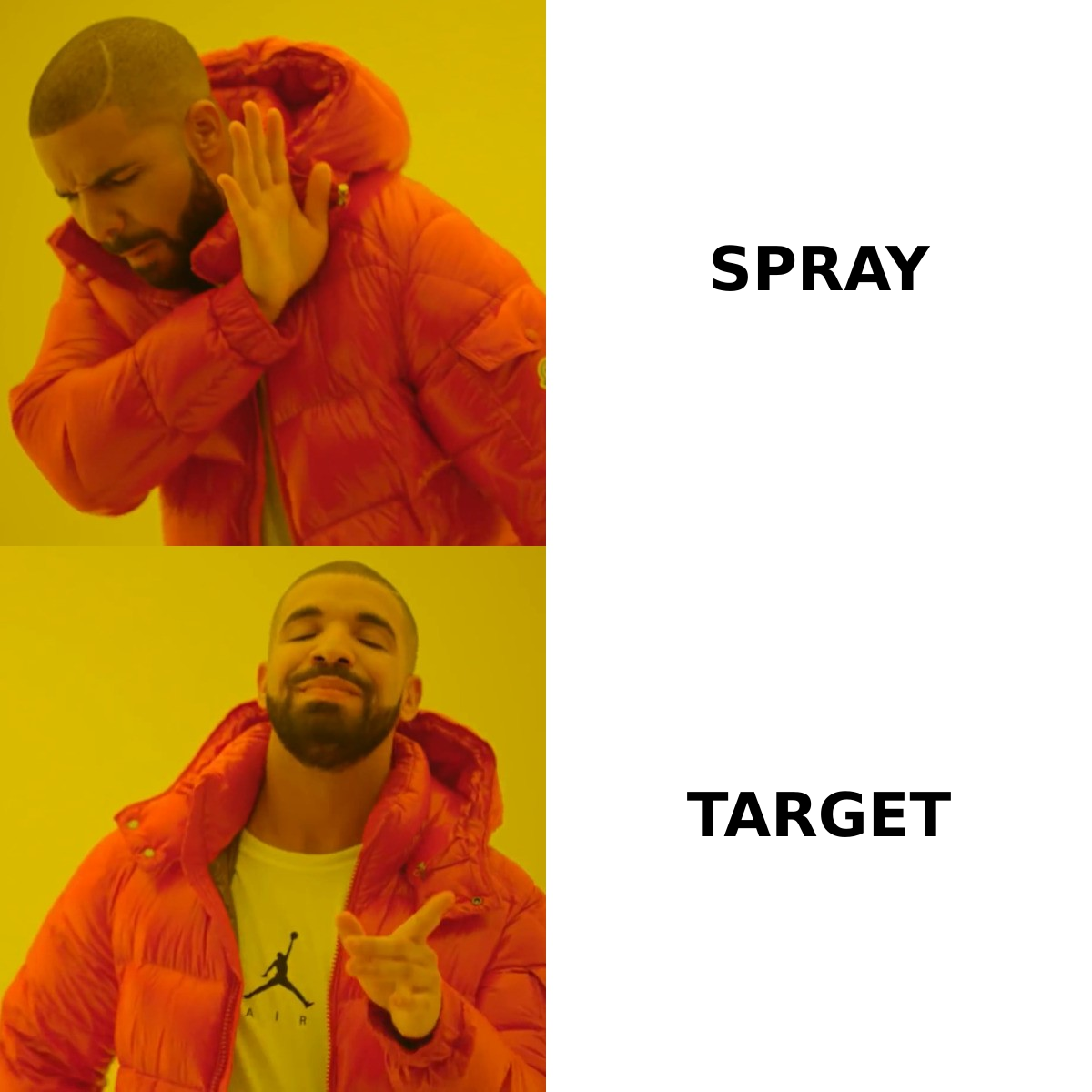
| Input | Spray-and-pray list | Verified, enriched data |
|---|---|---|
| Bounce rate | 15–30% | Under 3% |
| Connect rate on calls | Low, untargeted | Higher, role-matched |
| Personalization | Generic blasts | Specific to person & company |
| Sender reputation | Degrades fast | Protected |
| Rep hours per meeting | High | Lower |
The takeaway is blunt: in B2B, you do not have a messaging problem until you have solved your data problem. Tools like a dedicated email verifier and domain search exist precisely because reaching the committee reliably is half the battle.
What metrics define B2B sales performance?#
You cannot improve what you do not measure, and B2B sales is heavily quantified. These are the numbers that actually run the business:
- Win rate — The percentage of qualified opportunities you close. A healthy win rate tells you your qualification and discovery are sound.
- Average sales cycle length — How long a deal takes from first touch to signature. Shorter cycles mean more deals per rep per year.
- Average contract value (ACV) — The annualized revenue per customer. Rising ACV usually signals you are selling to better-fit accounts.
- Pipeline coverage — The ratio of open pipeline to quota, typically 3x–4x. Thin coverage is an early warning of a future miss.
- Response rate — How often outreach earns a reply. Your response rate is the canary for both list quality and message relevance.
- Customer acquisition cost (CAC) — Total sales and marketing spend divided by new customers won.
Notice how many of these trace back to the top of the funnel. A weak response rate or low win rate frequently isn't a closing problem — it's a targeting and data problem wearing a closing problem's costume.
What does the modern B2B sales tech stack look like?#
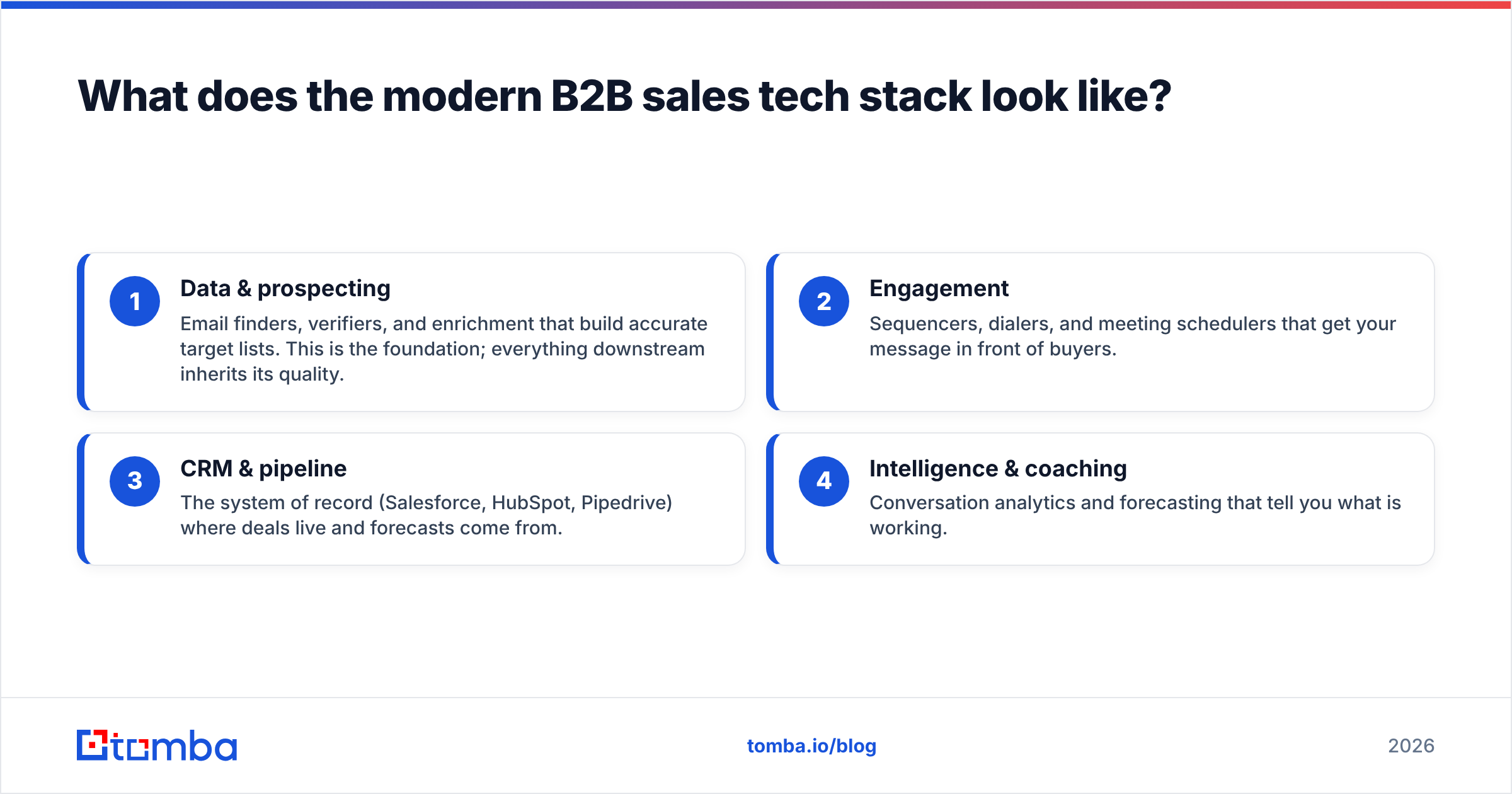
The 2026 stack has four layers, and they work together. You can verify the categories and read user reviews on directories like G2, but the structure is consistent across high-growth teams:
- Data & prospecting — Email finders, verifiers, and enrichment that build accurate target lists. This is the foundation; everything downstream inherits its quality.
- Engagement — Sequencers, dialers, and meeting schedulers that get your message in front of buyers.
- CRM & pipeline — The system of record (Salesforce, HubSpot, Pipedrive) where deals live and forecasts come from.
- Intelligence & coaching — Conversation analytics and forecasting that tell you what is working.
The mistake teams make is over-investing in layers 2–4 while neglecting layer 1. A gorgeous sequencer firing into unverified emails is an expensive way to land in spam folders. That's why disciplined orgs start at the data layer — finding and verifying contacts first, then automating outreach to people who actually exist and actually fit. Tomba's data enrichment and finder tools sit in that foundational first layer for exactly this reason.
How do you get started in B2B sales?#
If you are building (or rebuilding) a B2B motion, sequence it like this:
- Define your ICP first. Industry, company size, role, and the specific pain you solve. Vague targeting guarantees vague results.
- Build a clean, verified list. Use a finder to source contacts by company and role, then verify before you send a single message.
- Pick one channel and master it. Email, phone, or LinkedIn — depth beats spreading thin across all three badly.
- Document your stages. A written process turns one lucky rep into a repeatable team.
- Measure, then tune. Track response and win rates weekly; let the numbers tell you where the funnel leaks.
None of this requires a 50-person team or a six-figure budget. It requires discipline at the top of the funnel and honesty about your metrics. The teams that win in B2B are rarely the loudest — they are the ones with the cleanest data and the tightest process.
The bottom line on B2B sales meaning#
B2B sales means selling to businesses through a structured, multi-stakeholder process where data quality, repeatable stages, and clear metrics decide who wins. It is less about the perfect pitch and more about reaching the right people, consistently, with a message that fits their problem.
That reaching part is where most teams quietly lose. If your outreach is bouncing, your titles are stale, or your reps are guessing at email formats, no amount of clever copy will save the quarter. Fix the foundation first.
Start your prospecting on solid ground with the Tomba Email Finder. Find verified professional emails by name, company, or domain, confirm deliverability before you send, and feed your pipeline contacts that actually convert. The free tier gives you 25 searches a month to test it; paid plans start at $49/mo on the Starter tier — see full Tomba pricing to match a plan to your volume. Good B2B sales starts with reaching the right person. Make sure you can.
// get started
Find, verify and enrich your first contacts today
Start on the free plan with 25 searches a month, then scale when your team is ready.
Free plan · No credit card required · GDPR & CCPA
// about the author