B2B Sales Strategy in 2026: A Complete Framework Guide
A practical 2026 framework for building a B2B sales strategy that fills pipeline, shortens cycles, and lifts win rates — with steps, a model comparison table, and the data stack behind it.
TL;DR
- A B2B sales strategy is your documented plan for who you sell to, how you reach them, and what moves a deal from first touch to closed-won — not a vague "sell more" goal.
- The 2026 winners aren't doing more outreach; they're doing better-targeted outreach on top of clean, verified contact data.
- Pick a sales model (inbound, outbound, PLG, ABM, or hybrid) based on deal size and buying-committee complexity — not on what's trendy.
- A repeatable 7-step framework beats heroics: ICP → data → messaging → channels → process → enablement → measurement.
- Garbage data quietly kills good strategy. Verified emails, accurate phone numbers, and enriched accounts are the floor, not the ceiling.
What is a B2B sales strategy?#
A B2B sales strategy is the documented set of decisions that determines which companies you target, how your team engages their buying committee, and the repeatable steps that turn an account from "never heard of you" into a paying customer.
Think of it like a flight plan. Pilots don't take off and "see how it goes" — they file a route, account for weather, and set checkpoints. Your sales strategy is that route: the destination (revenue target), the path (sales model and motion), and the checkpoints (pipeline stages and metrics) that tell you whether you're on course.
Technically, a complete strategy answers five questions: Who is the ideal customer? What problem are we solving for them? How do we reach the buying committee? What does the sales process look like stage by stage? And how do we measure whether it's working? Skip any one and you end up with activity that feels productive but doesn't compound.
The biggest shift heading into 2026 is that buyers do most of their research before they ever talk to a rep. Gartner has reported that B2B buyers spend only about 17% of the purchase journey actually meeting with potential suppliers — and that time is split across every vendor in the deal. Your strategy has to win the deal in the margins, with precision targeting and relevance, not volume.
What are the main B2B sales models in 2026?#
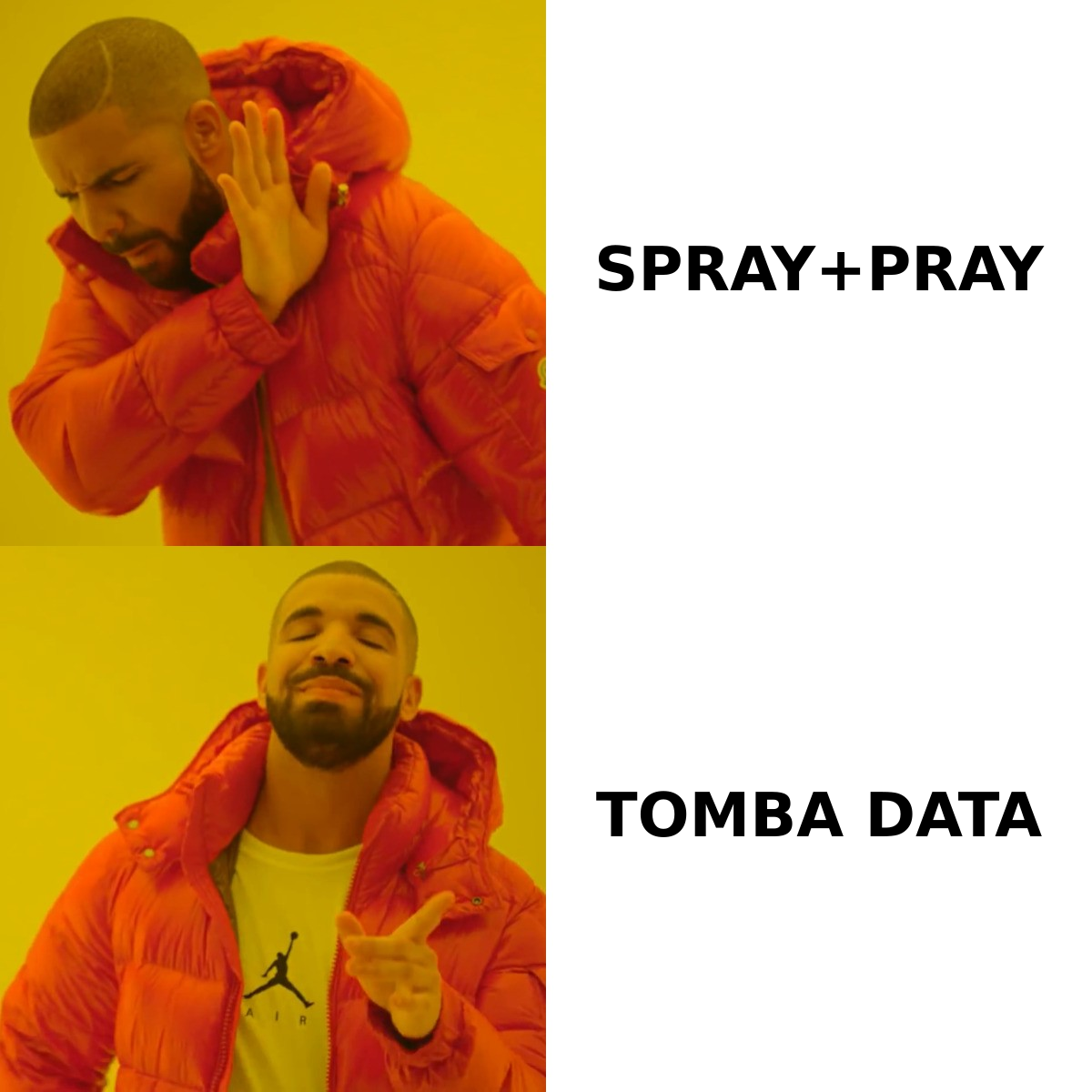
There is no single "best" model. The right one depends on your average contract value (ACV), how many people sit on the buying committee, and how complex your product is to evaluate. Here's how the five dominant motions compare.
| Sales model | Best for | Typical ACV | Sales cycle | Primary channel |
|---|---|---|---|---|
| Inbound | Strong content + brand, mid-market | $5k–$25k | 1–3 months | Demos from website leads |
| Outbound | Defined ICP, low brand awareness | $10k–$75k | 2–5 months | Cold email + calls + LinkedIn |
| Product-led (PLG) | Self-serve, fast time-to-value | $0–$15k | Days–weeks | Free trial / freemium |
| Account-based (ABM) | Enterprise, large committees | $75k+ | 6–18 months | Multi-threaded, multi-channel |
| Hybrid | Most scaling B2B companies | $15k–$100k | 3–9 months | Blend of above |
Most companies past their first $1M in revenue end up hybrid: inbound captures demand, outbound creates it, and ABM concentrates resources on the accounts that move the number. The mistake isn't choosing the "wrong" model — it's running two models at half-effort and wondering why neither produces pipeline.
A quick gut check: if your deal needs sign-off from five or more stakeholders, pure inbound won't carry it. You need an outbound or ABM motion that multi-threads across the committee. If your product sells itself in a 14-day trial, hiring ten SDRs to cold-call is burning money.
How do you build a B2B sales strategy step by step?#
Here's the 7-step framework that holds up across industries. Run it in order — each step feeds the next.
- Define your ICP and buying committee. Get specific: industry, company size, tech stack, trigger events, and the 3–5 roles that actually influence the purchase. A vague ICP ("B2B SaaS companies") produces vague outreach. A sharp one ("Series A–B vertical SaaS, 50–200 employees, using HubSpot, recently hired a VP of Sales") produces relevance.
- Build a clean, verified data foundation. Map your ICP to real accounts and contacts, then verify every email and phone number before a rep touches it. This is where most strategies silently leak — more on it below.
- Craft positioning and messaging per persona. The CFO cares about ROI and risk; the end user cares about whether it makes their day easier. One generic pitch insults both.
- Choose and sequence your channels. Email, phone, LinkedIn, and referrals each have a job. Decide the cadence — for example, a 14-day sequence mixing two emails, two calls, and a LinkedIn touch.
- Document the sales process and stages. Define exit criteria for each stage so a deal can't sit in "negotiation" for 90 days because nobody defined what that stage requires.
- Enable the team. Battle cards, objection-handling scripts, demo flows, and a shared definition of a qualified lead. Strategy that lives in one rep's head isn't a strategy.
- Measure, then tighten the loop. Track conversion at each stage, not just closed revenue. The stage with the steepest drop-off is where your next improvement lives.
The discipline is in steps 5 through 7. Plenty of teams nail targeting and messaging, then lose deals to a sloppy process and no feedback loop. If you want a deeper primer on pipeline mechanics, the sales process and CRM fundamentals are worth grounding the team in before you scale spend.
Why does data quality make or break the strategy?#
Because every other decision rides on top of it. A perfect ICP and brilliant messaging sent to a bounced email or a wrong-number contact converts at zero. Data quality isn't a back-office detail — it's the foundation the whole strategy stands on.
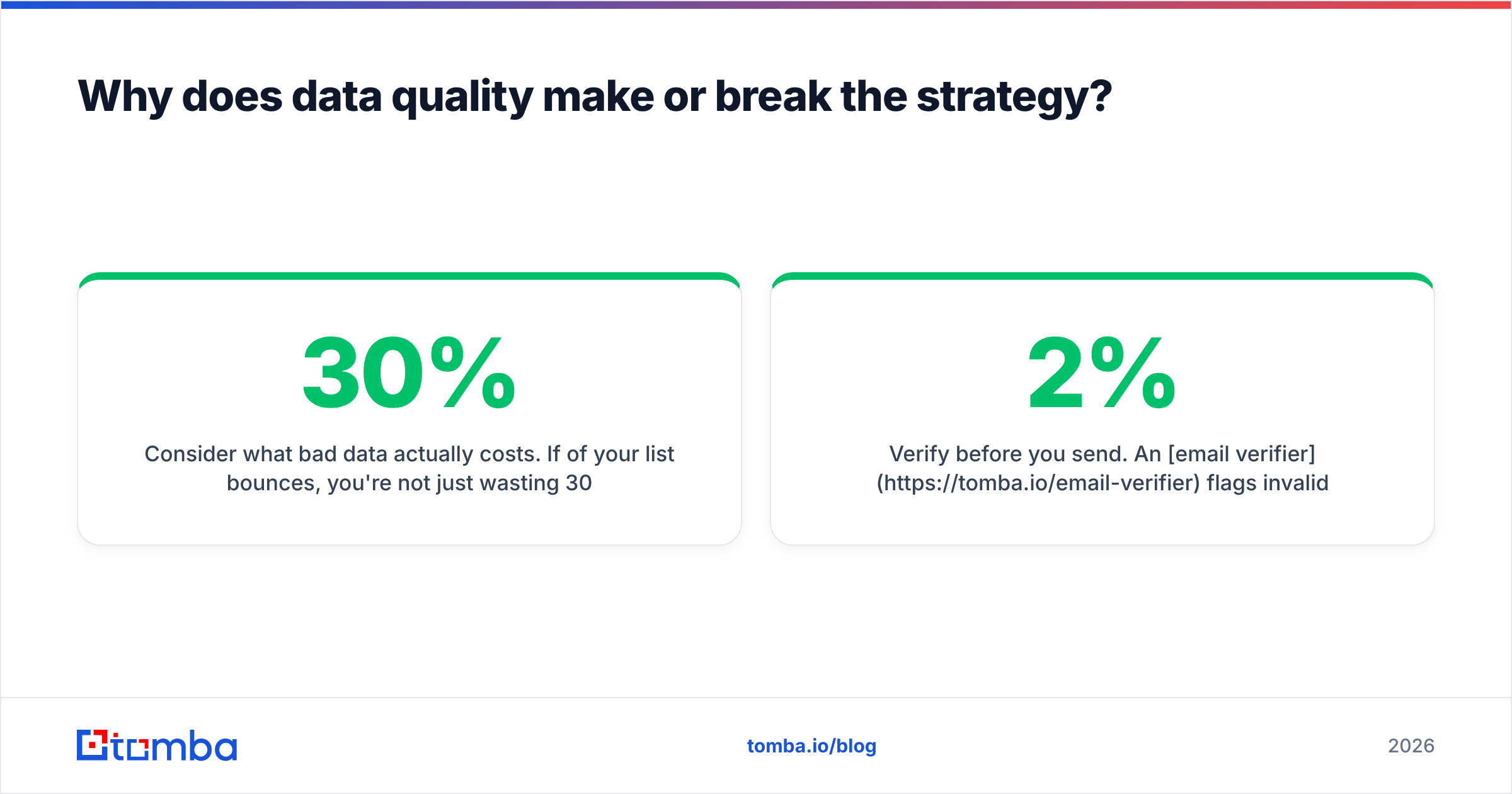
Consider what bad data actually costs. If 30% of your list bounces, you're not just wasting 30% of effort. High bounce rates wreck your sender reputation, which drops all your email into spam — including the messages to good contacts. One bad list can poison your domain for months. This is why email deliverability and data hygiene are inseparable from sales strategy in 2026.
The fix is a verification-first workflow:
- Find the right contacts by mapping your ICP to real people — using a domain search to pull every relevant email pattern at a target company, or an email finder to locate a specific decision-maker by name.
- Verify before you send. An email verifier flags invalid, risky, and catch-all addresses so your bounce rate stays under 2%.
- Enrich what you have. Data enrichment fills in titles, company size, and firmographics so your sequencing and routing logic actually works.
That's the unglamorous engine behind every high-performing outbound motion. Independent review sites like G2 make it easy to compare accuracy claims across providers — and accuracy is the metric that quietly decides whether your strategy compounds or stalls.
How do you measure whether your B2B sales strategy works?#
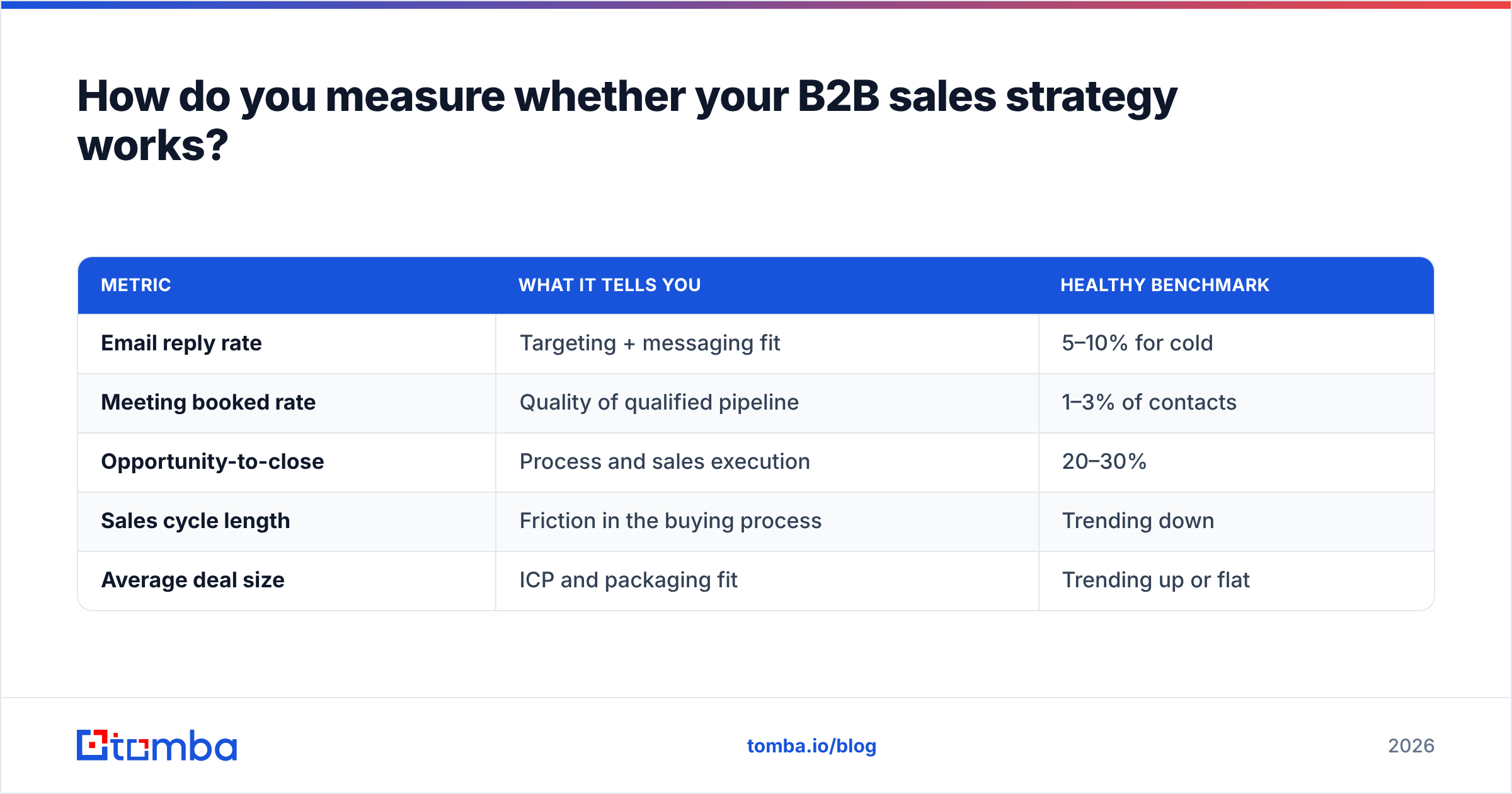
Track the funnel, not just the finish line. Closed revenue tells you what happened; stage-by-stage conversion tells you why and where to fix it. These are the metrics that matter in order of leading-to-lagging.
| Metric | What it tells you | Healthy benchmark |
|---|---|---|
| Email reply rate | Targeting + messaging fit | 5–10% for cold |
| Meeting booked rate | Quality of qualified pipeline | 1–3% of contacts |
| Opportunity-to-close | Process and sales execution | 20–30% |
| Sales cycle length | Friction in the buying process | Trending down |
| Average deal size | ICP and packaging fit | Trending up or flat |
If reply rates are healthy but meetings don't convert to opportunities, your problem is qualification, not targeting. If everything looks good until the final stage, you have a closing or pricing issue — not a top-of-funnel one. The whole point of measuring per stage is to stop guessing which lever to pull.
One caution: don't optimize a single metric in isolation. Pushing reply rates with a gimmicky subject line can tank meeting quality. Look at the chain end to end, and weight changes by their downstream effect on revenue. Authoritative sales-research shops like Forrester consistently find that alignment across the full revenue funnel — marketing, SDR, and AE handoffs — predicts win rates better than any single tactic.
Inbound vs. outbound: which should you prioritize?#
Prioritize the motion that matches your demand reality. If buyers already search for what you sell, inbound is cheaper to scale. If they don't know your category exists yet, outbound is the only way to create the conversation.
Most scaling teams shouldn't treat this as either/or. The strongest 2026 playbook uses outbound to create demand in named accounts, inbound to capture the demand that outbound and content generate, and tight handoffs so a hand-raiser from a target account gets routed to the rep already working it. The failure mode is running both as disconnected silos — your SDR cold-emails an account that just downloaded three of your guides, looking like you don't know your own pipeline.
Whichever you lead with, the contact data underneath is shared infrastructure. Whether a lead comes from a content download or a cold sequence, you still need to verify the email, enrich the record, and route it correctly. That's why teams centralize finding and verification rather than bolting a different tool onto each motion. You can see how the Tomba pricing tiers map to team size — the Free plan (25 searches/mo) is enough to pressure-test data quality before you commit, with Starter at $49/mo and Growth at $99/mo as volume grows.
What are the most common B2B sales strategy mistakes?#
Four mistakes show up again and again, and all of them are avoidable.
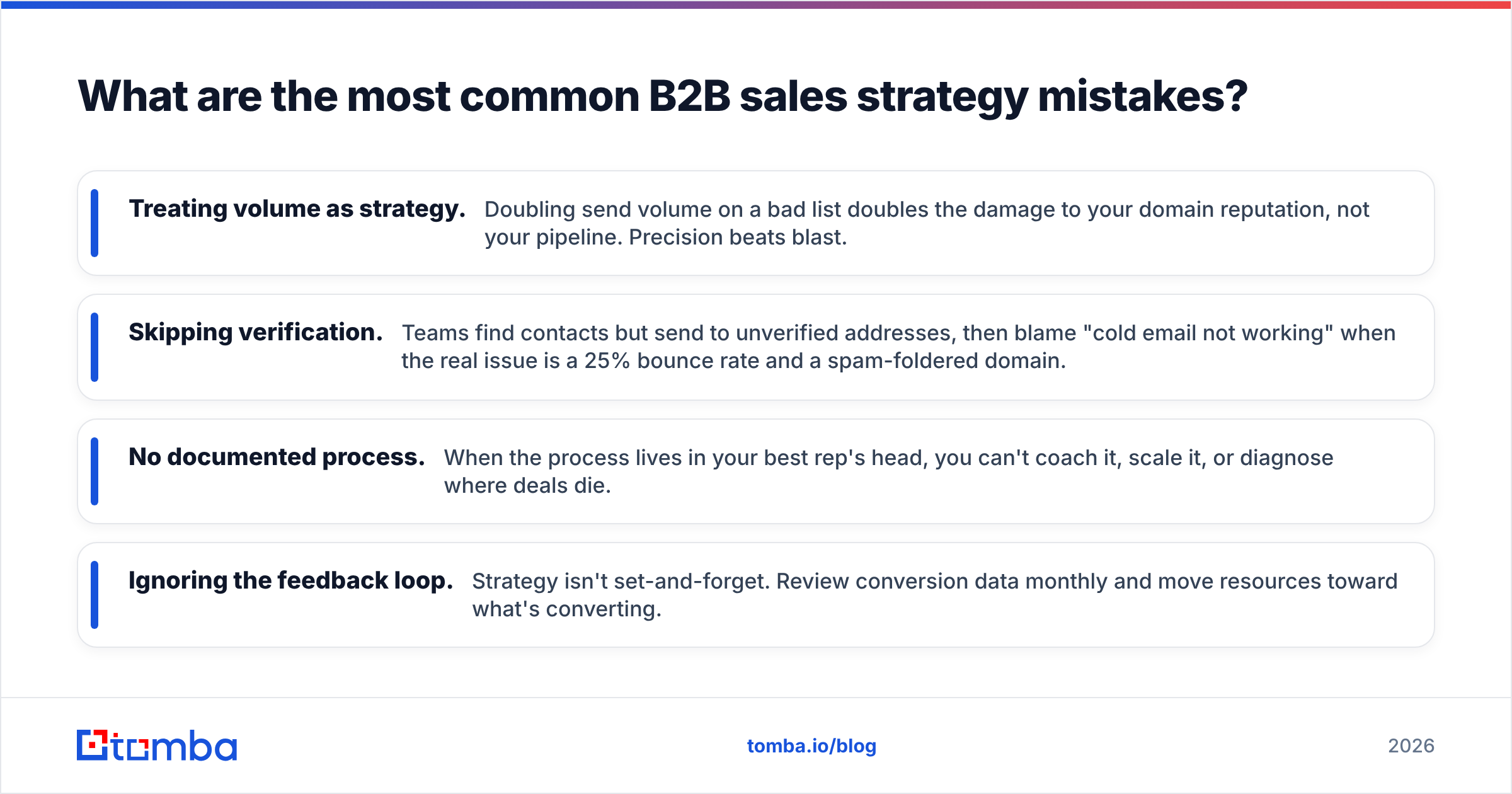
- Treating volume as strategy. Doubling send volume on a bad list doubles the damage to your domain reputation, not your pipeline. Precision beats blast.
- Skipping verification. Teams find contacts but send to unverified addresses, then blame "cold email not working" when the real issue is a 25% bounce rate and a spam-foldered domain.
- No documented process. When the process lives in your best rep's head, you can't coach it, scale it, or diagnose where deals die.
- Ignoring the feedback loop. Strategy isn't set-and-forget. Review conversion data monthly and move resources toward what's converting.
The thread connecting all four: discipline and data. A modest strategy executed with clean data and a tight process will out-earn a brilliant strategy running on a stale list every time.
How do you put this into action this quarter?#
Start small and sequential. Pick one ICP segment, build a verified list of 200 accounts, write persona-specific messaging, run a 14-day multi-channel cadence, and measure conversion at every stage. Resist the urge to launch five segments at once — you'll learn faster from one clean experiment than from five noisy ones.
The unlock at every step is contact data you can trust. Before your reps spend a single hour on outreach, build your target list with the Tomba Email Finder — find professional emails by domain, name, or company, verify them in the same workflow, and enrich each record so your sequencing logic actually fires. Start free with 25 searches to validate your ICP, then scale into Tomba's plans as your pipeline grows. A strategy is only as strong as the data it runs on — give yours a foundation that converts.
// get started
Find, verify and enrich your first contacts today
Start on the free plan with 25 searches a month, then scale when your team is ready.
Free plan · No credit card required · GDPR & CCPA
// about the author