Best AI Tools for Cold Email Outreach in 2026 (Ranked)
AI now touches every step of cold outreach — sourcing, writing, sending, and warmup. Here's how the best AI tools for cold email stack up in 2026, and where each one actually earns its price.
TL;DR
- The "best AI tool for cold email" is really a stack of four jobs: find contacts, verify them, write/sequence, and protect deliverability. No single tool wins all four.
- For writing and sequencing at scale, Instantly, Smartlead, and Lemlist lead. For AI personalization research, Clay and Lavender stand out.
- AI copy means nothing if your list is junk. Bounce rates above ~3% tank your sender reputation regardless of how clever the prompt was.
- Start your stack with accurate sourcing — a verified email finder feeding clean data into whichever sending tool you pick.
- Budget reality: most teams run two or three tools, not one. Expect $50–$300/mo combined for a lean setup.
Why does cold email need AI at all?#
Cold email has a math problem. To book one meeting you might need 30–50 positive-intent replies, which can mean thousands of sends — each one ideally personalized, deliverable, and sent to a real inbox. Doing that by hand doesn't scale past a few dozen prospects a day.
AI fixes the bottlenecks at four specific points, not one. Think of cold outreach like running a restaurant: sourcing ingredients (data), prepping (verification), cooking (copy + sequencing), and keeping the kitchen clean so the health inspector doesn't shut you down (deliverability). A tool that only "writes emails" handles one station and leaves the other three on fire.
So when people search for the best AI tools for cold email outreach, the honest answer is: pick the best tool per job, then connect them. Below I break down each job, name the strongest options, and show where they overlap.
What are the four jobs an AI cold-email stack has to do?#
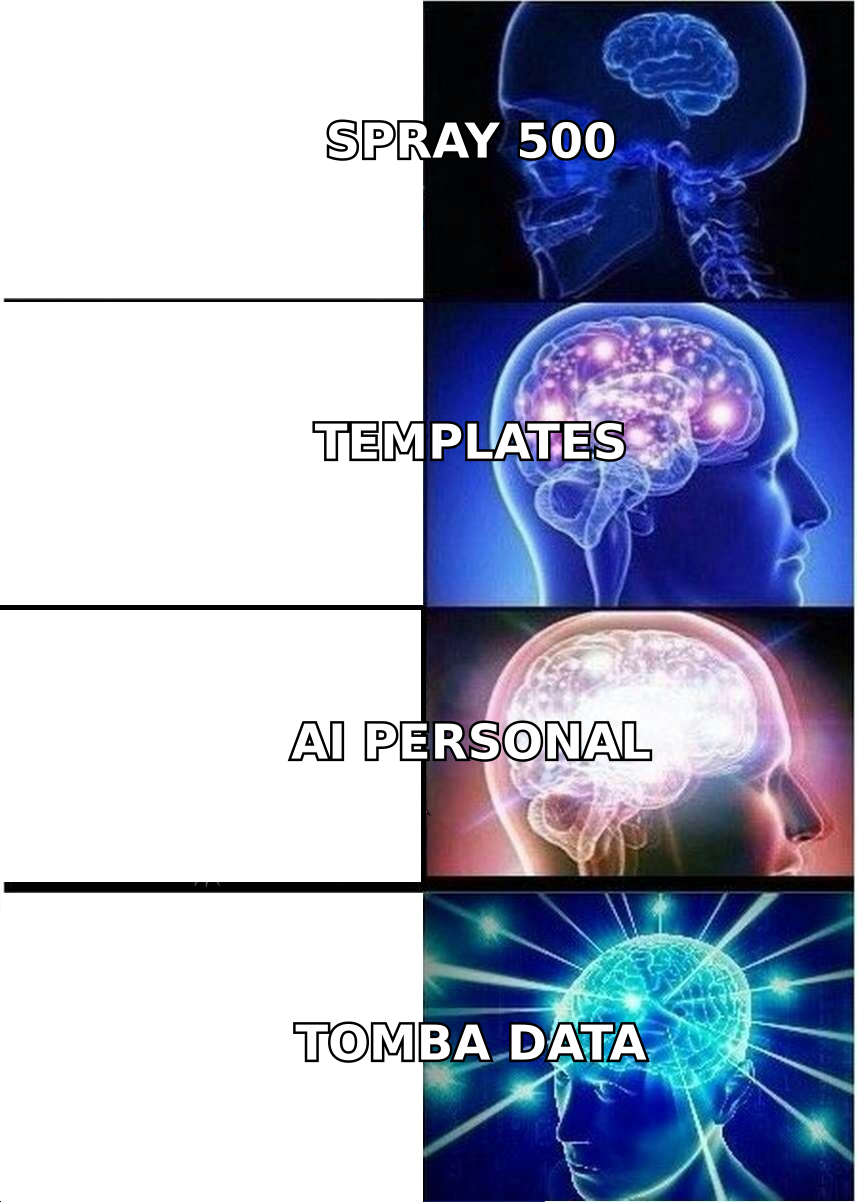
Before comparing brand names, get the categories straight. These are the four jobs, in the order data flows through them:
- Source contacts — Turn a company or persona into real names and email addresses. Tools: email finders, database/enrichment platforms, LinkedIn scrapers.
- Verify deliverability — Confirm each address actually accepts mail before you send. Tools: email verifiers, catch-all checkers.
- Write and sequence — Draft personalized first lines and multi-step follow-ups, then send on a schedule across inboxes. Tools: sending platforms with AI copy.
- Protect the sender — Warm up inboxes, rotate domains, and monitor reputation so you land in the inbox, not spam.
Most "AI cold email tool" roundups blur jobs 3 and 4 together and ignore 1 and 2 entirely — which is exactly why so many AI-written campaigns still flop. A perfect email to a fake address is still a bounce.
Which AI tools are best for cold email outreach in 2026?#
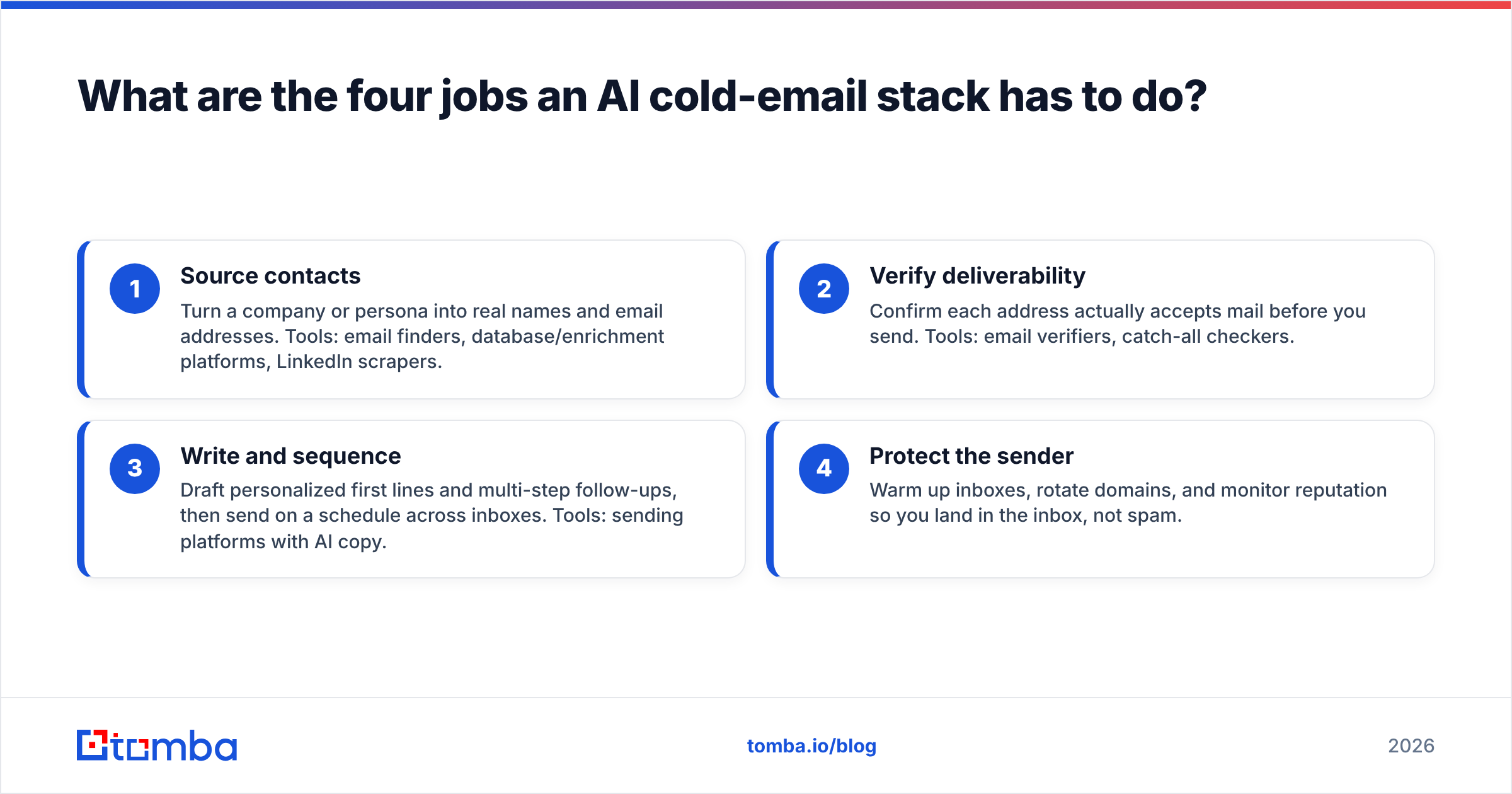
Here's the head-to-head. Prices are entry paid tiers as of 2026 and move around, so treat them as directional and check each vendor's page.
| Tool | Primary job | AI strength | Entry price | Best for |
|---|---|---|---|---|
| Tomba | Source + verify | Email finding & verification accuracy | Free (25/mo), then $49/mo | Feeding clean, verified contacts into any sender |
| Instantly | Send + warmup | Unlimited inboxes, built-in warmup | ~$37/mo | High-volume senders rotating many domains |
| Smartlead | Send + deliverability | Unibox, reputation controls | ~$39/mo | Agencies running many client campaigns |
| Lemlist | Write + sequence | AI personalization, image/video tokens | ~$55/mo | SMB teams wanting creative personalization |
| Clay | Enrich + research | AI agents that scrape and summarize | ~$149/mo | RevOps building bespoke enrichment waterfalls |
| Lavender | Copy coaching | Real-time email scoring | ~$29/mo | Reps improving reply rates on each draft |
Notice the pattern: the sending tools (Instantly, Smartlead, Lemlist) cluster around $37–$55/mo, the research/enrichment tools cost more, and sourcing/verification is where you can actually start free. You will likely buy one from the top group and one from the data group.
Sourcing: where the campaign is won or lost#
Your reply rate is capped by your list quality before a single word is written. If 20% of your addresses bounce, mailbox providers read that as spam-like behavior and throttle everything — even the good sends. This is the least glamorous job and the one that quietly decides outcomes.
A dedicated email verifier plus a finder that returns confidence scores keeps your bounce rate under the ~3% danger line. If you sell into mid-market and enterprise, you'll also hit catch-all domains constantly; a catch-all verifier tells you which of those are safe to mail instead of guessing. For company-wide sourcing, domain search pulls every known address pattern at a target account in one pass.
Writing and sequencing: where AI gets the headlines#
This is the job everyone pictures when they say "AI cold email." Instantly, Smartlead, and Lemlist all generate first lines, rewrite for tone, and spin follow-ups. The real differentiator isn't the model — it's the surrounding infrastructure: inbox rotation, a unified reply inbox (unibox), and spintax to vary copy across sends.
Lavender takes a different angle: instead of sending, it scores your draft live against reply-rate data and tells you to cut the 200-word essay down to 60. It's a coaching layer that sits on top of whatever you send with.
Deliverability: the job that protects all the others#
Even flawless copy lands in spam if your domain reputation is shot. AI warmup tools simulate human inbox behavior — opening, replying, marking important — to build trust before you scale volume. Strong email deliverability depends on SPF/DKIM/DMARC being correct, gradual volume ramps, and keeping complaint rates low. No AI rescues a domain you burned by blasting 1,000 cold emails on day one.
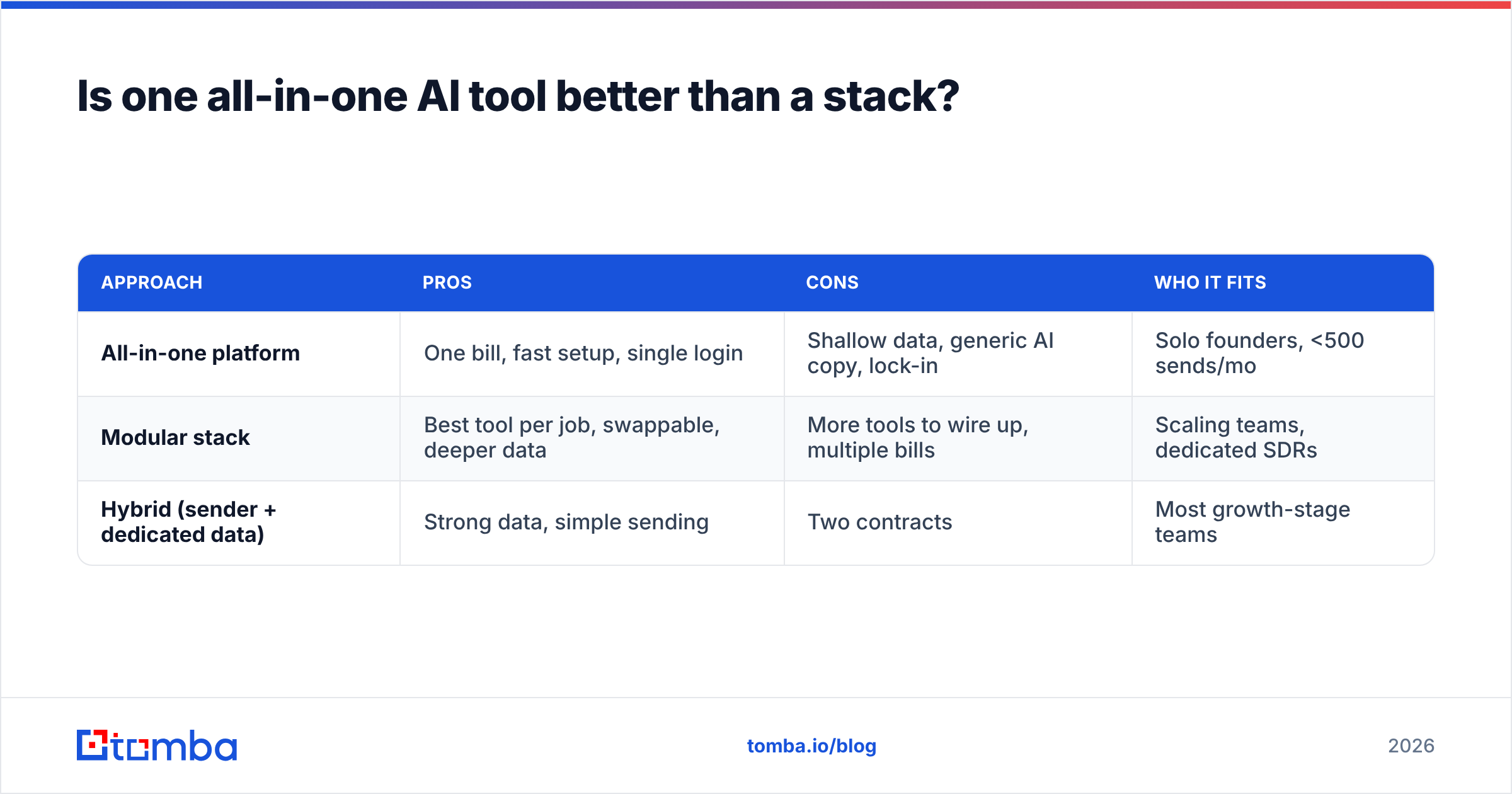
Is one all-in-one AI tool better than a stack?#
Short answer: a stack wins on quality, an all-in-one wins on simplicity — pick based on volume.
All-in-one platforms (Apollo, Smartlead with native enrichment) are tempting because one login covers sourcing, sending, and warmup. The trade-off is that bundled data is usually shallower and staler than dedicated providers, and bundled AI copy is generic. If you're sending a few hundred emails a month and value one bill, all-in-one is fine.
But if cold email is a real revenue channel, the modular stack wins. You keep best-in-class sourcing, swap the sender if deliverability dips, and aren't held hostage by one vendor's roadmap. The glue is integrations and APIs — for example, pushing verified contacts via the Tomba API straight into your sequencer, or syncing through HubSpot so reps work one source of truth.
| Approach | Pros | Cons | Who it fits |
|---|---|---|---|
| All-in-one platform | One bill, fast setup, single login | Shallow data, generic AI copy, lock-in | Solo founders, <500 sends/mo |
| Modular stack | Best tool per job, swappable, deeper data | More tools to wire up, multiple bills | Scaling teams, dedicated SDRs |
| Hybrid (sender + dedicated data) | Strong data, simple sending | Two contracts | Most growth-stage teams |
For most readers, the hybrid row is the sweet spot: a dedicated data layer feeding a single sending platform.
How do AI cold email tools actually personalize at scale?#
They combine a data signal with a template slot. The AI doesn't invent insight from nothing — it reads a field you supplied (job title, recent funding, tech stack, a LinkedIn post) and writes one or two sentences around it. Garbage signal, garbage personalization.
That's why enrichment quality matters more than the copy model. Clay built its whole business on "waterfall" enrichment — trying multiple data sources until one returns a hit — then letting AI agents summarize the result into a usable line. You can replicate the core of that cheaply by pairing solid data enrichment with your sender's native AI.
Practical personalization tiers, from weakest to strongest:
- Token swaps —
{{first_name}},{{company}}. Table stakes; not really personalization. - Segment lines — One custom sentence per persona or industry. Scales well, decent lift.
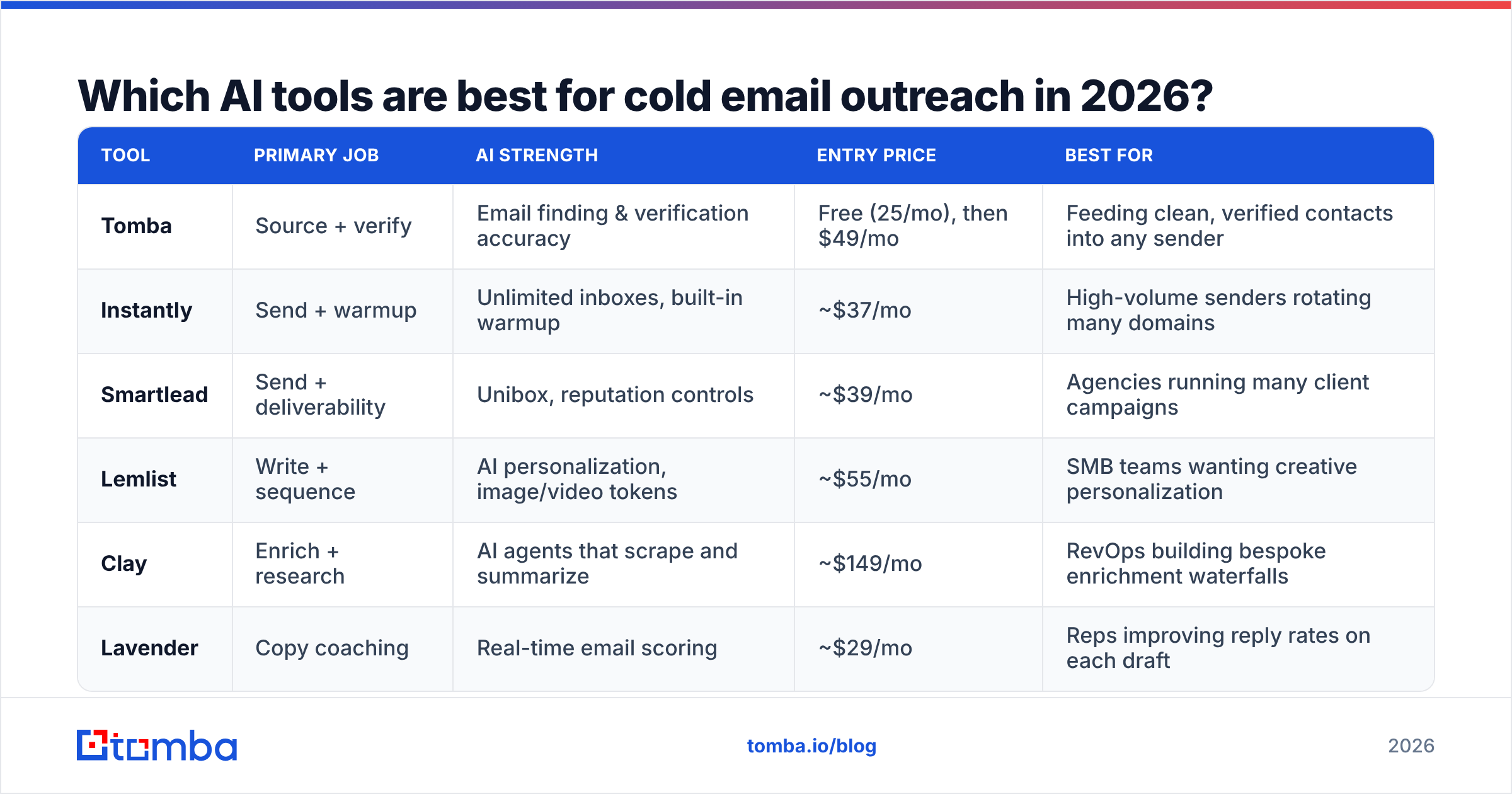
- Signal-based — A line tied to a real event (funding, hiring, a launch). Strong lift, needs good data.
- Research-grade — AI summarizes a prospect's content or role. Highest reply rates, highest cost per lead.
Match the tier to your deal size. A $500 ACV product can't justify research-grade lines on every contact; a $50K ACV deal absolutely can.
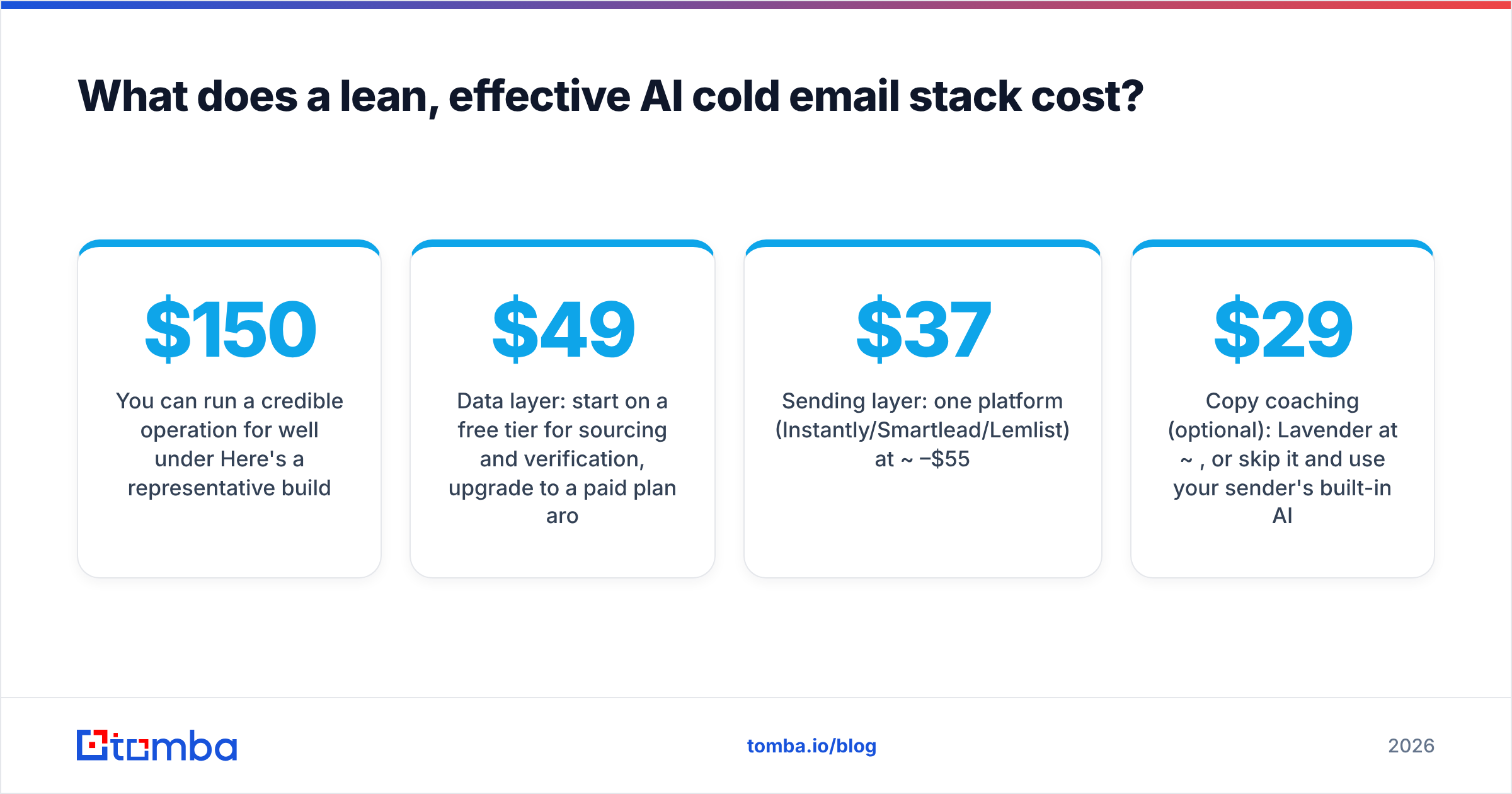
What does a lean, effective AI cold email stack cost?#
You can run a credible operation for well under $150/mo. Here's a representative build:
- Data layer: start on a free tier for sourcing and verification, upgrade to a paid plan around $49/mo once volume grows. See Tomba pricing for tier breakpoints.
- Sending layer: one platform (Instantly/Smartlead/Lemlist) at ~$37–$55/mo.
- Copy coaching (optional): Lavender at ~$29/mo, or skip it and use your sender's built-in AI.
That's roughly $90–$130/mo for a setup that sources verified contacts, personalizes, sends across rotated inboxes, and warms up — the four jobs covered. Compare that to a single all-in-one seat at $99–$149/mo with weaker data, and the stack often costs the same or less while performing better.
You can validate vendor claims independently on G2 and cross-check deliverability fundamentals against guidance from established players like HubSpot before committing budget.
How do you choose the right AI tool for your situation?#
Decide by your binding constraint, not by feature lists:
- If your bounce rate is high → fix sourcing and verification first. Better copy won't help a dirty list. Add an email verifier and a bulk email finder before touching your sequencer.
- If your reply rate is low but deliverability is fine → invest in personalization (Clay, Lavender) and tighter segmentation.
- If you land in spam → it's a deliverability problem. Prioritize warmup, domain rotation, and authentication, not AI copy.
- If you're an agency running many clients → Smartlead's multi-account architecture plus a programmatic data feed via API is hard to beat.
Run the diagnosis before you buy. Most teams overspend on the copy layer because it's the most visible, while the actual leak is upstream in the data.
The bottom line#
The best AI tools for cold email outreach in 2026 aren't a single product — they're a coordinated stack covering sourcing, verification, writing, and deliverability. Pick a strong sender, add real personalization where deal size justifies it, and never let AI copy distract you from the unglamorous truth that clean, verified data is what actually books meetings.
That data layer is where everything starts. Tomba's Email Finder returns professional, verified addresses by name, domain, or company — with confidence scoring so you feed your sequencer contacts that land instead of bounce. Start free with 25 searches a month, then scale to the $49/mo Starter plan when your pipeline demands it. Get the inputs right, and every AI tool downstream gets better automatically.
// get started
Find, verify and enrich your first contacts today
Start on the free plan with 25 searches a month, then scale when your team is ready.
Free plan · No credit card required · GDPR & CCPA
// about the author