Best Cold Calling Scripts for 2026: 11 Proven Templates
Eleven battle-tested cold calling scripts for 2026 — openers, objection handlers, and voicemails you can copy, plus the data step that makes them connect.
Best Cold Calling Scripts for 2026: 11 Proven Templates
Cold calling is not dead — bad cold calling is. A script is the difference between a rep who stammers through the first eight seconds and one who books a meeting before the prospect reaches for the hang-up button. Below are eleven scripts you can lift word-for-word, adapt to your market, and start dialing today.
TL;DR#
- Scripts are scaffolding, not handcuffs. Use them to control the opening 15 seconds and the three objections you hear most — then talk like a human.
- The opener decides everything. A permission-based opener ("Did I catch you at a bad time?") consistently beats the fake-rapport opener.
- Eleven ready-to-use scripts below cover openers, gatekeepers, voicemails, objection handling, and the callback.
- A script only works if you reach the right person. Verified direct-dial numbers beat switchboards every time — that's the unglamorous half nobody scripts for.
- Measure connect rate, conversation rate, and meeting rate separately so you know which line to fix.
What makes a cold calling script actually work in 2026?#
The best cold calling scripts share three traits: a fast value statement, a question that earns the next 30 seconds, and built-in branches for the objections you already know are coming. Everything else is noise.
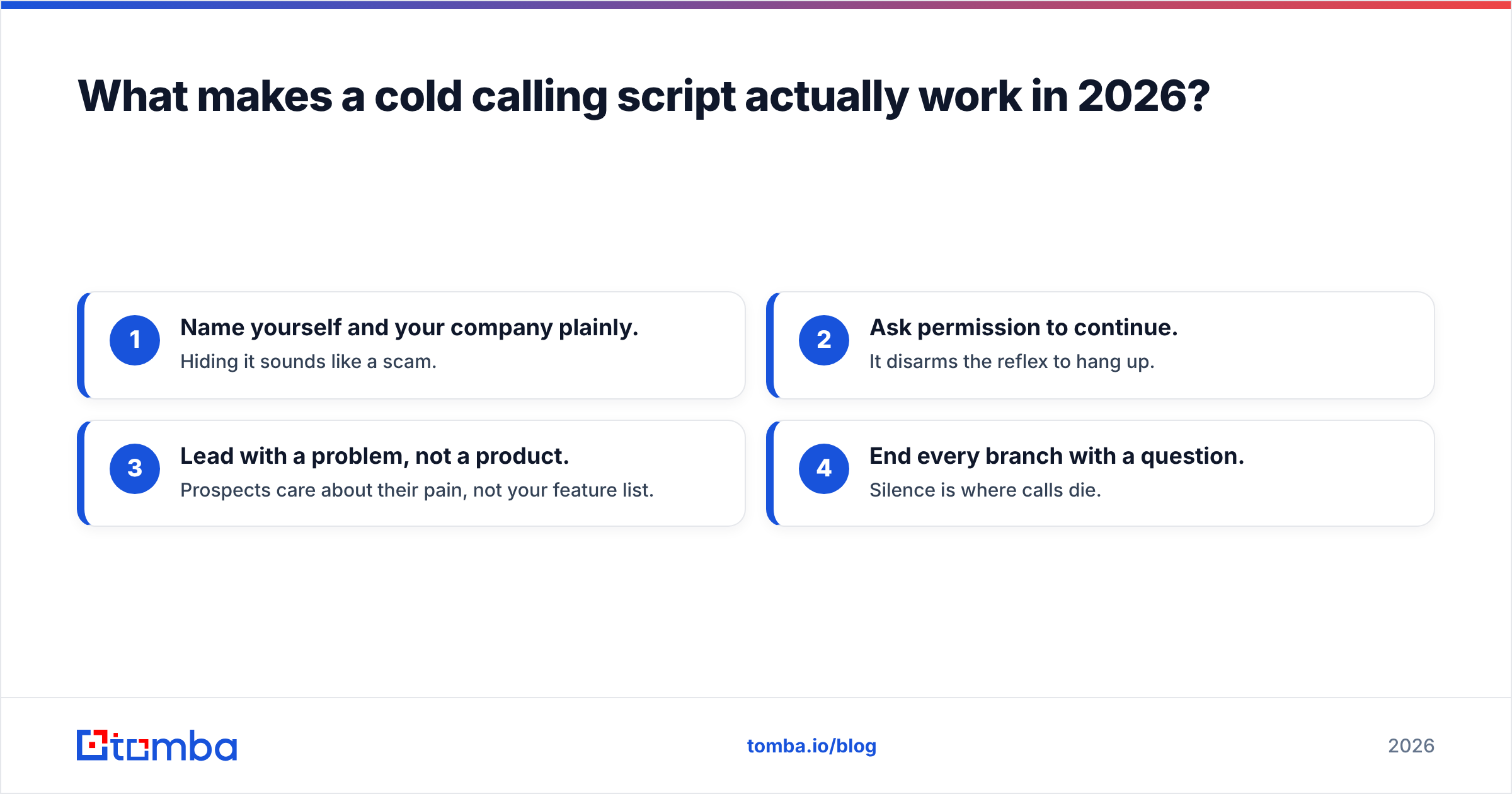
Buyers in 2026 screen calls harder than ever. Spam labeling, mobile-first answering, and shrinking attention mean your first sentence has to pass a "is this worth my time" filter instantly. The scripts that survive that filter do four things:
- Name yourself and your company plainly. Hiding it sounds like a scam.
- Ask permission to continue. It disarms the reflex to hang up.
- Lead with a problem, not a product. Prospects care about their pain, not your feature list.
- End every branch with a question. Silence is where calls die.
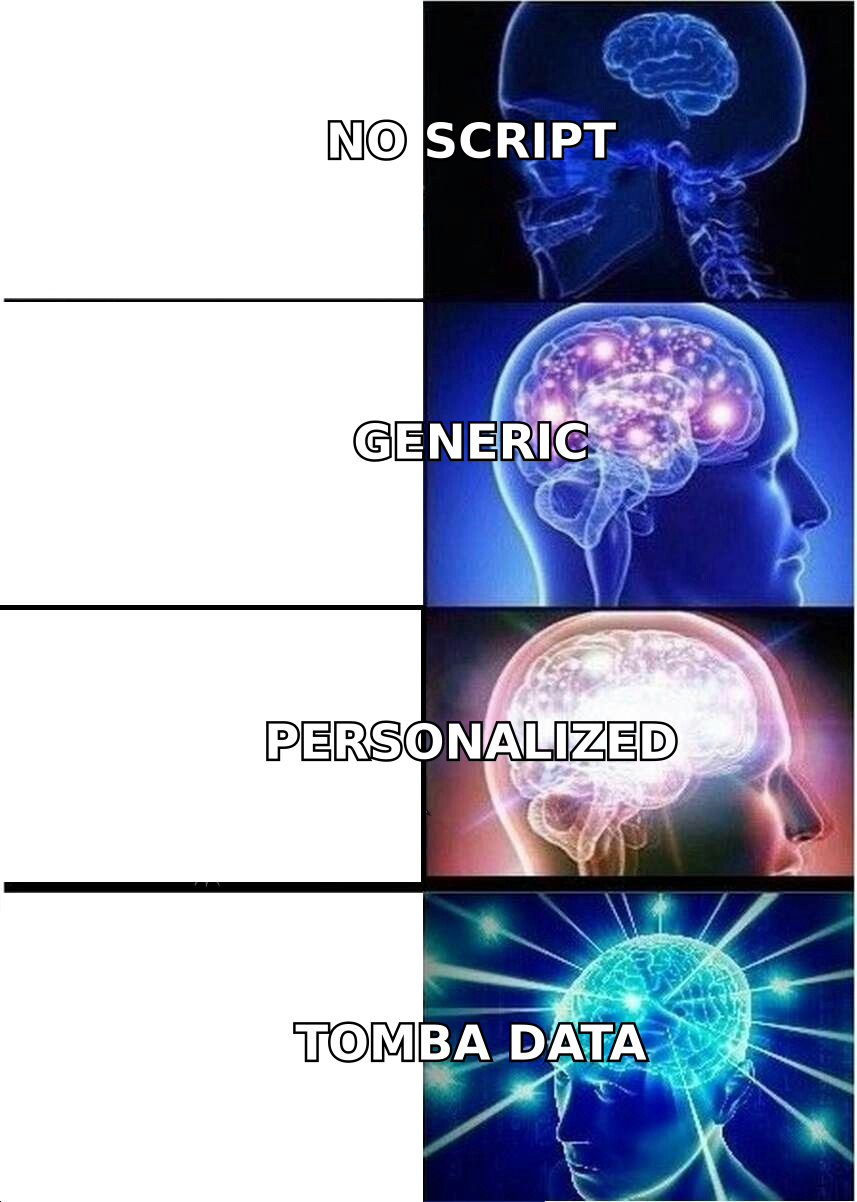
Before any of this matters, you have to be dialing a number that rings the actual decision-maker. Reps routinely burn 60–70% of their calling block on dead numbers, switchboards, and wrong extensions. Pulling verified direct dials with a phone finder and screening them through a phone validator is the least exciting and most important step on this page.
What are the best cold calling opener scripts?#
The opener is 80% of the outcome. Here are three openers ranked by how they perform in practice.
Script 1 — The permission-based opener (highest connect-to-conversation rate)#
"Hi [Name], this is [You] from [Company]. I know I'm an interruption — did I catch you at a bad time?"
Counterintuitively, "yes, a bit" usually leads to "but go ahead, what's this about?" You've handed them control, so they relax.
Script 2 — The pattern interrupt#
"Hi [Name], you weren't expecting my call — can I take 30 seconds to tell you why I'm calling, and then you decide if it's worth continuing?"
This works on skeptical, senior buyers who respect directness.
Script 3 — The referral / trigger-event opener#
"Hi [Name], I saw [Company] just [hired 5 SDRs / raised a Series B / launched in EU]. We help teams in exactly that moment with [outcome]. Is that something on your plate right now?"
A real trigger event — funding, hiring, a product launch — turns a cold call warm. You can surface those signals with data enrichment before you dial.
How do you get past the gatekeeper?#
Script 4 — The respectful gatekeeper script#
"Hi, I'm hoping you can help me out. I need to reach whoever owns [function] at [Company] — am I right that's [Name], or should I be talking to someone else?"
Treat the gatekeeper as an ally, not an obstacle. Ask for help, name the function clearly, and never pretend you already know the person.
Script 5 — The voicemail that gets a callback#
"Hi [Name], it's [You] at [Company], my number is [number]. I'm calling about [specific problem] — I'll keep it to two minutes when we connect. Again, that's [You] at [number]. Talk soon."
Keep it under 20 seconds. State your number twice, slowly. Reference one specific problem, never a pitch.
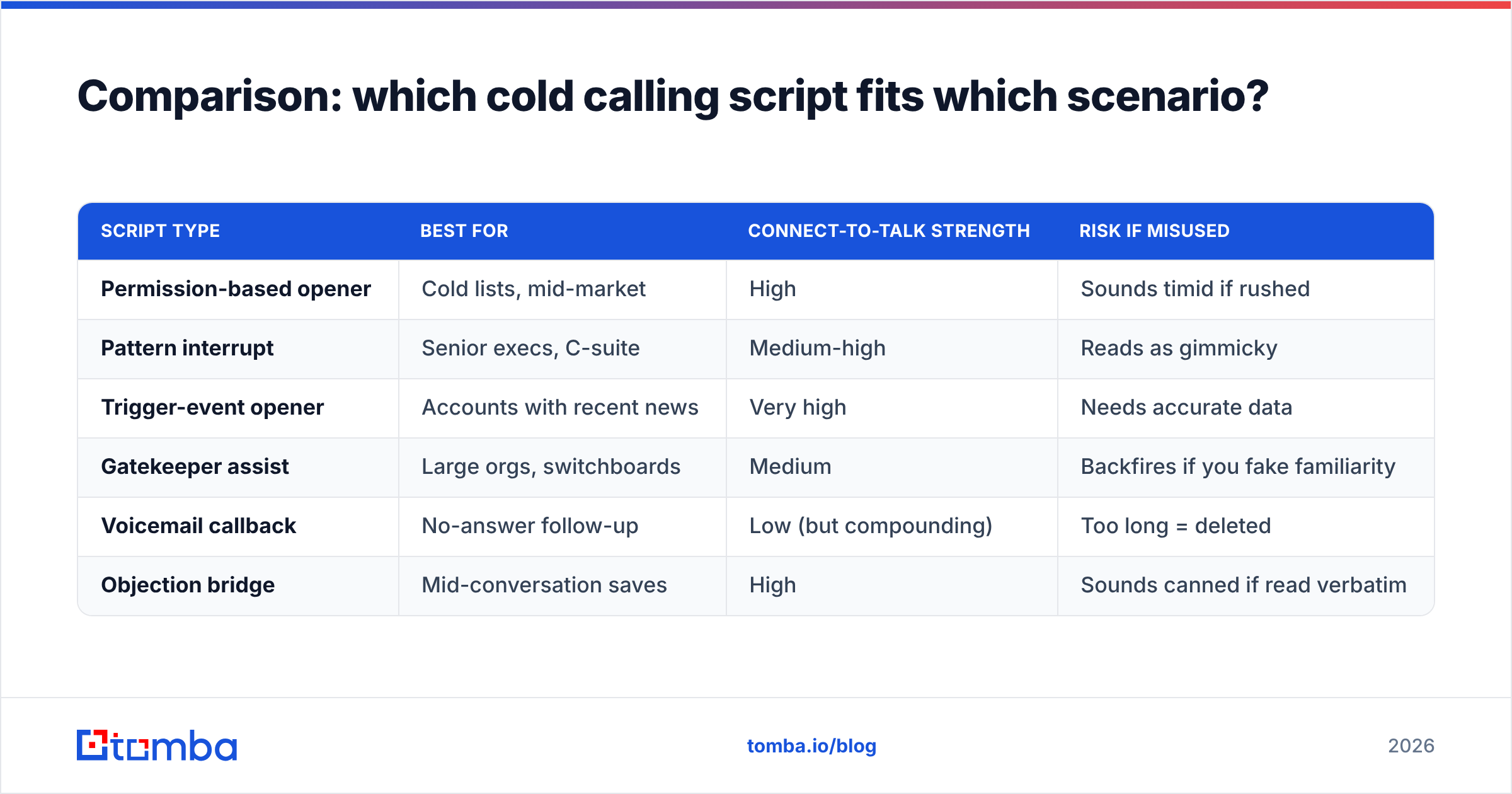
Comparison: which cold calling script fits which scenario?#
| Script type | Best for | Connect-to-talk strength | Risk if misused |
|---|---|---|---|
| Permission-based opener | Cold lists, mid-market | High | Sounds timid if rushed |
| Pattern interrupt | Senior execs, C-suite | Medium-high | Reads as gimmicky |
| Trigger-event opener | Accounts with recent news | Very high | Needs accurate data |
| Gatekeeper assist | Large orgs, switchboards | Medium | Backfires if you fake familiarity |
| Voicemail callback | No-answer follow-up | Low (but compounding) | Too long = deleted |
| Objection bridge | Mid-conversation saves | High | Sounds canned if read verbatim |
Use the table as a routing guide: match the script to the prospect and the channel, not the other way around.
What are the best objection-handling scripts?#
Objections are not rejection — they're requests for a reason to keep talking. Acknowledge, reframe, ask.
Script 6 — "I'm not interested"#
"Totally fair — you don't know enough yet to be interested. Most people I talk to say that until they hear [specific outcome]. Can I give you one sentence and you tell me if it's worth 30 more seconds?"
Script 7 — "We already use [Competitor]"#
"Good — that tells me you take [category] seriously. Most of our customers came from [Competitor]. The reason they switched was [differentiator]. Worth a quick comparison?"
Script 8 — "Send me an email"#
"Happy to. So I don't send a generic one that gets buried — what's the one thing that would make this relevant enough to open? I'll put just that in the subject line."
This turns a brush-off into a discovery question. When you do send that follow-up, a verified address keeps it out of the void — run names through Tomba's email verifier first.
Script 9 — "We don't have budget"#
"Understood, and I'm not asking you to spend anything today. If I could show you [outcome] paying for itself in [timeframe], would it be worth a 15-minute look — even if the budget conversation is next quarter?"
How do you close the call and book the meeting?#
Script 10 — The assumptive close#
"This sounds like a fit worth exploring properly. I've got Thursday at 10 or Friday at 2 — which works better for a 20-minute call?"
Offer two specific times, never "when are you free?" Open-ended scheduling kills momentum.
Script 11 — The soft-commit close#
"No pressure to decide now. How about I send a short agenda, and if it still looks relevant we grab 15 minutes next week? Sound reasonable?"
Use this for cautious buyers who need a low-stakes yes before a calendar yes.
How should you build and personalize your script?#
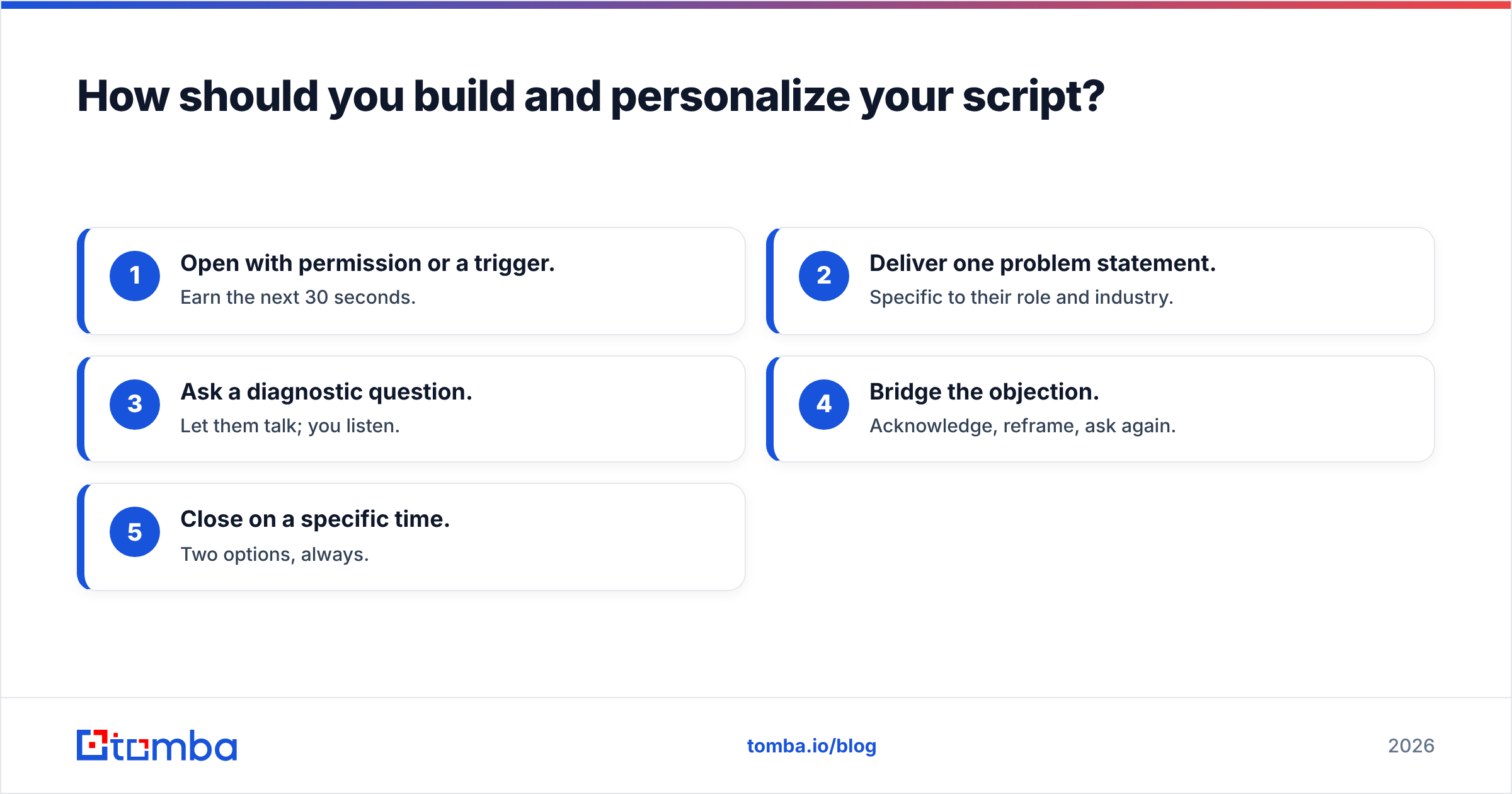
A great script is a skeleton you flesh out per call. Follow these steps:
- Open with permission or a trigger. Earn the next 30 seconds.
- Deliver one problem statement. Specific to their role and industry.
- Ask a diagnostic question. Let them talk; you listen.
- Bridge the objection. Acknowledge, reframe, ask again.
- Close on a specific time. Two options, always.
Personalization beats polish. A slightly clumsy line about their recent product launch outperforms a flawless generic pitch every time. Pull role, company, and contact details ahead of the dial so the personalization is real — Tomba's domain search and data enrichment feed that prep without manual research.
For benchmarks on what good outbound looks like, HubSpot's sales statistics and Salesforce's State of Sales report are worth bookmarking, and peer reviews on G2 help you sanity-check tools before buying.
How do you measure if your scripts are working?#
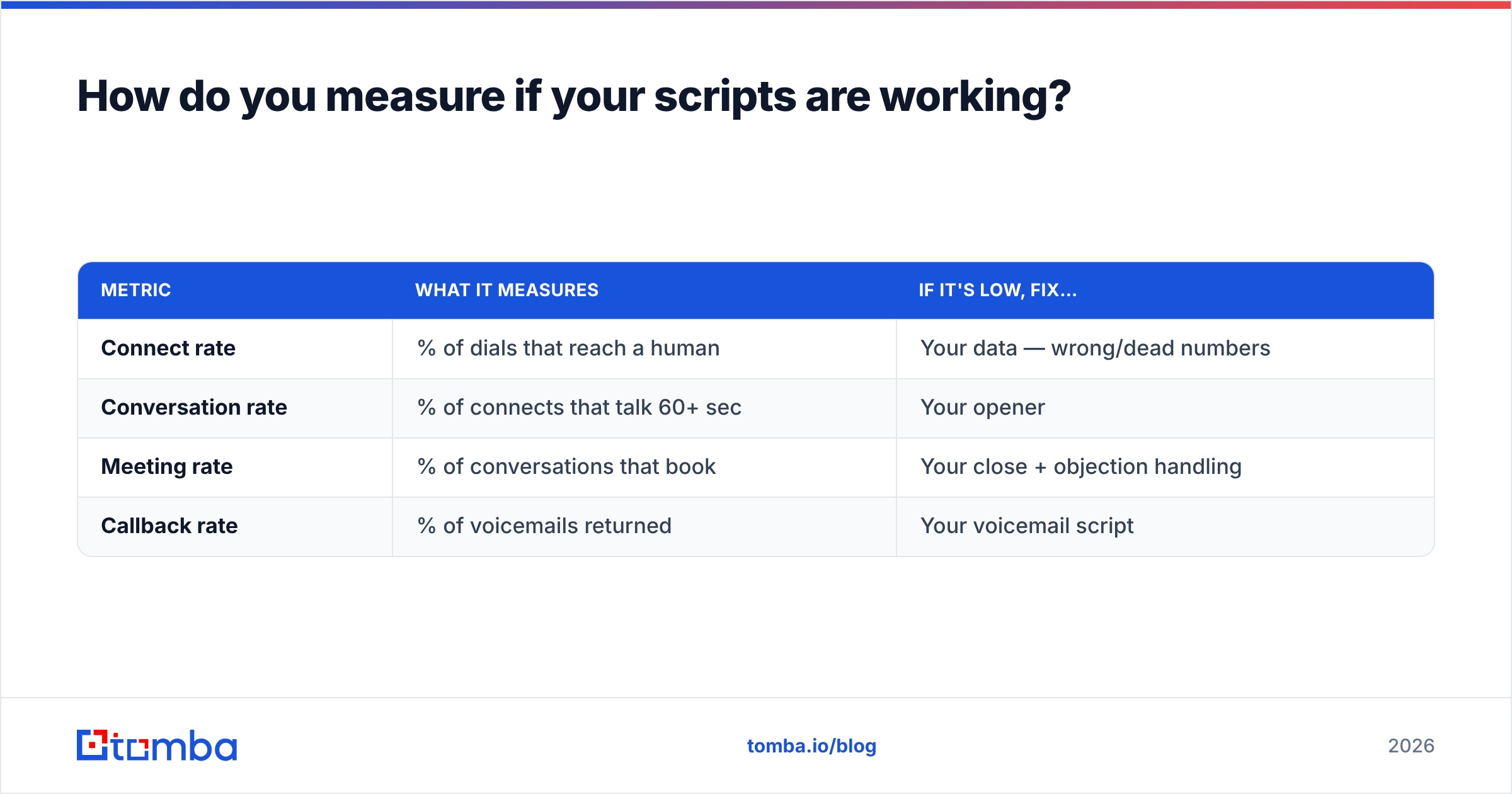
Track three numbers independently, because a low result in each points to a different fix:
| Metric | What it measures | If it's low, fix… |
|---|---|---|
| Connect rate | % of dials that reach a human | Your data — wrong/dead numbers |
| Conversation rate | % of connects that talk 60+ sec | Your opener |
| Meeting rate | % of conversations that book | Your close + objection handling |
| Callback rate | % of voicemails returned | Your voicemail script |
If connect rate is the bottleneck, no script change helps — you have a data problem, not a talk-track problem. That's the most common misdiagnosis on sales floors: reps rewrite openers when they should be cleaning their dial list.
Common cold calling mistakes to avoid#
- Reading verbatim. A script you read sounds like a script. Internalize the branches, then speak.
- Pitching before diagnosing. Ask first, present second.
- Talking past the close. When they say yes, stop selling and book the time.
- Ignoring the number quality. Switchboards and stale mobiles wreck your connect rate before a single word.
Final word: scripts get you talking, data gets you connected#
The best cold calling scripts in 2026 are simple: open with permission, lead with a problem, branch on objections, and close on a specific time. Copy the eleven above, adapt the language to your market, and rehearse the objection bridges until they sound like you.
But a perfect script is wasted on a dead line. The fastest way to lift every metric on this page is to dial verified, accurate direct numbers and pair them with confirmed email addresses for follow-up. Start with the Tomba Email Finder to build clean, decision-maker-level contact lists, layer in the phone finder for direct dials, and check Tomba pricing — the free tier gives you 25 searches a month to test it before you commit. Better data, then better scripts. In that order.
// get started
Find, verify and enrich your first contacts today
Start on the free plan with 25 searches a month, then scale when your team is ready.
Free plan · No credit card required · GDPR & CCPA
// about the author