Breakcold vs Pipedrive (2026): Which Sales CRM Wins?
Breakcold vs Pipedrive in 2026: a hands-on breakdown of pricing, pipeline features, social selling, and which CRM fits your outbound motion best.
Choosing between Breakcold and Pipedrive comes down to one question: do you sell by working a pipeline, or by working relationships across email and social? Both are real CRMs, both close deals, but they were built for different motions. This breakdown gives you the concrete differences so you can pick without a 14-day trial regret cycle.
TL;DR#
- Breakcold is a social-selling CRM built for founders, agencies, and SDRs who manage outreach across email, LinkedIn, and Twitter from one inbox.
- Pipedrive is a pipeline-first CRM built for structured sales teams that live in deal stages, forecasts, and activity reminders.
- Pricing: Breakcold starts around $29/seat/mo; Pipedrive starts at $14/seat/mo (Essential) and climbs fast as you add automation and reporting.
- Pick Breakcold if outreach and relationship velocity are your bottleneck. Pick Pipedrive if deal-stage discipline and forecasting are.
- Either CRM is only as good as the contact data feeding it — pair it with accurate email finder and data enrichment so reps work real inboxes, not bounces.
What is Breakcold?#
Breakcold is a CRM that treats the conversation as the primary object, not the deal record. Think of it like a shared social inbox welded to a lightweight pipeline: you see a prospect's recent LinkedIn posts, your last email thread, and your pipeline stage on the same screen, then engage without tab-hopping.
It grew out of the cold-outreach world, so it leans toward founders, agencies, and small outbound teams who measure success in replies and booked calls. The signature feature is the unified engagement feed — you can like and comment on a prospect's LinkedIn activity, send a follow-up email, and move them a stage forward in one workflow. For teams running LinkedIn outreach alongside email, that consolidation is the whole pitch.
Where Breakcold is thinner is heavy forecasting, multi-team permissions, and the deep automation that enterprise sales ops expect. It is intentionally simple.
What is Pipedrive?#
Pipedrive is the archetypal pipeline CRM. Its core metaphor is the visual deal board: drag a card from "Contacted" to "Demo Booked" to "Won," and the system nags you about the next activity until the deal closes. It has been around since 2010, serves hundreds of thousands of teams, and is the default recommendation when someone asks for an affordable, structured CRM.
Pipedrive's strength is process discipline. Activity reminders, deal rotting alerts, weighted forecasts, and a clean reporting layer keep reps accountable to a repeatable motion. Add-ons like Smart Docs, LeadBooster, and Campaigns extend it into proposals and marketing, and its integration with most sales stacks is mature.
The trade-off: outreach is not native. You can send tracked emails, but LinkedIn and social engagement live outside Pipedrive unless you bolt on third-party tools. It manages deals beautifully and sources conversations poorly.
Breakcold vs Pipedrive: the core comparison#
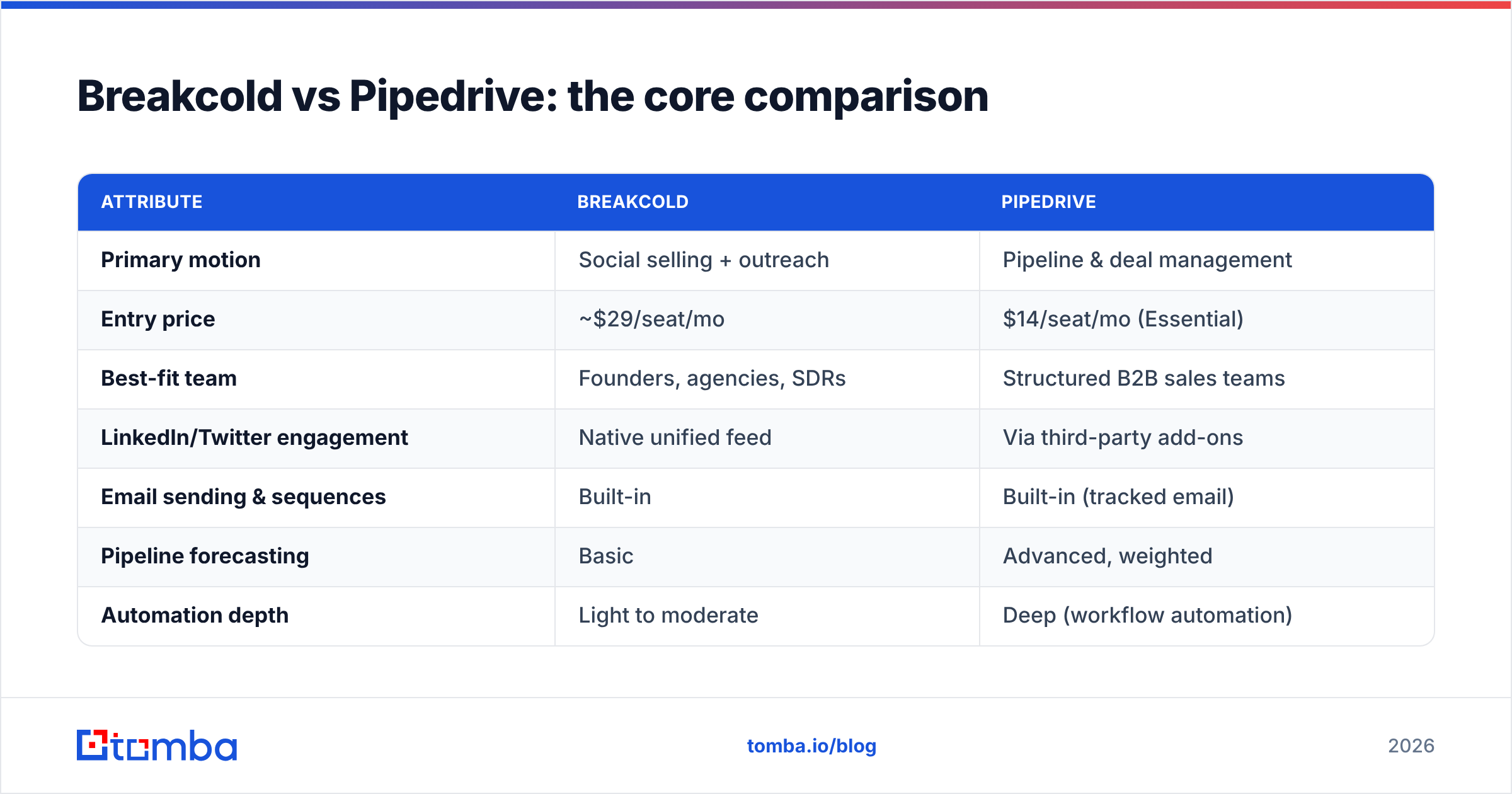
Here is the head-to-head on the attributes that actually change your workflow. Prices reflect publicly listed plans as of 2026 and can shift, so confirm on each vendor's site before buying.
| Attribute | Breakcold | Pipedrive |
|---|---|---|
| Primary motion | Social selling + outreach | Pipeline & deal management |
| Entry price | ~$29/seat/mo | $14/seat/mo (Essential) |
| Best-fit team | Founders, agencies, SDRs | Structured B2B sales teams |
| LinkedIn/Twitter engagement | Native unified feed | Via third-party add-ons |
| Email sending & sequences | Built-in | Built-in (tracked email) |
| Pipeline forecasting | Basic | Advanced, weighted |
| Automation depth | Light to moderate | Deep (workflow automation) |
| Reporting & dashboards | Functional | Strong, customizable |
| Learning curve | Low | Low to moderate |
| Native data enrichment | Limited | Limited (add-on) |
The pattern is clear: Breakcold optimizes the top of the funnel where conversations start; Pipedrive optimizes the middle and bottom where deals get managed and forecast.
Is Breakcold better than Pipedrive for cold outreach?#
Yes, for pure outreach velocity Breakcold wins — and it is not close. If your day is sending personalized emails, warming prospects on LinkedIn, and chasing replies, Breakcold's unified feed removes the context-switching tax that kills SDR productivity. You research, engage, and log activity in one place.
Pipedrive can run outbound, but you will end up duct-taping a sequencer and a LinkedIn tool onto it. That stack works, but it is more cost and more breakage. Breakcold's bet is that for outreach-led teams, the CRM should be the outreach tool.
That said, "better at outreach" is not "better CRM." Once a deal is qualified and you are managing a six-stage pipeline with a forecast your VP cares about, Pipedrive's structure pulls ahead.
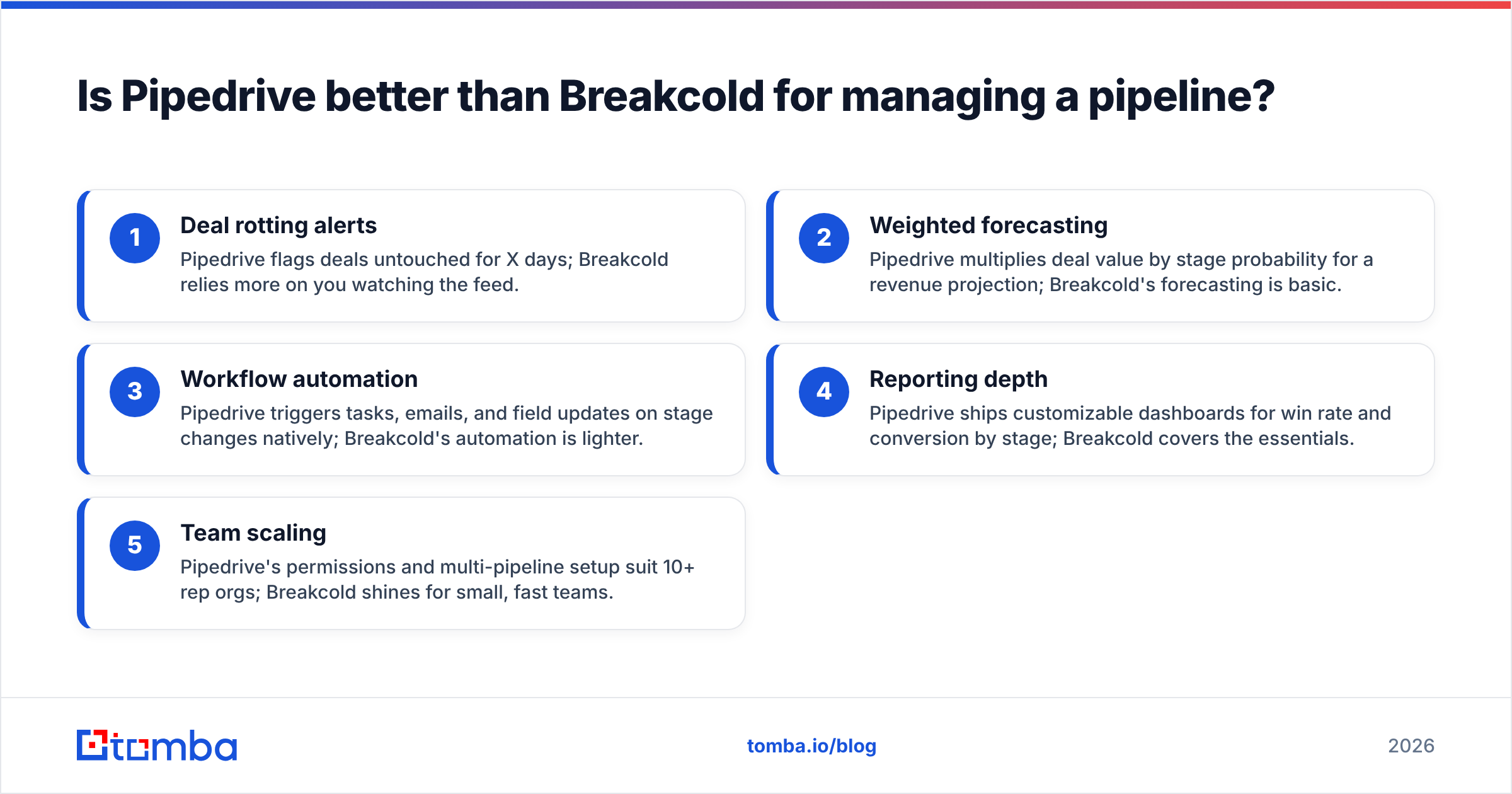
Is Pipedrive better than Breakcold for managing a pipeline?#
Yes. Pipedrive is purpose-built for the moment a lead becomes a deal you have to shepherd to close. Its forecasting, activity automation, and reporting are more mature, and it scales to larger teams with role permissions and customizable pipelines per product line.
Consider the difference in how each handles a stalled deal:
- Deal rotting alerts — Pipedrive flags deals untouched for X days; Breakcold relies more on you watching the feed.
- Weighted forecasting — Pipedrive multiplies deal value by stage probability for a revenue projection; Breakcold's forecasting is basic.
- Workflow automation — Pipedrive triggers tasks, emails, and field updates on stage changes natively; Breakcold's automation is lighter.
- Reporting depth — Pipedrive ships customizable dashboards for win rate and conversion by stage; Breakcold covers the essentials.
- Team scaling — Pipedrive's permissions and multi-pipeline setup suit 10+ rep orgs; Breakcold shines for small, fast teams.
If your bottleneck is "deals slip through the cracks," Pipedrive is the answer. If your bottleneck is "we don't have enough conversations," it is not.
How do Breakcold and Pipedrive compare on price?#
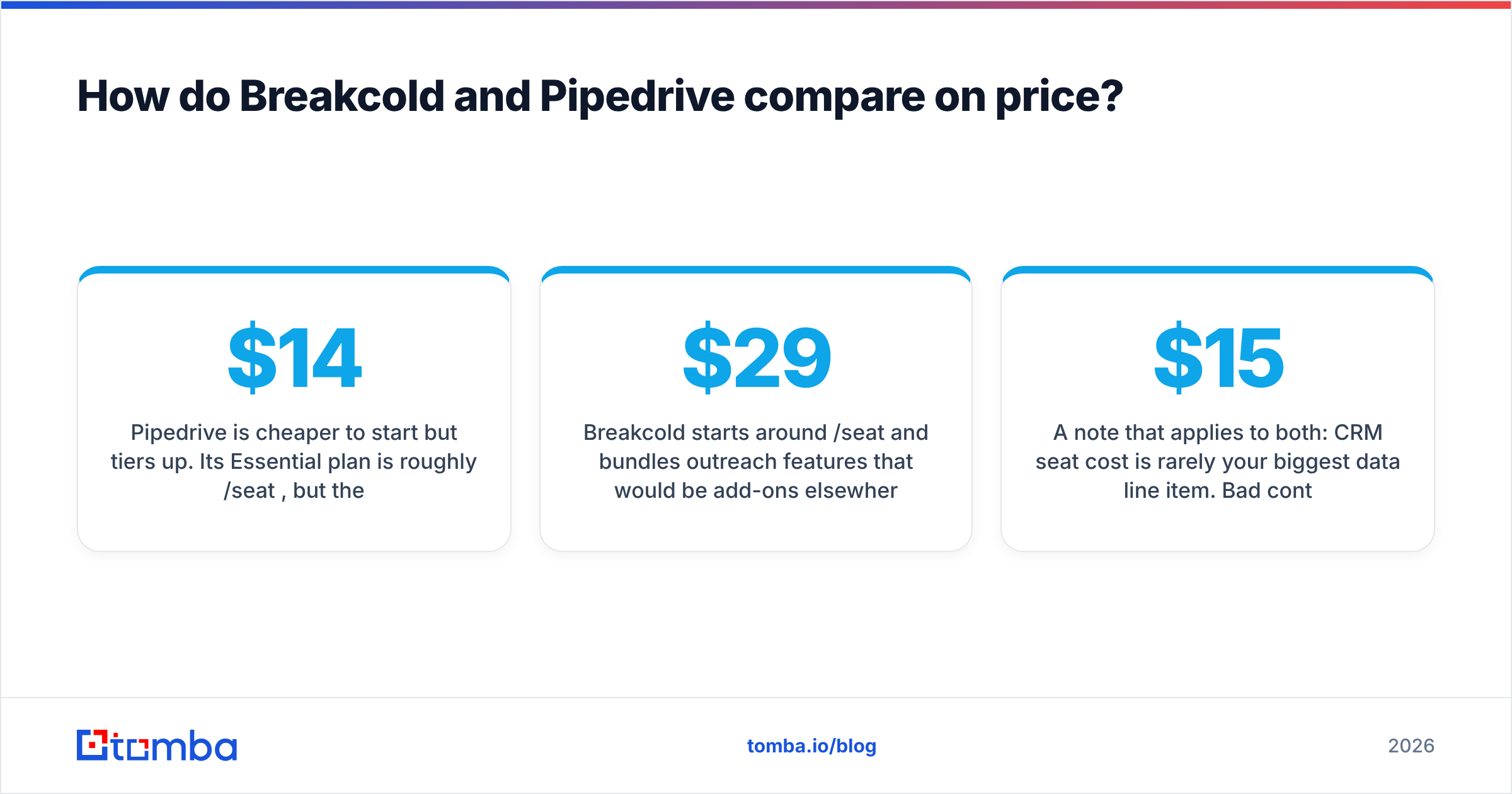
Pipedrive is cheaper to start but tiers up. Its Essential plan is roughly $14/seat/mo, but the features most teams actually want — workflow automation, advanced reporting, email sequences — sit in Advanced and Professional, which run meaningfully higher. Add LeadBooster or Campaigns and the real cost per seat climbs.
Breakcold starts around $29/seat/mo and bundles outreach features that would be add-ons elsewhere. So while Pipedrive's headline number is lower, total cost depends on which features you need. For an outreach-led team, Breakcold can be cheaper all-in because you are not paying for a separate sequencer. For a structured sales org that needs forecasting and automation, Pipedrive's mid-tiers are competitive and battle-tested.
A note that applies to both: CRM seat cost is rarely your biggest data line item. Bad contact data — bounces, wrong titles, dead numbers — quietly wastes far more rep time than a $15/seat difference. Budget for clean data, not just the CRM.
Which CRM should you choose?#
Here is the decision in plain terms:
- Choose Breakcold if you are a founder, agency, or small SDR team whose growth depends on volume and quality of outreach across email and social. You want one screen to engage and track, and you don't need enterprise forecasting yet.
- Choose Pipedrive if you have a defined sales process, multiple stages, and a manager who lives in forecasts. You need discipline, reporting, and automation more than native social engagement.
- Choose both, layered if you are scaling: some teams run Breakcold for top-of-funnel engagement and sync qualified deals into Pipedrive for management. Check each tool's integration options before committing to a two-tool stack.
Neither tool is a data provider, which is the gap most teams underestimate.

Why does contact data quality decide the winner?#
Because both CRMs assume you already have accurate contacts — and you usually don't. A CRM organizes relationships; it does not find them. If your reps are manually hunting emails or importing scraped lists riddled with bounces, your beautiful pipeline is built on sand. Garbage in, stalled deals out.
This is where a dedicated data layer matters more than the Breakcold-vs-Pipedrive debate. Before a contact ever enters either CRM, you want:
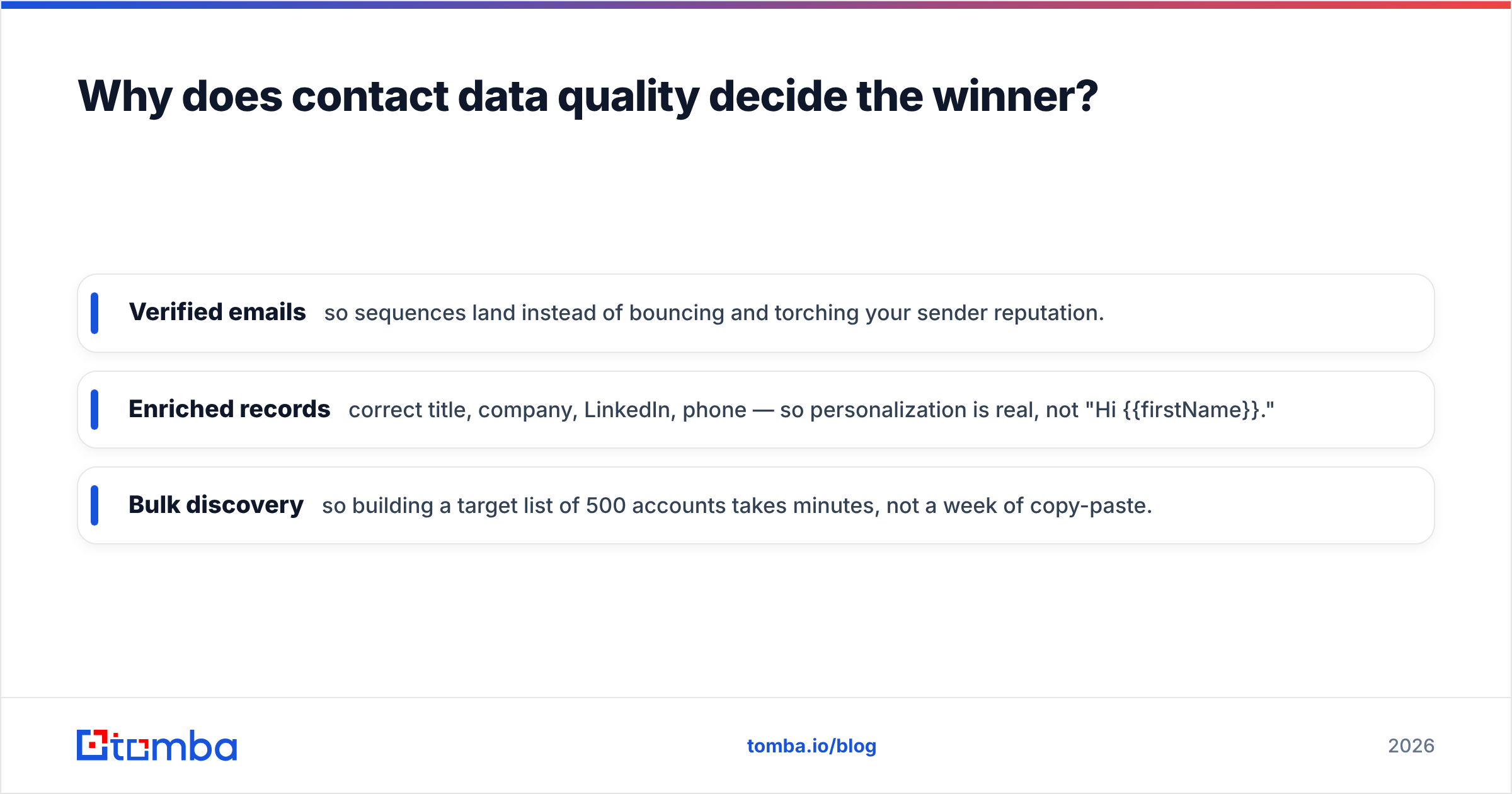
- Verified emails so sequences land instead of bouncing and torching your sender reputation.
- Enriched records — correct title, company, LinkedIn, phone — so personalization is real, not "Hi {{firstName}}."
- Bulk discovery so building a target list of 500 accounts takes minutes, not a week of copy-paste.
Tomba slots in exactly here. Use the Tomba Email Finder to find verified professional emails by name or company, run data enrichment to fill in the fields your CRM needs for segmentation, and verify in bulk before importing. Whether the records land in Breakcold or Pipedrive, they arrive clean. You can connect the flow directly through the Pipedrive integration or push into other tools via Zapier and Make.
The point is simple: the CRM is the destination, not the engine. Compare Breakcold and Pipedrive on workflow fit, then make sure both are fed by data that doesn't bounce.
How do Breakcold and Pipedrive handle integrations?#
Both integrate widely, but with different centers of gravity. Pipedrive's marketplace is larger and skews toward the broader sales-ops stack — proposal tools, accounting, support desks, and marketing platforms. If your company already runs a dozen SaaS tools, Pipedrive likely connects to more of them out of the box, and it is a common hub in mid-market stacks (you'll find it rated across G2 and similar review sites).
Breakcold's integrations skew toward outreach and enrichment — the tools an outbound team touches daily. It connects to email providers, LinkedIn workflows, and automation platforms like Zapier so you can route new replies into tasks or sync engaged contacts elsewhere.
For data specifically, neither ships a deep native enrichment engine, so most serious teams add one. Tomba's API and no-code connectors handle that layer regardless of which CRM you pick, which keeps your enrichment consistent even if you switch CRMs later.
Final verdict and recommendation#
There is no universal winner — there is a winner for your motion. Breakcold is the better CRM for outreach-led, social-selling teams that win on conversation volume and speed. Pipedrive is the better CRM for process-led sales teams that win on pipeline discipline and forecasting. Map the tool to your actual bottleneck and the choice makes itself.
What both have in common is total dependence on contact data quality. The fastest way to make either CRM underperform is to fill it with unverified emails and half-empty records.
Start by fixing the data layer. Use the Tomba Email Finder to source verified emails and enrich your contacts before they hit Breakcold or Pipedrive — Tomba's free tier gives you 25 searches a month to test it, and paid Tomba plans start at $49/mo when you're ready to scale outreach. Clean data first, then let your CRM do what it's good at.
Ready to find emails that actually work?
Join 150,000+ professionals who stopped guessing and started sending. Free credits on signup — no credit card required.
Get the Tomba newsletter
Practical outbound tactics and product updates — once every two weeks.
About the author