Call Logic Alternatives: 7 Better Sales Dialers for 2026
Call Logic is solid for call tracking, but it is not the only option. Here are 7 Call Logic alternatives compared on price, dialing speed, and the data that actually fills your pipeline.
Call Logic does one job well: it tracks calls, schedules follow-ups, and keeps reps from letting warm leads go cold. But if you run an outbound team in 2026, "call tracking with a basic dialer" is the floor, not the ceiling. Teams outgrow it the moment they need faster dialing modes, deeper CRM sync, native SMS, or — the part most buyers underestimate — clean phone numbers and emails to actually load into the dialer.
This guide compares seven Call Logic alternatives on the attributes that change your connect rate and your cost per meeting, not just feature checklists.
TL;DR#
- Call Logic is best for small teams that want call tracking, scheduled callbacks, and TCPA-aware dialing without a heavy setup.
- You outgrow it when you need predictive/parallel dialing, native SMS sequences, conversation intelligence, or tight HubSpot/Salesforce sync.
- Top picks: Aircall (ops-friendly), JustCall (SMS + AI), PhoneBurner (power dialing), Kixie (CRM-native), Orum (parallel dialing for SDR teams).
- The hidden lever: no dialer fixes bad data. Disconnected numbers and wrong contacts wreck connect rates — fix the list before you switch tools.
- Bottom line: match the dialer to your motion (high-velocity SDR vs. relationship sales), then feed it verified contacts with a tool like Tomba.
What is Call Logic and what does it actually do?#
Call Logic is a cloud-based call management and dialing platform aimed at small-to-midsize sales and service teams. Its core value is keeping reps organized: it logs every call, automates callback scheduling, supports click-to-call and a basic auto-dialer, and includes TCPA-compliance features so you do not accidentally dial numbers you should not.
Where it stops short is velocity and intelligence. It is not built to be a predictive dialer churning through hundreds of dials an hour, and it leans on integrations rather than native conversation analytics or multichannel sequencing. For a two-rep insurance agency, that is fine. For a 15-SDR outbound org, it becomes the bottleneck.

Why look for Call Logic alternatives in 2026?#
Three forces push teams to switch:
- Dialing speed. Single-line auto-dialers cap your reps at roughly 40–60 dials a day with notes. Power and parallel dialers push that to 200–400, which directly multiplies conversations.
- Multichannel expectations. Buyers ignore voicemails. Teams now need SMS, email, and LinkedIn touches woven into the same cadence — a phone-only tool forces a second platform.
- Data quality. This is the one nobody puts on the comparison grid. If 25% of your numbers are wrong, a faster dialer just helps you reach wrong numbers faster. Connect rate is a data problem before it is a dialer problem.
That last point is why this guide treats your contact source as part of the stack, not an afterthought.
What are the best Call Logic alternatives?#
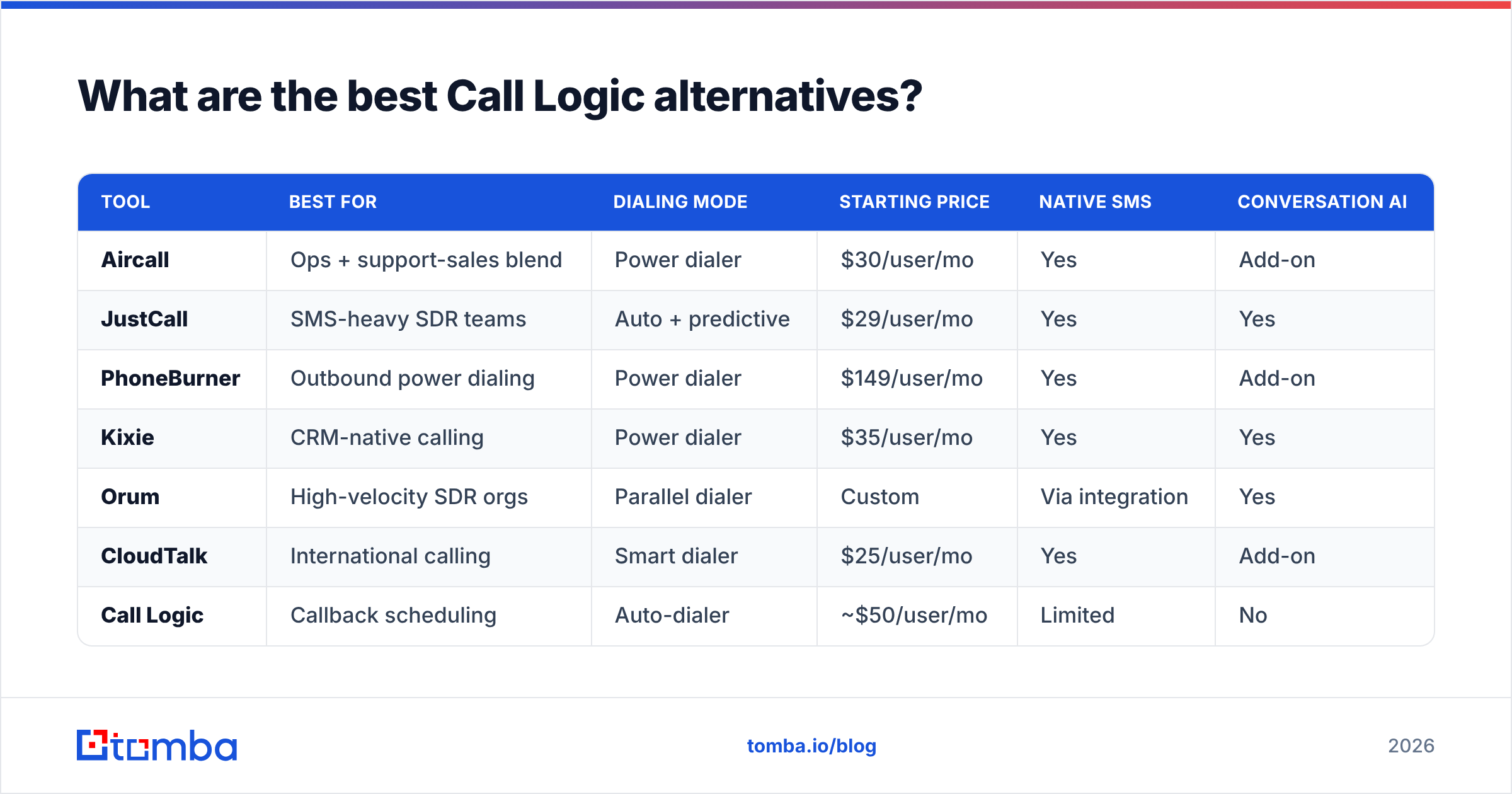
Here is the head-to-head. Prices are entry/published rates as of 2026 and shift with seats and contracts — always confirm on the vendor's own pricing page.
| Tool | Best for | Dialing mode | Starting price | Native SMS | Conversation AI |
|---|---|---|---|---|---|
| Aircall | Ops + support-sales blend | Power dialer | $30/user/mo | Yes | Add-on |
| JustCall | SMS-heavy SDR teams | Auto + predictive | $29/user/mo | Yes | Yes |
| PhoneBurner | Outbound power dialing | Power dialer | $149/user/mo | Yes | Add-on |
| Kixie | CRM-native calling | Power dialer | $35/user/mo | Yes | Yes |
| Orum | High-velocity SDR orgs | Parallel dialer | Custom | Via integration | Yes |
| CloudTalk | International calling | Smart dialer | $25/user/mo | Yes | Add-on |
| Call Logic | Callback scheduling | Auto-dialer | ~$50/user/mo | Limited | No |
Aircall#
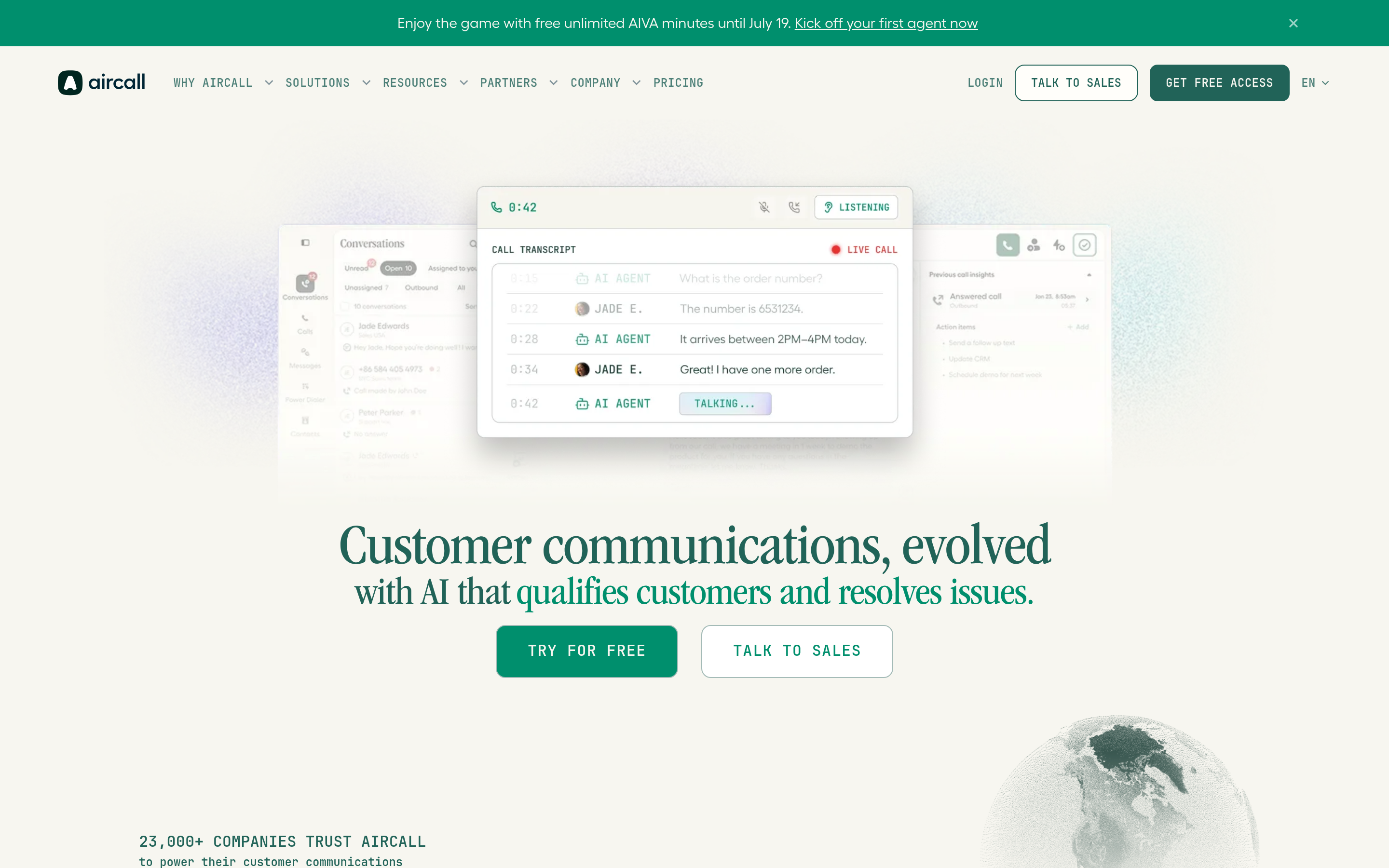
Aircall is the "IT and RevOps will approve it" choice. It is a full cloud phone system with a power dialer, 100+ integrations, call routing, and clean analytics. It is not the fastest dialer on this list, but it is the most balanced if your team blends inbound, support, and outbound. The trade-off: per-seat cost climbs and the heaviest AI features are paid add-ons. See the official Aircall site for current packaging.
JustCall#

JustCall punches above its price by bundling voice, SMS, and an AI layer (call scoring, transcripts, real-time agent assist). For SDR teams that live in text follow-up, the native SMS automation alone justifies a look. Predictive dialing is available on higher tiers.
PhoneBurner#
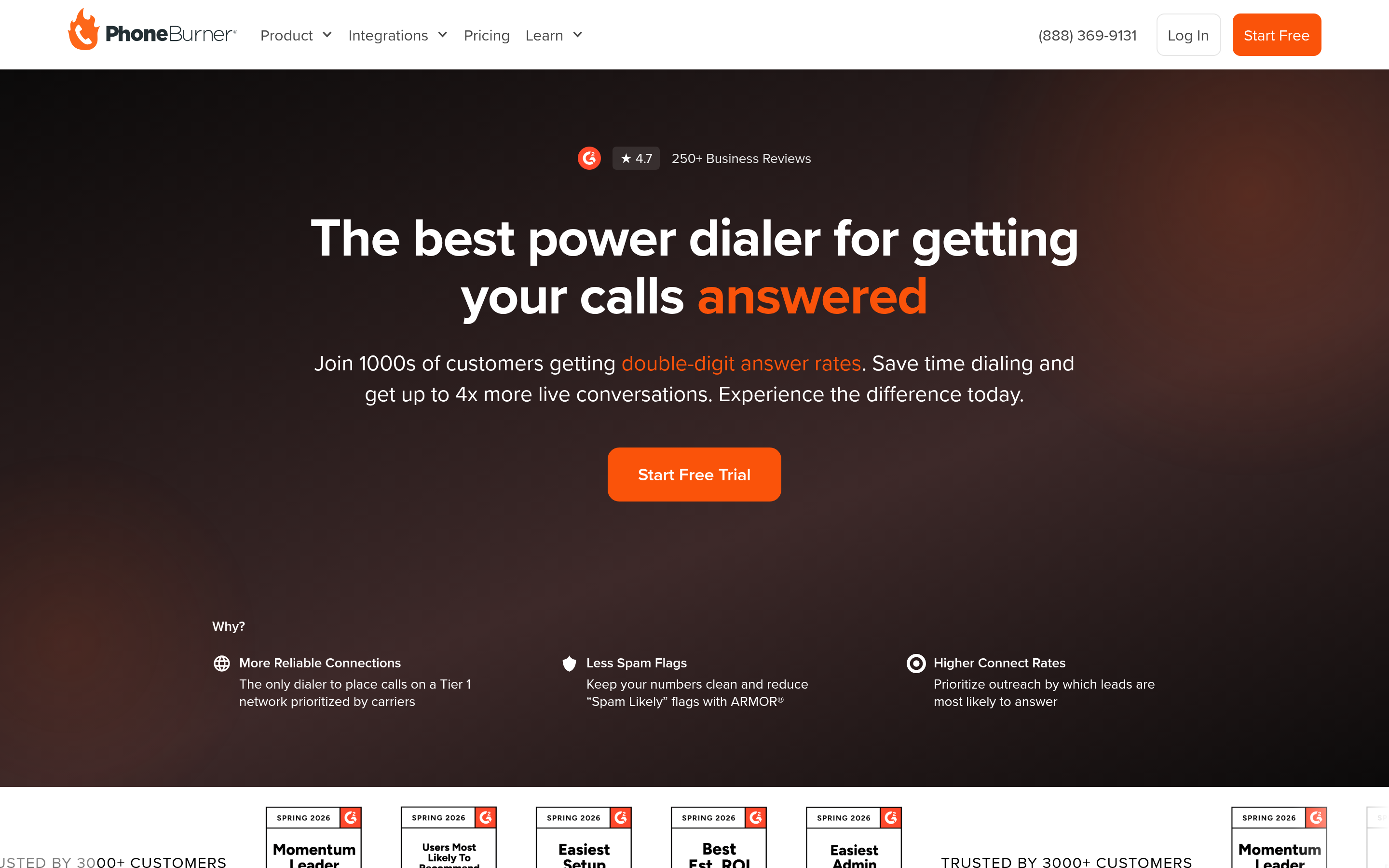
If raw outbound throughput is the goal, PhoneBurner is purpose-built. Its power dialer drops voicemails in one click, logs dispositions automatically, and removes the dead-air delay that makes prospects hang up. It is the priciest entry point here, but high-volume teams recover that in conversations per hour.
Kixie#
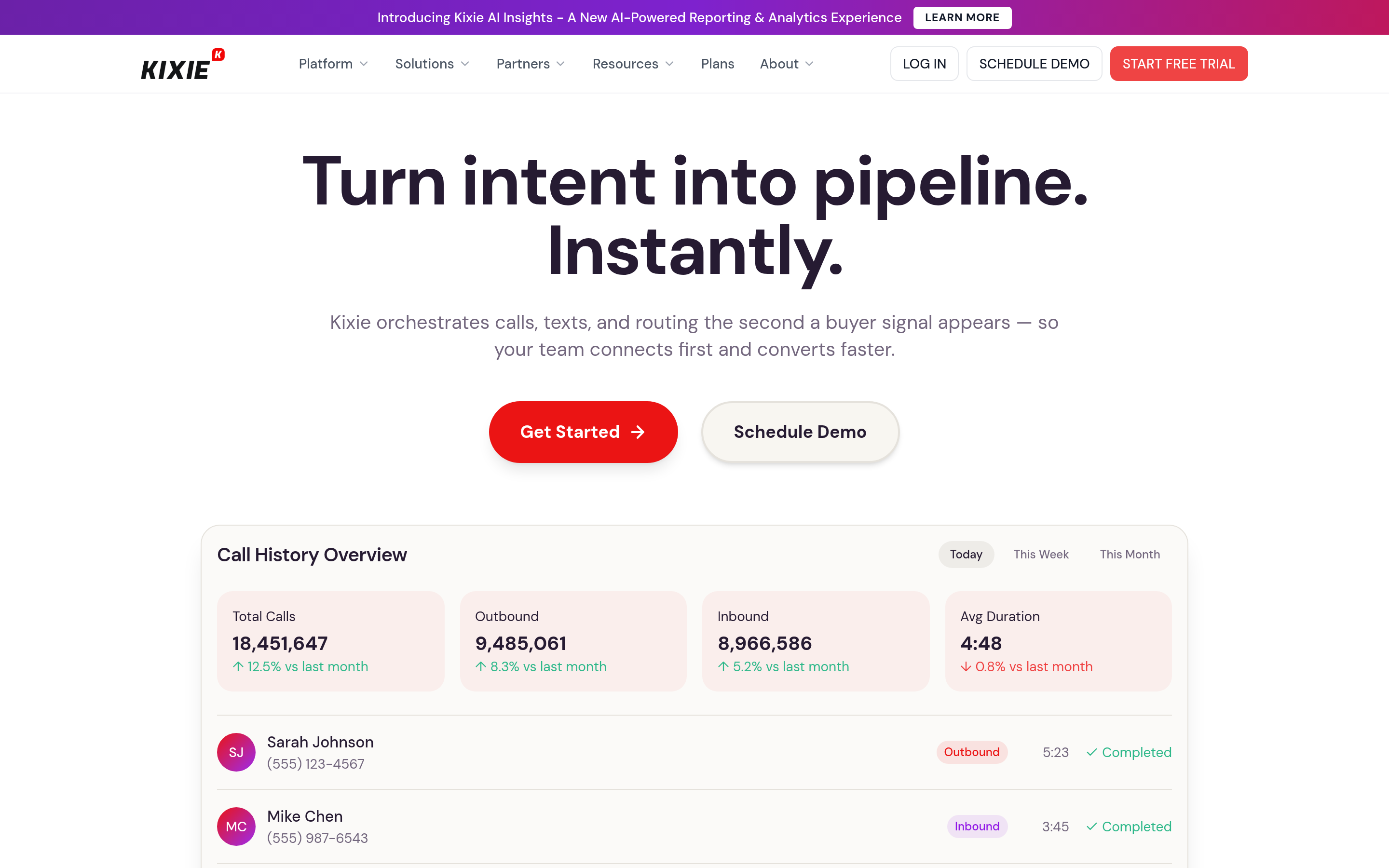
Kixie is the dialer for teams that refuse to leave their CRM. Its HubSpot and Pipedrive integration work is tight, it offers local presence dialing, and the AI features land on mid-tier plans. Reliable, CRM-native, and reasonably priced.
Orum#
Orum is a parallel dialer: it calls several numbers at once and only connects a rep when a human answers, skipping ringing, voicemail, and bad numbers entirely. For SDR-heavy orgs measured on conversations per day, it is a different category of speed. It is also where data quality matters most — parallel dialing burns through a list fast, so a dirty list bleeds budget at scale.
How do you choose the right one?#
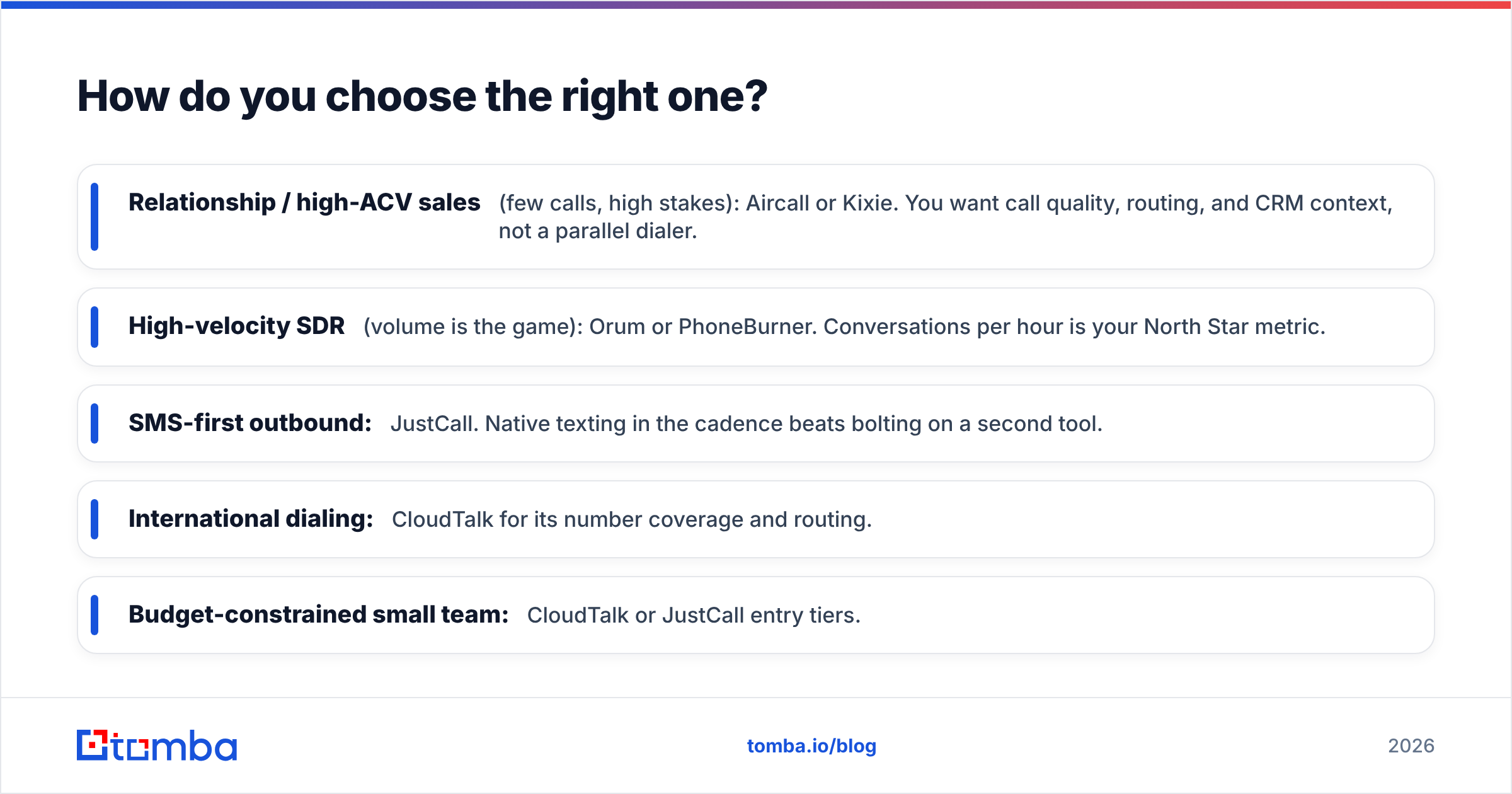
Match the tool to your motion, not the feature count:
- Relationship / high-ACV sales (few calls, high stakes): Aircall or Kixie. You want call quality, routing, and CRM context, not a parallel dialer.
- High-velocity SDR (volume is the game): Orum or PhoneBurner. Conversations per hour is your North Star metric.
- SMS-first outbound: JustCall. Native texting in the cadence beats bolting on a second tool.
- International dialing: CloudTalk for its number coverage and routing.
- Budget-constrained small team: CloudTalk or JustCall entry tiers.
For a deeper framework on building the calling motion itself, our guide to cold calling and phone sales tactics pairs well with whichever tool you pick.
Does the dialer matter more than the data?#
No — and this is the mistake that quietly tanks switching projects. A dialer is a delivery mechanism. It can only call the numbers you give it. If your list is full of disconnected lines, gatekeeper numbers, and people who left the company 18 months ago, the best parallel dialer on earth just produces faster failure.

The math is blunt. Say you run 300 dials a day at a 5% connect rate — that is 15 conversations. Clean your data so the connect rate hits 9% and you get 27 conversations from the same effort. You nearly doubled output without changing dialers, scripts, or headcount. That is why mature outbound teams treat list hygiene as a permanent process, not a one-time cleanup.
Two data moves give you most of that lift:
- Verify before you dial. Validate numbers and emails so reps spend their hours on reachable contacts. Tomba's phone validator checks number validity before a list ever hits the dialer.
- Enrich what is thin. Many lists have a name and a company but no direct dial or work email. Fill those gaps with a phone finder and email finder so every record is actually actionable.
You can read more about where the data comes from and how accuracy is maintained — a question worth asking any data vendor before you trust their numbers.
How do these alternatives compare on total cost?#
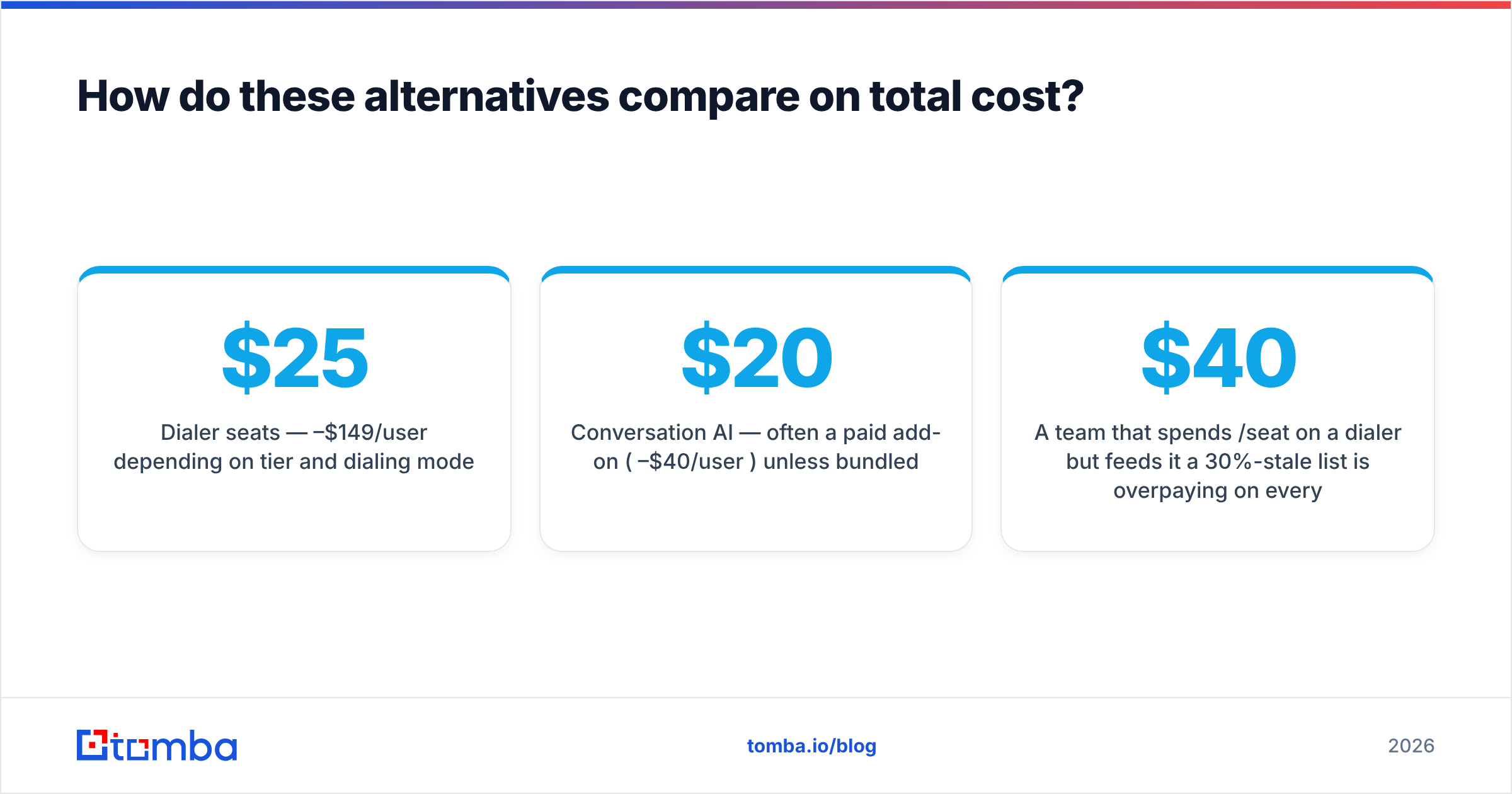
Per-seat dialer pricing is only half your bill. The full cost of an outbound stack is roughly:
- Dialer seats — $25–$149/user/mo depending on tier and dialing mode.
- Phone numbers / minutes — usage-based, easy to underestimate at high volume.
- Conversation AI — often a paid add-on ($20–$40/user/mo) unless bundled.
- Contact data — the line item people forget. Bad data inflates every other cost because reps waste paid dialing minutes on dead numbers.
A team that spends $40/seat on a dialer but feeds it a 30%-stale list is overpaying on every metric that matters. Spending a fraction of that on verification and enrichment usually pays for itself in recovered selling time. If you want to model the contact-data side, compare Tomba pricing against the dialing minutes you would otherwise waste.
Quick recommendations by team type#
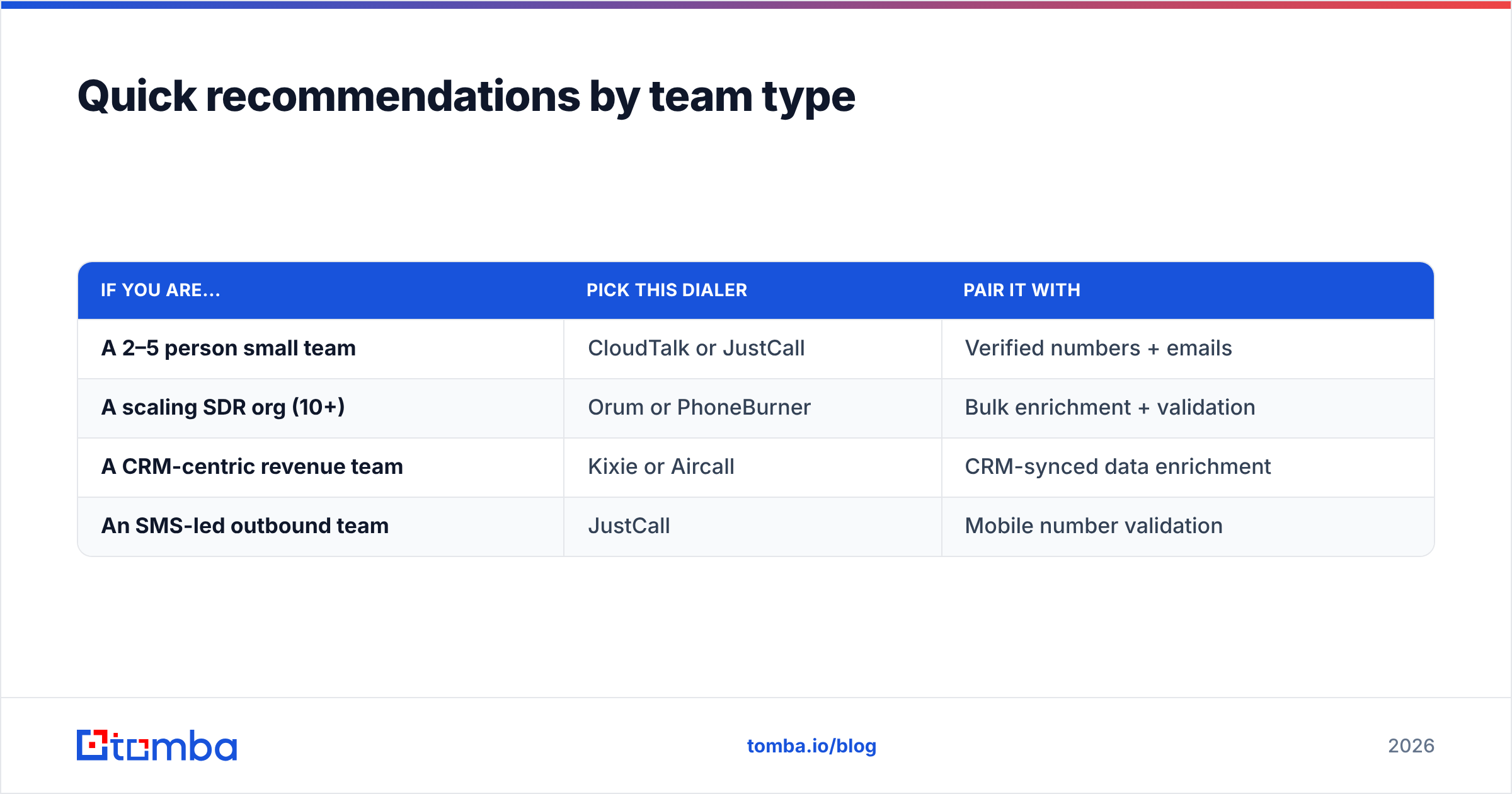
| If you are... | Pick this dialer | Pair it with |
|---|---|---|
| A 2–5 person small team | CloudTalk or JustCall | Verified numbers + emails |
| A scaling SDR org (10+) | Orum or PhoneBurner | Bulk enrichment + validation |
| A CRM-centric revenue team | Kixie or Aircall | CRM-synced data enrichment |
| An SMS-led outbound team | JustCall | Mobile number validation |
For high-volume teams, loading lists in batches matters: a bulk email finder and bulk validation keep your dialer fed without manual lookups, and you can wire it all together through Tomba's integrations into HubSpot, Salesforce, or Pipedrive.
Is switching from Call Logic worth the effort?#
If Call Logic still fits — small team, modest volume, callback scheduling is your main need — stay. There is no prize for migrating to a tool you do not need.
Switch when you hit one of these walls: reps capped by single-line dialing, follow-up scattered across phone-only and email-only tools, no visibility into call quality, or a CRM that does not sync cleanly. Those are real ceilings, and the alternatives above each break through a different one.
Whatever you choose, decide on the basis of your actual sales motion and the metric you are paid on — conversations per day, connect rate, meetings booked — not the longest feature list.
The piece every dialer comparison skips#
A dialer change moves your connect rate a little. A data change moves it a lot. Before you sign a new contract, audit your list: how many numbers are valid, how many contacts are current, how many records are missing a direct dial entirely?
That is where Tomba fits. Use the Tomba Email Finder and phone finder to build accurate, current contact records, validate them before they hit your dialer, and enrich the thin ones — so whichever Call Logic alternative you pick is dialing people who actually answer. Start on the free tier (25 searches a month), and scale up only once the data is proving itself in your connect rate. The right dialer matters. The right data is what makes it work.
// get started
Find, verify and enrich your first contacts today
Start on the free plan with 25 searches a month, then scale when your team is ready.
Free plan · No credit card required · GDPR & CCPA
// about the author