Call Tracking and Lead Scoring: The 2026 Playbook
Most teams treat phone calls as a black box and score leads on guesswork. Here's how to connect call tracking and lead scoring into one revenue engine in 2026.
Most sales teams run call tracking and lead scoring as two disconnected systems — and lose deals in the gap between them. Call tracking tells you which campaigns drive phone conversations. Lead scoring tells you which contacts deserve attention. When they share data, you get a closed loop: the right rep calls the right lead at the right moment, and every dial sharpens the model. When they don't, you get reps cold-calling low-intent contacts while a buyer who just requested a quote sits in a queue.
This guide shows you how to wire the two together in 2026, what to measure, and where most teams leak revenue.
TL;DR#
- Call tracking attributes phone conversations to campaigns, keywords, and pages — it answers "what made this person pick up the phone?"
- Lead scoring ranks contacts by fit and intent — it answers "who should we talk to first?"
- The win comes from feeding call data into the score. A 6-minute inbound demo call is a stronger buying signal than 20 email opens.
- Bad contact data breaks both systems. A wrong number or unverified email means the call never connects and the score never updates. Clean enrichment is the foundation.
- Start simple: track calls, pass call outcomes back to your CRM, and add three call-based scoring rules before you build anything fancy.
What is call tracking and lead scoring?#
Think of it like a smart thermostat for your pipeline. Call tracking is the sensor that reads the room — it knows who walked in, from which door, and how long they stayed. Lead scoring is the thermostat logic that decides whether to turn the heat up (route to a closer) or leave it idle (drop into nurture). One measures, the other decides. Without the sensor, the thermostat is guessing.
Call tracking assigns unique phone numbers to marketing sources — a Google ad, a landing page, a billboard, an email signature. When a prospect calls, the system records which source generated the call, how long it lasted, whether it converted, and often a transcript. This closes the attribution loop for offline conversions that web analytics alone can't see.
Lead scoring assigns points to contacts based on two axes:
- Fit — does this person match your ideal customer profile? (industry, company size, job title, region)
- Intent — are they showing buying behavior? (pricing-page visits, demo requests, email replies, and phone calls)
The connection most teams miss: a tracked call is one of the highest-intent signals a buyer can send. Someone who dials your number has more urgency than someone who opened three newsletters. Yet in most CRMs, that call never touches the lead score.
Why connect call tracking to your lead score?#
Because intent decays fast. A marketing qualified lead who calls during a comparison-shopping window is worth ten who fill a form and forget. If your score doesn't react to the call, your routing doesn't either, and a competitor with a faster follow-up wins the deal.
Here's what changes when the two systems share data:
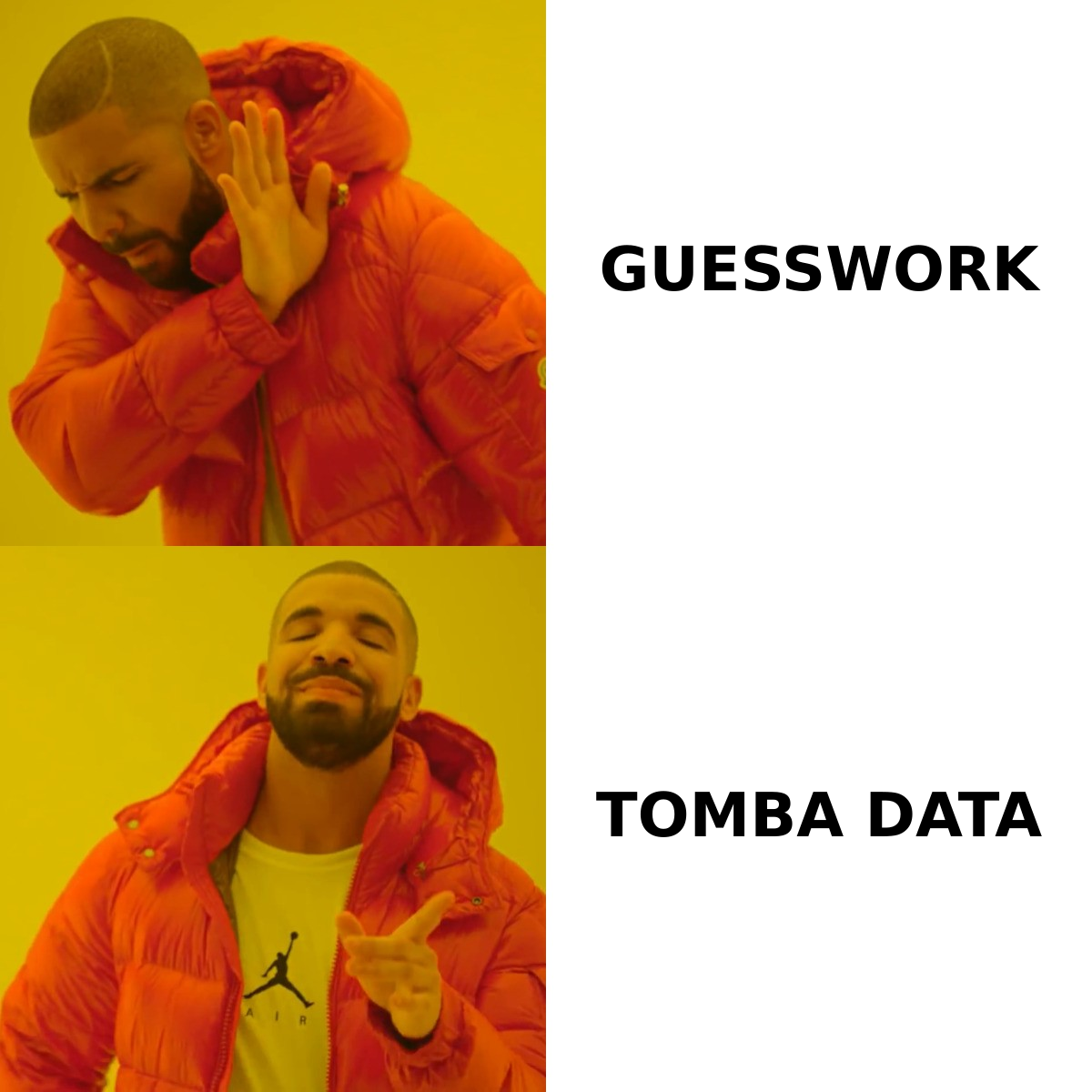
- Routing gets sharper. A high-fit lead who calls and stays on for 5+ minutes jumps the queue to a senior closer automatically.
- Reps stop wasting dials. Instead of working an alphabetical list, they work a score that already accounts for who reached out by phone.
- Marketing attribution improves. You learn which channels drive conversations, not just clicks — and you can score leads from high-converting channels higher.
- The model self-corrects. Call outcomes (booked, no-show, disqualified) feed back as training data, so the score reflects reality instead of a static point table.
According to HubSpot's research on lead response time, the odds of qualifying a lead drop sharply after the first few minutes. Call data is the freshest intent signal you have — letting it sit outside the score is leaving speed on the table.
How do call tracking and lead scoring compare?#
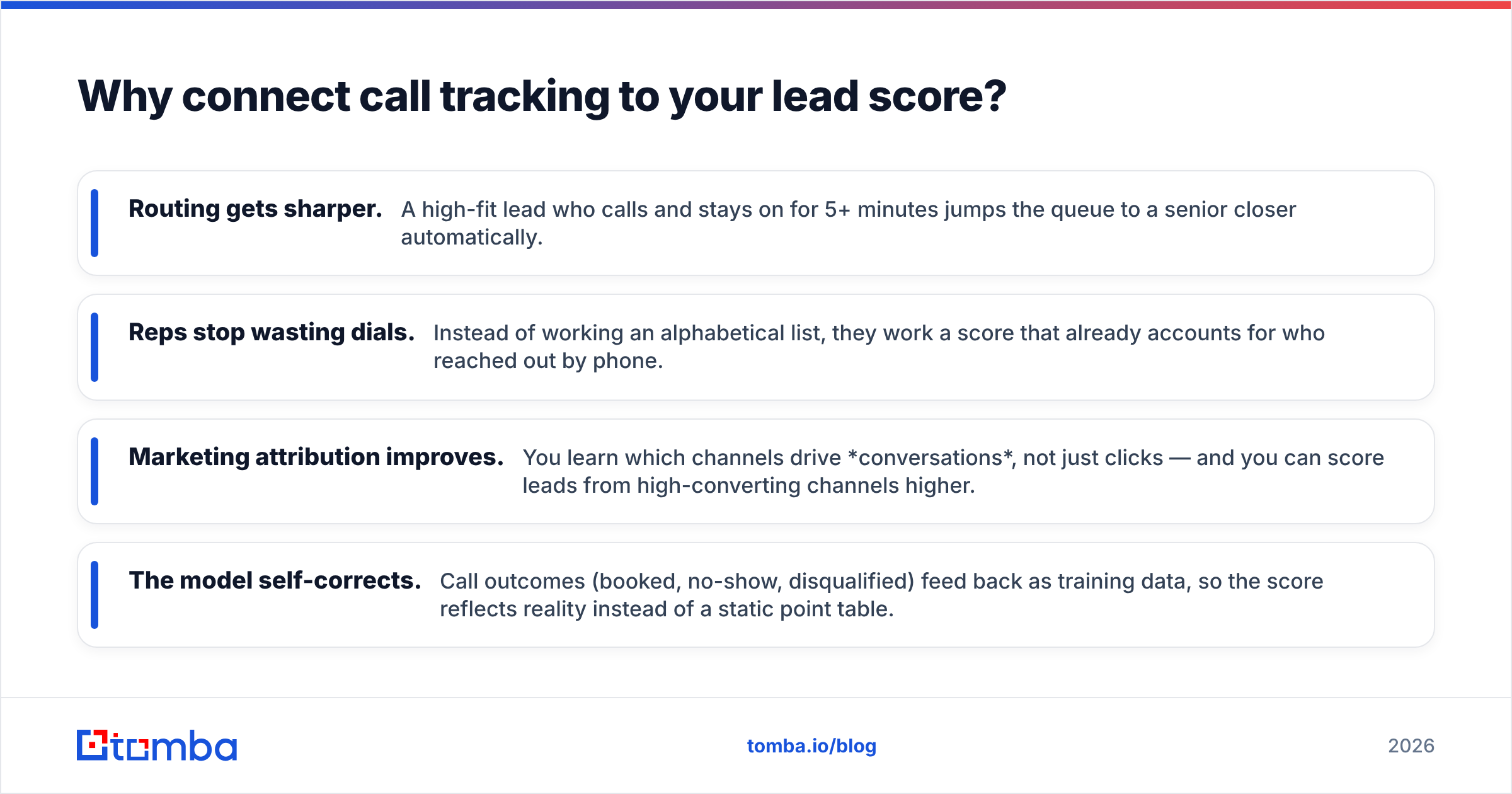
They're complementary, not competitive. Here's how they line up across the dimensions that matter when you're deciding where to invest first.
| Dimension | Call Tracking | Lead Scoring |
|---|---|---|
| Core question | Which source drove the call? | Who should we talk to first? |
| Primary signal | Phone conversations, duration, transcripts | Fit attributes + intent behaviors |
| Owner | Marketing / RevOps | Sales / RevOps |
| Best for | Offline attribution, ad ROI | Prioritization, routing, SLAs |
| Fails when | Numbers aren't mapped to sources | Contact data is stale or unverified |
| Output | Source-tagged call records | A ranked, routable contact |
| Time to value | Days (number provisioning) | Weeks (model tuning) |
The table makes the dependency obvious: lead scoring "fails when contact data is stale," and call tracking "fails when numbers aren't mapped." Both failure modes trace back to data quality — which is why enrichment sits underneath everything.
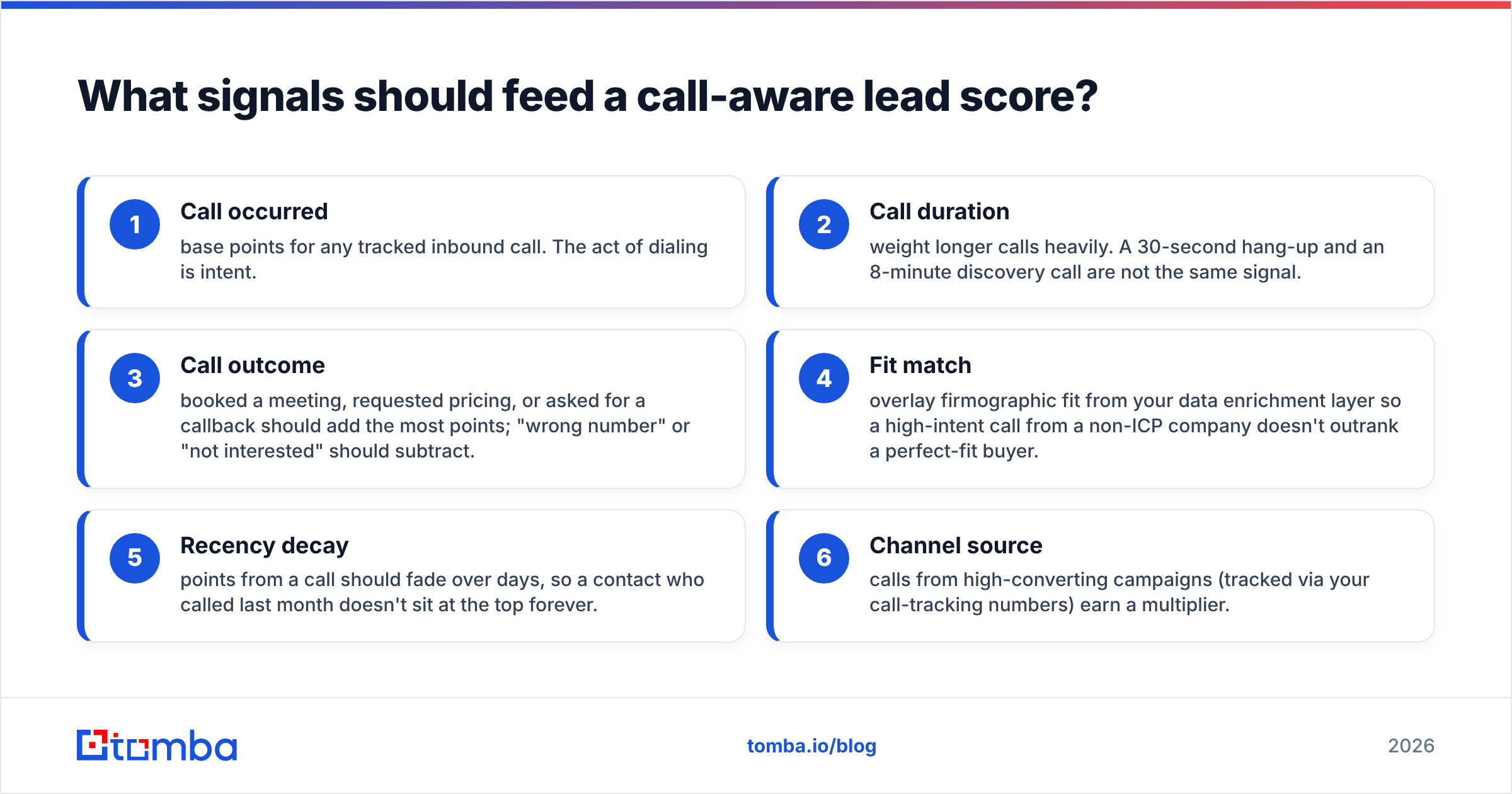
What signals should feed a call-aware lead score?#
Don't overcomplicate the first version. Five categories cover most of the value:
- Call occurred — base points for any tracked inbound call. The act of dialing is intent.
- Call duration — weight longer calls heavily. A 30-second hang-up and an 8-minute discovery call are not the same signal.
- Call outcome — booked a meeting, requested pricing, or asked for a callback should add the most points; "wrong number" or "not interested" should subtract.
- Fit match — overlay firmographic fit from your data enrichment layer so a high-intent call from a non-ICP company doesn't outrank a perfect-fit buyer.
- Recency decay — points from a call should fade over days, so a contact who called last month doesn't sit at the top forever.
- Channel source — calls from high-converting campaigns (tracked via your call-tracking numbers) earn a multiplier.
Notice that three of these six depend on accurate contact records. If the phone number is wrong, there's no call to score. If the email bounces, your nurture never re-engages the contact between calls. This is where most scoring models quietly rot.
Where does data quality break the loop?#
Everywhere the contact record is wrong. A lead score is only as trustworthy as the data underneath it, and a call only happens if the number connects.
Two failure points dominate:
- Unreachable numbers. You can't track or score a call that never connects. Validating numbers before they hit a dialer keeps your reps on live conversations instead of dead lines. A phone validator catches disconnected and invalid numbers up front.
- Missing or stale enrichment. Without firmographics, your "fit" axis is blank, so every call looks equally important. Without a verified email, you can't run the cross-channel nurture that warms a lead between calls.
Filling those gaps is a prospecting-data problem, not a scoring problem. You need a reliable way to find direct numbers and verified emails, then keep them fresh. Tools like the Tomba phone finder surface B2B phone numbers tied to verified contacts, so your call-tracking system has real people to connect — and your CRM has the firmographic context the score needs.

How do you build the integration step by step?#
You don't need a six-month RevOps project. Ship a working loop in a few weeks, then refine.
Step 1 — Provision tracked numbers. Assign unique call-tracking numbers to each major source: paid search, organic landing pages, email campaigns, and outbound. Map every number to a campaign in your CRM.
Step 2 — Pipe call events into the CRM. Every call should create or update a contact activity with source, duration, and outcome. This is the data your score will read.
Step 3 — Add three call-based scoring rules. Start minimal: (a) +points for any inbound call, (b) bonus for calls over 3 minutes, (c) big bonus for "meeting booked" outcomes. Resist adding ten rules on day one.
Step 4 — Route on the new score. Set an SLA: any contact crossing the "hot" threshold after a call gets assigned to a closer within minutes, not hours.
Step 5 — Enrich on entry. When a new contact appears, automatically pull firmographics and verify the phone and email. A bulk enrichment pass keeps existing records from going stale.
Step 6 — Feed outcomes back. Once a month, compare scored "hot" leads against actual closed deals. Adjust weights where the score over- or under-predicted. This is what turns a static point table into a real model.
Platforms like Salesforce and most modern CRMs support custom scoring fields and routing rules natively, so steps 3–4 rarely require custom code — just disciplined configuration.
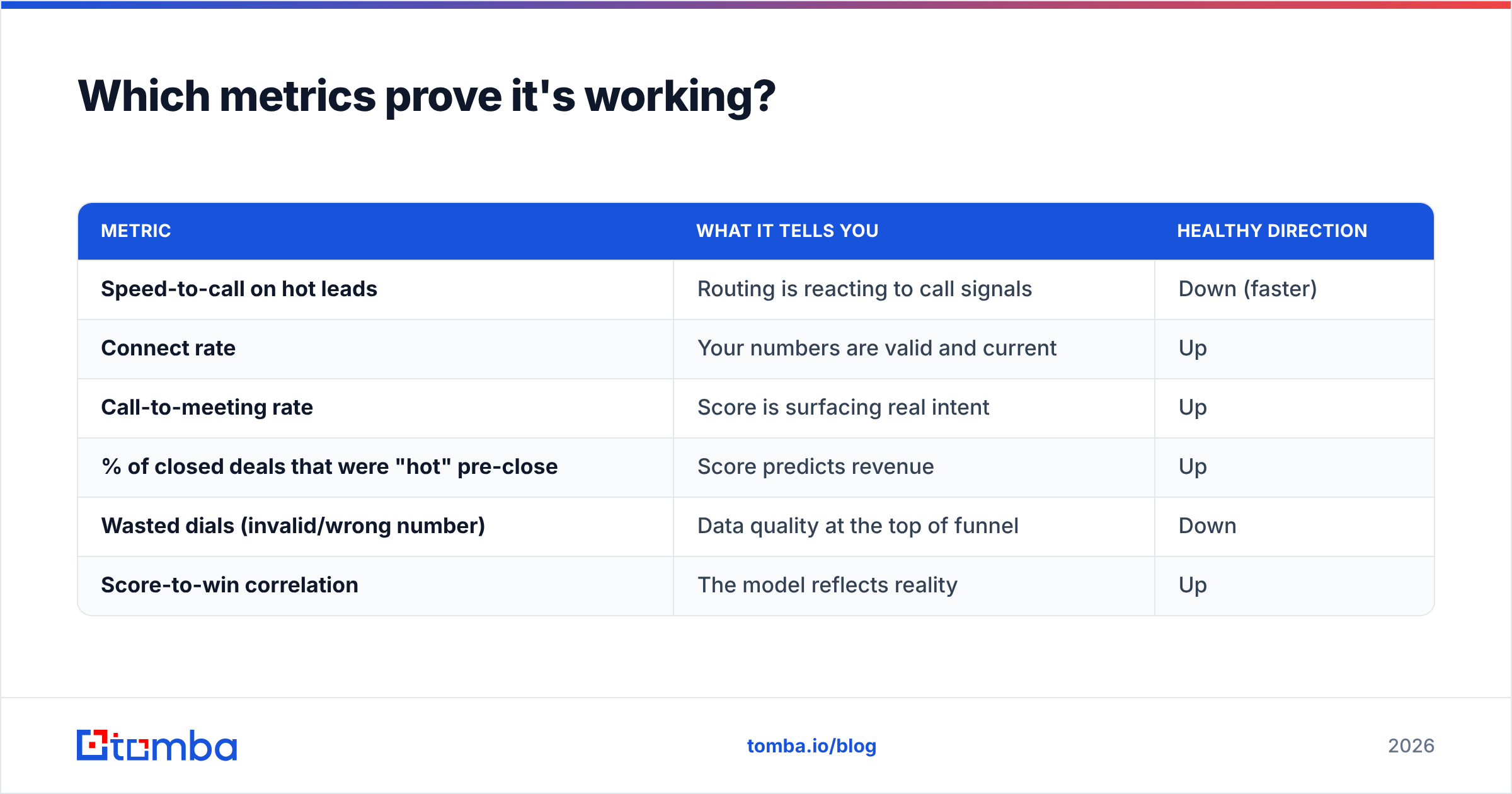
Which metrics prove it's working?#
Track the loop, not just the parts. Vanity metrics like "total calls" tell you nothing about whether scoring improved.
| Metric | What it tells you | Healthy direction |
|---|---|---|
| Speed-to-call on hot leads | Routing is reacting to call signals | Down (faster) |
| Connect rate | Your numbers are valid and current | Up |
| Call-to-meeting rate | Score is surfacing real intent | Up |
| % of closed deals that were "hot" pre-close | Score predicts revenue | Up |
| Wasted dials (invalid/wrong number) | Data quality at the top of funnel | Down |
| Score-to-win correlation | The model reflects reality | Up |
If "wasted dials" stays high, your problem isn't the score — it's the contact data feeding it. Fix enrichment before you tune weights.
What mistakes should you avoid?#
- Scoring calls without scoring outcomes. A call that ends in "not interested" should lower the score. Counting every call as positive intent inflates your pipeline with noise.
- Ignoring recency. A hot call from six weeks ago isn't hot anymore. Without decay, your "top" leads are just your oldest ones.
- Letting marketing own scoring alone. Sales has to agree on what "qualified" means, or routing fights break out. Make it a shared RevOps function.
- Building the model before fixing the data. The most elegant scoring logic in the world produces garbage if 20% of your phone numbers are dead. Validate and enrich first.
- Over-engineering on day one. Three good rules beat thirty fragile ones. Add complexity only when the data proves it's needed.
You can sanity-check vendor options on a neutral marketplace like G2 before committing, but the integration discipline above matters far more than which specific call-tracking tool you pick.
Is this worth it for a small team?#
Yes — arguably more so. A small team can't afford to waste reps on the wrong calls. When you have three closers, putting them on the highest-intent, best-fit, recently-called leads is the entire game. The setup is lighter than it looks: tracked numbers, a handful of scoring rules, and clean data. The constraint is almost never the tooling. It's whether the contact records under the score are accurate enough to trust.
That's the unglamorous truth of call tracking and lead scoring: the model is easy, the data is hard. Get the data right and a simple loop outperforms a sophisticated model running on stale records.
Get the data layer right first#
Call tracking and lead scoring only pay off when every contact in your system is real, reachable, and enriched. Before you tune a single scoring weight, make sure your reps are dialing valid numbers and your "fit" axis is built on accurate firmographics. The Tomba Email Finder gives you verified professional emails to anchor each contact record, and pairs with the phone finder and enrichment tools so your score is built on data you can trust — not guesswork. Start free with 25 searches a month, then scale on the Starter plan at $49/mo when you're ready to enrich at volume. Fix the data layer, and the loop between calls and scores starts compounding in your favor.
// get started
Find, verify and enrich your first contacts today
Start on the free plan with 25 searches a month, then scale when your team is ready.
Free plan · No credit card required · GDPR & CCPA
// about the author