CallFire Pricing Reviews Pros and Cons: 2026 Guide
A no-spin breakdown of CallFire pricing, real user reviews, and the honest pros and cons — plus where it fits in a 2026 outbound stack and where it falls short.
CallFire has been a fixture in voice broadcast and text marketing for over a decade. But every outbound team asks a simpler question: is it worth the money in 2026, and what do you give up to use it? This guide to CallFire pricing reviews pros and cons answers that with real numbers, not marketing copy.
TL;DR#
- CallFire is a voice + SMS platform, not a sales dialer or a lead-data tool — it shines at broadcast campaigns (IVR, ringless voicemail, bulk text), not 1-to-1 prospecting.
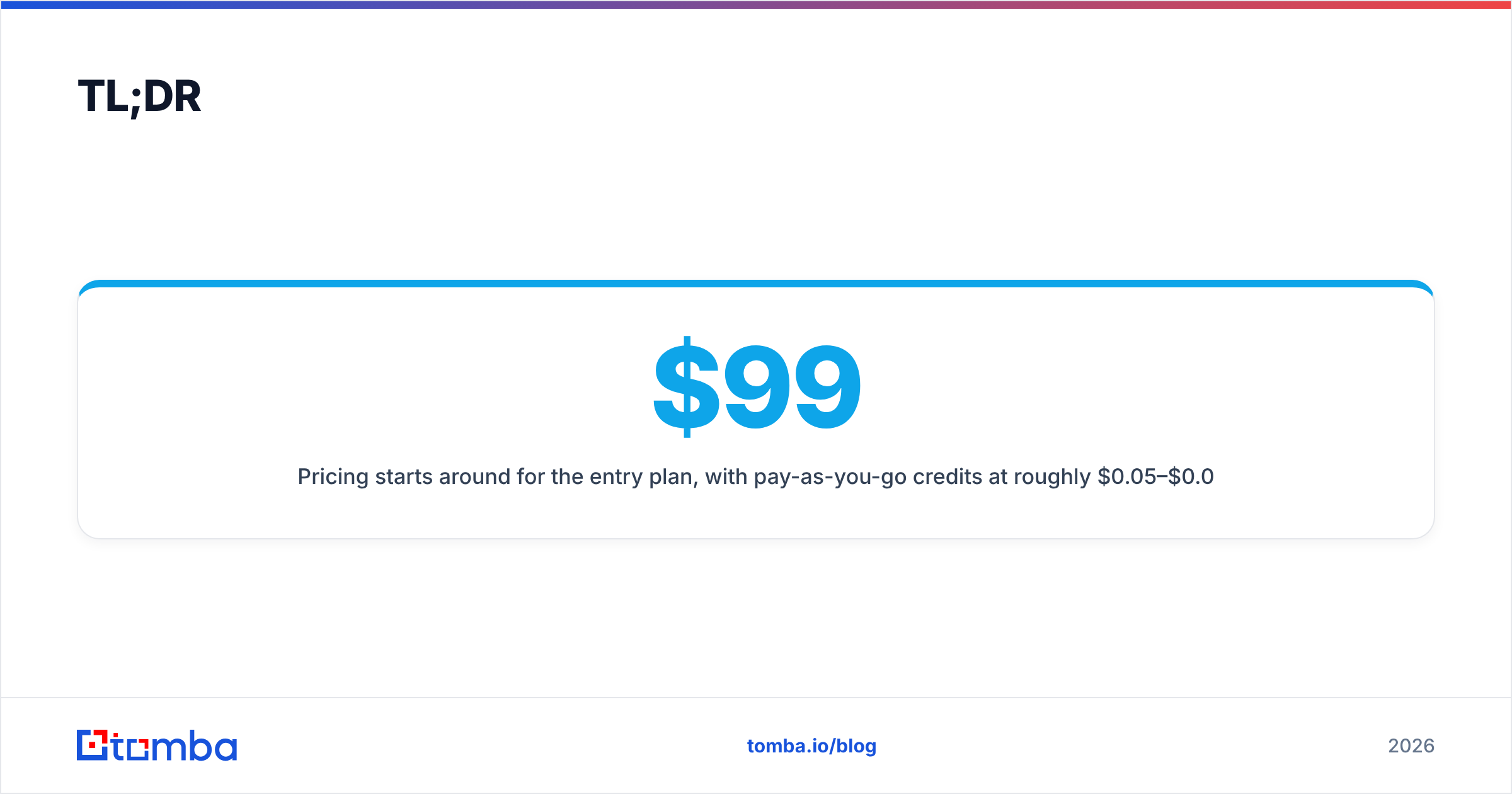
- Pricing starts around $99/mo for the entry plan, with pay-as-you-go credits at roughly $0.05–$0.06 per minute or text. Higher tiers buy volume, not new features.
- Reviews average ~4.5/5 on G2 and Capterra: users praise ease of use and deliverability, but flag clunky reporting and support response times.
- The biggest gap is data — CallFire sends to numbers you already have; it does not find, verify, or enrich them.
- Best fit: SMBs running compliance-heavy notification or marketing blasts. Poor fit: SDR teams who need accurate B2B contact data and a power dialer.
What is CallFire and who is it for?#
CallFire is a cloud communications platform for outbound voice and SMS at scale. Think of it less like a sales phone and more like a megaphone with a scheduler. You load a contact list, record a message or write a text, and CallFire fires it to thousands of numbers. Tracking happens on the back end.
Its core modules are voice broadcast, text messaging (bulk SMS and keyword campaigns), interactive voice response (IVR) menus, ringless voicemail drops, and call tracking with local or toll-free numbers. That feature set tells you the buyer: political campaigns, real estate teams, healthcare reminders, churches, and SMBs sending appointment or promotional blasts.
What CallFire is not is a B2B prospecting engine. It assumes you already own a clean, opted-in list of phone numbers. If your problem is finding the right person and a working number, that happens upstream — with a phone finder and a phone validator — long before CallFire ever dials.
How much does CallFire cost in 2026?#
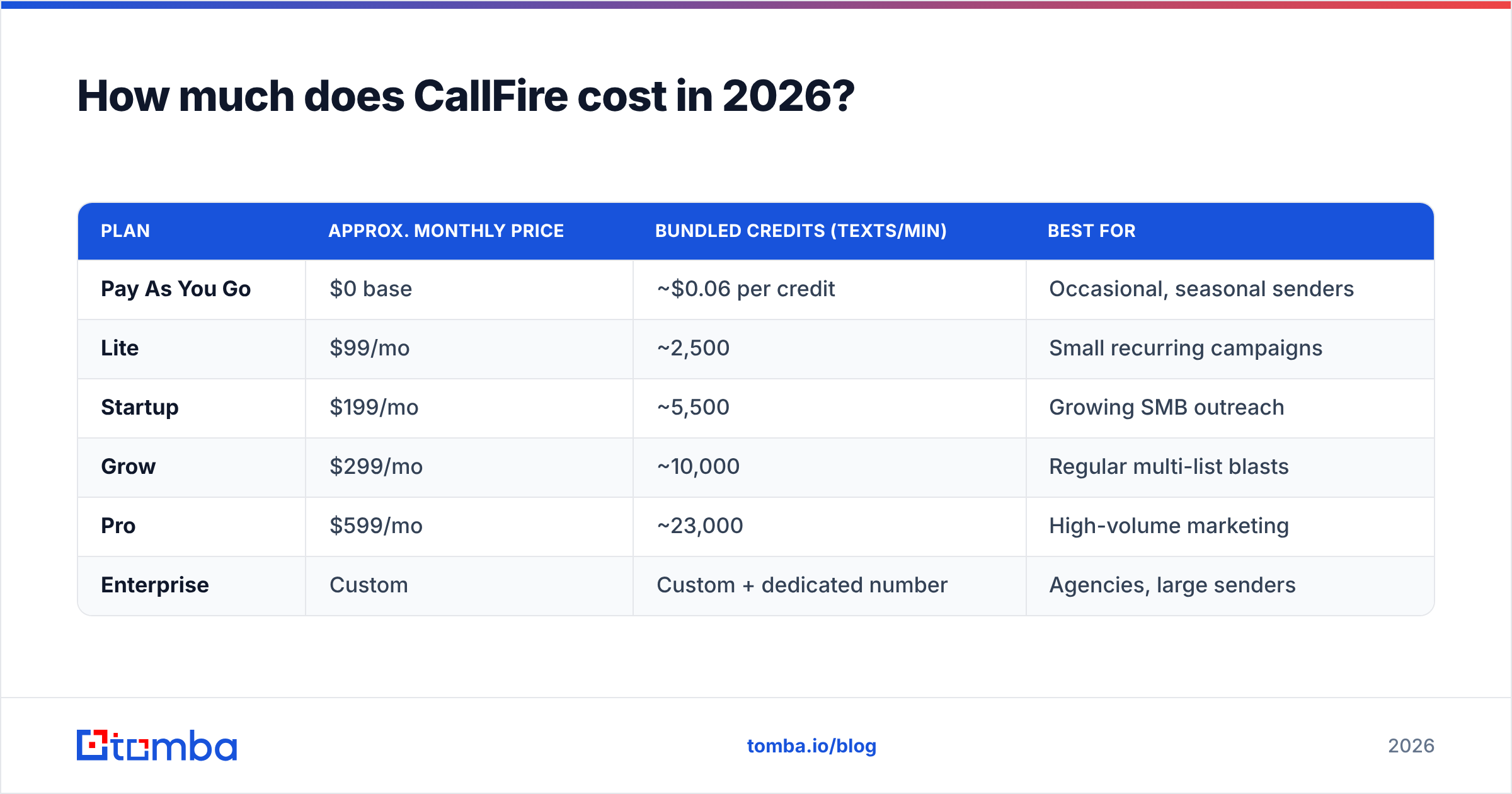
CallFire uses a hybrid model. You can buy pay-as-you-go credits for low-volume or seasonal sending. Or you can pick a monthly plan that bundles credits at a lower per-unit rate. One credit equals roughly one call-minute or one text segment.
Always confirm current numbers on the official CallFire pricing page, because credit bundles shift. As of early 2026, the commonly cited structure looks like this:
| Plan | Approx. monthly price | Bundled credits (texts/min) | Best for |
|---|---|---|---|
| Pay As You Go | $0 base | ~$0.06 per credit | Occasional, seasonal senders |
| Lite | $99/mo | ~2,500 | Small recurring campaigns |
| Startup | $199/mo | ~5,500 | Growing SMB outreach |
| Grow | $299/mo | ~10,000 | Regular multi-list blasts |
| Pro | $599/mo | ~23,000 | High-volume marketing |
| Enterprise | Custom | Custom + dedicated number | Agencies, large senders |
A few things are worth understanding before you sign:
- Credits are the real currency. The plan name matters less than the cost-per-credit, which drops as you move up tiers. If you send sporadically, pay-as-you-go is cheaper than a plan you under-use.
- Numbers cost extra. Dedicated local or toll-free numbers and keyword rentals are add-ons, not included in the base credit math.
- Unused credits can expire. Monthly plan credits typically don't roll over indefinitely, so over-buying volume is a quiet way to waste budget.
- No meaningful free tier. CallFire offers trial credits to test, but there is no permanent free plan the way data tools often provide.
Compared with per-seat sales tools, CallFire's volume-based pricing is honest and predictable — you pay for what you send. The catch is that none of that spend improves the quality of your list.
What do CallFire reviews actually say?#
Aggregate ratings are solid. CallFire sits around 4.5/5 on G2 and a similar score on Capterra, based on hundreds of reviews. Read past the stars, though, and clear themes emerge.
What reviewers consistently like:
- Setup speed — non-technical users get a broadcast live in under an hour.
- Deliverability — voice and SMS land reliably, which is the whole point.
- Transparent usage billing — the credit dashboard makes spend easy to forecast.
- IVR and keyword tools — surprisingly capable for the price bracket.
What reviewers repeatedly criticize:
- Reporting depth — analytics are described as basic; power users export to spreadsheets.
- Support latency — slower email support on lower tiers is the most common complaint.
- UI dated in spots — functional but not modern, with occasional friction in list management.
- Compliance burden on you — CallFire gives the tools, but TCPA/opt-in responsibility sits entirely with the sender.
None of these are dealbreakers for the core use case. They become dealbreakers when teams try to stretch CallFire into a job it wasn't built for — like personalized B2B sales sequencing.
CallFire pricing reviews pros and cons: the honest verdict#
Here is the balanced ledger, pulled from the pricing structure and review patterns above.
| Pros | Cons |
|---|---|
| Predictable pay-per-credit pricing | No lead data — you supply every number |
| Strong voice + SMS deliverability | Reporting is shallow for analysts |
| Fast, no-code campaign setup | Support slower on entry plans |
| IVR, ringless voicemail, keywords included | Compliance risk falls on the sender |
| Good fit for high-volume blasts | Weak for 1-to-1 sales prospecting |
| Scales credits without new contracts | Credits can expire unused |
The pattern is consistent. CallFire is excellent at delivery and weak at everything upstream of delivery. That single sentence should drive your buying decision.
Is CallFire good for B2B sales prospecting?#
Short answer: not on its own. CallFire is a delivery layer. And B2B prospecting lives or dies on the data layer underneath it.
Here is the gap in practice. A typical SDR workflow needs three things CallFire doesn't provide:
- Accurate decision-maker contact info — names, direct dials, and emails tied to the right company.
- Verification — confirmation that a number is live and a verified email is deliverable before you spend a credit.
- Enrichment — title, company size, and intent signals to prioritize who you contact first.
Dialing a stale list through any platform just burns credits and torches your sender reputation. That is why most modern outbound stacks separate the two concerns. A data tool builds and cleans the list, and a delivery tool like CallFire (or a true sales dialer) handles the conversation.
If your team is leaning on CallFire for cold B2B outreach, the missing half of the equation is a contact source. Pulling direct dials from a B2B database and validating them first turns a spray-and-pray blast into a targeted campaign — and protects the deliverability CallFire's reviewers rave about.
How does CallFire compare to alternatives?#
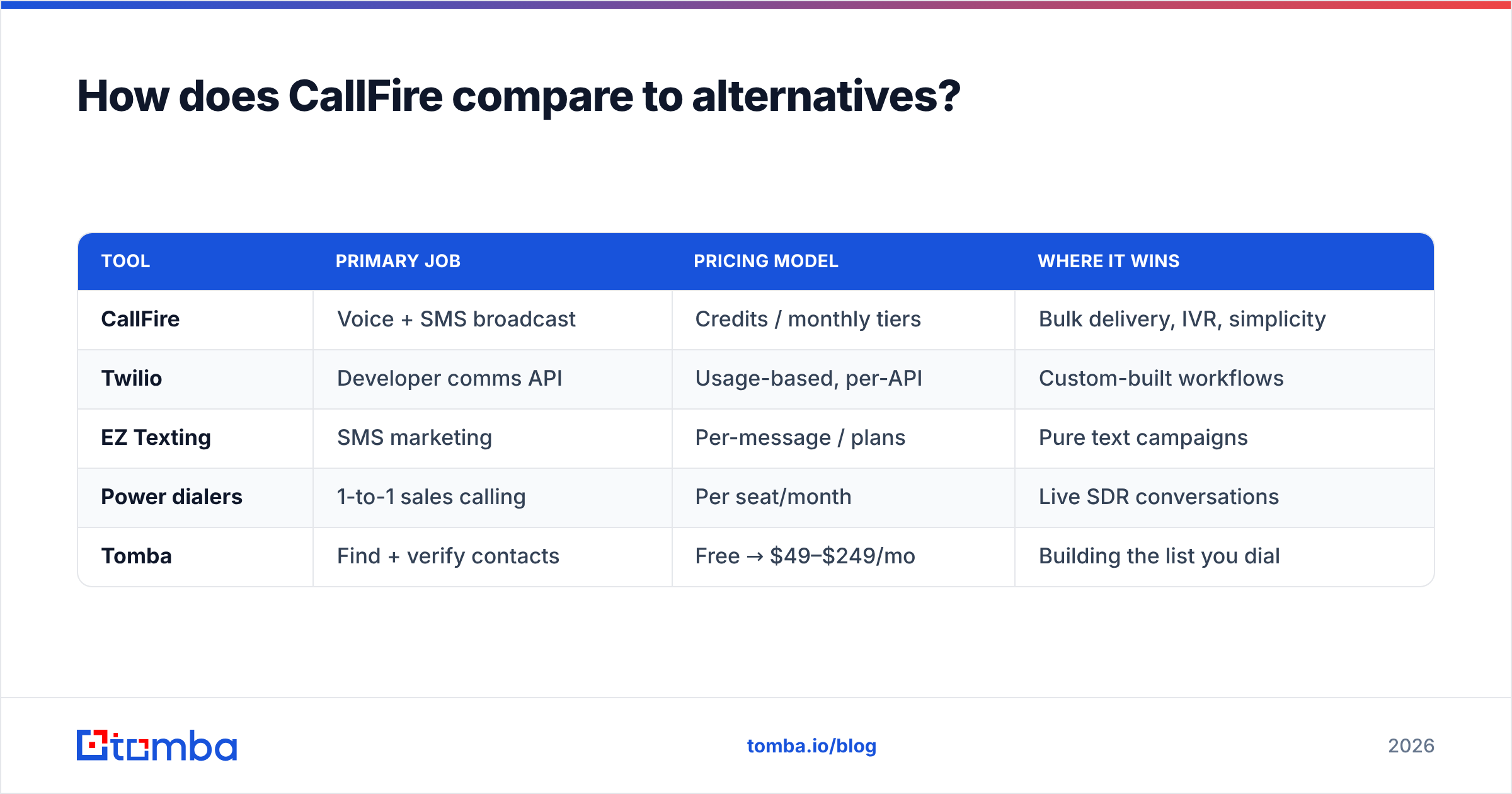
CallFire competes in a crowded space, but most "alternatives" actually solve different problems. Knowing which lane each tool is in saves you from buying the wrong thing twice.
| Tool | Primary job | Pricing model | Where it wins |
|---|---|---|---|
| CallFire | Voice + SMS broadcast | Credits / monthly tiers | Bulk delivery, IVR, simplicity |
| Twilio | Developer comms API | Usage-based, per-API | Custom-built workflows |
| EZ Texting | SMS marketing | Per-message / plans | Pure text campaigns |
| Power dialers | 1-to-1 sales calling | Per seat/month | Live SDR conversations |
| Tomba | Find + verify contacts | Free → $49–$249/mo | Building the list you dial |
The honest takeaway: if you want a broadcast platform, CallFire vs. EZ Texting vs. Twilio is the real comparison. If you want better outbound results, the highest-leverage upgrade isn't switching delivery tools — it's fixing the data that feeds them.
How do you build a stack that actually converts?#
Treat CallFire as one stage in a pipeline, not the whole pipeline. The sequence that works looks like this:
- Source — find the right companies and decision-makers, then pull their direct contact details with a phone finder and email finder.
- Verify — run numbers through a phone validator and emails through verification so dead records never reach a campaign.
- Enrich — add title, seniority, and company context so you can segment lists by who's worth a credit.
- Deliver — push the clean, segmented list into CallFire (or your dialer) for the actual outreach.
- Measure — track responses and feed winners back into your sourcing criteria.
CallFire owns step 4 well. Steps 1–3 are where teams quietly lose most of their ROI, because every invalid record is wasted credits and reputation damage. Get the data right and the same CallFire spend produces materially better results.
Frequently asked questions#
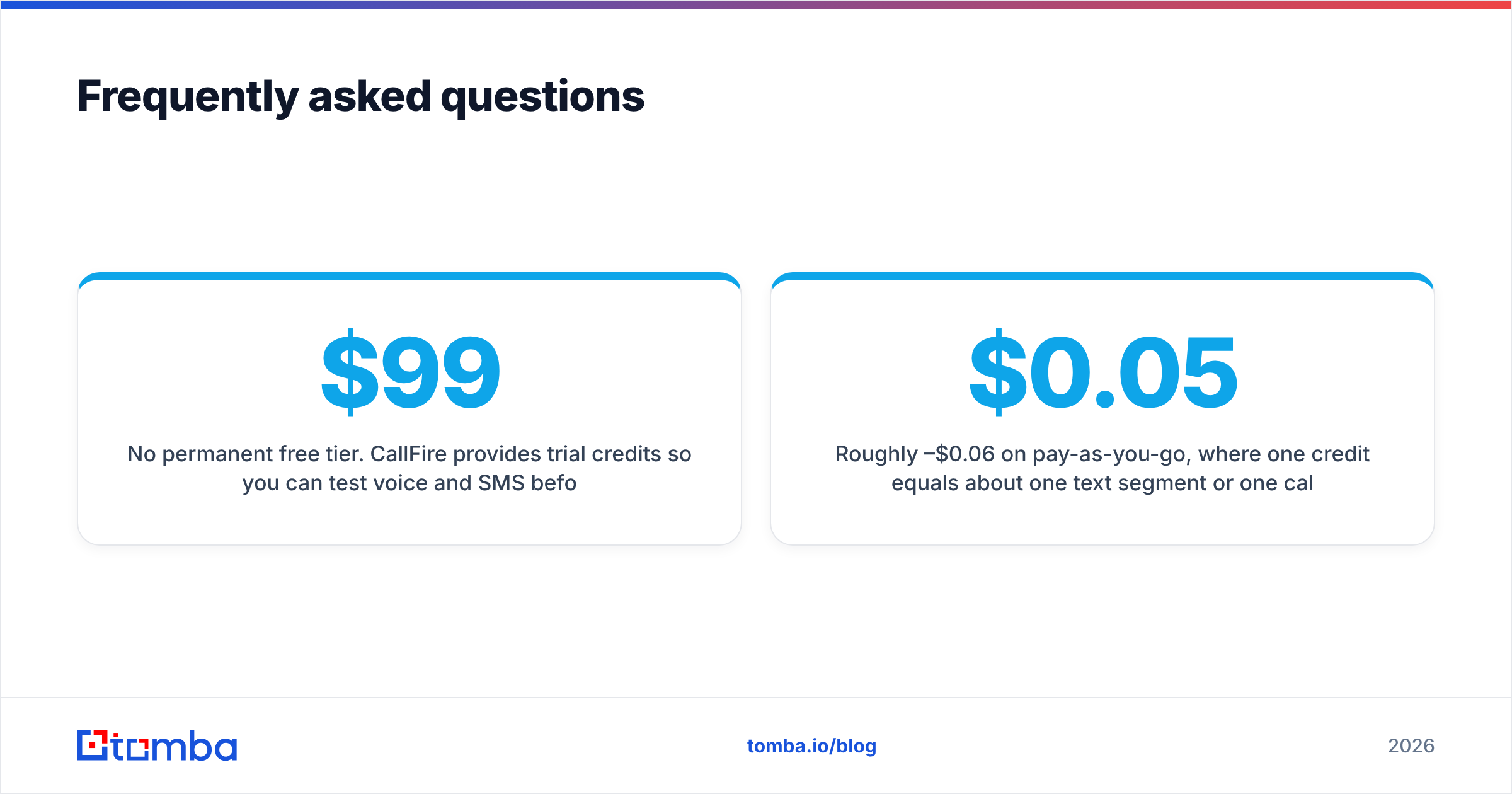
Does CallFire have a free plan? No permanent free tier. CallFire provides trial credits so you can test voice and SMS before committing, but ongoing use requires either pay-as-you-go credits or a monthly plan starting around $99/mo.
Is CallFire TCPA compliant? CallFire supplies opt-out handling and the tooling to run compliant campaigns, but legal responsibility for consent and TCPA compliance rests with you, the sender. Maintain documented opt-in records for every number.
How much does CallFire cost per text or call? Roughly $0.05–$0.06 per credit on pay-as-you-go, where one credit equals about one text segment or one call-minute. The effective rate drops on higher monthly plans that bundle credits.
Can CallFire find phone numbers for me? No. CallFire only sends to numbers you upload. Sourcing and verifying numbers happens upstream with a dedicated data tool before you load any list.
What is the best CallFire alternative for B2B sales? For pure delivery, EZ Texting or a power dialer. But if your real bottleneck is contact data, pair any delivery tool with a finder-and-verifier so you're dialing accurate, deliverable records — the single biggest driver of outbound ROI.
The bottom line#
That is the real story behind CallFire pricing reviews pros and cons. CallFire is a dependable, fairly priced voice-and-SMS broadcast platform. It does exactly what it promises and not much more. Its pricing is transparent, its reviews are genuinely good, and its limits are predictable. It delivers messages, but it won't tell you who to message or whether your numbers are real.
That missing half is where your results are decided. Before your next campaign, build and clean the list first. Use the Tomba Email Finder to source verified decision-maker contacts, validate every number, and only then spend a single CallFire credit. Compare the simple, volume-friendly Tomba pricing — free to start, $49/mo Starter — and you'll find the upstream fix costs less than the credits you're wasting on bad data. Fix the data, and every delivery dollar after it works harder.
// get started
Find, verify and enrich your first contacts today
Start on the free plan with 25 searches a month, then scale when your team is ready.
Free plan · No credit card required · GDPR & CCPA
// about the author