Cursing During Sales Calls: What the Data Actually Says
Does dropping an F-bomb close deals or kill them? Here's what real call data shows about cursing during sales calls — when it builds rapport, when it backfires, and how to use it without torching the pipeline.
Should you ever swear on a sales call? The honest answer is "sometimes, on purpose, and rarely" — not "never" and definitely not "whenever it slips out." Cursing during sales calls is one of those tactics that works in a narrow band and blows up spectacularly outside it. This guide breaks down what the data shows, why a well-placed curse can build rapport, and the specific moments where it torches an otherwise winnable deal.
TL;DR#
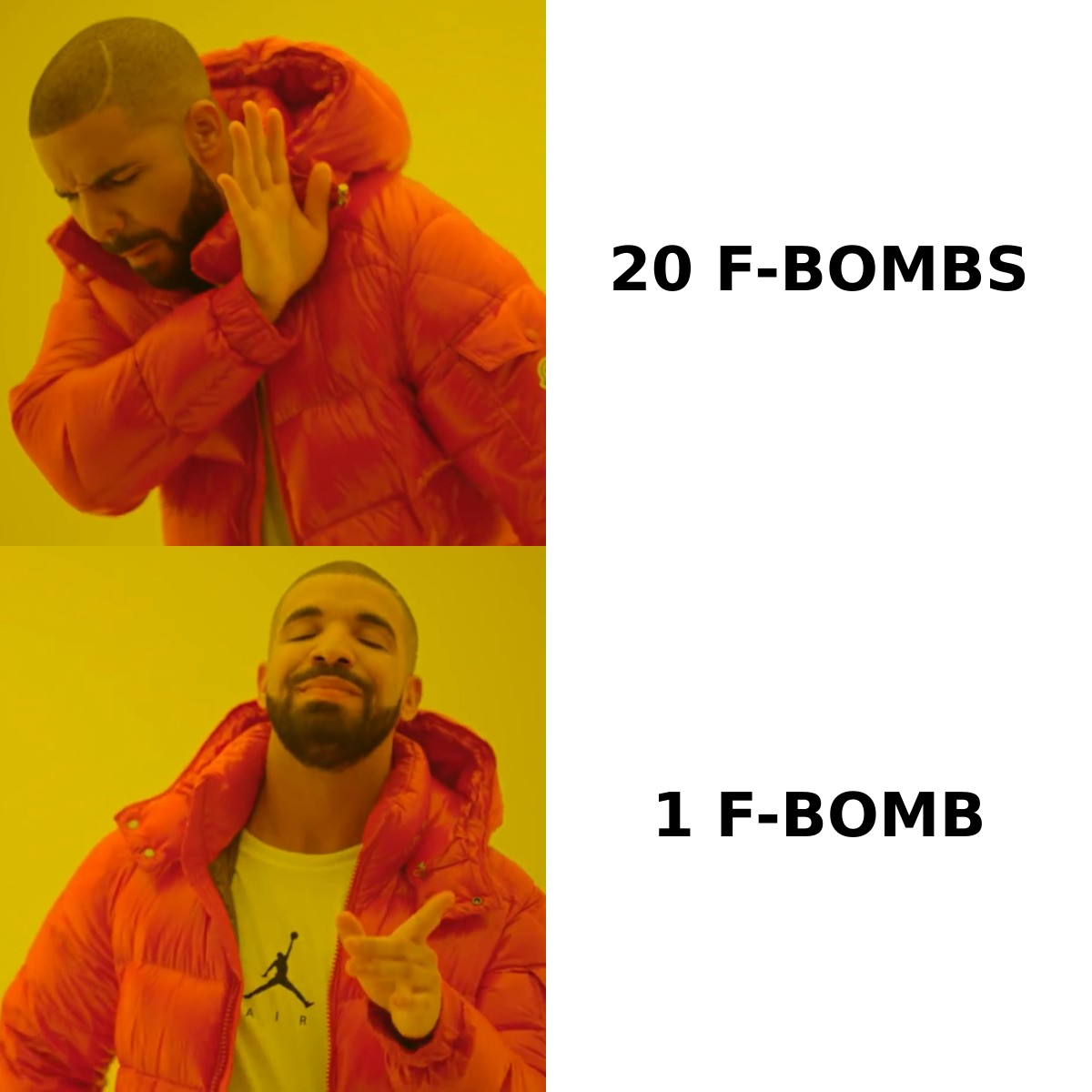
- A little profanity can help; a lot always hurts. Occasional, natural cursing can signal authenticity and passion. Frequent swearing reads as unprofessional and lowers trust.
- Context is everything. Mirroring a prospect who curses first is very different from dropping an F-bomb cold on a first call with a compliance-heavy buyer.
- Tone beats vocabulary. The word matters far less than the emotion, timing, and who you're talking to.
- Directed-at-the-problem swearing > directed-at-a-person swearing. "This pricing model is insane" lands; cursing at a competitor, the prospect, or yourself does not.
- When in doubt, don't. The downside (lost deal, damaged brand, HR complaint) is far larger than the marginal upside.
Does cursing during sales calls actually work?#
Short answer: occasionally, and only when it's authentic and mild. There's a real psychological basis for it. Research summarized on Wikipedia's profanity overview shows that swearing is associated with emotional intensity and, in some studies, with perceived honesty — people read a well-timed curse as "this person isn't filtering everything through a corporate script."
That's the upside on a sales call. When a rep says "honestly, that renewal quote is ridiculous," a light curse can make them sound like a human being on the prospect's side rather than a quota-carrying robot. It breaks the polished-pitch pattern the buyer has heard fifty times this quarter.
But the effect is a thin edge, not a cliff you can lean on. The same intensity that signals passion in one sentence signals volatility in the next. And unlike a cold email you can edit, a call is live — once it's out of your mouth, you can't take it back.

What does the call data show about swearing and close rates?#
Conversation-intelligence platforms that record and transcribe thousands of B2B calls give us the closest thing to hard evidence. Vendors like Gong have published analysis on filler words, monologue length, talk-to-listen ratios, and — yes — charged language. The consistent pattern across this kind of research:
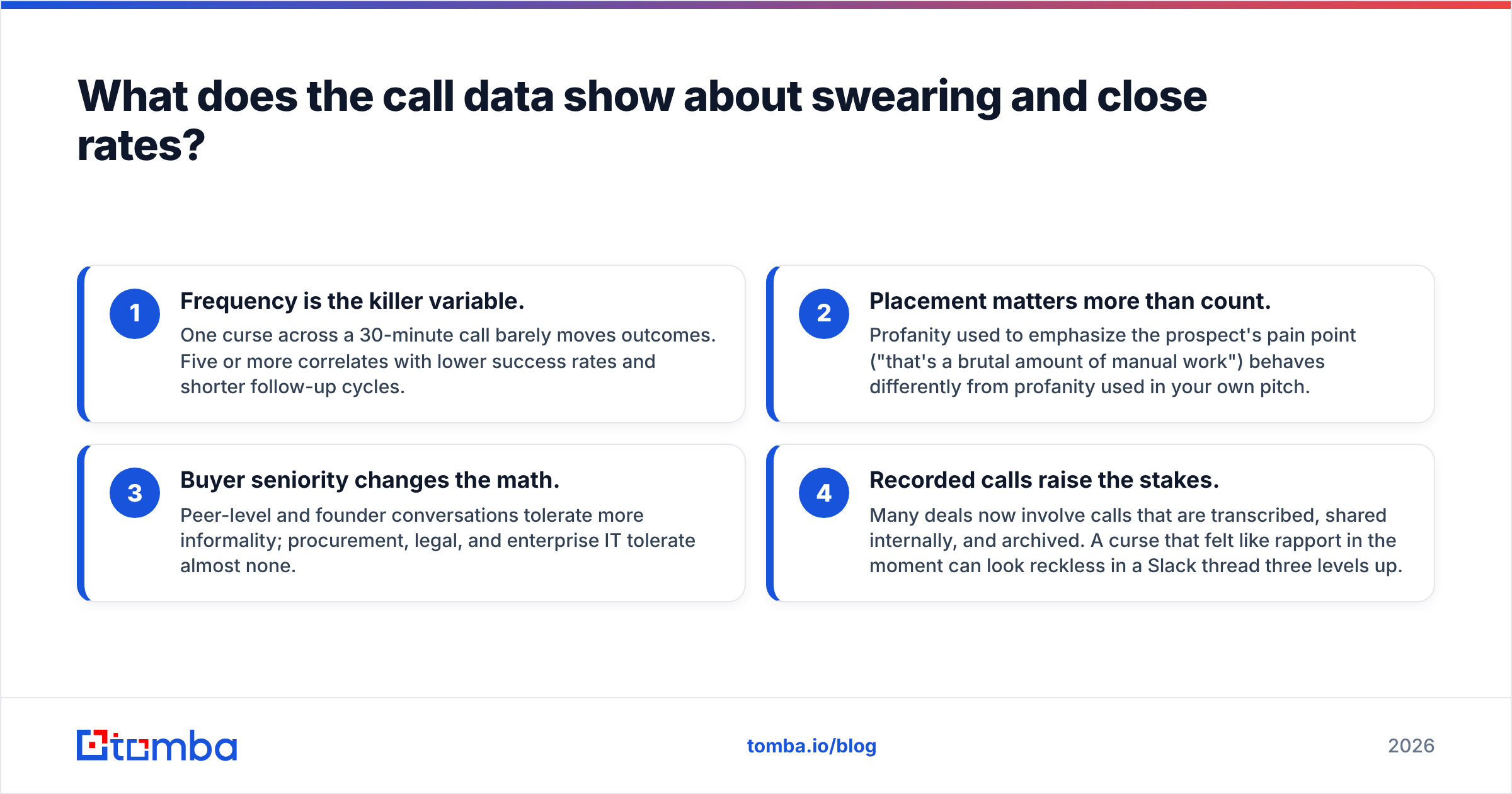
- Frequency is the killer variable. One curse across a 30-minute call barely moves outcomes. Five or more correlates with lower success rates and shorter follow-up cycles.
- Placement matters more than count. Profanity used to emphasize the prospect's pain point ("that's a brutal amount of manual work") behaves differently from profanity used in your own pitch.
- Buyer seniority changes the math. Peer-level and founder conversations tolerate more informality; procurement, legal, and enterprise IT tolerate almost none.
- Recorded calls raise the stakes. Many deals now involve calls that are transcribed, shared internally, and archived. A curse that felt like rapport in the moment can look reckless in a Slack thread three levels up.
None of this means "swearing raises your win rate." It means the relationship between profanity and outcomes is conditional, and most of those conditions push toward restraint.
When is cursing during sales calls a good idea?#
Here's the narrow band where a mild curse can help rather than hurt. Treat all five as conditions that should be true together, not a menu:
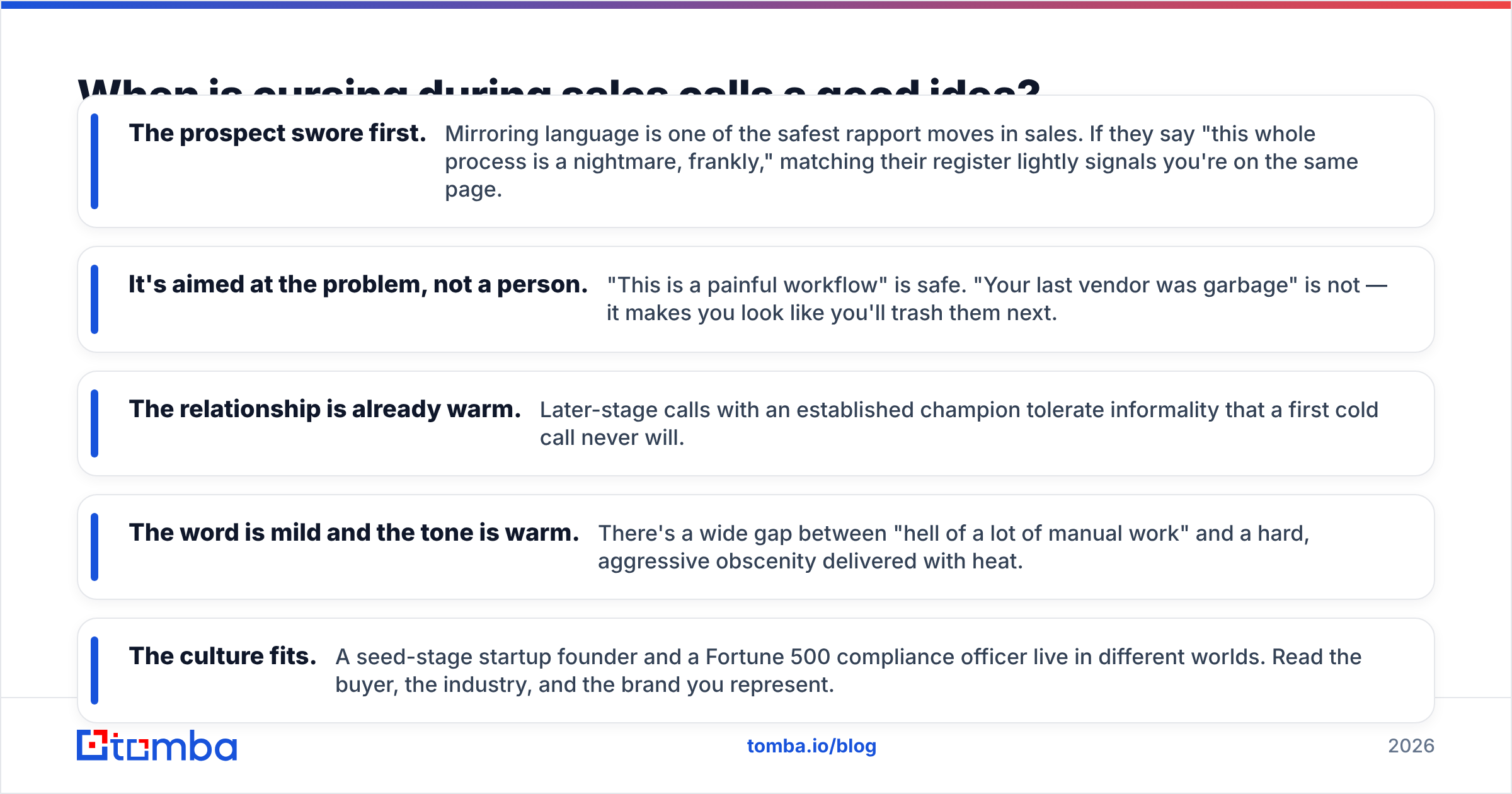
- The prospect swore first. Mirroring language is one of the safest rapport moves in sales. If they say "this whole process is a nightmare, frankly," matching their register lightly signals you're on the same page.
- It's aimed at the problem, not a person. "This is a painful workflow" is safe. "Your last vendor was garbage" is not — it makes you look like you'll trash them next.
- The relationship is already warm. Later-stage calls with an established champion tolerate informality that a first cold call never will.
- The word is mild and the tone is warm. There's a wide gap between "hell of a lot of manual work" and a hard, aggressive obscenity delivered with heat.
- The culture fits. A seed-stage startup founder and a Fortune 500 compliance officer live in different worlds. Read the buyer, the industry, and the brand you represent.
When should you absolutely keep it clean?#
The list of "don'ts" is longer than the list of "dos," which tells you where the risk lives. Never curse when:
- It's a first call and you have zero read on the person. You're guessing, and the cost of guessing wrong is the whole relationship.
- The buyer is in a regulated or conservative field — finance, healthcare, government, insurance, legal. Professional norms are stricter and the personal risk to your contact is higher.
- The call is being recorded or transcribed for a group — which, in 2026, is most enterprise calls.
- You're frustrated. Cursing out of your own irritation is not a rapport tactic; it's a tell that you've lost the room.
- It's directed at anyone — the prospect, a competitor, a colleague, or yourself. Self-directed swearing ("I can't believe I screwed that up") reads as low confidence.
If you would hesitate to have the sentence read aloud in the buyer's next internal meeting, don't say it.
How does profanity compare across different swearing "styles"?#
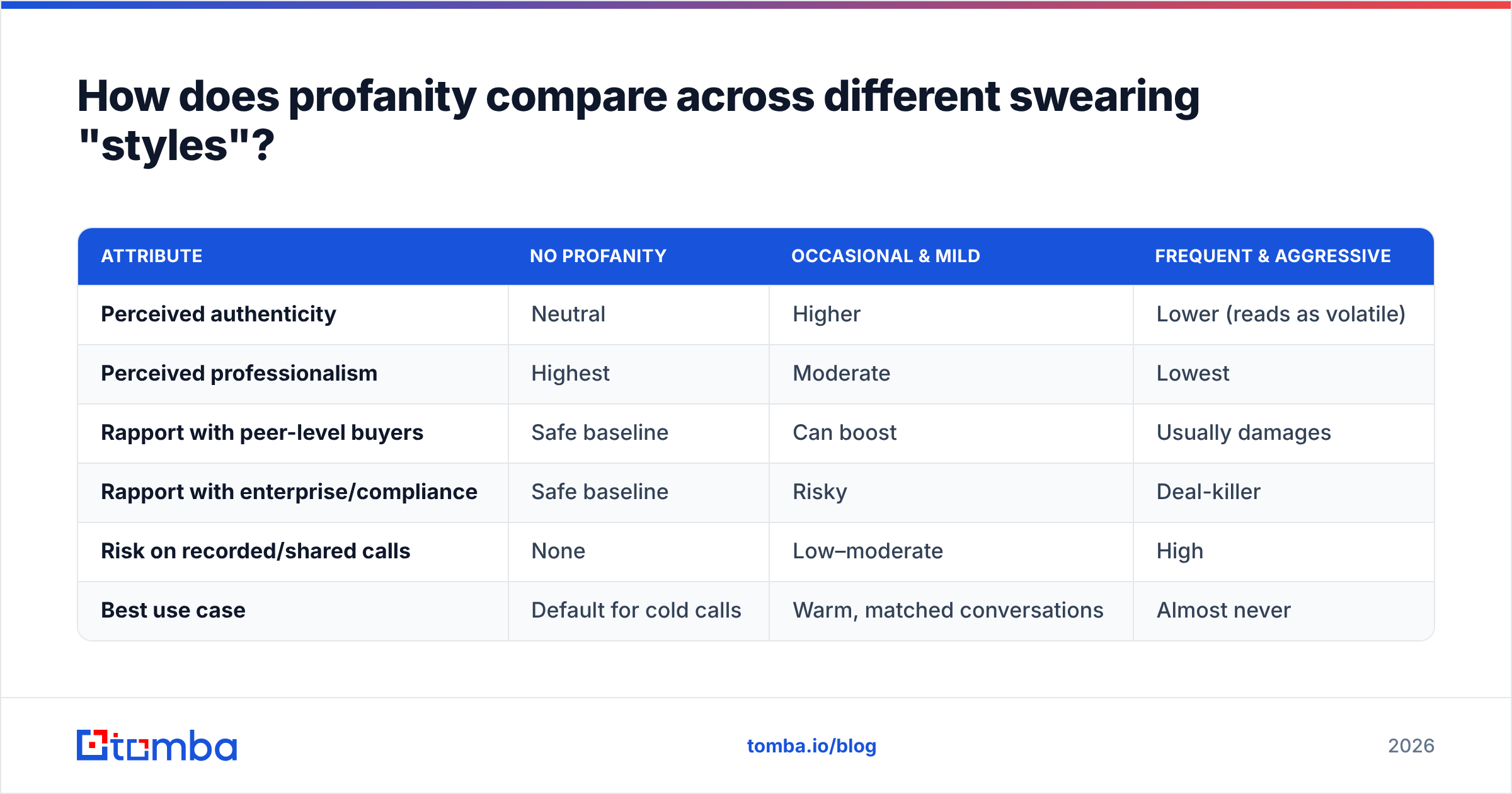
Not all cursing is equal. The table below breaks down how three common approaches tend to land in a B2B sales context. This is a general read, not a guarantee — your industry and buyer override everything.
| Attribute | No profanity | Occasional & mild | Frequent & aggressive |
|---|---|---|---|
| Perceived authenticity | Neutral | Higher | Lower (reads as volatile) |
| Perceived professionalism | Highest | Moderate | Lowest |
| Rapport with peer-level buyers | Safe baseline | Can boost | Usually damages |
| Rapport with enterprise/compliance | Safe baseline | Risky | Deal-killer |
| Risk on recorded/shared calls | None | Low–moderate | High |
| Best use case | Default for cold calls | Warm, matched conversations | Almost never |
The pattern is clear: "no profanity" is the safe default that never costs you a deal, "occasional and mild" is a situational tool for warm conversations, and "frequent and aggressive" has almost no scenario where it wins.
Why does tone matter more than the actual word?#
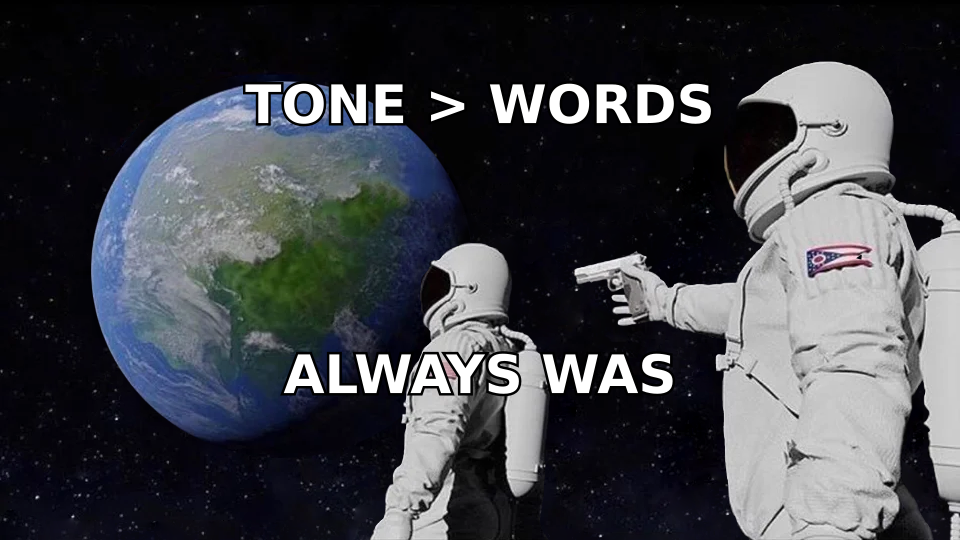
Because buyers respond to emotional signal, not vocabulary. The same word can read as warmth or as a threat depending entirely on delivery.
Think of profanity like hot sauce. A drop on the right dish makes it more memorable and shows you're not afraid of flavor. Dumping the whole bottle on everything just ruins the meal and signals you can't taste what you're doing. The sauce isn't the problem — the volume and the pairing are.
Technically, what's happening is that a curse spikes emotional emphasis. If that spike is aligned with the prospect's frustration ("that renewal increase is insane"), you're amplifying their feeling, which builds alignment. If the spike is aligned with your own tension, you're broadcasting stress, and buyers read stress as risk. Same word, opposite outcome — that's why you can't script cursing. You have to feel the room.
This is also why a great response rate on cold outreach comes from tone and relevance far more than from any single edgy line. The edginess is a garnish on a message that already respects the buyer's time.
What are the real risks of getting it wrong?#
The asymmetry is the whole argument. The upside of a well-placed curse is marginal — a slightly warmer call, a touch more perceived authenticity. The downside is not marginal:
- You lose the deal. A single word can end trust with a conservative buyer instantly, and you rarely get to know it happened.
- You damage the brand. You're not just representing yourself; on a recorded call you're the company. A viral-in-a-bad-way clip is a real risk.
- You trigger HR or compliance issues. Especially if the prospect finds it offensive and escalates.
- You train a bad habit. Reps who curse "strategically" tend to slide into cursing reflexively, and reflexive profanity is where careers and quotas take damage.
Because the downside dwarfs the upside, the rational default for most reps most of the time is to keep it clean and save the tool for the rare warm, matched moment.
How should sales managers coach this?#
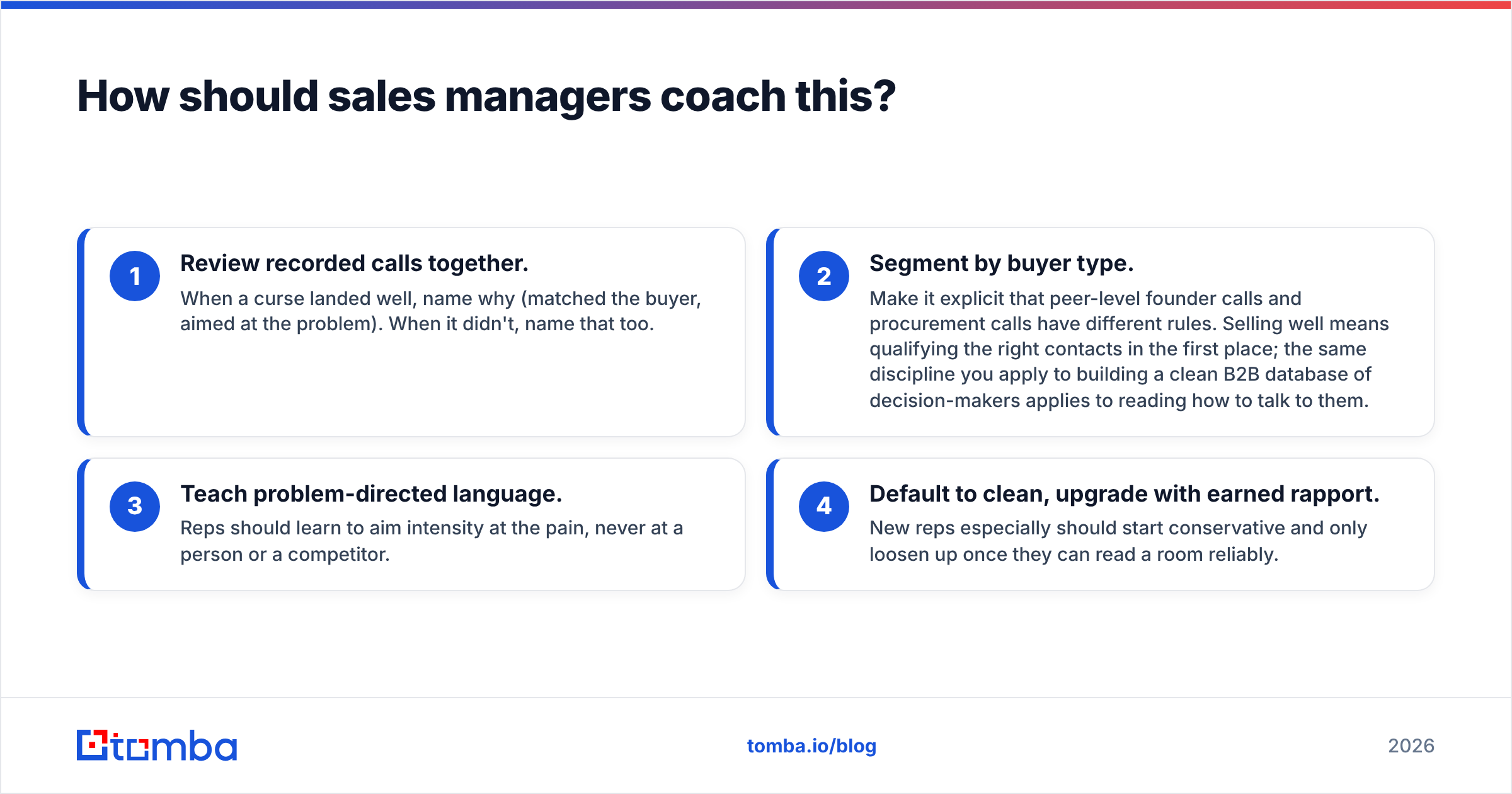
Don't ban it outright and don't encourage it — coach for judgment. A blanket "never swear" rule ignores that mirroring a prospect's own language is one of the best rapport tools available. A "swearing builds rapport, go for it" attitude produces reps who torch enterprise deals.
Practical coaching moves:
- Review recorded calls together. When a curse landed well, name why (matched the buyer, aimed at the problem). When it didn't, name that too.
- Segment by buyer type. Make it explicit that peer-level founder calls and procurement calls have different rules. Selling well means qualifying the right contacts in the first place; the same discipline you apply to building a clean B2B database of decision-makers applies to reading how to talk to them.
- Teach problem-directed language. Reps should learn to aim intensity at the pain, never at a person or a competitor.
- Default to clean, upgrade with earned rapport. New reps especially should start conservative and only loosen up once they can read a room reliably.
Tie it back to fundamentals from resources like HubSpot's sales blog: rapport is built on relevance, listening, and respect. Profanity is at most a tiny accelerant on top of those — never a substitute.
The bottom line: is cursing during sales calls worth it?#
Occasionally, mildly, and only when you've read the room right. The evidence points to a thin band of value — a well-timed, problem-directed, mild curse that mirrors a prospect's own register can make you sound human and aligned. Outside that band, the tactic ranges from mildly risky to deal-ending, and the risk grows with buyer seniority, industry conservatism, and how many people will eventually hear the recording.
If you take one thing away: the word is never the point. The emotional signal is. Get the tone, timing, and target right and you rarely need profanity at all — the rapport is already there.
Before you worry about what to say, make sure you're talking to the right person#
You can perfect your call tone all day, but it's wasted if you're pitching the wrong contact. The highest-leverage move in any calling program is reaching the actual decision-maker with a verified, current email and phone number — so your carefully-read, well-timed conversations happen with people who can say yes.
That's where Tomba Email Finder comes in. Find professional email addresses by domain, name, or company, verify them before you reach out, and pair them with the phone finder to build a clean, dial-ready list. Start free with 25 searches a month, then scale up on the Starter plan at $49/mo — full Tomba pricing is on the site. Nail the targeting first; then worry about whether that one F-bomb belongs in the call.
Ready to find emails that actually work?
Join 150,000+ professionals who stopped guessing and started sending. Free credits on signup — no credit card required.
Get the Tomba newsletter
Practical outbound tactics and product updates — once every two weeks.
About the author