9 Best Intapp Alternatives in 2026 for Deal and Client Teams
Intapp DealCloud is built for private capital and professional services — and priced like it. Here are nine Intapp alternatives compared on cost, implementation time, relationship intelligence and data quality.
TL;DR
- Intapp (and its DealCloud CRM) is purpose-built for private capital, investment banking, legal and accounting firms. It is excellent at relationship intelligence and compliance — and it is quote-only, implementation-heavy, and usually a six-figure annual commitment.
- The best Intapp alternatives split into three buckets: vertical deal CRMs (Affinity, Altvia, 4Degrees, Dynamo), horizontal CRMs you configure yourself (Salesforce, HubSpot, Dynamics 365, Attio), and legal-specific platforms (Litify, Clio).
- If your pain is "the CRM is too expensive and takes nine months to roll out," a horizontal CRM plus a contact-data layer gets you 80% of the value in weeks.
- If your pain is "our contact records are stale and nobody enriches them," switching CRMs will not fix it. Fix the data pipeline first.
- Budget reality: DealCloud-class platforms typically land in the $50k–$250k+/year range once seats, modules and implementation are counted. Attio, HubSpot and a data layer like Tomba can run under $10k/year for a small team.
What is Intapp, and who actually uses it?#
Intapp is a software company serving what it calls "professional and financial services" — private equity, venture capital, investment banking, law firms, accounting firms and consultancies. Its platform spans several products: DealCloud (the deal and relationship CRM), Intapp Time, Intapp Conflicts, Intapp Walls (ethical screens), Intapp Intake and Intapp Terms.
When people search for Intapp alternatives, they almost always mean one of two things:
- DealCloud alternatives — a CRM that understands deals, funds, LPs, intermediaries and long relationship cycles rather than a linear B2B sales pipeline.
- Intapp risk/compliance alternatives — conflicts checking, time capture and intake for law firms.
This post focuses mostly on the first, because that is where the market has the most credible competition. You can review Intapp's own product breakdown at intapp.com and read practitioner reviews on G2's CRM category before you shortlist.
The thing Intapp genuinely does well: it models a non-linear business. A private equity firm does not have a "lead" that becomes an "opportunity" that closes in 45 days. It has a banker it met in 2019, a founder it passed on twice, a co-investor it shared a deal with, and a portfolio company that just hired a new CFO. DealCloud tracks those webs. Generic CRMs, out of the box, do not.
The thing that sends people looking elsewhere: cost, contract rigidity, and implementation timelines measured in quarters.
Why do teams look for Intapp alternatives?#
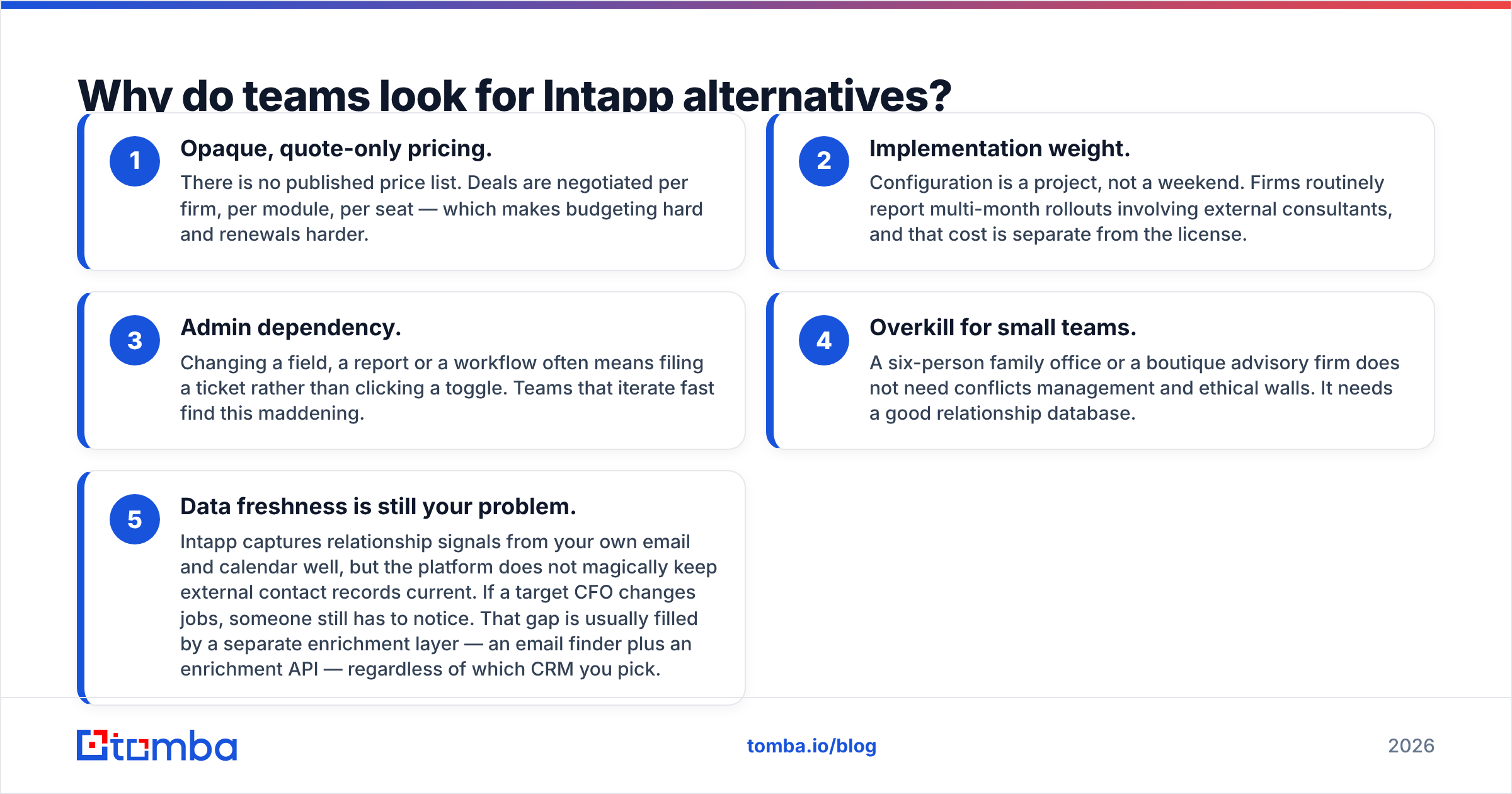
From buyer conversations and public review patterns, the reasons cluster into five predictable complaints:
- Opaque, quote-only pricing. There is no published price list. Deals are negotiated per firm, per module, per seat — which makes budgeting hard and renewals harder.
- Implementation weight. Configuration is a project, not a weekend. Firms routinely report multi-month rollouts involving external consultants, and that cost is separate from the license.
- Admin dependency. Changing a field, a report or a workflow often means filing a ticket rather than clicking a toggle. Teams that iterate fast find this maddening.
- Overkill for small teams. A six-person family office or a boutique advisory firm does not need conflicts management and ethical walls. It needs a good relationship database.
- Data freshness is still your problem. Intapp captures relationship signals from your own email and calendar well, but the platform does not magically keep external contact records current. If a target CFO changes jobs, someone still has to notice. That gap is usually filled by a separate enrichment layer — an email finder plus an enrichment API — regardless of which CRM you pick.
That last point matters more than most vendor comparisons admit. Swapping CRM vendors changes the interface. It rarely changes the accuracy of the 40,000 contact records you are dragging along with you.
What are the best Intapp alternatives in 2026?#
Here is the shortlist, mapped to the buyer type each one actually fits.
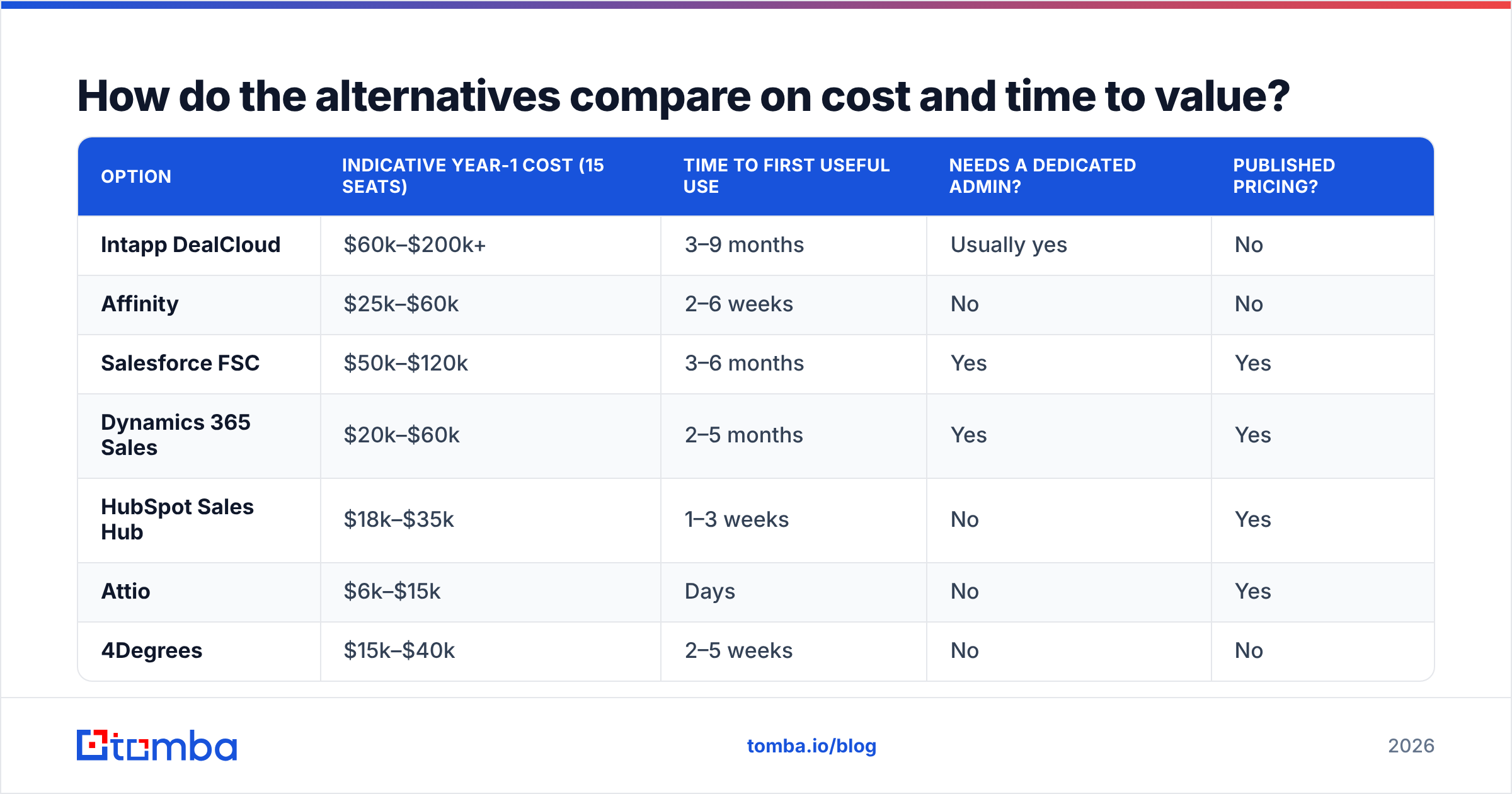
| Alternative | Best for | Pricing model | Relationship intelligence | Rollout effort |
|---|---|---|---|---|
| Affinity | VC and PE deal teams | Quote-based, per-seat | Strong — auto-captures email/calendar graph | Low to medium |
| Salesforce Financial Services Cloud | Large firms with in-house admins | Published per-user tiers (premium) | Medium — via add-ons | High |
| HubSpot Sales Hub | Advisory, consulting, boutique banks | Published, seat-based | Medium | Low |
| Attio | Modern, technical, fast-moving teams | Published from ~$29/user/mo | Medium-strong, data-model driven | Very low |
| Altvia | Private equity fundraising and IR | Quote-based | Medium — LP/fund-centric | Medium to high |
| 4Degrees | Boutique PE, VC, search funds | Quote-based, SMB-friendly | Strong — network-graph native | Low |
| Dynamo Software | Alternative asset managers, fund admin | Quote-based | Medium | High |
| Microsoft Dynamics 365 Sales | Microsoft-committed enterprises | Published per-user tiers | Medium — via Viva/Graph | High |
| Litify | Law firms (Salesforce-native) | Quote-based | Low — matter-centric, not deal-centric | High |
A note on pricing: only HubSpot, Attio, Salesforce and Dynamics publish rates. Everything else in that table requires a call. Treat any figure you see in a listicle — including the ranges later in this post — as directional and confirm on the vendor's own page.
Affinity#
The closest true competitor to DealCloud for venture and growth-stage investors. Affinity's core idea is that your firm's relationship graph already exists inside Gmail and Outlook — it just needs to be extracted and scored. It auto-logs interactions, surfaces "who at our firm knows this person best," and requires far less manual data entry than a configured Salesforce org.
Where it loses to Intapp: less depth on fund administration, compliance and professional-services workflows like time capture or conflicts.
Salesforce Financial Services Cloud#
If your firm already runs Salesforce, FSC gives you household/relationship modelling, referral tracking and a mature AppExchange ecosystem. It is the most extensible option on this list and the most demanding. Budget for an admin — full-time or fractional — permanently. Salesforce publishes FSC tiers on salesforce.com, and they sit at the premium end of per-user CRM pricing.
HubSpot Sales Hub#
The pragmatist's answer. HubSpot will not model a fund waterfall, but it will track relationships, sequences, tasks and pipeline cleanly, and a two-person ops team can configure it in a fortnight. Pricing is public on hubspot.com, which alone removes a month of procurement friction. Pair it with the HubSpot integration for contact enrichment and you have a workable deal desk for a fraction of DealCloud's cost.
Attio#
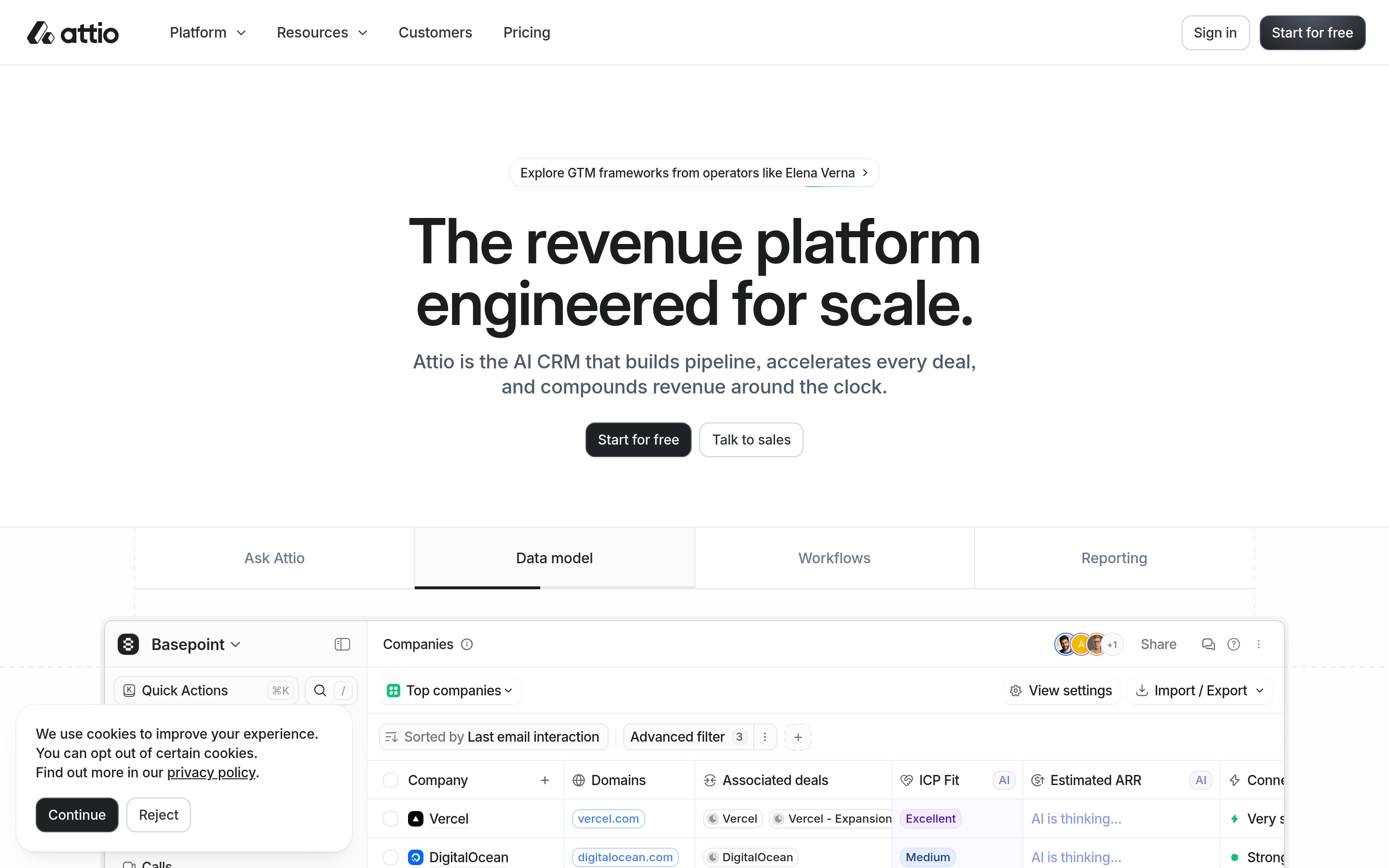
The newest serious entrant. Attio is built around flexible objects — you define "Funds," "LPs," "Intermediaries," "Deals" as first-class record types without a consultant. It publishes per-user pricing starting in the $29–$70 range depending on tier, and setup is measured in days. The trade-off is ecosystem maturity: fewer vertical templates, fewer certified implementation partners.
4Degrees#
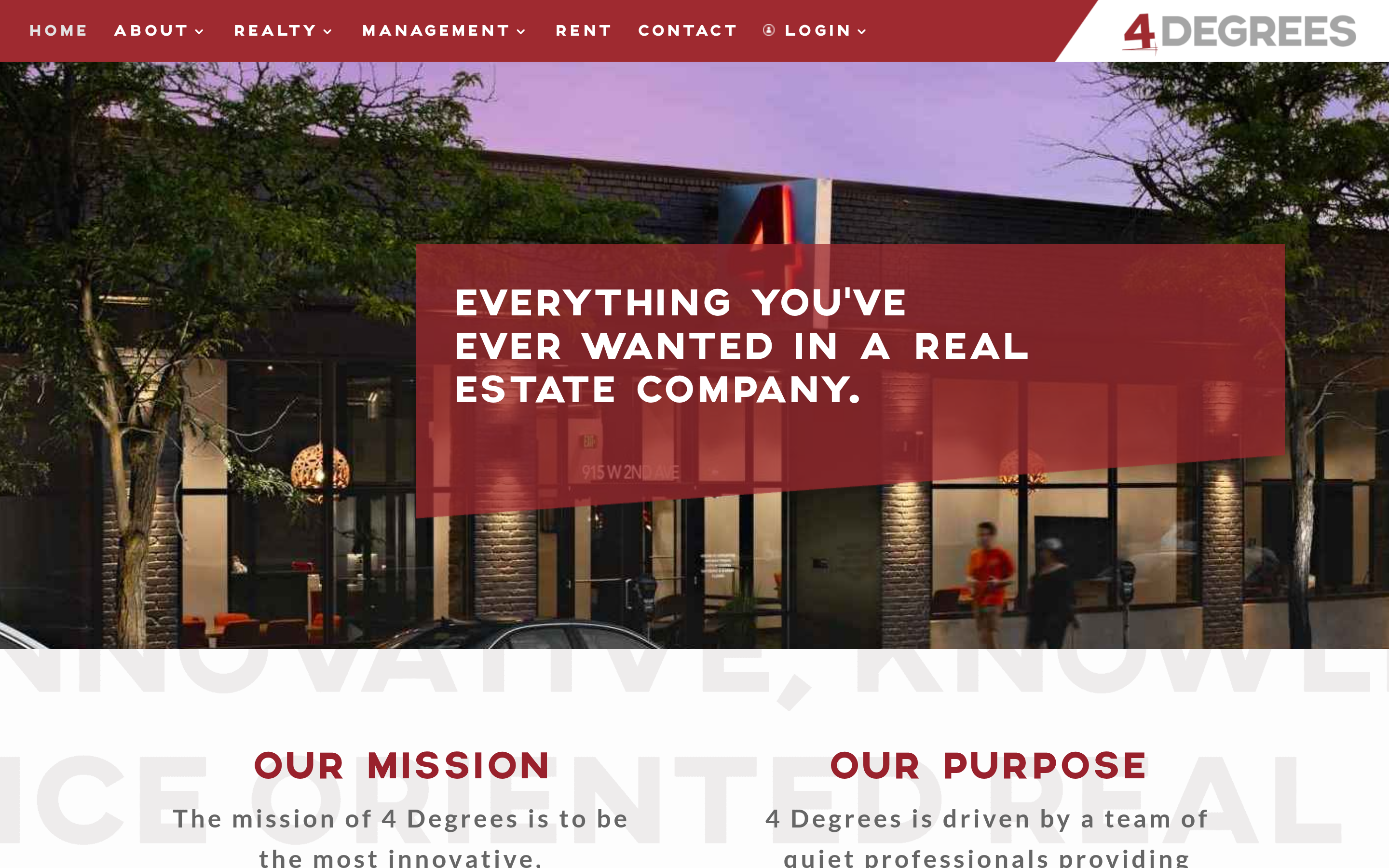
Explicitly positioned at firms that find DealCloud too heavy. Network-graph-first, SMB-friendly commercial terms, and a fast onboarding story. Strong fit for search funds, independent sponsors and boutique PE.
Altvia and Dynamo Software#
Both aim at the private-capital back and middle office — LP reporting, fundraising pipelines, investor portals, fund data. If your motivation for leaving Intapp is "we need better IR and LP workflows," these belong on the shortlist. If your motivation is "we want something lighter," they do not.
Microsoft Dynamics 365 Sales#
Rational if your firm is deep in Microsoft 365 and already pays for E5. Relationship signals come from the Microsoft Graph, security posture is familiar to IT, and pricing is published. Configuration effort is comparable to Salesforce.
Litify#
For law firms specifically, Litify (built on Salesforce) competes with Intapp's legal stack on intake and matter management. It is matter-centric rather than deal-centric — pick it for a firm, not a fund.
How do the alternatives compare on cost and time to value?#
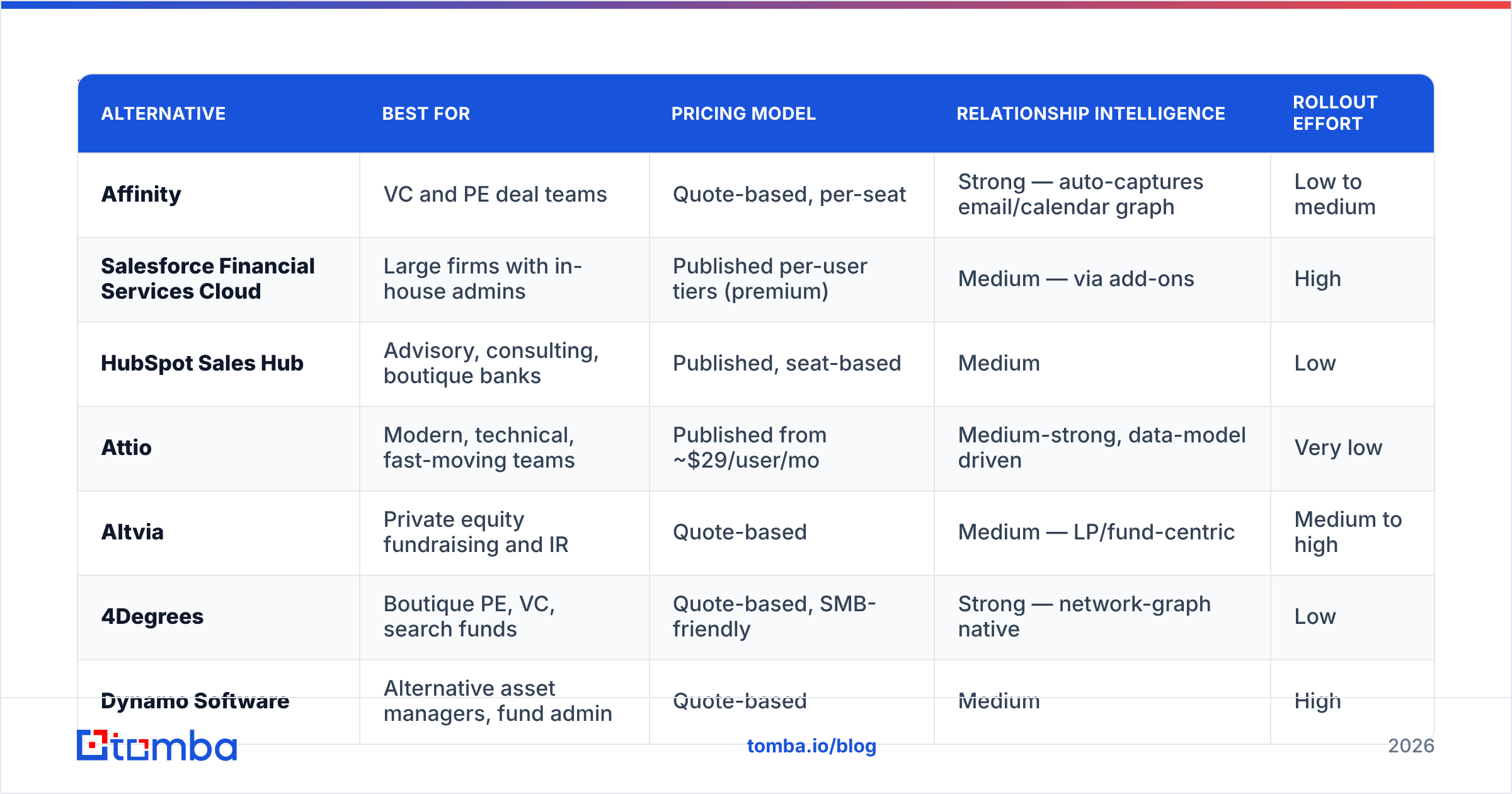
This is the table most buyers actually want. Figures are indicative annual all-in estimates for a 15-seat team, including license plus typical first-year implementation, based on published rates where available and market-reported ranges where not.
| Option | Indicative year-1 cost (15 seats) | Time to first useful use | Needs a dedicated admin? | Published pricing? |
|---|---|---|---|---|
| Intapp DealCloud | $60k–$200k+ | 3–9 months | Usually yes | No |
| Affinity | $25k–$60k | 2–6 weeks | No | No |
| Salesforce FSC | $50k–$120k | 3–6 months | Yes | Yes |
| Dynamics 365 Sales | $20k–$60k | 2–5 months | Yes | Yes |
| HubSpot Sales Hub | $18k–$35k | 1–3 weeks | No | Yes |
| Attio | $6k–$15k | Days | No | Yes |
| 4Degrees | $15k–$40k | 2–5 weeks | No | No |
| Altvia / Dynamo | $40k–$100k+ | 3–6 months | Often | No |
Two observations worth more than the numbers themselves.
First, implementation cost is the hidden variable. A platform that is 30% cheaper on license but needs two consultants for five months is not cheaper. Ask every vendor for a written scope and a named go-live date, and make the last payment tranche contingent on it.
Second, time to first useful use predicts adoption better than feature count. A CRM your associates start using in week two beats a perfectly modelled system they resent in month seven. Most failed CRM migrations are adoption failures, not feature failures.

Will switching CRMs actually fix your data problem?#
Usually not — and this is the single most expensive misdiagnosis in the category.
Think of your CRM as a filing cabinet and your contact data as the paper inside it. Buying a nicer cabinet does not make the paper less out of date. Roughly a quarter of B2B contact records decay every year as people change roles, companies rebrand and domains get consolidated. None of the platforms above prevent that on their own.
A durable stack separates the two jobs:
- System of record — the CRM. Affinity, Attio, HubSpot, Salesforce, DealCloud. Owns relationships, pipeline, notes, permissions.
- Data layer — enrichment and verification that runs continuously against the record. Finds current work emails, verifies them before you send, flags role changes, appends firmographics.
That second layer is where tools like Tomba fit. You can run bulk enrichment jobs against an exported contact list, verify addresses before an LP outreach campaign with an email verifier, or wire continuous enrichment into your CRM through the Tomba API so records refresh without anyone remembering to do it. If you are new to the vocabulary here — deliverability, catch-all domains, verification states — the B2B glossary covers the terms your vendor calls will assume you know.
Tomba's contact enrichment runs alongside whichever CRM you land on, which means the data-quality decision is independent of the platform decision. Make them separately.
Which Intapp alternative is right for your firm?#
Use these five filters in order. They resolve most shortlists in under an hour.
- Are you regulated in a way that requires conflicts, walls or time capture? If yes, Intapp's integrated stack is genuinely hard to replace — and Litify is the closest legal-side substitute. If no, skip the whole compliance-grade tier and save six figures.
- Is your business relationship-led or pipeline-led? Relationship-led (VC, PE, advisory, search) points to Affinity or 4Degrees. Pipeline-led (consulting, services, software-adjacent) points to HubSpot or Attio.
- Do you have — and want — a dedicated CRM admin? If no, eliminate Salesforce FSC, Dynamics and Dynamo immediately. They are excellent platforms that punish teams without an owner.
- What is your realistic go-live deadline? Anything under 60 days rules out every quote-only enterprise platform, full stop.
- Where will contact data come from after go-live? If the answer is "manual entry by analysts," you have already designed the failure. Budget an enrichment and verification layer from day one.
The uncomfortable honest answer for many firms: Intapp is not overpriced, it is over-scoped for you. If you use three of its twelve capabilities, you are paying a compliance-platform premium for a contact database. If you genuinely use conflicts, walls, intake, time and DealCloud together, the consolidated bill is often defensible.
What should you do this week?#
Run a two-week parallel trial, not a twelve-week evaluation. Pick your top two alternatives, import the same 500 contacts into both, and have three real users work actual deals in each. You will learn more from that than from any feature matrix — including this one.
Then fix the data before you migrate it. Export your contact list, dedupe it, verify the addresses, and re-enrich the ones that have gone stale. Migrating 40,000 rotten records into a shiny new platform is how firms end up shopping for CRM alternatives again in eighteen months.
Start with the layer that outlives every CRM decision. Tomba Email Finder locates current professional email addresses by name, domain or company, verifies them before you send, and connects to whatever system of record you choose through the API, Chrome extension or bulk upload. The free tier gives you 25 searches a month to test accuracy on your own target list; paid plans start at $49/mo, with Growth at $99/mo and Pro at $249/mo. Full details are on the Tomba pricing page — published, no sales call required.
Related guides#
// get started
Find, verify and enrich your first contacts today
Start on the free plan with 25 searches a month, then scale when your team is ready.
Free plan · No credit card required · GDPR & CCPA
Get the Tomba newsletter
Product and data updates
// about the author