Cold Calling Scripts That Book Meetings in 2026 (+Templates)
Proven cold calling scripts, frameworks, and objection-handling lines that book more meetings in 2026 — plus a copy-paste template library and the data to back each play.
Cold calling is not dead — bad cold calling is. The reps still booking meetings in 2026 are not reading robotic monologues. They are running tight, tested cold calling scripts that give them a spine to lean on and the freedom to sound human. This guide gives you the scripts, the framework behind them, and the numbers that tell you which lines actually move pipeline.
TL;DR#
- A cold calling script is a flexible map, not a word-for-word cage — top reps follow a structure but improvise the language.
- The highest-converting calls open with a permission-based opener, name a relevant trigger, and earn the next 30 seconds instead of pitching.
- Objections are predictable. Pre-write responses to the five you hear most ("not interested," "send me an email," "no budget," "we use X," "call me later").
- Voicemails should be 15–25 seconds, reference one specific reason, and tee up your next touch — not beg for a callback.
- Scripts only work when you dial the right people; bad contact data sinks even a perfect pitch.
What is a cold calling script (and why do you still need one)?#
A cold calling script is a structured outline that guides a sales call from hello to next step. Think of it like a jazz musician's chord chart: the structure is fixed, but the notes you play on top change with every call.
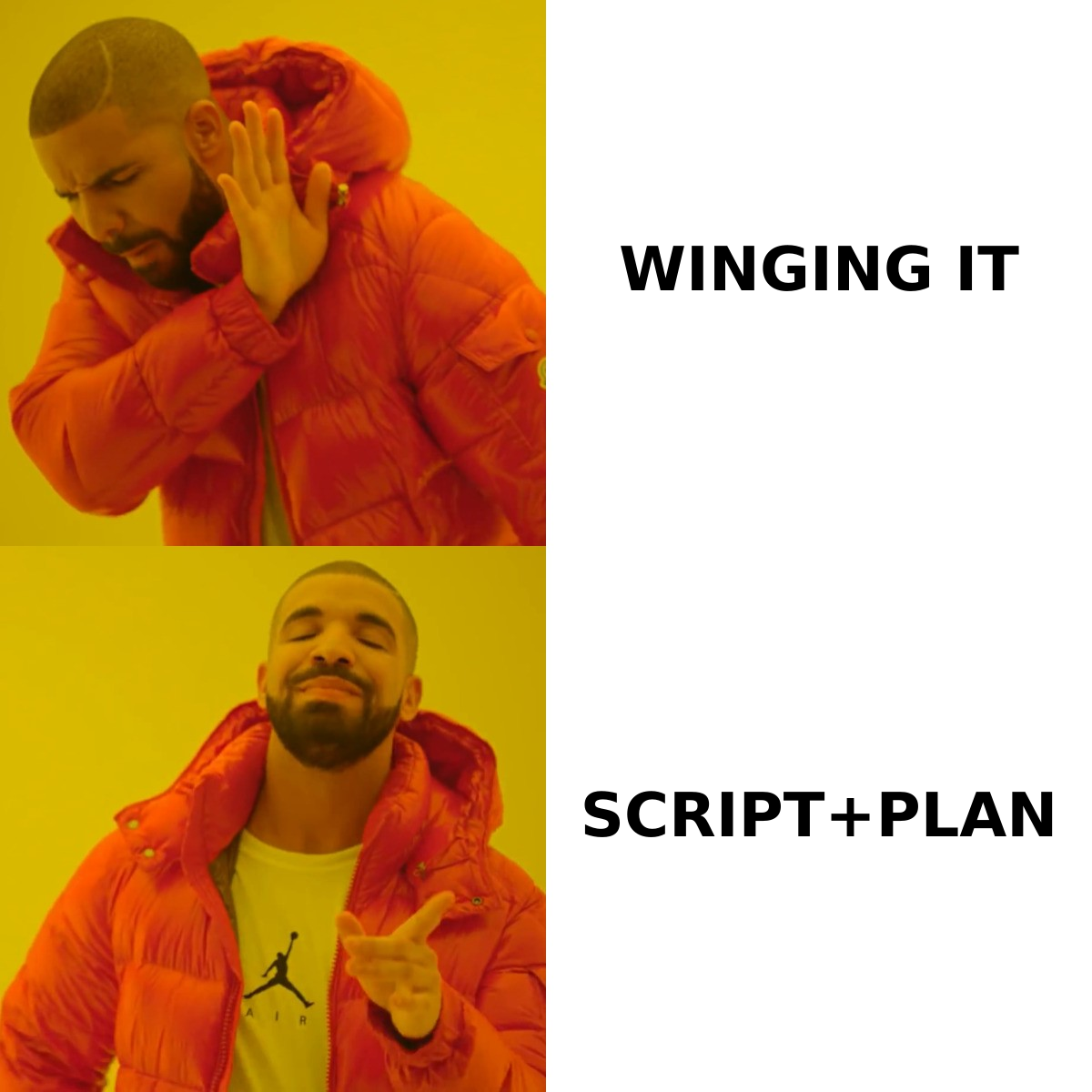
Reps resist scripts because they fear sounding canned. That fear is valid — reading verbatim does sound canned. But the answer is not to wing it. The answer is to internalize a structure so well that you stop thinking about what comes next and start listening to the person on the other end. According to Gartner research on B2B buying, buyers spend most of their journey doing independent research, which means your live conversation has to add value fast or it is over.
A good script does three things:
- Removes the cognitive load of "what do I say next" so you can listen.
- Standardizes your best-performing language so the whole team benefits.
- Gives you a measurable baseline — change one line, measure the lift.
What does a high-converting cold call structure look like?#
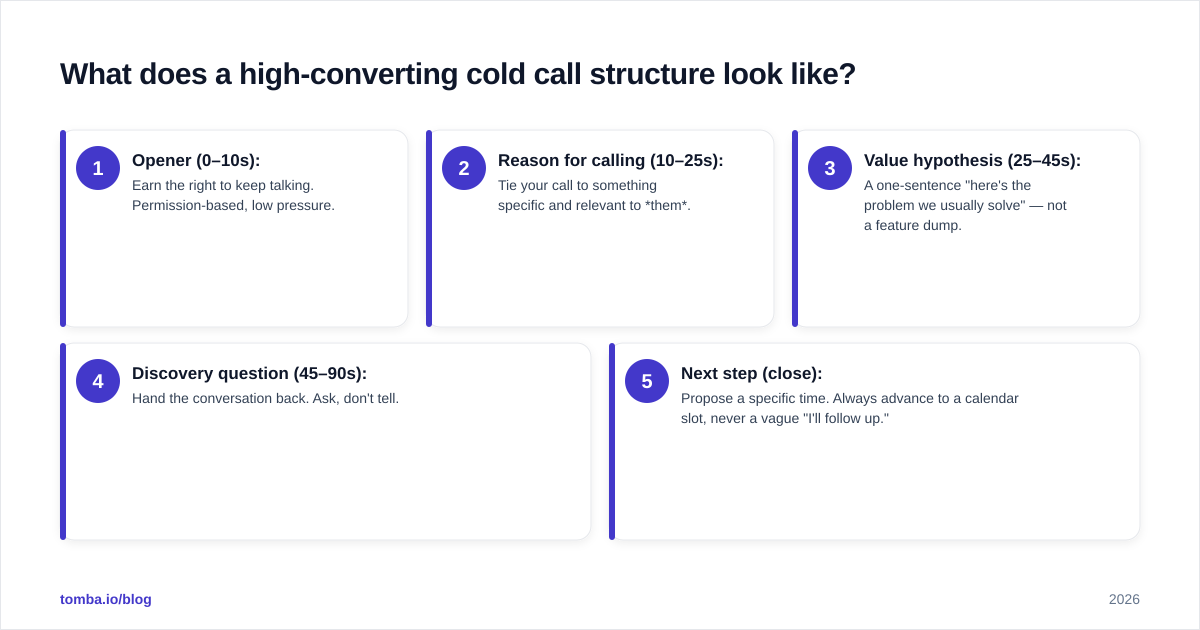
Every effective cold call follows the same five-beat arc. The labels change across sales books, but the sequence does not.
- Opener (0–10s): Earn the right to keep talking. Permission-based, low pressure.
- Reason for calling (10–25s): Tie your call to something specific and relevant to them.
- Value hypothesis (25–45s): A one-sentence "here's the problem we usually solve" — not a feature dump.
- Discovery question (45–90s): Hand the conversation back. Ask, don't tell.
- Next step (close): Propose a specific time. Always advance to a calendar slot, never a vague "I'll follow up."
The mistake most reps make is collapsing beats 2–4 into one long pitch. The buyer's brain hears a wall of selling and disengages. Keep the talk-to-listen ratio close to 45/55 in your favor of listening.
What are the best cold calling scripts for 2026?#
Below are battle-tested scripts you can adapt today. Swap the brackets for your specifics.
The permission-based opener#
"Hi [Name], it's [You] from [Company]. I know I'm an interruption — can I have 27 seconds to tell you why I called, and you can tell me to get lost if it's not relevant?"
Why it works: naming the interruption disarms the reflexive "I'm busy." The oddly specific "27 seconds" signals you respect their time and pattern-interrupts the usual sales cadence.
The trigger-event opener#
"Hi [Name] — I saw [Company] just [opened a new office / hired 12 SDRs / launched X]. Usually when that happens, [relevant problem] starts to bite. Is that on your radar yet?"
This only works if your trigger is real and recent. That requires good data — which is why prospecting and contact accuracy matter as much as the words. Pair your dialer with a B2B database so the trigger you reference is current, not six months stale.
The referral / mutual-connection opener#
"Hi [Name], [Mutual Contact] suggested I reach out. They mentioned your team is wrestling with [problem] — is now a bad time for 60 seconds?"
The straightforward "honest" opener#
"Hi [Name], this is a cold call. Want to hang up, or give me 30 seconds?"
Counterintuitively, this converts well with senior buyers who appreciate the candor. Test it against your permission opener and let the data decide.
The value-hypothesis line#
"We help [role] at [company type] cut [metric] by [range] without [common downside]. I'm not sure that's a fit for you yet — that's why I'm calling."
The "I'm not sure it's a fit" hedge lowers resistance. You are diagnosing, not closing.
How do you handle the most common cold call objections?#
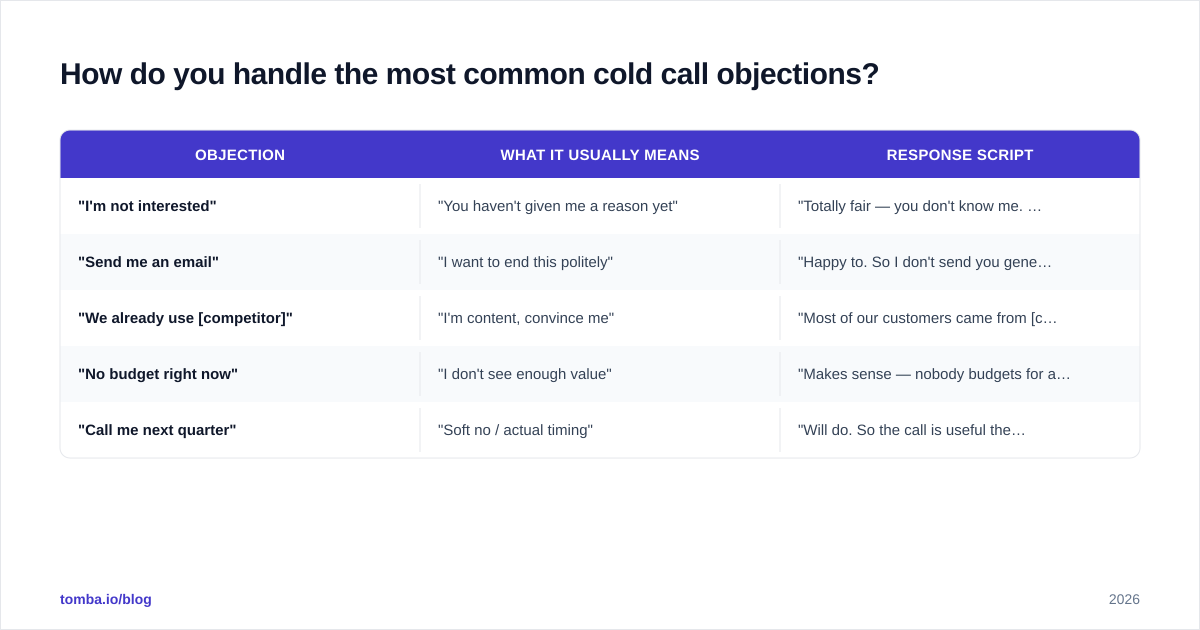
Objections are not rejections; they are requests for more information delivered impatiently. Pre-write your responses so you never freeze. Here are the five you will hear most and a response framework for each.
| Objection | What it usually means | Response script |
|---|---|---|
| "I'm not interested" | "You haven't given me a reason yet" | "Totally fair — you don't know me. Most people I call aren't interested until they hear [specific outcome]. Worth 20 seconds?" |
| "Send me an email" | "I want to end this politely" | "Happy to. So I don't send you generic junk — what's the one thing you'd actually want me to address?" |
| "We already use [competitor]" | "I'm content, convince me" | "Most of our customers came from [competitor]. They switched because of [one specific gap]. Are you running into that?" |
| "No budget right now" | "I don't see enough value" | "Makes sense — nobody budgets for a problem they haven't sized. Can I show you what this is costing you first?" |
| "Call me next quarter" | "Soft no / actual timing" | "Will do. So the call is useful then — what needs to be true by [quarter] for this to be a priority?" |
The pattern across all five: acknowledge, reframe, ask a question. Never argue. Never pitch harder. The question hands control back and keeps the conversation alive.

What is the best cold call voicemail script?#
Most calls go to voicemail, so treat it as a deliberate touch — not a throwaway. The best voicemails are 15–25 seconds and do not try to sell. They create curiosity and reference your next touch.
"Hi [Name], it's [You] at [Company]. I'm calling about [specific, relevant reason] — not a generic pitch. I'll send a short email so you have the context, and I'll try you again [day]. If it's easier, my number is [number]. Thanks [Name]."
Notes: say your number slowly and only once at the end. Reference the email so your follow-up has a hook ("as I mentioned in my voicemail…"). Never say "just following up" — it signals low value.
If your follow-up email is part of the sequence, make sure it actually lands. Tight email deliverability is what turns a voicemail-plus-email combo into a booked meeting instead of a spam-foldered orphan.
Should you script every word, or improvise?#
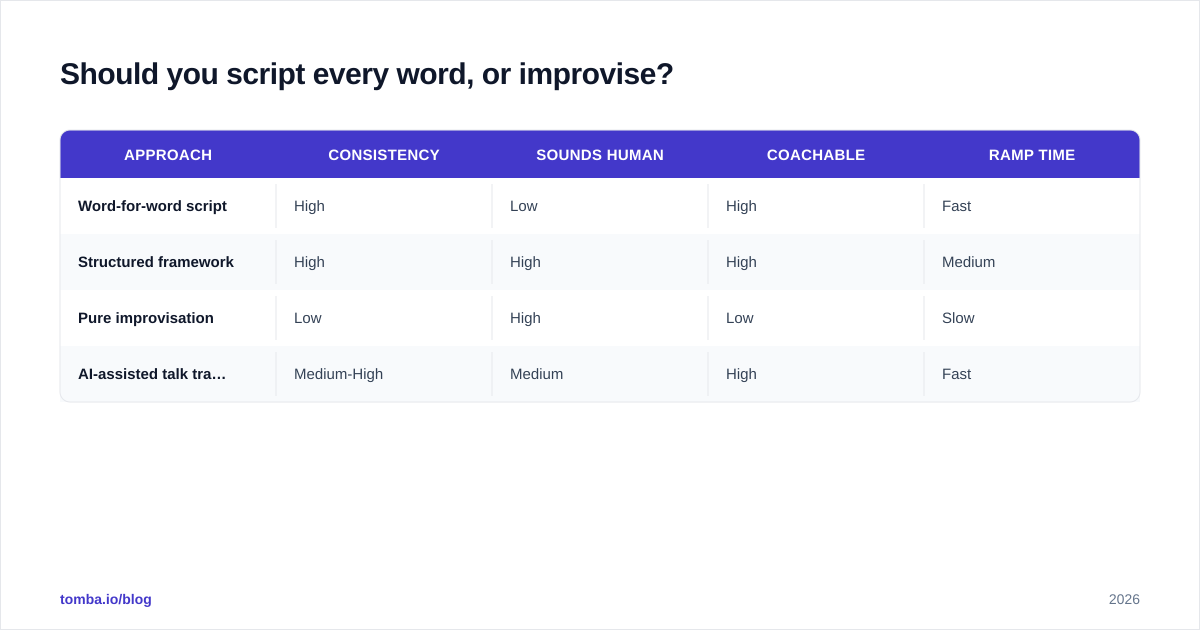
Script the structure, improvise the language. This is the central tension of cold calling, and the research is clear: reps who follow a consistent framework outperform both rigid readers and pure improvisers.
Here is how the three approaches stack up.
| Approach | Consistency | Sounds human | Coachable | Ramp time |
|---|---|---|---|---|
| Word-for-word script | High | Low | High | Fast |
| Structured framework | High | High | High | Medium |
| Pure improvisation | Low | High | Low | Slow |
| AI-assisted talk tracks | Medium-High | Medium | High | Fast |
The structured framework wins because it is the only column without a hard weakness. New reps can ramp on it quickly, managers can coach line-by-line, and the rep still sounds like a person. Tools like Gong and conversation-intelligence platforms let you find which exact phrases correlate with booked meetings, then bake those into the framework.
How do you build a cold call script for your team?#
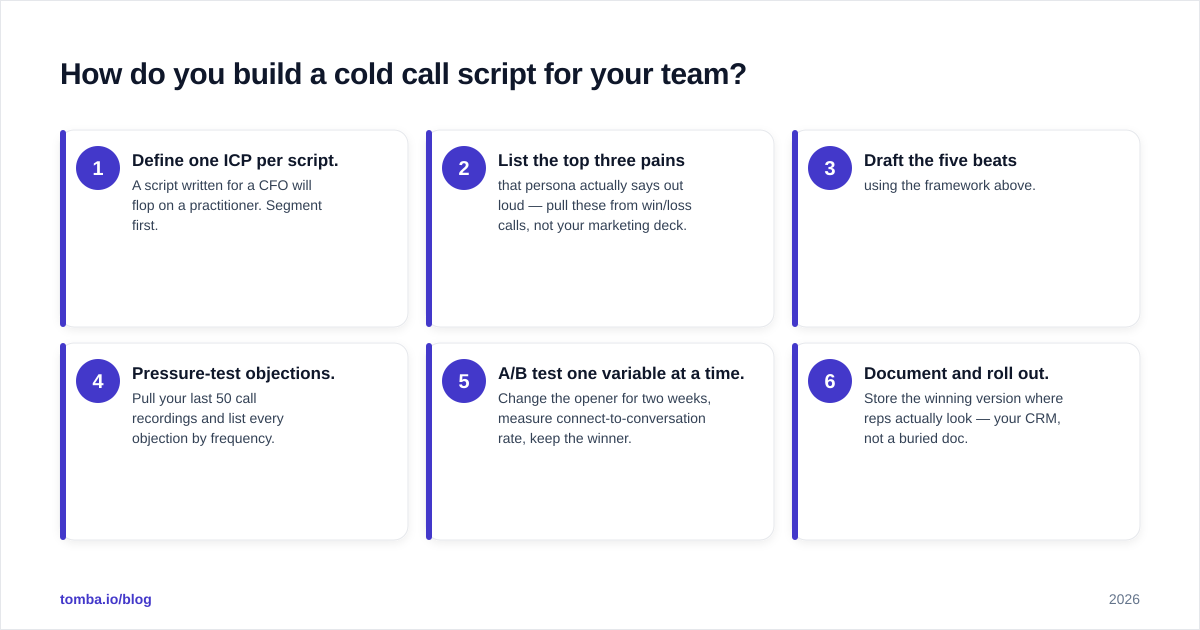
Use this repeatable process instead of copying a generic template wholesale.
- Define one ICP per script. A script written for a CFO will flop on a practitioner. Segment first.
- List the top three pains that persona actually says out loud — pull these from win/loss calls, not your marketing deck.
- Draft the five beats using the framework above.
- Pressure-test objections. Pull your last 50 call recordings and list every objection by frequency.
- A/B test one variable at a time. Change the opener for two weeks, measure connect-to-conversation rate, keep the winner.
- Document and roll out. Store the winning version where reps actually look — your CRM, not a buried doc.
Keep a living objection library. Every new objection a rep hears gets a pre-written response added within the week. Over a quarter this compounds into a genuine moat.
What metrics tell you a script is working?#
Don't measure scripts by "vibes." Track these:
- Connect rate: dials that reach a live human. Low here is a data problem, not a script problem.
- Connect-to-conversation rate: live answers that get past the opener. This is your opener's score.
- Conversation-to-meeting rate: conversations that book a next step. This is your value hypothesis and close.
- Show rate: booked meetings that actually happen. Weak qualification inflates bookings and tanks shows.
If your connect rate is the bottleneck, no script edit will save you — you need better numbers and better timing. A phone finder that surfaces direct-dial mobile numbers will lift connect rates far more than another opener tweak ever could.
How does data quality change your cold calling results?#
You can have the best cold calling scripts in the world and still fail if you are dialing wrong numbers or irrelevant people. The script is the last mile; the data is the road.
Three data inputs make or break a calling motion:
- Accurate direct dials so you reach the human, not a gatekeeper switchboard.
- Verified role and seniority so your value hypothesis lands on someone who owns the problem.
- Fresh trigger events so your "reason for calling" is genuinely relevant this week.
This is where enrichment pays off. Before a calling block, enrich your list so every row has a verified mobile, a confirmed title, and recent company signals. You can enrich leads in bulk and feed clean records straight into your dialer, then verify the matching email addresses for the follow-up sequence. Reps who dial enriched lists spend their energy on conversations instead of dead numbers.
Quick-reference: copy-paste script stack#
Stitch the pieces together into one flow:
- Opener: Permission-based or trigger-event (test both).
- Reason: One specific, relevant trigger.
- Value hypothesis: "We help [role] cut [metric] without [downside]."
- Discovery: "Is that something you're dealing with today?"
- Objection: Acknowledge → reframe → question.
- Close: "Does Thursday at 10 or Friday at 2 work better?"
- Voicemail (if no answer): 20 seconds, one reason, tee up the email.
Print it, tape it to your monitor, and run it 50 times. By call 30 it stops being a script and starts being how you talk.
Start with the right numbers#
Great scripts get you in the door, but only if the door belongs to the right person and the phone actually rings. Before your next dial block, build a clean, verified list: confirm titles, pull direct dials, and validate the emails you'll use for follow-up. Tomba's Email Finder and its phone and enrichment tools give you accurate, ready-to-dial contact data so your hard-won script lands on a real, relevant human every time. Check the Tomba pricing plans — start free with 25 searches a month, then scale to Starter at $49/mo when your calling motion takes off. Dial smarter, not just harder.
// get started
Find, verify and enrich your first contacts today
Start on the free plan with 25 searches a month, then scale when your team is ready.
Free plan · No credit card required · GDPR & CCPA
// about the author