Email Compliance and Unsubscribe Rules: 2026 Deliverability Guide
One-click unsubscribe is now mandatory for bulk senders. Here's how email compliance and unsubscribe rules affect deliverability in 2026 — and how to stay out of spam.
Unsubscribe is no longer a courtesy link buried in your footer. As of 2024, Google and Yahoo treat a working one-click opt-out as a hard requirement for bulk senders, and regulators on three continents can fine you for getting it wrong. Compliance and deliverability used to be two separate conversations. They are now the same conversation.
TL;DR#
- One-click unsubscribe is mandatory for anyone sending 5,000+ messages a day to Gmail or Yahoo. Miss it and your mail gets throttled or junked.
- Three legal regimes matter most: CAN-SPAM (US), GDPR (EU), and CASL (Canada). They disagree on consent but agree opt-out must be easy and honored fast.
- Honoring an unsubscribe within 10 days is the legal floor; within 48 hours is the deliverability standard. Mailbox providers watch how fast you stop.
- Spam complaints above 0.3% will sink your sender reputation faster than any single legal violation — and a clunky unsubscribe is the #1 driver of complaints.
- Clean lists prevent the problem upstream. Verifying contacts before you send reduces bounces, traps, and the angry-recipient complaints that trigger both fines and filtering.
What does "email compliance and unsubscribe" actually mean in 2026?#
It means two things that now travel together: the legal obligation to let people opt out of your email, and the technical obligation to prove to mailbox providers that you do. The legal side is written by governments. The technical side is enforced by Gmail, Yahoo, and Microsoft — and they are far less forgiving than any court.
A few years ago you could be technically legal and still land in the inbox without much effort. That gap is gone. Google's bulk sender rules now require a one-click email deliverability mechanism (RFC 8058 List-Unsubscribe), a complaint rate under 0.3%, and authenticated mail. Yahoo mirrors these. The result: your unsubscribe experience is now a ranking signal, not a footnote.
If you only remember one principle, make it this: every friction point between "I want out" and "I'm out" is a complaint waiting to happen, and every complaint is a deliverability tax.
Which laws govern unsubscribe, and how do they differ?#
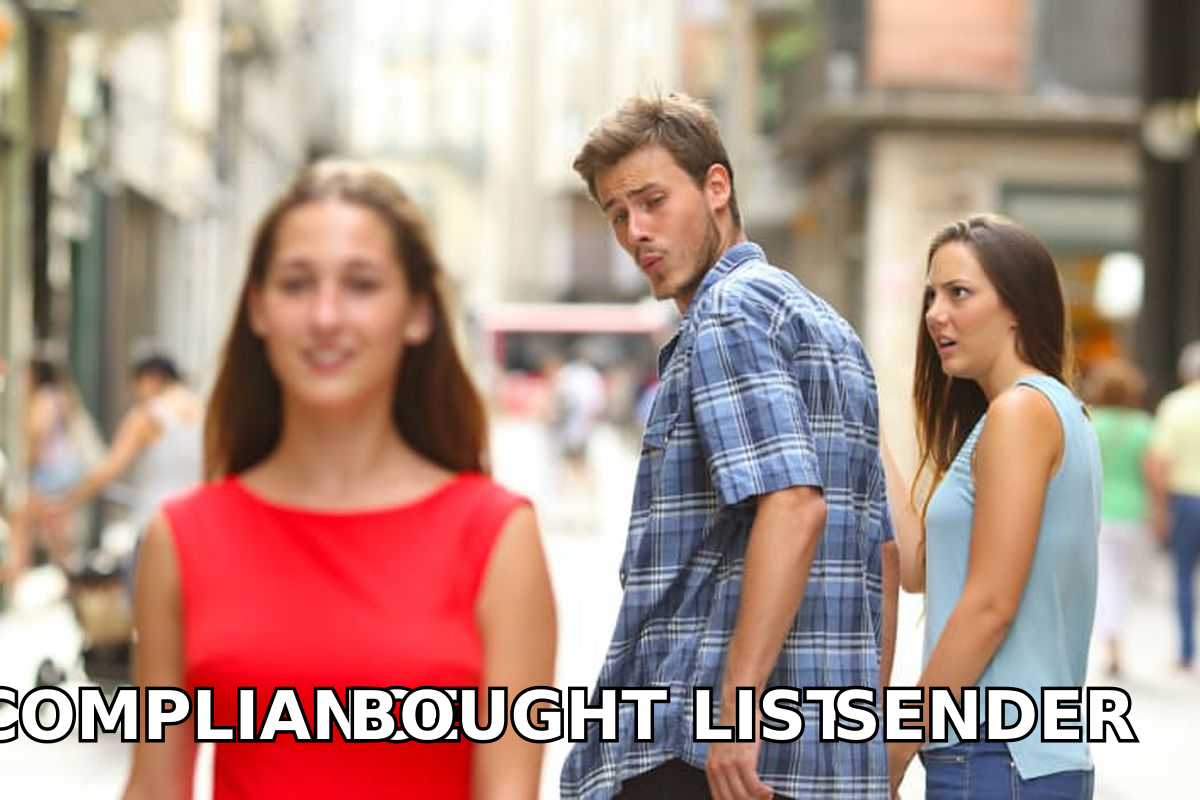
Three frameworks cover most B2B and B2C senders. They were written in different decades for different philosophies — US law is opt-out by default, EU law is opt-in by default — but they converge on the unsubscribe mechanics.
| Requirement | CAN-SPAM (US) | GDPR (EU) | CASL (Canada) |
|---|---|---|---|
| Consent model | Opt-out (implied OK) | Opt-in (explicit) | Opt-in (express or implied) |
| Unsubscribe link required | Yes | Yes | Yes |
| Time to honor opt-out | Within 10 business days | "Without undue delay" | Within 10 business days |
| Physical postal address | Required | Recommended | Required |
| Max penalty per violation | Up to ~$53,088 | Up to €20M or 4% of revenue | Up to C$10M |
| Pre-checked consent boxes | Allowed | Banned | Banned |
The practical takeaway: build for the strictest regime you touch. If any portion of your list is European, you need explicit consent and a frictionless opt-out anyway, so you might as well apply that standard everywhere. You can read the US baseline directly in the FTC's CAN-SPAM compliance guide and the EU rules at gdpr.eu.
A common myth: "CAN-SPAM lets me email anyone once." Technically you can send to a cold contact in the US, but the moment that contact marks you as spam, your reputation absorbs the damage — regardless of legality. Legal permission and inbox permission are different currencies.
How does unsubscribe behavior affect deliverability?#
Directly and brutally. Mailbox providers infer your list quality from how recipients react, and the unsubscribe-versus-complaint ratio is one of their clearest signals.
When someone wants off your list, they have two buttons: your unsubscribe link, or the provider's "Report Spam" button. If your unsubscribe is easy, they use yours and you lose one contact quietly. If it's hidden, broken, or slow, they hit "Report Spam" and you take a complaint that mailbox providers count against your sender reputation.
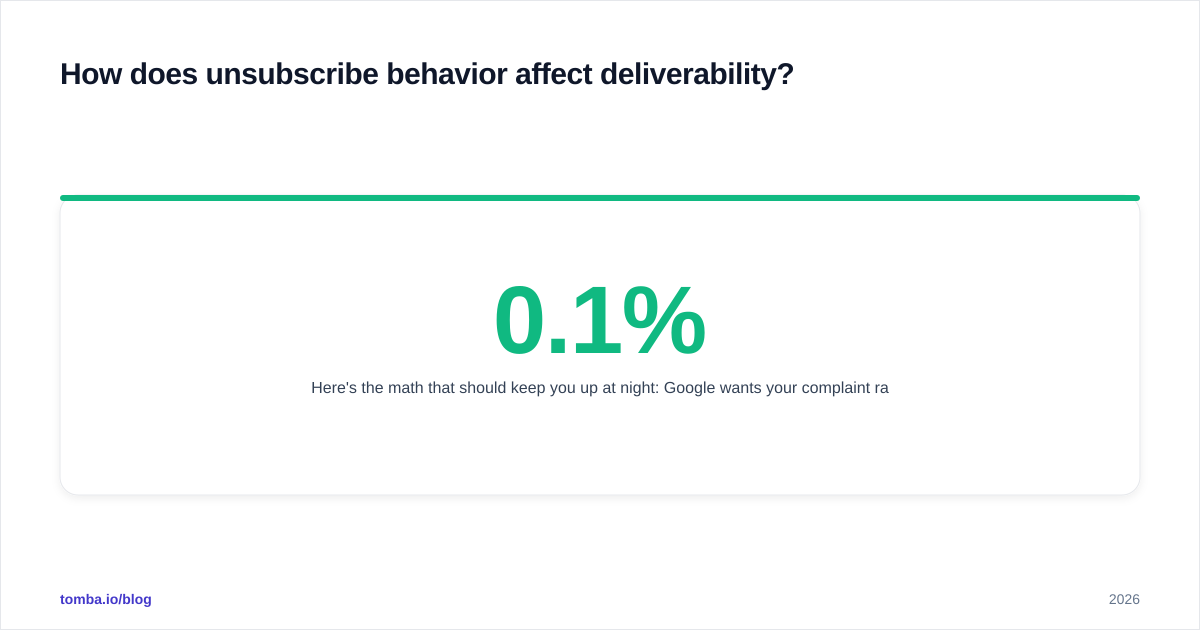
Here's the math that should keep you up at night: Google wants your complaint rate under 0.1% and will act against you above 0.3%. At 0.3%, just three complaints per thousand emails starts the throttling. A bad unsubscribe flow can push a single campaign past that line.
Monitor this in Google Postmaster Tools — it's free and shows your complaint rate, domain reputation, and authentication status in near real time. If you only check one thing weekly, check this.
What does a compliant, deliverability-safe unsubscribe look like?#
It satisfies the law, the mailbox providers, and the human on the other end — in that priority order reversed. Get the human right and the other two usually follow.
A compliant 2026 unsubscribe has these traits:
- One-click, no login. RFC 8058 requires that the
List-Unsubscribe-Postheader lets a recipient opt out without opening your site or signing in. Gmail surfaces this as a native "Unsubscribe" button next to your sender name. - A visible in-body link too. The header handles power users and Gmail's UI; the footer link handles everyone else. You need both.
- Honored fast. The law says 10 days. Deliverability says under 48 hours. Re-sending to someone who just unsubscribed is the fastest route to a spam complaint.
- No re-confirmation gauntlet. Asking "are you sure?" three times, requiring a password, or making people "manage preferences" before they can fully exit all increase complaints. Offer preference granularity as an option, never as a gate.
- A real From address and physical address. Spoofed or no-reply-only senders without a postal address violate CAN-SPAM and look like phishing to filters.
The process side matters as much as the markup. When an opt-out comes in, it should propagate to every list, every sequence, and every integrated tool immediately — not just the one campaign it came from. Suppression has to be global.
How do you keep complaints low before anyone clicks unsubscribe?#
You prevent the bad sends that generate complaints in the first place. Unsubscribe handling is your last line of defense; list hygiene is the front line.
Most complaints come from three sources: people who never really opted in, addresses that should have bounced, and spam traps that should never have been mailed. All three are fixable upstream.
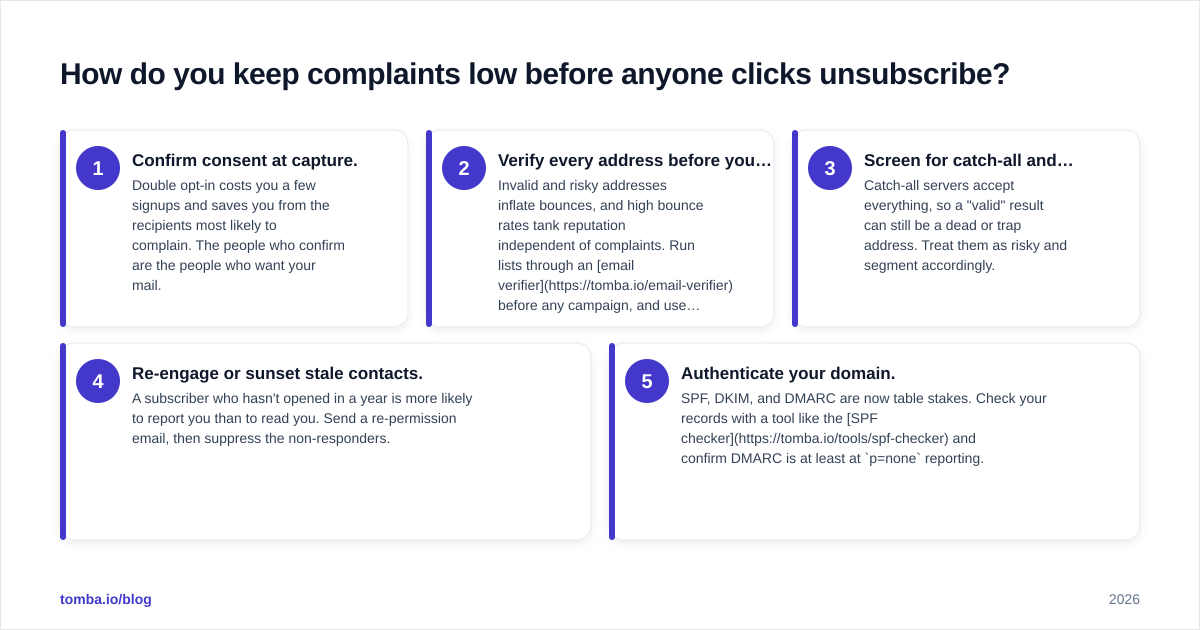
- Confirm consent at capture. Double opt-in costs you a few signups and saves you from the recipients most likely to complain. The people who confirm are the people who want your mail.
- Verify every address before you send. Invalid and risky addresses inflate bounces, and high bounce rates tank reputation independent of complaints. Run lists through an email verifier before any campaign, and use bulk verify for large imports.
- Screen for catch-all and trap-prone domains. Catch-all servers accept everything, so a "valid" result can still be a dead or trap address. Treat them as risky and segment accordingly.
- Re-engage or sunset stale contacts. A subscriber who hasn't opened in a year is more likely to report you than to read you. Send a re-permission email, then suppress the non-responders.
- Authenticate your domain. SPF, DKIM, and DMARC are now table stakes. Check your records with a tool like the SPF checker and confirm DMARC is at least at
p=nonereporting.
This is also where data quality at the source pays off. If you're building lists with accurate, deliverable contacts from the start — rather than scraping or buying — you sidestep most of the complaint problem before it exists. A B2B database of verified, consented contacts is structurally less likely to generate the angry opt-outs that trigger filtering.
Is one-click unsubscribe the same as the in-body link?#
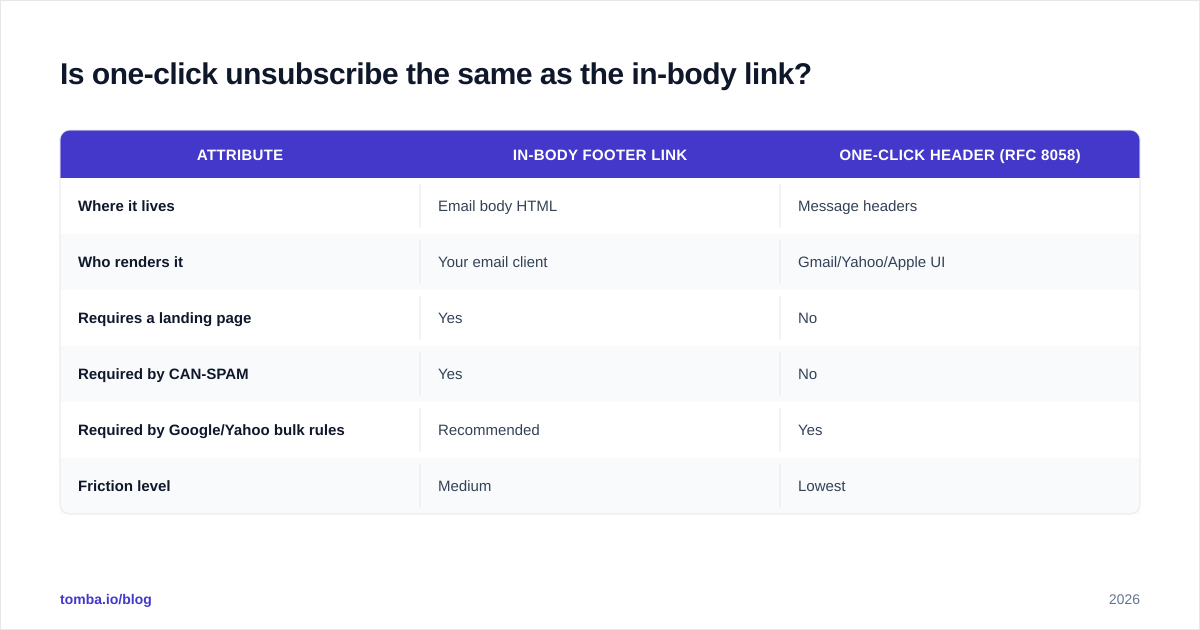
No — and conflating them is a common reason senders fail Google's check. They serve different mechanisms, and you need both.
The in-body link is the clickable "Unsubscribe" text in your email footer. It's been required by CAN-SPAM since 2003. It works, but it routes the recipient to a web page, which is friction.
The one-click header is the List-Unsubscribe plus List-Unsubscribe-Post headers defined in RFC 8058. These let the mailbox provider render a native unsubscribe button and submit the opt-out on the recipient's behalf — no page load, no form. This is what Gmail and Yahoo now require from bulk senders.
| Attribute | In-body footer link | One-click header (RFC 8058) |
|---|---|---|
| Where it lives | Email body HTML | Message headers |
| Who renders it | Your email client | Gmail/Yahoo/Apple UI |
| Requires a landing page | Yes | No |
| Required by CAN-SPAM | Yes | No |
| Required by Google/Yahoo bulk rules | Recommended | Yes |
| Friction level | Medium | Lowest |
Your ESP should generate both automatically, but verify it. Send a test to a Gmail account and confirm the native "Unsubscribe" button appears next to your sender name. If it doesn't, your headers aren't configured and you're out of compliance with the bulk sender rules regardless of what your footer says.
What happens if you ignore these rules?#
Two penalties stack, and the regulatory one is usually the smaller of the two. Most senders fear the fine. The deliverability collapse hurts more.
The legal exposure is real but slow: investigations take time, and enforcement tends to target egregious or repeat offenders. CAN-SPAM penalties run into tens of thousands per violation, GDPR into the millions, but these are tail risks for most legitimate senders.
The deliverability exposure is immediate and certain. Cross the complaint threshold and Gmail throttles you within days. Your open rates fall, your sales sequences stall, and recovery takes weeks of careful reputation rebuilding — assuming you fix the root cause. Unlike a fine you can pay and move past, a burned domain reputation follows you.
The asymmetry is the whole lesson: doing unsubscribe right costs you a few engineering hours and a slightly smaller list. Doing it wrong costs you the inbox.
Compliance and unsubscribe checklist for 2026#
Run this before every major send:
- One-click
List-Unsubscribe-Postheader present and tested in Gmail - Visible in-body unsubscribe link in the footer
- Valid physical postal address in every message
- Opt-outs honored within 48 hours, propagated to all lists and tools
- No login or multi-step gate required to unsubscribe
- SPF, DKIM, and DMARC authenticated and passing
- List verified for invalid, risky, and catch-all addresses
- Complaint rate under 0.1% in Google Postmaster Tools
- Consent documented (especially for any EU contacts)
- Stale, non-engaging contacts sunset or re-permissioned
Build clean lists before you worry about opt-outs#
The cleanest unsubscribe flow in the world can't save a dirty list. If you're emailing addresses that never consented, bounce, or belong to spam traps, you'll generate complaints faster than any opt-out link can absorb them.
Start where deliverability actually starts — with accurate, deliverable contact data. Tomba's Email Finder helps you build prospect lists from verified professional addresses tied to real domains and names, so the people you reach are reachable and relevant. Pair it with the email verifier to scrub every list before send, and you remove most of the upstream causes of complaints, bounces, and the angry opt-outs that trigger both fines and filtering. Compliance is easier when your list is clean to begin with. See Tomba pricing — the free tier gives you 25 searches a month to start, with paid plans from $49/mo.
// get started
Find, verify and enrich your first contacts today
Start on the free plan with 25 searches a month, then scale when your team is ready.
Free plan · No credit card required · GDPR & CCPA
// about the author