B2B Events Strategy 2026: Turn Booths Into Pipeline
Most B2B events lose money because the strategy ends at the booth. Here's how to plan, capture, and convert event leads into real 2026 pipeline.
A B2B events strategy is the difference between a booth that drains budget and a channel that books revenue. Most teams nail the logistics — booth, badges, branded socks — and then treat the leads like a pile of business cards. This guide fixes that. It walks the full loop: pick the right events, set goals you can defend to finance, capture clean data, enrich it the same week, and run follow-up that actually converts.
TL;DR#
- Strategy beats spend. A clear goal (pipeline, not "brand awareness") decides which events, booth size, and follow-up you need.
- Data quality is the bottleneck. Badge scans and fishbowl cards are dirty; enrich and verify within 48 hours or the lead decays.
- Speed-to-follow-up is the single biggest lever. Contacts you reach within 24–48 hours convert far better than week-two outreach.
- Measure cost-per-opportunity, not leads. A 200-lead show that books 3 deals beats a 900-scan show that books none.
- Pick events by ICP density, not attendee count. Fewer right people > thousands of wrong ones.
What is a B2B events strategy?#
A B2B events strategy is your repeatable plan for choosing events, capturing the right contacts, and converting them into pipeline — measured against revenue goals, not vanity metrics.
Think of an event like a fishing trip. Anyone can buy a boat (the booth) and motor out to the water (show up). A strategy is knowing which lake has the fish you want, what bait works, and — the part everyone forgets — having a cooler ready so the catch doesn't spoil on the drive home. That cooler is your data and follow-up process. Without it, you paid for the boat and threw the fish back.
The strategy spans four phases that most teams treat as separate jobs owned by separate people. They aren't separate. They're one pipeline:
- Plan — Define the revenue goal, then reverse-engineer the event mix, budget, and staffing.
- Capture — Collect contact data at the event in a clean, structured, exportable form.
- Enrich and verify — Fill the gaps (work email, title, company size) and confirm deliverability before anyone sends a thing.
- Convert — Run fast, segmented, multi-touch follow-up tied to your CRM and pipeline stages.
How do you set goals for a B2B event?#
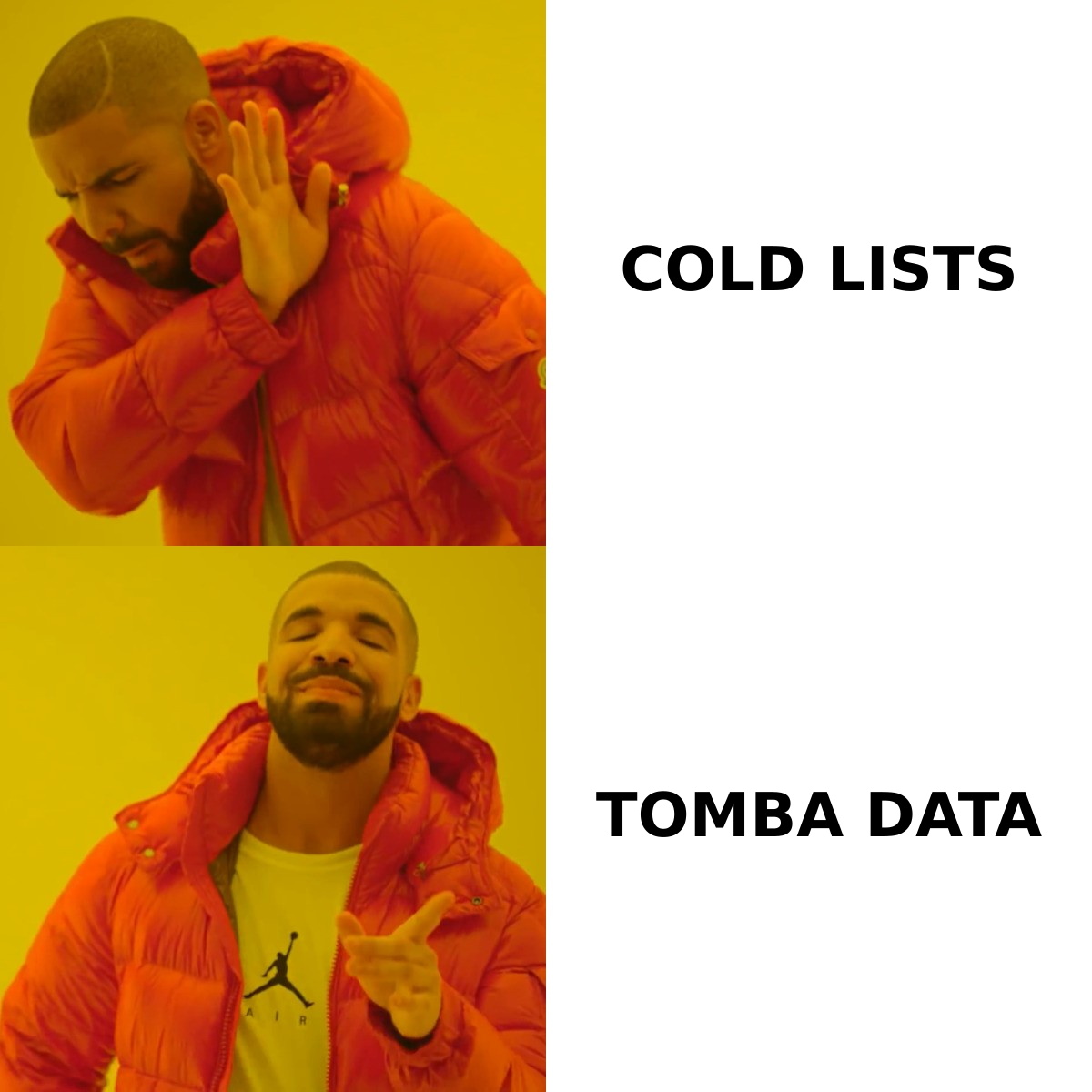
Start from the number you have to defend, then work backward. The order matters: revenue target → opportunities needed → qualified leads needed → raw conversations needed → event choice.
Here's a worked example for a mid-market SaaS team with a $12k average deal size:
| Metric | Target | How you get there |
|---|---|---|
| New pipeline goal | $360,000 | Set by sales leadership |
| Win rate | 25% | Historical close rate |
| Opportunities needed | ~120 | $360k ÷ ($12k × 25%) |
| SQL → opp rate | 40% | Historical |
| SQLs needed | ~300 | Across all events in the quarter |
| Raw conversations needed | ~1,200 | Assuming ~25% qualify |
Now the event choice is concrete: you need venues where you can realistically have 1,200 quality conversations and where the audience matches your marketing qualified lead profile. A 400-person niche conference with dense ICP coverage may out-perform a 20,000-person mega-show where you're one of 600 vendors.
Goal types, ranked by how defensible they are:
- Sourced pipeline — Dollar value of opportunities created from event contacts. The gold standard.
- Influenced pipeline — Open opps that an event contact touched. Useful but easy to over-claim.
- Qualified meetings booked — A leading indicator you can measure within two weeks.
- Net-new qualified contacts — Acceptable only if you commit to enrich and work them.
- Booth scans / badge counts — A logistics metric, not a goal. Never report this as success.
Which B2B events are actually worth it?#
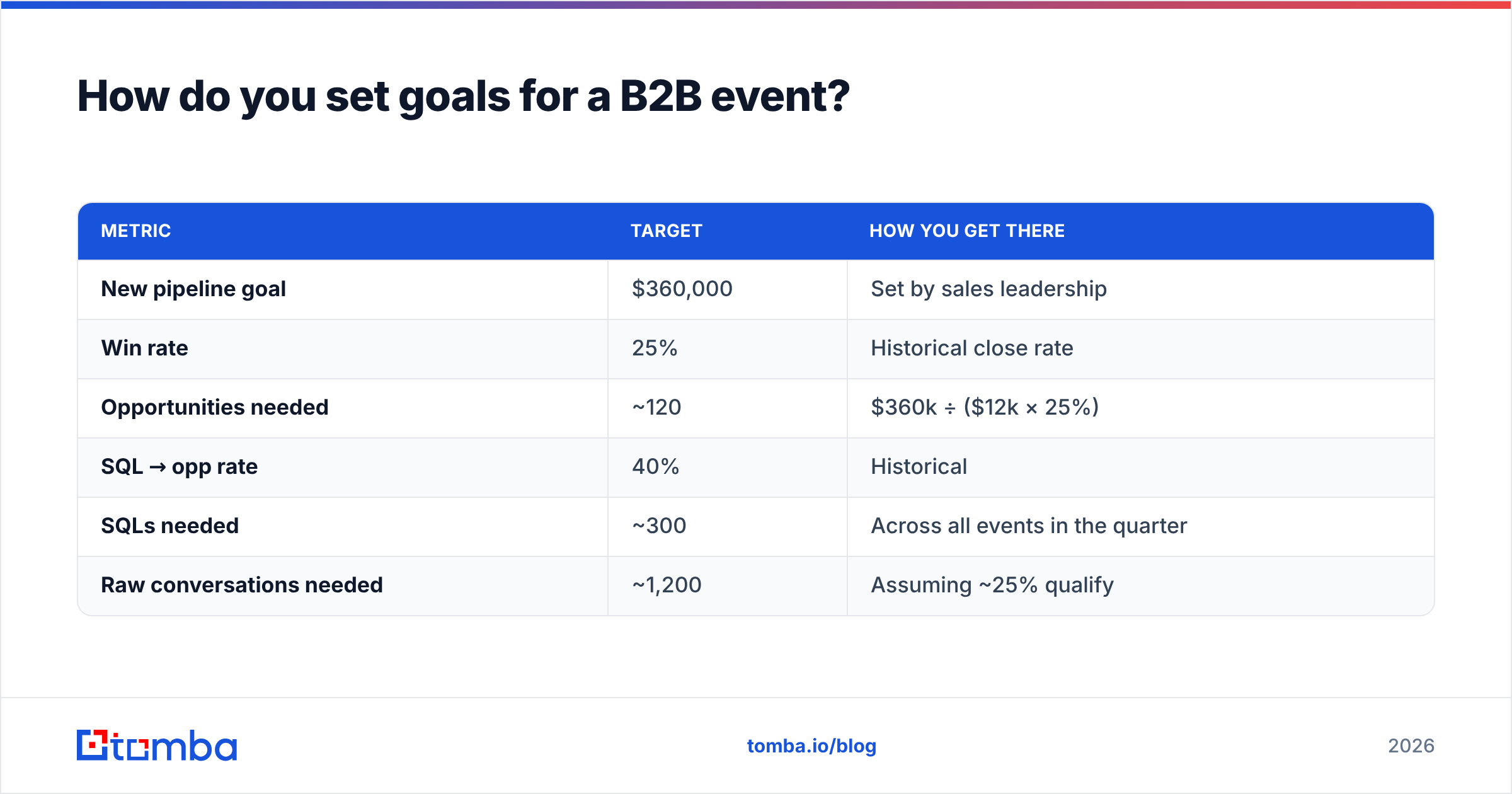
Choose by ICP density and intent, not by headline attendee numbers. A useful filter: would 30% of attendees recognize the problem you solve? If not, you're renting foot traffic.
| Event type | Best for | ICP density | Cost | Realistic outcome |
|---|---|---|---|---|
| Large industry trade show | Brand + volume | Low–medium | $$$$ | Many scans, heavy enrichment needed |
| Niche vertical conference | Targeted pipeline | High | $$$ | Fewer leads, higher fit |
| Regional roadshow / dinner | Late-stage deals | Very high | $$ | Small list, high conversion |
| Your own field event | Existing pipeline | Very high | $$–$$$ | Account expansion |
| Webinar / virtual summit | Top-of-funnel | Medium | $ | Cheap reach, weaker intent |
Two rules to protect your budget: First, sponsor for the attendee list and speaking slot, not the giant banner — content and access drive conversations, signage doesn't. Second, treat virtual and in-person differently. Virtual events flood you with registrations that need aggressive email verification because a chunk are throwaway or mistyped addresses.
How do you capture clean lead data at events?#
Capture structured, exportable data — never rely on memory or a stack of cards. The capture method you choose determines how much cleanup you'll face on Monday.
- Badge scanners are fast but give you whatever the registration system holds — often a personal Gmail, a stale title, or a misspelled company. Plan to enrich every scan.
- Manual entry forms (tablet apps) let reps add qualification notes in the moment, which is worth more than the contact itself.
- Business cards still happen; photograph and digitize them same-day, before they get lost.
- QR-to-form flows let attendees self-enter, reducing typos but lowering volume.
Whatever the method, capture three things beyond name and email: the qualifying question's answer (budget, timeline, pain), the rep who spoke to them, and a priority tag (hot/warm/cold). A contact with context converts; a contact without it is just a name.
The dirty secret of badge data is that the email is frequently unusable for B2B outreach — it's a personal address or a role inbox. That's why the enrichment step isn't optional.
How do you enrich and verify event leads fast?#
Run enrichment and verification within 48 hours, because lead quality decays fast and your competitors met the same people. This is the step that separates teams who report pipeline from teams who report "leads."
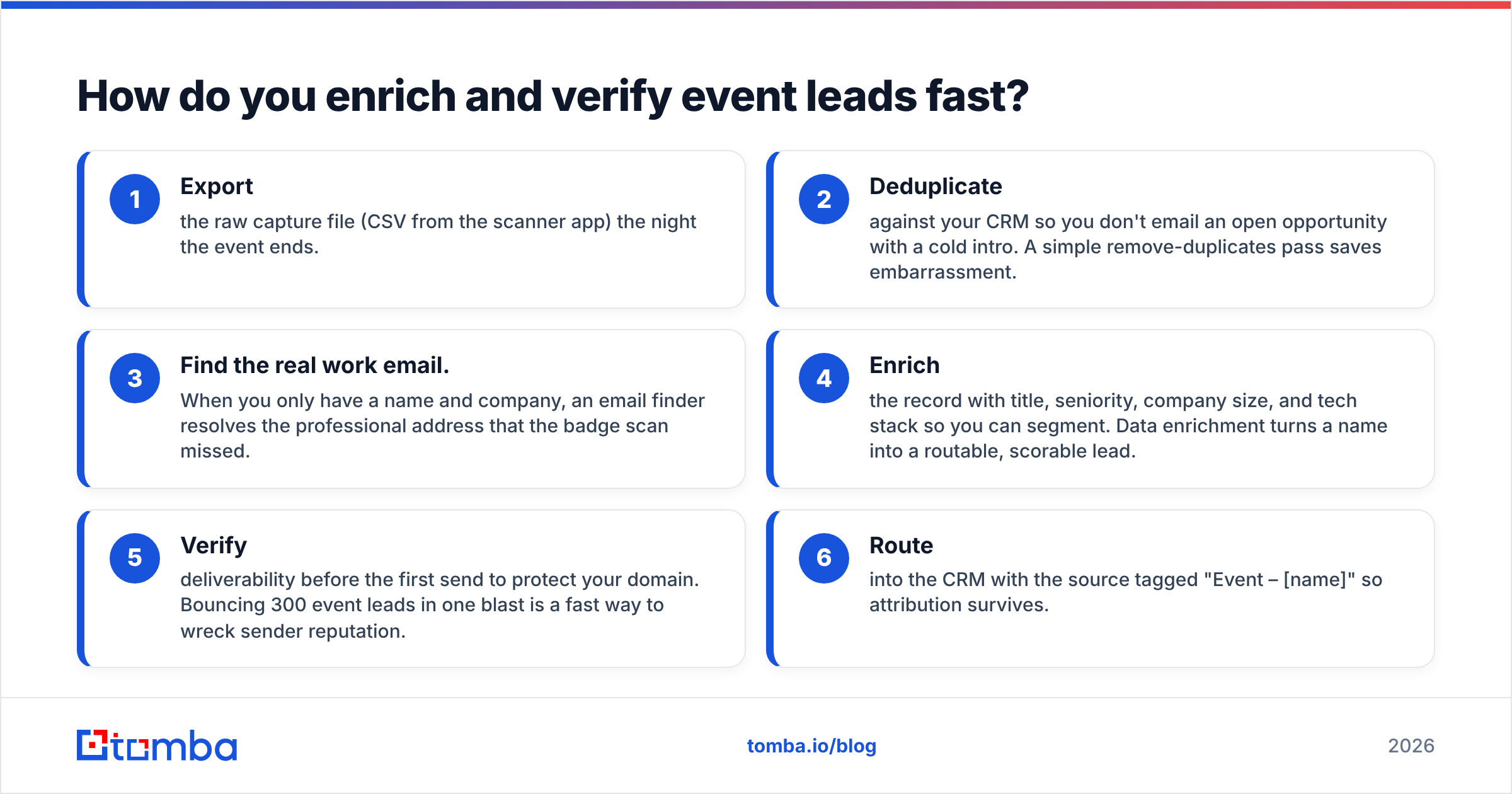
A practical post-event data workflow:
- Export the raw capture file (CSV from the scanner app) the night the event ends.
- Deduplicate against your CRM so you don't email an open opportunity with a cold intro. A simple remove-duplicates pass saves embarrassment.
- Find the real work email. When you only have a name and company, an email finder resolves the professional address that the badge scan missed.
- Enrich the record with title, seniority, company size, and tech stack so you can segment. Data enrichment turns a name into a routable, scorable lead.
- Verify deliverability before the first send to protect your domain. Bouncing 300 event leads in one blast is a fast way to wreck sender reputation.
- Route into the CRM with the source tagged "Event – [name]" so attribution survives.
For high-volume shows, do this in batches rather than one record at a time — a bulk lead generation run handles a few hundred scans in minutes instead of a rep copy-pasting for two days. If decision-makers gave you a direct line, a phone finder adds a calling channel for your hottest tier.
The point of all this is speed and cleanliness at once. A verified, enriched, deduplicated list on day two is worth more than a "complete" raw export on day one.
What does good event follow-up look like?#
Good follow-up is fast, segmented by how the conversation went, and multi-touch — not one generic "great to meet you" blast to everyone. Speed is the dominant variable: outreach in the first 24–48 hours lands while the conversation is still a memory.
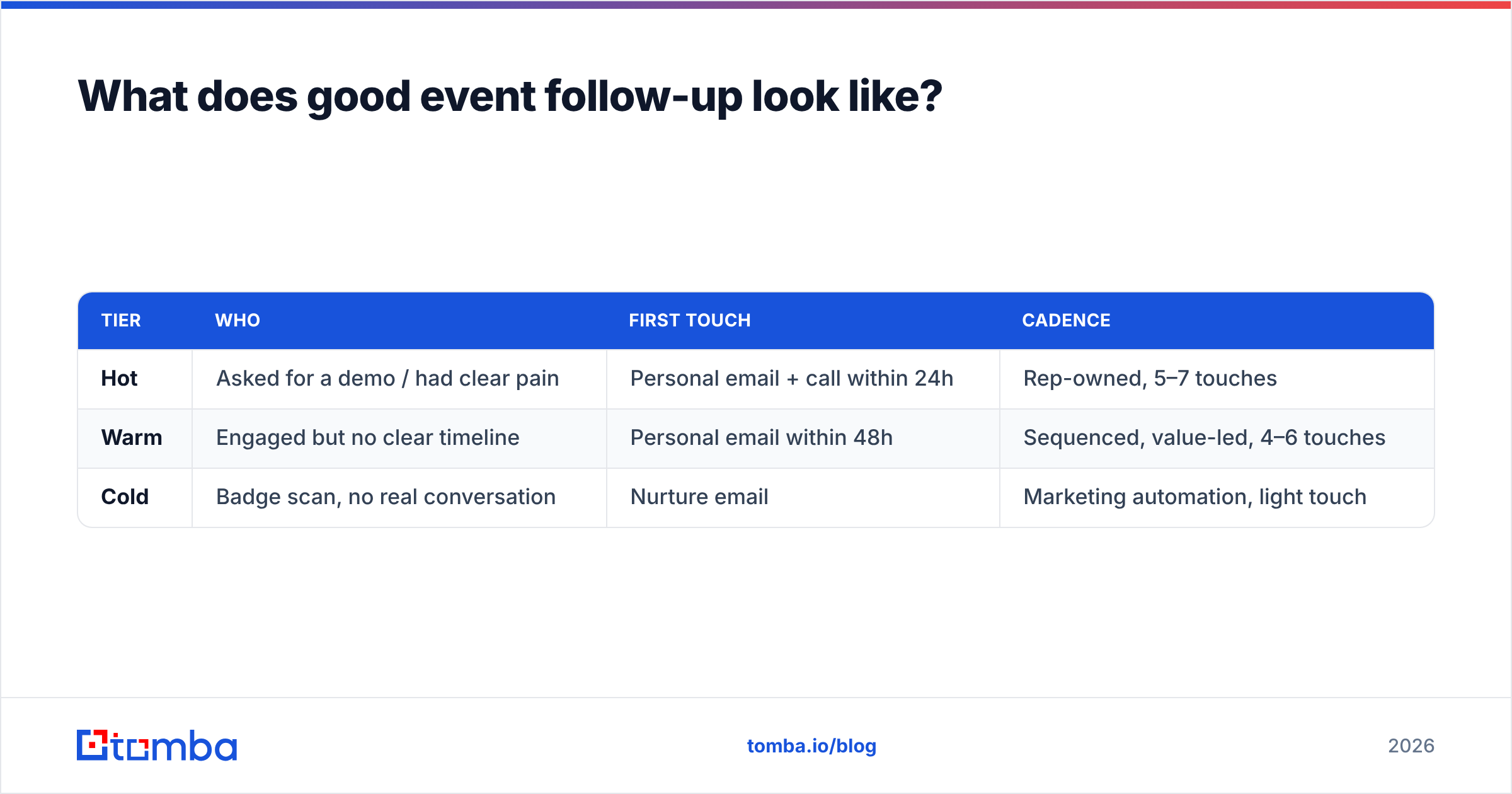
Segment your enriched list into at least three tiers and treat them differently:
| Tier | Who | First touch | Cadence |
|---|---|---|---|
| Hot | Asked for a demo / had clear pain | Personal email + call within 24h | Rep-owned, 5–7 touches |
| Warm | Engaged but no clear timeline | Personal email within 48h | Sequenced, value-led, 4–6 touches |
| Cold | Badge scan, no real conversation | Nurture email | Marketing automation, light touch |
A few rules that lift reply rates:
- Reference the specific conversation or session. "You mentioned your team struggles with X" beats "Thanks for stopping by."
- Send from the rep who spoke to them, not a generic marketing inbox — it nearly always wins on response rate.
- Don't pitch in touch one. Lead with the resource or answer you promised at the booth.
- Sync everything to the CRM so the cadence respects pipeline stage. Push enriched leads straight into your stack with the HubSpot integration or Salesforce integration instead of manual imports.
For follow-up copy at scale, structured templates keep quality consistent across reps; a tested set of cold email templates gives the team a starting frame they can personalize fast.
How do you measure B2B event ROI?#
Measure cost-per-opportunity and sourced pipeline, then compare events against each other to decide what to repeat. Total cost includes booth, travel, staff time, and sponsorship — not just the table fee.
The formula that matters:
- Cost per opportunity = Total event cost ÷ Opportunities sourced
- Event ROI = (Pipeline sourced × Win rate × Avg deal size − Total cost) ÷ Total cost
Track these in a single sheet across every event for a quarter, and the budget decisions make themselves. According to peer-review platforms like G2 and analyst guidance from firms such as Gartner, event-sourced pipeline is consistently under-attributed because the follow-up data never makes it cleanly into the CRM — which is exactly the gap a disciplined enrich-and-route step closes. HubSpot's own marketing benchmarks make the same point about speed-to-lead: minutes and hours matter far more than days.
Attribution only works if the source tag survives from booth to closed-won. That's a data hygiene problem, not a reporting problem — and it's why the capture and enrichment phases earn their keep.
A 6-step B2B events strategy checklist for 2026#
- Set a revenue goal and reverse-engineer the conversations you need.
- Pick events by ICP density, then negotiate for the list and a speaking slot.
- Capture structured data with qualification notes and rep ownership.
- Enrich, verify, and dedupe within 48 hours — before any outreach goes out.
- Follow up fast and segmented, sent by the rep who had the conversation.
- Report cost-per-opportunity and kill the events that don't clear the bar.
Compare your current process against this list. Most teams are strong on steps 1–3 and quietly fail at 4 — which is precisely why their events "don't work."
Turn your next event list into pipeline#
Your booth conversations are only as valuable as the data you walk away with. The moment the show ends, the clock starts: badge scans go stale, personal emails bounce, and competitors are already in the inbox. Tomba's Email Finder closes that gap — feed it the names and companies from your scanner export, get verified professional emails back in minutes, then enrich and route them straight into your CRM before your follow-up window closes. Start on the free tier (25 searches/month) to clean up your last event's list, and scale to Starter at $49/month once you see how many "dead" badge scans were actually reachable buyers all along.
// get started
Find, verify and enrich your first contacts today
Start on the free plan with 25 searches a month, then scale when your team is ready.
Free plan · No credit card required · GDPR & CCPA
// about the author