B2B Inbound Lead Generation: The 2026 Playbook That Converts
A concrete 2026 playbook for B2B inbound lead generation: channels, funnel math, the inbound vs outbound trade-off, and how to enrich the leads you already attract.
B2B Inbound Lead Generation: The 2026 Playbook That Converts
TL;DR
- B2B inbound lead generation means earning attention with content, search, and product experiences so buyers come to you — then capturing and qualifying them before sales reaches out.
- Inbound wins on cost-per-lead and trust over time; outbound wins on speed and targeting. The strongest 2026 teams run both and connect them with shared data.
- Most inbound traffic stays anonymous. The teams that win identify, enrich, and route those visitors instead of waiting for a form fill.
- A working funnel needs four layers: attract (SEO, content, community), capture (offers, forms, chat), qualify (scoring, enrichment), and route (CRM + fast follow-up).
- Enrichment is the multiplier. A name and a work email turn a soft inbound signal into a sales-ready contact your reps can act on the same day.
What is B2B inbound lead generation?#
B2B inbound lead generation is the practice of attracting potential buyers to your business through valuable content and experiences, then converting that attention into identifiable, qualified leads. Instead of interrupting strangers, you publish the answers your market is already searching for and let intent pull them in.
Think of it like running a great restaurant on a busy street versus handing out flyers in the rain. Outbound is the flyers — you control the volume, but most get tossed. Inbound is the restaurant: the smell of the kitchen, the reviews, the line out front. People walk in because they already want what you serve. The work is making sure you actually capture their details before they leave.
The mechanics matter because B2B buying is slow and committee-driven. A single deal can involve six to ten stakeholders, and most of them research anonymously for weeks before they ever fill out a form. Your job is to be present at every one of those research moments — and to convert as many of them into known contacts as your data stack allows.
Why does inbound matter more in 2026?#
Three shifts make inbound a priority this year.
- Buyers self-educate first. The majority of a B2B purchase decision happens before a vendor conversation. If you are not the source of the education, you are not in the consideration set.
- Outbound is getting noisier and more filtered. Spam controls, stricter sending rules, and buyer fatigue mean cold volume converts worse than it did three years ago. Inbound leads arrive warmer and cheaper at scale.
- AI search changed discovery. Answer engines and AI overviews now summarize your category. Brands with deep, structured, genuinely useful content get cited; thin content disappears.
None of this means outbound is dead. It means inbound is the compounding asset — the content you publish in Q1 keeps generating a marketing qualified lead in Q4 with zero extra spend. Outbound stops the moment you stop paying for it.
How does the B2B inbound funnel actually work?#
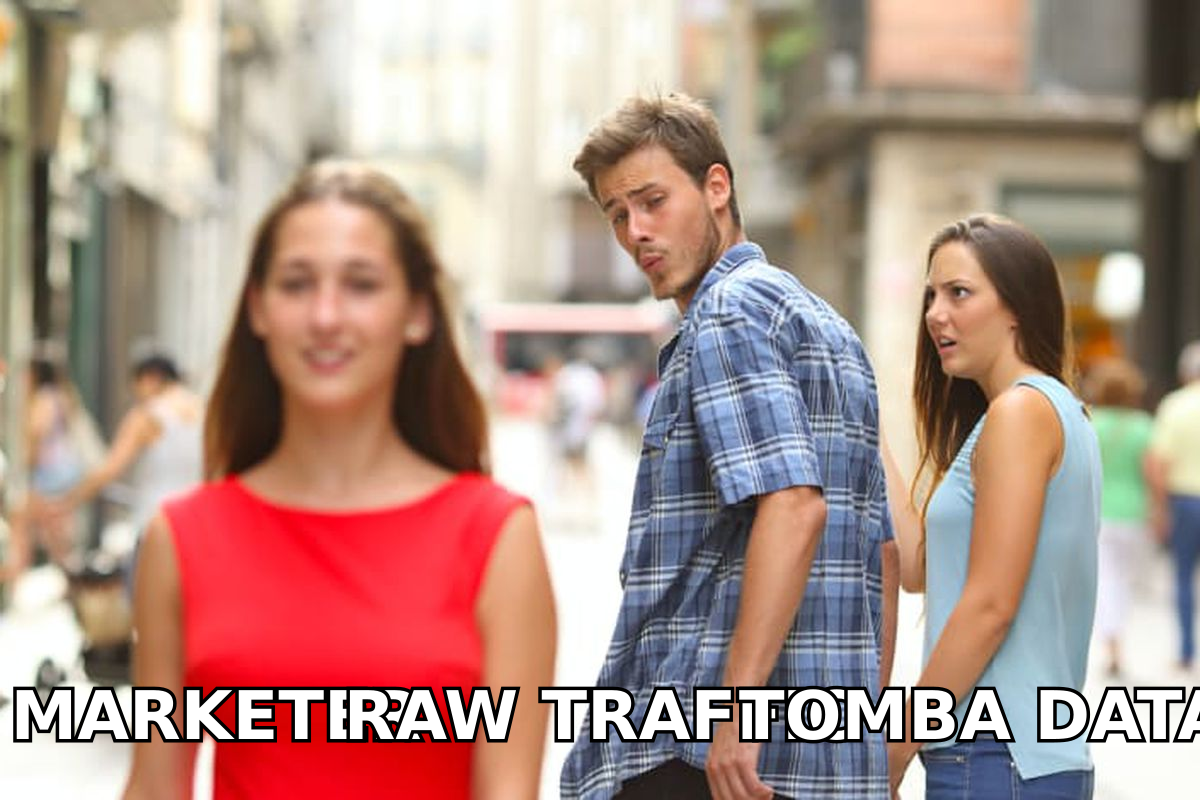
A clean inbound funnel has four jobs. Skip one and the whole thing leaks.
- Attract — Earn qualified traffic with SEO content, comparison pages, thought leadership, webinars, and community presence. This is the top of the funnel and the slowest to build.
- Capture — Convert that traffic into a known contact with lead magnets, free tools, demos, newsletter sign-ups, and live chat. Without a capture mechanism, traffic is just vanity.
- Qualify — Score and enrich each lead so you know who is worth a rep's time. Fit (company size, industry, role) plus intent (pages viewed, content downloaded) decides priority.
- Route — Push the qualified lead into your CRM and trigger fast follow-up. Speed-to-lead is the single biggest lever most teams ignore.
The hard truth: most of your "attract" stage never reaches "capture." Anywhere from 95% to 98% of B2B website visitors leave without filling out anything. That is where modern teams add a fifth move — visitor identification — using a website visitor reveal layer to turn anonymous sessions into company- and contact-level data you can act on.
What are the highest-ROI inbound channels?#
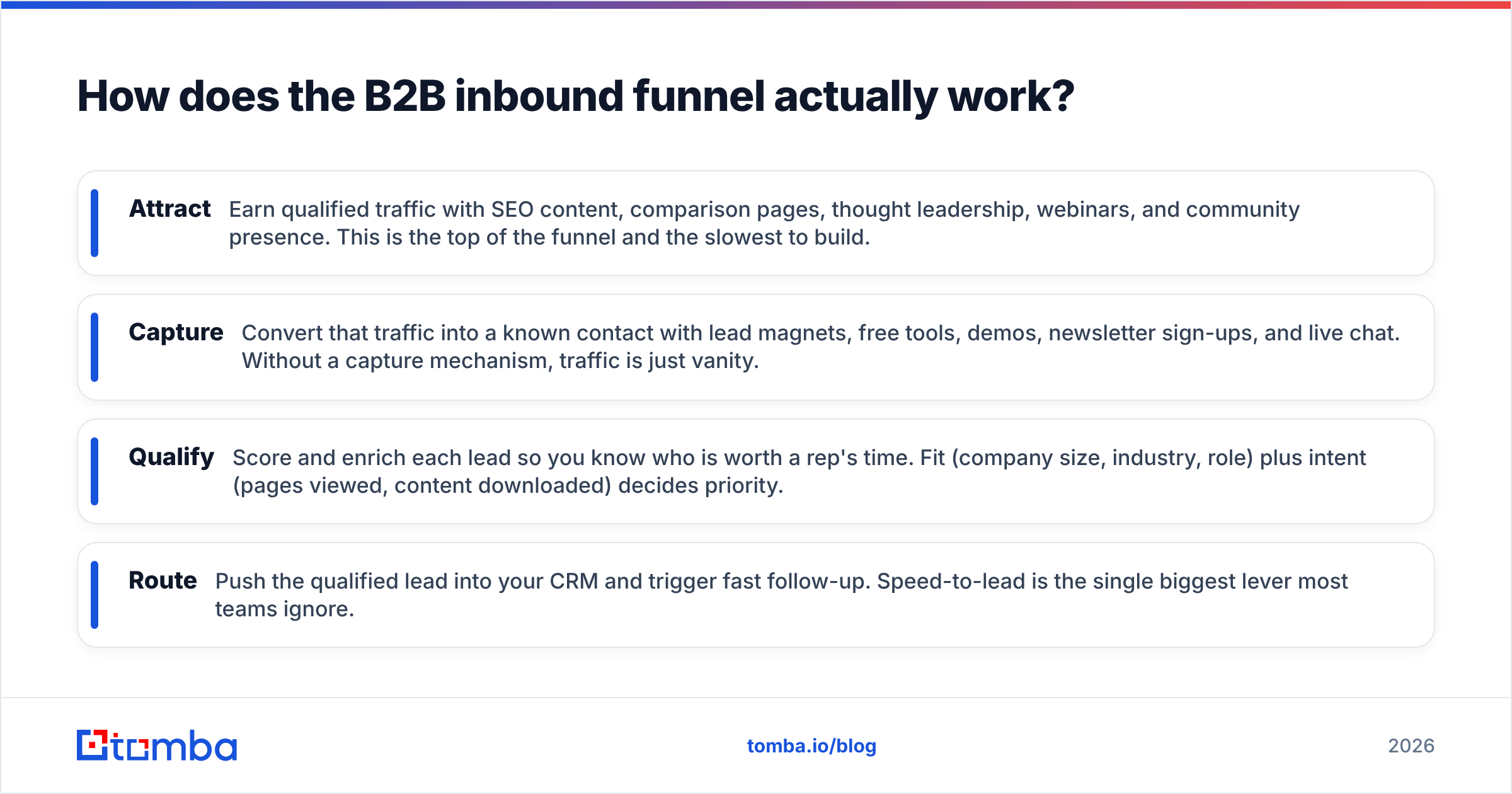
Not all channels pay back equally. Here is how the main B2B inbound channels compare on the metrics that decide budget.
| Channel | Time to first leads | Cost over time | Lead intent | Scales without spend |
|---|---|---|---|---|
| SEO / organic content | 3–6 months | Low (compounds) | High | Yes |
| Comparison & "alternative" pages | 2–4 months | Low | Very high | Yes |
| Free tools / calculators | 1–3 months | Medium build, low run | High | Yes |
| Webinars & events | Weeks | Medium | Medium-high | No |
| Community & social proof | Ongoing | Low | Medium | Partial |
| Paid search retargeting | Days | High (always-on) | High | No |
The pattern is clear: the channels that compound — SEO content, comparison pages, and free tools — take longer to start but cost less per lead forever after. Bottom-of-funnel comparison content ("X vs Y," "best tools for Z") attracts buyers who are close to a decision, which is why it converts at a far higher rate than top-of-funnel awareness posts. If you sell software, a single well-ranked Apollo alternative style page can outproduce a quarter of blog posts.

Inbound vs outbound: which should you run?#
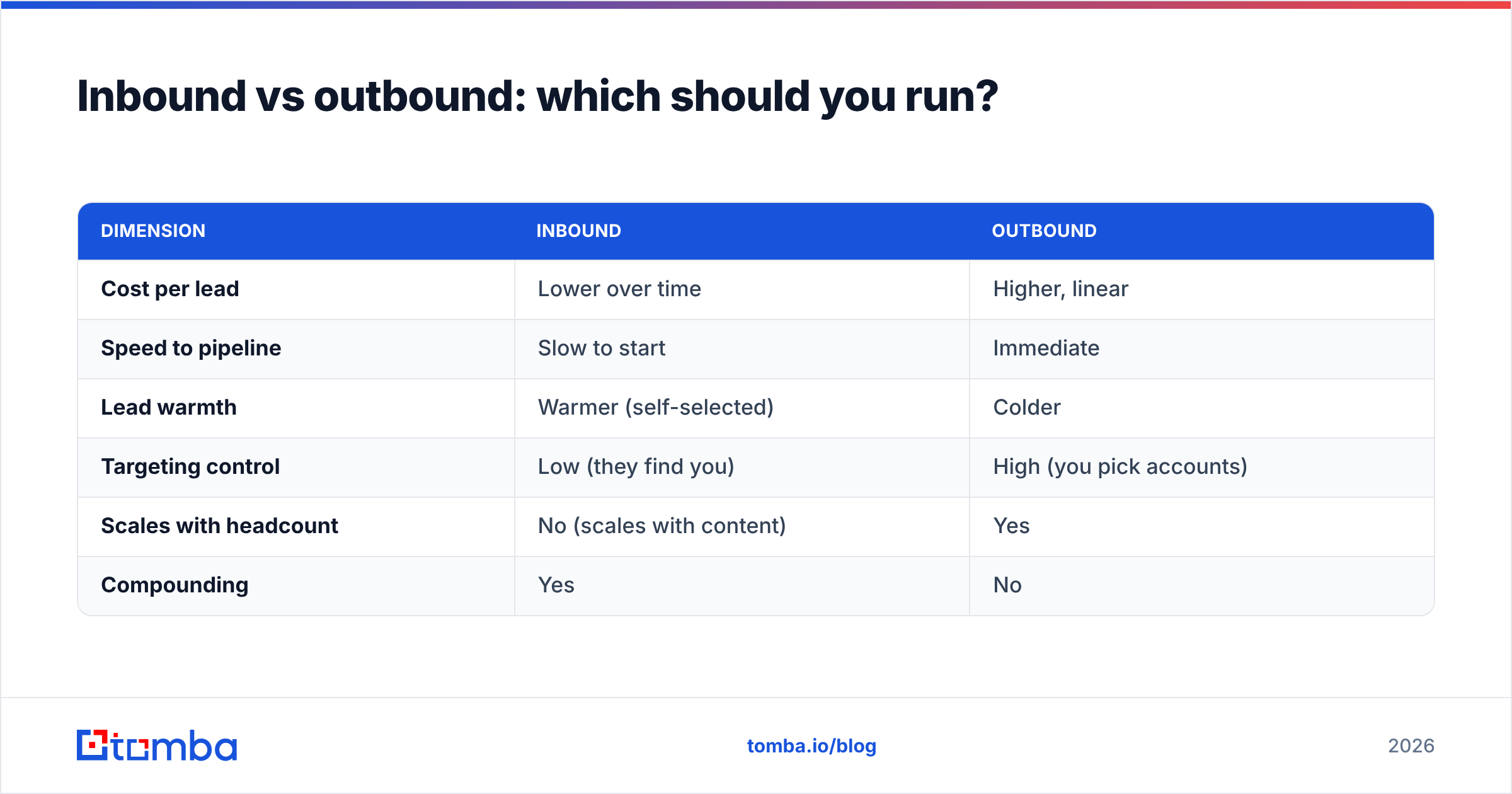
Run both — but know what each is for. Inbound builds a durable, lower-cost pipeline that compounds; outbound gives you control, targeting, and speed when you need to hit a number this quarter or break into a specific account list.
| Dimension | Inbound | Outbound |
|---|---|---|
| Cost per lead | Lower over time | Higher, linear |
| Speed to pipeline | Slow to start | Immediate |
| Lead warmth | Warmer (self-selected) | Colder |
| Targeting control | Low (they find you) | High (you pick accounts) |
| Scales with headcount | No (scales with content) | Yes |
| Compounding | Yes | No |
The mistake teams make is treating them as rival budgets. The 2026 model is a loop: inbound content captures intent signals, your data layer enriches those contacts, and outbound sequences follow up on the warm-but-unconverted ones. A visitor who read three pricing pages but never filled out a form is an outbound target — if you can identify and enrich them. That is the bridge between the two motions, and it runs on data quality.
For a deeper breakdown of when to lean outbound, the HubSpot research on inbound marketing and Gartner's B2B buying journey data are both worth reading before you set your channel mix.
How do you capture leads without killing conversion?#
Capture is where good traffic goes to die. Three rules keep your conversion rate healthy.
Ask for less, enrich for more. Every field you add to a form drops completion. The modern approach is to ask for just a work email — sometimes just a company domain — and then fill in the rest with data enrichment behind the scenes. A two-field form plus enrichment beats a ten-field form on both volume and data completeness.
Offer genuine value at the point of intent. A buyer comparing vendors wants a comparison sheet, an ROI calculator, or a free tool — not a generic "subscribe to our newsletter" box. Match the offer to the page's intent and capture rates climb.
Identify the anonymous majority. Since most visitors never convert, deploy a visitor reveal layer to surface the companies browsing your high-intent pages. Combine that with a domain search to pull the right contacts at each identified account, and you have built pipeline from traffic that would otherwise have vanished.
This is the step that separates a 1% form-conversion site from a team that turns 10x more traffic into pipeline. The traffic was always there; the data layer is what makes it usable.
How should you qualify and score inbound leads?#
Qualification answers one question: who gets a rep, and who gets nurtured? Score on two axes.
- Fit — Does this contact match your ideal customer profile? Company size, industry, region, seniority, and tech stack. A perfect-fit director outranks a poor-fit VP.
- Intent — What did they do? Demo requests, pricing-page visits, and high-value downloads signal readiness. A newsletter sign-up does not.
Multiply the two. A high-fit, high-intent lead is a sales-ready opportunity that deserves a call within minutes. A high-fit, low-intent lead goes into nurture. A low-fit, high-intent lead gets a self-serve path. This simple grid stops reps from wasting hours on leads that were never going to close, and it stops good-fit buyers from going cold while no one calls them.
Enrichment makes scoring possible. You cannot score on company size or seniority if all you captured was an email. Append firmographic and role data at the moment of capture, and your scoring model has something real to work with — not a guess.
Where does data quality fit into all this?#
Data quality is the difference between a lead list and a pipeline. You can run the best content engine in your category, but if the contacts you capture bounce, route to the wrong rep, or lack the role data your scoring needs, the engine spins without traction.
Three data jobs underpin every healthy inbound program:
- Find the right contact — When you identify an account from traffic or a partial form fill, you still need the decision-maker's address. An email finder resolves a name and domain into a verified, deliverable work email.
- Verify before you send — Inbound leads with typos or dead inboxes wreck your sender reputation. Run captured addresses through an email verifier so your follow-up actually lands.
- Enrich for context — Append company size, role, location, and social profiles so scoring, routing, and personalization all have fuel.
Skipping these turns "we generated 500 leads" into "sales worked 80 and ignored the rest." Clean, complete data is what lets every downstream step — scoring, routing, sequencing — do its job.
What does a 2026 inbound stack look like?#
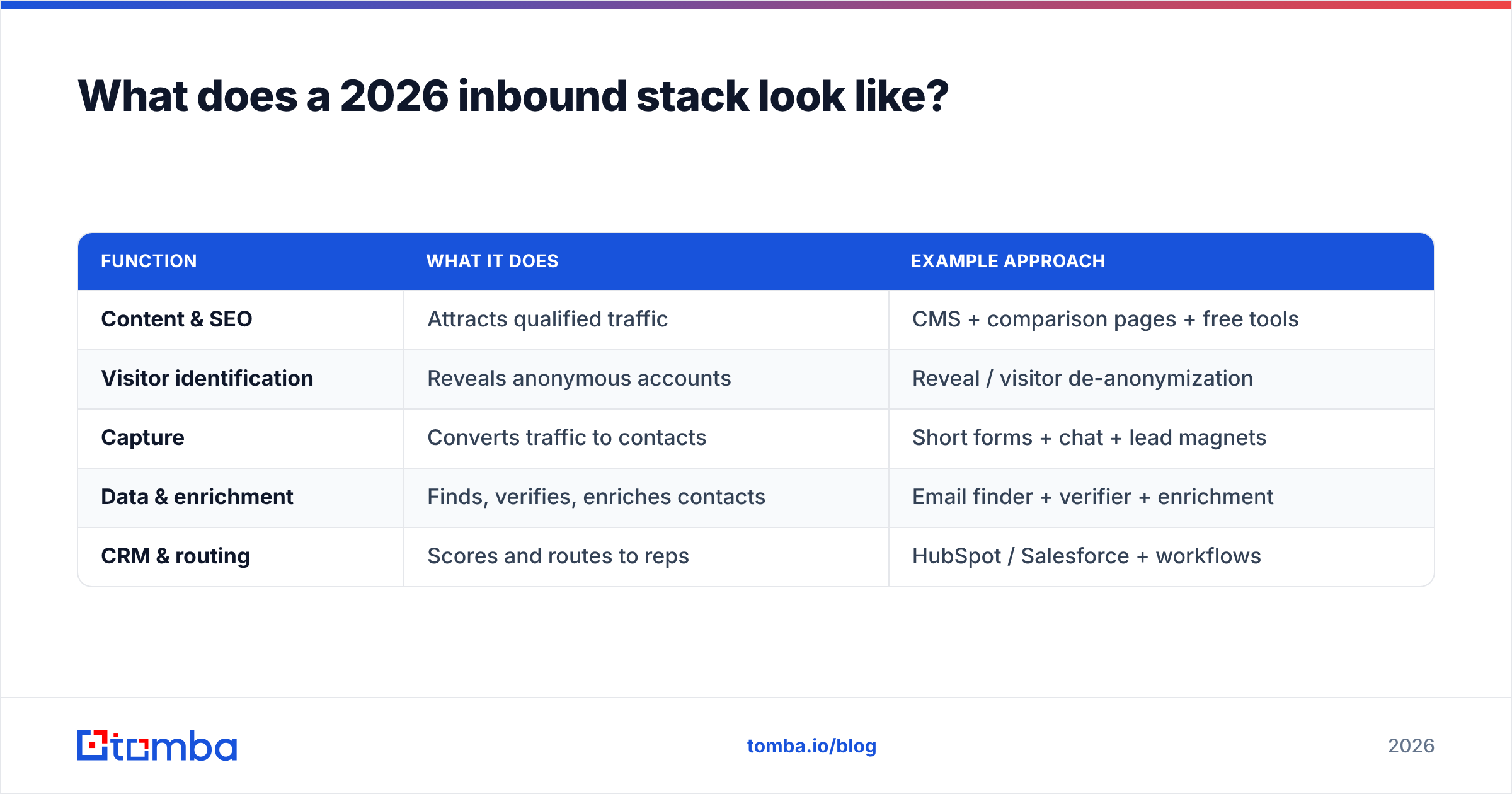
You do not need fifteen tools. You need coverage across five functions, with data flowing cleanly between them.
| Function | What it does | Example approach |
|---|---|---|
| Content & SEO | Attracts qualified traffic | CMS + comparison pages + free tools |
| Visitor identification | Reveals anonymous accounts | Reveal / visitor de-anonymization |
| Capture | Converts traffic to contacts | Short forms + chat + lead magnets |
| Data & enrichment | Finds, verifies, enriches contacts | Email finder + verifier + enrichment |
| CRM & routing | Scores and routes to reps | HubSpot / Salesforce + workflows |
The connective tissue is integrations. Your enrichment and finding tools should write directly into your CRM so a captured lead is enriched and routed without a human copy-pasting anything. Tomba's HubSpot integration and broader integrations library handle that hand-off, and the Tomba API lets engineering wire enrichment into a custom capture flow when an off-the-shelf connector isn't enough.
How do you measure inbound success?#
Track the full funnel, not just the top. Vanity traffic numbers hide a leaky middle. The metrics that actually predict revenue:
- Traffic-to-lead rate — What share of visitors become known contacts (including identified anonymous ones)?
- Lead-to-MQL rate — How many captured leads clear your fit-and-intent bar?
- MQL-to-opportunity rate — Are sales-accepted leads turning into real pipeline?
- Cost per opportunity — Total inbound spend divided by opportunities created, by channel.
- Speed-to-lead — Median minutes from capture to first sales touch. Faster always wins.
Review these by channel monthly. The comparison page that quietly produces your cheapest opportunities deserves more content like it; the awareness webinar that fills the top but never converts deserves scrutiny. Let the funnel math, not the prettiest dashboard, set your roadmap. For benchmarking your numbers against the market, peer reviews on G2 give a reality check on what comparable teams achieve.
Putting it together#
B2B inbound lead generation in 2026 is no longer "publish blogs and hope." It is a system: attract intent with content that earns citations, capture more of it than your competitors by asking for less, identify the anonymous majority, and enrich every contact so qualification and routing have something real to work with. The teams that win are not the ones with the most traffic — they are the ones that convert the traffic they already have, because their data layer turns soft signals into sales-ready contacts.
Start where the leak is biggest. For most teams, that is the gap between traffic and captured contact. Close it with a data layer that finds and verifies the right person the moment intent appears — then let your reps do what they do best on leads that are actually ready.
Ready to turn inbound traffic into pipeline? Tomba's Email Finder resolves the accounts and names your content attracts into verified, deliverable work emails — so every inbound signal becomes a contact your team can act on the same day. Pair it with enrichment and verification, start free with 25 searches a month, and scale on a plan that fits your funnel (Starter at $49/mo, Growth at $99/mo). Stop guessing who's on your site. Start closing them.
// get started
Find, verify and enrich your first contacts today
Start on the free plan with 25 searches a month, then scale when your team is ready.
Free plan · No credit card required · GDPR & CCPA
// about the author