B2B Phone Number Data in 2026: Find, Verify, and Dial
Where B2B phone numbers come from, why most lists are wrong, and how to find, verify, and dial direct-dial mobile numbers that actually connect in 2026.
You bought a list of 5,000 "verified" B2B phone numbers. Your reps dialed 200 of them on Monday. By lunch, 70 went to dead lines, 40 reached the wrong person, and a handful landed on a main switchboard with no extension. That is the normal failure rate for cheap B2B phone number data — and it is fixable.
This guide explains where B2B phone numbers actually come from, why so many are wrong, and how to build a dialing list that connects in 2026.
TL;DR#
- A B2B phone number is only useful if it reaches a decision-maker directly — direct dials and verified mobiles beat switchboard numbers by a wide margin.
- Most "verified" lists are stale: people change roles every ~2-3 years, and numbers decay roughly 20-30% per year.
- Accuracy comes from layering sources — public records, enrichment APIs, and live validation — not from one vendor's claim.
- Validate before you dial: a line-status check removes disconnected and invalid numbers and protects your caller reputation.
- Tools like the phone finder and phone validator from Tomba combine lookup and verification so you dial fewer dead lines.
What is a B2B phone number?#
A B2B phone number is a contact number tied to a person or company in a business context — not a personal consumer line you'd find in a phone book. In practice it comes in three flavors, and the difference decides whether your call connects.
- Main line / switchboard — the company's front desk. Easy to find, almost useless for outbound. You get a gatekeeper or an IVR menu.
- Direct dial — a desk extension that rings the specific person. Far better, but increasingly abandoned as offices go remote and hybrid.
- Mobile / cell number — the person's actual phone. The highest connect rate in 2026, because that's where decision-makers actually answer.
Think of it like mailing a letter. A switchboard number is the company's street address, a direct dial is the office suite, and a mobile is the recipient's hand. The closer you get to the hand, the faster you get a "yes" or a clean "no."
Where do B2B phone numbers come from?#
No single database "owns" the world's business phone numbers. Good data providers assemble them from layered, overlapping sources and reconcile the conflicts. Here are the main inputs:
- Public and regulatory filings — company registries, SEC documents, and business licenses list contact lines.
- Company websites and footers — main lines, sales numbers, and regional office contacts.
- Telecom and carrier metadata — line type (mobile vs. landline vs. VoIP) and carrier, used to validate a number is live.
- User-contributed and CRM exhaust — opt-in networks where sales teams share verified contacts.
- Web crawling and enrichment — matching a person's name, title, and company to a number via data enrichment pipelines.
The takeaway: accuracy is a function of cross-referencing, not a single magic source. When two sources agree and a live check confirms the line is active, you have a number worth dialing.
Why are most B2B phone number lists wrong?#
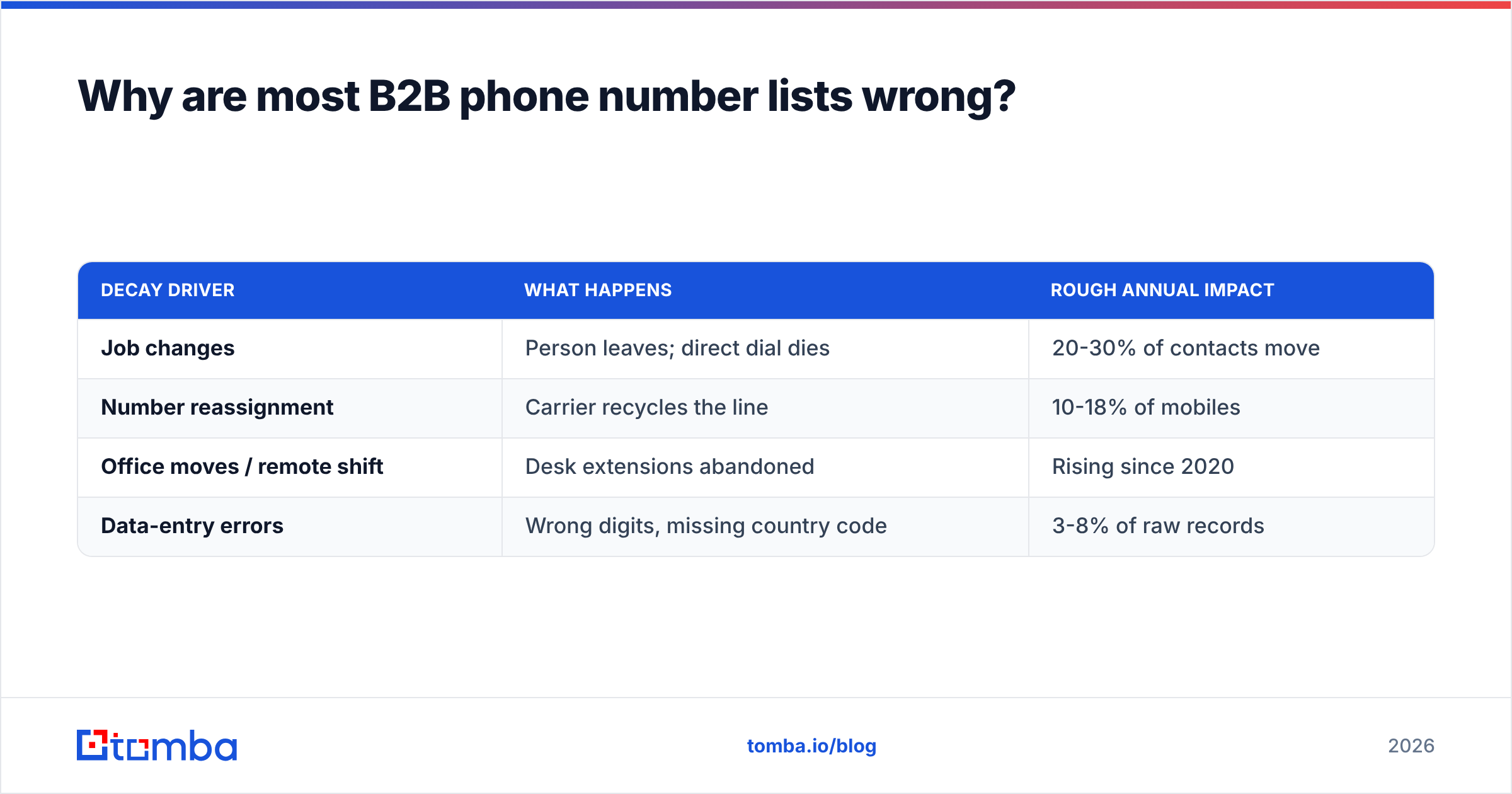
Because data decays, and most vendors sell snapshots. Three forces work against you:
| Decay driver | What happens | Rough annual impact |
|---|---|---|
| Job changes | Person leaves; direct dial dies | 20-30% of contacts move |
| Number reassignment | Carrier recycles the line | 10-18% of mobiles |
| Office moves / remote shift | Desk extensions abandoned | Rising since 2020 |
| Data-entry errors | Wrong digits, missing country code | 3-8% of raw records |
Stack those over a year and a "fresh" list bought 12 months ago can be 40%+ wrong. That's why a number that was perfect in 2024 reaches a stranger in 2026. The fix is not buying a bigger list — it's verifying close to the moment you dial.
How do you find a B2B phone number?#
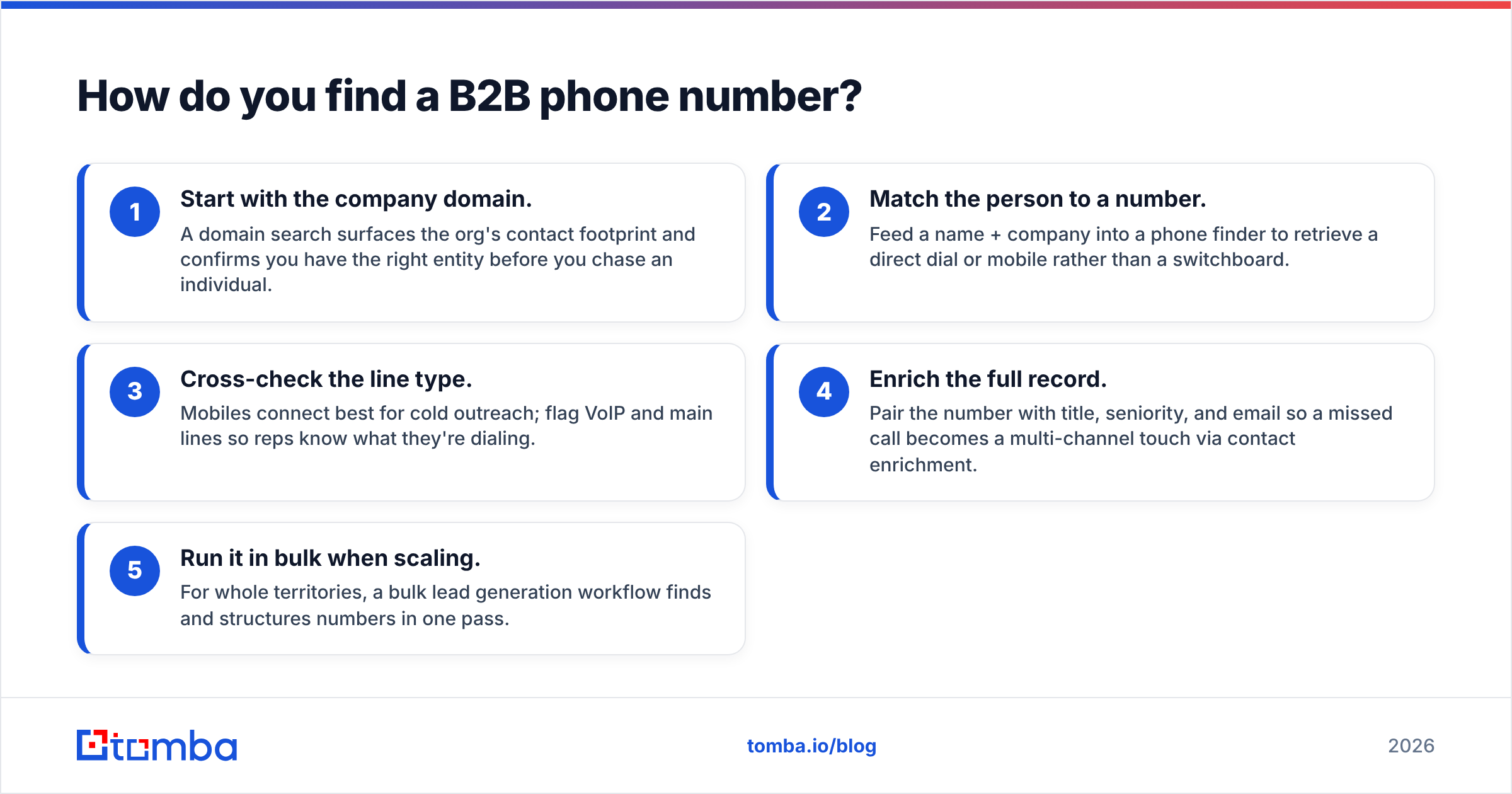
Work from what you already know about the prospect, and escalate:
- Start with the company domain. A domain search surfaces the org's contact footprint and confirms you have the right entity before you chase an individual.
- Match the person to a number. Feed a name + company into a phone finder to retrieve a direct dial or mobile rather than a switchboard.
- Cross-check the line type. Mobiles connect best for cold outreach; flag VoIP and main lines so reps know what they're dialing.
- Enrich the full record. Pair the number with title, seniority, and email so a missed call becomes a multi-channel touch via contact enrichment.
- Run it in bulk when scaling. For whole territories, a bulk lead generation workflow finds and structures numbers in one pass.
A quick reality check on expectations: you will not get a verified mobile for every contact. Coverage varies by region, seniority, and industry. Senior execs in regulated industries are harder; mid-market ops leaders are easier. Plan your list size around realistic coverage, not the vendor's headline number.
How do you verify a B2B phone number before dialing?#
Verification answers one question: is this line live and reachable right now? A real validation pass checks several things at once.
- Syntax & formatting — correct country code, digit count, E.164 normalization.
- Line type — mobile, landline, VoIP, or toll-free (changes your dialing strategy and TCPA exposure in the US).
- Carrier & region — confirms the number maps to a plausible location for the contact.
- Active status — whether the line is connected vs. disconnected.
Run every number through a phone validator before a campaign. It's the cheapest insurance you can buy: you protect your team's time, avoid wasting dials on dead lines, and keep your outbound caller reputation clean. Skipping this step is like sending a fleet of trucks out without checking whether the addresses exist.
What's the difference between phone finding and phone validation?#
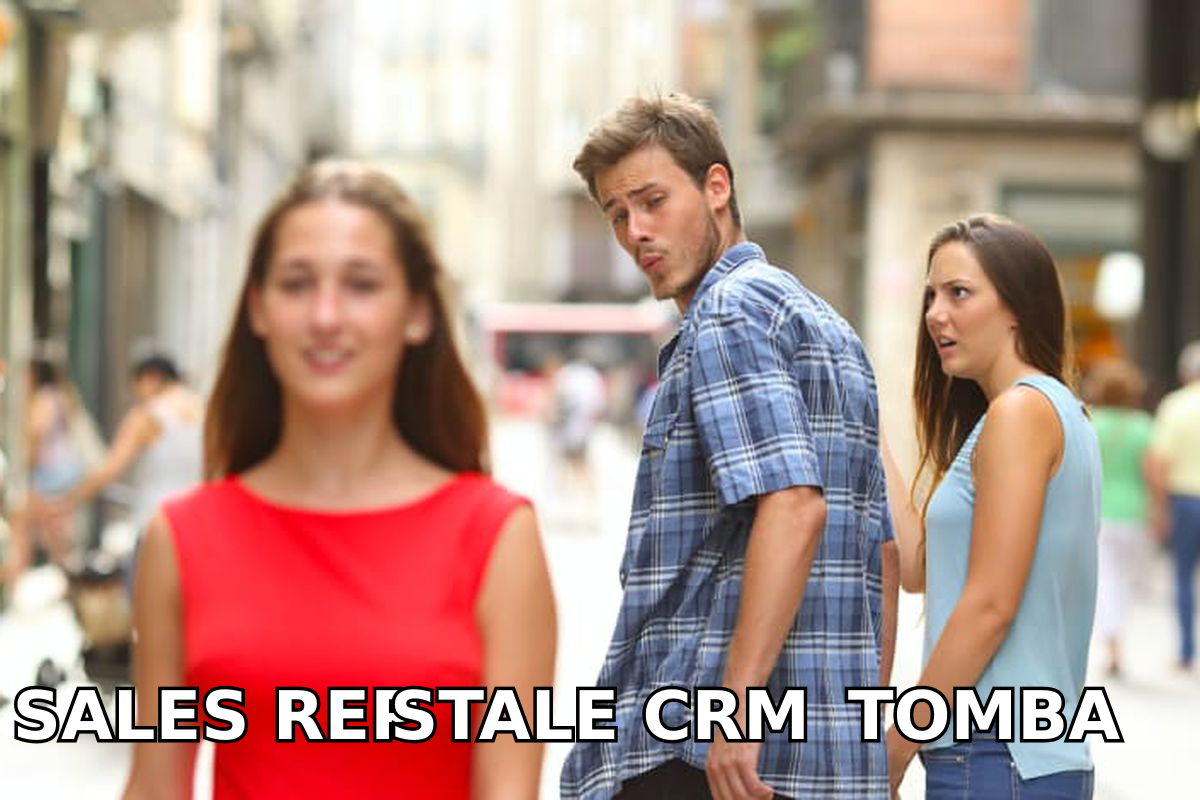
They solve different problems and you need both. Finding gets you a candidate number; validating tells you it's real. Here's how they compare against the alternative of doing nothing:
| Capability | Phone finder | Phone validator | No tool (manual) |
|---|---|---|---|
| Retrieves missing numbers | Yes | No | Slow, manual |
| Confirms line is active | No | Yes | No |
| Detects line type (mobile/VoIP) | Partial | Yes | No |
| Scales to thousands | Yes | Yes | No |
| Protects connect rate | Indirect | Direct | No |
| Best used | Building the list | Before dialing | Tiny lists only |
The workflow that wins: find → enrich → validate → dial. Each stage removes waste before the next, so by the time a rep picks up the phone, the odds are stacked in their favor.
How does Tomba compare to other B2B phone data tools?#
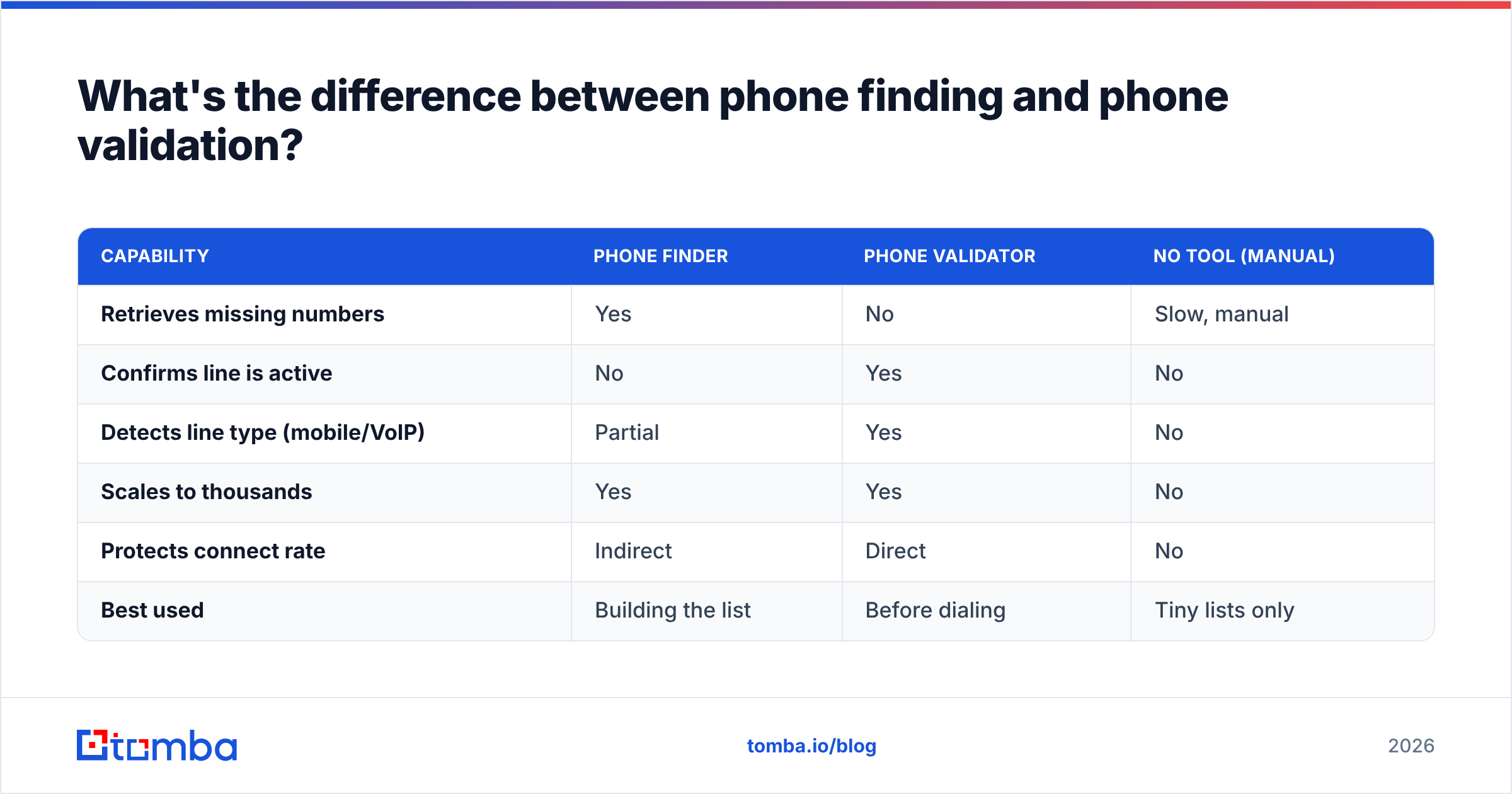
Most teams evaluate Tomba against Apollo, Lusha, and RocketReach. The honest summary: each has strengths, and the right pick depends on whether you mostly need an all-in-one sales platform or precise, verifiable contact data with transparent pricing.
| Factor | Tomba | Apollo | Lusha |
|---|---|---|---|
| Free tier | 25 searches/mo | Limited credits | Limited credits |
| Entry paid plan | $49/mo (Starter) | ~$49/seat/mo | ~$36/seat/mo |
| Phone + email in one | Yes | Yes | Yes |
| Standalone validation | Yes | Add-on | Limited |
| API access | Full API | Yes | Yes |
| Best for | Verifiable data + dev workflows | All-in-one outreach | Quick browser lookups |
A couple of fair caveats. Apollo bundles sequencing and a large practitioner community, which matters if you want one platform for everything. Lusha's browser extension is fast for one-off LinkedIn lookups. Tomba's edge is data you can verify and pipe programmatically — useful when phone accuracy and clean integrations matter more than an all-in-one suite. Compare specifics on the Apollo alternative and RocketReach alternative pages, and check current Tomba pricing before deciding. For independent reviews, G2 and Capterra are reasonable cross-checks.
How do you stay compliant when calling B2B phone numbers?#
Compliance is not optional, and the rules differ by region. This is a practical overview, not legal advice — confirm with counsel for your market.
- United States — the TCPA restricts autodialed and pre-recorded calls to mobiles; check numbers against the National Do Not Call Registry and respect state-level rules. Knowing a number is a mobile (via validation) directly changes what's allowed. The FTC publishes the current guidance.
- European Union / UK — GDPR and PECR require a lawful basis and honor opt-outs; B2B has some leeway but document your legitimate-interest basis.
- General hygiene — keep suppression lists, log consent and opt-outs, and re-validate before reusing old numbers.
Treat compliance as part of data quality. A clean, well-sourced list with documented provenance is also the easiest one to defend.
How do you keep your B2B phone numbers accurate over time?#
Data decays, so accuracy is a process, not a purchase. Build a simple maintenance loop:
- Re-validate quarterly. Run active lists back through a phone validator every 90 days to catch disconnections.
- Trigger on job changes. When enrichment flags a role change, re-find the number — the old direct dial is dead.
- Capture call outcomes. Feed "wrong number" and "disconnected" dispositions back into your CRM so bad records get suppressed.
- Refresh from source, not copies. Pull from a maintained B2B database rather than recycling an exported spreadsheet.
- Layer channels. Pair numbers with verified emails so a dead line still has a working path to the prospect.
Teams that run this loop typically hold connect rates steady year over year, while teams that "set and forget" watch their dialing efficiency erode every quarter.
Frequently asked questions#
How accurate are B2B phone numbers? Freshly found and validated direct dials and mobiles can exceed 90% reachability; unvalidated lists older than a year often drop below 60%. Validation is what closes the gap.
Can I find mobile numbers specifically? Yes — a good phone finder flags line type, so you can prioritize mobiles, which have the highest connect rates for cold outreach. Coverage varies by region and seniority.
Is it legal to call B2B numbers? In most regions, B2B calling is permitted with conditions (consent rules, do-not-call suppression, opt-out handling). The exact requirements depend on country and line type, so confirm with counsel.
Do I need both an email and a phone number? For modern outbound, yes. Multi-channel sequences (call + email + LinkedIn) consistently outperform single-channel, which is why pairing a phone finder with an email workflow works well.
The bottom line#
A B2B phone number is only worth dialing if it reaches the right person on a live line. Get there by layering sources, finding direct dials and mobiles instead of switchboards, validating before every campaign, and re-checking on a schedule. Do that, and your reps spend their hours in conversations instead of dial tones.
Ready to build a dialing list that connects? Start with Tomba's phone finder to retrieve direct dials and mobiles, run them through the phone validator to strip dead lines, and enrich each record so every contact has a backup channel. The free tier gives you 25 searches to test the data quality on your own list before you commit — dial the difference yourself.
// get started
Find, verify and enrich your first contacts today
Start on the free plan with 25 searches a month, then scale when your team is ready.
Free plan · No credit card required · GDPR & CCPA
// about the author