B2B Sales Skills in 2026: 12 Skills Every Rep Must Master
The 12 B2B sales skills that separate quota-crushers from the pack in 2026 — from discovery and multithreading to data hygiene, with a self-assessment scorecard.
B2B selling stopped rewarding charm a long time ago. Buyers run their own research, sit on bigger committees, and ghost reps who lead with a pitch instead of a point of view. The reps hitting quota in 2026 aren't the loudest — they're the ones who pair a sharp human skillset with clean data and disciplined process.
This guide breaks down the 12 B2B sales skills that actually move pipeline today, how to self-assess where you stand, and which to fix first.
TL;DR#
- The skillset shifted from persuasion to diagnosis. Discovery, business acumen, and multithreading now outrank pitch delivery.
- Data quality is a sales skill, not an ops chore. Reps who prospect off bad contact data burn hours and torch deliverability before they ever talk to a buyer.
- Soft skills still win deals — active listening, writing, and objection handling are the difference between a "maybe" and a signed order form.
- You can measure every skill on this list. Use the scorecard near the end to rank yourself 1–5 and pick the two lowest scores to drill.
- Tools amplify skill; they don't replace it. A clean prospecting stack (a reliable email finder, verifier, and CRM) gives a skilled rep leverage and makes a weak one obvious.
What are B2B sales skills, really?#
B2B sales skills are the repeatable competencies a rep uses to move a complex, multi-stakeholder deal from first touch to closed revenue. Think of them like a chef's skills: anyone can follow one recipe once, but a professional controls heat, timing, seasoning, and plating across hundreds of covers a night. Selling is the same — the deal changes, the fundamentals don't.
They split into three buckets, and a great rep needs all three:
- Core selling skills — discovery, qualification, objection handling, negotiation, and closing. The mechanics of advancing a deal.
- Communication skills — active listening, written outreach, storytelling, and executive presence. How you land a message and build trust.
- Operational skills — pipeline management, CRM hygiene, data sourcing, and forecasting. The unglamorous discipline that keeps the engine running.
Most sales training overweights bucket one and ignores bucket three. That's a mistake in 2026, because buyers compress the human selling window — they self-educate for 60–70% of the journey, according to Gartner's B2B buying research — so the rep who shows up with accurate context and a tight process wins the narrow slice of time they actually get.
Which B2B sales skills matter most in 2026?#
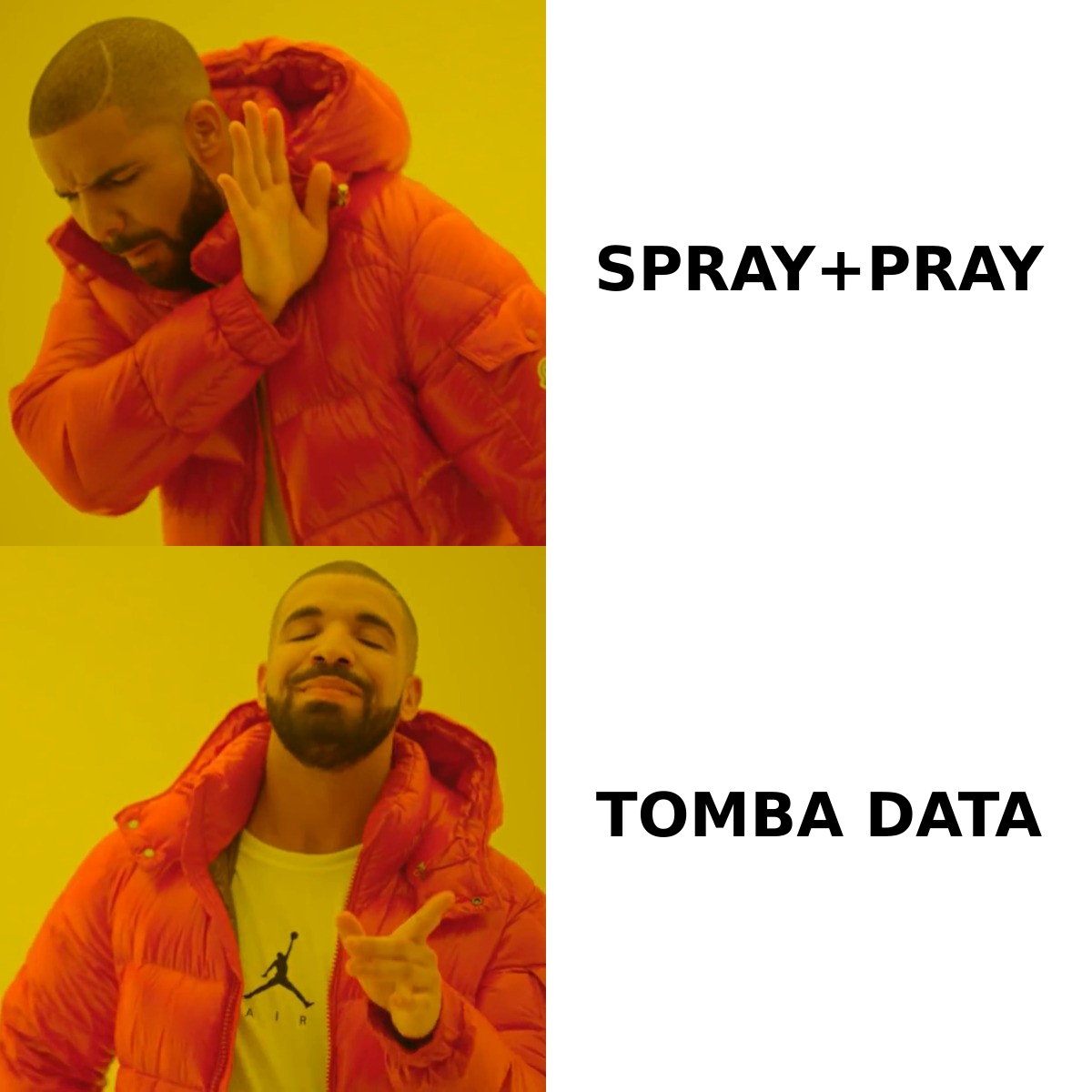
Here's the honest ranking. Not every skill carries equal weight, and the order has shifted as buying committees grew and inboxes got noisier.
| Skill | Why it matters in 2026 | How to measure it |
|---|---|---|
| Discovery & diagnosis | Buyers reward reps who understand the problem, not the product | % of calls with a documented pain + impact |
| Multithreading | Average B2B deal involves 6–10 stakeholders | # of contacts engaged per open opp |
| Data sourcing & hygiene | Bad data = wasted touches + bounce damage | Bounce rate, % verified contacts |
| Written outreach | First impression is almost always text | Reply rate, positive reply rate |
| Objection handling | Stalls kill more deals than "no" does | Stage-to-stage conversion |
| Business acumen | You sell to CFOs and committees now | Deals with quantified ROI case |
| Active listening | Talk-to-listen ratio predicts win rate | Talk ratio from call recordings |
| Negotiation | Protects margin and close dates | Avg discount %, sales cycle length |
| Forecasting | Trust with leadership; resource planning | Forecast accuracy vs actuals |
| CRM discipline | Clean data compounds across the team | % of fields completed per opp |
Notice that three of the top five are not "talking" skills — they're research, targeting, and writing. That's the real shift. The modern rep spends more time preparing the right conversation than performing it.
Discovery is the skill everything else hangs on#
If you fix one skill this quarter, make it discovery. A strong discovery call does three things: surfaces a quantified business pain, maps the decision process, and earns the right to a second meeting. Weak reps interrogate; strong reps diagnose. The tell is your talk ratio — if you're speaking more than 45% of a discovery call, you're pitching, not learning.
Multithreading is how you survive the committee#
Single-threaded deals die when your champion changes jobs, loses budget, or goes quiet. Multithreading means deliberately building relationships across the buying group — economic buyer, technical evaluator, end users, and the inevitable skeptic. To do that you need to find those people first, which is exactly where data sourcing becomes a selling skill, not a back-office task. A domain search across a target account surfaces the full org map so you're not betting the deal on one contact.
Is data sourcing actually a sales skill?#
Yes — and it's the most underrated one on the list. Here's the everyday analogy: a carpenter who shows up with a dull, bent saw will lose to one with a sharp blade, no matter how good their technique. Your contact data is the blade. Dull data (wrong emails, stale titles, no phone numbers) makes every other skill less effective.
Reps who treat data as someone else's problem pay for it three ways:
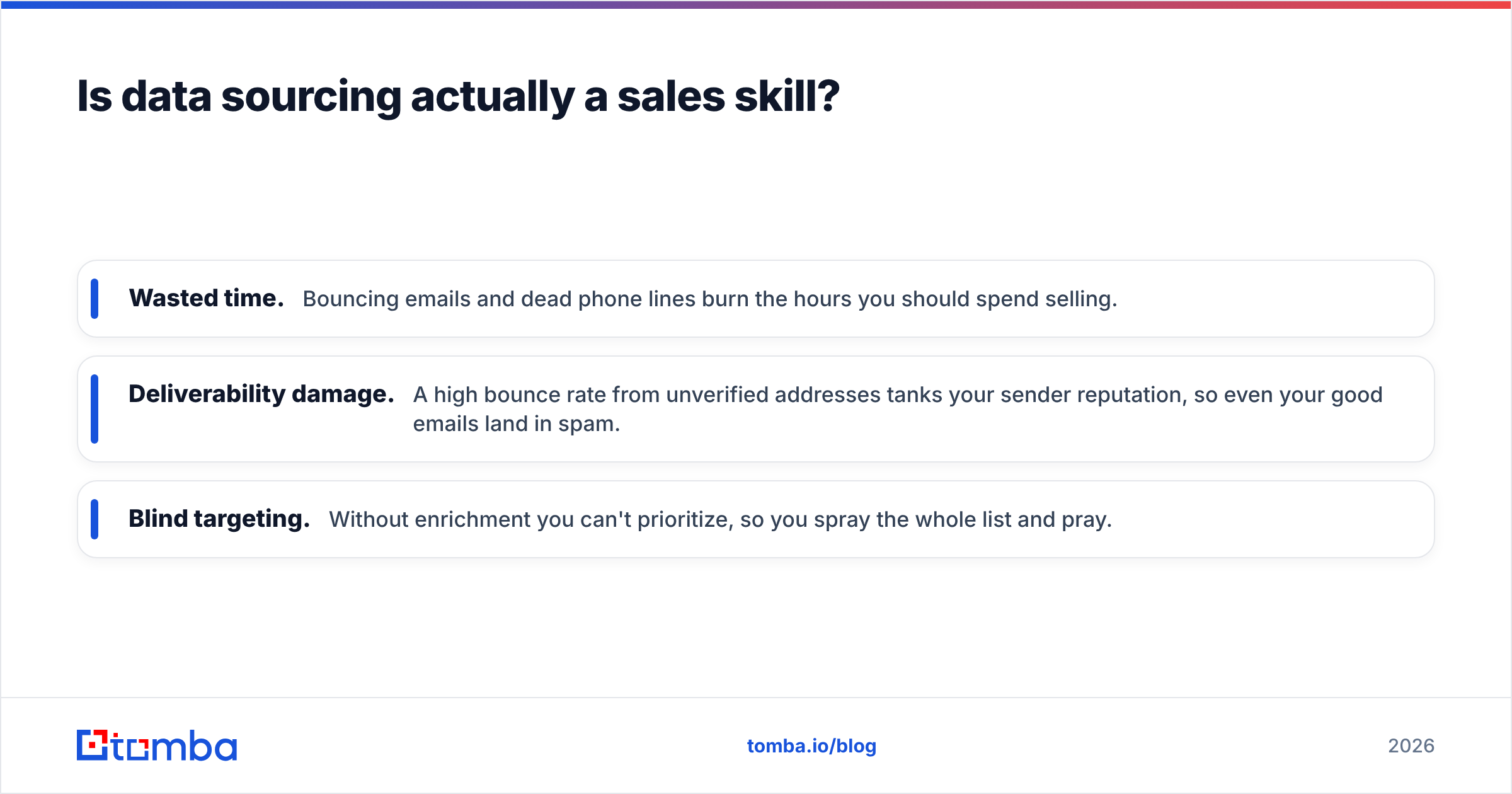
- Wasted time. Bouncing emails and dead phone lines burn the hours you should spend selling.
- Deliverability damage. A high bounce rate from unverified addresses tanks your sender reputation, so even your good emails land in spam.
- Blind targeting. Without enrichment you can't prioritize, so you spray the whole list and pray.
The fix is a tight, repeatable workflow: find the right contacts, verify before you send, and enrich so you know who to prioritize. Verifying your list with an email verifier before a send is a five-minute habit that protects months of reputation. Skilled reps build this into their cadence without thinking about it.
How do soft skills fit in when buyers self-serve?#
Soft skills matter more in a self-serve world, not less — because the few live interactions you get carry enormous weight. Three to drill:
Active listening. Stop loading your next question while the buyer talks. Summarize what you heard ("So the real cost isn't the license, it's the three days your team loses each month — did I get that right?") before you respond. This single move builds trust faster than any feature dump.
Written outreach. Most B2B first impressions happen in text, so writing is now a frontline skill. Short, specific, and about them — not you. If you need help tightening cold copy, lean on proven cold email templates as a starting frame, then personalize the first line with something only research would surface.
Executive presence. When you reach the economic buyer, talk in their language: risk, ROI, payback period, opportunity cost. A demo features list does not survive contact with a CFO.
What's the difference between B2B and B2C sales skills?#
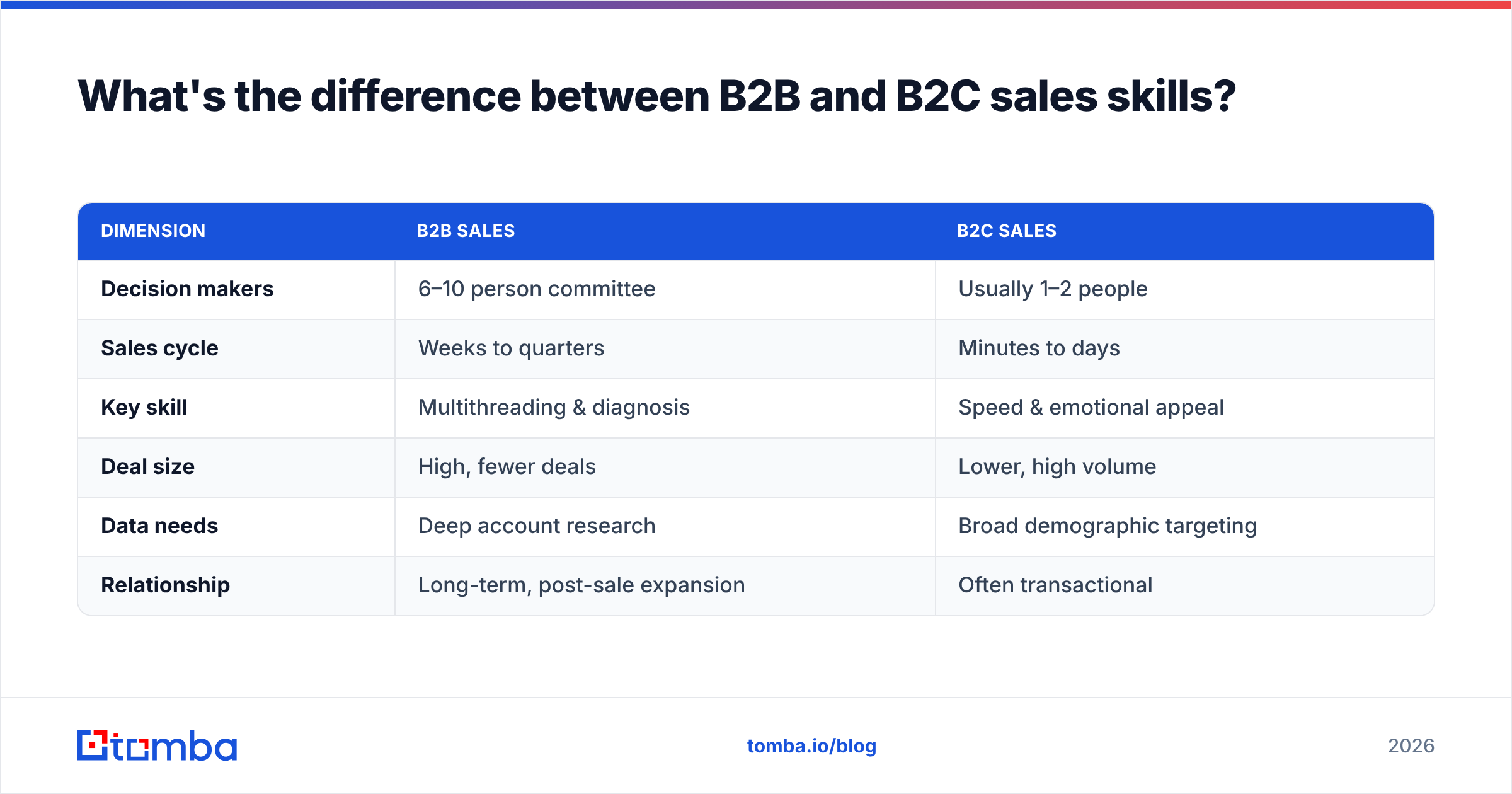
They share fundamentals but diverge on what's hard. The table below shows where to invest if you're moving from B2C into B2B, or coaching a team that is.
| Dimension | B2B sales | B2C sales |
|---|---|---|
| Decision makers | 6–10 person committee | Usually 1–2 people |
| Sales cycle | Weeks to quarters | Minutes to days |
| Key skill | Multithreading & diagnosis | Speed & emotional appeal |
| Deal size | High, fewer deals | Lower, high volume |
| Data needs | Deep account research | Broad demographic targeting |
| Relationship | Long-term, post-sale expansion | Often transactional |
The headline: B2B rewards patience, research, and orchestration across people. If your instinct is to close on the first call, you'll struggle until you retrain for the long game.
How do you measure and improve your sales skills?#
You can't improve what you don't score. Rate yourself 1–5 on each skill below, then pick your two lowest and build a 30-day drill around each.
- Discovery — Do I leave calls with a quantified pain and a mapped decision process?
- Multithreading — How many stakeholders am I engaged with per open deal?
- Data hygiene — What's my bounce rate, and do I verify before every send?
- Written outreach — Is my positive reply rate above 5%?
- Objection handling — Do stalls move forward, or do they just sit?
- Business acumen — Can I state the ROI of my deal in the buyer's own numbers?
- Forecasting — How close was my last-quarter call to actuals?
For the lowest scores, the improvement loop is the same one athletes use: measure → drill → review tape → adjust. Pull your call recordings for talk ratio. Pull your CRM for stage conversion. Pull your sending tool for bounce and reply rates. The data tells you where the skill gap is more honestly than your gut will.
One practical accelerator: remove the friction that makes the operational skills feel like chores. If sourcing and verifying contacts takes three clicks instead of thirty minutes — via a Chrome extension or a bulk email finder wired into your CRM — you'll actually do it consistently, and consistency is what turns a behavior into a skill.
What tools support each skill (without replacing it)?#
Tools are leverage, not a substitute for competence. A skilled rep with a clean stack outperforms a skilled rep without one; an unskilled rep with the best stack just generates noise faster. Match the tool to the skill:
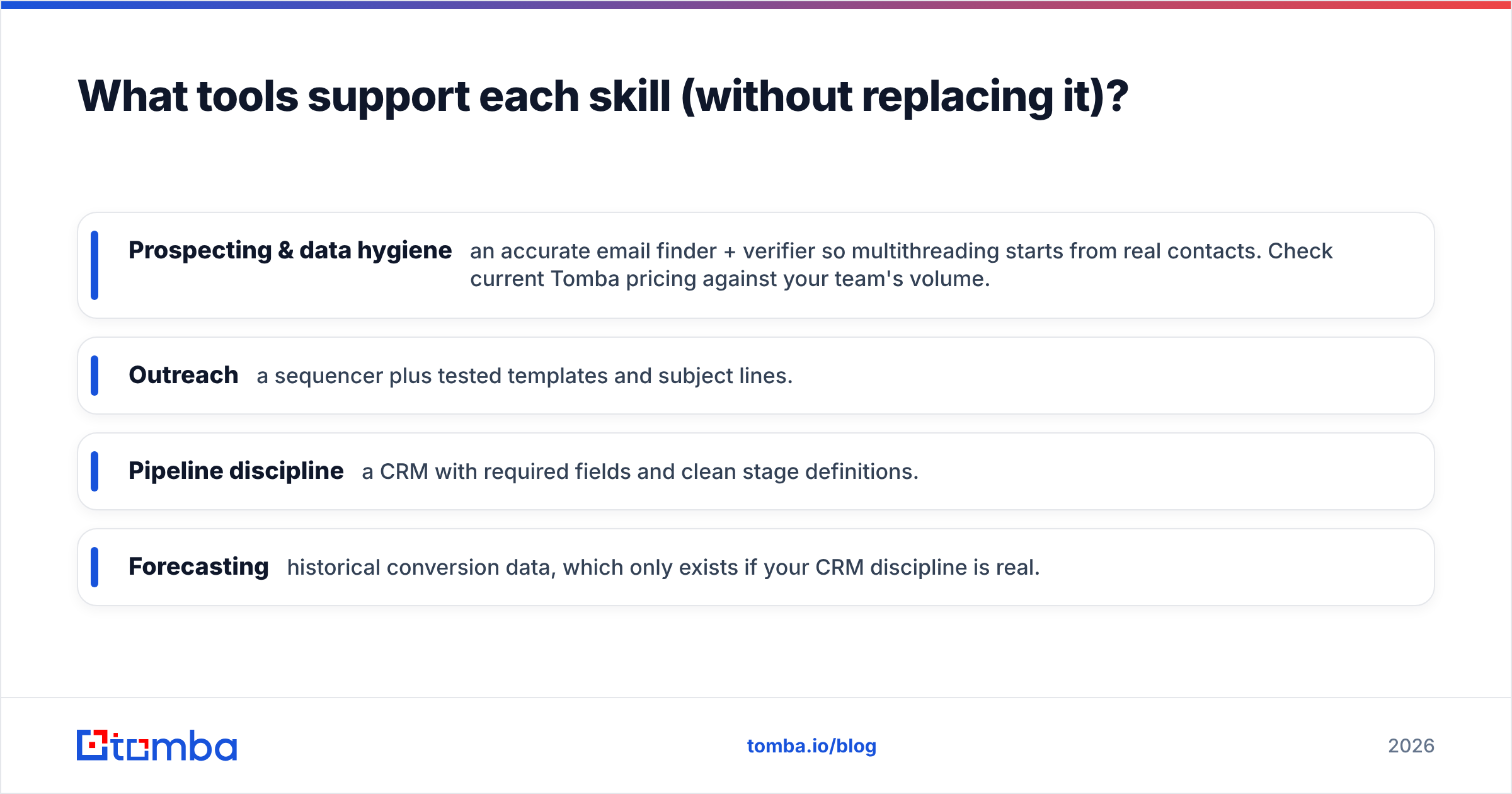
- Prospecting & data hygiene — an accurate email finder + verifier so multithreading starts from real contacts. Check current Tomba pricing against your team's volume.
- Outreach — a sequencer plus tested templates and subject lines.
- Pipeline discipline — a CRM with required fields and clean stage definitions.
- Forecasting — historical conversion data, which only exists if your CRM discipline is real.
You'll notice the chain: forecasting depends on CRM hygiene, which depends on the habit of logging clean data, which is easier when sourcing is frictionless. Skills and tools reinforce each other. Compare vendors honestly — sites like G2 are useful for cutting through marketing claims — and pick the stack that removes friction from your weakest skill first.
Sharpen the skill that feeds every other one#
Every skill on this list runs on accurate contact data. Discovery needs the right person in the room. Multithreading needs the full buying committee mapped. Outreach needs verified addresses so your message lands instead of bouncing. Get the data layer right and the rest of your skills compound.
Start there. Tomba's Email Finder finds verified professional emails by name, company, or domain, so your prospecting starts from clean data instead of guesswork — and your sender reputation stays intact. Pair it with the verifier, wire it into your CRM, and spend your saved hours on the part no tool can do: the conversation. The free tier gives you 25 searches a month to test it against your own accounts before you commit a dollar.
Skill plus clean data is the combination that closes in 2026. Build both.
// get started
Find, verify and enrich your first contacts today
Start on the free plan with 25 searches a month, then scale when your team is ready.
Free plan · No credit card required · GDPR & CCPA
// about the author