The 9 Best Cold Emailing Tools in 2026 (Tested & Compared)
A no-fluff breakdown of the best cold emailing tools in 2026 — sending platforms, warmup, deliverability, and the data layer that makes them work.
Cold email still works in 2026 — but only if three things line up: a clean list, a sending tool that protects your reputation, and copy that earns a reply. Most "best cold emailing tools" roundups obsess over the sending platform and ignore the other two. That is exactly why so many campaigns hit spam.
This guide fixes that. You will get a ranked, honest comparison of the sending platforms people actually use, plus a clear view of where the data layer fits — because the fanciest sequencer in the world cannot save a list full of invalid addresses.
TL;DR — The Short Version#
- Best all-in-one sender: Instantly and Smartlead lead the pack for unlimited inboxes, built-in warmup, and rotation.
- Best for teams that live in a CRM: HubSpot Sales and Salesloft win on pipeline visibility, not raw sending.
- Best deliverability stack: No tool beats spam — you need warmup, verified lists, and authentication (SPF/DKIM/DMARC) working together.
- The part everyone skips: Your sender reputation is decided before you send. Verify every address and authenticate your domain first.
- The data layer matters most: A great tool sending to a bad list still fails. Build the list right with a bulk email finder and a strict email verifier.
What Counts as a "Cold Emailing Tool" in 2026?#
A cold emailing tool is software that sends personalized outreach at scale while protecting your domain reputation. Think of it like a delivery fleet: the truck (the sending platform) only matters if the packages have correct addresses (your data) and the depot has a good record with the post office (your sender reputation).
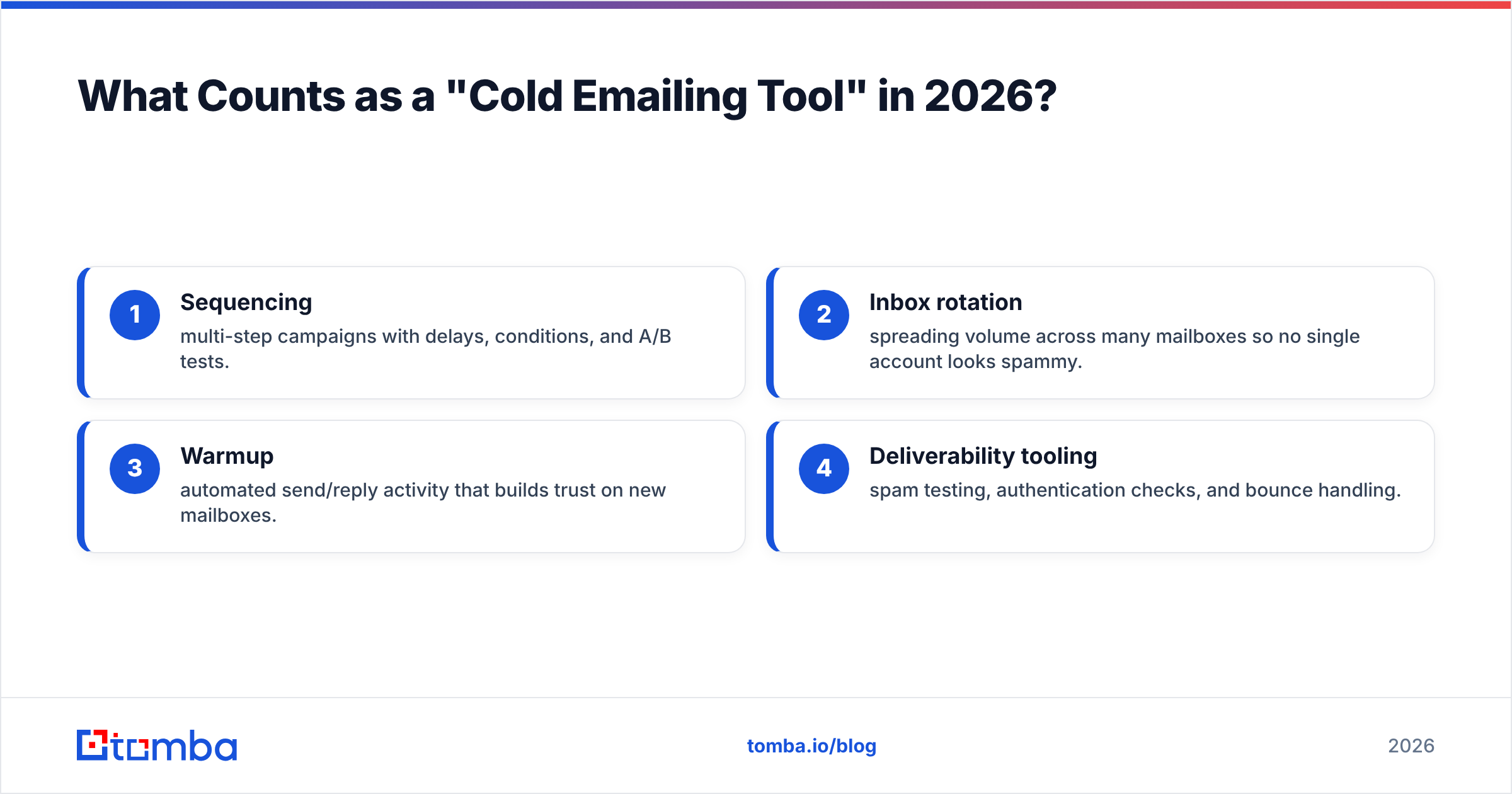
Most platforms bundle four jobs:
- Sequencing — multi-step campaigns with delays, conditions, and A/B tests.
- Inbox rotation — spreading volume across many mailboxes so no single account looks spammy.
- Warmup — automated send/reply activity that builds trust on new mailboxes.
- Deliverability tooling — spam testing, authentication checks, and bounce handling.
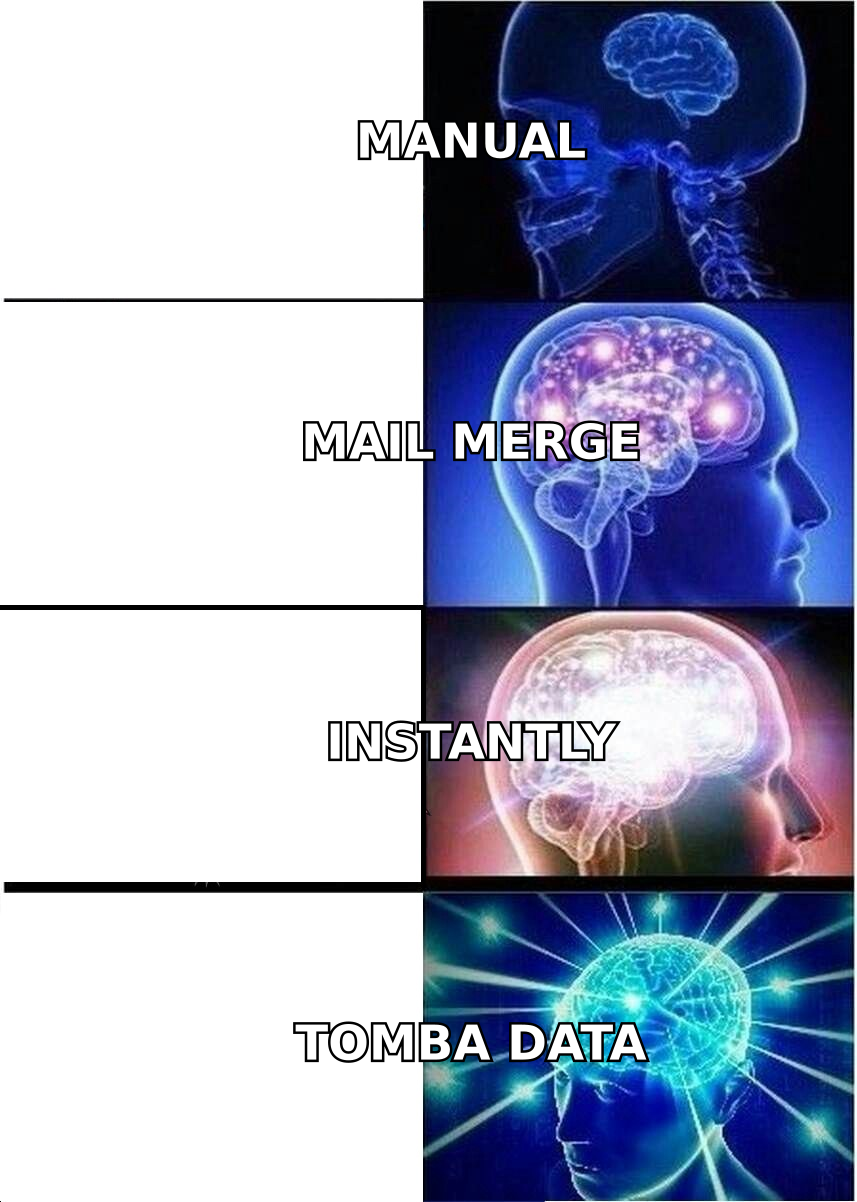
What they almost never do well is find and verify contacts. That is a separate data problem, and it is the one that quietly decides your campaign's fate.
What Are the Best Cold Emailing Tools Right Now?#
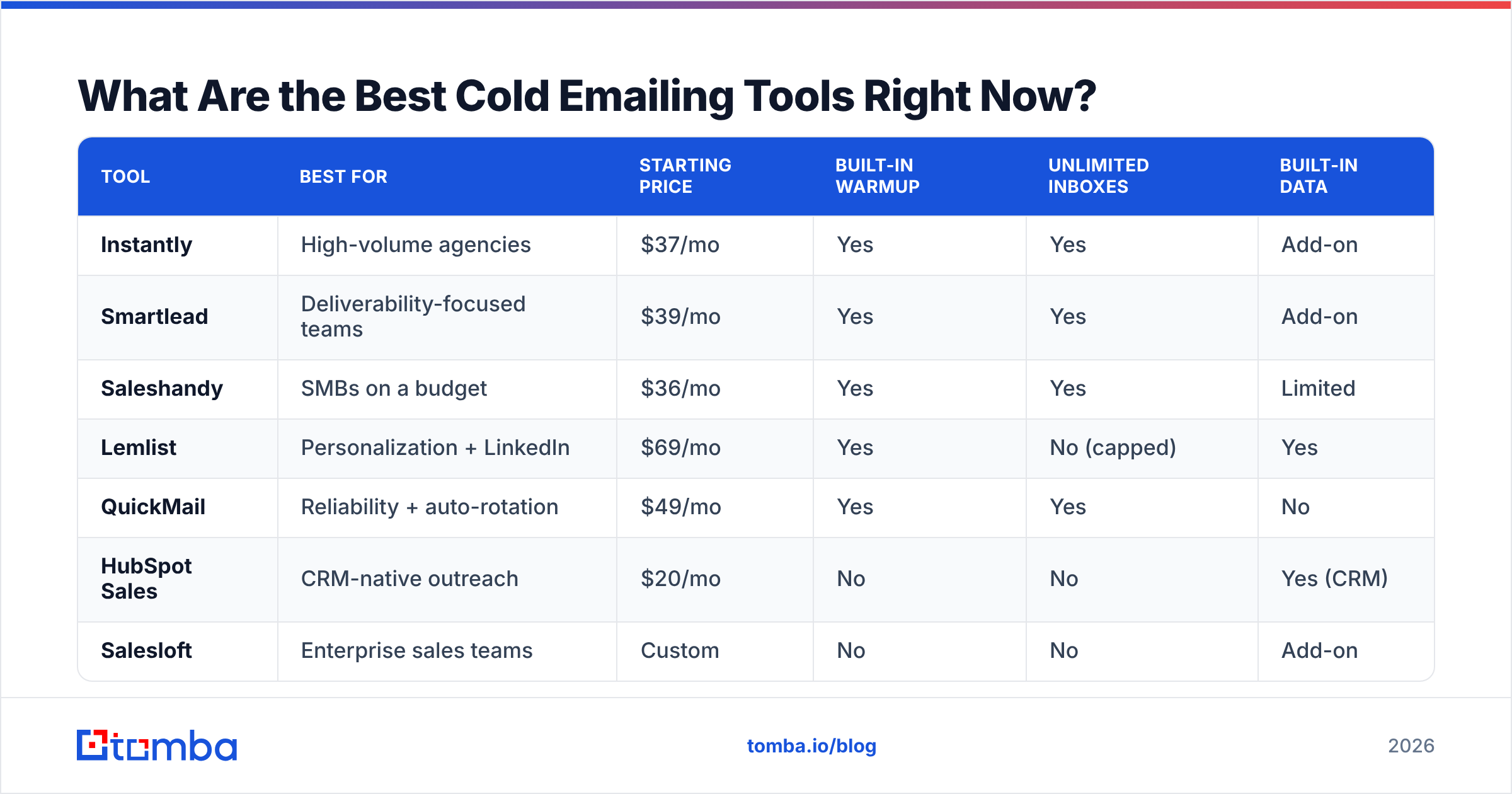
Here is the head-to-head. Prices are starting tiers as of 2026 and move around, so treat them as directional and confirm on each vendor's site.
| Tool | Best for | Starting price | Built-in warmup | Unlimited inboxes | Built-in data |
|---|---|---|---|---|---|
| Instantly | High-volume agencies | $37/mo | Yes | Yes | Add-on |
| Smartlead | Deliverability-focused teams | $39/mo | Yes | Yes | Add-on |
| Saleshandy | SMBs on a budget | $36/mo | Yes | Yes | Limited |
| Lemlist | Personalization + LinkedIn | $69/mo | Yes | No (capped) | Yes |
| QuickMail | Reliability + auto-rotation | $49/mo | Yes | Yes | No |
| HubSpot Sales | CRM-native outreach | $20/mo | No | No | Yes (CRM) |
| Salesloft | Enterprise sales teams | Custom | No | No | Add-on |
| Reply.io | Multichannel sequences | $59/mo | Yes | No | Yes |
| Tomba (data layer) | Finding + verifying contacts | $49/mo | N/A | N/A | Yes |
Two things jump out. First, the dedicated senders (Instantly, Smartlead, Saleshandy, QuickMail) cluster tightly on price and features — your choice comes down to deliverability reputation and UX. Second, every one of them treats contact data as an add-on. That gap is the whole point of this article.
Is Instantly or Smartlead the Better Sending Platform?#
For most cold email operators, the real decision is Instantly vs. Smartlead — they dominate the agency and high-volume segment.
- Instantly is the cleanest UX, with a big warmup network and a simple campaign builder. It is the default choice if you want to get sending fast and you value polish. See their feature set on the Instantly site.
- Smartlead wins on granular control — sub-sequences, webhooks, a master inbox, and a reputation for transparent deliverability reporting. It is the pick for teams who want to tune everything. Details on the Smartlead site.
Both offer unlimited mailboxes and built-in warmup, so the feature gap is narrow. If you are an operator running many clients, test both with a small list for two weeks and watch inbox placement, not open rates (open tracking is increasingly unreliable in 2026).
If you are comparing automation platforms more broadly, our Instantly alternative breakdown covers where the gaps are and who should look elsewhere.
Why Do Cold Emails Land in Spam Even With a Great Tool?#
Because the tool is the last mile, not the foundation. Deliverability is earned upstream. A sending platform can rotate inboxes and pace your sends, but it cannot fix a dirty list or an unauthenticated domain.
Three foundations decide whether you see the inbox:
- List hygiene. Sending to invalid or risky addresses spikes your bounce rate, and a high bounce rate is the fastest way to torch a new domain. Run every list through an email verifier before the first send, and re-verify lists older than 90 days.
- Authentication. SPF, DKIM, and DMARC tell mailbox providers you are who you say you are. Check your records with a free SPF checker and confirm your domain's sender reputation before scaling.
- Warmup and pacing. New mailboxes need weeks of gradual ramp. A warmup calculator tells you how many sends per day are safe so you do not trip volume filters.
The uncomfortable truth most tool reviews avoid: the single biggest lever on deliverability is the quality of your list, and no sending platform supplies that for you.

How Should You Stack These Tools Together?#
Stop thinking "which one tool" and start thinking "which stack." The best cold emailing setups in 2026 layer three categories that each do one job well.
- Data layer (find + verify): Build and clean the list. This is where Tomba's email finder, domain search, and verification live. Garbage in, spam out — so this layer comes first.
- Sending layer (sequence + rotate): Instantly, Smartlead, Saleshandy, or QuickMail. This is the truck that delivers your packages on a schedule.
- Copy layer (write + test): Tools that draft and pressure-test your message — a cold email AI writer for first drafts, a spam checker to catch trigger words, and a subject-line tester before you hit send.
Run them in that order. Most failed campaigns invert it — they buy a shiny sequencer, scrape a sloppy list, and wonder why replies never come.
What About CRM-Native Tools Like HubSpot and Salesloft?#
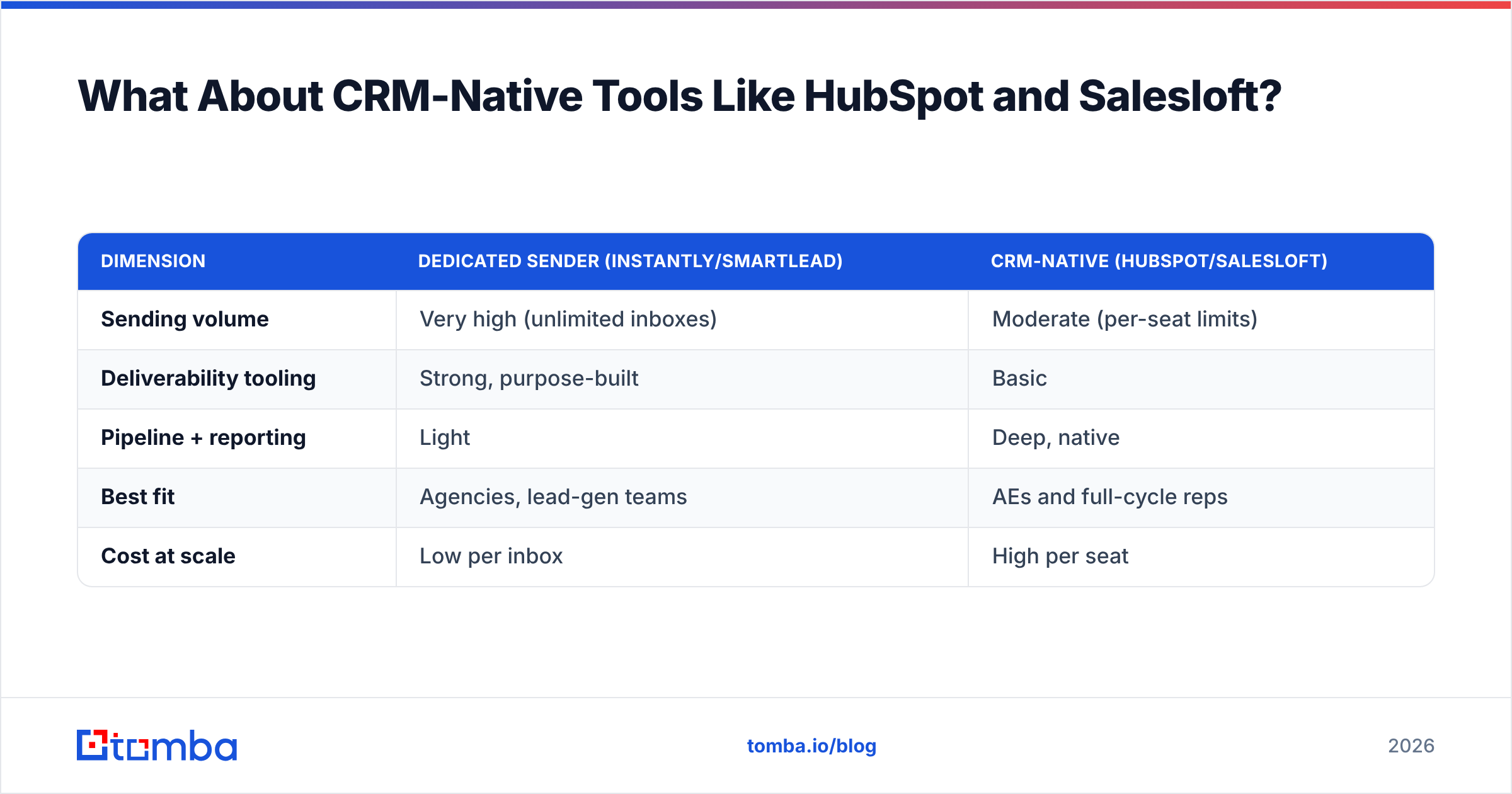
They serve a different buyer. If cold outbound is a small part of a larger sales motion that lives in a CRM, a native sequencer keeps everything in one place.
| Dimension | Dedicated sender (Instantly/Smartlead) | CRM-native (HubSpot/Salesloft) |
|---|---|---|
| Sending volume | Very high (unlimited inboxes) | Moderate (per-seat limits) |
| Deliverability tooling | Strong, purpose-built | Basic |
| Pipeline + reporting | Light | Deep, native |
| Best fit | Agencies, lead-gen teams | AEs and full-cycle reps |
| Cost at scale | Low per inbox | High per seat |
The rule of thumb: if your job is to book meetings at volume, use a dedicated sender. If your job is to manage a pipeline end to end, use the CRM's tooling and connect data through an integration. You can also enrich CRM records on the way in so reps never work a stale contact.
How Do You Pick the Right One for Your Situation?#
Match the tool to your real constraint, not to a feature list.
- Solo founder or small team, tight budget: Saleshandy or QuickMail. Low entry price, unlimited inboxes, solid warmup.
- Agency running multiple clients: Smartlead for control, Instantly for speed. Both scale to hundreds of mailboxes.
- Personalization-heavy, low-volume outbound: Lemlist or Reply.io, which lean into custom images, video, and multichannel.
- Full-cycle reps inside a CRM: HubSpot Sales or Salesloft, kept fed with enriched, verified data.
- Any of the above: A data layer underneath all of them. The sender changes; the need for accurate, verified contacts never does.
Whatever you choose, validate the platform with independent reviews on G2 before committing annually — vendor pages oversell, and deliverability reputations shift quarter to quarter.
What Does This Cost Once You Add It All Up?#
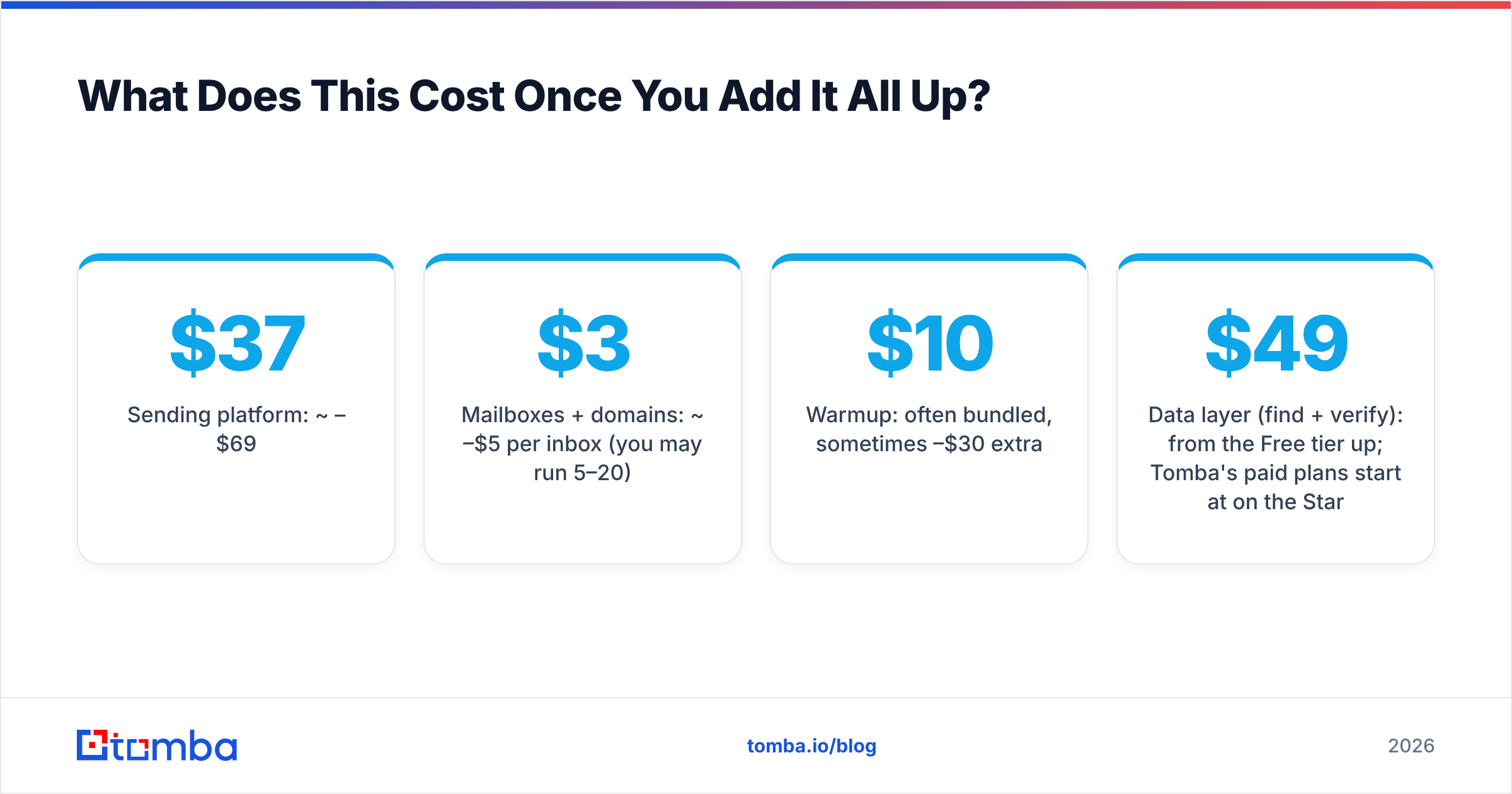
Budget for the full stack, not just the sequencer. A realistic small-team setup looks like this:
- Sending platform: ~$37–$69/mo
- Mailboxes + domains: ~$3–$5 per inbox/mo (you may run 5–20)
- Warmup: often bundled, sometimes $10–$30/mo extra
- Data layer (find + verify): from the Free tier up; Tomba's paid plans start at $49/mo on the Starter tier, scaling to Growth at $99/mo. Full Tomba pricing is public.
The data layer is the cheapest line item with the highest leverage. A $49/mo verification and finding budget routinely saves a $5,000 domain reputation that one bad list would have destroyed.
The Bottom Line#
The best cold emailing tools in 2026 are not magic — Instantly and Smartlead are excellent trucks, but trucks need good addresses. Pick a sending platform that fits your volume and budget, authenticate your domain, warm up your mailboxes, and then obsess over the one thing every tool review skips: the quality of your list.
That is where Tomba fits. Before a single email leaves your sequencer, use the Tomba Email Finder to source accurate, professional addresses by name, company, or domain — then verify them so your bounce rate stays low and your sender reputation stays intact. Start free with 25 searches a month, and only pay once you have proof the data lands. Your sending tool will thank you, and so will your reply rate.
// get started
Find, verify and enrich your first contacts today
Start on the free plan with 25 searches a month, then scale when your team is ready.
Free plan · No credit card required · GDPR & CCPA
// about the author